“Blind? I think there’s no doubt that Marla Runyan can see things much clearer than most of us with 20/20 vision.” —Lance Armstrong Marla Runyan was nine years old when she was diagnosed with Stargardt’s disease, an irreversible form of macular degeneration. With the uneasy but unwavering support of her parents, she refused to let her diagnosis limit her dreams. Despite her severely impaired, ever-worsening vision, Marla rode horseback and learned to play the violin. And she found her true calling in sports. A gifted and natural athlete, Marla began to compete in the unlikeliest event of the heptathlon, the grueling women’s equivalent of the decathlon, consisting of seven the 200-meter dash, high jump, shot put, 100-meter hurdles, long jump, javelin throw, and 800-meter run. In 1996, she astonished the sports world by qualifying for the U.S. Olympic Trials and, along the way, set the American record for heptathlon 800. It was then that she decided to concentrate on her running. Four years of intense effort paid off. In 2000, she qualified for the U.S. Olympic team by finishing third in the 1,500 meters. In Sydney, she placed eighth in the finals, the top American finisher—the highest women’s placing for the United States in the event’s history. With self-deprecation and surprising wit, Marla reveals what it’s like to see the world through her eyes, how it feels to grow up “disabled” in a society where expectations are often based on perceived abilities, and what it means to compete at the world-class level despite the fact that—quite literally, for her—there is no finish line.
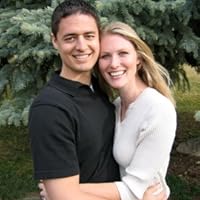
Heard Ms. Runyan speak one weekend a few years ago and got my picture taken with her and one of my best friends, Cheryl. This is a great story about devotion...Her mother never gave up on Marla and her chance to live, learn and overcome obstacles set before her as a young child with limited sight. Marla inspired me greatly and instilled the sense that "there is no finish line" in this life. We keep moving. We keep trying. We keep our eyes on the prize.
This book was given to me back in my hardcore running days when I began my own battle with increasing vision loss. Two decades later, my cautious return to running made me pull it off my bookcase and re-read it. Runyan's story inspired me to keep running although I'm older and my eyesight is worse.
Marla’s story is incredible. As someone who was diagnosed with Stargardt disease impacting her sight in her early years, she never let her lack of vision impact her dreams.
Her memoir details her grit and determination to make the Olympics in her 1500 track event. The details of her running experience are so real - issues with injury, the mental struggles - made it very relatable.
After recently becoming a guide with Achilles for blind and disabled athletes, I felt like this was a must read.
Everyone is so capable of doing anything they dream.
Had to DNF this one because it was missing 1.5 chapters from my book I picked up at a used bookstore.
**update: I finished the book because Ben found a PDF online for me 😄 honestly, I think you have to be a runner (track athlete specifically) to understand the essence of this book.
Every now and then I really like reading a book about running. Since I'm trying to climb back on the fitness wagon, I'm hoping this book will help fire me up.
After reading:
Marla Runyan's story is particularly interesting since she's legally blind. This book definitely falls into the class that counters "I can't" mentalities.
This is the story of a blind runner. It was amazing to read about he challenges that she overcame in order to be able to be the best runner she could be.