Фима живет в Иерусалиме, но всю жизнь его не покидает ощущение, что он должен находиться где-то в другом месте. В жизни Фимы хватало и тайных любовных отношений, и нетривиальных идей, в молодости с ним связывали большие надежды - его дебютный сборник стихов стал громким событием. Но Фима предпочитал размышлять об устройстве мира и о том, как и он сам, и его страна затерялись в лабиринтах мироздания. Его всегда снедала тоска - разнообразная, непреходящая. И вот ему уже перевалило за пятый десяток, Фима обитает в ветхой квартирке, борется с бытовыми неурядицами, барахтается в паутине любовных томлений и работает администратором в гинекологическом кабинете. Его любят все, но и выносят с трудом его тоже все. Он тот, кто позволил мечтам и фантазиям победить реальность. Яичница у него всегда подгорает, бутерброд падает вниз вареньем, мертвый таракан читает ему экзистенциальные нотации, а приход маляров видится апокалипсисом. Но в хаосе Фиминой жизни неярко, однако уверенно и стойко мерцает светлячок. Надежды? Любви? Мудрости? Кто знает. Амос Оз выписывает портрет человека и поколения, способных на удивительные мечты, но так в мечтах и застрявших. Это один из самых "русских" романов израильского классика, в котором отчетливо угадываются тени Гоголя и Чехова, а за суетливым Фимой явственно проступает Обломов. Пресса о книге Оз пишет блестяще и лаконично... Из хаоса и мрака он творит гимн человечности и жизнелюбию. Independent on Sunday Роман Амоса Оза - это обезоруживающе мудрое и остроумное произведение. Sunday Telegraph "Фима" - глубокий, бодрящий, забавный, страстный спор о жизни, политике, сексе и истории. Амос Оз - писатель сложный, тонкий и нисколько не боящийся прослыть идеалистом. The Observer Герой романа Фима - это истинный Обломов нашего времени. Амос Оз мастерски рассказывает историю человека, погруженного в кататоническое ощущение бессилия сделать то, что он считает нужным и важным сделать, чтобы изменить себя, свою жизнь, свою страну. Роман буквально вибрирует от страсти, юмора и интеллектуальной мощи. Nadine Gordimer, The Observer Рациональность стиля Амоса Оза уравновешивается чистой поэзией, напоминающей стихи-заклинания Чеслава Милоша. "Фима" - безусловно, самая прекрасная книга Оза, истинный праздник человеческой сложности и ее постижения. Scotland on Sunday Это роман, в котором политика и таинство отношений мужчины и женщины перетекают друг в друга. Это триумф стиля простого и изощренного разом. Амос Оз - писатель, у которого каждого слово наполнено смыслом, он уважает слова, он как никто понимает, что они соединяют людей. И он передает это свое теплое знание читателю. The Spectator Оз наделил библейской мудростью нелепого мечтателя, чья неистовая страсть к справедливости искупает весь его инфантилизм. Его Фима раздражает своими разговорами, суетой, деталями своей интимной жизни, но он абсолютно прекрасен. Times Literary Supplement Амоса Оза не раз называли пророком. Будущее Израиля, которое он с такой любовью и нежностью излагает в "Фиме", было выписано в сумраке восьмидесятых годов. И оно осуществилось едва ли не до последнего слова. The Times Роман, в котором Амос Оз с огромным обаянием и симпатией предупреждает человека о реальной жизни, которая происходит за пределами его личных фантазий. У "Фимы" очевидно русские корни - за суетой, мечтами, речами, любовями нелепого Фимы угадывается фигура Обломова. The Irish Times Оз выписал своего антигероя столь блестяще, столь ярко и выпукло, что его невозможно не полюбить. Фима - истинное противоядие стереотипу об израильтянах. Его комический характер взрывает современное самодовольство. Воистину, лучшие книги - комические книги. New Statesmen and Society Земля потерянных носков и сюрреалистичных снов кажется на первый взгляд совсем новой территорией для Амоса Оза, израильского классика, романы которого обычно резонируют с проблемами его страны. Он ступает на землю, где быт растворяется в поэзии, а потерянный носок становится знаменем нового донкихотства. The Sunday Times Затягивающе комичный роман в духе Гоголя. История Израиля через призму сознания, в котором безумные мечты главнее голоса разума. Kirkus Reviews В этой, несомненно лучшей, своей книге Амос Оз ведет захватывающий рассказ об эмоциональном распаде человека, в котором отразился этический распад еврейского государства. Оз поддерживает в романе высочайший интеллектуальный и эмоциональный накал до самой последней страницы. Жестокий романс выплескивается бурлеском, тихая личная драма взрывается политическими дебатами, а симпатия и ненависть к герою то и дело меняются местами. Publishers Weekly "Фима" - отличный роман не только в силу своих литературных достоинств, это книга, которая заставляет сомневаться. Амосу Озу удалось поставить под сомнение законность любых действий человека. The Big Issue Это один из тех редких, исключительных романов, которые управляют чем-то куда более сложным, чем словами. Этой книге удается заставить нас поверить до самого последнего движения в ...
Amos Oz (Hebrew: עמוס עוז; born Amos Klausner) was an Israeli writer, novelist, journalist and intellectual. He was also a professor of literature at Ben-Gurion University in Beersheba. He was regarded as Israel's most famous living author.
Oz's work has been published in 42 languages in 43 countries, and has received many honours and awards, among them the Legion of Honour of France, the Goethe Prize, the Prince of Asturias Award in Literature, the Heinrich Heine Prize and the Israel Prize. In 2007, a selection from the Chinese translation of A Tale of Love and Darkness was the first work of modern Hebrew literature to appear in an official Chinese textbook.
Since 1967, Oz had been a prominent advocate of a two-state solution to the Israeli–Palestinian conflict.
It's hard not to get attached to the character created by Amos Oz, a fifty-four-year-old dreamer, divorced, childless, and employed part-time in a gynecological clinic. Brilliant but unambitious, Fima dreams about his life and changing the world in endless monologues. His favorite activities are reading newspapers, arguing endlessly with his friends, and seducing women. His immaturity and lack of practicality complicate his life terribly, often drawing him into delicate situations. Through this character described with great tenderness, Amos Oz criticizes the Israeli policy towards the Occupied Territories and wonders about the reasons for this colossal mess. The Third Sphere is a clever and humorous attempt to respond to the tragic plight of the Israelis and Arable, reflecting humanity.
Fima is a unique, brilliant, dysfunctional guy who has a circle of good friends who take him under their wing. He published a well-received book of poems years ago, so he has talent and promise, but don’t expect any more poems soon.
Fima is 54 and seems to be in an ongoing mid-life crisis that he can’t get out of. Fima writes occasional op-ed pieces for Israeli newspapers, pieces that have a fairly liberal perspective on Israeli politics. This group of friends, four or five couples, all live in Jerusalem and all are married except Fima. One of the married couples is Fima’s ex- and her second husband who have a young boy. Fima often babysits for them and acts as a second father to the boy.
We are told that Fima’s friends see in him a “…unique combination of wit and absent-mindedness, of melancholy and enthusiasm, of sensitivity and helplessness, of profundity and buffoonery.”
SOME SPOILERS FOLLOW BUT MAJOR ONES HIDDEN
Fima has had sex, or actively has sex, with all the women in the group. The men are aware of this. One husband, I can understand. He travels a lot for his work and he’s a Casanova who has a woman in every town, so he figures he can let his wife have some fun with this harmless guy. But I can’t figure out why none of the other husbands haven’t beaten the crap out of him.
One married woman regularly comes over to his apartment. They have sex and she cooks and cleans the place (he’s a slob of course). The women call each other up and say things like “When he comes over to your place make sure he eats. I sewed up his shirt.”
When the group meets at one or another’s home the men drink, smoke and argue politics. Fima’s brilliance always wins the argument and we’re told ‘he has to win the argument and he has to let you know he’s won.’ Oddly, the women never join in the political discussions. Are we supposed to assume they are off in a corner talking about diapers and detergents?
I have a hard time accepting the premise of this book. I fail to see the point of having Fima as my friend. I don’t like argumentative people and I don’t like guys hanging around my house who are going to try to hit on my wife. He’ll never darken my door. I do feel bad for him knowing what his big dream in life is:
Fima seems self-aware. He asks himself at one point “How come there are people who can still stand me?” A dramatic event occurs at the end of the book and maybe there’s hope for Fima.
I’ve read a lot of Amos Oz lately, in large part because he has so many books available on my library’s online system while the interlibrary loan system was (and still is) shut down due to Hurricane Ian. It’s still a good read despite my problem with the premise, so 3.5 rounded up to 4.
There’s some dialog but not a lot. Here’s a passage I choose to illustrate the writing style. The passage talks about a man, not the main character:
“…like someone who has long since learned how intimately love and ridicule are interwoven; how both seducer and seduced are guided by fixed rituals; how absurdly childlike was his own indefatigable urge to conquer, in which carnal needs played only a small part; how lies, mannerisms and pretenses are woven into the very fabric even of true love; and how the passing years deprive us all of the power of thrilling and the power of longing alike, as if everything wears out and fades.”
Goodreads says Oz was Israel’s ‘most famous living author’ (1938-2018). His 40 novels, short story collections, and children’s books were translated into 45 languages. All his novels appear to be available in English. His best-known book in English is A Tale of Love and Darkness. I read his novels Rhyming Life and Death and gave it a ‘5’ and I gave Judas a ‘4.’
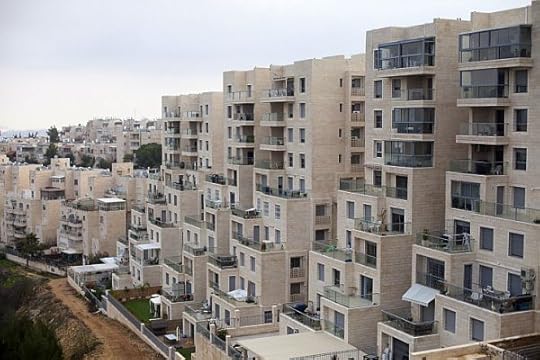
Top photo of apartments in Jerusalem from jewishpress.com The author from theguardian.com
Fima is a brilliant novel, albeit a deeply depressive one and at times quite a difficult read. It's not a novel for an average reader. Perhaps it could be said that it requires patience and concentration from its reader. It takes patience to look beyond the surface- and see that it's not just about empty ravings and endless passionate monologues of a self- centered, neurotic, depressed and lazy intellectual. It takes patience and concentration to see the meaning behind the bleakness. In fact, had it not been for Amos Oz's name on the book, I would perhaps been tempted to give Fima up at some point. However, seeing that it is Oz and that I have yet have to read a book of his that I wouldn't enjoy, I continued reading- and I was rewarded for my patience.
This book has a frustrating protagonist- Fima, an idle intellectual whose endless passive aggressive behaviour get more and more out of hand. He is passive and yet domineering at the same time. He is emphatic and full of compassion for the sorrows of the world and Israel in the particular, but he is too self-observed to have a single quality relationship or to take care of anything or anyone. He has moments of (possible genuine) empathy but his neurotic behaviour stops him from connecting with anyone or anything. At times, it really hard to put up with him- and on most if not all occasions the reader is tempted to agree with his ex- wife Jael- you've gone too far this time Fima. His mood shifts and intellectual inspirations move like a flooding river, without a concern for anyone. When inspiration strikes, Fima is desperate for an audience to whom he will deliver his long speeches on the salvation of Israel and he doesn't care if the indented recipient of the message is asleep or has problems of his own. He dreams of fighting of what he sees as fantastical behaviour, but with time he is becoming the thing he opposes.
At times Fima seems like someone suffering from a severe form of depression, unable to stop his destructive behaviour, at other times a clown playing a joke on everyone including himself, and yet at other times he seems to be a self-centered pampered man child. Even when Fima criticizes himself, I didn't feel like like sympathizing with him because his self-critique didn't seem honest. It felt too much like victim Olympics everyone is playing these days, a defense mechanism- you cannot kick me now when I'm down. Nevertheless, somehow against all logic, I did feel for Fima. In those moments when Fima seems to admit the complexity of life, when he leaves all his reasoning aside and seems to admit that life after all is - a complex tragedy and a mystery. Fima is a tragic character. A cynic idealist with a quick mind, a writer that gave up. Fima is the like someone that builds castles in the sand and destroys them himself, realizing their futility but moved by a strong urge, he sets to work again.
There are a lot of naturalistic details in this novel, more than I encountered in other Oz's books. Detailed description of the horrible state of Fima's apartment and his lack of personal hygiene add to the bleakness and pessimism of the novel. The way Fima examines his own body (and even the bodies of his lovers) with a mixture of disgust and sorrow adds to the overall dark naturalistic feel of the novel. It as if the mere fact of having a body makes us somehow tragic. Are we condemned to tragedy and sorrow by our humanness? Are our bodies a mark of our human course? Aren't all humans tragic in some way? The personages that populate this novel are not any less tragic than Fima. There isn't one happy character in this book- except perhaps the one that dies towards the end of the novel. The thing is- with all their flaws revealed these characters tell us a great deal about what it means to be human. What it means to be disappointed, betrayed and lost.
To conclude, Fima definitely isn't an easy read. I'm sure that many will fail to miss that this book can speak on many levels (if you listen carefully enough), like it rises to the question of Jael's senile father- in what sense? In that sense, it is perhaps one of Amos Oz's most serious and profound works. One is tempted to add- if only it wasn't so depressive- but at the same time - if it wasn't so depressive, would it be equally powerful? I'm sure it wouldn't. The darkness of this book hides the honestly that you don't come upon too often. There is a Fima in many of us. Being high on our intellectual or other talents and passions, failing to see that the world around us is ever shifting and changing, that every moment needs us to exist in it- or better to say- to co-exist with others. Failing to see that others are just as afraid as we are and just as anxious to construct fantasies to save themselves from admitting it. Fima gets lost in his fantasies about saving Israel, others search for meaning in other ways- but all are equally unhappy. That's the tragedy of this book, the tragedy of life itself. Failing to see that perhaps saving ourselves from ourselves is the most we can do. That it is not the world that needs to be saved- but ourselves. The ending of the novel didn't surprise me. I didn't expect a different kind of ending, in fact the ambiguous ending is the only thing that makes sense in the context of the pessimistic writing. So, I'd definitely say this book is worth both the time and the patience it requires.
Amos Oz's most frustrating, inane, gross, boring, and conceited novel may also be his most brilliant, erudite, funny, and deeply profound work.
Let me be frank: this book is absolutely tortuous to get through at times, actually, for most of its length it seems to be everything a book shouldn't be. The protagonist is almost completely unsympathetic sometimes being so self-obsessed and condescending to those around him that you want spit on the page just to spite him. And the few spots of potential evolution and even personal redemption planted throughout the text serve only to cause more frustration as he, inevitably and (kind of spoiler I guess) falls right back into the same annoying character patterns that the reader has come to know and scream at.
The eponymous protagonist Ephraim "Fima" is surrounded by characters equally unappealing as each, in turn, serve only to enable and exacerbate Fima's issues while simultaneously using him as a distraction in their own misguided and frustrated lives. Fima to them is basically the dumb ass clown who, they do admit, is smarter than most if not all of them with the potential to be 'better' but is kept from being so by his numerous failings, namely his lack of direction and near pathological apathy.
On the surface the story drags and drags. Similar to Joyce's "Portrait of the Artist as a Young Man" Fima, for thirty chapters, alternates between rising and falling actions. Fima fails, usually because of himself and even despite his infinitesimal and occasional efforts, but unlike Joyce's book the victories and defeats depicted in the story are almost all universally mundane and apparently meaningless. From the trials of a filthy apartment with dead bugs, spoiled food, and dirty laundry, all the way up to the biggest issues regarding the state of Israel's involvement with the 'territories' and how these issues affect the way people act, dress, and even speak, down to the most minute changes in the language used to describe both it and simple everyday life, Fima lives as a slug, observing and commenting but doing nothing otherwise despite his stated (and well described) boundless potential.
The intellectual analyses running throughout the story serve as commentary both for the main character and the various situations he finds himself in, but are all crushed under the inherent apathy and disappointment of not only the inaction and frustrated confusion of the aging 'modern' generation of Israelis but of the condescending and sanctimonious attitude of the previous generation of 'founders' who seem to now exist only to be disappointed.
Now, the story is clearly more than just the basic story. The metaphor between Fima and his friends and family as both characters and concepts is well shown, and Oz navigates the cast admirably.
But where this book not only shines but eventually explodes in literary incandescence (and I only really felt this way after finishing the last page though there were pangs and tremors of this feeling brewing from a little after the first quarter or so of the book) is in its depiction of the liberation of a tired intellect from the atrophied confines of disinterest, disappointment, and frustration. Fima's mind goes from being mired and listless in a purgatorial swamp to (after repeated attempts both half hearted and otherwise) being forcefully pulled out of the sludge and the quicksand (I can't help but think of a bright and glorious star somehow being magnificently pulled by a man barehanded from the deepest foulest most filthy and disgusting pit and being placed in the heavens) not only finally accepting responsibility for the future of both the individual (Fima) and the nation (Israel) but also to acceptance of both man's limitless potential seemingly counterbalanced by some ineffable negative truths about the human condition, namely the before mentioned pit falls of apathy and ennui along with a shattering evaluation of both what the achieving of the Zionist dream accomplished along with not only what it failed to do but what it was doomed to failing at before the whole enterprise even started.
At first I thought this book was just an established author trying something 'a little different' and would be just a quiet and enjoyable bit of literature from a man who, I feel, is a "writer's writer". But, whether intentionally or not, Amos Oz has produced a work that through the struggle of not only the mind of the reader but of the main character himself, has successfully navigated the pitfalls of the most popular understanding of nihilism and emerged from that pit, wearied, near dead from exhaustion, but infinitely brighter in every sense of the word. Think of a man battling the world of Camus' "The Stranger" with Dylan Thomas' 'Do Not Go Gently into that Good Night'as an, at first, quiet refrain, but eventual warriors call to victory.
A mammoth frustration but a brilliant and mandatory read for all lovers of fine literature.
Leí esta novela durante el año 2015, y no registré en su momento una reseña en mis archivos. Por lo que recuerdo, Fima es un hombre cuarentón, perteneciente a la clase media progresista y "bien-pensante" de Jerusalén; el dominio que sus análisis y conclusiones tienen sobre su vida, lo transforman en una persona que se irrita con las opiniones adversas, y es incapaz de establecer relaciones basadas en conversaciones banales. Por otra parte, el carácter obsesivo de sus ideas, le imposibilitan cualquier forma de acción. Fima, posiblemente un adolescente que nunca creció, atrapado en su laberinto. Por la fuerza con que quedó registrado en mi memoria después de casi seis años, he decidido modificar su calificación.
gosh, this one's hard to pinpoint -- a book about a very complex character: a loser with an over-intellectual mind; obsessed with political and philosophical intricacies and emotionally oblivious; a user and a leech who can't pay his bills or keep his trash from overflowing, but who is deeply compassionate and yearns for the unattainable grace of being he calls the "third dimension"; at once pathetic and somehow impossible to hate...and all this set in jerusalem, with all the intricacies and contradictions of life in israel. the main character "fima" is perhaps himself a symbol of the paralysis of some israeli left-wing intellectuals -- who have all the solutions for peace in their heads or on paper, and yet can't seem to make anything happen in reality.
Nisam sigurna da li bih bježala od ovakvog lika ili bih se zabavljala u njegovu društvu, u slučaju da imam priliku upoznati osobu kao što je Fima. Vrlo je kompleksan lik. Dosadan (gnjavator ponekad), duhovit, smotan i emotivan... I još puno toga što mu je ovaj izuzetan pisac omogućio biti. Sve one regularne životne situacije u kojima se Fima nalazi, prijatelji, prijateljice-ljubavnice, politička kriza ili tumačenje novinskih članaka, gdje vidimo piščevu genijalnost da od obične svakodnevne stvari stvori zanimljivu priču, čine ovaj roman velikim i zahtjevnim. Treba čitati polako i uživati u svakoj stranici. Budući da ne volim kad u romanima detaljno čitam o tuđim snovima (a ovdje ih ima dosta) i malo mi je zamorno iščitavati nečija politička promišljanja, ocjena manje.
Ephraim Fima tem 54 anos e uma existência banal. Mora num pequeno e decadente apartamento em Jerusalém e trabalha numa clínica de obstetrícia onde é recepcionista, enfermeiro, zelador e por vezes psicólogo. Fima é um intelectual problemático que fracassou no seu casamento e na carreira profissional (desistiu do curso de medicina). Ás vezes é engraçado e cativante mas é mais vezes visto pelos outros como uma pessoa insuportável e provocador e este livro é o vislumbre do turbulento mundo interior de um sonhador que não consegue acordar do próprio sonho. À medida que conhecemos esta personagem de Amos Oz e ao seu labirinto de fantasia e dor, vemos um mundo de devaneios e de amargura e ficamos na dúvida se Fima é um louco ou um visionário. Amos Oz é um dos meus escritores preferidos mas este livro, embora levante questões pertinentes e importantes como a resolução do conflito entre Israel e a Palestina, foi uma leitura repetitiva e arrastada onde os pensamentos e fantasias de Fima pecaram pelo excesso deixando para trás uma história bem mais interessante como a relação dele e do pai assim como da turbulenta vida romântica deste israelita de meia idade.
Ne mogu shvatiti zašto je toliko ljudi u svojim osvrtima reklo da im je ovo jedna od lošijih knjiga Amosa Oza. Jer, meni je ovo izvanredno. Čista sjajnost, ljepota i još jedno Njegovo remek-djelo. Ne mogu shvatiti pogotovo kad ljudi kažu kako "inače vole čitati Amosa Oza, ali ovo mi se ne sviđa, jer se ništa ne događa." Ma, zbilja?! Jeste li ikad zaista čitali Amosa Oza? Jer da jeste, ne biste pisali ovakve nebuloze. Nitko ne zna tako sjajno opisati čovjeka, na svim poljima, kao što to zna Amos Oz. Sa SVIME što je na čovjeku i u njemu. Takva je i ova knjiga. Ne mora vam se Fima kao osoba nužno sviđati, ali božemoj, pa zar zbilja po tome mjerite vrijednost knjige? Ovo je još jedno Majstorovo savršenstvo. Ne mogu prežaliti, još uvijek, Njegovu smrt. Zahvalna sam da su sve ovakve divne knjige ostale. Pa onda i On ostaje ovdje. I da - Andrea Weiss Sadeh - THE prevoditeljica! Klanjam se, zaista.
Pentru fanii lui Amos Oz, cartea este un “must”, după părerea mea. Iar faptul că nu primeşte de la mine numărul maxim de steluţe are o explicaţie simplă: în încercarea de a fi cât mai corectă îi acord numai 4, doar pentru că Amos Oz are în CV câteva romane care ar merita cam un catralion de steluţe… aşa…
Amos Oz is a prominent Israeli novelist and essayist who lives in Jerusalem and writes in Hebrew. However, the protagonist of this novel, Fima, could have stepped right out of a novel by Saul Bellow. I don’t know whether this is owing to Bellow’s influence, or whether both men draw on some common sources in Hebrew and Yiddish literature; perhaps a little of each. At any rate, Fima is a Bellovian character, an intellectual idler who agonizes over the troglodytic policies of the Israeli government on the issue of the Arabs (the year is 1989), sends articles to newspapers and letters to editors, convenes cabinet meetings in his head to resolve vital issues, agonizes over his own share of the communal guilt, has affairs with numerous women, holds forth brilliantly in conversations during which he tries to demolish his opponents, has grand poetic feelings, talks to himself out loud, fights with his businessman father, is physically clumsy and socially inept, keeps changing his mind all the time, can’t perform the simplest household chores, can scarcely dress himself to go out, plays on the sympathies of his friends and then bores them to death with his garrulousness, and is, as his father characterizes him, not even a shlemiel but a shlemazel (the difference?—the shlemiel clumsily knocks over the cup of tea, the shlemazel is the one it spills on). This is a “character novel” in which we follow Fima virtually hour-by-hour through several days in which he tries to figure out the meaning of his life—we witness his escapades and ineptitudes, his internal and external arguments, his bizarre and testy relationships. If you like Bellow (as I do), you’ll certainly enjoy this book. Read:
Fima aimed a fork at his forehead, at his temple, at the back of his head, and tried to guess or sense what it must feel like the instant the bullet pierces the skull and explodes: no pain, no noise, perhaps, so he imagined, perhaps just a searing flash of incredulity like a child prepared for a slap in the face from his father and receiving instead a white-hot poker in his eye. Is there a fraction, an atom of time, in which illumination arrives? The light of the seven heavens? When what has been dim and vague all your life is momentarily opened up before darkness falls? As though all those years you have been looking for a complicated solution to a complicated problem, and in the final moment a simple solution flashes out?
Liat Sirkin taught Fima one or two unusual, exquisite pleasures, but he felt, beyond the carnal thrills, faint hints of a more spiritual elation: almost day by day he fell under the spell of a secret mountain joy mingled with a sense of exaltation which endowed him with heightened powers of vision such as he had never experienced before or since. During these days in the mountains of northern Greece he was able, looking at the sunrise over a clump of olive trees, to see the creation of the world. And to know with absolute certainty, as he passed a flock of sheep in the midday heat, that this was not the first time he had lived.
When Yael wrote to him from Seattle early in 1966 to say there was another man in her life, Fima laughed at the trite expression. The love affairs of his billy-goat year, his marriage to Yael, Yael herself, now seemed as trite, as overacted, as childish as the underground revolutionary cell he had tried to set up when he was in high school. He decided to write her a line or two simply to send his best wishes to her and the other man in her life. He sat down at his desk that afternoon, and did not stop writing until midday the following day: in a feverish missive of thirty-four pages he confessed the depth of his love for her.
But when he prostrated himself and started searching behind the trash can for the lost apple, he discovered half a roll, a greasy margarine wrapper, and the burned-out lightbulb from yesterday’s power cut, which it suddenly dawned on him was probably not burned out after all. Suddenly a cockroach came strolling toward him, looking weary and indifferent. It did not try to escape. At once Fima was fired with the thrill of the chase. Still on his knees, he slipped off a shoe and brandished it, then repented as he recalled that it was just like this, with a hammer blow to the head, that Stalin’s agents murdered the exiled Trotsky. And he was startled to discover the resemblance between Trotsky in his last pictures and his father, who had been here a moment before begging him to marry. The shoe froze in his hand. He observed with astonishment the creature’s feelers, which were describing slow semicircles. He saw masses of tiny stiff bristles, like a moustache. He studied the spindly legs seemingly full of joints. The delicate formation of the elongated wings. He was filled with awe at the precise, minute artistry of this creature, which no longer seemed abhorrent but wonderfully perfect: a representative of a hated race, persecuted and confined to the drains, excelling in the art of stubborn survival, agile and cunning in the dark; a race that had fallen victim to primeval loathing born of fear, of simple cruelty, of inherited prejudices. Could it be that it was precisely the evasiveness of this race, its humility and plainness, its powerful vitality, that aroused horror in us? Horror at the murderous instinct that its very presence excited in us?
Automatic living, he thought, a life of comfort and achievement, accumulating possessions, honors, and the routine eating, mating, and financial habits of prosperous people, the soul sinking under folds of flesh, the rituals of social position; that was what the author of the Psalms meant when he wrote, ‘Their heart is like gross fat.’ This was the contented mind that had no dealings with death and whose sole concern was to remain contented.
Going to the kitchen, he opened the fridge and stood pensively holding the door open, fascinated by the mystic light shining behind the milk and the cheeses, reexamining in his mind the expression ‘the price of morality’ in the title of the article he had written in the night. He found no reason to revise or alter it. There was a price of morality and a price of immorality, and the real question was: What is the price of this price, i.e., what is the point and purpose of life? Everything else derived from that question. Or ought to. Including our behavior in the Occupied Territories.
This is a rather charming novel about a sympathetic loser. Despite all his set-backs, Fima is still idealistic. He loves those who have rejected him and hopes that his country will act charitably towards the palestinians. Fima is a character who could have come out of a novel by Saul Bellow or Mordecai Richler. One comes away with the feeling that the Jews in Israel have the same liberal and generous instincts that they do in Montreal and Chicago.
I found it nice and re-assuring but neither innovative nor original.
This is the most political novel that Amos Oz ever wrote. It also contains the most extravagant ideas. No wonder that he had to invent such a scatter-brain of a character, like Fima, as an excuse for speaking up his own Ozian mind, in an utmost iconoclast rethoric (and, I suppose, the most outrageous way for some of the Israeli readers). Under such circumstances, no one could accuse neither Oz nor Fima for any crime of opinion, since everything could look like a pamphlet (although it is not).
This inner voice speaks, repeatedly, in various forms (also, by means of different characters), about the "burden" generated to the Israelian State by the Occupied Arab Lands, after the Six Days War, in 1967. There is also a taxi driver speaking up his mind in the same way as Fima (and, of course, Oz).
The author mentions, also, the risk encountered by the Jewish people to become opressors for the Arabs people. The opinion could have remained a wide spread cliché, if only it hadn't been contradicted by Fima's father, Baruch, in a most casual and hilarious way. Baruch simply considers the swap to be legitimate, only because it is not forbidden by the Bible (therefore, could be nothing but permitted). Briefly, Jews could become Cossacks, for a change, Baruch says (this time, Oz really outdid himself).
Fima also considers men to be the gentle sex, instead of women (being either a man or a woman - and not both- is such an unjustice).
Everything is upside down, in a very provocative manner, just for fun or for art sake. After all, why not/what if? Humour is the best way to survive, the message says.
The book contains not only one eternal triangle, but three of them, all linked to Fima, who is, on one hand, the most tender babysitter for his former wife's little boy, which she had procreated with some other man (who is, obviously, a friend of Fima, too); on the other hand, Fima is involved in an occasional relationship with a married woman, benefitting from the approval of her husband; in addition to that, he has an adventure with a divorced lady-client from the gynecology clinique. Not only that these traingles cling all to Fima (to the extent that he forgets whom he is to meet in bed for the night), but the triangles also cross each other, unplausible, but nevertheless amusing: two of the husbands (the cheated one and the cheater) meet in Italy, although just in Fima's imagination.
Fima is obsessed with politics, with linguistic, with food. He is a bit like Oblomov, since he lacks ambitions of any kind (academic or professional), to his father dispair. He is also a little bit like Shmuel, the main character from Judas, another Oz's novel.
The book is not funny by all means. All of a sudden, it becomes sad and even bitter, as life itself.
Lo amé y me desesperó. Entiendo el paralelo que le hace Nadine Gordimer con Oblómov, pero Fima es otra cosa, entre su cerebro que no para, sus relaciones complicadas con mujeres, su pasado, su padre, no para un segundo, y hasta llega al borde surrealista por lo disperso que es, olvida y se acuerda, empieza ideas que nunca termina. Lo adoré y lo quiero cachetear. Genial.
Ya hace varios días que leí este libro, y me sigo acordando de Fima. Ese carácter suyo, tan desesperante, me encanta! hasta lo extraño en cierta manera, por su particular relación con el mundo, con sus amigos, con su padre, con las mujeres. No parece querer salir de ese limbo en el que vive, y es tan bien como describe su ex mujer su manera de ser, como ha cambiado y se ha perdido, que se entiende que lo haya dejado, pero después la relación que el tiene con la hija de ella y otro tipo, me da ternura. No se por donde seguiré leyendo a Amos Oz, pero estoy segura de que cualquier libro suyo que me cruce por el camino con leeré con mucha curiosidad y ganas, que me cae demasiado bien, y me gusta su manera entre emotiva, dura, y con la gracia que tiene para contar las cosas, sin ser nada parecido a lo cómico, solo que tiene gracia. No muchos lo tienen, y de el me encanta.
Илья Обломов, Васисуалий Лоханкин или третье состояние? Он порой действует на нервы, нет у него чувства меры, но в том-то и штука: когда он в ударе, он по-настоящему в ударе. Из всего, написанного Амосом Озом читала только "Мой Михаэль" больше двадцати лет назад, книга произвела сильное, но тяжелое впечатление. Продолжать знакомство не стремилась, однако внутренне была уверена, что однажды мой статус относительно классика израильской литературы сменится со "все сложно" на "в отношениях". Время пришло, и не последнюю роль в этом сыграла аудиокнига в исполнении Ефима Шифрина.
Эфраиму пятьдесят четыре, но он словно бы законсервирован в состоянии вечного юнца, иначе, чем Фимой, никто не называет. Когда говорю о юности, не имею в виду привлекательности Дориана Грея. Даже и напротив, внешне герой нехорош. Рыхловат, вяловат, толстоват, не слишком хорошо одет, частенько забывает поменять белье и выстричь волосы в одной ноздре, бреясь. Такой грибоедовский "Петрушка, вечно ты с обновкой, с разодранным локтем, достань-ка календарь".
Высоким социальным положением не может похвастаться, работает администратором и прислугой "за все" у частного гинеколога, частенько манкируя обязанностями: не захотелось идти на работу - так и не пошел, сказавшись больным. Мог бы вовсе не работать, деньгами отец, владелец парфюмерно-косметической фабрики, готов снабжать, но герой не из тех, кто ставит финансы во главу угла, хотя порой ему приятно бывает найти в кармане положенную туда папой банкноту.
А ведь были когда-то и мы рысаками, в том смысле, что начиналось все блистательно. Молодой человек с победительным обаянием Питера Пэна подавал многие надежды, блистал в учебе, издал сборник стихов, фонтанировал идеями, многие из которых уходили в народ и становились мемами - в эпоху до интернета бывало не так скоро, как теперь, но все, кто есть кто-то бывали в курсе. Женщины его любили.
И как теперь дошел до жизни такой? Да вот как-то само вышло. Такое случается, когда кто-то неспособен идти к своей цели по головам, а масштаб одаренности намного превышает востребованность дарований. Классический образец лишнего человека и горя от ума. А все же есть в нем, при всей мелочности его существования, анекдотичности ситуаций, в которые то и дело попадает, всей бестолковой внешней суетливости - что-то очень правильное. Дзен-буддистская благодать.
Сильная книга большей частью грустная, даже страшная, но местами смешная. Проникнута космическим гуманизмом и милосердием ко всем живущим.
Have you read Oblomov? I ask because Fima reminds me a lot of Goncearov's famous character: the same lovable-hateable middle aged man, lazy, sometime gross, annoying and pretty stupid when he is not amazing brilliant. He is genuine good, but he haven't found yet his inner equilibrium. He looks after something, but he doesn't know what, he wants to do something, but he doesn't know what either. Only in the holy day of Sabbath he gets the idea of The Third State, which becomes clearer with the death of his father. Fima, the antihero, is a tragic character. But Amos Oz managed to create a complex, subtle and very funny portrait of him. Fima is sharp with the other and himself, he has a lucid eye on all his defects, but also on his folk's defects. He is an atheist in The Holy Land, which, he thinks, is a paradox as the Jews are. Think only to the funny paragraph in which the young student at the rabbinic school tries to convince him to wear the phylacteries, but not forgetting to offer the best geschäft of Fima's life: a driving license for only 300usd, all inclusive :))
This is my favorite Amos Oz book and the first one I read. This is a great book. Amos Oz has an incredible talent to paint simple stories with incredible depth and cut open the life of his characters for us to go deep in their soul. Any Amos Oz (fiction) is interesting for this reason, but Fima is extraordinary.
Well-written but boring. Took me forever to finish it. Titular character got on my nerves sooooooo bad, and unfortunately 90% of the book is just his boring, annoying thoughts. Ugh, what a relief it is to be done with this one.
This was my pick for the Middle East category for Book Riot's 2016 Read Harder challenge.
La peggior disgrazia non è l'oblio, bensì la stasi: volontà, nostalgia, ricordi, desiderio fisico, curiosità, entusiasmo, gioia, generosità, tutto si calma- E' vero, anche la sensibilità al dolore si calma un po' con l'andar degli anni, ma insieme a essa s'estinguono anche i segni di vita. Le cose elementari, le cose più semplici, che non parlano, le cose davanti alle quali ogni bambino resta attonito: per esempio, il mutare delle stagioni, la corsa di un gatto in un cortile, una porta girevole, il ciclo vegetale della fioritura e dell'appassimento, l'enfiarsi dei frutti, lo stormire dei pini, una colonna di formiche sul balcone, il movimento della luna negli affossamenti e sui pendii di queste montagne, il pallore della luna e dell'alone che la circonda, le ragnatele che la mattina intrappolano gocce di rugiada, le meraviglie del respiro, della favella, il crepuscolo, l'acqua che bolle e si congela, il luccichio di un pezzetto di vetro, a mezzogiorno -queste e altre sono cose che abbiamo perso. Non torneranno, o peggio, traspariranno ancora in rari momenti, ma l'emozione di un tempo si è dileguata, spenta. Per sempre. Tutto annebbiato, occluso. La vita stessa si va coprendo di polvere e cenere: chi vincerà in Francia, cosa verrà deciso nel partito della destra, perché hanno respinto l'articolo, quanto guadagna il direttore, come risponderà il ministro alle accuse che gli sono state mosse? Anche questa mattina hanno detto, anche questa mattina io ho detto: 'sono in ritardo. Devo proprio scappare'. Ma perché? Dove? In nome di cosa? Queste cose antiche certo un tempo hanno mosso anche il ministro della Difesa Rabin, allorché, mille anni fa, era un bambino pel di carota, introverso, un bambino scalzo, lentigginoso ed esile, in un cortile di Tel Aviv , tra i fili della biancheria, in un giorno d'autunno alle sei del mattino, quando all'improvviso gli è passato sopra la testa uno stormo di aironi bianchi fra le nuvole dell'aurora. Che prometteva a lui, come anche a me, un mondo puro, pieno di silenzio e di azzurro, lontano da parole e menzogne, se solo osassimo lasciare tutto e andarcene. Ma ecco che il ministro della Difesa quanto noi che ce lo ritroviamo ogni giorno sul quotidiano, tutti noi abbiamo ormai dimenticato, e ci siamo calmati. Come anime morte. Ovunque ci dirigiamo, lasciamo dietro una scia di carcasse di parole, donde è breve la strada per i cadaveri dei bambini arabi uccisi nei Territori. Ed è altrettanto breve la strada verso l'abominevole constatazione che un uomo come me ignora totalmente quei bambini di una famiglia di oltranzisti che due giorni fa sono bruciati vivi per una bottiglia di molotov sulla strada per Alfei Menashe. Perché li ho rimossi? La loro morte non è abbastanza pura? Non merita di entrare nel santuario delle sofferenze, al quale dovremmo essere preposti noi? E' solo perché gli oltranzisti dell'occupazione mi spaventano e mi mandano in bestia mentre i bambini arabi mi pesano sulla coscienza? Può essere che un uomo qualunque come me sia diventato talmente bastardo da discriminare fra una morte di bambini intollerabile e un'altra meno intollerabile? Era la giustizia in persona che parlava per bocca della signora Schenberg, quando gli aveva detto, in tutta semplicità: 'La pietà è pietà'. Il ministro della Difesa Rabin tradisce i valori più essenziali e via di seguito. Mentre secondo Rabin io e i miei simili tradiamo un principio fondamentale e via di seguito. Ma in rapporto al richiamo della prima, preziosa luce di un lontano mattino d'autunno, in rapporto al volo degli aironi, ebbene siamo tutti traditori. (...)
Scendendo dall'autobus mormorò come un vecchio brontolone: 'Calembour, vacuo calembour', perché d'un tratto le parole 'oblio' e 'stasi' non gli sembrarono che un odioso sofismo, tanto che non disse nemmeno 'Grazie e arrivederci' all'autista, cosa che non mancava di fare anche nei momenti di maggior distrazione, incluso ieri quando era sceso alla fermata sbagliata.
Nach monatelanger Leserei endlich fertig: Oz beschreibt das Leben von Fima, Sohn eines reichen Industriellen, der als linker Autor und Sekretär in einer Arztpraxis seine Tage verbringt. Lesenswert fand ich das Buch hauptsächlich wegen zwei Punkten: Fimas Charakterzüge, in denen man sich - zumindest ich- (wenn auch das nicht immer Anspruch an Protagonist*innen sein muss) oft wiederfindet. Fima verbringt Tage völliger Unproduktivität, um am nächsten Morgen in wenigen Stunden unzählige Aufgaben zu erledigen, verstrickt sich in endlosen Gedankenpalästen, will sich nicht mit dem Taxifahrer streiten, obwohl er absolut nicht seiner Meinung ist und führt die Diskussion dann zu Hause in seinem Bett. Neben den tiefgehenden Schilderungen Fimas Tage sind auch die Überlegungen von Fima und seinen Freunden zu Gaza und den besetzten Gebieten lesenswert und unschön bekannt, obwohl 35 Jahre alt- " die Araber haben offenbar schon begriffen, dass man uns nicht ins Meer jagen kann. Bleibt bloß das Problem, dass die Juden schlecht ohne jemanden leben können, der sie ins Meer jagen möchte" stellt Fima einmal fest.
Lange war ich nur halb überzeugt, weil sich die ersten 250 an manchen Stellen schon anstrengend ziehen, die letzten Kapitel und Fimas Entdeckung des "dritten Zustands" haben mich dann aber doch zu vier Sternen bewegt
This entire review has been hidden because of spoilers.
Entre Harry Haller e Ignatius Reilly (menos espectacular que el segundo y sin lograr la eternidad del primero), Fima se queda con el lector; que rápido buscará diferencias con este cincuentón adolescente porque los parecidos están a la orden del día.
I rate this book a 3.57 on a scale of 1 to 5, with 5 being best. Here is a sample of the neuroses oozing from this book: "Suddenly a cockroach came strolling toward him, looking weary and indifferent. It did not try to escape. At once Fima was fired with the thrill of the chase. Still on his knees, he slipped off a shoe and brandished it, then repented as he recalled that it was just like this, with a hammer blow to the head, that Stalin's agents murdered the exiled Trostsky. And he was startled to discover the resemblance of between Trotsky in his last pictures and his father, who had been here a moment before begging him to marry. The shoe froze in his hand. He observed with astonishment the creature's feelers, which were describing slow semi-circles. He saw masses of tiny stiff bristles, like a mustache. He studied the spindly legs seemingly full of joints. The delicate formation of the elongated wings. He was filled with awe at the precise, minute artistry of this creature, which no longer seemed abhorrent but wonderfully perfect: a representative of a hated race, persecuted and confined to the drains, excelling in the art of stubborn survival, agile cunning in the dark; a race that had fallen victim to primeval loathing born of fear, of simple cruelty, of inherited prejudices. Could it be that it was precisely the evasiveness of this race, its humility and plainness, its powerful vitality, tat aroused horror in us? Horror at the murderous instinct that its very presence excited in us? Horror because of the mysterious longevity of a creature that could neither sting nor bite and always kept its distance? Fima therefore retreated in respectful silence. He replaced the shoe on his foot, ignoring the rank smell of his sock. And he closed the door of the cupboard under the sink gently, so as not to alarm the creature."
Fima is unique! He is educated, nice, fair, gentle, a good lover, a loyal friend, a dreamer. But he is at the same time annoying, furious, chatterer, opinionated, vulgar, lazy and behaves like a clown. He is the perfect antihero that anybody can love and hate at the same time. The novel is interesting dealing with many things including the geopolitical events related to Israel and Palestine, racism, discrimination, sexism, war and politics. The writing is quite lyrical but even though I often like this, in this book it felt unnecessary. After a certain point I thought that there was a lot of repetition in the main themes and ideas, with endless monologues, and the narration didn’t have anything new to add. It required a lot of concentration and felt that if you lose a couple of words you needed to read the whole sentence (which sometimes is half a page long) from the beginning. A thought provoking book definitely worth reading but make sure you have a lot of patience in order to go up to the last page!
A strange and endearing novel. Fima is a loveable, aimless man who spends his time subjecting his friends to philosophical and political tirades and daydreaming of his role in bringing peace to the Middle East. He lives in disorder (unable to kill a cockroach he comes across-he later buries it when he finds it deceased. He decides it is the first insect to die from filth). Brilliant but unable to apply his brilliance to anything, he writes fierce, occasional political pieces for the papers. Rude and self-centered he still manages to be lovable.
The book had some very interesting ideas about a complicated subject, the Israeli occupation of the territories, but it became very repetitive and dragged on and on and on and on and on and on and on and on and on and on and on and on and on and on and on and on and on and on
Ich glaube, selten hat mich der Protagonist eines Buches so kirre gemacht wie dieser Fima aus "Der dritte Zustand". Das Buch ist 1991 erschienen und ich las bereits vorab in irgendeiner Rezension, daß die Lektüre einen schier in den Wahnsinn treibt. Was soll ich sagen: Es stimmt. Denn dieses Buch ist wie die Lesbarmachung dessen, was im Zitat bereits angedeutet wird: Fima, der Protagonist, lässt sich unentwegt ablenken. Jeder Tag seines Lebens ist eine Reihe von Ablenkungen. Eben steht er noch auf und will sich einen Kaffee machen und setzt Wasser auf, da fällt sein Blick auf den Papierkorb, in welchem er eine alte Zeitung vom Vortag sieht, er nimmt sie heraus, trägt sie an seinen Schreibtisch, liest, beginnt an einem Artikel zu schreiben und schreckt irgendwann wegen des Geruchs auf. Das Wasser im Wasserkocher ist verdampft, der Wasserkocher zerstört und er hat noch immer keinen Kaffee. Im nächsten Moment ruft er einen seiner Freunde an und erklärt ihm die Problematik des israelischen Verhaltens den Arabern gegenüber und hat auf jede offene Frage in der politischen Situation Israels eine Lösung parat.