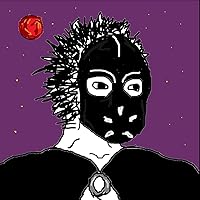
From the creator of the 2005 hit graphic novel Black Hole comes this new softcover edition of his other masterpiece of modern horror. Big Baby is a particularly impressionable young boy named Tony Delmonte, who lives in a seemingly typical American suburb until he sneaks out of his room one night and becomes entangled in a horrific plot involving summer camp murders and backyard burials. Burns' clinical precision as an artist adds a sinister chill to his droll sense of humor, and his affection for 20th-century pulp fiction permeates throughout, creating a brilliant narrative that perfectly captures the unease and fear of adolescence.
Charles Burns is an American cartoonist and illustrator. Burns grew up in Seattle in the 1970s. His comic book work rose to prominence in Art Spiegelman and Françoise Mouly magazine 'RAW' in the mid-1980s. Nowadays, Burns is best known for the horror/coming of age graphic novel Black Hole, originally serialised in twelve issues between 1995 and 2004. The story was eventually collected in one volume by Pantheon Books and received Eisner, Harvey, and Ignatz awards in 2005. His following works X'ed Out (2010), The Hive (2012), Sugar Skull (2014), Last Look (2016) and Last Cut (2024) have also been published by Pantheon Books, although the latter was first released in France as a series of three French comic albums. As an illustrator, Charles Burns has been involved in a wide range of projects, from Iggy Pop album covers to an ad campaign for Altoids. In 1992 he designed the sets for Mark Morris's restaging of The Nutcracker (renamed The Hard Nut) at the Brooklyn Academy of Music. He illustrated covers for Time, The New Yorker, and The New York Times Magazine. He was also tapped as the official cover artist for The Believer magazine at its inception in 2003. Burns lives in Philadelphia with his wife and daughters.
Big Baby collects the adventures of Tony Delmonto, the Big Baby. It's some crazy shit!
Once upon a time, I watched a documentary about underground comics and Big Baby by Charles Burns was one of the comics featured. Now, decades later, I have it in my clutches.
Charles Burns' art reminds me of 1950s EC stuff, not only the horror stuff but Mad as well. There are grotesque figures, heavy use of blacks, and all sorts of creepy things going on. Tony's mind tends to run wild due to his obsession with horror comics so he jumps to conclusions. Not to say that he isn't encountering aliens, ghosts, subterranean beings, and a weird plague afflicting teenagers...
There's not much else to tell about this. The slim 64 page hardcover is in an oversize format, perfect for showcasing Charles Burns' art, which I am now a tremendous fan of.
Big Baby is a collection of tales that remind me of what it was like to get freaked out over bumps in the night. I need more Charles Burns! Five out of five stars.
Aaah, now THIS is why I read comics: perfection, only better... The book's b-movie-obsessed center piece, 'Curse of the Molemen,' is one of my all-time favorites, and Big Baby deserves five stars in my book for its inclusion alone. Originally published between 1983 (in RAW Vol.1 #5) and 1992, the various Big Baby short stories collected here represent some of Burns' earliest work, and many of their themes (teen sexuality, angst, transformation, disease, horror) will later be revisited and further explored in Burns' masterpiece Black Hole. The level of craftsmanship is already astonishing at this early stage of Burns' career, though - required reading for fans of alternative comics!
Big Baby is a series of comics Burns did in the mid 80s and early 90s about an alien-looking kid nicknamed Big Baby. They're drawn in Burns' inimitable and unique style, all inky blacks and glaring whites, and show you the early formations of some of the ideas that led Burns to create "Black Hole".
"Curse of the Molemen" is about a neighbour who's having a swimming pool put in as a warped test of his wife's fidelity - will she cheat on him with one of the workmen? One of these workmen teases Big Baby that there's molemen in the hole and so one night Big Baby goes to the hole and imagines a subterranean prison with evil looking creatures holding humans captive. The story ends happily though and on an ambiguous note - did he imagine the molemen?
"Teen Plague" is similar to the themes of "Black Hole" and features one of Burns' most disturbing creations - a talking eyeball on a human body!
"Blood Club" is about a ghost boy at a summer camp and Big Baby's attempts to put the spirit to rest.
The stories all feature elements of growing up and childhood which many of us can relate to but Burns twists them with monsters and other-wordly beings.
It's an interesting book with a great central character and some fun, disturbing stories. If you've read Burns before and liked him, you'll love it. Amazing artwork too. A good read.
Precursor to Black Hole, his comic horror masterpiece, stuff he did in the eighties that is the most clearly autobiographical work I've read from him, with an afterward that confirms it. Enjoyable, not as striking as Black Hole though there are stories here where you see Black Hole being drafted as an idea. Burns weirdness and humor present throughout. Inventive, sort of bizarrely reflective on growing up strange in the strange and alienating suburbs of the early sixties... These are pieces, short stories, not a coherent whole, but there is a kind of range of topics in it that make it appealing.
Big Baby is such a cool and convincing character. I have no idea how old he's supposed to be, but he acts like I did when I was young. I believe in his actions.
Blood Club is the best story here, about Big Baby going to a summer camp. It was very similar to my camp experiences (minus the ghost story being real).
It's not Black Hole, but very little is up to that standard. It is, however, pretty clearly autobiographical, an idea that it's nice to have confirmed by the back matter, in which Burns explicitly says the book comes straight from his own formative experiences: weirdness in the middle of suburbia, bad horror movies, horror comics, imagination at play. All of those aspects are treated lovingly but with a recognition of their weaknesses, and some of my favorite parts of the book are those that partially parody the material they address, without denying its appeal, as with the late-night Mole-men movie and the cover of a comic book that features a monster eating a human finger and holding an eyeball on a fork. The art, as ever, is rapturous. What is it about Burns's shading that just makes me want to look at it and look at it? It's not as though his people are particularly attractive in their own right, but there is something about the interplay of black and white (sans gray) that makes me spend longer on his pages than on almost anyone's, and the images stick in your brain. Jared and I had just been joking, also, about tattoos. He'd said if he ever got one, he'd get a Charles Burns one, and then I said I'd get a tattoo of a hot dog, to express my love for them. Whereupon, a few minutes later, reading this, there is in fact a panel of a hot dog, being roasted on a stick over a fire, that is effing beautiful. It won't happen, but if it were to, the material is there.
É, não, adianta, eu curto muito os trabalhos de Charles Burns (não confundir com o Charles Montgomery Burns, de Os Simpsons). Esse é o cara que trouxe ao mundo a sensacional graphic novel Black Hole, um quadrinho que explodiu minha cabeça quando eu li e me abriu para as possibilidades dos quadrinhos. Neste Big Baby, nós temos pequenas histórias de Charles Burns feitas no início da sua carreira para a revista RAW, de Art Spielgeman. Incluída nelas está "Praga Adolescente", a história que inspirou o enredo e clima de Black Hole. A edição de Big Baby tem o capricho sem igual das edições da Darkside Books, e tem aquele clima e atmosfera de terror que os quadrinhos do Charles Burns fornecem com seu traço encorpado e pesado. O personagem principal é o Big Baby, um garoto que tem o rosto de um bebê, e que vive aventurar arrepiantes de terror que, se a princípio podem parecer apenas fantasias da sua cabeça que lê muito gibi, por outro lado, elas acabam se tornando apavorantemente reais tanto para Big Baby quanto para aqueles que não levam a sério suas insinuações. Que quadrinho bom! Deveria ter pelo menos um quadrinho do Burns por ano! Amei!
Big Baby shows clearly Burns's early potential for gothic line art, psychedelic narration and surreal characters that make his main later works—Black Hole and Last Look—truly great.
It's a fun read, but to me it is not really rereadable, emotionally moving, or shocking enough for me to 'really like' or love' it... but more because this is not a genre I like reading much even in fiction. That written, I can understand why these might be favorites to other people as they are fairly original and aesthetically distinctive—I'd go so far as to say these are underrated. Highly recommended for anyone who liked Black Hole, if only to see his early ideas.
Big Baby is a collection of Charles Burns' comic stories from the '80s-'90s featuring the character of Tony Delmonto, AKA "Big Baby", a naïve but imaginative young child who grows up in what looks like an idyllic 1950's American suburb. Though these stories lack the complexity and surreal depth of Burns' later works like "The Last Look" trilogy or his magnum opus, "Black Hole", the "Big Baby" comics are remarkably proficient nonetheless. The stories are filled with tropes of horror B-movies and classic horror mags, but filtered through the child-like wonder of Big Baby's own imagination. The ensuing result are some pretty funny stories that capture a nostalgic feel while also feeling wholly unique.
The collection opens with the brief comic strip entitled "Big Baby" (from Raw magazine, issue #5) which introduces the character of Tony as he plays with his toys and demonstrates his endless imagination. There isn't much here, but the flourish of Burns' bold aesthetic sets the stage for the bigger pieces following this opener.
"Curse of the Molemen" (which I originally read as a standalone one-shot comic from Kitchen Sink) is a story of classic suburban paranoia about what exactly is happening over at your neighbors' house. Big Baby believes that the pit in his neighbors' backyard is home to a subterranean species, but the story also follows the domestic abuse of the couple inside the house. The story demonstrates the wonderful contrast of the mundane and the surreal as it bounces between Tony's sheltered suburban life alongside the highly fantastical nature of the unknown threat in the yard.
"Teen Plague" (from Raw vol. 2 #1) has a bit of a "Black Hole" sensibility to it since it follows teens in the midst of a cheesy horror movie setup, but it leans more heavily on the humor than it does on the horror. The clever and meta little tale that works as a perfect marriage between Burns' love for old-school horror and comics and the avant-garde surrealism he is so well known for.
"Blood Club" (also previously released as a one-shot from Kitchen Sink) closes out the collection and it follows Tony's time at camp where a urban legend of a murdered camp goer hangs over the heads of all the current kids there. Though relatively straightforward for a Charles Burns comic, there is a deep sense of imaginativeness in the way the events unfold that keeps things entertaining throughout.
A strong collection of comics overall, bolstered greatly by Burns' striking artwork. Highly recommend picking up "Big Baby" for a look into the early works of one of the all time greats in the comics medium.
De courtes histoires, avec toujours un délicieux climat étrange. Charles Burns a sa patte, de la même façon que Tim Burton a eu la sienne ! Bien que ces histoires ont été écrites bien avant, j'ai lu Big Baby après Black Hole (un chef d'œuvre), ce qui était une erreur. Au lieu d'apprécier l'évolution de style et les prémices de l'histoire, cela m'a paru un peu fade. Cela reste plaisant et rapide à lire.
Tony „Big Baby” Delmonto er lítill strákur með mikið ímyndunarafl. Hann elskar að horfa á hryllingsþætti fyrir fullorðna en fer þá líka að sjá skrímsli í myrkrinu. Góð blanda af strákaparafrásögn, draugasögum og B-mynda-hryllingi. Kaballa-Bonga er held ég uppáhaldið mitt.
Charles Burns’s “Big Baby” comics ingeniously combine real-world horrors with the stuff of old-school monster movies and horror comics. Through the naïve eyes of an ambiguously aged but decidedly prepubescent protagonist, incomprehensible and disturbing topics like sex and domestic violence merge and blend with monsters, ghosts and extraterrestrials. The result is sometimes humorous, but it also does a really great job of genuinely capturing a child’s perception of the adult world, and the feeling of alienation and horror that it can instill – the sense of the world being big, confusing and somehow dark, with untold terrors potentially lurking around every corner.
This work isn’t as complex or sophisticated as Burns’s magnum opus, Black Hole, but it’s nonetheless incredibly accomplished. Most strikingly, even though some of these pages predate Black Hole by more than a decade, Burns’s inimitable visual style is already fully formed, and his line work is already inhumanly precise. As in all of his comics that I’ve read so far, every panel looks great.
The collection (at least my French paperback from Cornélius) contains four separate comics, which share characters but don’t otherwise interlink, so I’ll briefly address each one individually:
The two-page opener, simply titled Big Baby, is the collection’s oldest material, originally published in issue #5 of Raw magazine in 1983. It’s a simple episode, structured a bit like a gag strip, and it mainly just serves to introduce protagonist Tony Delmonto. Even though not much happens, it’s still a lot of fun, relishing in a child’s sense of imagination.
The 30-page Curse of the Molemen (originally published by Raw Books in 1986 as a standalone one-shot) is absolutely brilliant, and it’s probably my favourite comic in the book. It’s full of mystery, as well as horror both mundane and fantastical. It definitely fits into the category of “suburban horror”, exploring the dark side of 1950s suburbia in a really original and compelling way.
The 20-page Teen Plague (originally published in 1989, in the first issue of Raw magazine’s second volume) has been described a prototype for Black Hole, but actually the similarities are fairly superficial. In any case, this is a great comic in its own right, with a clever story and an inventive premise, though not as much real horror to it as Curse of the Molemen. I guess this is the funniest and most light-hearted comic here, especially as a significant chunk of it is taken up by a loving pastiche of corny old-school horror (a comic within the comic).
I think the final piece, the 30-page Blood Club (originally published by Kitchen Sink Press as a standalone one-shot in 1992), is the most complex and fully realized in terms of plot. Whereas the collection’s other comics are primarily about atmosphere, mystery and cool concepts, this one is more narrative-driven. It also has more conventional pathos, with more focus on realistic and relatable social interactions. It feels a bit less imaginative than Curse of the Molemen or Teen Plague – its central premise is fairly standard ghost story fare – but it’s really interesting to see Burns moving into the believable human drama that makes Black Hole so great.
In short, the material in this collection exhibits Burns’s signature mix of thought-provoking enigma, literary depth, great art, and page-turning excitement. This work might not rival the brilliance of Black Hole, but it’s still absolutely excellent.
Big baby: definindo o tom do nosso peculiar e imaginativo protagonista. Maldição dos tropeiras: como plano de fundo violência familiar e casamento tóxico, vemos nosso protagonista viajar na lomba do programa dos toupeiras e nas atividades na casa vizinha. 3/5 Peste juvenil: icônico esse kaballa-bonga mas o plano de fundo excelente de ISTs na adolescência por sexo desprotegido. Pra criança, um horror cósmico. Pros adolescentes, um horror real. 4/5 Clube de sangue: 5/5. Acho que fecha bem este volume com uma história que une todos os elementos legais da série, de bullying e as dificuldades sociais da pré adolescência, desvios escabrosos de conduta de pessoas mais velhas, mistério sobrenatural imaginário com conclusões materiais. Curti.
Por fim, que estilo icônico. É desconsertante mas ao mesmo tempo familiar, clássico. Muito uso do preto, feições bem expressivas mas ainda assim simples, com momentos de brilho no grotesco. Não é um Mutarelli mas é muito bom.
This entire review has been hidden because of spoilers.
Talvez não seja tão original, e pareça somente mais grande reverência aos tempos áureos do terror e da ficção científica da década de 60. Porém, Big Baby me prendeu muito pela ambientação em que Charles Burns cria nas pequenas e médias histórias presente nessa coletânea. Há um domínio muito grande na técnica de luz e sombra - que parece ser próprio do traço de Burns - e isso contribui muito para a imersão na história. Além disso, é interessante observar as camadas que Burns traz por de trás do véu do terror. As limitações do 'american way of life' estão presentes aqui, visto pelo olhar de uma criança que não tem muitos amigos, mas possui muita imaginação para compreender as verdadeiras atrocidades cometidas, mas não pelos monstros que povoam seus gibis, mas sim pelos próprios americanos.
And then there’s this pretty little bit of strange from Mr. Burns, a smattering of short bizarro stories that are, I suppose, to Burn’s childhood what Black Hole is to his teenage years. Not as revelatory as the above work, but eh it really isn’t supposed to be. These two really have me revved to catch Fear(s) of the Dark, the animated French anthology film that burns does a segment of. His style seems like it would lend well to animation,
Just finished reading Skin Deep by Burns and realized that I liked this one a lot more. The title character is not a creepy as the cover would suggest. There are three short stories and one strip feature. Burns weaves a couple of related narratives together to create a little crazy story. Tone is important and the art sets it perfectly. Too bad it's not in color, that would seem fitting for these stories.
Totally great and fun read. Charles burns has such a love for B-Movies, and trash pulp, and it really shows here. This is exactly the kind of comic I wish I would have had as a kid to stash under my mattress so my mom wouldn't have found it. I can see myself rereading and flipping through this book over and over for a long time to come!
These stories made more sense than the ones in Skin Deep. Tony’s a good character, and all these stories felt like weirder-than-usual adventure stories in which kids get into hijinks all on their own. But, you know, way weirder.
No período 1983/1999 o escritor e desenhista estadunidense Charles Burns, nascido em 1955, publicou histórias da sua criação mais famosa entre os “quadrinhófilos” – o garoto Tony Delmonto mais conhecido pela alcunha “Big Baby”. Acerca de sua mais notória criação o autor declarou o seguinte:
“Acho que devo admitir que meu personagem Big Baby é, em muitos sentidos, um reflexo concentrado da minha própria infância em meio aos subúrbios de classe média nos USA”.
Em suas histórias Charles Burns situa o garoto, em meio às dores do crescimento, adultos indiferentes e, ou brutais, bullying e solidão, dando asas à imaginação e se envolvendo, de forma um tanto fortuita, em situações inusitadas em que elementos sobrenaturais são personagens assíduos. Nessa edição, a cargo da “DARKSIDE”, muito bem estruturada e com uma belíssima capa dura, podemos conferir três histórias completas protagonizadas por “Big Baby”: “The curse of moleman”, “Teen Plague” e “Blood Club”, todas muito bem escritas e desenhadas. Além da qualidade das histórias vale a pena destacar também o preto e branco “vintage” dos quadrinhos. Apenas um senão: senti falta de extras que trouxessem mais informações sobre o autor e sua obra. Mesmo assim é uma ótima opção, principalmente para fãs de quadrinhos e de histórias de terror.
Its so good! After reading Black Hole and now this, I can safely say I am a huge fan of Charles Burns. Like in Black Hole, each panel is immaculately drawn in his lush high contrast, chiaroscuro style cartooning. I'm of the opinion that his artwork really shines sans color, in shimmering stark black and white ink, it is no different here.
These stories are from the '80s and early '90s and stylistically referential to '50s pulp comics and Americana, but in his style, with his storytelling they feel timeless. The "Big Baby" stories all follow Tony, a kid with an overactive imagination who loves comics and sci-fi shows. We see the world through his eyes as it is colored by his naive imagination, contrasted with the darker realities of the adult world, and the two are melded together in fiction come to life. The execution of the stories feel genuinely relatable and nostalgic to me.
If Black Hole is about the dangerous, unreal experience of being a teenager, Big Baby is about again being that kid that knew that somehow your fantasies could be real. Fantagraphics needs to bring this back into print - though much shorter, its just as good as Black Hole in my opinion.
A set of Burns's early comics from the 80s featuring Big Baby who is actually just a weird looking kid. The comic collects all of the Big Baby stories. All of stem from your typical child's imagination getting away from them until parts of the stories do turn out to be real. One of the stories had the kid going to camp. Another one is about the neighbor next door digging a pool while this kid keeps seeing mutants climbing out of the pool at night. In the third story, the kid sees a monster movie and thinks aliens are really attacking his babysitter after seeing a hickey on her. The book is only 100 pages and well worth a read, especially if you are looking to explore some alternative comix.
The person who lent this to me is a wonderful friend and illustrator based in Philly. Charles Burns is based in Philly too. David Lynch studied in Philly for a while. Poe lived here for awhile. There a unique flavor of grit and grunge and weirdness that can only be wrought from living in a place like Philly and it's present in this book.
Before anything else this book is pure fun storytelling. Images that demand you see them, not just look at them. The story as much as the illustrations make this a worthwhile experience.
The only story that's really worth it in here is Blood Club. That's a 5 star. The rest are fairly forgettable, save for the expectedly great art. I'm not sure why Big Baby is depicted that way or why he is called Big Baby, but I didn't really like the implications and I couldn't find an explanation to dissuade me. Though I am not one to make issue of artistic choices, I just felt it necessary to comment on. Read Blood Club, skip the rest.
A solid semi-autobiographical horror anthology! 25% gorgeous artwork, 25% compelling storyline, 50% “what the fuck is going on” but in a good way. Comics are about drawing stuff that doesn’t make sense in such a visceral way that the reader experiences it. Some readers criticize Burns’ storytelling in that his conflicts are never fully resolved, but that’s almost a modernist touch, in my opinion.
More of a 3.5 for me, but I'll bump it to 4, fairer than 3. Fun short horror stories. My first Charles Burns book, and I enjoyed it quite a lot. Good storytelling, great at keeping your attention, and good characters. I reminisce about my own childhood reading Big Baby, the things we imagined and theories we created on our own minds. I understand this is one of his earlier works, so I'm interested to see how the author evolved in his later comics.
Overall I enjoyed this book. Charles Burns has a way with creating tones and moods with his ink and brushwork that’s really appealing. The stories in this collection of his Big Baby character were good. I personally enjoyed the last story “Blood Club,” the best. The story was great and the artwork really had something to it that makes me want to go back and analyze it.