

What do you think?
Dickson McCunn #1
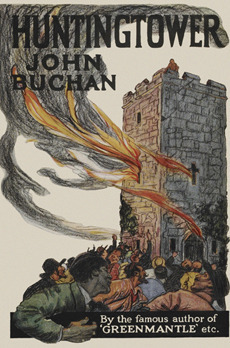
Huntingtower
This modern fairy-tale is also the gripping adventure story about Dickson McCunn, a respectable, newly retired grocer who finds himself in the thick of a plot involving the kidnapping of a Russian princess held prisoner in the rambling mansion, Huntingtower. Here, Buchan introduces some of his best-loved characters and paints a remarkable picture of a man rejuvenated by joining much younger comrades in a fight against tyranny and fear.
170 pages, Paperback
First published January 1, 1922
About the author
John Buchan
1,738 books501 followersLibrarian Note: There is more than one author in the GoodReads database with this name.
John Buchan was a Scottish novelist, historian, and Unionist politician who served as Governor General of Canada, the 15th since Canadian Confederation.
As a youth, Buchan began writing poetry and prose, fiction and non-fiction, publishing his first novel in 1895 and ultimately writing over a hundred books of which the best known is The Thirty-Nine Steps. After attending Glasgow and Oxford universities, he practised as a barrister. In 1901, he served as a private secretary to Lord Milner in southern Africa towards the end of the Boer War. He returned to England in 1903, continued as a barrister and journalist. He left the Bar when he joined Thomas Nelson and Sons publishers in 1907. During the First World War, he was, among other activities, Director of Information in 1917 and later Head of Intelligence at the newly-formed Ministry of Information. He was elected Member of Parliament for the Combined Scottish Universities in 1927.
In 1935, King George V, on the advice of Canadian Prime Minister R. B. Bennett, appointed Buchan to succeed the Earl of Bessborough as Governor General of Canada and two months later raised him to the peerage as 1st Baron Tweedsmuir. He occupied the post until his death in 1940. Buchan promoted Canadian unity and helped strengthen the sovereignty of Canada constitutionally and culturally. He received a state funeral in Canada before his ashes were returned to the United Kingdom.
John Buchan was a Scottish novelist, historian, and Unionist politician who served as Governor General of Canada, the 15th since Canadian Confederation.
As a youth, Buchan began writing poetry and prose, fiction and non-fiction, publishing his first novel in 1895 and ultimately writing over a hundred books of which the best known is The Thirty-Nine Steps. After attending Glasgow and Oxford universities, he practised as a barrister. In 1901, he served as a private secretary to Lord Milner in southern Africa towards the end of the Boer War. He returned to England in 1903, continued as a barrister and journalist. He left the Bar when he joined Thomas Nelson and Sons publishers in 1907. During the First World War, he was, among other activities, Director of Information in 1917 and later Head of Intelligence at the newly-formed Ministry of Information. He was elected Member of Parliament for the Combined Scottish Universities in 1927.
In 1935, King George V, on the advice of Canadian Prime Minister R. B. Bennett, appointed Buchan to succeed the Earl of Bessborough as Governor General of Canada and two months later raised him to the peerage as 1st Baron Tweedsmuir. He occupied the post until his death in 1940. Buchan promoted Canadian unity and helped strengthen the sovereignty of Canada constitutionally and culturally. He received a state funeral in Canada before his ashes were returned to the United Kingdom.
Ratings & Reviews
Friends & Following
Create a free account to discover what your friends think of this book!
Community Reviews
Displaying 1 - 30 of 110 reviews

December 20, 2023
It was the great Graham Greene who remarked in his laudatory essay, "John Buchan was the first to realize the enormous dramatic value of adventure in familiar surroundings, happening to unadventurous men..." and nothing could have been truer or more astute as a compliment to one of the pioneering writers of thrillers of the twentieth century. For long, it has been considered fashionable, in the paradoxical way of Chesterton, to judge Buchan as unfashionable - out of date with his patriotic and conservative attitudes - when the truth remains that he was indeed the single most formative influence for every thriller writer in the previous century - from Greene to Eric Ambler, from Ian Fleming to even John Le Carre. And while these equally brilliant writers might have reinvented the rules of the genre, it is no denying that it was from Buchan that they learnt the art in the first place. To plunge the protagonist like a fish out of water into a dangerous and dramatic situation that also affects the fates and fortunes of people and nations is a trope that Buchan invented and established, for the others to follow, subvert but always honour with respectful homage.
"Huntingtower", the first of his adventures featuring Dickson McCunn, the retired grocer of Glasgow, is something of a different beast, at least from a superficial glance. In sharp contrast to the more well-known Richard Hannay adventures which featured a more or less capable man, with a background of fighting and adventure, who is assigned a dangerous mission to steal behind enemy lines and thwart some conspiracy, not unlike James Bond or even one of Le Carre's scalp-hunters, this novel is centered around a truly humdrum protagonist, a truly unadventurous man whose only idea of adventure might lie originally in a walk in the Scottish Highlands to relieve himself of the tedium of retirement. Fond of his Browning and Wordsworth (who wouldn't be?) and excited by the speed and efficiency of his new instant razor, McCunn sets out on the said walk, before his wife returns from her hydropathic asylum, little aware that he is about to spar with a realistic English poet called John Heritage, discover, with him, a Russian princess held hostage inside an old tower and, as if these were not audacious enough, find himself tugged into an ambitious plan to rescue the said princess put into motion by Heritage and an intrepid gang of Scottish schoolboys named the Gorbals Die Hards.
Preposterous, it all is certainly, but it takes a truly great writer to make even something as preposterous as this story, blissfully free from the need to be politically prescient or astute, into something genuinely, originally exciting, full of not merely the requisite thrills and spills but also crammed with plenty of warm humour and even warmer camaraderie among chivalrous and even romantic men all driven to the same honourable quest. And Buchan was indeed an extraordinarily assured storyteller, gifted with a lively and even conversational prose style that lent much levity and light-footed mirth to even his darkest thrillers and he indulges this nimble sense of humour to the hilt, fleshing out a cast of wonderfully mismatched but utterly endearing men and boys plunged together in an adventure straight from the medieval times.
While McCunn is a wonderfully mild-mannered character, a romantic soul who soon takes up the charge of his audacious but heroic quest in the fashion of a pragmatic businessman, the others are equally charming in their idiosyncratic but wholly admirable ways - Heritage, the realistic poet gone romantic at the first sight of the princess Saskia, whom he knew even during the First World War, the Gorbals Die Hards with their nifty tricks of boyish bravado, led by the disgruntled but resourceful Dougal and the enigmatic and beautiful Saskia herself, a victim of the upheaval of revolution and anarchy in her homeland and yet brave and spirited in her own fashion. There is also something to be said about how, with assured skill and keen relish, does Buchan revive the adventurous spirit of the Scottish countryside with vivid, atmospheric detail, thus making it a suitably suspenseful background to the adventure of hairbreadth flight and anxious ambush, thus honouring the tradition of Walter Scott and Robert Louis Stevenson.
It is not as if "Huntingtower" is completely bereft of political insight - Saskia's ancestry is frequently mentioned and the Bolshevik Revolution is dissected too and while a present-day reader might accuse Buchan of simplifying the consequences of the uprising, one should also attend to the fact that the writer is not merely targeting the rebels as convenient villains to the story. The real enemy of the situation, as Saskia says in a wonderfully prescient monologue, is not merely revolution or anarchy but crime, which has lasted since time immemorial and is not only to be found in Russia. And true to its traditional roots, this is rendered as a classic battle between good and evil, between the heroic chivalry of men like McCunn and Heritage and even their later ally Sir Archibald Roylance, aided by the derring-do of these Boy Scouts, and the very sinister evil of men like Leon and Spidel and we should judge and enjoy the story in these purely Manichean terms to truly appreciate it.
The influence of Buchan, as said before, cannot be overlooked or denied. Apart from influencing a whole style of thriller writing, in which thickly plotted suspense has been blended skilfully with a topical realism, his influence on all storytelling feels so indelible that there were times when I almost felt that the makers of one of those James Bond films in recent times were clearly reading "Huntingtower", which too ends in a classic standoff in an old Scottish mansion, in between, behind the scenes. For that is the sign of a truly great storyteller, like the other names mentioned here, to be still read and remembered even as the world might have changed around us.
"Huntingtower", the first of his adventures featuring Dickson McCunn, the retired grocer of Glasgow, is something of a different beast, at least from a superficial glance. In sharp contrast to the more well-known Richard Hannay adventures which featured a more or less capable man, with a background of fighting and adventure, who is assigned a dangerous mission to steal behind enemy lines and thwart some conspiracy, not unlike James Bond or even one of Le Carre's scalp-hunters, this novel is centered around a truly humdrum protagonist, a truly unadventurous man whose only idea of adventure might lie originally in a walk in the Scottish Highlands to relieve himself of the tedium of retirement. Fond of his Browning and Wordsworth (who wouldn't be?) and excited by the speed and efficiency of his new instant razor, McCunn sets out on the said walk, before his wife returns from her hydropathic asylum, little aware that he is about to spar with a realistic English poet called John Heritage, discover, with him, a Russian princess held hostage inside an old tower and, as if these were not audacious enough, find himself tugged into an ambitious plan to rescue the said princess put into motion by Heritage and an intrepid gang of Scottish schoolboys named the Gorbals Die Hards.
Preposterous, it all is certainly, but it takes a truly great writer to make even something as preposterous as this story, blissfully free from the need to be politically prescient or astute, into something genuinely, originally exciting, full of not merely the requisite thrills and spills but also crammed with plenty of warm humour and even warmer camaraderie among chivalrous and even romantic men all driven to the same honourable quest. And Buchan was indeed an extraordinarily assured storyteller, gifted with a lively and even conversational prose style that lent much levity and light-footed mirth to even his darkest thrillers and he indulges this nimble sense of humour to the hilt, fleshing out a cast of wonderfully mismatched but utterly endearing men and boys plunged together in an adventure straight from the medieval times.
While McCunn is a wonderfully mild-mannered character, a romantic soul who soon takes up the charge of his audacious but heroic quest in the fashion of a pragmatic businessman, the others are equally charming in their idiosyncratic but wholly admirable ways - Heritage, the realistic poet gone romantic at the first sight of the princess Saskia, whom he knew even during the First World War, the Gorbals Die Hards with their nifty tricks of boyish bravado, led by the disgruntled but resourceful Dougal and the enigmatic and beautiful Saskia herself, a victim of the upheaval of revolution and anarchy in her homeland and yet brave and spirited in her own fashion. There is also something to be said about how, with assured skill and keen relish, does Buchan revive the adventurous spirit of the Scottish countryside with vivid, atmospheric detail, thus making it a suitably suspenseful background to the adventure of hairbreadth flight and anxious ambush, thus honouring the tradition of Walter Scott and Robert Louis Stevenson.
It is not as if "Huntingtower" is completely bereft of political insight - Saskia's ancestry is frequently mentioned and the Bolshevik Revolution is dissected too and while a present-day reader might accuse Buchan of simplifying the consequences of the uprising, one should also attend to the fact that the writer is not merely targeting the rebels as convenient villains to the story. The real enemy of the situation, as Saskia says in a wonderfully prescient monologue, is not merely revolution or anarchy but crime, which has lasted since time immemorial and is not only to be found in Russia. And true to its traditional roots, this is rendered as a classic battle between good and evil, between the heroic chivalry of men like McCunn and Heritage and even their later ally Sir Archibald Roylance, aided by the derring-do of these Boy Scouts, and the very sinister evil of men like Leon and Spidel and we should judge and enjoy the story in these purely Manichean terms to truly appreciate it.
The influence of Buchan, as said before, cannot be overlooked or denied. Apart from influencing a whole style of thriller writing, in which thickly plotted suspense has been blended skilfully with a topical realism, his influence on all storytelling feels so indelible that there were times when I almost felt that the makers of one of those James Bond films in recent times were clearly reading "Huntingtower", which too ends in a classic standoff in an old Scottish mansion, in between, behind the scenes. For that is the sign of a truly great storyteller, like the other names mentioned here, to be still read and remembered even as the world might have changed around us.

January 20, 2010
Both the Russian Revolution and the Great War lurk in the close-background of Huntingtower, set in a Scotland of 1920 and published in 1922, but there's always a subdued jolliness and sense of well-being in Buchan's adventure novels that mitigates whatever menace he introduces. However grim he tries to make his modern fairy tale, it will never be Grimm.
Dickson McCunn, retiring from his fancy grocery store establishment at 55, decides to go on a brisk walk in southwest Scotland while his wife vacations at a "hydropathic hotel" (spa). After happening upon a charming village with a grandmotherly type who puts him up in her spotless cottage and feeds him and the wandering poet he has just met, he inquires about a gloomy nearby castle, Huntingtower. His suspicions are aroused when he and the poet are hurried off the grounds, and they return to find that a beautiful Russian princess and her elderly female cousin are being held hostage inside. Aided by a gang of Glasgow street urchins, a lame laird, and various others, McCunn finds himself in a fierce battle between Bolshevik conspirators and lovers of freedom. The premise and the fight scenes are just as ridiculous here as in The Island of Sheep, but Buchan's readers aren't really looking for realism.
McCunn is a far stodgier hero than Richard Hannay; while he is comfortably wealthy, he lives in a semi-detached villa and his favorite possession seems to be his new safety razor. "He is the petit bourgeois," says the Russian princess Saskia, admiringly, "the épicier, the class which the world ridicules. He is unbelievable. The others with good fortune I might find elsewhere - in Russia perhaps. But not Dickson."
"No," her Russian fiance replies woodenly. "You will not find him in Russia. He is what they call the middle-class, which we who were foolish used to laugh at. But he is the stuff which above all others makes a great people. He will endure when aristocracies crack and proletariats crumble. In our own land we have never known him, but till we create him our land will not be a nation." Oh, snap!

January 23, 2012
Huntingtower introduces readers to Dickson McCunn, a middle-aged Glasgow grocer newly retired from his successful business. With his wife away at a health spa, he finds himself at somewhat of a loose end following his retirement. ‘It was the end of so old a song, and he knew no other tune to sing. He was comfortably off , healthy, free from any particular cares in life, but free too from any particular duties.’ He decides to take a walking tour of the Highlands. Early in his travels, he reaches a point in the road where two potential routes converge. Uncharacteristically, he rejects his intended route, drawn by some whim instead to take the other direction. The author sagely notes: ‘For he [McCunn] had come, all unwitting, to a turning of the ways, and his choice is the cause of this veracious history.’
Dickson McCunn’s decision results in him becoming involved in an adventure like something out of the romance novels he favours. There’s a damsel in distress (Princess Saskia) imprisoned in, if not quite a castle, a gloomy Scottish manor house, there’s a gang of bad guys some of whom may be foreigners (or even worse, Bolsheviks) and a lovelorn hero (modernist poet, John Heritage). But things turn distinctly hairy when it becomes clear that the bad guys will stop at nothing, are large in number and heavily armed. As Dickson reflects ruefully, ‘Romance, forsooth! This was not the mild goddess he had sought, but the awful harpy who battened on the souls of men.’ However, he faces down his doubts and fears, clinging steadfastly to the belief that there is a solution to most problems if one one applies a business mind to it (such as some sleight of hand involving a left luggage office) – and that there’s life in the old dog yet.
There’s a lot of humour in the book, chiefly contributed by the exploits of the gang of Glasgow street urchins who come to the aid of Dickson and Heritage in their attempts to rescue the Princess. The self-styled ‘Gorbals Die-Hards’ are a bit like the militant wing of Sherlock Holmes’ trusty ‘Baker Street Irregulars’. Their appointed Chieftain is the feisty, courageous and resourceful Dougal.
The book includes two recurring features of Buchan’s adventure stories: a villain who has a great brain but no scruples to go with it; and the idea that only ‘a very thin crust’ separates civilization from anarchy (first explored in Buchan’s early novel, The Power-House). The book also finds a place in the story for Archie Roylance, the character first introduced in the Richard Hannay novel, Mr. Standfast.
I do need to mention some fine descriptions of food in the book, like that of the splendidly generous Scottish tea that follows. Those who are observing a strict diet should probably look away now. ‘There were white scones and barley scones, and oaten farles, and russet pancakes. There were three boiled eggs for each of them; there was a segment of an immense currant cake…; there was skim milk cheese; there were several kinds of jam, and there was a pot of dark-gold heather honey.’
As an adventure story, Huntingtower is great fun, with some exciting action scenes as the good guys go into battle against the bad guys. However, there are one or two elements to set against that. The first is that Buchan has chosen to render a lot of the dialogue in broad Scots, including liberal use of dialect words and phrases, which can at times be difficult to understand and could be off-putting for some readers. For example, ‘But if ye’re my nevoy ye’ll hae to keep up my credit, for we’re a bauld and siccar lot’. No, no idea either. However, I did like the description of one character as ‘as useless as a frostit tattie’.
Also distinctly off-putting to this reader was an ill-judged reference to Jews, the use of the word ‘cripple’ to describe someone with a disability and a general hostile and suspicious attitude to foreigners. However, one must perhaps bear in mind when this book was written (1922) and that language and attitudes we would find offensive today would have been considered less so at the time.
Dickson McCunn’s decision results in him becoming involved in an adventure like something out of the romance novels he favours. There’s a damsel in distress (Princess Saskia) imprisoned in, if not quite a castle, a gloomy Scottish manor house, there’s a gang of bad guys some of whom may be foreigners (or even worse, Bolsheviks) and a lovelorn hero (modernist poet, John Heritage). But things turn distinctly hairy when it becomes clear that the bad guys will stop at nothing, are large in number and heavily armed. As Dickson reflects ruefully, ‘Romance, forsooth! This was not the mild goddess he had sought, but the awful harpy who battened on the souls of men.’ However, he faces down his doubts and fears, clinging steadfastly to the belief that there is a solution to most problems if one one applies a business mind to it (such as some sleight of hand involving a left luggage office) – and that there’s life in the old dog yet.
There’s a lot of humour in the book, chiefly contributed by the exploits of the gang of Glasgow street urchins who come to the aid of Dickson and Heritage in their attempts to rescue the Princess. The self-styled ‘Gorbals Die-Hards’ are a bit like the militant wing of Sherlock Holmes’ trusty ‘Baker Street Irregulars’. Their appointed Chieftain is the feisty, courageous and resourceful Dougal.
The book includes two recurring features of Buchan’s adventure stories: a villain who has a great brain but no scruples to go with it; and the idea that only ‘a very thin crust’ separates civilization from anarchy (first explored in Buchan’s early novel, The Power-House). The book also finds a place in the story for Archie Roylance, the character first introduced in the Richard Hannay novel, Mr. Standfast.
I do need to mention some fine descriptions of food in the book, like that of the splendidly generous Scottish tea that follows. Those who are observing a strict diet should probably look away now. ‘There were white scones and barley scones, and oaten farles, and russet pancakes. There were three boiled eggs for each of them; there was a segment of an immense currant cake…; there was skim milk cheese; there were several kinds of jam, and there was a pot of dark-gold heather honey.’
As an adventure story, Huntingtower is great fun, with some exciting action scenes as the good guys go into battle against the bad guys. However, there are one or two elements to set against that. The first is that Buchan has chosen to render a lot of the dialogue in broad Scots, including liberal use of dialect words and phrases, which can at times be difficult to understand and could be off-putting for some readers. For example, ‘But if ye’re my nevoy ye’ll hae to keep up my credit, for we’re a bauld and siccar lot’. No, no idea either. However, I did like the description of one character as ‘as useless as a frostit tattie’.
Also distinctly off-putting to this reader was an ill-judged reference to Jews, the use of the word ‘cripple’ to describe someone with a disability and a general hostile and suspicious attitude to foreigners. However, one must perhaps bear in mind when this book was written (1922) and that language and attitudes we would find offensive today would have been considered less so at the time.

July 24, 2014
I gave up on this at 30%. It's a strange little book.
It was a clever, interesting story at first, but as the dialect got broader and broader I got fed up with it. Having lived in England and having had Scottish friends, as well as vacationing in various areas of Scotland (not even mentioning TV) I've heard my share of Scottish accents so it's not totally beyond me to understand dialect. But seriously, do we need to spell out every accented word? Surely we can get the idea of accented speech without making every word look like an Overdrive misprint. Here you are, galloping along enjoying the story, oh this is nice, and WHAM!
"When I was a lassie they ca'ed it Dalquharter Hoose, and Huntingtower was the auld rickle o' stanes at the sea-end. But naething wad serve the last laird's faither but he maun change the name, for he was clean daft about what they ca* anticki'ties. Ye speir whae bides in the Hoose? Naebody, since the young laird dee'd. It's standin cauld and lanely and steikit, and it aince the cheeriest dwallin' in a' Carrick,"
Mrs. Morran's tone grew tragic. "It's a queer warld wi'out the auld gentry...Sic merry nichts I've seen in the auld Hoose, at Hogmanay and at the servants balls and the waddin's o' the young leddies! But the laird bode to waste his siller in stane and lime, and hadna' that much to leave to his bairns. And now they're a' scattered ordeid."
Ok, we can step back and figure this out. But by now I've forgotten why we want to know and the pace of the story has just. completely. stopped.
If you don't mind pages and pages of dialect just like the passage I highlighted than why not give this a go. But nivva say I dinae' warn ye!
It was a clever, interesting story at first, but as the dialect got broader and broader I got fed up with it. Having lived in England and having had Scottish friends, as well as vacationing in various areas of Scotland (not even mentioning TV) I've heard my share of Scottish accents so it's not totally beyond me to understand dialect. But seriously, do we need to spell out every accented word? Surely we can get the idea of accented speech without making every word look like an Overdrive misprint. Here you are, galloping along enjoying the story, oh this is nice, and WHAM!
"When I was a lassie they ca'ed it Dalquharter Hoose, and Huntingtower was the auld rickle o' stanes at the sea-end. But naething wad serve the last laird's faither but he maun change the name, for he was clean daft about what they ca* anticki'ties. Ye speir whae bides in the Hoose? Naebody, since the young laird dee'd. It's standin cauld and lanely and steikit, and it aince the cheeriest dwallin' in a' Carrick,"
Mrs. Morran's tone grew tragic. "It's a queer warld wi'out the auld gentry...Sic merry nichts I've seen in the auld Hoose, at Hogmanay and at the servants balls and the waddin's o' the young leddies! But the laird bode to waste his siller in stane and lime, and hadna' that much to leave to his bairns. And now they're a' scattered ordeid."
Ok, we can step back and figure this out. But by now I've forgotten why we want to know and the pace of the story has just. completely. stopped.
If you don't mind pages and pages of dialect just like the passage I highlighted than why not give this a go. But nivva say I dinae' warn ye!

January 2, 2009
See my review to "Prester John" for more detail about the author, John Buchan.
This review will also encompass the entire Dickson McCunn series, "Huntingtower," "Castle Gay," and "The House of the Four Winds."
We've only really begun to scratch the surface of Buchan's writings, but this hero, Dickson McCunn is the most unlikely and the most fun.
The subtitle to this book is "The astonishing adventure of a merchant, a poet and a captive princess."
Dickson McCunn has spent his life as a respectable and successful Glasgow Grocer. The husband and I chuckled at McCunn's description as I read aloud to him "Mr McCunn--I may confess it at the start--was an incurable romantic. He had had a humdrum life since the day when he had first entered his uncle's shop with the hope of someday succeeding that honest grocer; and his feet had never strayed a yard from his sober rut. But his mind, like the Dying Gladiator's, had been far away. As a boy he had voyaged among books, and they had given him a world where he could shape his career according to his whimsical fancy. Not that Mr. McCunn was what is known as a great reader. He read slowly and fastidiously, and sought in literature for one thing alone. Sir Walter Scott has been his first guide, but he read the novels not for their insight into human character or for their historical pageantry, but because they gave him material wherewith to construct fantastic journeys. It was the same with Dickens. A lit tavern, a stage-coach, the clack of hoofs on a frosty road, went to his head like wine..."
Now tell me you don't already like him!
He has recently sold his business for a tidy profit and finds himself with some time of his hands. His wife is off at a spa and he decides to go on a walking tour to "someplace where there were fields and woods and inns, somewhere, too, within call of the sea."
And off he goes and it's a fabulous adventure and I'm not going to ruin it for you. All I'll say is that the cast of characters in this book is one of the most fun I've come across ever, and they are so real. Mr McCunn almost wimps out when the going gets tough, but he doesn't, and it's so great.
So why is this one rated a five and it's 2 successors only 3? Well, part of it is that I felt totally ripped off that the main character was NOT Dickson McCunn. He figures only slightly in the stories, and it's not to their credit. While these two novels were fun stories, they really lacked Buchan's best storytelling style. I never got to really care for the characters or the plot--they just fell flat a bit--perhaps because Buchan was creating something totally fictional instead of treading trusted ground. I wouldn't NOT recommend them, but I probably won't read them again, where I'm sure I will revisit Huntingtower someday.
*Note: In Huntingtower especially there is a lot of broad Scots. Takes some getting used to.
This review will also encompass the entire Dickson McCunn series, "Huntingtower," "Castle Gay," and "The House of the Four Winds."
We've only really begun to scratch the surface of Buchan's writings, but this hero, Dickson McCunn is the most unlikely and the most fun.
The subtitle to this book is "The astonishing adventure of a merchant, a poet and a captive princess."
Dickson McCunn has spent his life as a respectable and successful Glasgow Grocer. The husband and I chuckled at McCunn's description as I read aloud to him "Mr McCunn--I may confess it at the start--was an incurable romantic. He had had a humdrum life since the day when he had first entered his uncle's shop with the hope of someday succeeding that honest grocer; and his feet had never strayed a yard from his sober rut. But his mind, like the Dying Gladiator's, had been far away. As a boy he had voyaged among books, and they had given him a world where he could shape his career according to his whimsical fancy. Not that Mr. McCunn was what is known as a great reader. He read slowly and fastidiously, and sought in literature for one thing alone. Sir Walter Scott has been his first guide, but he read the novels not for their insight into human character or for their historical pageantry, but because they gave him material wherewith to construct fantastic journeys. It was the same with Dickens. A lit tavern, a stage-coach, the clack of hoofs on a frosty road, went to his head like wine..."
Now tell me you don't already like him!
He has recently sold his business for a tidy profit and finds himself with some time of his hands. His wife is off at a spa and he decides to go on a walking tour to "someplace where there were fields and woods and inns, somewhere, too, within call of the sea."
And off he goes and it's a fabulous adventure and I'm not going to ruin it for you. All I'll say is that the cast of characters in this book is one of the most fun I've come across ever, and they are so real. Mr McCunn almost wimps out when the going gets tough, but he doesn't, and it's so great.
So why is this one rated a five and it's 2 successors only 3? Well, part of it is that I felt totally ripped off that the main character was NOT Dickson McCunn. He figures only slightly in the stories, and it's not to their credit. While these two novels were fun stories, they really lacked Buchan's best storytelling style. I never got to really care for the characters or the plot--they just fell flat a bit--perhaps because Buchan was creating something totally fictional instead of treading trusted ground. I wouldn't NOT recommend them, but I probably won't read them again, where I'm sure I will revisit Huntingtower someday.
*Note: In Huntingtower especially there is a lot of broad Scots. Takes some getting used to.
This entire review has been hidden because of spoilers.

February 3, 2025
An old man goes on holiday and stuff doesn't go how he pictures it. 3 ⭐.

January 5, 2019
To enjoy this short early 20th century ‘thriller’ you will have to do several things.
1. Remember that WW1 has just ended and that the UK is still hanging on to it’s empire while being petrified of the potential for communist revolution.
2. Accept class division that is nowadays totally unacceptable and turn a blind eye to occasional comments that may appear anti Semitic (Buchan was not an antisemite and in fact in other novels there are Jewish protagonists but he was ‘of his time’).
4. Accept the romantic idea of an Ayrshire that is sunny and warm in April and thus an enjoyable location for a walking holiday!
Ok with that? Great! So what’s it about? The hero is a middle aged grocer who’s sold his business and, rather like mole in the Wind in the Willows, is looking for a romantic (in the classical rather than the ‘lurv’ sense) escapade. He finds it in a small coastal Ayrshire village where an isolated and apparently empty country house conceals a secret. Best bits? The Gorbals Die Hards, a group of wannabe Boy Scouts who are more like a juvenile SAS. The description of a rural Scotland that is sadly past (and was already nearly past when Buchan was writing). Great setting do, very like an Enid Blyton but without the ginger beer.
1. Remember that WW1 has just ended and that the UK is still hanging on to it’s empire while being petrified of the potential for communist revolution.
2. Accept class division that is nowadays totally unacceptable and turn a blind eye to occasional comments that may appear anti Semitic (Buchan was not an antisemite and in fact in other novels there are Jewish protagonists but he was ‘of his time’).
4. Accept the romantic idea of an Ayrshire that is sunny and warm in April and thus an enjoyable location for a walking holiday!
Ok with that? Great! So what’s it about? The hero is a middle aged grocer who’s sold his business and, rather like mole in the Wind in the Willows, is looking for a romantic (in the classical rather than the ‘lurv’ sense) escapade. He finds it in a small coastal Ayrshire village where an isolated and apparently empty country house conceals a secret. Best bits? The Gorbals Die Hards, a group of wannabe Boy Scouts who are more like a juvenile SAS. The description of a rural Scotland that is sadly past (and was already nearly past when Buchan was writing). Great setting do, very like an Enid Blyton but without the ginger beer.

December 30, 2011
I really dig Buchan for some reason. Great adventure stories with tons of period details (he seems to know every general, battle, and politician of the era). And that's despite the ridiculously out-of-date imperialist, colonial-era biases and stereotypes that he is mired in.
Still, these are quick, easy reads, with lots of fun and adventure. I love the idea of these British dudes going off to some colonial frontier to "make their pile" then coming back to live the good life for a while, and eventually getting bored and heading off on some other adventure.
Good stuff. Greenmantle and 39 Steps are great too.
Oh, and this is the first digital book I've downloaded for my new iPad. Sorry, real books. We'll see how it goes. So far it's pretty cool.
This story was a little less exciting than 39 Steps or Greenmantle, if only becuase it's about a retired grocer/gentleman who goes on a walking tour and is somehow mixed up in a Bolshevik kidnapping plot. It gets fun when a gang of kids called the Die-Hards shows up and does battle with the kidnappers in an abandoned mansion. Crazy stuff, but good for a rainy afternoon.
Still, these are quick, easy reads, with lots of fun and adventure. I love the idea of these British dudes going off to some colonial frontier to "make their pile" then coming back to live the good life for a while, and eventually getting bored and heading off on some other adventure.
Good stuff. Greenmantle and 39 Steps are great too.
Oh, and this is the first digital book I've downloaded for my new iPad. Sorry, real books. We'll see how it goes. So far it's pretty cool.
This story was a little less exciting than 39 Steps or Greenmantle, if only becuase it's about a retired grocer/gentleman who goes on a walking tour and is somehow mixed up in a Bolshevik kidnapping plot. It gets fun when a gang of kids called the Die-Hards shows up and does battle with the kidnappers in an abandoned mansion. Crazy stuff, but good for a rainy afternoon.

April 18, 2026
Having blissfully chewed through much of Buchan's well-known and lesser-known fiction, I didn't expect to find something superior in the few novels remaining to my discovery, but I was happily wrong. What a gem, what a romp! This is just the kind of hobbit-like adventure I find delightful. The middle-aged businessman, the moody modern poet, the harum-scarum street boys (they are the best), and a matronly 'old wife' caught up in a crazy adventure- and good old Archie Roylance, who seems to show up in every good Buchan story.
It has a perfect ending, and also is a great spring time read, taking place in April with all the Buchan-esque atmosphere details that make it glow.
Cheers to Simon Evers who nailed this on Librivox- it was too good to be free, but it still is - https://librivox.org/huntingtower-by-...
It has a perfect ending, and also is a great spring time read, taking place in April with all the Buchan-esque atmosphere details that make it glow.
Cheers to Simon Evers who nailed this on Librivox- it was too good to be free, but it still is - https://librivox.org/huntingtower-by-...

May 28, 2015
A rip-roaring adventure, marred by the ugliness of Buchan's anti-Semitism. The damsel in distress was pursued by people who wanted to get the jewels with which she had been entrusted. "But behind them were the Jews, and behind the Jews our unsleeping enemies." (page 120)
What I find really chilling about this quite unnecessary reference to Jewish people being cast as part of an evil conspiracy, is that it was perfectly acceptable and unremarkable to have it appear in a book published in 1922. John Buchan became Baron Tweedsmuir and was a Governor-General of Canada. He was part of the establishment, not a member of a lunatic fringe group. And that leaves a nasty taste in my mouth.
It certainly knocked a star off what would otherwise be a solid three star adventure.
What I find really chilling about this quite unnecessary reference to Jewish people being cast as part of an evil conspiracy, is that it was perfectly acceptable and unremarkable to have it appear in a book published in 1922. John Buchan became Baron Tweedsmuir and was a Governor-General of Canada. He was part of the establishment, not a member of a lunatic fringe group. And that leaves a nasty taste in my mouth.
It certainly knocked a star off what would otherwise be a solid three star adventure.
October 26, 2024
A ripping yarn, goodies baddies and as Scottish as you like, full of derring do, wonderful characters, and a love of the country. The first of three Dickson McCunn and the Gorbals Diehards adventures. I’m looking forward to reading the other two (castle gay, and the house of four winds).
Warning, some of the dialogue is in Scots dialect.
Warning, some of the dialogue is in Scots dialect.

August 12, 2019
This is the story of a Grocery magnate who retired, selling his business and now lives on the proceeds. His wife is on holiday at a spa, and he decides to go on a long walk across Scotland to give his life some more interest and variety.
On the walk he finds out much about himself, meets a somewhat annoying young man who fancies himself a poet, and eventually gets entangled in a strange situation involving a princess and some Bolsheviks.
The story is interesting in a way because the main character is a middle aged slightly out of shape businessman, not some spy or soldier or secret ninja and he gets involved in a rescue with some very desperate characters. And the cast of heroes is pretty unlikely: the poet, some rough street kids who have created their own more violent version of the Boy Scouts, and a nice old Scots lady.
It works pretty well but at around 2/3rds of the way through the book the main character Dickson McCunn kind of disappears. He's all but forgotten during the main climax and things resolve with him being elsewhere and barely involved in the story. Which was pretty disappointing and odd, to say the least.
On the walk he finds out much about himself, meets a somewhat annoying young man who fancies himself a poet, and eventually gets entangled in a strange situation involving a princess and some Bolsheviks.
The story is interesting in a way because the main character is a middle aged slightly out of shape businessman, not some spy or soldier or secret ninja and he gets involved in a rescue with some very desperate characters. And the cast of heroes is pretty unlikely: the poet, some rough street kids who have created their own more violent version of the Boy Scouts, and a nice old Scots lady.
It works pretty well but at around 2/3rds of the way through the book the main character Dickson McCunn kind of disappears. He's all but forgotten during the main climax and things resolve with him being elsewhere and barely involved in the story. Which was pretty disappointing and odd, to say the least.

June 15, 2012
3.5 Like I said, you could characterize this book by Paddington bear and his friends rescuing Anastacia.
The thing that is really neat is that the good guys do end up rescuing and saving the day, but they are humble and do the rescuing without some great need for vengeance or bravado.
Dixon is a very Paddington like character-- he makes the pace of the book quite slow because he dawdles and meanders. But his meanderings serve purpose: they provide social commentary on many tendencies in the modern world (early 20th century)such as communism.
Definitely an interesting take on how everyday people can land themselves in mighty adventures! But this book is not an "action thriller", rather it is one to enjoy on a Saturday afternoon with tea and biscuits.
The thing that is really neat is that the good guys do end up rescuing and saving the day, but they are humble and do the rescuing without some great need for vengeance or bravado.
Dixon is a very Paddington like character-- he makes the pace of the book quite slow because he dawdles and meanders. But his meanderings serve purpose: they provide social commentary on many tendencies in the modern world (early 20th century)such as communism.
Definitely an interesting take on how everyday people can land themselves in mighty adventures! But this book is not an "action thriller", rather it is one to enjoy on a Saturday afternoon with tea and biscuits.

April 11, 2020
First published in 1922, 'Huntingtower' is the first in a series featuring Dickson McCunn, a retired Scotsman in his 50s, comfortably well off after selling his chain of grocery stores. McCunn stumbles upon an adventure whilst on a trekking holiday, involving a Russian princess held captive in a dilapidated country house. Being set entirely in Scotland allows for some excellent well worded descriptions of locations. The plot has way too many coincidences, but rattles along at a brisk pace with plenty of action with some nice characterisations.

November 21, 2022
I wanted to like this a lot more than I did. It started off in a promising way--reminded me almost of Ransom's walking tour in Out of the Silent Planet--and I liked its version of the Baker St Irregulars. But the casual anti-Semitism and other -isms bothered me more than I thought they would, and (as others have said) I ended up skimming through the last third of the book as the characters sank under the endless descriptions of fighting. A good surprise twist or two, somebody turning out to be a double agent or something, would have helped a lot, but it played out quite predictably, as even the scoundrel lawyer was identified as such before McCunn even left his office. McCunn and Heritage argue throughout the book as to whether this adventure is anything like Scott's romances, and I can see the similarities myself (think of the besieged castle in Ivanhoe), but in the end it falls short.

July 31, 2017
I didn't think Buchan was capable of writing a bad book, but this comes pretty close: preposterous, vague backstory, and tediously overwrought intrigue suspense make for a boy's own adventure fit only for the dimmest of lads.

November 20, 2018
Brilliant. No "Clubland heroism" here...

May 30, 2022
such fun! so many wonderful characters.

February 1, 2012
I first read this book many years ago after seeing a very good BBC production on TV. It’s a rollicking good adventure yarn. I then read it a couple of years ago on my Sony E-Reader; which was brilliant because in the Oxford English Dictionary pre-installed on my e-reader, I found definitions for all but one of the archaic Scots words that Buchan uses (and he uses a lot). That was a huge help; and I gained a lot from that increased understanding.
I like the typeface in this particular edition; the entire book is comfortably pocket-sized and nice to hold open. With a fast-paced story like this it’s pleasant to have a printed book; where one doesn’t have to turn the pages as frequently as touch-screen swipe on the e-reader. The printed book also has another advantage: a front piece b/w illustration of the Huntingtower estate.
I like the typeface in this particular edition; the entire book is comfortably pocket-sized and nice to hold open. With a fast-paced story like this it’s pleasant to have a printed book; where one doesn’t have to turn the pages as frequently as touch-screen swipe on the e-reader. The printed book also has another advantage: a front piece b/w illustration of the Huntingtower estate.

October 2, 2012
I've always enjoyed this story of the retired grocer who sets out on a walking holiday and finds himself allied with a cynical Modern poet and a gang of Glasgow street boys defending an exiled Russian princess from her enemies, but on my most recent revisiting of it, I found myself wondering whether Dickson might not have a small place in Bilbo's literary genes. Tolkien enjoyed Buchan, and the exultation of how middle-class British virtues underpin an enduring heroism, and the efforts of both Dickson McCunn and Bilbo Baggins to apply 'business sense' to their romantic heroism, is suggestive.

March 12, 2018
This is classic early 20th century action and adventure, with some of the cultural flaws inherent to the time (off-hand antisemitism & misogyny, etc.) I was impressed by the cast of characters, though- headed by a middle-aged grocer who finds himself thrust into intrigue and danger, it includes a competent and self-aware princess, a gang of street kids who save the day more than once, and an old Scots granny who plays a key role in many of the heroics. It's old-fashioned and a bit quaint, but still a fun, G-rated, red-blooded adventure.

January 13, 2023
One of Buchan's most fun and playful. A 3.5 or 4-star adventure story elevated by its Scottish setting and Bolshevik kidnapping plot, its fun cast of characters, especially the interestingly Hobbit-like protagonist, a comfortably retired middle-aged grocer who stumbles into adventure, and its surprisingly sweet and moving final chapter. Full review for John Buchan June at the blog.

October 7, 2014
A very enjoyable short read packed full of adventure and altruistic actions. The protagonist (a retired grocer taking a holiday in the Highlands) battles with his conscience, going against all he has abided by his whole life, in the name of justice, romance and euphoria. Buchan finds warmth in the darkest corners of an often barren and harsh land, through loyalty, valour and a good cup of tea!

June 16, 2012
Better known for his drama, The Thirty Nine Steps and hero Richard Hannay, Buchan here introduces another hero, Dickson McCunn, who leads us through quite a thrilling adventure set near Carrick, Scotland...

fic-guided
July 20, 2020It’s a pity Buchan is only remembered, by many, for THE THIRTY-NINE STEPS – and for that thanks are due mainly to Alfred Hitchcock. But the fact was, he didn’t care if he was remembered at all as a novelist. ‘Writing is a delightful hobby’, he once told a friend, ‘but it becomes stale and tarnished if adopted as a profession.’ His profession was politics. He died the Governor General of Canada and it was his hand which signed the country’s declaration of war against Germany, in 1939. That same hand also wrote an impressive range of fiction.
Huntingtower is one of his once popular ‘Die-Hard’ comic thrillers. It’s also one of Buchan’s most generously Scottish works and a frank expression of his political beliefs (arch-Tory – but amiable with it). The novel opens with a prelude, set in wartime, just before the Russian upheavals of 1917, describing the tribulations of the Russian Princess Saskia. The main action then switches abruptly to post-war Glasgow, where Dickson McCunn has just retired from a long and prosperous career as a grocer, aged fifty-five. His wife, Tibby, is away at the Neuk ‘Hydropathic’, getting a water cure. The McCunns had one child, a daughter, Janet, who died tragically ‘long ago in the Spring’. Dickson has displaced his paternal feelings to a gang of street urchins, the Gorbals Die-Hards, based in Glasgow’s Mearns Street (a name with echoes of ‘Mean Streets’).
Dickson goes off for a fortnight’s jaunt, tramping the high roads of Scotland. He puts up at the Black Bull Inn, Kirkmichael, where he falls in with a morose young poet, John Heritage, who coins lines such as ‘the moon’s pale leprosy sloughs the fields’. Not, as Dickson thinks, ‘much cop’.
After some sparring (Heritage insists on calling Dickson ‘Dogson’) they join forces to investigate a mysterious house standing on a peninsula: Huntingtower. The building is eccentric: a ‘mad’ replica of a Tudor house, ‘in a countryside where the thing was unheard of’. They hear a woman singing, which recalls an experience Heritage had in Italy during the war. In fact, in both cases the woman was Princess Saskia. McCunn and Heritage are reinforced by the Die-Hards, who are spending their annual summer vacation under canvas. Dougal, their leader, explains that two women, Saskia and Eugénie, are being held captive in Huntingtower. It emerges that Saskia’s jewels – secreted during the Revolution – are the reason she is incarcerated. These gems are lusted after both by the Resistance and by the Bolsheviks. The Poet (Heritage), the Grocer (McCunn), the street arabs (the Die-Hards), and an incognito Russian prince mount an assault on Huntingtower to rescue the Russian ladies and their jewels. Dickson is relieved of his chronic boredom. The poet Heritage (although he is denied union with the princess whom he loves) finds a new meaning in life. The Die-Hards prove they are something more than street garbage. The Bolsheviks are foiled.
Huntingtower has many charming touches, not least the Die-Hards’ war chants, which they have adapted from a Socialist Sunday School song-book without the slightest idea what they mean or what the ‘Boorjaysies’ or ‘Proley-Tarians’ are. McCunn is rewarded with a necklet, which he passes on to his unwitting wife Tibby. ‘Real stylish. It might be worn by a queen’, she observes. The novel ends with a eulogy by the Russian Prince for the British values that McCunn embodies:
‘He is the stuff which above all others makes a great people. He will endure when aristocracies crack and proletariats crumble. In our own land [Russia] we have never known him, but till we create him our land will not be a nation.’
Some would say we are still waiting.
Huntingtower is one of his once popular ‘Die-Hard’ comic thrillers. It’s also one of Buchan’s most generously Scottish works and a frank expression of his political beliefs (arch-Tory – but amiable with it). The novel opens with a prelude, set in wartime, just before the Russian upheavals of 1917, describing the tribulations of the Russian Princess Saskia. The main action then switches abruptly to post-war Glasgow, where Dickson McCunn has just retired from a long and prosperous career as a grocer, aged fifty-five. His wife, Tibby, is away at the Neuk ‘Hydropathic’, getting a water cure. The McCunns had one child, a daughter, Janet, who died tragically ‘long ago in the Spring’. Dickson has displaced his paternal feelings to a gang of street urchins, the Gorbals Die-Hards, based in Glasgow’s Mearns Street (a name with echoes of ‘Mean Streets’).
Dickson goes off for a fortnight’s jaunt, tramping the high roads of Scotland. He puts up at the Black Bull Inn, Kirkmichael, where he falls in with a morose young poet, John Heritage, who coins lines such as ‘the moon’s pale leprosy sloughs the fields’. Not, as Dickson thinks, ‘much cop’.
After some sparring (Heritage insists on calling Dickson ‘Dogson’) they join forces to investigate a mysterious house standing on a peninsula: Huntingtower. The building is eccentric: a ‘mad’ replica of a Tudor house, ‘in a countryside where the thing was unheard of’. They hear a woman singing, which recalls an experience Heritage had in Italy during the war. In fact, in both cases the woman was Princess Saskia. McCunn and Heritage are reinforced by the Die-Hards, who are spending their annual summer vacation under canvas. Dougal, their leader, explains that two women, Saskia and Eugénie, are being held captive in Huntingtower. It emerges that Saskia’s jewels – secreted during the Revolution – are the reason she is incarcerated. These gems are lusted after both by the Resistance and by the Bolsheviks. The Poet (Heritage), the Grocer (McCunn), the street arabs (the Die-Hards), and an incognito Russian prince mount an assault on Huntingtower to rescue the Russian ladies and their jewels. Dickson is relieved of his chronic boredom. The poet Heritage (although he is denied union with the princess whom he loves) finds a new meaning in life. The Die-Hards prove they are something more than street garbage. The Bolsheviks are foiled.
Huntingtower has many charming touches, not least the Die-Hards’ war chants, which they have adapted from a Socialist Sunday School song-book without the slightest idea what they mean or what the ‘Boorjaysies’ or ‘Proley-Tarians’ are. McCunn is rewarded with a necklet, which he passes on to his unwitting wife Tibby. ‘Real stylish. It might be worn by a queen’, she observes. The novel ends with a eulogy by the Russian Prince for the British values that McCunn embodies:
‘He is the stuff which above all others makes a great people. He will endure when aristocracies crack and proletariats crumble. In our own land [Russia] we have never known him, but till we create him our land will not be a nation.’
Some would say we are still waiting.
This entire review has been hidden because of spoilers.

November 20, 2018
I knew that I was going to love this book even before I read it. John Buchan is a favourite author of mine, and I don't think I could ever be disappointed with his work.
When I found out that Dickson McCunn was a man aged past his fifties, I wondered uneasily about how the romance would be worked in. Then he met John Heritage, and I thought, "Aha! Here is material for romance." But Heritage was not the right type of person for a beautiful Russian princess, and I was in suspense until she blushingly spoke about a "friend". I still did not realize who he was though until Dickson attacked him.
I actually liked Alexis from the beginning, but there was a moment when I feared that the enemy and the friend were one and the same man.
At first, I wished that Dickson was a younger man, but later when he took care of the "jools" and was pricked by his conscience until he went back to Dalquaharter, I begin to admire him. From then on, I liked him better and better all the way until the end.
When I read this part, my heart was completely won over by Dickson:
"As Dickson struggled against the wind and stared, his heart melted and a great awe fell upon him. He may have wept; it is certain that he prayed. 'Poor souls, poor souls!' he repeated. 'I doubt the last hour or two has been a poor preparation for eternity.'
The tide next day brought the dead ashore. Among them was a young man, different in dress and appearance from the rest—a young man with a noble head and a finely-cut classic face, which was not marred like the others from pounding among the Garple rocks. His dark hair was washed back from his brow, and the mouth, which had been hard in life, was now relaxed in the strange innocence of death.
Dickson gazed at the body and observed that there was a slight deformation between the shoulders.
'Poor fellow,' he said. 'That explains a lot... As my father used to say, cripples have a right to be cankered.'"
Dickson is the best kind of hero. He has his fears and doubts, he is old and not in perfect shape, he is flawed, yet he does what is right, and he can even feel sympathy for the ruffians. That is my favourite kind of person. I look forward to reading the next two books in the Dickson McCunn trilogy.
When I found out that Dickson McCunn was a man aged past his fifties, I wondered uneasily about how the romance would be worked in. Then he met John Heritage, and I thought, "Aha! Here is material for romance." But Heritage was not the right type of person for a beautiful Russian princess, and I was in suspense until she blushingly spoke about a "friend". I still did not realize who he was though until Dickson attacked him.
I actually liked Alexis from the beginning, but there was a moment when I feared that the enemy and the friend were one and the same man.
At first, I wished that Dickson was a younger man, but later when he took care of the "jools" and was pricked by his conscience until he went back to Dalquaharter, I begin to admire him. From then on, I liked him better and better all the way until the end.
When I read this part, my heart was completely won over by Dickson:
"As Dickson struggled against the wind and stared, his heart melted and a great awe fell upon him. He may have wept; it is certain that he prayed. 'Poor souls, poor souls!' he repeated. 'I doubt the last hour or two has been a poor preparation for eternity.'
The tide next day brought the dead ashore. Among them was a young man, different in dress and appearance from the rest—a young man with a noble head and a finely-cut classic face, which was not marred like the others from pounding among the Garple rocks. His dark hair was washed back from his brow, and the mouth, which had been hard in life, was now relaxed in the strange innocence of death.
Dickson gazed at the body and observed that there was a slight deformation between the shoulders.
'Poor fellow,' he said. 'That explains a lot... As my father used to say, cripples have a right to be cankered.'"
Dickson is the best kind of hero. He has his fears and doubts, he is old and not in perfect shape, he is flawed, yet he does what is right, and he can even feel sympathy for the ruffians. That is my favourite kind of person. I look forward to reading the next two books in the Dickson McCunn trilogy.
July 12, 2023
This novel screams "Suspend disbelief and judgement! Bring your own popcorn and enjoy!"
Written shortly after the Russian revolution and World War I, both events have deeply coloured 'Huntingtower', with its tale of a Russian princess and Russian jewels in mortal peril (to use the language of the day). The numbers of young men killed or maimed in the Great War also have a large role to play. The story itself might seem a childish adventure story today, but that was apparently what they liked to read in those days. Buchan and similar writers had brought out these simplistic narratives for a readership of 'the troops' – men on leave or in the trenches or in hospital beds, most of them rarely more than eighteen and with literary tastes to match. Such books were meant both as adventure stories and morale boosters. Huntingtower itself was published long after the war, though.
Its chief delight lies in the characters, chiefly that of Dickson Mcgunn, a retired, very successful and portly grocer, who has managed a holiday without his wife, of whom, Buchan adds, he is very fond. Dickson has a shrewd mind, plenty of common sense, and hitherto unsuspected depths (heights?) of romance in his soul, all of which come to his aid in moments of crisis. Of course, being over fifty five, he cannot clamber and climb, for which he finds an able general in the scamp Dougal Crombie. Dougal would have done well as a general in life, for he thinks in exceedingly military and militant terms. The third to this stout company is Miss Phemie Morran, Quartermaster-general to Russian royalty and Glaswegian street gangs as well as other miscellaneous friends of a disreputable ex-grocer who poses as her nephew.
After reading it as a child many years ago, I listened to it on Librivox. The recording was by Simon Evers, a brilliant reading, but as he is so patently English, I have no idea if his reading of the Scots names and words were correct, and I don't think it matters. It was very good to listen to.
Written shortly after the Russian revolution and World War I, both events have deeply coloured 'Huntingtower', with its tale of a Russian princess and Russian jewels in mortal peril (to use the language of the day). The numbers of young men killed or maimed in the Great War also have a large role to play. The story itself might seem a childish adventure story today, but that was apparently what they liked to read in those days. Buchan and similar writers had brought out these simplistic narratives for a readership of 'the troops' – men on leave or in the trenches or in hospital beds, most of them rarely more than eighteen and with literary tastes to match. Such books were meant both as adventure stories and morale boosters. Huntingtower itself was published long after the war, though.
Its chief delight lies in the characters, chiefly that of Dickson Mcgunn, a retired, very successful and portly grocer, who has managed a holiday without his wife, of whom, Buchan adds, he is very fond. Dickson has a shrewd mind, plenty of common sense, and hitherto unsuspected depths (heights?) of romance in his soul, all of which come to his aid in moments of crisis. Of course, being over fifty five, he cannot clamber and climb, for which he finds an able general in the scamp Dougal Crombie. Dougal would have done well as a general in life, for he thinks in exceedingly military and militant terms. The third to this stout company is Miss Phemie Morran, Quartermaster-general to Russian royalty and Glaswegian street gangs as well as other miscellaneous friends of a disreputable ex-grocer who poses as her nephew.
After reading it as a child many years ago, I listened to it on Librivox. The recording was by Simon Evers, a brilliant reading, but as he is so patently English, I have no idea if his reading of the Scots names and words were correct, and I don't think it matters. It was very good to listen to.

May 28, 2022
Middle-Aged Middle Class retired grocer Dickson McCunn goes on an extended walkabout while his wife visits a spa resort, and becomes ensnared in a plot involving a Russian princess, fancy jewels, and the villainous Bolsheviks. Scotland hadn't seen such action since Bonne Prince Charlie!
Buchan's adventure novel reads like a move script written for Liam Neeson. I can certainly see him playing the heroic grocer McCunn and fighting off Russians, corrupt land agents, and thugs. While Dickson doesn't have "a very particular set of skills", he is loyal, kind, and enthusiastic for adventure.
I enjoy Buchan's romantic adventure novels. The violence is gentlemanly, the world doesn't seem that complicated, and it feels very rooted in the Victorian age.
I would say Huntingtower is kind of boring throughout, but not boring in a way that made me want to put down the book and move on to another. Boring in a way as in you're listening to a story told by an old person where they think it is much more exciting than it actually is, and you stealthily check your watch to see how much time has elapsed.
There is a bit of anti-Semitism sprinkled in throughout Huntingtower, but it comes across more casual rather than insidious. As a result, I found it more annoying than offensive. It is an easy component of the narrative to ignore with an eye roll as it has no weight on the story. I have heard that this is a common theme throughout Buchan's novels.
All in all - I settled on 3***. I feel like I would give this novel a 2.5 if I could, but I liked the boldness of Saskia (the princess) which bumps this up to a 3.
Buchan's adventure novel reads like a move script written for Liam Neeson. I can certainly see him playing the heroic grocer McCunn and fighting off Russians, corrupt land agents, and thugs. While Dickson doesn't have "a very particular set of skills", he is loyal, kind, and enthusiastic for adventure.
I enjoy Buchan's romantic adventure novels. The violence is gentlemanly, the world doesn't seem that complicated, and it feels very rooted in the Victorian age.
I would say Huntingtower is kind of boring throughout, but not boring in a way that made me want to put down the book and move on to another. Boring in a way as in you're listening to a story told by an old person where they think it is much more exciting than it actually is, and you stealthily check your watch to see how much time has elapsed.
There is a bit of anti-Semitism sprinkled in throughout Huntingtower, but it comes across more casual rather than insidious. As a result, I found it more annoying than offensive. It is an easy component of the narrative to ignore with an eye roll as it has no weight on the story. I have heard that this is a common theme throughout Buchan's novels.
All in all - I settled on 3***. I feel like I would give this novel a 2.5 if I could, but I liked the boldness of Saskia (the princess) which bumps this up to a 3.
September 4, 2022
"Huntingtower" is typical of John Buchan's stories: modest but manly heroes, dastardly villains, and lots of tramping around the Scottish countryside in the rain. This story also has a Russian princess and a group of gallant Boy Scout types from Glasgow's Gorbals, in its day the poorest part of Britain. Buchan isn’t a snob: the boys are main characters and as brave and game for adventure as any soldier. They also speak thick Scots, which has clearly fazed some readers. It really doesn't matter if you can't understand every word of dialect. Buchan is a good enough writer to not hide clues in local idiom.
The boy was on his feet. “I must be off to the camp to give out the orders for the morn. I’m going back to that Hoose, for it’s a fight atween the Gorbals Die-Hards and the scoondrels that are frightenin’ thae women. The question is, Are ye comin’ with me? Mind, ye’ve sworn. But if ye’re no, I’m going mysel’, though I’ll no’ deny I’d be glad o’ company. You anyway–” he added, nodding at Heritage. “Maybe auld McCunn wouldn’t get through the coal-hole.”In its way, "Huntingtower" is a grown-up version of a 1920's Boy's Own yarn: lots of fighting and shooting and desperate sieges in dilapidated buildings. I have to admit I loved it and it's disappointing to find so many nitpickers among the reviews.
July 5, 2017
I really loved this book. It was first published in 1922, and it could be described as a really jolly adventure. It's the story of a retired grocer, a poet, an old lady and a valiant band of street urchins, who rescue a Russian princess from the clutches of dastardly Russian villains. The book made me smile, with people dashing about on pushbikes, and doing things like using a trunk of home made scones as a decoy for a batch of priceless jewels. It is humorous and heartwarming, and the plot carries you along.
So if you like an improbable adventure, a lot of humour and heavy nostalgia, then read this book. I highly recommend it.
So if you like an improbable adventure, a lot of humour and heavy nostalgia, then read this book. I highly recommend it.
Displaying 1 - 30 of 110 reviews