A lyrical and suspenseful debut novel from an exciting and darkly comic new voice in literary fiction.
Mission House was not built for three people. Especially when one of them won't stop humming.
1954, the South Pacific islands. When Beatriz Hanlon agreed to accompany her missionary husband Max to a remote island, she knew there would be challenges. But it isn't just the heat and the damp and the dirt. There are more insects than she could ever have imagined, and the islanders are strangely hostile. And then there are the awful noises coming from the church at night.
Yet as the months go by, Bea slowly grows accustomed to life on the island. That is until an unexpected and interminably humming guest arrives, and the couple's claustrophobic existence is stretched to breaking point.
Events draw to a terrible climax, and Bea watches helplessly as her husband's guilt drives him into madness. It's not long before Bea finds herself fighting for her freedom and her life.
Things Bright and Beautiful follows a preacher, Max, and his new wife, Beatriz, as they venture on a mission to the hostile Advent Island. The stark interior of their new home, the tiring and endless series of chores, the unaccessibility of any sort of Western convenience, and the continual scuttling and creeping of untold scaled and winged creatures makes Beatriz's life a continual burden. But these prove to be the very least of her worries when their small island house becomes home to one more...
This novel proved as beautiful inside as out. Salam displayed both a prosaic and yet often unsettling style of voice that made this novel a beautiful yet eerie journey into the unknown, hostile landscape. The depiction of setting, where lush greens give way to unknown depths, and the evocative descriptions of the deadly beauty surrounding the characters made this a truly mesmeric read. It was often discomforting to be confronted with such an encroaching quantity of deadly nature, and the reader was thus cleverly twinned to the split-protagonists.
The exploration of religion provided many points of fascinating discourse. Max's fervent belief in his god is at odds with the standard beliefs of the island, and even his wife does not seem to share in his blind faith in the holy father. The world they once inhabited feels like a distant dream, with their present surroundings the new reality, and it was interesting to see the Western construct of Christianity struggle for dominance in a place so far removed from all the order and constraint they once knew.
Whilst completely absorbing, the slowness of pace started to lag a little, towards the mid-way point. This was a small snag in my overall enjoyment, however, but it did provide a few chapter's worth of turgidity and a slight mar on prior blind adoration with this novel.
A rather odd, deeply atmospheric novel of a South Pacific island (now Vanuatu) and the experiences of an american missionary and his Venezuelan wife. No holds barred as to the misery and discomfort of life in the rainy season especially for people who have no idea how to function in this climate and terrain, plus the awfulness of socialising with the few other expats, and the profoundly warped combination of local beliefs and imported Christianity leading to a nightmarish stew.
It is distinctly low on plot, which started to get a bit frustrating and the subplot about Vietnamese workers didn't really feel tied in, but the stifling atmosphere, squelchy setting, choking feelings and rising Gothic tension are all very well conveyed, and for the most part carry the book along.
A book that evokes all the claustrophobic discomfort of living on the outskirts of a jungle as missionaries. This book was full of atmosphere but a little overwhelmed with details unnecessary to the main story. I did not feel much connection to Max or Bea. Thanks to Netgalley for an arc of this book. All opinions are my own.
Things Bright and Beautiful is set on an island in the New Hebrides (now Vanuatu), which I can safely say is a first for me as the location for a book. “The isle is full of noises” (The Tempest, Act 3 Scene 2).
Arriving on Advent Island with her missionary husband, Max, Bea finds her new home is no Bali Ha’i. Whatever she was expecting it wasn’t the incessant insects, dirt, heat, rain and the almost suffocating nature of the jungle. ‘Its constant whirring noises, its fetid organic complexity. Its restlessness. So many thousands of trees and and bushes and leaves, each populated by slithering, crawling insects, all with tiny hearts pumping and pumping.’ The jungle threatens to invade even their home in the Mission House. ‘On Advent Island, the jungle refused to stay outdoors, it lurked at the corners of the village and wormed its way into civilization. Pale weevils cavorted in the powdered milk, black orchids blossomed in the shower… It perpetuated itself with explosive fertility.’
Max is buoyed up by the strength of his faith and his fervent belief in the importance of his mission. ‘To think there were still villages, here on the island, which had never heard the Word. It was the last frontier. His chance to carve out another kingdom for the Lord.’ However, Bea initially struggles to adjust to the many ‘tabus’ governing a woman’s place in the social order of the island. ‘She wasn’t supposed to go walking around by herself. She wasn’t to show any skin above her elbows or knees…She wasn’t allowed to go out in a dugout canoe. It was tabu for women to fish…She wasn’t to wear her hair loose. She mustn’t dry her cloths outside, especially any underclothes. She wasn’t to point directly at anything, because it was unlucky.’ I loved the way the author gives us small signs of Bea’s spirited and slightly rebellious nature, a spirit that will sustain her through the trials to come. ‘It made Bea feel a little wild. All she wished to do was to leap from her house on a Sunday morning, wearing only her underclothes with her hair shockingly loose, and run straight down the cost in a dugout and start fishing.’
The island is so remote – no running water, sanitation, electricity – that I constantly had to remind myself the book is set in the 1950s, not in the Victorian age. Bea and Max’s isolation from the life they’ve known before is almost total. ‘They had brought a transistor radio with them, but the island was too far out to catch any frequencies.’ Because there are no clocks on the island, the pace of life follows ‘island time’. However, the islanders are industrious and resourceful, making use of whatever animal life, fruit, herbs and roots the island can provide. They are used to making long treks between villages that take hours, even days, over often perilous paths where one slip can spell disaster – and, in fact, does with momentous consequences.
Although many of the islanders have ostensibly embraced Christianity, they cling to their traditional ways or ‘kastoms’, with anything else being ‘tabu’. They have a particularly strong sense of the power of the Devil, who exists for them as an almost physical presence within parts of the jungle or within people. Under the influence of the charismatic Aru, the villagers indulge in ‘dark praying’ in an effort to exorcise the evil presence they feel all about them.
Bea’s mood lifts as the rainy season ends and the vibrant, kaleidoscopic profusion of the island becomes evident, conveyed in wonderfully lush prose by the author. ‘Candy-pink hibiscus flowers appeared in the hedges, crinkled at the edges like crȇpe paper. Crimson-headed honeyeaters buzzed at the tips of banana suckers. Gigantic butterflies swarmed in and out of the palms, streaked with electric-blue zigzags. Occasionally, in the fringes of the coconut palms south of the village, there was the bright flash of parrots, a conflagration of colours so impossibly lurid they looked like novelty recreations of themselves, made from marzipan.’ Max is not doing so well. The rain, the insects, the humidity, the heat, the macabre night-time chanting of the islanders and the after-effects of malarial fever all play on his mind. ‘The island was doing things to him. He was supposed to be here to set an example.’ He is also consumed by guilt for his role in a tragic event that he has kept secret.
Having formed a valuable friendship, Bea gradually develops a courage and resilience that surprises Max. She’s no longer the damaged young woman he first met in Venezuela. However, affected by the febrile atmosphere of the island, Max begins to fear that Bea’s very soul is in spiritual danger. ‘And despite his best efforts, the darkness inside her persisted’. Events take a darker turn before reaching a shocking conclusion.
The book introduces other characters and another storyline that touches on the impact of colonialism and the plight of Vietnamese workers brought to the island on five year contracts to toil in the plantations. However, this always feels secondary to the compelling story of Max and Bea.
This is a book that transports the reader to another time and place. At times, Things Bright and Beautiful has a dreamlike quality; at other times, it’s more the stuff of nightmares. With its intoxicating atmosphere, Things Bright and Beautiful is like the love child of Black Narcissus, Heart of Darkness and Wide Sargasso Sea. An impressive and imaginative debut; I look forward to reading more from this author.
I received an advance reader copy courtesy of NetGalley and publishers, Fig Tree, in return for an honest and unbiased review.
When your husband has to move to the South Pacific due to his work, it might sound like you have hit the jackpot. Things Bright and Beautiful will make you reconsider your upcoming vacation plans. Set in the 1950s, Bea Hanlon accompanies her missionary husband to a remote island, where she will not only face the struggles of a life in dirt, damp and among insects, but also see her husband slowly but surely losing his mind.
It was the setting and time that attracted me to this book and both was conveyed very vividly. With most of the story told from Bea's point of view, her struggle to accustom to the new living circumstances feels relatable and Salam makes the world come alive with vivid and claustrophobic descriptions. The biting vermin, the tropical heat and the hostile islanders... it is all there.
What is not, on the other hand, is a plot that managed to grip me from beginning to end. There are inserted chapters of other people's lives which did not feel relevant to the main plot we were following and I feel like the story would have profited from focussing on a smaller cast, as you did not end up caring about the rest of the people anyway. There is a build up of suspense towards the end of the novel, with the second half being a lot more action-packed and I wish it would have been more of that.
Things Brights and Beautiful is an atmospheric novel that is a nice change in time and setting from many other things that are being published at the moment and I enjoyed my stay on the South Pacific Islands (mainly glad to not having been there in person), but I can't help but feel that this would have made a stronger novella than full-length novel.
Edit : Lowering my rating after a few months of reading the book. Max and Bea are a missionary couple sent to Advent Island in South Pacific.
Pros - extremely atmospheric. The rainforest comes alive with all the teeming insects and other fauna; pineapples and fruits. A magical setting -Themes of religion -Claustrophobic: a new entrant into the house that Max and Bea share, suffocation of religion and its values ; feeling stuck in a marriage etc
Cons: - I didn't feel any connection to any of the characters at any point of the novel and this affected my enjoyment of the book -The book is quite slow.
Disclaimer : Much thanks to Penguin for a copy of the novel. All opinions are my own.
This is mostly the story of Bea who goes with her missionary husband Max to a Pacific island in the 1950s. Everything is a battle: making friends, dealing with heat and the rain, what to eat, what she is and isn't allowed to do, the irritation of an unwelcome visitor, but most of all her relationship with her husband, who grows more deranged by the page. The writing and the descriptions made me feel as though I was really there, alongside Bea, picking the rat droppings out of the rice, searching the rain forest for something to eat. She is a really interesting character, surprising and loving, but also delightfully wilful and wild. This isn't published until April 2018, but I highly recommend it.
It took me a while after I’d read this novel to realise what I thought about it. It fascinated and annoyed me at different times during my time on Advent Island, a fictional place thank goodness, where the book is set.
It was totally immersive and claustrophobic throughout though.Pastor Max and his wife Bea come here but it gets too much too soon for the Pastor and he descends into a hell of his own. Those trees get darker and more dense, the island even more remote and cut off from reality. Delirium is his only companion before too long.
This growing madness and spiral into hell on earth was sometimes difficult to read and when mention of the humming started, I felt myself getting as annoyed and frustrated as the characters. I swear I could feel those bugs creeping over me as I read.
I’ll stop there as you’ll want to go on that journey to Advent Island yourself as it will have various effects on you so take the bug spray and read this underneath a giant net.
Be aware though if anyone hums near you as you read…
*Thank you to the author and NetGalley for giving me a copy of this book in exchange for an honest review*
This is a strange book that I'm glad I found. It's a slow-burning, claustrophobic and unnerving story that follows the lives of Pastor Max and his wife Bea, on Advent Island - a place full of unrelenting tropical heat, an abundance of rats and insects, neverending 'tabus' (specifically for the women of the Island) and one large humming machine that intrudes on their life.
For Max, this intrusion sparks a slow, psychological downward spiral. Over the chapters, we see and feel how Max gradually disconnects and declines in his health and sense of reality, as he becomes more delirious and disturbed.
Salam does a great job of depicting his growing madness, and the oppressive and suffocating environment that Bea and Max endure on the Island. As well as making me cringe and itch in revulsion at all the mentioning of their critter infested surroundings.
The only negative thing I have to say about the book is that I only cared about Max and Beas chapters - I didn't really see the relevance in most of the other POV's, and it felt like there were chapters full of unnecessary information because of this.
I'll definitely keep a look out for more of Salams books in the future!
This was one of those novels where I adored the beautiful writing and was immersed into the setting but didn't quite manage to connect with the characters.
The premise was highly intriguing, the actual backdrop to the life of these missionaries was pitch perfect, I felt I was living there with them. The theme of religious beliefs and differing cultures was fascinating and I felt like Anbara Salam really got into the deep seated island community and she writes with an unsettling and dark prose that really appealed.
Overall it was a mesmerising read but my lack of character love just dropped it slightly on a very subjective and personal level. Overall this was a literary debut of high standard and I'll look forward to more from this author.
Bea accompanies her new husband Max on his mission to the New Hebrides of the mid-20th century. It’s not a brand new mission, the previous incumbent of the post, Marietta, is still on the island and makes a surprise, unwelcome reappearance a few months after they arrive. But this version of Protestant Christianity has only a tenuous hold on the hearts of the islanders, who tend to overlay it with belief in devilry and exorcism rituals, not to mention clinging on to the old pre-Christian faith in leaf magic. An incident on the mountaintop involving Max and Marietta leaves Max mentally unbalanced and his mission starts to break down, leaving Bea vulnerable to sinister forces.
The claustrophobic atmosphere of the village and the surrounding jungle is the outstanding achievement of this novel. Torrential rain turning the landscape into a mudbath, the sweltering heat and humidity, festering sores, vermin and insects make it so difficult to carve out more than a temporary existence in such a place. As seen in Bea’s attempts at gardening, the slightest loss of vigilance and the jungle creeps back in to reclaim its own.
The author has a splendid way with words and produces some cracking imagery. Just one example that particularly struck me:
‘On the days when the plane merely circled over the strip like a large gull, and headed back west again, Max felt a crochet hook of disappointment picking at the lining of his stomach.’
There is an appealing deadpan humour here too. I loved the idea of the tasty vegetable garnish Bea adds to meals known only as ‘hedge’.
Highly recommended and, since this is the author’s debut novel, I can’t wait to see what she tackles next. Thanks to Penguin/Fig Tree via NetGalley for the opportunity to read this one.
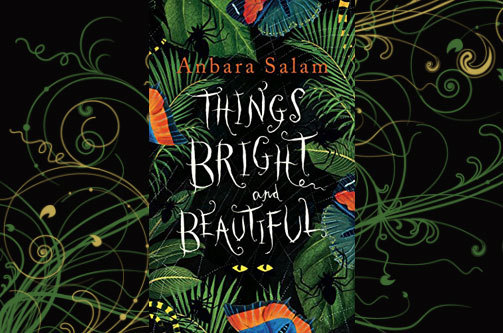
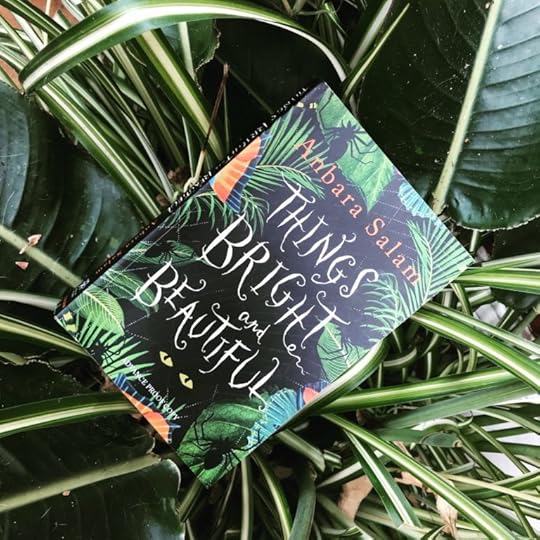
Like the novel's stunning and vivid cover, Salam brings the jungle setting to glorious life in her debut novel.
Her writing is saturated with vibrant detail, exploring both the beauty and the horror of this wonderfully diverse and atmospheric setting.
However, I found that the blurb did not quite match the novel itself; I expected Bea to be the central character but there were times she got lost beside Max's narrative or that of other sub-characters (whose purpose I'm entirely unsure of). Bea and Max were well-explored and developed, though I didn't always feel that their marriage came across as dysfunctional and I was therefore surprised by the turn of events.
This was very much literary fiction that was character-driven but in places it lost sight of this when the focus shifted away from Bea and Max. It was still enjoyably dark, creepy and full of mystery.
(DNF @ 6%.) Not compelling for me in the least. Even the twist in the last line of the prologue was not enough to keep me reading. Try Euphoria by Lily King instead.
A story set in an unspecified time (but most likely the late half of the twentieth century), “All things Bright and Beautiful” tells the tale of missionary Maxis and his wife Bea. They have moved to an isolated island in order to spread “the word of god” and find the “light”. The story explains Island life and Maxis’ slow decline into madness after he kills Marietta, an old ex-missionary on the island. Initially a clear-minded and logical man, Maxis spirals into chaos after a terrible fever and starts to behave like the shaken son the island who attempt to use and trap the women using their “dark prayers” and exorcisms.
The story seems to have a good plot at its roots, allowing for a healthy balance between an intriguing storyline and references to the real life adventures of those who really were missionaries in the late twentieth century. However, as a reader I personally lost interest in the other plot after the fourth or fifth chapter, due to the slow moving storyline and the overload of factual information. The story hasn’t been edited in places where the plot becomes bland and boring. Essentially there isn’t enough of an extrapolated plot and this leads the story to become stagnant, only picking up towards the end of the novel.
Bea as a character is strong and independent, with many layers to her character that create an interesting personality that can be analysed and picked apart. Other characters in the plot seems unnecessary, adding very little to the plot, such as the Vietnamese slaves that work for a framer on another island. Whilst these characters do help to explain more about the world that has been created, they do not need as much expansion as they are given. The plot should be focused on where the characters are.
The story picks up a lot more towards the second half of the book, but there is a lot of filler that I do not think is needed in the story that has been written. I feel that this novel should either be cut down to a novella, focusing on the characters of Bea, Maxis, Santra and Aru; or it should be extrapolated more using the same characters mentioned so that there is more substance. I feel that this book simply isn’t ready yet, there is still much more that can be improved and I feel as though the author should develop her writing further in order to improve the flow and quality of her writing. This is why I’m giving it 2/5 stars.
This entire review has been hidden because of spoilers.
I was drawn in by the prologue of this book and the conflict at the heart of it, but if it weren't for that, I'm not sure I would have persevered. The writing is beautiful and has a hypnotic quality, giving a real flavour of the island. However that's also its weakness - it's harder to cut good prose when it isn't pulling its weight in narrative terms. There were also large sections of backstory that were probably useful to the writer but superfluous to the reader. It did eventually pick up pace towards the end and the drama turned in a way I didn't entirely expect. * I received a copy of Things Bright and Beautiful from the publisher Netgalley. Read more of my reviews at https://katevane.com
Bea and Max are newlyweds with a mission to bring God to Advent Island. Max is the missionary, Bea the wife he saved from despair and destitution and took across the seas into the island jungle.
They had no idea the old missionary, a woman with a gammy leg, a facility for the local languages, and a domineering manner, was still there. When she moves back into the mission house with them, the difficult situation of managing the local interpretation of Christianity – centred around the need to cast out the devil in nightly vigils filled with singing, young women writhing on the ground and screaming as the evil is exorcised, along with holy water sprinkled around evil properties – is made worse by the additional burden of her presence.
Bea, while trying hard to perform well as the missionary’s wife, is also attempting to farm and find friends without any knowledge of island customs, language or foliage. She keeps on accidentally making herself ridiculous, but she keeps on trying.
Max attempts to understand and quietly make inroads into the local Christian beliefs and tries to convert other islanders, battling the demons of cultural confusion, misunderstanding and his own need to dominate and be the civilising force.
Alongside these narratives are those of I. A. M. Jonson, the local British government official, who is there to report on the development of an airstrip highly unlikely to ever be properly built, and a pair of badly treated foreign workers from the local farming complex who are trying to flee to the mainland to save their baby from a measles outbreak.
There is no western medicine; no running water apart from streams, rivers and the ocean; and the jungle with its barbed vines, its animals, its poisoned plants, its insects, is everywhere, creeping into and over any untended life.
The intensity of the physical and emotional extremes of these lives is compelling. Sweltering heat, drowning rains whose ‘bullets of warm water … splattered crowns of mud in the air’, endless insect bites, the labyrinthine nature of the jungle in which any stranger is instantly lost, alongside a need for spiritual and physical companionship makes for a visceral and heady combination that takes its characters to even greater extremes, offering the reader a privileged position outside of the maze of cross-cultural misreading that leads so many characters into a kind of fevered desperation from which the strangest of actions can seem the only logical course.
I thoroughly enjoyed the moral and cultural complexities of Things Bright and Beautiful though this is more a novel for the sceptic than the believer. Filled with thoughts on cultural and religious colonisation, Things Bright and Beautiful is a fevered delight. Though these thoughts are mostly from an expat perspective, the whole idea of belonging, of fitting in, of acting correctly, of social cohesion, makes Things Bright and Beautiful very relevant to a modern global world. Jonson and Max both have their own way of looking at the different world around them, but they also both believe they should somehow be able to control it, to save it and those around them, women in particular. The local spiritual leader, Aru, and indeed Marietta the old female missionary, are much the same. A colonising spirit is a dangerous one. Bea’s approach is different and her story the one that ultimately sings through the madness.
A solid debut. Some imperfections here and there (a few cliches, an occasional mixed metaphor, weird inconsistencies of character etc) but ultimately it was 1. something I haven't read before 2. exactly what I wanted to read right now.
Things Bright and Beautiful is a tense and claustrophobic novel set on a South Pacific island. Beatriz accompanies her husband Max, a missionary, to a remote island, where he tries to spread what he thinks is the right religious message amidst strange noises coming from the church and Beatriz has to get used to the jungle climate and lack of food. But just as they seem to have got used to their new surroundings, they suddenly must play host to the old missionary, who hums all the time and takes up a space that both Beatriz and Max grow to resent. When things take a dark turn and Max isn’t the same, Beatriz finds herself desperate and trapped.
The novel starts with their unexpected guest arriving and then uses flashbacks to show how Beatriz, from Venezuela, and Max, an American, ended up on the island and attempted to adjust. This style makes it slightly disorientating in a way that seems to work along with the narrative to show the dangers of religious mania and guilt. Beatriz is an interesting character and she holds the novel together, particularly in relation to the opinions and actions of her husband.
Salam’s novel is an atmospheric look at both a personal crisis and a larger situation. This is a book for readers looking for something that is more about creating atmosphere and central characters than a gripping plot.
I was lucky enough to read this book very early on in its life and I was blown away by the story and the imagery. stunning opening, gripping plot, great characterisation...humourous and chilling all at once. I loved it and will put it on my 'must read again' pile!
book starts out depressing, becomes disgusting, and ends horrific, and it was very disorienting trying to follow the different timelines and the introductions to completely unrelated characters :/
Novel set in 1950s NEW HEBRIDES (present day VANUATU)
The reader peers through the damp fronds of the jungle, vision clouded by insects and heat vapour, the cacophony of birds assaults the ears – the steaming, dripping moisture is ever present. We, as readers, are invited in to this cloying, sensuous and yet hostile environment to witness the unfolding story….
Max and Bea have arrived in the New Hebrides, just a few years after the end of WW2. They are far away from their home in America, their accommodation is not much more than a shack. Their possessions have not arrived and food is limited. Max has followed his calling as a missionary and has brought his wife. They have hardly moved in when Marietta, the former missionary, bustles in and settles her objectionable rump into their confined living accommodation, upsetting the marital equilibrium.
Gradually they become aware of rumblings of unrest, forces at work in the jungle and a visceral feel starts to envelop the community – plantation workers are escaping, devil chasers are crawling out of the decaying woodwork and Max is struggling to keep his sanity. Bea however finds solace at times in the taxing environment, “the treacly mildew of the jungle” is like a siren, and syphons her resolve; she acquiesces to its clarion call.
The author, who has a PhD in Theology (specialising in apocalyptic death cults) spent six months living on a small South Pacific island – and her experience vividly comes through in the descriptions and feel of the setting in the book. The pervading visceral sense of the jungle environment almost takes over the storyline, mirroring the plight of the missionary couple, and this forms a very atmospheric and experiential book. It is always suggested that authors write about what they know and it is clear that Anbara Salam is extremely familiar with the tropical locale. The story does, however, get a little engulfed at times by the pervasive setting – which in terms of TripFiction I never thought I would ever flag – and which on occasion can make it a little heavy going. For me, the balance of story and setting wasn’t quite right. The writing is, however, very good and I do look forward to seeing what this author writes next.
Beatrix Hanlon agrees to accompany her missionary husband to a remote island. It would be challenging, hot and humid and dirty but she was a devoted wife and was willing to put up with it.
As months go by Bea slowly gets used to the island - that is until a visitor arrives; a visitor who hums interminably and the couple are pushed to their limit in their tiny house.
Events lead to Bea watching her husband go mad with guilt and her own life and freedom are almost taken away from her.
This book is a good read, an unusual storyline which explores subjects that are not always comfortable to read. Bea and Max are strong characters and you are rooting for them and must keep reading to find out the ending. This was not always easy because the book had a lot of slow moments which pushed my patience several times.
A book which explores religion and the power of belief even in the most testing of situations.
Chester.
Breakaway Reviewers received a copy of this book to review.
Things Bright and Beautiful by Anbara Salam ~~~~~ ⭐️⭐️⭐️ 3.5 stars My first read for the @literaturelassies ~~~~~ When Bea Hanlon follows her preacher husband Max to a remote island in the Pacific, she soon sees that their mission will bring anything but salvation. ~~~~~ I absolutely loved the writing. It was so atmospheric; you could feel the heat, you could feel the humidity. It was uncomfortable, claustrophobic, creepy and suffocating. The author really brought the island and its jungle to life, and turned them into characters in their own right. I really enjoyed Bea's evolution through part of the story, from being the proverbial fish out of water to showing unexpected resilience and determination to make the best out of her situation on the island and I would have liked to read more of this. However I had a real problem with the pacing of the story. It branched out into a secondary plot about a couple of migrant workers, which I thought added nothing to the story and turned into nothing. I also felt that the spiral down towards the ending was rushed and jarring after such a slow build-up. I liked the ending but I wish its delivery had been more balanced compared to the rest of the book. This is a debut novel and I would really like to read more from this author as I thought the writing was great. ~~~~~
Things Bright and Beautiful is set in the New Hebrides on a remote island in the South Pacific, where the missionary, Max Hanlon and his wife, Bea set about trying to convert the islanders to Christianity. That the islanders have their own customs and taboos is very obvious from the start and in trying to become accustomed to island life, both Max and Bea experience their own very different problems.
The claustrophobic atmosphere of the island, and the oppressive nature of living in a place where the very air you breathe teems with verminous life, sets the scene for this unusual story, which looks at the power of superstition and the irresistible lure of insanity.
Although the story is set in the 1950s, there is a timeless quality about it which, regardless of time frame, focuses the attention on the here and now. Max and Bea do their very best to settle into island life but it becomes obvious from the start that these two are very different people and the marital discord in their relationship isn’t going to be resolved easily. The destructive nature of living in such a menacing place and the rat-infested creatures that hide away in dark corners only serves to emphasise the terrifying consequences of living in such an enclosed atmosphere and further isolates, Max and Bea, from the community at large.
The islanders themselves have their own very distinct personalities, their way of life intrigued me and I especially enjoyed reading about Aru and Santra, and of the effect that these two very different people had on both Max and Bea.
Things Bright and Beautiful is a highly original story with a complexity of narrative which is as fascinating as it is terrifying to behold.
This was a strange book which didn't seem to be following any true storyline. It makes me wonder how much - if any - of it was based on Anbara Salam's own experience on South Pacific islands.
A very claustrophobic and eerie story of a woman and her missionary husband on a tropical island. Enjoyed reading this interesting and progressively nightmarish story