Jump to ratings and reviews
Rate this book

The Hill Bachelors

Rate this book
A collection of twelve short stories offers tales of love, rebellion, and dashed dreams set in Ireland.

244 pages, Hardcover

First published January 1, 2000

37 people are currently reading
524 people want to read

About the author

William Trevor

181 books770 followers
William Trevor, KBE grew up in various provincial towns and attended a number of schools, graduating from Trinity College, in Dublin, with a degree in history. He first exercised his artistry as a sculptor, working as a teacher in Northern Ireland and then emigrated to England in search of work when the school went bankrupt. He could have returned to Ireland once he became a successful writer, he said, "but by then I had become a wanderer, and one way and another, I just stayed in England ... I hated leaving Ireland. I was very bitter at the time. But, had it not happened, I think I might never have written at all."

In 1958 Trevor published his first novel, A Standard of Behaviour, to little critical success. Two years later, he abandoned sculpting completely, feeling his work had become too abstract, and found a job writing copy for a London advertising agency. 'This was absurd,' he said. 'They would give me four lines or so to write and four or five days to write it in. It was so boring. But they had given me this typewriter to work on, so I just started writing stories. I sometimes think all the people who were missing in my sculpture gushed out into the stories.' He published several short stories, then his second and third novels, which both won the Hawthornden Prize (established in 1919 by Alice Warrender and named after William Drummond of Hawthornden, the Hawthornden Prize is one of the UK's oldest literary awards). A number of other prizes followed, and Trevor began working full-time as a writer in 1965.

Since then, Trevor has published nearly 40 novels, short story collections, plays, and collections of nonfiction. He has won three Whitbread Awards, a PEN/Macmillan Silver Pen Award, and was shortlisted for the Booker Prize. In 1977 Trevor was appointed an honorary (he holds Irish, not British, citizenship) Commander of the Most Excellent Order of the British Empire (CBE) for his services to literature and in 2002 he was elevated to honorary Knight Commander of the Most Excellent Order of the British Empire (KBE). Since he began writing, William Trevor regularly spends half the year in Italy or Switzerland, often visiting Ireland in the other half. He lived in Devon, in South West England, on an old mill surrounded by 40 acres of land.

Ratings & Reviews

What do you think?
Rate this book

Friends & Following

Create a free account to discover what your friends think of this book!

Community Reviews

5 stars
209 (32%)
4 stars
278 (43%)
3 stars
122 (19%)
2 stars
28 (4%)
1 star
4 (<1%)
Displaying 1 - 30 of 92 reviews
Profile Image for Jim Fonseca.
1,169 reviews8,596 followers
November 20, 2025
It’s easy to find cover blurbs that list an author as “one of the greatest…” But Trevor’s blurbs go beyond that. A reviewer in the Wall Street Journal said of Trevor “There is no better short story writer in the English-speaking world.” A reviewer in The Weekly Standard called him "the greatest living writer in English.” Trevor’s gone now but his work lives on.

description

This collection of a dozen short stories shows his style: poignant and melancholy with deep psychological insight, especially about loneliness. Some stories are set in towns but most are in rural areas: dying farms and dying churches. Some examples of the stories I liked best:

Two of the stories concern men wanting to be on the farm and women wanting to be in town. In “Low Sunday, 1950” a brother and sister in their 40s have been living on a farm and in a house inherited from an aunt. She wants to move into town but can’t bring herself to broach the subject with her brother. She knows that he will chose to stay on the farm alone. Maybe next year she can bring it up…

In the title story, “The Hill Bachelors,” a young man has returned to live with his mother and run the farm after his father’s death. He’s knows of a half-dozen women who would marry him but none want to move out of the town and into rural isolation. Even his mother wants him to leave again. “She hadn’t thought she would be left. She hadn’t wanted it. She didn’t now.”

description

In some stories, humor is added to the seriousness. In “Death of a Professor,” a senior faculty member, fifteen years older than his wife, is the last to know that all four of the morning papers carried his obituary. It is said of his wife that “…in her heyday Vanessa’s beauty recalled Marilyn Monroe’s. Over the years, inevitably has come the riposte that she still possesses the film star’s brain.” Were the obituaries a student prank? Or a joked played on another professor who has pined for Vanessa for decades? In “Against the Odds” we see how a woman con-artist takes bachelor farmers for quite a sum.

In “The Virgin’s Gift,” three times a monk has had visions of the Virgin Mary. When he was a youth she told him to join the abbey, which he did for more than fifteen years. Then she told him to go live a totally solitary existence on an island, which he did for twenty-five years. Now she reappears for the last time (she tells him) and says he must go back to civilization. Why? He loves his life of peaceful isolation. He doesn’t even know if his parents are alive of if the abbey still exists.

In “A Friend in the Trade” A married couple runs a small publishing company. A decades-long friend comes to their house so frequently that he’s like a member of the family. The woman knows he’s secretly in love with her. Now they are moving out of London. Does the friend really think he’s going to move in with them in their new house?

description

In other stories mentioned in the cover blurb, three people are frozen in a conspiracy of silence that prevents love’s consummation, and a nine-year old girl dreams that a movie part will heal her fragmented family life.

Great stories from a master.

William Trevor is one of my favorite authors and I have read about 15 of his novels and collections of short stories. Below are links to reviews of some others of my favorite novels of his:

Mrs Eckdorf in O'Neill's Hotel

After Rain

Fools of Fortune

Nights at the Alexandra

The Children of Dynmouth

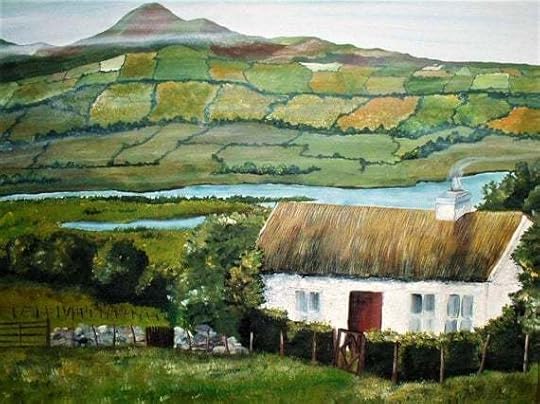
Top photo of a notecard of a painting in County Mayo from i.etsystatic.com
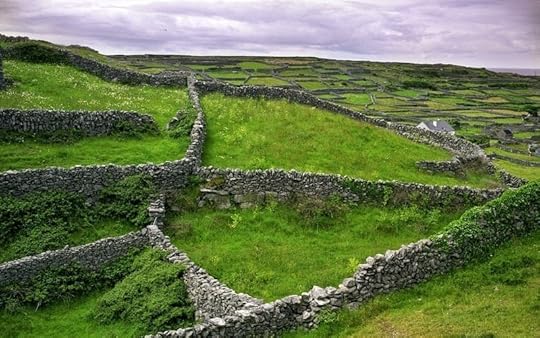
Middle photo from googleusercontent.com/stone-walls-ire...
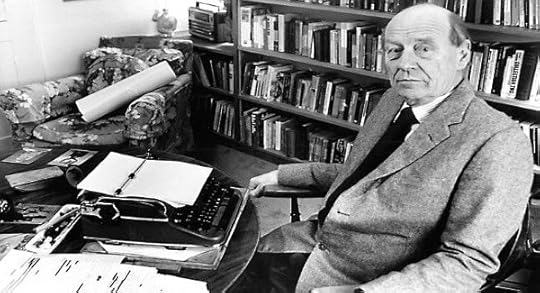
The author from irishexaminer.com
Profile Image for Fiona.
988 reviews530 followers
May 12, 2017
Every one of these short stories is nothing short of perfection. I've never been a great lover of this genre but William Trevor is a master. Every story is poignant and haunting and I find myself thinking about the people in them all the time. Each is a snapshot of people's lives and the thread is the way in which life can often trap us, sometimes because we choose a certain path, sometimes through a sense of duty, and sometimes due to circumstances outwith our control. For me, and I think I've said this in previous reviews, Trevor is one of the greatest living writers and this volume of short stories provides ample evidence of that.
Profile Image for Misha.
467 reviews741 followers
September 9, 2023
My eighth William Trevor, and the eighth time, I am in awe of what the author can achieve with such few words.

In Hill Bachelors, a short story collection, there are moments of empathy and tenderness, and moments of menace, sometimes both at the same time. An echoing sadness runs through all the stories, not a sadness that weighs you down, but a sadness of acceptance of how some things are beyond our control or that so many things are changeable. 

Like all of Trevor's works, these are stories of loneliness, disillusionment and yearning. And all of this is told through the sparest of prose. I found myself re-reading sentences because more happens in the white spaces that Trevor leaves for the readers than in the actual words. He makes you pay attention, every sentence makes you feel so present, so when you finish a story, you continue savouring it and maybe still discovering layers. I love that Trevor, by leaving this white space, lets his characters breathe and be alive in ways that's not dependent on elaborate descriptions. These sentences are like a painting - they are gorgeously wrought without giving away all of their mysteries.
Profile Image for Alan.
Author 15 books195 followers
November 22, 2016
re-posting this because the great man has died. RIP William Trevor. It's sad to think there will be no more stories.

here's a short essay I wrote about this book for a series on writing (for beginners) for a local newspaper:

Because of space some feel stories should be relentless, single minded in their plots, marching irrevocably to resolution. However this can lead to stories being too dependent on plotting, twists in the tale and too glib a resolution. Stories like that can be well written, exciting but often can be dismissed after reading because they are too firmly resolved, they are sealed off. I’m more interested in stories that stay with you and make you think about the characters, their lives and relationships and how there are connections with your own life; where resolutions are not straightforward or possible and various subtleties are employed to get the reader involved. These stories you read slowly and they linger in the mind until you re-read and get more from them each time. To write stories that will stand up to re-reading is difficult, and sometimes calls for an oblique approach. One of the masters of this type of story is William Trevor, and his latest The Hill Bachelors is marvellous.

Trevor came to writing relatively late (in his 30s) and had been a sculptor, or as he says, attempted to be one – he was doing abstract sculptures and found his interest waned – he missed the human touch, people. His stories make up for this – they brim with real, awkward, hard to categorise individuals. They are people with foibles, obsessions, plans and hidden passions. People who live lonely lives are a favourite – in bedsits, above a club, in hill cottages; the urge for contact makes them blind to dangers, deceits, the predatory, or accept them. The need to communicate is often entangled with the need to conceal and manipulate. Like the daughter in ‘Good News’ who cannot tell her mother about the man who is molesting her for fear of damaging her mother’s reunion with her stepfather.

‘Good News’ in fact is a perfect example of the oblique approach. The child abuse is central but is never referred to directly. This makes it all the more powerful because it suggests how such things can slip by unnoticed in real life, also the reader is left with the horrible task of thinking about what might have happened. In this way the reader becomes involved and feels the awfulness of the situation.

The girl’s point of view is evoked wonderfully through one or two scenes: a tear in the visiting stepfather’s jacket is noticed which gets worse, unstitched, as the story unfolds over several weeks. Not only does this tell you a lot about the man’s home background, but because the tear is at the girl’s eye level (‘just above the pocket’) you also start to see things from her height, and how they must seem. For instance she watches adults talk from behind plants, not hearing properly what is being said, mirroring her inability to understand or interpret what is happening to her. She tries to find someone to tell, but no one seems appropriate. The reader gets an idea of the complex motivations and twisted patterns of people’s lives, all in a few pages.

The story ‘Death of a Professor’ centres around premature newspaper
obituaries for an academic. In different hands this would have become a whodunit and why, but we never find out, instead the obituaries are used to highlight the don’s relationships with his fellow academics, and especially his marriage to a younger wife. It is beautifully handled, the professor’s puzzlement leading him to have a few whiskies in a pub, very much out of character, and the wife coming to re-assess their relationship after she found herself unable to tell her husband about the obituary which she tears from the paper. ‘Whoever the perpetrators are she feels she belongs to them, has added to their cruelty’ by trying to shield her husband, but by the end of the story she has come to realise why she loves him, despite the age gap, his dryness. She loves him for his wisdom. ‘Not brains, they all had brains, not skill. Not knowing everything … his wisdom is almost indefinable, what a roadworker might have, a cinema usher or a clergyman, or a child’. Somehow, by following him about on this day, by eavesdropping on what his colleagues say, and watching how his wife reacts, Trevor enables us too to see this wisdom.

Trevor never wastes a word, his every detail works hard. Take food: meals and snacks and treats are in almost every story. In ‘Against the Odds’ the widowed turkey farmer eats every week in a café and follows a ritual: ‘There was one piece of meat left, its size calculated to match what was left of the potatoes and peas.’ The implications of this simple sentence can stand in for a whole paragraph of explication. Or a meal can act as an authentic background to a crucial conversation, as in this one from ‘The Mourning’, also in a café. An ex-patriot Irishman is explaining to another who’s recently come to London: ‘Feeney leaned forward over a plate of liver and onions. He lowered his voice to a whisper. “They wash the ware twice after us.
Plates, cups, a glass you’d take a drink out of.”’

Elsewhere food can signify a (seemingly) loving relationship. ‘“A loin of lamb,” Vera says, and takes it from the fridge, a net of suet tied in place to make it succulent in the roasting. Parsnips she’ll roast too, and potatoes because there’s nothing Sidney likes more.’ In ‘Good News’ the breakfast cereal that the ex-spouse likes re-appearing on the table signals a renewed relationship.

So what I am recommending is to approach your subject from a side angle, or at least not to tell us too much directly. Let your imagery do the work for you, to imply is sometimes better than to tell, because the reader has to do some work, and therefore becomes more involved with the story. It would be difficult to emulate Trevor, but you can learn from him. The way he captures interest with the humanity of the characters, making stories authentic by use of ordinary, telling detail, eschewing the obvious, are all elements to consider.

Re-reading the stories for this essay has been such a pleasure. I had hoped to quote more but it is difficult to pick moments as the experience of reading the whole piece is what counts, the cumulative effect. All I can suggest is you read these stories of priests and actors, conwomen, labourers and farmers, salesmen and academics and you will be enthralled.
Profile Image for Laura.
7,137 reviews607 followers
June 5, 2018
From BBC Radio 4 - Afternoon Drama:
Paulie has returned home for the funeral of his father. A man he barely knew. The remote farm is on a boreen, high up in the hills, a place he hasn't been back to in many years. As his brothers and sisters arrive home for the funeral, the question on everyone's mind is - 'What will happen to Ma?' She cannot manage by herself and Paulie knows what they are inadvertently saying - he is the only one who is unmarried, doesn't have children - it is up to him to move back and help his mother.

Caught between desire and circumstance, Paulie, must choose between marrying his long-time love, Patsy Finnucane, or caring for his widowed mother and resigning himself to the isolated life of a hill bachelor.

'There is no better short story writer in the English-speaking world' The Wall Street Journal

William Trevor has long been hailed as the master in short story telling. He has published nearly 40 novels, short story collections, plays, and collections of non-fiction. He has won three Whitbread Awards, a PEN/Macmillan Silver Pen Award, and been nominated five times for the Booker Prize, most recently for his novel Love and Summer (2009). In 1977 Trevor was awarded an honorary CBE (Commander of the Most Excellent Order of the British Empire) for his services to literature.

Written by William Trevor

Directed by Gemma McMullan.


https://www.bbc.co.uk/programmes/b01s...
Profile Image for Tony.
1,037 reviews1,918 followers
October 22, 2009
Trevor is a superb craftsman. I feel like I am reading an old friend, a familiar voice. These stories, like all Trevor, speak truths. He makes me nod my head; makes me smile. Of these stories, in particular I would recommend The Death of a Professor, which tells the story of an obituary of an academic, placed in the papers by an anonymous practical joker. The reactions of friends, colleagues, a spouse and the 'deceased' are all priceless. Le Visiteur, likewise, will stay with me forever.
Profile Image for Sadjad Abedi.
174 reviews60 followers
November 25, 2018
کتاب متشکل از سه داستان کوتاه بود. داستان اول ازدواج دوم یک مرد نابینا در کهنسالی را روایت می‌کند. به نظر من بهترین داستان این مجموعه بود و تنها افسوسم این بود که علی‌رغم پتانسیل بالایش زود تمام شد. داستان دوم درونمایه‌ای مذهبی داشت. مرد جوانی دو توریست را برای بازدید از یک مجسمه مذهبی به حومه شهر می‌برد و در این بین اتفاقاتی می‌افتد که جوان از آن برداشت‌های خاص خود را دارد. داستان سوم روایت جوانیست که پس از مرگ پدرش به این علت که تنها فرزند مجرد خانواده است ناگزیر به سرپرستی از مادر پیر خانواده می‌شود و وظیفه‌ی نگهداری از مزرعه‌ی پدری بر دوش او می‌افتد. شیوه‌ی روایی این داستان بهتر از سایر داستان‌ها بود و فضاسازی زنده‌ای داشت.
در مجموع قلم ترور را در عین سادگی‌اش پسندیدم و مشتاقم که باز هم از او بخوانم.
Profile Image for Paul.
3 reviews
December 8, 2012
Incredible shifts in focus from the perspective of one character to another. You begin a story with the unspoken reflections of one character, bound in some kind of intimacy with another. It's like the intimacy between the characters is not made explicit, never stated, but it's there in their silences. You read the words and the connection is made somewhere in the spaces between the words, and it moves me when I intuitively infer the truth of the relationships.
Profile Image for Sylvia Tedesco.
169 reviews30 followers
June 26, 2008
William Trevor is in my top five favorite authors. The Hill Bachelors contains the short story "Of the Cloth" which tells the story about a country area in Ireland. The Catholic priest visits an elderly rector and they share their memories, feelings of failure and age. A very special, typical elegiac story with Trevor's sure, light touch."Of the Cloth" is also a penetrating tale of the impact a small act of kindness has over the years. Work like this reveals a perfectly crafted story as one of the true gems of literature. One of the best of an outstanding bunch is "The Mourning," the story of a simple Irish laborer who nearly gets to plant a bomb in London for the IRA, until he thinks better of it; the subtle way he is drawn into thinking he can perform such a desperate act says more about the Troubles than many a full-length novel. I read both these stories when they appeared in the New Yorker Magazine. When I read them again, they seemed new and even brighter and more full of meaning.
494 reviews2 followers
June 11, 2025
A collection of profoundly sad short stories, beautifully and quietly crafted. I've not been able to read over the last wee while, no brain space for it, so I needed something really good to get me back in the zone, and by jings, this was more than good. I love short stories anyway, but not all short stories are equal. Having never read any William Trevor before, I think I'll be reading everything he's ever written, once my heart has healed from the effects of this wonderful book.
Highly, highly recommended.
Profile Image for Frank.
239 reviews15 followers
January 19, 2011
More than one reviewer has called William Trevor the greatest writer of short fiction in the English-speaking world and I heartily agree. His simple, soft, un-dramatic prose belies a depth of feeling and intensity that few others can match. Trevor's world is confined to the two islands he has called home, the Britain of his choosing and the Ireland of his birth. The twelve stories here are set in country towns and London suburbs, Munster farms and Ulster villages. It is populated with aged widows and child actors, rare book collectors and lorry drivers, jilted women and brides-to-be; for the most part, simple people dealing with simple problems.

There is also, however, in some few of the stories, and element of the macabre, again familiar territory for Trevor (most famously noted in his novel Felicia's Journey). In the open story, "Three People", it is gradually revealed that someone has died; an alibi is provided by a total stranger of limited mental capacity, who twenty-years later is still visiting the house were the tragedy occurred. In "Against the Odds" a jilted spinster exacts her revenge by conning random men into giving her large sums of money. Less sinister but no less creepy is "Le Visiteur", where a young wife, horribly humiliated by her boorish older husband uses a handsome bachelor as a tool against her spouse.

Trevor also has a unique perspective on the religious differences which have plagued Ireland in general and the North in particular, for most of the last century. Having himself been reared as a Protestant in the Republic, he has a great sympathy for both communities: in "Of the Cloth", a young Catholic curate commiserates with an older CofI rector whose parish has been decimated by the rolling years. "The Virgin's Gift" describes a medieval monk's progression from family farm to monastery to hermitage and back again. Many of Trevor's characters, so richly and yet simply drawn, are outsiders. Perhaps this too reflects his own experiences growing up in a minority community in his own country.

The eponymous final story of the collection is the most heartrending. Simply put, the youngest son of a medium-sized family inherits the farm of an uncaring father, at first merely because he alone of the siblings has no other demands and can take care of their mother in the place she's lived for decades. But finally Paulie—like the monk Michael in the earlier story—chooses to follow a calling, the calling of the land. Like the monk, he is destined for a life of poverty and celibacy, and though he knows the fate that his choice has determined, he accepts it as his choice.

When her own death came, he other children would return, again all at the same time. The coffin would be carried down the steep stairs, out into the van in the yard, and the funeral would go through the streets of Drunbeg, and the next day there’d be the Mass. They’d go away then, leaving Paulie in the farmhouse…Guilt was misplaced, goodness hardly came into it. Her widowing and the mood of a capricious time were not of consequence, no more than a flicker in the scheme of things that had always been there. Enduring, unchanging, the hills had waited for him, claiming one of their own.

Profile Image for Pauline Ross.
Author 11 books363 followers
December 3, 2011
This is a collection of short stories set either in the author's native Ireland, or else in England, his later home, with one set in France. He is regarded as a master of the short story, and it's true that each is a little masterpiece of prose, with a skillfully drawn set of characters, an intriguing scenario gradually revealed and a little twist at the end. Each one is a perfect vignette of lives at a moment in time. The stories themselves are often full of pathos, with enough subtleties and undercurrents to intrigue. Some are quite hauntingly memorable, and the Irish ones in particularly have a wonderful resonance of time and place.

And yet... It's not that I disliked these stories, I didn't at all. But a short story is, somehow, a peculiarly artificial form of prose. The twist at the end is, after all, the whole point, so the story is entirely constructed around it, with the aim being to deceive and then, triumphantly, reveal it. It's intended to be clever rather than to tell a story, and personally I would rather have had more depth and development and less cleverness. I can't help feeling: if the author didn't care enough about these characters to give them the space to grow, why should I care about them either?

It's all too easy to see them as disposable products - read, enjoy in the moment and then throw away. But some of them really deserved a broader canvas. 'The Virgin's Gift', for instance, raised more questions than it answered. Readers will have their own views on the nature of the visions of the Virgin Mary, but what exactly was the gift? Was it simply the obvious one, of returning a son to his home? Or did the author intend the more subtle irony of giving back something which had been taken away in the first place? And what would become of the main character after that? And 'The Hill Bachelors' could easily have made a full length novel, or a film. It seems a shame to criticise a short story for being too short, yet several of them felt that way - too much detail crammed in, cluttering up the simplicity of the picture. And occasionally it felt clunky, as if the author was determined to shoehorn in a particular piece of information, relevant or not. Nevertheless, these are superb examples of the art of the short story, for those who enjoy the genre.
Profile Image for Patrick O'Donoghue.
82 reviews9 followers
July 25, 2018
This is my first time reading William Trevor and it certainly won’t be my last. Trevor, born in Cork in 1928, wrote (to the best of my knowledge) 14 novels and was nominated for the Booker Prize 5 times. Aside from his novels, he was widely regarded as one of the greatest short story writers in contemporary English, and being Irish I thought it was about time I read his work!
~~~~.~~~~.~~~~
This collection of 12 stories quietly details the lives of men and women, without high drama or fireworks. We are gently placed into their lives, with the scene very quickly and skillfully set in mere sentences at the beginning of each story. One of the issues I have with short stories is that you can so often spend half the story trying to work out where you are, who the character is, and what’s going on, so that it ends up not being very enjoyable. But I think that Trevor is very skilled at giving us all of that information very swiftly so we can get on with the story.
Some of my favourites from this collection include the title story: ‘The Hill Bachelors’, which was quite heartbreaking. I also loved ‘The Mourning’, ‘The Virgin’s Gift’, and ‘Against The Odds.’
There were two stories which I didn’t feel had the same effect as the rest, as they were quite different in tone and subject - ‘Low Sunday, 1950’ and ‘Le Visiteur.’
But overall an excellent introduction to an author whose many works I’m looking forward to reading.
Profile Image for Barry Smith.
Author 2 books2 followers
February 27, 2021
Fabulous. Twelve independent stories, each a world of its own, written with economy, skill and a keen eye for the tell-tale minutiae of everyday situations. There's humanity, wry observation, a sense of realism and the endings are unexpected and always thought provoking. The Mourning, with an Irishman in London during the 70s, is a masterpiece of hidden intentions. In The Virgin's Gift, a harsh life of absence and abstinence is unexpectedly illuminated by a deep warmth we all understand. The Telephone Game sketches out the sliding floor of trust and suspicion which lies at the heart of every couple.

It's not just the writerly skill for the realism of the characters which draws you in, but the constantly surprising twists that keep you enthralled. And you never see them coming. William Trevor has been called 'the finest living writer of short stories,' and I'd be prepared to believe it.
Profile Image for Liina.
355 reviews326 followers
August 16, 2022
The Hill Bachelors is my fourth read by William Trevor. His trademark melancholy is present in this collection as well. As are a few stories about religion/Church of Ireland that always bore me. Trevor is an author that requires a lot of attention. You can miss a sentence or two that is crucial to understanding the context or undercurrents in the relationship between the characters and the magic is gone. If you pay attention though, the stories have a certain kind of atmosphere and sadness that is unmistakable to Trevor. I could recognize his style even if not told who the author is. If you are new to Trevor though I would recommend his Last Stories which is my favourite by him of those I’ve read.
Profile Image for John Daily.
Author 1 book21 followers
April 15, 2020
I didn't enjoy this as much as his first collection, and Trevor's prose seems (on the whole) less poetic here. That said, "A Friend in the Trade," "Le Visiteur," "Death of a Professor," and "Against the Odds" are standout stories, and enough for me to keep this in my library. 3.5 out of 5.
Profile Image for Mary Kay.
459 reviews1 follower
July 7, 2009
William Trevor's short stories are excellent - he captures character, hesitation, and doubt beautifully.
Profile Image for Nancy.
1,280 reviews54 followers
March 18, 2021
Finished: 18.03.2021
Genre: short stories
Rating: A
#ReadingIrelandMonth21
Conclusion:
His is the 'master' of the short story!

My Thoughts


Profile Image for Amelia Morgan.
58 reviews
December 7, 2025
Tells the truth in a roundabout, conversational way that serves the stories well
Profile Image for Rosamund Taylor.
Author 2 books205 followers
May 1, 2018
William Trevor's prose is straightforward without being journalistic: he gives his sentences space and thought and allows imagery to develop, but no one could accuse him of being lyrical. His style makes his stories accessible and gripping, and I galloped through this collection. Some of them are more successful than others, as is natural. My favourites were "Good News" and "The Virgin's Gift", which differ hugely in theme and tone. "Good News" typifies Trevor's remarkable ability to write about trauma or violence obliquely without directly describing the event, but capturing the emotional response of the character. This is an extremely moving and effective way of writing about trauma: in "Good News" we are left in no doubt that nine-year-old Bea has been sexually abused, but there is nothing sensationalist about the story. Instead we are left with her pain and the complicity of adults. I also admired "The Virgin's Gift", which is about Michael, a monk and holy man, living at some nameless point in Ireland's history. The story captures Michael's solitary life and why he is driven to a holy calling. The less successful stories rushed their endings, or appeared to have too much design on the reader's emotions. The title story, "The Hill Bachelors", is one of these: we loose track of the characters because Trevor is too intent on describing the plight of lonely Irish farmers, and the ending feels contrived.
Profile Image for Nancy Gilreath.
502 reviews2 followers
October 6, 2019
William Trevor, who died in 2016, was a master of the short story. Each story in this collection demands to be read slowly, each word and scene purposeful. Marginalized, eccentric men and women populate these stories. Many of these people seem at odds with a changing culture and a new Ireland. The troubles of the early 20th century underlie each story as well. Some of the stories are painful to read, pity and foreknowledge causing me to take a break from time to time. I don’t think these stories could be written today. As much as I admire the writing and work, I understand I am not the target reader, and I fear those targets are a dying breed. William Trevor will continue to be read, as he should, and new writers will be influenced by him and assure his legacy carries forward in their work.
Profile Image for Nick Garbutt.
323 reviews10 followers
March 9, 2025
I’m becoming more and more obsessed with William Trevor, the brilliant Irish writer of short novels and short stories.
If any one is seriously interested in learning how to write well, reading Trevor is as good a place to start as any.
The Hill Bachelors is a wonderful collection, where every word has purpose, every sentence has rhythm and everything is brilliantly observed, from the dialogue to every object and piece of furniture.
Like Cormac McCarthy another great writer from a very different school he sees the dignity in the poor, the less intelligent and the tragedy in the drudgery of the day to day.
This group of stories stands out because all linger in the memory, there is not a weak one among them. They are deeply moving melancholy tales.
Profile Image for Michele.
691 reviews210 followers
August 28, 2013
Short stories steeped in the Irish psyche and landscape. I first encountered William Trevor a few months back in the break room at work, via his short story "The Women" in The New Yorker. Like that one, these stories are intense, focused, acutely observant, and often with some sort of secret or unspoken event at their core. Excellent examples of subtlety and keenness, though more often melancholy than happy.
Profile Image for Steve Leach.
30 reviews
January 21, 2011
Read somewhere that, in that critic's opinion, William Trevor and Alice Munro would be the short story writers most highly esteemed by future generations. I've read all of Alice Munro, a favorite, and had only read a couple of Trevor's stories. Now I'm catching up. Both writers are very good with shadings of character and quirky relationships. William Trevor seems a little darker than Alice Munro.
Profile Image for Barbara Sibbald.
Author 5 books11 followers
Read
February 20, 2018
Astounding short fiction in the Chekhovian tradition: rich, intricate plots, fully drawn characters driven by slathers of pathos and drama from pedophilia to terrorism. The Globe and Mail once declared that Trevor is "The greatest living writer in English." It may well be so.
My favourites: Three People, The Telephone Game (harrowing) and The Hill Bachelors.

These transcend the normal confines of the genre: breathtaking.
Displaying 1 - 30 of 92 reviews

Can't find what you're looking for?

Get help and learn more about the design.