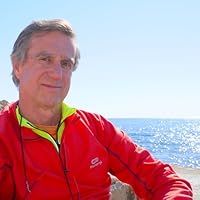
In The Atheist’s Way , Eric Maisel teaches you how to make rich personal meaning despite the absence of beneficent gods and the indifference of the universe to human concerns. Exploding the myth that there is any meaning to find or to seek, Dr. Maisel explains why the paradigm shift from seeking meaning to making meaning is this century’s most pressing intellectual goal.
Eric Maisel, Ph.D., is the author of more than 40 books in the areas of creativity, coaching, mental health, and cultural trends. He is a psychotherapist and creativity coach, and writes for Psychology Today and Professional Artist Magazine and presents workshops internationally.
Eh. By the end, the word “meaning” had lost… well, all meaning. I don’t know, maybe I just prefer a more savage brand of atheism ala Christopher Hitchens.
Unlike other atheist books, The Atheist’s Way, explains to both new atheists, those on the cusp of atheism and non-atheists what exactly it is that atheists believe in. Most people equate atheists with negative cynics and stoics, but the reality is that atheism can mean an extremely positive and beautiful existence; “…the atheist's way is a rich way, as rich as life itself” (page 2).
This books shows everyone just how meaningful, fulfilled and ethical an atheist’s life is. I’ve seen so many questions on sites like Yahoo Answers where people will ask ethical questions of atheists expecting that question to make them doubt their path in life, but many don’t realize that religion and ethics are not hand-in-hand. You don’t need one to have the other.
Dr. Maisel uses anecdotes from fellow atheists to weave a picture of their lives and their tribulations. Yes, that’s right, you think problems end with the removal of religion from life? No, far from it. He does a brilliant job of explaining how an atheist would deal with crisis and the “blues“. He shows that atheism is not just a lack of belief in deity but a “complete worldview“.
For the most part, this book was courageously bracing, well-written and thoroughly refreshing. Highly recommended to those seeking an atheist path or spiritually minded persons who would like to understand the atheist’s way. However, I don’t believe long-time atheist’s will find anything new here.
Rating I’m giving this book a 4.5 out of 5 only because in a few places I felt Dr. Maisel was being condescending to folks, like me, who are drawn to a spiritual way of life.
Testo con qualche pensiero interessante qua e là, ma molto ridondante. L'ateo, non avendo la religione e Dio che indicano il senso della vita, deve crearsi un significato e una morale per la propria. È questo in sintesi il messaggio trasmesso dal libro.
Wow, this is some crap. I'm really disappointed in Dale McGowan, Dan Barker, and Hemant Mehta for their enthusiastic blurbs for this on Amazon.
Maisel appears to think if he repeats the word "meaning" a whole lot, his hot air becomes meaningful. Nope. The question of purpose and satisfaction in a godless life is a valuable one, but Maisel doesn't investigate it with any concreteness or specificity. He instead just tells his readers that meaning means whatever you want it to mean and exhorts us repeatedly to make meaning however we decide to, to invest meaning, to maintain meaning, and to have meaning events, meaning efforts, meaning crises, and meaning adventures. Meaning, meaning, meaning! Inevitably meaningful, right? No. Wrong.
It’s not always easy to explain what being an atheist means, other than not believing in God or religion. Maisel not only explains what it means to be an atheist, free from religious dogma, but how to make meaning and become the hero in one’s own life. How we live, what we decided to invest meaning in, what our values and morals are, he asserts are the true paths to happiness, fulfillment and peace. We do not seek meaning, we make it. We create purpose and passion by deciding to. He affirms that life is a beautiful, amazing and wondrous journey and one does not need gods to explain natural phenomena. Another book that helped me understand human motives and helped inform and reaffirm my own belief system.
This is a good practical guide to finding meaning without resorting to things that other such books might suggest: praying for guidance, getting spiritual guidance from a guru or tarot cards or scripture. It is all about finding within yourself what it is that means something to you, finding a way to become your own hero rather than allowing or forcing someone else to choose for you. It is a self-help book for atheists, and a good one for those in need of the assistance. I was not searching for meaning, particularly, but it did force me to take a step back and look at myself closely. Any book that can do that is worth a read.
Had to stop about half way through on this one. I didn't feel that the content of this one was too terrible; however, the way it was presented was awful. It feels like Eric Maisel is trying to convert you to atheism from the beginning.......which is one of the main problems that I have with organized religion in the first place.
First Read, 22 March 2009: We need more books like this!
Second Read, 13 Oct 2010: It is a comfort to read this book: just knowing there are a few people out there with a similar world view. And still, "we need more books like this!" :)
This was rather "preachy" (ironically) and heavy emphasis on including "there is no god" wherever he thinks he can slip it in. That's not to say I didn't find some well thought out content within this, but the writing style was rather unpalatable.
Maisel's book is not as good as I thought it would be. He promotes finding meaning in one's life but presents a world view that is dreary and depressing. Not to my liking.
3.5 stars. Interesting take on making meaning out of life instead of being a self-serving nihilist. The author tries hard not to be negative or dreary but that still comes through at times when discussing existentialism and ideas such as "the universe has no meaning."
This is the first book on atheism I've read. I'm interested to checking out more. As someone who grew up baptist in the south and rejected religion at age 15, these topics are considered very taboo which makes them all the more interesting to explore in my opinion. I've never wanted to call myself an atheist because of the disdain it tends to bring when speaking the word aloud, but maybe that culture will change during our lifetime...
Me lo aspettavo più interessante. L’autore ripete sempre lo stesso concetto all’infinito un po’ banale di creare significato nella propria vita. Qualunque esso possa essere l’importante che abbia senso per noi stessi. Nella nostra vita dobbiamo riuscire a creare significato a partire da noi stessi. Tutto questo è il senso della vita senza dei. Onestamente mi pare parli poco di ateismo, con qualche spunto interessante qua e là.
This entire review has been hidden because of spoilers.
A bit preachy for my taste but also had some empowering and encouraging bits. Lots of quotes from athiests that humanize the central theme.
The message is simple: if nothing is inherently good, bad, or otherwise, what do I do with myself? Decide for yourself what you think is important and commit to it. Just don't get bogged down with god-talk and magical thinking.
. . . Maisel's important mission is to help atheists face the truth of their circumstances, and in his book he gives some guidance as to what to do with once those circumstances are honestly understood. His message, I found, is crucial. His execution, however, is somewhat flawed, if nobly so.
This book offers a vital message that I think any nonreligious person needs to hear, even if they don't realize they need to hear it: There is no inherent "meaning of life," existence really is a random, pointless phenomenon, and any meaning for which we may pine must be created by ourselves. Maisel levels with the reader, and insists that we establish our own parameters and values based on our consciences and intelligence, and encourages us to live these to our best ability. . . .
Reads a little like a self-help book penned by Jean-Paul Sartre. Maisel's main theme is that we must all make our own meaning. In some ways, this is refreshing, simply because much of the "new atheism" pays little attention to building a constructive sense of what atheism might be FOR (focusing exclusively on what atheists are AGAINST). It was also refreshing to see a complex treatment of how some atheists construct ethics (I haven't read enough about that).
I'd be interested in seeing what a skeptic like Michael Shermer would say about this book. There are some passages of this book ("You get to make existential magic...") that border on the sort of "woo-woo" that Shermer and other non-believers react so strongly against.
References to "existential magic" notwithstanding, Maisel definitely knows how to turn a phrase. I find optimism in his statement that "each individual's life can have meaning, even if the universe has none."
Not a book that bashes god or religion, instead offers tips on how to live life without these beliefs. This is especially handy for someone who used to believe.
Throughout the author quotes the experiences of others from a wide array of abandoned beliefs - no matter what flavor of atheist you are, there's probably at least one person in this book with a former belief similar to your old one. These are especially useful.
The author challenges us to create our own meaning, which is a great idea. Unfortunately a few chapters got mired in this and it became somewhat repetitive, but that's the only real complaint.
The author takes great pains to stress that this book outlines his way of living life as an atheist - he is not saying that his is the only correct way.
This book was clearly intended for those who have recently left their religion and might find themselves at odds with their newly discovered free time. Although Maisel does a good job in detailing all the ways in which one can live a meaningful life without having to go to church, the most important take-away message that I got was that it is perfectly ok for you to decide what meaning you want to give to your own life. I recommend this book to those who left religion after having it be such a large part of their lives.
So - you don't believe in God or you're thinking about not believing in God...now what? This book creates a great discussion on creating and maintaining meaning in our lives in the absence of "supernatural enthusiasms." Its thoughtful and accessible. Unlike many atheist writers who go on angry tirades against God and religion, Maisel gently demonstrates how one might make meaning and ethics in a godless universe. I love this book.
I largely agree with Maisel's philosophy: that we should live according to our own values, and make our own choices rather than defaulting without question to the received wisdom provided by religious and societial institutions. However, he insists that depression and mental illness is caused by people not living according to the principles laid out in his books. That just makes him look like a dick.
Although Im not ready to define myself as an athiest, this book certainly makes me consider it. It's provocative, compelling, well-argued and gives a strong case for making meaning in one's life. I see the damage that religion has done on many people close to me and I can only hope this book enters their lives.
This book has a useful premise, but even at only 175 pages, it wasn't substantive enough -- too cutesy, anecdotal, and repetitive. It could have been condensed into a pamphlet. You've got the gist 30 pages in.
Meh, maybe I expected too much after reading the covers. The book can be read in an afternoon. The audience that might most appreciate this book is one that is struggling with meaning and needs a quick push in the right direction.
Basically it's existentialism for beginners. The existentialism is pretty much used as a self help tool. He argues that in the face of the fact that there is no God and no meaning in the universe we have to create our own meaning. Not that bad really and easily readable in a day or two.
Given a lack of a god to give meaning to your life, you create your own meaning in the things you do. I've just described in one sentence what it takes this book 175 pages to explain. Anyone who's already an atheist already knows this, and anyone not an atheist isn't going to read this book.