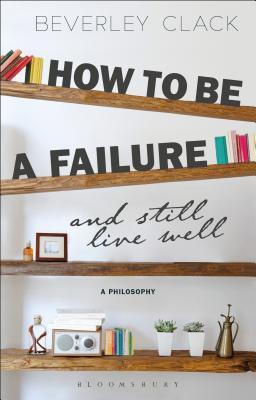
Beverley Clack’s "How to Be a Failure and Still Live Well: A Philosophy" explores the deeper meaning of failure, loss, and interconnectedness in human life. The book challenges traditional definitions of success, particularly those imposed by modern capitalist societies, and offers an alternative perspective—one that values relationships, creativity, and a more holistic understanding of what it means to live well. Clack argues that failure is an unavoidable part of life, but rather than being something to fear or avoid, it can serve as a source of insight, growth, and deeper connection with others.
Failure is often seen as something to be hidden, a mark of personal inadequacy rather than an expected part of the human experience. In literature, history, and philosophy, failure has long been framed as a negative force, something to be overcome or erased. However, Clack encourages readers to see failure differently—not as a final judgment but as a transformative experience. When we fail, we are forced to confront our own limitations, question societal expectations, and reevaluate what truly matters. This process, though painful, can be deeply rewarding. It forces us to let go of rigid success narratives and embrace a more fluid, compassionate approach to life.
One of the main issues Clack highlights is society’s obsession with work and productivity. The modern world measures success primarily through economic achievements, reducing individuals to their professional output. Work dominates personal identity, and failure in this realm—whether through job loss, financial struggles, or an inability to meet professional expectations—is seen as a personal failing rather than a reflection of larger structural issues. This emphasis on work-centered success is reinforced by neoliberal ideologies, which place responsibility for success or failure squarely on the individual, ignoring systemic barriers such as economic inequality, discrimination, and precarious job markets.
This perspective can be deeply damaging, leading to stress, burnout, and a sense of disillusionment. The pressure to constantly perform and achieve prevents individuals from exploring other meaningful aspects of life, such as creativity, relationships, and community engagement. Clack argues that true fulfillment comes not from relentless ambition but from embracing activities that bring joy and meaning beyond financial success. Philosophers such as Hannah Arendt and Richard Sennett suggest that focusing on craftsmanship, attentiveness, and genuine engagement with the world can lead to deeper satisfaction than conventional career-driven success.
Women, in particular, face unique challenges when it comes to societal expectations of success and failure. Clack discusses the pressures placed on women regarding motherhood, beauty, and aging, all of which are framed in terms of success or failure. Women who do not have children—whether by choice or circumstance—often face scrutiny and are made to feel as if they have failed at a fundamental aspect of womanhood. Similarly, aging is treated as something to be resisted at all costs, with industries capitalizing on insecurities about beauty and youth. These societal pressures reveal deeper anxieties about control, mortality, and the unpredictability of life. Rather than accepting natural processes such as aging or childlessness, society often frames them as personal failures.
By confronting these narratives, Clack suggests that individuals can reclaim their own definitions of success. Loss and imperfection should not be seen as failures but as integral aspects of human life. Instead of striving for unattainable ideals, individuals can focus on what truly brings fulfillment—relationships, creativity, and a sense of purpose that extends beyond narrow social expectations. A meaningful life is not necessarily one free of failure but one that embraces it as part of a larger, richer human experience.
Another major theme of the book is the illusion of control, particularly when it comes to death and illness. Modern society tends to treat mortality as something that can be managed, delayed, or even conquered. Advances in medicine have led to a belief that illness and aging are failures to be corrected rather than natural parts of life. Those who fall ill are often seen as having somehow failed to take care of themselves, as if health were purely a matter of personal responsibility. This mindset is deeply ingrained in capitalist societies, where self-sufficiency and independence are prized above all else.
However, Clack argues that illness and death reveal a fundamental truth: no one is truly independent. Human beings are inherently vulnerable and interconnected, relying on one another for care and support. Rather than resisting this reality, Clack encourages readers to embrace it, recognizing that relationships and shared experiences are at the heart of what it means to live well. Philosophers and theologians throughout history have grappled with these questions, from Epicurus’ belief that death should not be feared to Augustine’s framing of mortality as a consequence of human imperfection. These differing perspectives highlight the ways in which societies have attempted to make sense of death, often through the lens of control or punishment.
Grief, too, plays a central role in shaping how we understand failure and loss. Losing a loved one is one of the most painful experiences a person can go through, but it also serves as a reminder of what truly matters. Grief strips away superficial concerns and forces individuals to confront the fragility of life. While modern society often tries to minimize or rush through grief, Clack suggests that allowing oneself to fully experience loss can lead to a deeper appreciation for the relationships and connections that define human existence.
In discussing failure and loss, Clack also critiques the over-reliance on metrics and quantifiable success in modern workplaces and institutions. Bureaucracy and standardized measurements dominate many aspects of professional life, often at the expense of creativity, spontaneity, and personal fulfillment. Employees are evaluated based on rigid performance indicators, reducing human effort to numbers on a spreadsheet. This obsession with efficiency can be stifling, making it difficult for individuals to find meaning in their work. Clack advocates for a more human-centered approach—one that values the process of work rather than just the outcome. By shifting the focus away from relentless productivity and toward creativity and personal engagement, individuals can find more satisfaction in their professional and personal lives.
Ultimately, Clack argues for a redefinition of success—one that prioritizes relationships, community, and a sense of belonging over material achievements. While modern society tends to measure individuals based on their financial and professional success, true fulfillment comes from meaningful connections with others. Philosopher Friedrich Nietzsche challenges the pursuit of conventional success, advocating for a deeper, existential understanding of fulfillment that goes beyond material wealth. Similarly, Julia Kristeva emphasizes the importance of relationships and shared human experiences in shaping identity and well-being.
As Clack suggests, shifting away from the narrow focus of "Homo Economicus"—the rational, self-interested economic being—toward a more relational perspective ("Homo Religiosus") can offer a more fulfilling way of living. Instead of constantly striving for more—more money, more achievements, more recognition—individuals can find contentment in the simple, meaningful aspects of life: love, creativity, and human connection.
Failure, then, is not something to be feared but something to be embraced. It provides opportunities for reflection, growth, and a deeper understanding of what truly matters. By letting go of rigid definitions of success, accepting the inevitability of loss, and focusing on relationships rather than achievements, individuals can live more fulfilling and authentic lives. Clack’s book ultimately serves as a reminder that imperfection is not a flaw but an essential part of the human experience—one that, when embraced, leads to a richer, more meaningful way of living.