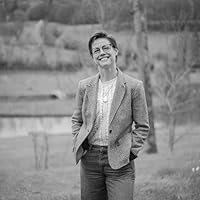
William Stanley Merwin was an American poet, credited with over fifty books of poetry, translation and prose.
William Stanley Merwin (September 30, 1927 – March 15, 2019) was an American poet who wrote more than fifty books of poetry and prose, and produced many works in translation. During the 1960s anti-war movement, Merwin's unique craft was thematically characterized by indirect, unpunctuated narration. In the 1980s and 1990s, his writing influence derived from an interest in Buddhist philosophy and deep ecology. Residing in a rural part of Maui, Hawaii, he wrote prolifically and was dedicated to the restoration of the island's rainforests.
Merwin received many honors, including the Pulitzer Prize for Poetry in 1971 and 2009; the National Book Award for Poetry in 2005, and the Tanning Prize—one of the highest honors bestowed by the Academy of American Poets—as well as the Golden Wreath of the Struga Poetry Evenings. In 2010, the Library of Congress named him the 17th United States Poet Laureate.
Imagine one of America's great poets wrote about growing up in your town, in language so beautiful it washes the grime off your neck and makes you think you're not tragically crippled to come from such a place. Instead, you might be blessed.
W. S. Merwin recently became our nation's latest Poet Laureate. I could not be more thrilled. But then I realized that I haven't mentioned what a Merwin booster I am here on good old GoodReads, so I'm remedying that now with this, my favorite of his many books.
It's not really poetry as such. It's . . . stories? fables? parables? Hard to define or classify, really. And I've read this countless times.
I also own several copies, and I often give them to people I like. So if you don't have one, and I like you, feel free to ask me for one!
Reading Merwin is like being inside of something but not being able to feel the edges; you never quite know where you are, and yet you feel natural about that, as if you were stepping in the footprints of someone walking just out of view, but who surely knows the way.
So excellent. I’ll let you decide for yourself: “The Sky Beetle—Shortly before dawn he burrows into the sky and begins to sing. One by one the stars turn to the other side to hear him, and their light leaves ours and fixes on the small black insect singing of the world that they will never see because it is on the side from which they have turned. As long as it is day here he sings to them and we do not even here him. And as soon as our light has gone he stops and comes out and sits on the sky, having done his work, and then they turn one by one and try to see the world of which he has been singing. All night their faces burn through the darkness, empty but hoping.”
I’m very glad I read this. It is quite an unusual book. The author, a poet, writes very brief little essays while using images from poetry. It is a stunning achievement. Most of these little essays are 2 pages long. A very few are five pages long. Some are a paragraph long. The images will stay with me for a long time.
read for class— i read the dachau shoe, the approved, spiders i have known, and postcards from the maginot line. all were fine. i didn’t really feel strongly one way or another, they just weren’t my cup of tea.
Prose poems? Something else? Even Merwin wasn't sure, but it's some beautiful writing. Came out when I was in high school. Read it then, forgot about it, read it again during the shutdown. Just stunning.
Fucking what did I want? It was given to me back in college, by a teacher, presumably to blow my rickety little mind, which it did, and because I’d written something that, to the ear of this teacher, pitifully echoed the majestic weirdness of “Postcards From The Maginot Line,” and I suppose five years later I admire Merwin’s prescience, his commitment to baffling interiority, his of course poetic play on prose, but there was also, this time around, the clammy dread of not being, for better or worse, the reader I once was—I felt distracted, dissatisfied, done for.
Not sure how to rate this. The fact that Merwin even has a collection of prose was incredible to find. It's an odd collection: a mix of fairy tale, parable, magical realism, allegory, and meditations. I will need to flip through and re-read the stories I really loved. Some stories were a bit too slight, and some were too on the nose about its allegory.