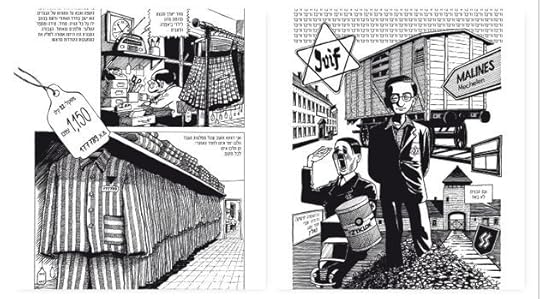
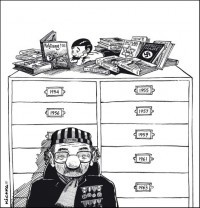
This is an autobiographical tale in which Michel Kichka goes back over the significant moments of a childhood, an adolescence, and a life overshadowed by the Holocaust, from Belgium to The Promised Land, from nightmares to funny anecdotes, moments of joy and liberation.
This is an autobiographical tale in which Michel Kichka goes back over the significant moments of a childhood, an adolescence, and a life overshadowed by the Holocaust, from Belgium to The Promised Land, from nightmares to funny anecdotes, moments of joy and liberation.
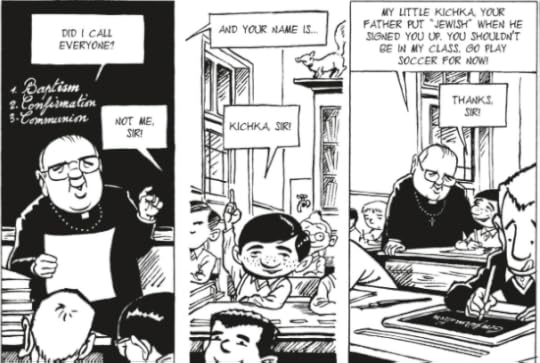
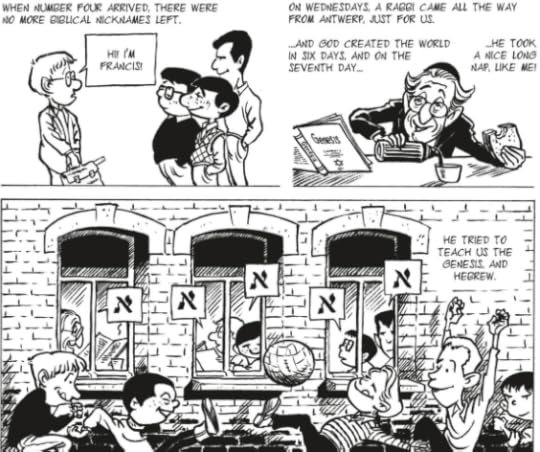
Second Generation hit unexpectedly home at multiple parts for me, especially regarding Kichka's childhood growing up in Belgium. It's quite funny because I had just talked with my mother about how my school experience in Belgium went. And then I pick this graphic novel up a few hours later, and I see my reality depicted nearly the same through someone else’s eyes... Crazy how the world works sometimes.
So it goes without saying that Second Generation has taken a special part in my heart. But regardless of my sentimental values, this was also a genuinely great graphic novel that filled in a lot of blank spaces I had about the Holocaust, Judaism, and even life in general. Also, the humor thrown in here was so unexpected but greatly appreciated.
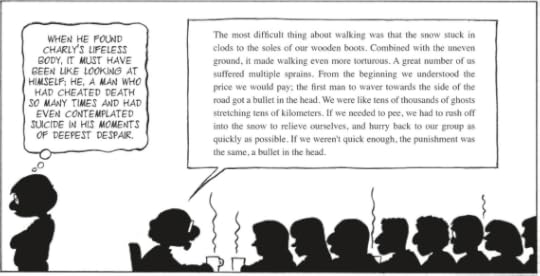
Here are some of the moments that made me either cry, laugh or something in-between:
. The only negative thing being that the pacing was a bit difficult to keep up with because of the time jumping, but other than that Second Generation was a spectacular take on family and intertwining histories that I'll continue to reference (especially to my mom) and treasure for quite some time.
4.5/5 stars
*Note: I'm an Amazon Affiliate. If you're interested in buyingSecond Generation, just click on the image below to go through my link. I'll make a small commission!*
Second Generation is a graphic novel written and illustrated by Michel Kichka. It tells about not only the story of his dad, Henri, but also how the author and his siblings grew up with a parent who was a Holocaust survivor. The recollections of what happened to Michel's dad in this book are less vivid and haunting compared to the other books I've read before that tackles the same topic. However, I found the ending a little bit odd and abrupt. Nonetheless, it's an entertaining graphic novel that will like by readers.
La mia famiglia era volata via in cenere, dispersa dal vento malvagio della storia
“Chi gli avrà scritto un numero tra i peli?” si chiedeva il piccolo Michel. E’ la curiosità di un bambino che si stupisce vedendo il braccio tatuato del padre; uno strano tatuaggio...
Una storia che non poteva che incominciare con un punto interrogativo, un domandarsi, un chiedersi perchè di molte cose del passato non si poteva parlare. Così, giorno dopo giorno, si tesseva la vischiosa ragnatela del "non detto”; solo qualche accenno e un paio di foto stropicciate da guardare di nascosto ed Auschwitz diventa un suono già sentito ma, allo stesso tempo, una parola mai chiarita.
I silenzi però stuzzicano la fantasia del giovane Michel che diventa sempre più avido nel voler saperne di più, capire cosa era successo.
Michel Kichka, affermato fumettista, ricostruisce la storia della sua famiglia e del rapporto con suo padre in questa graphic novel fatta di tavole in bianco e nero.
Così vediamo come questa seconda generazione sia, non solo, quella votata al riscatto dalle umiliazioni, dalle aspirazioni calpestate e dai desideri distrutti ma anche quella che deve mettere in atto una rielaborazione di una memoria vissuta in modo indiretto.
"sarò eternamente votato a fargli avere soddisfazioni che lo risarciscano di ciò che ha subito? Si riesce mai davvero a liberarsi dai traumi dei genitori? Fino a che età rimaniamo i loro “bambini”, con tutto quello che c’è di sottinteso?"
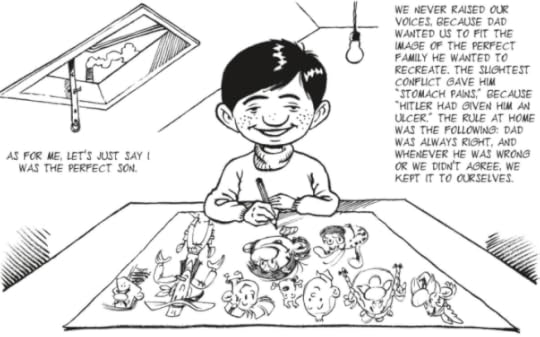
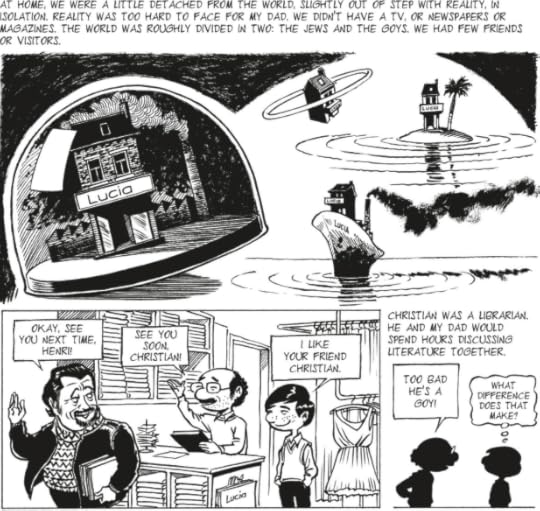
Apparentemente una famiglia modello, omologata a lo standard comune. Parlano in Yiddish per non farsi capire mentre le relazioni famigliari sono mascherate sotto una coltre di atteggiamenti prestabiliti, regole che soffocano i reali bisogni dei figli per paura di rimanere soffocati dal passato.
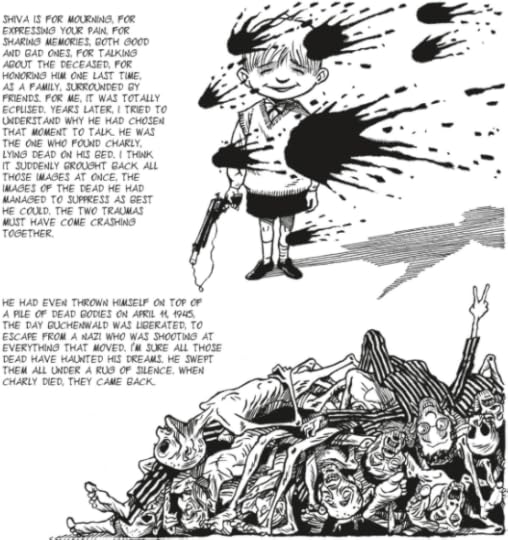
Dal padre impara l’amore per il disegno e poi succede qualcosa che dà una scossa a tutto questo: Charly, il figlio minore si suicida.
“Un’altra vittima della Shoah” è la sindrome della seconda generazione?"
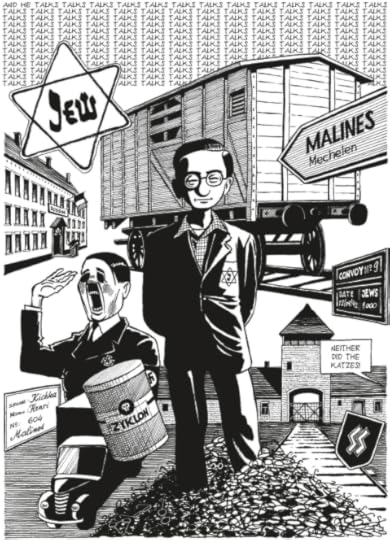
Da quel momento in poi Henry Kichka comincia a parlare e da allora non si ferma più. La testimonianza prima negata, si sblocca e diventa necessaria.
Come ci si riconcilia con i fantasmi del passato? Come ci si confronta con un’eredità dolorosa come quella della memoria?
"Soffrire per soffrire, siamo cresciuti nel non-detto, andiamo avanti così... di padre in figlio!"
Henri Kichka è morto lo scorso aprile, all’età di 94 anni. Così il figlio Michel ho dato la notizia su Facebook:
“Un piccolo e microscopico coronavirus è riuscito dove l’intero esercito nazista aveva fallito. Mio padre era sopravvissuto alla ‘marcia della morte’, ma oggi ha concluso la sua marcia della vita”.
Selamlar. Çok şaşkınım kitap bitirdim. Evet grafik roman olduğunun farkındayım, teşekkürler. Ama yine de yaşasın. Zira okumaya çalıştığım çizgi romanları bile yarım bıraktığım hangi gezegenin nerelere girdiğini bilemediğim dönemler geçirdim. Kitaba gelirsek, güzeldi beğendim, otobiyografi - anı tarzında eserlere eleştiri yapmaya çok çekiniyorum zira 'buna da kitap yazmazsın be' der gibi oluyor. :P İkinci dünya savaşı gerek kurgu, gerekse otobiyografi alanında bolca malzeme olan bir konu. Daha iyi eserlerle şansınızı deneyebilirsiniz diyorum ancak iflah olmaz bir bağımsız grafik roman koleksiyoneri iseniz orası sizin bileceğiniz iş.
Questa graphic novel è una delle cose più sincere e meno retoriche che io abbia mai letto sulla Shoah. Michel Kichka, figlio di un ebreo sopravvissuto a Buchenwald, si racconta con una semplicità disarmante. È un fumetto che è anche memoir, e risulta particolarmente efficace e toccante proprio perché non ha alcuna pretesa di commuovere, stupire o colpire tasti deboli. La terribile storia di suo padre emerge lentamente, dapprima attraverso i ricordi di un Michel bambino ossessionato dalla storia, che legge ossessivamente tutti i libri del padre, terrorizzato all'idea di riconoscere nei volti deformati dall'orrore delle fotografie scattate nel gennaio '45 gli occhi del genitore, per poi assumere chiarezza e definizione con la crescita di Michel e l'invecchiare padre, che scrive un libro di memorie e comincia a trincerarsi dietro testimonianze che ripete a chiunque, come se raccontare la propria storia costruisse un muro abbastanza resistente da arginare i ricordi veri e propri. Si potrebbe dire molto di questo fumetto, ma la verità è che la lettura è talmente gustosa ed emotivamente travolgente, nonostante la semplicità di termini e l'assenza di escamotage narrativi e retorici, che la sua forza sta proprio nell'immediatezza con cui riesce a mostrare il groviglio di sensi di colpa e difficoltà che si abbattono sulle spalle della "seconda generazione", e cercare di parlarne rischierebbe solamente di scafire un po' di questa forza. Io non posso che consigliare caldamente questa lettura.
Michel Kichka is a left leaning Israeli cartoonist. I happened to read two of his autobiographical works that are published as graphic novels- Second Generation and Falafel With Hot Sauce. Second generation is a book about his relationship with his father who is a Holocaust survivor.
I have written my detailed view in my blog post here
Ce roman graphique est un récit autobiographique d’un enfant de la deuxième génération autrement dit les enfants des survivants de la Shoah. Il s’inscrit donc dans la même veine que Maus, filiation que l’auteur revendique de façon explicite puisqu’il raconte même avoir essayé en vain de le faire lire à son père.
À la différence de son illustre aîné qui abordait les deux époques (le passé dans les camps et l’après, la génération du fils), ce livre se concentre exclusivement sur la vie après les camps. Ou comment construire une famille lorsque la sienne a été décimée par les nazis. Les scènes du passé ne sont évoquées qu’à l’occasion d’histoires racontées par le père de l’auteur.
Le dessin noir et blanc tout en arrondi et en harmonie, plutôt gai contraste avec les propos – l’auteur évoque d’ailleurs lui-même ce contraste. Il n’en restent pas moins agréables et la profondeur des propos suffisent à transmettre l’émotion. Comme dans Maus c’est le décalage entre le père et le fils, cette incompréhension mutuelle qui est mise en lumière et étudiée. Peut-être est-elle née de la difficulté à parler de l’horreur, une façon de se préserver ou d’épargner les siens. Pourtant petit à petit le père se mettra à raconter et ira même plus loin en faisant visiter les camps et en écrivant lui-même un livre sur son histoire. En y réfléchissant le même dispositif en miroir et la même incompréhension entre le père et le fils sont explorés dans un contexte proche mais différent, celui des camps de prisonnier de guerre dans Moi René Tardi, prisonnier de guerre au Stalag II B.
Difficile pour les enfants de s’épanouir dans un tel contexte. Il doit y avoir un sentiment étrange. Comment le père qui a vécu une telle horreur pourrait comprendre les difficultés de la vie quotidienne – “normales” – de ses propres enfants, et pourtant …
Encore un témoignage sincère et poignant sur ce drame qui, malgré le temps qui passe, n’a pas fini de faire souffrir les hommes.
The graphic memoir is something that I feel has become more and more popular in recent years, particularly Maus by Art Speigelman (which I haven't yet read). This falls into that same category though I feel that Michel Kichka's humour and brilliant illustrations made this book feel all the more real.
I feel that Kichka portrayed his father, a concentration camp survivor, in a very honest way; he didn't fall into the trap that I think other authors sometimes do of making all survivors perfect flawless people. The author's father has his flaws but this made the story stand out even more to me and I really felt like I was getting to know these people as I was reading.
Some parts of this book felt a little rushed but overall this was a great read. The themes of trauma and living under the weight of your parent's experiences really came across in a way that I think many people could relate to. I would highly recommend this if you enjoy graphic memoir or books about WWII.
Retazos inteligentes y humorísticos de recuerdos de su padre, de la shoa y de sus sensaciones como "segunda generación". Triste en momentos, simpático en otros, sólo carece a veces de un hilo conductor. Valiente ejercicio del autor!
There is a saying that the suffering of those who survived the holocaust, is passed down to the second generation. In this autobiographical memoire of his life, Michel goes over his childhood, as well as his dad's experience in Auschwitz.
This is not Maus, but it is like it in that the son is trying to understand his father. And learn his art from his father, as his father was a cartoonist before he was sent to the camps, and didn't pick up art until he retired years later.
But this is not so much a story of the camps, but how Michel say his father after the camps. How his father lead tours of Auschwitz, to school children. How his father would make jokes about how soup reminded him of the camps, because there was no soup there. Dark humor.
Michel said it took him ten years to write this because it was so hard to pull it out of his head. He had no problem thinking about it, but writing it was another matter.
Stirring, and sad. Funny, but distressing. The second generation has to figure out how to live with their parents who didn't know what to do with them, except send them off to boarding school.
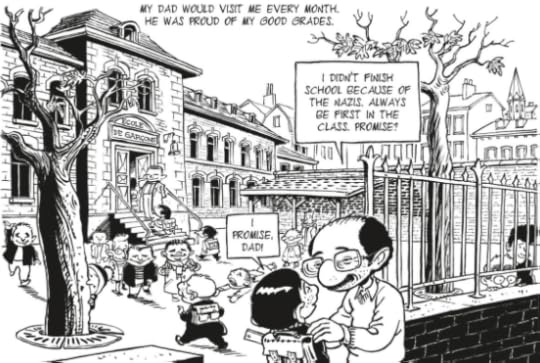
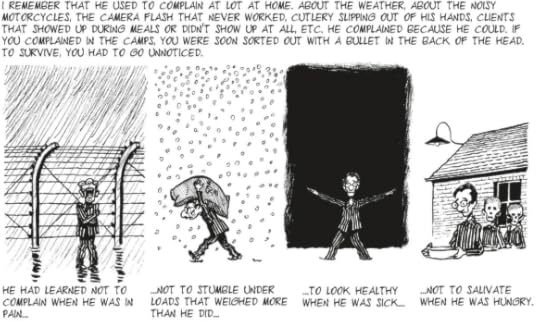
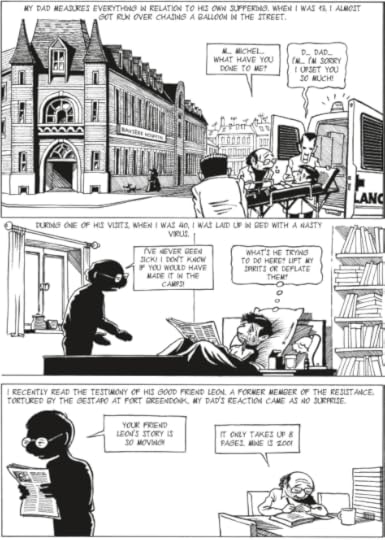
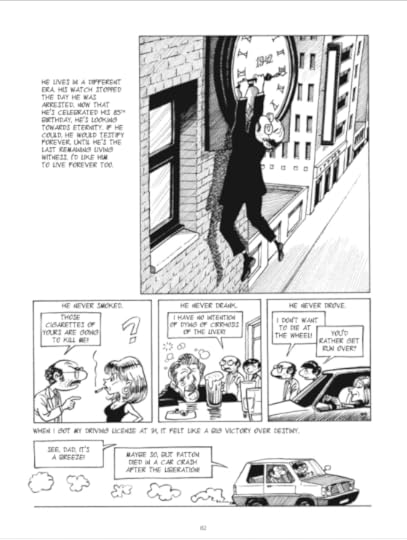
This panel, below, reminds me that though my father was not put in the camps, but he too had a very hard view of others. He lived through the depression, and felt that the way he lived was the right way, as well.
We are a part of our parents, no matter how much we reject it, and Michel felt this was the best way to tell his story.
A good contribution to the body of holocaust books out there.
Thanks to Netgalley for making this book available for an honest review.
המאייר מישל קישקה כתב ואייר בדם לבו ספר קומיקס על אביו, שורד מחנה אושוויץ. הסיפור הוא סיפורה של כל משפחת קישקה: אביו הלום השואה, אמו הקרה והמנוכרת, אחיו המיוסרים ומישל עצמו, שגדל כל חייו בצל השואה, כאילו הוא עצמו היה ניצול המחנות. האיורים יפהפיים, לעיתים מחרידים. כמה מהם גאוניים ממש. הטקסט קשה לעיכול, מכווץ את הלב, שורט את הנשמה.ככל שהספר מתקדם אל סופו, הוא הופך אפל יותר, אך עם זאת, לא לגמרי נטול תקווה. מומלץ.
this graphic novel was both a revelation and a disappointment. I ran across it while browsing in a second had bookshop and was immediately attracted to it, no one has ever told the story of the holocaust from the point of view of a second generation, rather than the generation that had to endure it. What are the results of such a tragic events not on the survivors, but on their sons and daughters? Will they feel hatred? Will they live in the shadows of the tragedy? or will they rise from the ashes? (and i mean it quite literally here) The first half of the novel is definitely intriguing, we get to see the writer and illustrator's life, his upbringing, the shadow that haunts him and his family, but this line reasoning is completely lost in the second part of the novel. I still haven't quite wrapped my head around the fact that the entire second part seemed a rant against michel's father. Was he trying to sympathize with him? Was he complain about his attitude? (which, by the way, wouldn't come to no surprise to me, because he was, indeed, pretty whiny). What hasn't quite convinced me though was that I really do not understand what is the point the author is trying to make... It was, nonetheless, an unexpected way of getting rid of what had seemed to me like the worst reading slump I have ever gotten into
'Second Generation - Things I Didn't Tell My Father' by Michel Kichka is an autobiographical graphic novel. The subject is fairly heavy with some lighter moments. I'm hoping it was quite cathartic for the author.
Michel's father survived the holocaust, but it looms over his life and the life of his family. They live in Belgium at the beginning of the novel. The kids just want to be kids, but they are constantly reminded of the horrors of their father's generation. Years later, Michel has moved to Israel. His father has written a book about his experiences and leads tours to Auschwitz. He invites Michel many times, but Michel is reluctant.
This book reminded me a bit of the famous graphic novel Maus, and the author even says it was an inspiration for him. How this differs is that the focus is much more on the second generation of survivors, those with parents that were traumatized by life in the camps. It's a poignant story with incredible art. I am thankful I got a chance to read this story.
I received a review copy of this graphic novel from Europe Comics and NetGalley in exchange for an honest review. Thank you for allowing me to review this graphic novel.
A story of the author's living in the shadow of his father's Holocaust experience. As a boy, Dad was always right -- always important not to argue with him because he'd live through too much. As a man, Dad still managed to bring things around to himself and his time in the Shoah (Dad wrote a book, and gave witness at Auschwitz).
I read this book as an advanced reading copy via NetGalley.
"It's not easy to make a family tree when most of the branches have been ripped or burned off."
"At Auschwitz, young Israelis march with their flag. I find that inappropriate. The Shoah belongs to all. The camps, or at least what's left of them, are enormous cemeteries where each step sends ashes of our civilization scattering into the wind. You have to go there in the spirit of total humility."
Ο Β��� Παγκόσμιος Πόλεμος είναι ένα απ’ τα συγκλονιστικότερα γεγονότα της ανθρώπινης ιστορίας. Το Ολοκαύτωμα συγκεκριμένα είναι ένα μοναδικό ιστορικό γεγονός. Ο βιομηχανικός θάνατος των Εβραίων (αλλά και των κομμουνιστών, των αντιφρονούντων, των ομοφυλόφιλων, των τσιγγάνων και άλλων εχθρικών για το ναζιστικό καθεστώς κοινωνικών ομάδων) δεν μπορεί να συγκριθεί με καμία άλλη απ’ τις μαζικές σφαγές της μέχρι τώρα ιστορίας. Τότε γεννήθηκε και η ίδια η έννοια της «γενοκτονίας», ως αποτέλεσμα γεγονότων τόσο απάνθρωπων που ίσως δεν θα μπορούσε νωρίτερα να τα συλλάβει ο ανθρώπινος νους.
Έχουμε γνωρίσει πολλά αριστουργήματα της τέχνης με κεντρικό θέμα τους τον Β’ Παγκόσμιο Πόλεμο. Στο χώρο των comics φυσικά ξεχωρίζει το Maus του Art Spiegelman που μεταφέρει τις αναμνήσεις του πατέρα του, επιζώντα του Ολοκαυτώματος αναπαριστώντας τον πόλεμο με μια μεταφορά στον κόσμο των ποντικιών και των γατών.
Βέβαια, πέρα απ’ το Maus -που θεωρείται πλέον ένα απ’ τα κλασσικότερα comic όλων των εποχών- υπάρχουν και άλλα comics τα οποία άμεσα ή έμμεσα αναφέρονται στο Β’ Παγκόσμιο Πόλεμο. Η χαρακτηριστικότερη μορφή των comics που έχει εμπλακεί στον Β’ Παγκόσμιο Πόλεμο είναι φυσικά ο Captain America, ο οποίος έκανε το πασίγνωστο ντεμπούτο του το 1941 με την εμβληματική του μπουνιά στον Χίτλερ, ενώ μέχρι και σήμερα διατηρεί αυτή την παράδοση έχοντας ως κορυφαίο του arch enemy τον Red Skull, αρχηγό της φασιστικής οργάνωσης Hydra, στις γραμμές της οποίας βρίσκουμε κι άλλες μορφές συνδεδεμένες με τους ναζί, όπως τον Baron Zemo και τον Baron Strucker. Η πιο πρόσφατη εμφάνιση αυτών των χαρακτήρων ήταν στο Secret Empire, το event του Nick Spencer που ήταν μια σαφής πολιτική κριτική στη διακυβέρνηση Trump. Πάντως τον Β’ Παγκόσμιο Πόλεμο μπορούμε να τον εντοπίσουμε και στα comics ελλήνων δημιουργών, όπως είναι το World War Sapiens του Δημήτρη Καμμένου.
Σ’ αυτή την κατηγορία των comics που αναφέρονται στον Β’ Παγκόσμιο Πόλεμο και πιο συγκεκριμένα στο Ολοκαύτωμα των Εβραίων προστέθηκε τα τελευταία χρόνια η «Δεύτερη Γενιά: Αυτά που δεν έχω πει στον πατέρα μου» του Michel Kichka, το οποίο μετέφρασαν στα ελληνικά οι εκδόσεις Μαμουθκόμιξ. Πρόκειται λόγω θέματος αλλά και χάρις στο περιεχόμενό του για ένα διαμάντι της 9ης τέχνης, αφού καταφέρνει μέσα από τη μορφή του comic να διηγηθεί μια πολύ προσωπική ιστορία συνδεδεμένη με τη μνήμη του Ολοκαυτώματος. Η μορφή του comic βοηθάει τον δημιουργό να διηγηθεί την ιστορία του πιο ανάλαφρα, συνοδεύοντας τα τραγικά γεγονότα με χιουμοριστικές στιγμές και ένα αντίστοιχο χιουμοριστικό σχέδιο. Όμως, παρά το χιουμοριστικό ασπρόμαυρο σχέδιο και τα ανάλαφρα διαλείμματα, πρόκειται για ένα comic σκληρό όσο και το θέμα του, απ’ το οποίο ο αναγνώστης έχει να μάθει πολλά αλλά καθόλου ανώδυνα. Άλλωστε πώς θα μπορούσε να είναι ανώδυνη η εμπειρία της ανάγνωσης μιας ιστορίας για το Ολοκαύτωμα, ακόμα και μέσα απ’ τις σελίδες ενός comic;
Η Δεύτερη Γενιά έχει σαφείς αναφορές στο Maus, με το οποίο μοιάζει στο βαθμό που ο δημιουργός ανασκευάζει σε comic τις μνήμες του επιζώντα απ’ το Ολοκαύτωμα πατέρα του. Όμως η διαφορά έγκειται στο ότι ο Kichka δεν επιχειρεί να γράψει ένα comic που θα διηγείται (ή θα εξηγεί) τον Β’ Παγκόσμιο Πόλεμο στις επόμενες γενιές. Ο Kichka μέσα από τη μνήμη του Ολοκαυτώματος την οποία γνωρίζει μέσω του πατέρα του, επιχειρεί να μας διηγηθεί τη δική του ζωή. Ουσιαστικά αυτοβιογραφείται ως το παιδί ενός επιζώντος του Ολοκαυτώματος που διηγείται πως μεγάλωσε κάτω από το φορτίο αυτής της βαριάς πραγματικότητας.
Πρωταγωνιστής της ιστορίας είναι ο Michel, ο ίδιος ο δημιουργός δηλαδή, όχι ο πατέρας του, ο Henri Kichka, ο οποίος όμως είναι βέβαια κεντρικό πρόσωπο της παιδικής και μετέπειτα της ενήλικης ζωής του. Αυτή η αλλαγή οπτικής του Kichka απ’ τα ίδια τα θύματα στους απογόνους του, τη Δεύτερη Γενιά θυμάτων, έχει αυτοτελές ιστορικό ενδιαφέρον για το πώς επέδρασε η μνήμη του Ολοκαυτώματος σε μια ολόκληρη γενιά η οποία δεν το έζησε αλλά γεννήθηκε και μεγάλωσε κάτω απ’ τη σκιά της καταστροφής και του θανάτου. Πώς είναι να γεννιέσαι σε μια οικογένεια χωρίς συγγενείς, επειδή όλοι έχουν εξοντωθεί στο Άουσβιτς; Πώς διαχειρίζεται το τραύμα του Ολοκαυτώματος μια οικογένεια ενός επιζώντος που έχει συνδέσει όλες του τις αναμνήσεις με αυτό το κορυφαίο γεγονός της ζωής του, στο οποίο όμως αναφέρεται μόνο παρεμπιπτόντως, αφού ακόμα και δεκαετίες μετά προτιμά τη σιωπή απ’ τη διήγηση αυτών των τραυματικών στιγμών;
Στην πραγματικότητα και οι Εβραίοι που συγκροτούν αυτή τη Δεύτερη Γενιά αποτελούν θύματα του Ολοκαυτώματος ακόμα κι αν δεν έζησαν εκείνα τα χρόνια, ακόμα κι αν δεν είδαν ποτέ από κοντά τα κρεματόρια. Κι αυτό γιατί γεννήθηκαν υπό τη σκιά αυτού του τραύματος, το οποίο καθόρισε τη ζωή του περισσότερο από κάθε άλλο λαό. Γι’ αυτό και ο Michel δυσκολεύεται να διηγηθεί την ιστορία του. Γιατί είναι μια τραυματική ιστορία. Γιατί υπήρξαν και θύματα μετά το Ολοκαύτωμα. Κάποια από αυτά επέζησαν, όπως ο ίδιος, ο οποίος τελικά βρήκε τη δύναμη και διηγήθηκε την ιστορία του, παρά τις δυσκολίες που αντιμετώπισε οι οποίες τον καθυστέρησαν δέκα χρόνια απ’ το να το ολοκληρώσει (κι αυτό ενώ κατά τα άλλα ήταν έμπειρος και παραγωγικός σκιτσογράφος). Κάποια άλλα θύματα δεν τα κατάφεραν, όπως ο αδερφός του, ο οποίος αυτοκτόνησε. Άλλο ένα θύμα των ναζί, δεκαετίες μετά από την ήττα της ναζιστικής Γερμανίας στον Β’ Παγκόσμιο Πόλεμο. Κάπως έτσι ζύγιζε και τη ζωή του ο Henri. Κάθε επίτευγμα δικό του ή της οικογένειάς του ήταν μία νίκη επί του Χίτλερ, που μπορούσε να του την τρίψει στα μούτρα. Οι καλοί βαθμοί του Michel, τα όμορφα σκίτσα του, το αυτοβιογραφικό βιβλίο του Henri ήταν όλα νίκες επί του Χίτλερ. Όμως δεν είχαν σταματήσει να υπάρχουν και ήττες και απώλειες ανθρώπων που ήταν θύματα του Χίτλερ, ακόμα κι αν δεν ζούσε πια για να δώσει την εντολή της εξόντωσής τους.
Το ιστορικό ενδιαφέρον για τη Δεύτερη Γενιά αντίστοιχα υπάρχει και για την άλλη πλευρά. Η διαχείριση του τραύματος του Β’ Παγκοσμίου Πολέμου ήταν ένα σημαντικό βάρος -ποιοτικά διαφορετικό- και για την επόμενη γενιά των Γερμανών, οι οποίοι έπρεπε να πάρουν θέση για το πρόσφατο παρελθόν της χώρας τους. Με αυτό το ζήτημα ασχολείται η μελέτη του Peter Sichrovsky «Γεννημένοι Ένοχοι» (εκδόσεις Στάχυ) που ερευνά τις αντιλήψεις της επόμενης γενιάς της άλλης πλευράς, δηλαδή των παιδιών των εγκληματιών Ναζί, μέσω συνεντεύξεων κάποιων από αυτούς. Ο Sichrovsky ερευνά τόσο πώς έμαθαν για το παρελθόν των γονιών τους όσο και αν το αποδέχτηκαν ή το απέρριψαν (μαζί με τους ίδιους τους γονείς τους). Η διαχείριση και αυτής της πλευράς του τραύματος του Β’ Παγκοσμίου Πολέμου έχει εξίσου ένα ιστορικό ενδιαφέρον, χωρίς φυσικά να ξεχνάμε ότι η προτεραιότητα πρέπει να δίνεται πάντα στην ιστορία των θυμάτων αυτής της πιο απάνθρωπης στιγμής στην ιστορία της ανθρωπότητας. Γιατί τη δικιά τους ύπαρξη θέλησε να εξαφανίσει ο φασισμός. Και γι’ αυτό η δικιά τους φωνή πρέπει να ακούγεται δυνατά σε όλο τον κόσμο. Για να μην ξεχνάμε. Για να μην το ξαναεπιτρέψουμε.
Was für ein Meisterwerk! Michhel Kichka erzählt die Geschichte seiner Familie, die die KZs überlebt haben, auf eine so wunderbare Weise wie es lange keiner mehr getan hat. Es ist ein tragikomischer Comic: Das Schreckliche, das geschehen ist, lastet zwar auf den Protagonisten (vor allem dem Vater, von dem Michel das Zeichnen gelernt hat), doch gibt es auch schöne Momente. Reale Erinnerungen erscheinen oft in düsteren, abstrakten Zeichnungen die an das große Vorbild Maus erinnern, doch wechseln sie sich mit Funnys und Karikaturen ab, die von einer bemerkenswerten Lebensfreude und einer gehörigen Portion Galgenhumor zeugen. Wie Vater und Sohn alberne Schmähbilder von SS-Offizieren und Hitler selbst zeichnen, ist gleichermaßen rührend, witzig, und lässt einem doch das Lachen im Hals stecken.
Besonders der Schluss ist bemerkenswert: Die gesamte Familie reißt einen Holocaust-Witz nach dem anderen, bis die genervte Mutter sich mit einem "ich geh duschen" effektvoll verabschiedet. Witze, die kaum geschmackloser sein könnten als Katharsis für das selbst erlebte Grauen. Das berührt und verstört, und ist doch durchdrungen von Optimismus. Ein wundervolles Buch.
Автобіографічний мальопис про дітей тих, хто вижив під час Голокосту. Як вижівші євреї продовжили своє життя після катувань, принижень та смерті всіх, кого вони любили? Як вони змогли - чи не змогли - жити в тих же містах, звідки їх примусово виселяли та жителі яких подекуди були винуватцями їхніх страждань та смерті їхніх близьких? Як вони виховували своїх дітей? Чи могли говорити про те, що пережили? З якими цінностями, страхами та думками росли їхні діти? Як травма поколінь вплинула на їхні життя? Для мене це був не тільки приємно намальований графічний роман (мультяшність персонажів в поєднанні з трагічністю подій вражає більше, ніж якщо б стиль малюнку був реалістичніший) з цікавим життєвим сюжетом, але й простір для рефлексій. Що ми, як люди що є жертвами геноциду зараз, можемо винести з думок про Голокост на суспільному та індивідуальному рівнях? Як досвід інших, що пережили схожі трагедії та схоже знищення, може допомогти нам? Багато плакала і багато думала. Хоча мальопис сам по собі написаний з гумором та в цілому залишає по собі приємне, тепле відчуття.
3.5 stars... Michel Kichka's father was an Auschwitz survivor who lost his entire family, making Michel part of the second generation to process the trauma of the Shoah (Holocaust). This memoir graphic novel details his childhood growing up with a father who was constantly fixated on proving himself and his worth because having a son who was best in his class would "show Hitler". It also references Michel's adulthood as he tries to relate and understand the man his dad has become in response to the trauma he's survived.
It was really intriguing, and an incredibly insightful look into one family's experience with the Holocaust. The only problems I had with it were the weirdly fragmented and abrupt ending and a few strangely placed anecdotes that I feel could have been left out. It was not the most seemless memoir, but I was captivated by it all the same.
I received a copy of this ebook from NetGalley in exchange for an honest review.
La Shoah raccontata da un testimone di seconda generazione, figlio cioè di un sopravvissuto al dramma, in una graphic novel dal tratto cartoonesco. L’immancabile senso di non detto, il desiderio di scoprire e al contempo la paura di sapere, la sofferenza, l’imbarazzo, la lacerazione interiore. Un tema da me da sempre ricercato, non facile da esplorare, soprattutto in un genere come quello della graphic novel. Ma Michel Kichka (che poi scopro essere docente di una delle più prestigiose scuole di arte al mondo, Presidente dell’Associazione Fumettisti Israeliani e nominato Cavaliere delle Arti e delle Lettere dal ministero della Cultura Francese, insomma, mica pizza e fichi!) ci ha provato, con un buon risultato. Poi, ovvio, non avvicinatevi con l’aspettativa di leggere un altro Maus. ...
Livre intéressant, où le dessin est secondaire à l‘histoire. j‘ai vu plusieurs parallèles entre le père de Kishka et celui de Spiegelman, comme si l‘expérience des camps transformaient l‘homme de la même manière... Troublant. J‘ai été déçue de ne pas connaître la réaction de Henri au livre de son fils, ce qui donne l‘impression d‘une oeuvre inachevée.
Que dire de plus que ces quelques mots de l'éditeur ? Tout y est. Une histoire personnelle touchante, sensible sans mièvrerie ou volonté de faire pleurer dans les chaumières. Une recherche personnelle aussi de sens à donner, de réponses à trouver face à une histoire familiale qui est parfois plus devinée que racontée.
Çok beğendim kitabı. Holokost'a dair başka bir hikaye anlatmış Michel Kichka. Türkiye'de de ikinci kuşak adına anlatılacak ne çok hikaye var diye düşündüm...
Le rapport des enfants de ceux qui sont revenus des camps à leur famille est tant marqué par les silences que par les discours. L'auteur témoigne de sa vie dans ce contexte.
Autor rozpoczyna autobiograficzną opowieść od listu do czytelników, w którym ujawnia, że w szkole podstawowej dowiedział się, że jest Żydem, dotąd miał się po prostu za Belga. Dopiero mając 20 lat i mieszkając w Izraelu, odkrył swoją tożsamość — jako Aszkenazyjczyk i Polak. Dowiedział się, że rodzina matki pochodziła z Częstochowy, a ojca z Łodzi i obie uciekły do Belgii w międzywojniu, jednak bliscy ojca zginęła w Shoa. W domu nikt nie mówił po polsku, jego ojciec miał z nim jedynie złe, antysemickie skojarzenia. Dopiero w 2015 roku — trzy pokolenia — ojciec autora, autor i jego synowie spotkali się razem w Auschwitz. To znamienne, bo Michel w swojej powieści graficznej — z humorem i powagą — pokazał traumę drugiego pokolenia. Jest to zatem spojrzenie na dzieci ofiar i oprawców, które musiały mierzyć się z przeszłością rodziców i dziadków. Terapeutyczna rola literatury to istotne zagadnienie, które należy omawiać z młodymi ludźmi, ukazywać różnicę przekazów, dobór formy literackiej i języka. Komiks Kichki to umieszczona w jedynie tuszowanych na czarno panelach historia autora, jego rodziny, a w szczególności jego ojca, który niemal przepracowywał traumę obozową na swojej rodzinie, bo wszystko wywoływało obozowe skojarzenia, a jednocześnie opowieść ta była pełna niedomówień i tajemnic, nie wyjaśniał on dzieciom, co widział, co stało się z jego rodzicami i dlaczego ma wytatuowane cyfry, jakby doświadczenia wojenne odebrały język do ich opisu — niczym u Różewicza, u którego podmiot liryczny nawoływał, że potrzeba mu nauczyciela, który jeszcze raz nazwie rzeczy i pojęcia, oddzieli światło od ciemności. Ojciec bohatera komiksu potrafił mówić o Auschwitz tylko przez filtr czarnego humoru, a matka wszystko tłumaczyła, że „to co innego, on był w obozie”. Autor zastosował zatem nietypowy zabieg — nie pokazał traumy osoby, która doświadczyła zagłady, lecz emocje jej dzieci. Bohater mierzy się zatem z żalem, jaki ma do swoich rodziców, za niedostateczną opiekę, miłość i troskę, za wymuszanie wielu zachowań i tłumaczenie wszystkiego zagładą, za spełnianie oczekiwań ojca, bo gdy osiągał najlepsze wyniki w szkole, ten chwalił się nimi tak, jakby każda z dobrych ocen była odegraniem się na Hitlerze. Także jako dorosły człowiek, ojciec swoich dzieci, Kichka zastanawiał się, czy wszystkie jego działania nie są podyktowane zadośćuczynieniem: “czy tym razem dostałem je dla siebie, czy dla niego? Trudno powiedzieć. czy jako »jego syn« nie jestem skazany na ciągłe zadowalanie go — wynagradzanie tego, co przeżył? Czy kiedykolwiek można wyzwolić się z traumy swoich rodziców? Jak długo pozostaje się ich „dzieckiem”, z całym bagażem, jaki się z tym wiąże?” Kichka w opowieści pełnej wyznań i dowcipów ukazuje też ból związany ze samobójczą śmiercią swojego brata Charliego, pisze o syndromie drugiego pokolenia i tym, że ojciec odebrał mu żałobę, bo… chwila pogrzebu stała się dla niego pretekstem do opowiedzenia — pierwszy raz — swojej historii. Jakby zamiatane pod dywan historie pełne trupów i śmierci, wraz z pogrzebem własnego dziecka — powróciły ze zdwojoną siłą i nadały mu nowy sens życia: oprowadzania wycieczek po Auschwitz, napisania książki i głoszenia świadectwa na całym świecie. Traumę obozową odczuwał także Michel Kichka, a komiks jest jego próbą określenia własnej tożsamości, zrozumienia siebie jako dziecka i odcięcia pępowiny, która łączyła go z miejscem w Polsce, którego nigdy nie chciał odwiedzić. Rysownik nie stworzył kolejnej opowieści o zbrodniczej statystyce, ale pokazał człowieka, a także jego dwa oblicza — publiczne i prywatne: jedynego ocalałego bohatera i płacących za to jego bliskich. Pokazał, że także po II wojnie światowej umierają ofiary Szoa. To wzruszająca historia, która chociaż ukazuje, jak działa trauma pokoleniowa i jakie są jej skutki, jest też pretekstem do rozmów w klasie, które nie będą dotyczyły historii obozowej, lecz tego, czy historia nas definiuje i jak wpływa na życie i że dzięki sztuce można znaleźć nić porozumienia. Zabawny styl rysunków Kichki nie stanowi bowiem dysonansu z opowieścią, którą za jego pośrednictwem przekazuje autor, czasami jedynie w formie tragikomicznej można opowiedzieć o tym, co najtrudniejsze. Uważam, że jest to forma, którą można przekazać już szesnastolatkom.
Firstly, I'd like to say thank you to NetGalley for providing me with an eCopy of this graphic novel in return for an unbiased review. This graphic novel based around the Jewish persecution in WWII is a little different from other novels on the subject, not only is the art within drawn in a more humorous manner than usual, but the perspective is from that of the victim's son. Second Generation tells the story of how Jews who suffered at the hands of the Nazis had an impact on their family around them once the nightmare of the concentration camps was far in their past.
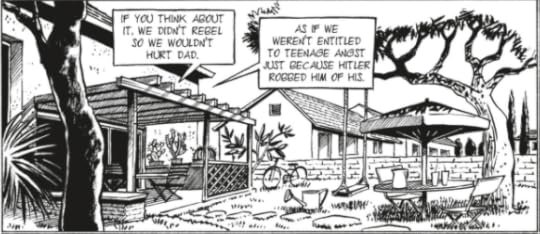
It was so interesting to read how Michel interpreted his fathers' experiences and how he felt alienated from his father due to his decision to withhold and disclose certain varying aspects of his life history, depending on the situation and the timing. It also affected what he and his siblings felt they could do in their childhoods, so not to affect their father. He mentions that he feels like he never had the chance to experience teenage angst because his fathers' opportunity was taken by the Nazis, and despite this being a small issue it really impacts an individuals childhood experience and how their personalities are shaped. There was, for someone who has no family history of being affected by the Nazis, a surprising amount of impact passed down the generations to those who weren't even born when the Nazis were in power. This was very sad but very interesting to learn about.
I really enjoyed this graphic novel, and although I am biased as I have a fascination with anything based around WWII I genuinely think this will be a book enjoyed by a large number of people and one that should be promoted more. A five star read for me.
Мішель Кішка представив свою сімейну історію у книжці “Second Generation”. Він дозволив нам зазирнути в екзистенційний простір «другого покоління». Як зростають діти тих, хто пережив Голокост, про що говорять у сім’ї, а найбільше – про що мовчать. Який тягар випадає нести «другому поколінню» і чи кожному під силу цей тягар витримати.
“Second Generation” by Michel Kichka є історією родини бельгійських євреїв втіленою у формі коміксу. Ця книжка дає можливість читачу знайти відповіді на подібні питання, допомагає зрозуміти те, як поєднуються два світи різних поколінь в одній травмі.
У центрі розповіді Анрі Кішка (Henri Kichka) – батько Мішеля Кішки. Він вижив у концентраційному таборі Аушвіцу, а пізніше став одним із тих, хто в тому самому таборі розповідав навчальним групам про Голокост. 25 квітня 2020 у віці 94 років Анрі Кішка помер від ковіду під час першої хвилі пандемії.
На щастя, він встиг зробити найважливішу екскурсію табором смерті для однієї єдиної людини – свого сина Мішеля. А той, у свою чергу, передав цю історію далі – нам, хто наважиться розгорнути сторінки цієї книжки.
I enjoyed the graphic novel for the most part. Michael Kichka describes his life growing up with parents who lived through the Holocaust. He focuses his story on how their father's issues impacted their life, how the family lived under the shadow of the Holocaust. Kichka describes the loves for his father as well as his frustrations for the way his life is because of the circumstances of the times. I enjoy the art. It has a more classic look with clean lines and I was intrigued as to how the family was impacted b what their father went through. But the section didn't flow into each other and the ending seemed abrupt with out a real conclusion. I enjoyed the story and seeing how the author lived, but the organization of the story was a little off. I received an ARC from NetGalley; all opinions are my own.