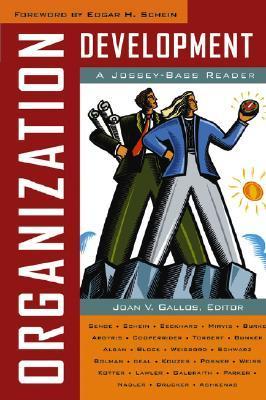
Organization Development is a one-stop guide to the world of planned change. Organization development has a powerful and influential heritage, solid core, evolving applications and approaches, and a vital role to play in today's global, fast-paced world of constant change. This volume immerses readers deeply in organization development's power and possibilities.
Newcomers to the field can read the book cover to cover and explore organization development's foundation, scope, focus, purpose, and methods. Experienced consultants and change agents will find chapters that capture best thinking on key topics--resources for fine-tuning skills, learning about intervention options, envisioning organization development's future, or reflecting on the larger issues in growth and change. Leaders and managers will find the resources they need to understand the route to organizational health and effectiveness, and to develop, launch, and nourish successful change efforts.
This is the third book in the Jossey-Bass Reader series. The collection of chapters will introduce you to the key thinkers and contributors in organization development including Ed Lawler, Peter Senge, Chris Argyris, Richard Hackman, Jay Galbraith, Cooperrider, Rosabeth Moss Kanter, Bolman & Deal, Kouzes & Posner, and Ed Schein, among others. The editor's interludes and organization of the book will help you appreciate the foundations and the growth of OD as a field and as a method of planned change.
Edgar Henry Schein (March 5, 1928 – January 26, 2023) was a Swiss-born American business theorist and psychologist who was professor at the MIT Sloan School of Management. He was a foundational researcher in the discipline of organizational behavior, and made notable contributions in the field of organizational development in many areas, including career development, group process consultation, and organizational culture. He was the son of former University of Chicago professor Marcel Schein.--Wikipedia.org
Excellent Org Dev resource. I liked the sections on successful interventions and change initiatives, communicative theory, or changing discourse to affect change, the distinction between organizational and human change, the need to construct community and collaborate within an org to realize change, and to balance the emphasis on process and virtue ("humanist") based consulting with the needs of the organization and present an awareness of how the organization perceives you as consultant. I also liked the chart on challenges to sustainability, or including sustainability as a consulting foci. I wanted to see more on healthy organizations, or org well-being and consulting to that end. Org health comprised the last chapter, but was quite short.