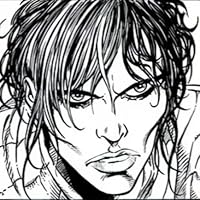
By the mid-1980s, X-Men had become significantly darker. This doesn’t always necessarily mean more mature, but one can tell that head writer Chris Claremont intended for his book of mutants to be for adults. By the time of the Mutant Massacre crossover this couldn’t have been clearer. It’s violent with so much outright murder, full of complex moral choices in which beloved superheroes are forced to kill, and probably upended the status quo more than any other event had before.
It’s technically the first X-Men crossover, though it was more indirect than modern crossovers with their “to be continued in ___” (the X-Men and the spinoff team X-Factor didn’t actually meet). The year before, there had been crossovers with Secret Wars II, and there was Secret Wars before that, but this felt different. Not as cosmic, but actually it felt more important.
When rereading it today, it can feel all over the place. There are a lot of different artists, and John Romita Jr. had a good start but the climactic first fight between Wolverine and Sabretooth was illustrated by Rick Leonardi. The X-Factor chapters by Walter Simonson—starting his legendary run—are absolutely beautiful. There are a lot of other Marvel titles thrown in as well, there was Thor which was written by Mr. Simonson, and Power Pack which had the same writer as X-Factor: Louise Simonson. Daredevil as well, for some reason. And a single New Mutants issue.
When just reading the Uncanny X-Men, for example, or only X-Factor, it could still feel like a full enough story. That was probably the intention at the time, before comic readers became such completists. Speaking from just the X-Men point-of-view, it’s remarkable how much the stakes felt higher in those days because the X-Men could get defeated by the likes of the Marauders, who were hardly a world-ending threat. In fact, the X-Men unequivocally lose. The Marauders, working for Mr. Sinister but we didn’t know that yet, pretty much completely succeed in killing off the majority of the poor homeless Morlocks living underground. And even those Marauders who die end up cloned, yet that’s later. In the end, there’s no catharsis with the good guys triumphantly saving the day. Instead, a realistic tragedy as they save merely a handful of lives.
The biggest legacy of the Mutant Massacre was the change of the lineup of the X-Men team. Before that, the changes were slow over the course of years, such as Banshee retiring and the addition of Kitty Pryde and Rogue. After this, Nightcrawler and Kitty were out of commission (leading to the creation of the Excalibur team soon after), and Colossus too. Psylocke then joins the team. And Longshot, although he doesn’t even show up here which seems to be a bit of a continuity error. Lastly, Dazzler. Suffice to say, it was a very different team afterwards. Over in X-Factor, by the way, Angel’s injuries led him to becoming Archangel in the excellent forthcoming Apocalypse storyline.
In the following year, they’d do the Fall of the Mutants event which wasn’t really a crossover. Not until Inferno was there a multi-part chaptered crossover in the way we’d recognize it today. It’s certainly become an overblown annual tradition, and much has been written already about event fatigue with 21st century superhero comics. The Mutant Massacre was before all that, and stands on its own merits as an important highlight of the 1980s-era X-Men.