

What do you think?

13 Ways of Looking at the Novel
Pulitzer Prize winner and bestselling novelist Jane Smiley celebrates the novel–and takes us on an exhilarating tour through one hundred of them–in this seductive and immensely rewarding literary tribute.
In her inimitable style–exuberant, candid, opinionated–Smiley explores the power of the novel, looking at its history and variety, its cultural impact, and just how it works its magic. She invites us behind the scenes of novel-writing, sharing her own habits and spilling the secrets of her craft. And she offers priceless advice to aspiring authors. As she works her way through one hundred novels–from classics such as the thousand-year-old Tale of Genji to recent fiction by Zadie Smith and Alice Munro–she infects us anew with the passion for reading that is the governing spirit of this gift to book lovers everywhere.
In her inimitable style–exuberant, candid, opinionated–Smiley explores the power of the novel, looking at its history and variety, its cultural impact, and just how it works its magic. She invites us behind the scenes of novel-writing, sharing her own habits and spilling the secrets of her craft. And she offers priceless advice to aspiring authors. As she works her way through one hundred novels–from classics such as the thousand-year-old Tale of Genji to recent fiction by Zadie Smith and Alice Munro–she infects us anew with the passion for reading that is the governing spirit of this gift to book lovers everywhere.
608 pages, Hardcover
First published September 13, 2005
About the author
Jane Smiley
149 books2,887 followersJane Smiley is a Pulitzer Prize-winning American novelist.
Born in Los Angeles, California, Smiley grew up in Webster Groves, Missouri, a suburb of St. Louis, and graduated from John Burroughs School. She obtained a A.B. at Vassar College, then earned a M.F.A. and Ph.D. from the University of Iowa. While working towards her doctorate, she also spent a year studying in Iceland as a Fulbright Scholar. From 1981 to 1996, she taught at Iowa State University. Smiley published her first novel, Barn Blind, in 1980, and won a 1985 O. Henry Award for her short story "Lily", which was published in The Atlantic Monthly. Her best-selling A Thousand Acres, a story based on William Shakespeare's King Lear, received the Pulitzer Prize for Fiction in 1992. It was adapted into a film of the same title in 1997. In 1995 she wrote her sole television script produced, for an episode of Homicide: Life on the Street. Her novella The Age of Grief was made into the 2002 film The Secret Lives of Dentists.
Thirteen Ways of Looking at the Novel (2005), is a non-fiction meditation on the history and the nature of the novel, somewhat in the tradition of E. M. Forster's seminal Aspects of the Novel, that roams from eleventh century Japan's Murasaki Shikibu's The Tale of Genji to twenty-first century Americans chick lit.
In 2001, Smiley was elected a member of The American Academy of Arts and Letters.
Born in Los Angeles, California, Smiley grew up in Webster Groves, Missouri, a suburb of St. Louis, and graduated from John Burroughs School. She obtained a A.B. at Vassar College, then earned a M.F.A. and Ph.D. from the University of Iowa. While working towards her doctorate, she also spent a year studying in Iceland as a Fulbright Scholar. From 1981 to 1996, she taught at Iowa State University. Smiley published her first novel, Barn Blind, in 1980, and won a 1985 O. Henry Award for her short story "Lily", which was published in The Atlantic Monthly. Her best-selling A Thousand Acres, a story based on William Shakespeare's King Lear, received the Pulitzer Prize for Fiction in 1992. It was adapted into a film of the same title in 1997. In 1995 she wrote her sole television script produced, for an episode of Homicide: Life on the Street. Her novella The Age of Grief was made into the 2002 film The Secret Lives of Dentists.
Thirteen Ways of Looking at the Novel (2005), is a non-fiction meditation on the history and the nature of the novel, somewhat in the tradition of E. M. Forster's seminal Aspects of the Novel, that roams from eleventh century Japan's Murasaki Shikibu's The Tale of Genji to twenty-first century Americans chick lit.
In 2001, Smiley was elected a member of The American Academy of Arts and Letters.
Ratings & Reviews
Friends & Following
Create a free account to discover what your friends think of this book!
Community Reviews
Displaying 1 - 30 of 191 reviews

July 5, 2007
So many books .... so little time. Last year I read over a hundred books, yet I still feel I barely scratched the surface. There’s always the sense of falling further behind. One can certainly understand the appeal of Pierre Bayard’s “How to Talk About Books You Haven’t Read”, if only as an aid to help keep your head above water, to help navigate the tsunami of new material which bombards us monthly.
But that’s not what this review is about. Jane Smiley’s “Thirteen ways of Looking at the Novel” won’t help you to deal with the problem of sheer volume of new books that are published nowadays. In fact, weighing in at close to 600 pages, it may actually slow progress towards whatever numerical goal you may have set for 2008. Nonetheless, I urge you, I implore you, to get this book and to take the time to read it. Why? Because if you do, you will never read a novel the same way again. I have read no other book that comes close to this one in terms of enriching my overall reading experience.
The structure of the book is straightforward. The first twelve chapters, spanning 270 pages, or just under half the book, have titles like The Origins of the Novel, The Psychology of the Novel, Morality and the Novel, The Art of the Novel, The Novel and History. Each reads like a terrific tutorial by the professor of literature you wish you had had in college. Though these chapters are never less than fascinating, for my money it’s the next four chapters which make this book so brilliant. They are titled The Circle of the Novel, A Novel of Your Own (I), A Novel of Your Own (II), ‘Good Faith: A Case History . Basically, Smiley uses the 100 pages or so spanned by these chapters to given an inspired tutorial, of unsurpassed brilliance, on how to write a novel. If I had my way, it would be required reading for all of the Rick Moodys, the Heidi Julavits, the Dave Eggers, the Deborah Eisenbergs, any of those too-smart-for-their-own good writers at work today who continue to foist off their whip-smart, empty-hearted, look-at-me-how-smart-am-I, metafictional experiments on the unsuspecting reader, passing it off as ‘literary fiction’.
In the last half of the book, Smiley analyzes 101 of her favorite novels, ranging from ‘The Tale of Genji’ and ‘The Decameron’ to ‘White Teeth’ and ‘Atonement’, bringing to bear the ideas laid out in the first half of the book. This is done with such wit, intelligence, and sympathy that the effect is to make you want to re-read those books you were already familiar with, and to rush out and get the books she discusses that you haven’t already read.
In short, this is one of those rare books that is genuinely uplifting, and will rekindle your enthusiasm for reading. I can give it no higher recommendation.
But that’s not what this review is about. Jane Smiley’s “Thirteen ways of Looking at the Novel” won’t help you to deal with the problem of sheer volume of new books that are published nowadays. In fact, weighing in at close to 600 pages, it may actually slow progress towards whatever numerical goal you may have set for 2008. Nonetheless, I urge you, I implore you, to get this book and to take the time to read it. Why? Because if you do, you will never read a novel the same way again. I have read no other book that comes close to this one in terms of enriching my overall reading experience.
The structure of the book is straightforward. The first twelve chapters, spanning 270 pages, or just under half the book, have titles like The Origins of the Novel, The Psychology of the Novel, Morality and the Novel, The Art of the Novel, The Novel and History. Each reads like a terrific tutorial by the professor of literature you wish you had had in college. Though these chapters are never less than fascinating, for my money it’s the next four chapters which make this book so brilliant. They are titled The Circle of the Novel, A Novel of Your Own (I), A Novel of Your Own (II), ‘Good Faith: A Case History . Basically, Smiley uses the 100 pages or so spanned by these chapters to given an inspired tutorial, of unsurpassed brilliance, on how to write a novel. If I had my way, it would be required reading for all of the Rick Moodys, the Heidi Julavits, the Dave Eggers, the Deborah Eisenbergs, any of those too-smart-for-their-own good writers at work today who continue to foist off their whip-smart, empty-hearted, look-at-me-how-smart-am-I, metafictional experiments on the unsuspecting reader, passing it off as ‘literary fiction’.
In the last half of the book, Smiley analyzes 101 of her favorite novels, ranging from ‘The Tale of Genji’ and ‘The Decameron’ to ‘White Teeth’ and ‘Atonement’, bringing to bear the ideas laid out in the first half of the book. This is done with such wit, intelligence, and sympathy that the effect is to make you want to re-read those books you were already familiar with, and to rush out and get the books she discusses that you haven’t already read.
In short, this is one of those rare books that is genuinely uplifting, and will rekindle your enthusiasm for reading. I can give it no higher recommendation.

May 22, 2016
I’m afraid I found this tedious – a huge waste of time and effort both on her part for writing it and my part for reading it. James Wood manages to give more thrilling insights into the nature of the novel in one review than Smiley manages in almost six hundred pages. Virginia Woolf likewise in any one of her essays in The Common Reader. At one point Smiley devises some bizarre clock segmented into twelve categories which is supposed to offer insight into the nature of the novel. The categories are – 1) Travel; 2) History; 3) biography; 4) Tale; 5) Joke; 6) Gossip; 7) diary/letter; 8) confession; 9) Polemic; 10) essay; 11) epic; 12) romance. She then begins counting how many of these categories are included in various famous novels. Though it soon becomes clear that gossip is simply one person talking about another – in other words a feature of just about every novel ever written; that travel is simply journeying from one place to another – in other words a feature of just about every novel ever written. Basically it ends up the most eccentric and meaningless means of evaluating novels I’ve probably ever come across.
At the end of the book she reviews 100 novels. Were I the editor of a magazine and had to choose the best review for a number of given books I found I would select several GR reviews over Smiley’s any day. Basically, her reviews are laboured and joyless, generic and uninspired. She has less of interest to say than many “common readers”.
For example this is how she closes her review of The Unbearable Lightness of Being -
“For Kundera, the nature of humanity is influenced, or even altered by communism. One of the problems with this idea is that when communism vanishes, Kundera’s insights into humans under communism lose immediacy too.”
If this were true every novel written about the Nazis would be on the way to becoming obsolete too, not to mention films like Schindler’s List and The Pianist. Kundera was writing about humans under political oppression. That certainly isn’t a state of affairs that has grown less relevant and sadly never will.
On Beloved– “Beloved is not as easy to read as, say, To Kill a Mockingbird, but it is easy to get used to, and once the reader begins to distinguish among the elements, they fall into place quite clearly.” What does that even mean? Distinguish among the elements? She goes on to say “Beloved has held up quite well over the years in spite of the fact that Morrison is as much a product of her times as any other novelist.” Smiley loves her negative modifiers. Twice her praise of Morrison is dampened by the party pooper “quite”.
Her review of The Death of the Heart, a novel I’ve read three times, was distinctly vacuous too.
I ended up with the conclusion that Smiley has too much time on her hands and writing for her has become a bit ocd. I loved A Thousand Acres but this was like watching someone killing time.
At the end of the book she reviews 100 novels. Were I the editor of a magazine and had to choose the best review for a number of given books I found I would select several GR reviews over Smiley’s any day. Basically, her reviews are laboured and joyless, generic and uninspired. She has less of interest to say than many “common readers”.
For example this is how she closes her review of The Unbearable Lightness of Being -
“For Kundera, the nature of humanity is influenced, or even altered by communism. One of the problems with this idea is that when communism vanishes, Kundera’s insights into humans under communism lose immediacy too.”
If this were true every novel written about the Nazis would be on the way to becoming obsolete too, not to mention films like Schindler’s List and The Pianist. Kundera was writing about humans under political oppression. That certainly isn’t a state of affairs that has grown less relevant and sadly never will.
On Beloved– “Beloved is not as easy to read as, say, To Kill a Mockingbird, but it is easy to get used to, and once the reader begins to distinguish among the elements, they fall into place quite clearly.” What does that even mean? Distinguish among the elements? She goes on to say “Beloved has held up quite well over the years in spite of the fact that Morrison is as much a product of her times as any other novelist.” Smiley loves her negative modifiers. Twice her praise of Morrison is dampened by the party pooper “quite”.
Her review of The Death of the Heart, a novel I’ve read three times, was distinctly vacuous too.
I ended up with the conclusion that Smiley has too much time on her hands and writing for her has become a bit ocd. I loved A Thousand Acres but this was like watching someone killing time.

September 25, 2007
If Jane Smiley's brain was a car it wouldn't be a car it would be a chunky powerful red tractor forever heaving things out of deep ditches and making a hell of a loud noise whilst doing so. Every time I read some of this big book it's like she's four inches from my face yelling things. But quite a lot of what she's yelling is really good. Frinstance -
unfortunately for the highly ideological novelist, ideas change - the first things to die in any novel are those precious social theories that the author laboured so intently to understand and incorporate into his work.
Ha, spot on, Jane.
In 13 Ways we go up the ladders of insight but alas also we go down the snakes of the painfully obvious. Up and down we go with Jane Smiley.
Some good bits:
Some narrators offend, some narrators appeal, but all narrators are present, the author but not the author,the protagonist but not the protagonist, an intermediary that the author and reader must deal with.
Very good. A tripartite division - reader/narrator/author. The narrator by the way is the voice created by the author even when writing omniscientaciously. And of course the narrative voice may change rapidly throughout a book. Here's another quote:
The protagonist is the fulcrum of the author's relationship to the narrator, and the prose, or style, of the novel continuously presents the shifting balances among the three.
So there is another trinity - the author/the narrator/the protagonist. The author is not speaking (writing) in his own voice in a novel. In first person narratives it appears that the narrator and the protagonist are fused but that is only an appearance.
I also liked this aside:
Reading books is deleterious to good manners.
So true.
The novel integrates several forms of human intelligence - verbal intelligence (for the style), psychological intelligence (for the characters), logical intelligence (for the plot), spatial
intelligence (for the symbolic and metaphorical content as well as the setting), and even musical intelligence (for pacing and rhythm.
That's good stuff! But then you get :
Everyone acknowledges that true stories can never be fully known — too many details lack corroboration, too many witnesses disagree about what really happened. Every true story is unsatisfying insofar as it is required to be true. But since the novel is required to be complete (its dispensation from truthfulness), its acknowledged untruthfulness removes it from the world of consequences. The reader suspending disbelief expects a novel to take place in a designated game area (inside a book) under rules that apply only to the game. The rules are agreed upon ahead of time (for example, that it is possible to experience a time and a place very different from one's own). However serious its subject matter, the reader suspends disbelief because a novel is a form of play.
A real mixture of the obvious and the contentious - what does "fully known" mean in the first sentence? Is anything at all fully known? Therefore is all less-than-fully-known human life unsatisfying? I fear this is all a bit dodgy.
But still, if you like thinking about novels as opposed to simply reading one after another after another, look no further.
I want to reread this one, it's a book you argue with furiously.
unfortunately for the highly ideological novelist, ideas change - the first things to die in any novel are those precious social theories that the author laboured so intently to understand and incorporate into his work.
Ha, spot on, Jane.
In 13 Ways we go up the ladders of insight but alas also we go down the snakes of the painfully obvious. Up and down we go with Jane Smiley.
Some good bits:
Some narrators offend, some narrators appeal, but all narrators are present, the author but not the author,the protagonist but not the protagonist, an intermediary that the author and reader must deal with.
Very good. A tripartite division - reader/narrator/author. The narrator by the way is the voice created by the author even when writing omniscientaciously. And of course the narrative voice may change rapidly throughout a book. Here's another quote:
The protagonist is the fulcrum of the author's relationship to the narrator, and the prose, or style, of the novel continuously presents the shifting balances among the three.
So there is another trinity - the author/the narrator/the protagonist. The author is not speaking (writing) in his own voice in a novel. In first person narratives it appears that the narrator and the protagonist are fused but that is only an appearance.
I also liked this aside:
Reading books is deleterious to good manners.
So true.
The novel integrates several forms of human intelligence - verbal intelligence (for the style), psychological intelligence (for the characters), logical intelligence (for the plot), spatial
intelligence (for the symbolic and metaphorical content as well as the setting), and even musical intelligence (for pacing and rhythm.
That's good stuff! But then you get :
Everyone acknowledges that true stories can never be fully known — too many details lack corroboration, too many witnesses disagree about what really happened. Every true story is unsatisfying insofar as it is required to be true. But since the novel is required to be complete (its dispensation from truthfulness), its acknowledged untruthfulness removes it from the world of consequences. The reader suspending disbelief expects a novel to take place in a designated game area (inside a book) under rules that apply only to the game. The rules are agreed upon ahead of time (for example, that it is possible to experience a time and a place very different from one's own). However serious its subject matter, the reader suspends disbelief because a novel is a form of play.
A real mixture of the obvious and the contentious - what does "fully known" mean in the first sentence? Is anything at all fully known? Therefore is all less-than-fully-known human life unsatisfying? I fear this is all a bit dodgy.
But still, if you like thinking about novels as opposed to simply reading one after another after another, look no further.
I want to reread this one, it's a book you argue with furiously.

July 10, 2010
Books about books can be interesting or deadly dull, and books with one author's arbitrary list of "100 books I think you should read" can likewise be great when they convince you to add a few to your TBR shelf, or annoying when you find yourself saying "Come on — a list full of obscure 19th century novels most people have never heard of, but no love at all for genre fiction?" I found myself doing both while reading 13 Ways of Looking at the Novel. Jane Smiley talks about novels with enthusiasm and wisdom and admirable depth, but she's not exactly exciting. She's a Pulitzer-prize winning literary author and she writes with a careful, analytical style that I found very informative and knowledgeable, but she did not exactly make me want to run out and read her novels. That said, I thought this was an excellent book and one that any serious reader should read.
Smiley started writing 13 Ways of Looking at the Novel while she was suffering writer's block post-9/11. She decided to "go back to her roots" by reading through a bunch of novels — 100 of them — and over the course of three years, besides writing lovely and incisive synopses and literary analyses of all of them, produced this book about what a novel is. She also talked about how novels form society and form the mind, not just the other way around.
So, Jane Smiley is what you might call one o' them elitist lib'rul intellectual types. More power to her — while her literary tastes aren't exactly the same as mine (there is a hint of snootiness in her studious avoidance of much of anything that smacks of pop fiction, though of course some of the books she mentions were bestsellers because they were great books), her point is well taken, and one I wish more people took seriously. Not that a Presidential candidate's choice in reading is necessarily a litmus test for fitness of office, but you do have to kind of wonder about someone who hasn't read an actual book since high school. (Which unfortunately describes most of American society.) The main reason I read is because I enjoy reading (duh), but I also read because I think it exercises the mind and it's good to have some intellectual pursuits, which is also why I've been reading more classics and "literary" books lately, even though I've always been more of a SF&F fan. 13 Ways of Looking at the Novel is great because Smiley articulates a lot of my thoughts about novels that I had no clue how to articulate before, points out a lot of things I always knew intuitively but couldn't describe intelligibly, and also taught me a lot of things I didn't know.
Besides tracing the history of Western literature (Smiley does mention a few non-European/American books, but mostly it's pretty Eurocentric), this book describes several different models for looking at novels — as a reader, as a critic, as a historian, as a writer. The first half of the book is all about novels as novels, and novelists. Aspects of the novel you've probably never consciously thought about before unless you're a literature major, like types of discourse and questions novels ask about society and what novels say about society as social documents and so on. If this sounds kind of dull, it's not, actually, if you are a true lover of literature. I'd call this book a "biography of the novel," if you consider the novel a historical character with a history going back (depending on how you reckon it) 400 years or a thousand.
In the second half of the book, Smiley summarizes and talks about the 100 novels she read to overcome her writer's block. It's not really fair for me to describe this as a recommendations list, because she doesn't actually claim they are the 100 best books ever, nor are they her 100 favorite books (in fact, several of them she says outright she didn't like). She chose each one because she thought it had an important place in the novelistic landscape, either because it was historically important, or because it was the greatest example of a certain type of novel, or because it was so influential on so many subsequent novelists, etc. If like me you read a lot but sometimes have trouble saying much more about a book than whether or not you liked it, you will envy Smiley's ability to tease apart every little detail about a novel's structure, pacing, prose, themes, characterization, and then to put it in a historical and literary context and talk a little bit about the author. These are some of the best 2-4 page book reviews I've ever read. Like I said, Smiley doesn't actually like all of them, and she dings a few classics that might cause some book fans to gasp in outrage. But she doesn't trash any of them either — she finds something valuable in every one, and every review is worth reading.
As mentioned above, Smiley doesn't seem to like genre fiction much. She lists a few classics that are precursors to modern genre fiction (T.H. White, Arthur Conan Doyle, Bram Stoker, etc.) but she certainly didn't find any non-literary novels written in the 20th century or later to be worth examining. It would have been nice if she'd at least mentioned them. But that aside, if you do want to be more well-read, you'd have a hard time being more well-read than Jane Smiley. This book is the next best thing to reading everything she's read. Highly recommended.
Smiley started writing 13 Ways of Looking at the Novel while she was suffering writer's block post-9/11. She decided to "go back to her roots" by reading through a bunch of novels — 100 of them — and over the course of three years, besides writing lovely and incisive synopses and literary analyses of all of them, produced this book about what a novel is. She also talked about how novels form society and form the mind, not just the other way around.
When, during the 2000 U.S. presidential election, Al Gore was asked to name his favorite book, he named The Red and the Black. Part of the reason I put it on my list was his recommendation. After I read it, I couldn't really understand what he liked about it—Julien Sorel seemed quite unlike Mr. Gore would want to seem, a cold, ambitious opportunist who uses and betrays women, then gets into trouble with the law and is executed in the end. But at least Gore's choice was a long and serious novel. The man in charge of the Western world had chosen a children's book, The Very Hungry Caterpillar, by Eric Carle. Let's not remark that this book is a tale of gluttony; let's just observe that it isn't a novel, that its choice as George W. Bush's favorite book perhaps reflects the fact that he doesn't read, or hasn't read, any serious novels. After a hundred and more novels of all kinds and degrees of seriousness, I was well aware that the habit of reading novels molds the mind in several significant ways, ways that other forms of literature do not. I wish that my president was reading Pride and Prejudice. Or As I Lay Dying. Or The Harafish. Or A Journal of the Plague Year.
So, Jane Smiley is what you might call one o' them elitist lib'rul intellectual types. More power to her — while her literary tastes aren't exactly the same as mine (there is a hint of snootiness in her studious avoidance of much of anything that smacks of pop fiction, though of course some of the books she mentions were bestsellers because they were great books), her point is well taken, and one I wish more people took seriously. Not that a Presidential candidate's choice in reading is necessarily a litmus test for fitness of office, but you do have to kind of wonder about someone who hasn't read an actual book since high school. (Which unfortunately describes most of American society.) The main reason I read is because I enjoy reading (duh), but I also read because I think it exercises the mind and it's good to have some intellectual pursuits, which is also why I've been reading more classics and "literary" books lately, even though I've always been more of a SF&F fan. 13 Ways of Looking at the Novel is great because Smiley articulates a lot of my thoughts about novels that I had no clue how to articulate before, points out a lot of things I always knew intuitively but couldn't describe intelligibly, and also taught me a lot of things I didn't know.
Besides tracing the history of Western literature (Smiley does mention a few non-European/American books, but mostly it's pretty Eurocentric), this book describes several different models for looking at novels — as a reader, as a critic, as a historian, as a writer. The first half of the book is all about novels as novels, and novelists. Aspects of the novel you've probably never consciously thought about before unless you're a literature major, like types of discourse and questions novels ask about society and what novels say about society as social documents and so on. If this sounds kind of dull, it's not, actually, if you are a true lover of literature. I'd call this book a "biography of the novel," if you consider the novel a historical character with a history going back (depending on how you reckon it) 400 years or a thousand.
In the second half of the book, Smiley summarizes and talks about the 100 novels she read to overcome her writer's block. It's not really fair for me to describe this as a recommendations list, because she doesn't actually claim they are the 100 best books ever, nor are they her 100 favorite books (in fact, several of them she says outright she didn't like). She chose each one because she thought it had an important place in the novelistic landscape, either because it was historically important, or because it was the greatest example of a certain type of novel, or because it was so influential on so many subsequent novelists, etc. If like me you read a lot but sometimes have trouble saying much more about a book than whether or not you liked it, you will envy Smiley's ability to tease apart every little detail about a novel's structure, pacing, prose, themes, characterization, and then to put it in a historical and literary context and talk a little bit about the author. These are some of the best 2-4 page book reviews I've ever read. Like I said, Smiley doesn't actually like all of them, and she dings a few classics that might cause some book fans to gasp in outrage. But she doesn't trash any of them either — she finds something valuable in every one, and every review is worth reading.
As mentioned above, Smiley doesn't seem to like genre fiction much. She lists a few classics that are precursors to modern genre fiction (T.H. White, Arthur Conan Doyle, Bram Stoker, etc.) but she certainly didn't find any non-literary novels written in the 20th century or later to be worth examining. It would have been nice if she'd at least mentioned them. But that aside, if you do want to be more well-read, you'd have a hard time being more well-read than Jane Smiley. This book is the next best thing to reading everything she's read. Highly recommended.

Read
July 20, 2026Reviewed in the July 2026 edition of Quick Lit on Modern Mrs Darcy:
It took me months to work my way through this 600+ page work of literary criticism, which first landed on my radar courtesy of Julie Berry and this episode of What Should I Read Next?. It's a dense work that required slow, careful reading, and I finally settled into a routine of reading ten pages a day in the mornings. This is a history of the novel, an exploration of its many possible aims and forms, and a critique of one hundred novels chosen by Smiley as a representative sampling of what the novel can do, but explicitly not a collection of "best" or "favorite" books. Smiley insists that when it comes to the novel, the primary question is not "What's good" but "What do I think is good?" and she writes here that her purpose is to encourage readers to read, because it is the reading itself that "will teach [the reader] not only what she likes but what there is to like, and why." This felt like a literature seminar in paperback form, and I came away with a very long list of books I'd like to read next.
It took me months to work my way through this 600+ page work of literary criticism, which first landed on my radar courtesy of Julie Berry and this episode of What Should I Read Next?. It's a dense work that required slow, careful reading, and I finally settled into a routine of reading ten pages a day in the mornings. This is a history of the novel, an exploration of its many possible aims and forms, and a critique of one hundred novels chosen by Smiley as a representative sampling of what the novel can do, but explicitly not a collection of "best" or "favorite" books. Smiley insists that when it comes to the novel, the primary question is not "What's good" but "What do I think is good?" and she writes here that her purpose is to encourage readers to read, because it is the reading itself that "will teach [the reader] not only what she likes but what there is to like, and why." This felt like a literature seminar in paperback form, and I came away with a very long list of books I'd like to read next.

August 2, 2016
الأمريكيين يميلون لتحليل ومقاربة الأمور وكأنهم يجرون عملية جراحية في عيادة مايو كلينيك، أو يصلحون سيارة في شيكاغو أو ديترويت. المعنى هو أنهم لا يأخذون الأمور بنفس العمق (المتعب أحياناً) الذي يميل له الأوروبيون، هذا التعميم الذي يبسط الكثير من الأمور، نجد دليل له في هذا الكتاب الممتع :
"13 طريقة لفهم الرواية"
في 2001 كانت الكاتبة الأمريكية جاين سمايلي في وسط عملية كتابة أحدث رواياتها، عندما تفاجأت أن بئر الإبداع جف فجأة وأنها لا تستطيع إكمال الكتابة، قررت سمايلي أن تقوم بقراءة 100 رواية مختلفة، على أمل أن تساعدها هذه الروايات الـ 100 في تغذية فهمها لفن الرواية بدماء جديدة. النتيجة ممتعة حقاً، تقوم سمايلي بتحليل عملي وعاطفي ونفسي مباشر وسريع لـ 100 رواية من مختلف أنحاء العالم.
بناءً على هذه التجربة القرائية الغنية، قامت سمايلي بكتابة 12 فصل تقوم فيها بمقاربة جوانب مختلفة من فن الرواية، ففي أحد الفصول تتحدث سمايلي عن "من هو الروائي؟" وفي فصل آخر تحلل سمايلي "أصول الرواية" وهناك فصل آخر يحمل عنوان جذاب "كيف تكتشف رواية عمرك؟". هذه الفصول المكثفة في مضمونها والقصيرة في حجمها، تدفعك للتفكير من جديد حول أسئلة وقضايا كنا نعتقد أن هناك توافق حولها وأنها لم تعد تثير النقاش أو البحث أو التساؤل.
طبعاً الجزء الأكثر جاذبية في الكتاب هو التحليل الذي تقوم به سمايلي للـ 100 رواية التي قامت بقراءتها. والحقيقة أني بعض آرائها صدمتني، فهي تعتبر رواية "غاتسبي العظيم" عادية ولا تستحق كل الثناء والتبجيل الذي تحصل عليه، وتعترف سمايلي أيضاً بأنها لم تستطع قراءة رواية "موبي ديك" لأنها مملة جداً، ولكني استفدت حقاً من تحليل سمايلي لرواية "غاتسبي العظيم" وذلك بعد أن قمت بقراءة الرواية مرة أخرى وبعد ذلك قرأت تحليل سمايلي مجدداً، أستطيع الآن أن أرى دقة تحليل سمايلي وأنه يحمل الكثير من الصحة.
خبرة جاين سمايلي كروائية معروفة في الولايات المتحدة، وكونها كتبت العديد من الأصناف الروائية (الرواية التاريخية، الرواية الإجتماعية، رواية الغرب الأمريكي الخ)، كل هذا يعطي نصائحها وآرائها مصداقية وواقعية ونظرة شخص يمارس مهنته بحب وإخلاص ونجاح. إحدى نصائح سمايلي في الكتاب قادتني لاكتشاف رواية "بين اليأس والأمل" للكاتب الكندي-الهندي روهينتون ميستري. ويالها من رواية عظيمة ومؤثرة، حقاً رواية قوية وراسخة في واقعيتها وصلتها بقوة وطاقة ودافعية الحياة، وفي نفس الوقت تحملك عالياً في اجواء التخيل.
هنا رأيي في الرواية :
https://www.goodreads.com/review/show...
هذا كتاب يستحق أن يترجم للغة العربية، أعرف أن هناك الكثير من الكتب المشابهة التي ترجمت للغة العربية، كتب تتحدث عن كيف تصبح كاتبا؟ أو كيف تفهم فن الرواية؟.
هذا الكتاب مختلف
"13 طريقة لفهم الرواية"
في 2001 كانت الكاتبة الأمريكية جاين سمايلي في وسط عملية كتابة أحدث رواياتها، عندما تفاجأت أن بئر الإبداع جف فجأة وأنها لا تستطيع إكمال الكتابة، قررت سمايلي أن تقوم بقراءة 100 رواية مختلفة، على أمل أن تساعدها هذه الروايات الـ 100 في تغذية فهمها لفن الرواية بدماء جديدة. النتيجة ممتعة حقاً، تقوم سمايلي بتحليل عملي وعاطفي ونفسي مباشر وسريع لـ 100 رواية من مختلف أنحاء العالم.
بناءً على هذه التجربة القرائية الغنية، قامت سمايلي بكتابة 12 فصل تقوم فيها بمقاربة جوانب مختلفة من فن الرواية، ففي أحد الفصول تتحدث سمايلي عن "من هو الروائي؟" وفي فصل آخر تحلل سمايلي "أصول الرواية" وهناك فصل آخر يحمل عنوان جذاب "كيف تكتشف رواية عمرك؟". هذه الفصول المكثفة في مضمونها والقصيرة في حجمها، تدفعك للتفكير من جديد حول أسئلة وقضايا كنا نعتقد أن هناك توافق حولها وأنها لم تعد تثير النقاش أو البحث أو التساؤل.
طبعاً الجزء الأكثر جاذبية في الكتاب هو التحليل الذي تقوم به سمايلي للـ 100 رواية التي قامت بقراءتها. والحقيقة أني بعض آرائها صدمتني، فهي تعتبر رواية "غاتسبي العظيم" عادية ولا تستحق كل الثناء والتبجيل الذي تحصل عليه، وتعترف سمايلي أيضاً بأنها لم تستطع قراءة رواية "موبي ديك" لأنها مملة جداً، ولكني استفدت حقاً من تحليل سمايلي لرواية "غاتسبي العظيم" وذلك بعد أن قمت بقراءة الرواية مرة أخرى وبعد ذلك قرأت تحليل سمايلي مجدداً، أستطيع الآن أن أرى دقة تحليل سمايلي وأنه يحمل الكثير من الصحة.
خبرة جاين سمايلي كروائية معروفة في الولايات المتحدة، وكونها كتبت العديد من الأصناف الروائية (الرواية التاريخية، الرواية الإجتماعية، رواية الغرب الأمريكي الخ)، كل هذا يعطي نصائحها وآرائها مصداقية وواقعية ونظرة شخص يمارس مهنته بحب وإخلاص ونجاح. إحدى نصائح سمايلي في الكتاب قادتني لاكتشاف رواية "بين اليأس والأمل" للكاتب الكندي-الهندي روهينتون ميستري. ويالها من رواية عظيمة ومؤثرة، حقاً رواية قوية وراسخة في واقعيتها وصلتها بقوة وطاقة ودافعية الحياة، وفي نفس الوقت تحملك عالياً في اجواء التخيل.
هنا رأيي في الرواية :
https://www.goodreads.com/review/show...
هذا كتاب يستحق أن يترجم للغة العربية، أعرف أن هناك الكثير من الكتب المشابهة التي ترجمت للغة العربية، كتب تتحدث عن كيف تصبح كاتبا؟ أو كيف تفهم فن الرواية؟.
هذا الكتاب مختلف

January 7, 2026
"As any piece becomes interesting and true, it becomes original. On the other hand, many original pieces of writing never find readers because they are solipsistic, tedious, tendentious, or self-indulgent. To pursue truth and interest is much more productive than to pursue originality, which will happen in any case."
It's odd to give a book four stars when I also skipped nearly half of it (and skimmed a bit of what I did read), but then again this is an odd book.
Really—at 600 pages—it's two, rather hefty, books in one. The first is the one the title applies to: a 13-part exploration of what novels are, where they come from, how they work, and how they're written. The second is a series of reviews of the 100(ish) novels from across ten centuries which Smiley read in preparation for this.
The first part is smart, insightful, and well-written. Smiley's critical/analytical faculty is impressive, pulling in information from those 100 novels and others (not to mention her own quite successful writing career) and synthesizing it all into a convincing overarching theory of the novel which feels a bit fresher and more inclusive than, say, Forster's or Gardner's. She's got her quirks, blind spots, hobbyhorses, and eye-rolling moments, but overall I found her commentary agreeable and interesting, and good inspiration for my own reading and writing as I start a new literary year.
The second part is less impressive, though fine for what it is. Her write-ups are basically proto-Goodreads reviews—i.e. focused on her personal experience of the work and one or two main points of interest rather than any sort of holistic analysis—which is sort of fun and could probably have been worked up into something even more so, but doesn't really seem in this underbaked form to warrant nearly 300 pages of text (2-5 pages per review) on top of the 300 pages already devoted to the other stuff.
It's that—the indulgent length—which really wore me down. Even in the "13 Ways..." section, Smiley averages 25-30 pages per chapter (on big hardback pages, mind) and her paragraphs are long and dense. She can cite examples and unfold a theme endlessly, and I was losing steam long before I reached the end of that first half. There's a strong sense that our Pulitzer-winning author was given carte blanche here, because I can't imagine an editor did more than a basic pass on this. The 12th chapter is particularly egregrious; it's a "case study" of the revision and publication process of a novel Smiley was working on concurrently with this project (Good Faith), and however cathartic it may have been for her to vent about her struggles with a book which even she professes not to like very much and to address her negative reviewers individually, it's hard for me to imagine anyone else could get much from an account which is both so granular and so formless. I skimmed this chapter, as well as the final one about her selection of the 100 titles, and while I'd already looked ahead to some of the book reviews and had planned to read at least the rest of the ones for the books I'm acquainted with, I decided I simply didn't have the stamina for anything more.
So, four stars for chapters 1-11, and I'll pretend away the rest. It's hard not to be concerned about the future of the novel given the state of things in the arts and everywhere else in our current moment, but I’m still happy to carry the torch and always glad to find others doing the same.
It's odd to give a book four stars when I also skipped nearly half of it (and skimmed a bit of what I did read), but then again this is an odd book.
Really—at 600 pages—it's two, rather hefty, books in one. The first is the one the title applies to: a 13-part exploration of what novels are, where they come from, how they work, and how they're written. The second is a series of reviews of the 100(ish) novels from across ten centuries which Smiley read in preparation for this.
The first part is smart, insightful, and well-written. Smiley's critical/analytical faculty is impressive, pulling in information from those 100 novels and others (not to mention her own quite successful writing career) and synthesizing it all into a convincing overarching theory of the novel which feels a bit fresher and more inclusive than, say, Forster's or Gardner's. She's got her quirks, blind spots, hobbyhorses, and eye-rolling moments, but overall I found her commentary agreeable and interesting, and good inspiration for my own reading and writing as I start a new literary year.
The second part is less impressive, though fine for what it is. Her write-ups are basically proto-Goodreads reviews—i.e. focused on her personal experience of the work and one or two main points of interest rather than any sort of holistic analysis—which is sort of fun and could probably have been worked up into something even more so, but doesn't really seem in this underbaked form to warrant nearly 300 pages of text (2-5 pages per review) on top of the 300 pages already devoted to the other stuff.
It's that—the indulgent length—which really wore me down. Even in the "13 Ways..." section, Smiley averages 25-30 pages per chapter (on big hardback pages, mind) and her paragraphs are long and dense. She can cite examples and unfold a theme endlessly, and I was losing steam long before I reached the end of that first half. There's a strong sense that our Pulitzer-winning author was given carte blanche here, because I can't imagine an editor did more than a basic pass on this. The 12th chapter is particularly egregrious; it's a "case study" of the revision and publication process of a novel Smiley was working on concurrently with this project (Good Faith), and however cathartic it may have been for her to vent about her struggles with a book which even she professes not to like very much and to address her negative reviewers individually, it's hard for me to imagine anyone else could get much from an account which is both so granular and so formless. I skimmed this chapter, as well as the final one about her selection of the 100 titles, and while I'd already looked ahead to some of the book reviews and had planned to read at least the rest of the ones for the books I'm acquainted with, I decided I simply didn't have the stamina for anything more.
So, four stars for chapters 1-11, and I'll pretend away the rest. It's hard not to be concerned about the future of the novel given the state of things in the arts and everywhere else in our current moment, but I’m still happy to carry the torch and always glad to find others doing the same.

January 13, 2010
One of the ways to consider this unusual book by Pulitzer-prize winning author Smiley is as an instruction book. I purchased this because it came up as a featured selection of the Writer's Digest Book Club, and its as good a book regarding the process of writing a novel as any I've read, and better than most. Smiley points out that, unlike many other artistic endeavors, the novel is one that doesn't require much equipment (paper and a pen/pencil). What it takes, more than anything is motivatioon and perseverance, as it is simply the accrual of words into sentences into paragraphs into pages. She underscores that getting your novel published is a different matter entirely, but if you want to write one, you likely have the ability.
The writing of this book itself was not necessarily as a textbook for writing programs, although Smiley has taught creative writing, but as therapy for Jane Smiley's own writing. From the text, it seems that Ms. Smiley was having problems with a recent novel of her own, and decided to undergo a course of reading (originally 275 novels, shortened to 101 after she began) that helped break the mental block she had about her novel and also gave insight into the "question of the novel" itself. To get there, though, Smiley covers a number of topics including a history of the novel as an art form: one of her thirteen ways of looking at the novel is through the lens of history, tracing the growth of the novel from Don Quixote. Another interesting portion covers the philosophy of novels, making the case that novel-reading is something of a subversive activity, as it incubates an ability to see multiple points of view (each novel, for example, requires that you try to understand at least one protagonist whose point of view is unique and unlike your own), thus leading to a more liberal view of the world (as opposed to a conservative, one-view-fits-all view of the world).
My favorite part of this book, and what likely will live on with me long after it has become just another book on my writing shelf, is how Smiley sees the novel as a game for both the reader and the writer. The reader expects the writer to follow the rules of the novel game: once a character and a setting are created, that the characters will proceed along the pages according to cause-and-effect relations (i.e., the plot) until a resolution is obtained. This is most apparent in the mystery genre, where the reader even tries to determine from clues presented by the author early on what the likely cause-and-effect resolution will be. But the game metaphor is even stronger for the writer, who gets to "roll the dice" for the characters and make those determinations of cause-and-effect according to what they think the most likely occurance would be. Some writers even complicate this by playing additional games as they write, trying to incorporate themes (in a novel about birth, the writer tries to make sure all the images reflect eggs, for example) or allusions to other works, places or events. As a game-player, I am surprised I had never thought of writing as just another game, but now that I've read Smiley on the matter, I feel like I'm never going to see it any other way, as it has changed my entire view of the process.
Half of the book is given over to a reading diary of those 101 novels that Smiley read on her way to creating the other half of the book. As someone who's been writing such immediate impressions on books as he's just read them, I admire her descriptions and commentary, even while feeling somewhat abashed at how few of these books I've read, although Smiley makes pains to state that her list is not a "Best Novels" list. If anything, it goes to show you that there is an incredible wealth of great literature to be had, and I've already marked a number of books from her list that I want to now read.
I'd highly recommend this book for both aspiring writers as well as anyone who likes to think about what they read.
The writing of this book itself was not necessarily as a textbook for writing programs, although Smiley has taught creative writing, but as therapy for Jane Smiley's own writing. From the text, it seems that Ms. Smiley was having problems with a recent novel of her own, and decided to undergo a course of reading (originally 275 novels, shortened to 101 after she began) that helped break the mental block she had about her novel and also gave insight into the "question of the novel" itself. To get there, though, Smiley covers a number of topics including a history of the novel as an art form: one of her thirteen ways of looking at the novel is through the lens of history, tracing the growth of the novel from Don Quixote. Another interesting portion covers the philosophy of novels, making the case that novel-reading is something of a subversive activity, as it incubates an ability to see multiple points of view (each novel, for example, requires that you try to understand at least one protagonist whose point of view is unique and unlike your own), thus leading to a more liberal view of the world (as opposed to a conservative, one-view-fits-all view of the world).
My favorite part of this book, and what likely will live on with me long after it has become just another book on my writing shelf, is how Smiley sees the novel as a game for both the reader and the writer. The reader expects the writer to follow the rules of the novel game: once a character and a setting are created, that the characters will proceed along the pages according to cause-and-effect relations (i.e., the plot) until a resolution is obtained. This is most apparent in the mystery genre, where the reader even tries to determine from clues presented by the author early on what the likely cause-and-effect resolution will be. But the game metaphor is even stronger for the writer, who gets to "roll the dice" for the characters and make those determinations of cause-and-effect according to what they think the most likely occurance would be. Some writers even complicate this by playing additional games as they write, trying to incorporate themes (in a novel about birth, the writer tries to make sure all the images reflect eggs, for example) or allusions to other works, places or events. As a game-player, I am surprised I had never thought of writing as just another game, but now that I've read Smiley on the matter, I feel like I'm never going to see it any other way, as it has changed my entire view of the process.
Half of the book is given over to a reading diary of those 101 novels that Smiley read on her way to creating the other half of the book. As someone who's been writing such immediate impressions on books as he's just read them, I admire her descriptions and commentary, even while feeling somewhat abashed at how few of these books I've read, although Smiley makes pains to state that her list is not a "Best Novels" list. If anything, it goes to show you that there is an incredible wealth of great literature to be had, and I've already marked a number of books from her list that I want to now read.
I'd highly recommend this book for both aspiring writers as well as anyone who likes to think about what they read.

February 17, 2009
I originally picked this book up at the library because I had fallen in love with How to Read Literature Like a Professor by Thomas C. Foster; that book changed the way I read, and it made me want to read more on the artistry behind reading and writing. The text started off at a crawl, the reader has to want to read this and plug through the dense language to get at the important message and value of this book. This is not dissimiliar to Smiley's works of fiction, as they generally start off slow, use dense paragraphs, stretch the reader's vocabulary to its sheer limit, and end up a satisfying read once completed.
Smiley challenges the readers of this book, among whom she assumes are aspiring authors, to understand the novel as a piece of art, as a social document, and a work of fiction that should inspire, educate, and entertain readers. She details how the novel has evolved throughout history from its earliest beginnings as fables and story cycles to its current position as a (somewhat) esoteric element of the cultural elite. Smiley makes repeated references to the fact that true literary fiction (exluding all types of genre fiction in her analysis) is generally reserved for a small segment of society, the large majority of which are women; however, she doesn't find this to be a negative mark against our culture and doesn't urge authors to pander to the masses--there are plenty of authors already doing that with their series of light romances, mystery thrillers, and the other types of genre fiction.
As the book blurb from the jacket mentioned, Jane does do a wonderful job on sharing the secrets of her writing process--the process that has led her numerous times to best seller's lists and won her a Pulitzer Prize (A Thousand Acres). The best part about this is that Smiley provides these insights in the final chapters, before she begins her discussions of the 100+ books she read, after she has taken you on a journey to develop your love and admiration for the novel and the writing process. She inspires you to want to write and contribute to the greater body of literature, the "world's big library" as she calls it.
In regard to her review of the 100+ novels, therein lies the only mark against her which reduced her rating to an A, rather than an A+. Smiley read every book with a (seemingly) open mind, providing a summary of the plot, an analysis of the writing, and an assessment of the work's contribution to society (both the society contemporary to the author and our current culture). Her numerous glowing reviews open the reader to discover lots of literary gems they likely would have overlooked, and expands their "to be read" list exponentially. The draw back is that numerous times she references other books she reviewed in the list, and the reading got a bit tedious. It would have been preferable if she had (when finding works and/or authors that fit within a similar canon) to combine these entries and/or shortened her summary/analysis significantly. By around book review #76 the reading got repetitive and tedious, with many of the books running together in the reader's mind, and this could have been avoided if she had reduced or eliminated redundancies.
All in all, a good book--definitely should be read by anyone who loves reading, writing, or the idea of reading and writing.
Smiley challenges the readers of this book, among whom she assumes are aspiring authors, to understand the novel as a piece of art, as a social document, and a work of fiction that should inspire, educate, and entertain readers. She details how the novel has evolved throughout history from its earliest beginnings as fables and story cycles to its current position as a (somewhat) esoteric element of the cultural elite. Smiley makes repeated references to the fact that true literary fiction (exluding all types of genre fiction in her analysis) is generally reserved for a small segment of society, the large majority of which are women; however, she doesn't find this to be a negative mark against our culture and doesn't urge authors to pander to the masses--there are plenty of authors already doing that with their series of light romances, mystery thrillers, and the other types of genre fiction.
As the book blurb from the jacket mentioned, Jane does do a wonderful job on sharing the secrets of her writing process--the process that has led her numerous times to best seller's lists and won her a Pulitzer Prize (A Thousand Acres). The best part about this is that Smiley provides these insights in the final chapters, before she begins her discussions of the 100+ books she read, after she has taken you on a journey to develop your love and admiration for the novel and the writing process. She inspires you to want to write and contribute to the greater body of literature, the "world's big library" as she calls it.
In regard to her review of the 100+ novels, therein lies the only mark against her which reduced her rating to an A, rather than an A+. Smiley read every book with a (seemingly) open mind, providing a summary of the plot, an analysis of the writing, and an assessment of the work's contribution to society (both the society contemporary to the author and our current culture). Her numerous glowing reviews open the reader to discover lots of literary gems they likely would have overlooked, and expands their "to be read" list exponentially. The draw back is that numerous times she references other books she reviewed in the list, and the reading got a bit tedious. It would have been preferable if she had (when finding works and/or authors that fit within a similar canon) to combine these entries and/or shortened her summary/analysis significantly. By around book review #76 the reading got repetitive and tedious, with many of the books running together in the reader's mind, and this could have been avoided if she had reduced or eliminated redundancies.
All in all, a good book--definitely should be read by anyone who loves reading, writing, or the idea of reading and writing.

August 19, 2016
Not bad—
This is not a practical guide book showing how to go about writing a novel. It doesn't have "techniques" or "method," but the different kinds of rumination Smiley offers can be instructive and in some cases inspire you to re-examine your own work, as yours sincerely did. At points, I had theoretical objections to her use of "theory" in writing novels, but that's a quibble really not worth mentioning here.
If you're interested in what novels can mean and learning about different aspects of the form, this might give you some insights.
Some golden nuggets of advice for any novelists, published or not:
"The trick is to make your material so fascinating that you cannot stay away from it, so intriguing that you ignore negative feelings and second thoughts, so rich with interest that the concepts of 'good' and 'bad' hardly occur to you. Because your goal is a complete rough draft of a novel, and every rough draft, by being complete, is perfect. For this reason, I advise against rewriting, except for grammar and clarity, until you have the whole arc of the novel complete. The desire to get each scene 'just right' works against productivity because it allows you to get in the habit of ruminating upon your self-doubts... Each day, you sit down to your work, reread what you wrote the day before, correct the spelling and untangle thoughts you no longer understand. If there is a sequence of actions that is unclear, fix it as best you can and then go on. Do not worry about finding newer, righter words. Do not worry about fixing major problems of setting or character or theme. Do not make things more complex. Use rereading and fiddling with details to orient yourself in your text and get on with it" (220)
"Ideally you will never know whether your teacher actually likes your work, because it is not the business of your teacher to like or dislike your work, but to analyze it, communicate the analysis to you, and enable you to learn from his or her wider experience" (226)
"You will also try to decide whether it is good. Let me answer that for you—it is, but it can be better, and your job in rewriting is to make it better" (230)
"...you have plenty of pages to fill to get your apparently normal, or average, or regular, or sympathetic protagonist to the point where he is going to do something that he would never have planned in a million years. This is the very point of your novel" (237)
"But broad necessarily makes a pattern and so is intellectual and abstract. Deep necessarily hides the author's theories about psychological causes and effects beneath an illusion of unfolding humanity, and so is more emotionally appealing but perhaps not very interesting" (241)
This is not a practical guide book showing how to go about writing a novel. It doesn't have "techniques" or "method," but the different kinds of rumination Smiley offers can be instructive and in some cases inspire you to re-examine your own work, as yours sincerely did. At points, I had theoretical objections to her use of "theory" in writing novels, but that's a quibble really not worth mentioning here.
If you're interested in what novels can mean and learning about different aspects of the form, this might give you some insights.
Some golden nuggets of advice for any novelists, published or not:
"The trick is to make your material so fascinating that you cannot stay away from it, so intriguing that you ignore negative feelings and second thoughts, so rich with interest that the concepts of 'good' and 'bad' hardly occur to you. Because your goal is a complete rough draft of a novel, and every rough draft, by being complete, is perfect. For this reason, I advise against rewriting, except for grammar and clarity, until you have the whole arc of the novel complete. The desire to get each scene 'just right' works against productivity because it allows you to get in the habit of ruminating upon your self-doubts... Each day, you sit down to your work, reread what you wrote the day before, correct the spelling and untangle thoughts you no longer understand. If there is a sequence of actions that is unclear, fix it as best you can and then go on. Do not worry about finding newer, righter words. Do not worry about fixing major problems of setting or character or theme. Do not make things more complex. Use rereading and fiddling with details to orient yourself in your text and get on with it" (220)
"Ideally you will never know whether your teacher actually likes your work, because it is not the business of your teacher to like or dislike your work, but to analyze it, communicate the analysis to you, and enable you to learn from his or her wider experience" (226)
"You will also try to decide whether it is good. Let me answer that for you—it is, but it can be better, and your job in rewriting is to make it better" (230)
"...you have plenty of pages to fill to get your apparently normal, or average, or regular, or sympathetic protagonist to the point where he is going to do something that he would never have planned in a million years. This is the very point of your novel" (237)
"But broad necessarily makes a pattern and so is intellectual and abstract. Deep necessarily hides the author's theories about psychological causes and effects beneath an illusion of unfolding humanity, and so is more emotionally appealing but perhaps not very interesting" (241)

May 20, 2013
How funny, I haven't added this book. I've been reading it for like three years now. It's terrific. Smiley's take on the 100 novels she reads don't always agree with mine, but they often do - and they're always clear-eyed, unsentimental and very smart. It's pretty fun to finish a classic, think "Man, I kinda didn't like that," flip to this thing and find Smiley just savaging it.
She calls To Kill a Mockingbird "The Uncle Tom's Cabin of the 20th century." Finally, someone agrees with me!
There's no reason for you not to have this book on your shelves.
She calls To Kill a Mockingbird "The Uncle Tom's Cabin of the 20th century." Finally, someone agrees with me!
There's no reason for you not to have this book on your shelves.

January 13, 2008
I wish Jane Smiley were on Bookface so that she could be my Bookster. I guess that isn't really necessary, though, thanks to this!
I really, really enjoyed 13 Ways of Looking at the Novel. I think it's great for someone who, like me, enjoys reading novels but doesn't think much about what they are or why she likes them, who'd appreciate some framework for thinking about them that isn't based at all in literary criticism or theory. Smiley isn't writing as an academic or a critic, but as a reader and novelist, and while her insights might not be striking for someone who's spent a lot of time contemplating the form, for me this book was full of revelations. I appreciated Smiley's thoughts on the political nature of the novel, on its intimate and social aspects, and about specific characteristics of novel-reading and writing. Although I didn't necessarily agree with everything she said, she did make some compelling points about the political implications of empathy, and of what it means for people in power to read, or not to read novels for this reason. She synthesizes her material -- the 100 novels on her "read" list, along with some simple, Wikipedia-level background about their authors -- in a casual, personal, organic way that really makes the book feel like a conversation with Smiley in her kitchen, or like communication over Bookster. I really do think Smiley'd be into this site.... she's already dumped several volumes on my already straining to-read pile.
This kind of made me feel like I should read A Thousand Acres, or maybe something else by her that wouldn't obligate me to bone up on the Shakespeare first.... I tried Horse Heaven a few years ago when it came out, but, not being a horsey type of girl, was bored as hell and eventually gave up. It was interesting finding out that Horse Sense is Smiley's own favorite of her novels, precisely because she is (in addition to being smiley) an extremely horsey type of girl herself.... which is just one more thing that highlights how subjective all this novel-reading type stuff is. There's something that's just such a huge relief about that, isn't there? I really think until I got addicted to Bookface that I'd forgotten that, that there is this one place that subjectivity still matters in such a simple, sweet, classic, un-pomoey way that is really just about taste and whatever people happen to like for whatever reason, and that is the basic point of it all. Smiley herself emphasizes this aspect of novels herself at the end of this book, in her review of Atonement. She writes that her perception of its failure as a work of art is part of what she likes about it: "McEwan is trying something out, taking a risk. I like the fact that it is a risk worth taking. When any reader, reading any hundred novels, loves some, likes some, doesn't care about a few, and hates one or two, she is asserting her freedom and casting her vote. I like that best of all" (p. 567).
Yeah! I might not agree with everything Smiley says in here about liberalism and the novel, but I really appreciated hearing it. I'd recommend this book to people like me, who're in the mood for a gentle, straightforward, enthusiastic, and somewhat old-fashioned approach to the novel. Good times!
I really, really enjoyed 13 Ways of Looking at the Novel. I think it's great for someone who, like me, enjoys reading novels but doesn't think much about what they are or why she likes them, who'd appreciate some framework for thinking about them that isn't based at all in literary criticism or theory. Smiley isn't writing as an academic or a critic, but as a reader and novelist, and while her insights might not be striking for someone who's spent a lot of time contemplating the form, for me this book was full of revelations. I appreciated Smiley's thoughts on the political nature of the novel, on its intimate and social aspects, and about specific characteristics of novel-reading and writing. Although I didn't necessarily agree with everything she said, she did make some compelling points about the political implications of empathy, and of what it means for people in power to read, or not to read novels for this reason. She synthesizes her material -- the 100 novels on her "read" list, along with some simple, Wikipedia-level background about their authors -- in a casual, personal, organic way that really makes the book feel like a conversation with Smiley in her kitchen, or like communication over Bookster. I really do think Smiley'd be into this site.... she's already dumped several volumes on my already straining to-read pile.
This kind of made me feel like I should read A Thousand Acres, or maybe something else by her that wouldn't obligate me to bone up on the Shakespeare first.... I tried Horse Heaven a few years ago when it came out, but, not being a horsey type of girl, was bored as hell and eventually gave up. It was interesting finding out that Horse Sense is Smiley's own favorite of her novels, precisely because she is (in addition to being smiley) an extremely horsey type of girl herself.... which is just one more thing that highlights how subjective all this novel-reading type stuff is. There's something that's just such a huge relief about that, isn't there? I really think until I got addicted to Bookface that I'd forgotten that, that there is this one place that subjectivity still matters in such a simple, sweet, classic, un-pomoey way that is really just about taste and whatever people happen to like for whatever reason, and that is the basic point of it all. Smiley herself emphasizes this aspect of novels herself at the end of this book, in her review of Atonement. She writes that her perception of its failure as a work of art is part of what she likes about it: "McEwan is trying something out, taking a risk. I like the fact that it is a risk worth taking. When any reader, reading any hundred novels, loves some, likes some, doesn't care about a few, and hates one or two, she is asserting her freedom and casting her vote. I like that best of all" (p. 567).
Yeah! I might not agree with everything Smiley says in here about liberalism and the novel, but I really appreciated hearing it. I'd recommend this book to people like me, who're in the mood for a gentle, straightforward, enthusiastic, and somewhat old-fashioned approach to the novel. Good times!

January 6, 2009
I thought this book would be light and breezy, probably because of ill-informed notions I had of Smiley as a writer (I guess I placed her near Anne Tyler in some kind of continuum), and because of the folksy title. The conceit behind the book is that shortly after Sept. 11, 2001, Smiley found herself not just stuck/bored with the novel she'd been writing, but also unsure about the importance of The Novel in general. So she set the book aside and read 100 novels over the next three years. The notes she took on these novels (ranging from The Tale of Genji [1004] to Jennifer Egan's Look at Me [2001]) form the basis for her discovery on what the novel is and can do and should do.
Some of this stuff is arbitrary and valuable only in Smiley's need to construct some new apparatus to set her book aside from the dozens of others like it. For her it's the Circle of the Novel, which is a kind of clock face with some form of discourse at each of its numbers. Going around clockwise it's this:
1. Travel narrative
2. History
3. Biography
4. Tale
5. Joke
6. Gossip
7. Diary/Letter
8. Confession
9. Polemic
10. Essay
11. Epic
12. Romance
So you can put any novel ever written at the center of the clock and start drawing lines to the forms included therein. Smiley's able to show that novels we kind of communally agree to be "great" have lines going off in all directions. Like at least seven of them. But then again, such novels tend to be certain kinds of novels (i.e., 19th century ones; one of the smartest things Smiley says in this book is that Middlemarch isn't necessarily the best novel ever written, as many people like to contest, but that it's merely "the most novelish of novels" [182]). And to, like, plan a fresh, unwritten novel by trying to figure out the best 1-12 combination would be a bad enough idea that I don't think I have to talk about why, do I?
So, it's neat. Lots of the book is Aristotelianly neat in how much sorting and ordering into types gets done. Also, the whole second half contains extended summaries/analyses of the 100 novels she read, which is handy for any level of English student.
Some of this stuff is arbitrary and valuable only in Smiley's need to construct some new apparatus to set her book aside from the dozens of others like it. For her it's the Circle of the Novel, which is a kind of clock face with some form of discourse at each of its numbers. Going around clockwise it's this:
1. Travel narrative
2. History
3. Biography
4. Tale
5. Joke
6. Gossip
7. Diary/Letter
8. Confession
9. Polemic
10. Essay
11. Epic
12. Romance
So you can put any novel ever written at the center of the clock and start drawing lines to the forms included therein. Smiley's able to show that novels we kind of communally agree to be "great" have lines going off in all directions. Like at least seven of them. But then again, such novels tend to be certain kinds of novels (i.e., 19th century ones; one of the smartest things Smiley says in this book is that Middlemarch isn't necessarily the best novel ever written, as many people like to contest, but that it's merely "the most novelish of novels" [182]). And to, like, plan a fresh, unwritten novel by trying to figure out the best 1-12 combination would be a bad enough idea that I don't think I have to talk about why, do I?
So, it's neat. Lots of the book is Aristotelianly neat in how much sorting and ordering into types gets done. Also, the whole second half contains extended summaries/analyses of the 100 novels she read, which is handy for any level of English student.

July 8, 2009
I'm reading this book just by opening and reading a paragraph or two... so much inspiration and insight doing it that way. Tried reading it in a linear way but didn't like that as much. This way, I read until I feel inspired and then go to work. I'm more interested in being inspired than informed.

June 10, 2011
I was not optimistic about Thirteen Ways of Looking at the Novel after I got it on GR Bookswap. The second half is about 100 books that the author thinks will “illuminate the whole concept of the novel.” I have read one of them (To Kill a Mockingbird) and heard of only about one-third more. Probably more than George W. Bush but still embarrassing for a college english major. Smiley takes Bush (who said his favorite book is The Very Hungry Caterpillar) to task in the chapter on history. She got points from me for that.
The book started out and stayed with a personal, direct voice that Smiley used well. It was like sitting in a small creative writing class with a professor who has a lot of successful writing experiences. Jane Smiley has a Pulitzer Prize so I guess you could say she has been successful. It is interesting that writing this book was evidently some kind of writer’s block therapy for her. It worked! Imagine, writing a book to overcome writer’s block!
Thirteen Ways does seem like a college class, a class that I would love to take. But what I enjoyed the most about the book is that the author is simply being a person (albeit an educated and smart person) who is sharing what she thinks and knows in a friendly and informal manner. She made me want to read many of the books that she discussed. And, in addition to the one hundred, she used summaries of many more books to illustrate her points.
Why am I wasting my time on Connelly and Pelecanos crime novels? I guess I just wasn’t ready to be a real english major forty-five years ago when I was twenty. And now when I don’t have to have a major, I can just enjoy reading a wide range of books. (But, no, probably not romance…) I am reading an interesting trio of books as I am going on the adventure about novels with Jane Smiley with the others being Cancer Ward by Alexander Solzhenitsyn and The Scarecrow by Michael Connelly.
I quite enjoyed Smiley’s tours through her novels as well as those of many others. I think it would have been immensely more enjoyable if I had read the books under discussion and been able to connect her observations with my experiences of the books. For me it is probably the difference between three and four stars. Unfortunately I am not well read in a broad range of classic or notable novels. So Jane gets three stars from me with apologies. I will consult her list of 100 books the next time I need to read an excellent novel. In the meantime I have a stack of Patricia Cornwell, Scott Turow, Ann Rule and Michael Connelly. But maybe a few steps up I also have some Joyce Carol Oates, Russell Banks, Tom Wolfe, and J.D. Salinger on my to read shelf. I will tell myself that it takes all types and different things appeal to me on different days.
My knowledge of Jane Smiley before reading this book was limited to once thinking about buying a copy of Moo. But I never did succumb to my curiosity about what a book titled Moo might be about. MOO on the spine of a book stood out on the library shelf more than once, never to be checked out. Now I have had a pleasant and informative experience with this author, one that I am pleased to have and that I expect will benefit me in my future reading. However, I have only skimmed the half of the book that is about those hundred novels. I think I’ll read To Kill a Mockingbird again when I have a chance.
The book started out and stayed with a personal, direct voice that Smiley used well. It was like sitting in a small creative writing class with a professor who has a lot of successful writing experiences. Jane Smiley has a Pulitzer Prize so I guess you could say she has been successful. It is interesting that writing this book was evidently some kind of writer’s block therapy for her. It worked! Imagine, writing a book to overcome writer’s block!
Thirteen Ways does seem like a college class, a class that I would love to take. But what I enjoyed the most about the book is that the author is simply being a person (albeit an educated and smart person) who is sharing what she thinks and knows in a friendly and informal manner. She made me want to read many of the books that she discussed. And, in addition to the one hundred, she used summaries of many more books to illustrate her points.
Why am I wasting my time on Connelly and Pelecanos crime novels? I guess I just wasn’t ready to be a real english major forty-five years ago when I was twenty. And now when I don’t have to have a major, I can just enjoy reading a wide range of books. (But, no, probably not romance…) I am reading an interesting trio of books as I am going on the adventure about novels with Jane Smiley with the others being Cancer Ward by Alexander Solzhenitsyn and The Scarecrow by Michael Connelly.
I quite enjoyed Smiley’s tours through her novels as well as those of many others. I think it would have been immensely more enjoyable if I had read the books under discussion and been able to connect her observations with my experiences of the books. For me it is probably the difference between three and four stars. Unfortunately I am not well read in a broad range of classic or notable novels. So Jane gets three stars from me with apologies. I will consult her list of 100 books the next time I need to read an excellent novel. In the meantime I have a stack of Patricia Cornwell, Scott Turow, Ann Rule and Michael Connelly. But maybe a few steps up I also have some Joyce Carol Oates, Russell Banks, Tom Wolfe, and J.D. Salinger on my to read shelf. I will tell myself that it takes all types and different things appeal to me on different days.
My knowledge of Jane Smiley before reading this book was limited to once thinking about buying a copy of Moo. But I never did succumb to my curiosity about what a book titled Moo might be about. MOO on the spine of a book stood out on the library shelf more than once, never to be checked out. Now I have had a pleasant and informative experience with this author, one that I am pleased to have and that I expect will benefit me in my future reading. However, I have only skimmed the half of the book that is about those hundred novels. I think I’ll read To Kill a Mockingbird again when I have a chance.

August 26, 2012
I've read this book several times now, and my copy is quite battered. That's partly because I have a bone-deep weakness for "books about books," and if someone writes an account of their reading, I will almost certainly read it, but it's also because Smiley's analysis of the novel as a form is insightful and nuanced.
Smiley was struggling with writer's block when she decided to reboot and recharge by reading a hundred "serious" novels. (There are moments where I push back against this book, and one of them is that I'd like to know what serious means in this context: ambitious, maybe? Well-regarded? She favors mainstream literary fiction but includes examples outside of it, such as Dracula, The Woman in White, and The Once and Future King, which means that "serious" doesn't entirely preclude genre content, at least.) She writes about them here, in the second half of the book, and I've gotten good recommendations from her discussion of them--this is one of the origins of my love for Anthony Trollope--and I've had minor arguments--Moby Dick deserves better--which is all you can hope for or expect when reading one person's knowledgeable but necessarily idiosyncratic set of reactions to an assembled canon.
The first half of the book is useful for more than recommendations, and that's where Smiley takes on the novel itself, in a series of considerations that are written lucidly rather than dryly. She looks at the novel's origins, including some reasons why it centered for so long on the "woman question," and at how the novel has shaped and been shaped by the public/private divide and considerations of morality. The chapter "The Circle of the Novel" is alone invaluable, as it gives a useful set of terms to use when considering a novel's aims and the pleasures it can offer. Smiley proposes that there are roughly twelve essential tacks a novel can take--travel, history, biography, tale, joke, gossip, diary/letter, confession, polemic, essay, epic, and romance--and that most novels take on more than one. So American Tabloid, one of my favorite novels, would be a history (of the late fifties and early sixties in America), a biography (of Kemper Boyd, Ward Littell, and Pete Bondurant), a tale (because part of its goal is to entertain and to provide suspense), gossip (all those Hush-Hush excerpts, plus glimpses into a secret history with famous figures--"public speculation about private lives"), and an epic (characters act ambitiously and serve to define their times). That's useful, especially since Smiley goes into the ways novels can let down their implicit promises--if a polemic doesn't have good rhetoric, it's just ranting; an essay-like novel with poor pacing is less of a fault than a tale-like novel with the same.
Every time I read this, I find myself thinking about the possibilities of the novel as a form and also about Great Novels I Have Known, and I want to delve more deeply into a nebulous set of required reading to better understand it all. Good books point towards other good books, which makes Thirteen Ways of Looking at the Novel a very good book.
Smiley was struggling with writer's block when she decided to reboot and recharge by reading a hundred "serious" novels. (There are moments where I push back against this book, and one of them is that I'd like to know what serious means in this context: ambitious, maybe? Well-regarded? She favors mainstream literary fiction but includes examples outside of it, such as Dracula, The Woman in White, and The Once and Future King, which means that "serious" doesn't entirely preclude genre content, at least.) She writes about them here, in the second half of the book, and I've gotten good recommendations from her discussion of them--this is one of the origins of my love for Anthony Trollope--and I've had minor arguments--Moby Dick deserves better--which is all you can hope for or expect when reading one person's knowledgeable but necessarily idiosyncratic set of reactions to an assembled canon.
The first half of the book is useful for more than recommendations, and that's where Smiley takes on the novel itself, in a series of considerations that are written lucidly rather than dryly. She looks at the novel's origins, including some reasons why it centered for so long on the "woman question," and at how the novel has shaped and been shaped by the public/private divide and considerations of morality. The chapter "The Circle of the Novel" is alone invaluable, as it gives a useful set of terms to use when considering a novel's aims and the pleasures it can offer. Smiley proposes that there are roughly twelve essential tacks a novel can take--travel, history, biography, tale, joke, gossip, diary/letter, confession, polemic, essay, epic, and romance--and that most novels take on more than one. So American Tabloid, one of my favorite novels, would be a history (of the late fifties and early sixties in America), a biography (of Kemper Boyd, Ward Littell, and Pete Bondurant), a tale (because part of its goal is to entertain and to provide suspense), gossip (all those Hush-Hush excerpts, plus glimpses into a secret history with famous figures--"public speculation about private lives"), and an epic (characters act ambitiously and serve to define their times). That's useful, especially since Smiley goes into the ways novels can let down their implicit promises--if a polemic doesn't have good rhetoric, it's just ranting; an essay-like novel with poor pacing is less of a fault than a tale-like novel with the same.
Every time I read this, I find myself thinking about the possibilities of the novel as a form and also about Great Novels I Have Known, and I want to delve more deeply into a nebulous set of required reading to better understand it all. Good books point towards other good books, which makes Thirteen Ways of Looking at the Novel a very good book.

October 3, 2009
Parts of this very wonderful book got two stars and parts got five stars, thus my three-star rating. It's not an exact science.
This is a big, keep-on-the shelf reference for would-be novelists. Lots of really important tips for authors, very practical stuff. Like David noted on his Goodreads review, there are quite a few novelists who should really study this before they write again.
My expectations for this chunky, pithy, reference was that it would be a book for readers. Really it is a book for writers. Still, we can all learn from it. I think if I want a book on the novel for readers, I need to follow Madeline's recommendation and read Francine Prose's "Reading Like a Writer."
The five-star part of this book for me was the very ambitious list Smiley compiled of 100 novels. These are not her best-of list or her very important writers list. She left out some writers (Hemingway, Oates, Fitzgerald) because everyone else has already talked about them. While I will never read everything on her list, there are some that I am really excited to get my hands on:
"Lives of Girls and Women," by Alice Munro
"Posession," by A.S. Byatt
"Guided Tours of Hell," by Francine Prose
"The Picture of Dorian Gray," by Oscar Wilde.
A very important book. If I were a novelist, it would get five stars.
This is a big, keep-on-the shelf reference for would-be novelists. Lots of really important tips for authors, very practical stuff. Like David noted on his Goodreads review, there are quite a few novelists who should really study this before they write again.
My expectations for this chunky, pithy, reference was that it would be a book for readers. Really it is a book for writers. Still, we can all learn from it. I think if I want a book on the novel for readers, I need to follow Madeline's recommendation and read Francine Prose's "Reading Like a Writer."
The five-star part of this book for me was the very ambitious list Smiley compiled of 100 novels. These are not her best-of list or her very important writers list. She left out some writers (Hemingway, Oates, Fitzgerald) because everyone else has already talked about them. While I will never read everything on her list, there are some that I am really excited to get my hands on:
"Lives of Girls and Women," by Alice Munro
"Posession," by A.S. Byatt
"Guided Tours of Hell," by Francine Prose
"The Picture of Dorian Gray," by Oscar Wilde.
A very important book. If I were a novelist, it would get five stars.
Want to Read
July 28, 2022“…those who don’t read novels are condemned to repeat the oldest mistakes in literature — the mistake of hubris, a Greek mistake, and the mistake of attributing one’s own emotions to God, a Judeo-Christian-Islamic mistake….”
August 27, 2012
REREAD. Had some issues with novel again. This book really helps me make decisions that otherwise I might not be able to make for weeks and weeks. Clarity on what the novel is, what it does, great examples when talking about 100 other novels. I love it. Highly Recommended.
I've had some issue with my own writing lately and to work out some problems in my mind, I stopped and read this book, which has been so helpful to me. Jane Smiley is a genius! For one she wrote this book for herself when she got stuck in a writing project and she wanted to think about reading and writing novels.
She explains that there are many sorts of writing and how novels fall into certain categories, and that the more categories the better. I always felt certain that I was writing a history of a city but now I know better. You can be writing about death and tell the story of a wonderful life and how important just living is.
Richness is important. Don't cheat your reader and you won't cheat your book or yourself.
Mainly this is a book about reading novels, and how reading provides us with a rich inner life. I've been thinking about why I read lately. It occurred to me that I don't read just for pleasure. It's not about being entertained. I work as a reader and there is nothing wrong with that. A good book can change a life. That's what a novel does.
I've had some issue with my own writing lately and to work out some problems in my mind, I stopped and read this book, which has been so helpful to me. Jane Smiley is a genius! For one she wrote this book for herself when she got stuck in a writing project and she wanted to think about reading and writing novels.
She explains that there are many sorts of writing and how novels fall into certain categories, and that the more categories the better. I always felt certain that I was writing a history of a city but now I know better. You can be writing about death and tell the story of a wonderful life and how important just living is.
Richness is important. Don't cheat your reader and you won't cheat your book or yourself.
Mainly this is a book about reading novels, and how reading provides us with a rich inner life. I've been thinking about why I read lately. It occurred to me that I don't read just for pleasure. It's not about being entertained. I work as a reader and there is nothing wrong with that. A good book can change a life. That's what a novel does.

October 11, 2010
This is a filet mignon of a book: meaty, delicious, and satisfying. I've enjoyed most of Smiley's fiction (except "Greenlanders" - WTF?), and this non-fiction work shows me exactly why that is. She discusses her own work, but also undertook to read 100 novels when she was having a bout of writer's block. That project resulted in this book. In the first half, she discusses various aspects of the novel, in general. She also gives a couple of chapters worth of writing tips. The last half of the book is summaries of each book on her list. Her writing is clear and her point of view is fascinating. She freely admits when and why she doesn't care for certain books, but finds positive aspects of every novel. It's a brilliant piece of work. I understood more about "Ulysses" from her two page summary than I did during a semester-long Comp. Lit. course at Cal. I was sad when this book was over. I may need to buy a copy to peruse at my leisure. I've added over 30 books to my "to-read" list as a result of this one book.

Read
February 5, 2009Critical opinion varies greatly on the discourse offered by this Pulitzer Prize winner on the biography and art of the novel. While some critics applaud her convictions on what makes a novel and a novelist, others feel she needs to exit the classroom and enter the minds of the mainstream reader. As the author of 11 novels who turned her attention to devouring books when she lost inspiration while writing Good Faith (**** July/Aug 2003) during 9/11, she has certainly done her homework. Perhaps the best way to bridge the disparity among reviewers is to say that at the very least, Smiley will enlighten, offer advice, and further the average reader's novelistic sensibilities, but she may also alienate the uninitiated fiction lover who reads mainly for pleasure.
This is an excerpt from a review published in Bookmarks magazine.

August 2, 2021
Jane Smiley is a fine writer. Moo made me laugh and 1000 Acres made me think, reflect, and yes even approach King Lear in a fresh way.
This text, however, confused me. Now, if the intended audience was primarily for aspiring or even established writers I can see the book’s benefits. If it was intended to direct a serious reader into a more appreciative arena of thought I can see and understand that as well.
But for me, I turned to this book for enlightenment and insight. I got those two points, but was weary and overwhelmed with the writing and commentary. My head spin; my mind rattled at times in confusion. This response to the book may well be all on me. I might well have misjudged the book and its intent.
Still, if one wants to read and enjoy a wonderful writer’s look at what she considers seminal novels be prepared for some heavy slogging.
This text, however, confused me. Now, if the intended audience was primarily for aspiring or even established writers I can see the book’s benefits. If it was intended to direct a serious reader into a more appreciative arena of thought I can see and understand that as well.
But for me, I turned to this book for enlightenment and insight. I got those two points, but was weary and overwhelmed with the writing and commentary. My head spin; my mind rattled at times in confusion. This response to the book may well be all on me. I might well have misjudged the book and its intent.
Still, if one wants to read and enjoy a wonderful writer’s look at what she considers seminal novels be prepared for some heavy slogging.
August 29, 2012
Certainly took me long enough to read because I fell asleep during the early sections - smart and insightful yes but also academic and I'm not sure why. But when I finally got to the three sections about novel writing - hitting the writing mother lode. As good as Ron Carlson Writes a Story, maybe better. So many gems that gave me hope and most valuable at all, deep insight into the creative process by a very smart and accomplished and brave writer.

Did Not Finish
May 25, 2016DNF.
I dislike Smiley's voice.
I dislike Smiley's voice.
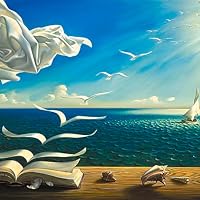
April 4, 2019
Smiley’s title is based on Wallace Stevens’ haiku-like, influential 1954 poem, “Thirteen Ways of Looking at a Blackbird.” Stevens dealt in the realm of poetry (& insurance); Smiley is concerned with the novel, which she defines as: a lengthy, written, prose narrative, with a protagonist. Smiley was working on a rough draft of her novel “Good Faith” when 9/11 happened. She writes that the events left her stunned. In order to make sense of the enormity of what had happened & move forward with her writing she started the tagged book. The first one half, 280 pages, of “13 Ways etc.” are essays concerning the novel, while the second half is comprised of mini-essays of 100 books that she calls both congenial & uncongenial, but all worth the effort. Her list spans from “The Tale of Genji” to Jennifer Egan’s “Look at Me.” Of the second half Smiley writes, “I suggest that it be used like an old trunk full of fabric samples or a box of costume jewelry-it is not to be read through from beginning to end in search of a cohesive argument, but to be rummaged about in, in search of something interesting or striking.” I took Smiley’s advice & randomly read a few in the second half; but I was positively mesmerized & enraptured by the first half. In an informed, & accessible, manner Smiley details the historical & democratic origins of the novel. The complexities & the uniqueness of the novel as an art form are clearly & passionately articulated. Declining novel sales are noted at one point, especially among male readers. However, this is not a defense of the novel, it is a celebration of what makes novels unique as well as the perennial relevance & perspective that classics afford the contemporary reader. Smiley writes that during the post 9/11 anthrax scare she was reading Boccacio’s Decameron, which takes place during the Black Death. She writes, “But here were the characters of the Decameron, seven women and three men & their servants, making up their minds to go out into the countryside, to take a break from the devastation, & to entertain themselves with stories. They go away for two weeks. Given the death rate, when they come back, four to seven of them will die, but they do find repose & they do entertain themselves, & most important for readers, with their tales & their discussion, they reconstitute what it means to be human & civilized even while civilization is disintegrating around them. And they do it with good humor rather than grief."

December 2, 2023
When I checked this out & realized how long it is, I thought I’d skim—wound up reading cover to cover. Smart, clear, demystifying and compelling, but probably less useful to novelists working outside of realism.
I disagree with her take on ‘inspiration’ which is something like: long contemplation renders results. I don’t think that sufficiently explains the novelists out there I continue to read despite their subject matter (Moshfegh). She gives short shrift to connection to the subconscious, or whatever it is that allows some (better than others) to astound us with stories that are more than a well-rendered process of logical deduction. This ability is ineffable, so obviously hard to write about. I don’t know what I would substitute for her definition, I just feel it’s something less programmatic.
But overall this is so full of insight. I like her argument that House of Seven Gables fails in its simplistic moral plot, in light of the graver, large issues of its day (slavery). She’s lukewarm on Ulysses in a funny way.
And best of all, she gives a matter of fact account of the drafting and reception of a novel (Good Faith) that she had mixed feelings about—or maybe just disliked! The honesty felt generous. Perhaps something only someone as prolific (with a Pulitzer under her belt) could be capable of. She emphasizes the distance between her authorial satisfaction with work and process and reception.
This book is almost 20 years old, one can imagine transposing her outrage of the Iraq War on to the Trump years. I can also imagine, were it published today, some people would disdain the preponderance of dead white guys among her 100 novels. Overall I think the arguments hold up.
I disagree with her take on ‘inspiration’ which is something like: long contemplation renders results. I don’t think that sufficiently explains the novelists out there I continue to read despite their subject matter (Moshfegh). She gives short shrift to connection to the subconscious, or whatever it is that allows some (better than others) to astound us with stories that are more than a well-rendered process of logical deduction. This ability is ineffable, so obviously hard to write about. I don’t know what I would substitute for her definition, I just feel it’s something less programmatic.
But overall this is so full of insight. I like her argument that House of Seven Gables fails in its simplistic moral plot, in light of the graver, large issues of its day (slavery). She’s lukewarm on Ulysses in a funny way.
And best of all, she gives a matter of fact account of the drafting and reception of a novel (Good Faith) that she had mixed feelings about—or maybe just disliked! The honesty felt generous. Perhaps something only someone as prolific (with a Pulitzer under her belt) could be capable of. She emphasizes the distance between her authorial satisfaction with work and process and reception.
This book is almost 20 years old, one can imagine transposing her outrage of the Iraq War on to the Trump years. I can also imagine, were it published today, some people would disdain the preponderance of dead white guys among her 100 novels. Overall I think the arguments hold up.

January 23, 2025
Reading this cover-to-cover is tedious. I don’t recommend it.
This should be dipped into and out of, just as Smiley moved through the 100 novels she read over three years. There are really interesting insights, things I hadn’t ever considered before, some really solid tips for writing, and a LOT of vocab for vocab’s sake. If I never read “lugubrious” again, I still will have read it too many times.
A 2-star experience for me, but a 3-star book.
This should be dipped into and out of, just as Smiley moved through the 100 novels she read over three years. There are really interesting insights, things I hadn’t ever considered before, some really solid tips for writing, and a LOT of vocab for vocab’s sake. If I never read “lugubrious” again, I still will have read it too many times.
A 2-star experience for me, but a 3-star book.

December 30, 2017
I've checked this out of the library enough times this year and read enough of it that I think it finally counts. I should probably get my own copy. Reading this is like finding a person on Goodreads who writes long, engaging reviews .

July 19, 2019
This is so detailed and very interesting. I read a lot of books about books and as far as information and learning about reading and writing goes, this is one of the best I've read.

May 2, 2020
For readers and fans of quality novels, this book details a variety of perspecties, to enhance your enjoyment. It also provides insightful descriptions of 100 great novels.
But what makes this book valuable for me is that it humanizes the experience of writing a novel, as an activity with its own unique challenges and pleasures.
Many are born with the compulsion to write novels and with enough ability actually do so. But for a multitude of reasons, very few of the novels that are written ever get published and/or ever reach an audience.
In the past, self-publishing or vanity publishing was stigmatized. Only losers did that. It was seen as a sign of vanity and selfishness to waste your time writing novels that would never be commercially published. People who did not write novels saw the whole point of writing novels as the subsequent commercial and financial success, plus the acclaim and respect that come to those that achieve critical success.
But Smiley repeatedly refers to the psychological and even physical experience of writing a novel, alluding to the pleasure that can come from the process itself - as characters come alive and do what they must do (regardless of the author's original intent) and as a rough first draft gets adjusted and polished and gradually becomes what by its nature it can become. At the same time, she provides valuable advice on how to write and rewrite the best novel you can.
That's an important message for hundreds of thousands of people in America today who feel compelled to write novels, and who feel a bit ashamed of that innate weakness of theirs. Many of them now self-publish as ebooks at Amazon, Smashwords and elsewhere. Many more hide their works on computers and/or in drawers, afraid to come out of the closet.
But, as the subtext of this book implies, the process itself has unique pleasures, regardless of whether the result reaches a wide audience. And it offers the psychological benefits of self-fulfillment and accomplishment.
If I were a book marketer, I would want to put a copy of 13 Ways into the hands of every potential attendee at writing courses and retreats and of everyone tempted to self-publish by print-on-demand and/or ebook. The writers' conferences and Amazon/Kindle, and the so-called "hybrid" publishers should all give away copies of this book to their prospects. And they should be promoting their services not as the vanity presses did by trying to fool people into thinking that they will become famous and rich, but rather as the culmination of the writing process, which in itself is fulfilling and worthwhile and laudable.
Not everyone who runs a marathon wins it. But thousands train hard, and try their hardes in races, and get a sense of accomplishment and a feeling that they are doing what they were born to do and are respected for that.
The vast majority of novel writers, who will never "win", deserve that same kind of respect.
PS - Googling, I find "More than 30 thousand running events take place in the U.S. every year, including 5k, 10k and 8K/5 mile races as well as half-marathons and marathons. All in all, these races were finished by more than 17.1 million people. In terms of distance, 5K runs had the highest number of finishers – about 7.6 million." https://www.statista.com/topics/1743/... I suspect that the number of people writing fiction in the US - stories and novellas, as well as novels - is comparable.
But what makes this book valuable for me is that it humanizes the experience of writing a novel, as an activity with its own unique challenges and pleasures.
Many are born with the compulsion to write novels and with enough ability actually do so. But for a multitude of reasons, very few of the novels that are written ever get published and/or ever reach an audience.
In the past, self-publishing or vanity publishing was stigmatized. Only losers did that. It was seen as a sign of vanity and selfishness to waste your time writing novels that would never be commercially published. People who did not write novels saw the whole point of writing novels as the subsequent commercial and financial success, plus the acclaim and respect that come to those that achieve critical success.
But Smiley repeatedly refers to the psychological and even physical experience of writing a novel, alluding to the pleasure that can come from the process itself - as characters come alive and do what they must do (regardless of the author's original intent) and as a rough first draft gets adjusted and polished and gradually becomes what by its nature it can become. At the same time, she provides valuable advice on how to write and rewrite the best novel you can.
That's an important message for hundreds of thousands of people in America today who feel compelled to write novels, and who feel a bit ashamed of that innate weakness of theirs. Many of them now self-publish as ebooks at Amazon, Smashwords and elsewhere. Many more hide their works on computers and/or in drawers, afraid to come out of the closet.
But, as the subtext of this book implies, the process itself has unique pleasures, regardless of whether the result reaches a wide audience. And it offers the psychological benefits of self-fulfillment and accomplishment.
If I were a book marketer, I would want to put a copy of 13 Ways into the hands of every potential attendee at writing courses and retreats and of everyone tempted to self-publish by print-on-demand and/or ebook. The writers' conferences and Amazon/Kindle, and the so-called "hybrid" publishers should all give away copies of this book to their prospects. And they should be promoting their services not as the vanity presses did by trying to fool people into thinking that they will become famous and rich, but rather as the culmination of the writing process, which in itself is fulfilling and worthwhile and laudable.
Not everyone who runs a marathon wins it. But thousands train hard, and try their hardes in races, and get a sense of accomplishment and a feeling that they are doing what they were born to do and are respected for that.
The vast majority of novel writers, who will never "win", deserve that same kind of respect.
PS - Googling, I find "More than 30 thousand running events take place in the U.S. every year, including 5k, 10k and 8K/5 mile races as well as half-marathons and marathons. All in all, these races were finished by more than 17.1 million people. In terms of distance, 5K runs had the highest number of finishers – about 7.6 million." https://www.statista.com/topics/1743/... I suspect that the number of people writing fiction in the US - stories and novellas, as well as novels - is comparable.
Displaying 1 - 30 of 191 reviews