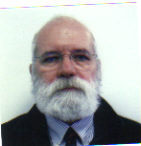
For years now, Nat Hentoff has been the best-known lay guardian of the magnificent spirit and letter of the First Amendment to the Constitution of the United States. His principled advocacy of free expression for all seems to be needed more than ever today, at a time of appalling assaults on expression not only by traditional opponents on the political right—those offended by what they consider obscene or radical or otherwise taboo—but also from the left—radical feminists calling for the suppression of pornography, members of minorities banning language they consider psychologically damaging, and various other proponents of so-called political correctness. These more recently minted censors are now to be found within such former bastions of free speech as the universities and even the American Civil Liberties Union. This urgently important book is not a mere collection of legal cases; neither is it a history of free expression or a polemic from either left or right. It is rather a wide-ranging report on—and analysis of—the many kinds of conflicts throughout our country between the illusion that this is a land of unfettered free speech and the reality when that illusion is acted upon. It is a book of many stories—of the continuing efforts to deprive students of Mark Twain's masterpiece, Huckleberry Finn, and of attempts to deprive other students of the right not to read books that offend them; of the well-intentioned rulings that result in speech codes and loyalty oaths; of the wide-spread lack of understanding, over the years, of such basic concepts as the marketplace of ideas and of the overriding value of untrammeled speech. Free Speech for Me—But Not for Thee is a book about fear, duplicity, some courage, a lot of hypocrisy, and a good deal of irony. It is a book of dramatic confrontations, of people acting, for better or for worse, on one of the most important of our domestic battlefields. And above all, it presents hopeful, practical suggestions for ways toward saving perhaps the most fragile of our cherished freedoms.
Nathan Irving "Nat" Hentoff was a historian, novelist, music critic, and syndicated columnist. As a civil libertarian and free-speech activist, he has been described by the Cato Institute—where he has been a senior fellow since 2009—as "one of the foremost authorities on the First Amendment" to the U.S. Constitution. He was a staff writer for The New Yorker for over 25 years, and was formerly a columnist for The Village Voice for over 50 years, in addition to Legal Times, The Washington Post, The Washington Times, and The Progressive, among others. Since 2014, he has been a regular contributor to the conservative Christian website WorldNetDaily, often in collaboration with his son Nick Hentoff.
Hentoff was a Fulbright Fellow at the Sorbonne in Paris in 1950 and was awarded a Guggenheim Fellowship in education in 1972. The American Bar Association bestowed the Silver Gavel Award in 1980 for his columns on law and criminal justice, and five years later his undergraduate alma mater, Northeastern University, awarded him an honorary Doctorate of Law degree. While working at the Village Voice in 1995, the National Press Foundation granted him the W.M. Kiplinger Distinguished Contributions to Journalism Award. He was a 1999 finalist for the Pulitzer Prize in Commentary, "for his passionate columns championing free expression and individual rights," which was won by Maureen Dowd. In 2004 he became the first non-musician to be named an NEA Jazz Master by the U.S. National Endowment for the Arts.
Hentoff lectured at many colleges, universities, law schools, elementary, middle and high schools, and has taught courses in journalism and the U.S. Constitution at Princeton University and New York University. He serves on the Board of Advisors of the Foundation for Individual Rights in Education (F.I.R.E.) and is on the steering committee of the Reporters' Committee for the Freedom of the Press.
I've always been something of a First Amendment absolutist, and as a life-long left-winger who grew up in the Sixties, I pretty much assumed that all the attacks on freedom of speech were coming from conservatives. So it was quite eye-opening to learn, from this unimpeachable source, that there were a number of very concerning attempts at censorship coming from people I consider, still, my ideological friends and allies.
This came to mind now because I'm once again seeing people with whom I agree on nine points out of ten, politically and philosophically, who are not only vigorously suppressing people's freedom of speech, but punishing various kinds of thoughtcrimes with relentless condemnation, ostracization, and even economic ruin. It's time to remind ourselves that if you don't care about people's freedom to say things you despise, then you don't really care about freedom of speech at all.
Hentoff unsparingly skewers the hypocrisy of too many true believers on both sides of the political spectrum, neither of whom seem to grasp the idea of true democracy or respect for diversity, but differ only in the type of conformity they try to impose. As he shows, this is inimical to the fundamental American philosophy of "I may disagree with what you say, but I will defend to the death your right to say it."
Nat Hentoff is a columnist who has written extensively about free speech and intellectual freedom. This book explores the "messiness" of free speech. It is easy to support intellectual freedom when it coincides with one's personal values but it is much harder to do so when the speech in question may conflict with or differ from your values. As a librarian for over 25 years I fully support intellectual freedom. But, I also see that there can be ethical dilemmas and gray areas when looking at how free speech reflects on society as a whole and not just on individual beliefs.
He used to be a liberal, but by the time he writes this book he's obsessed with proving that the Left is the real source of censorship in American society, which simply isn't true.
Excellent examination of free speech in various aspects. This book certainly gave me pause to realize that, despite believing myself generally fair, I do want to treat certain works or types of work differently from others. I'm convinced, based on the breadth of incidents he discusses and examines, that this is a human impulse, rather than one limited to either side of the political spectrum—but it is one that, with firm commitment to liberal values (in the classical, non-partisan sense) we can overcome. I think he also makes a compelling case that we should all strive towards free speech absolutism, both as a good in itself but also because it is essential to challenging injustice such as racism and sexism, and its absence can just as easily be used against the righteous as the wicked. I regret to say that I think our commitment to free speech, particularly in higher education, has decreased since the publication of this book in 1992, an in patterns resonant with those Hentoff examined over years. I wish I could put this into the hands of every policymaker and school administrator, but even more into the hands of every high school student. I do not think we will find a cure for incivility and a way to work together in spite of differences until we are truly prepared to robustly defend even bad speech, whatever that means for each of us, and engage ideas fearlessly. I think we'll find both that the truly evil ideas can be defeated, and that our ideological opponents need not be our enemies. Hentoff's compelling work lays the groundwork for the serious introspection and community dialogues needed to achieve that.
NFL football players are taking a knee. The President is attempting to pressure the NFL into punishing rebellious players. Nazis are marching in the streets. Racist comments are being made by and to middle school students in my hometown. Banned book week is an annual celebration at the library. The reaction is visceral and immediate. This book allows these situations to be put into perspective in regards to the importance of the First Amendment and the lengths some people have gone to to protect this most important of rights. The author explains how both the left and the right are guilty of attempted suppression of free speech and seems to perfectly encapsulate the complete disrespect shown by both sides in the current political sphere: "The dispute also reflected the lust of certain groups--left, right, or beyond category--to delegitimize all dissent. Dissenters are not seen as individuals, and hardly as human". That said, it does feel at times a bit condescending. However, this book is most definitely needed.
Finally had to return this to the library unfinished, after renewing it twice. Found much of it interesting but would much rather read Hentoff's Village Voice pieces than try to get through over 400 pages of his anecdotes in one tome. Highly enjoyed Hentoff's high praise for Judith Krug!
‘Freedom Speech for Me But Not for Thee’ was published in 1992. I read it in 1993 when I was thirty-three and thought the book was an eye-opening experience. It has influenced my perspective since then. The late Mr. Hentoff (1925-2017) was widely known as a liberal-leaning writer. However, he pulls no punches on either side of the political divide. I was curious to see if the book would resonate with me as much as it did thirty years ago. The internet and social platforms had not yet become a worldwide social component back when the book was written. The book is not focused on disinformation a.k.a. lies as much as people’s right to express themselves in the United States, even if their opinions are cockamamie or inflammatory as can be. In 2023 we are still an audience to all kinds of censorship from a wide variety of sources. For example, colleges have become woke havens with nonsensical trigger warnings and speech codes and Florida’s governor/presidential wannabe, Ron DeSantis, is going Attila the Hun by attempting to eradicate or limit educational material that promotes critical thinking of our racist past and present as well as stuff that addresses LGBTQXYZetc. lifestyles.
Mr. Hentoff took to task such people and groups that wanted to remove ‘The Adventures of Huckleberry Finn’ and other pieces of popular literature from public libraries and schools or restrict its access; politicians and government officials using the “heckler veto” to suppress unpopular demonstrations; college campuses restricting the free exchange of ideas to make their places a more comfortable place to live and learn; feminists efforts to make porn illegal; and self-censorship in the publishing and news industries. It also points out the impact of the Supreme Court ruling in Rust v. Sullivan that the government can restrict what a doctor can discuss with a patient when it involves the option of abortion. Boy, the ruling almost seems quaint compared to the recent overturning of Roe v. Wade. The book is about the lust of certain groups to delegitimize or suppress dissent that counters their objectives. The author also addresses the importance of the American Civil Liberties Union remaining focused on defending free speech and not watering down its mission statement. Symbolic speech such as burning the American flag, displaying the Confederate flag, controversial art, or not being forced to recite the Pledge of Allegiance are highlighted. Mr. Hentoff went off on a tangent in using an entire chapter as a eulogy to the groundbreaking comic Lenny Bruce. The vaguely worded Racketeer Influenced and Corrupt Organizations Act (RICO) of 1970 is also shown as a cudgel against free speech and public demonstrations. Some of the excuses and tools used thirty-years ago are still being applied today.
At its core, ‘Free Speech for Me But Not for Thee’ is about power plays and the struggle between civil rights and civil liberties. Since its inception, the First Amendment has been constantly used as toilet paper by people in positions of power or very angry constituents. Mr. Hentoff does lightly touch upon examples from history; however, he mostly focuses on events from the 1950s to the beginning of the 1990s. I found the weakest part of his argument involved the fear of people speaking their mind on college campuses due to social mores. This is not unique to schools. All people internally struggle with free expression when in groups or communities because they fear blowback or outright expulsion. However, higher-learning’s primary mission statement is about challenging beliefs and expanding thought, not to coddle students… or what college administrators now view as primarily customers.
I was surprised that a large amount of the book focused upon the shenanigans occurring in schools and college campuses, even law schools. I don’t recall the work being so when I first read it. ‘Free Speech for Me But Not for Thee’ is highly repetitious in free speech being assaulted from all fronts and, while the examples are educational, come across as quite dated or irrelevant. For example, the Catherine MacKinnon/Andrea Dworkin branch of feminism and their quixotic crusade of making porn (a very broad definition using their metrics) illegal has withered away due to erotica’s ubiquity on the Internet. Hell, such feminists might as well try to make air illegal. The liberal Mr. Hentoff leans much more heavily in his book on criticizing liberal crusades in implementing censorship on things they find offensive. ‘Free Speech for Me But Not for Thee’ did not resonate as much with me as it did back in 1993. A more updated book about today’s censorship efforts would be nice.
Read this book as part of a course years ago, but the arguments from it have stayed with me for many years. As I think about what free speech means in America today, I think this book is incredibly useful as a way to talk about free speech and censorship.