What is the blockchain? Unlike the Internet, where information is stored on the servers of Google, Amazon, Microsoft and the like, the information that is the foundation of the blockchain phenomena exists within a distributed network. Rather than being siloed, and ultimately the property of the makers of the web pages and server farms we all use, a blockchain consists of multiple nodes around the world that are exact copies of each other. Whereas there is basically one world wide web, there are any number of blockchains. Every transaction that occurs on a blockchain must be recorded and validated by the same protocols each node adheres to before it becomes a part of a permanent, immutable record. It is the permanent record that makes the blockchain unique. Every transaction is timestamped and becomes a part of an unalterable history that is available for all to see, where each node in the network is an exact duplicate of the other nodes making up the blockchain. The kicker is that it is totally anonymous for those taking part. Each person who involves him/ herself holds an anonymous electronic key available only to him/ her. Although transactions are linked to the key, there is no database linking keys to users.
Most people have heard of Bitcoin. Simply, it is a cryptocurrency created using blockchain technology. The author of the protocol that brought this new form of currency into existence has the moniker Satoshi Nakamoto. No one knows who Satoshi Nakamoto is, whether he or she is a person, group of people, or alien from another dimension. It doesn’t matter. What does matter is that by collaborating through an open-source team, the ideas first made public in November 2008 by Satoshi Nakamoto became the foundation of the bitcoin protocol, and more importantly, the blockchain technology that is its underpinning.
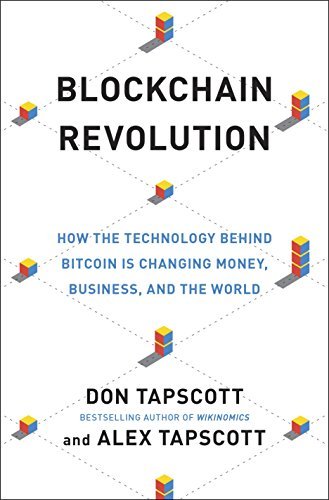
How will the blockchain transform the world as we know it? The authors of The Blockchain Revolution explain how blockchain technology will level the playing field and unlock incalculable value for billions of people, many of whom are systemically excluded, through no fault of their own, from the opportunities we in the west take for granted. Disintermediation (getting rid of the middle man) is one of the key attributes of blockchain technology.
Those of us who have used the likes of Uber and Airbnb and have marvelled at the value these services unlock would be hard put to offer a better way. But why couldn’t we eliminate the middlemen (Uber, Airbnb, others) and go directly peer to peer? Blockchain makes that possible in the same way that buyers and sellers using the world wide web build their reputations by infusing their transactions with honesty, integrity, and reputable service. Blockchain technology eliminates the middlemen and allows the value extracted by them to be kept by buyers in the form of reduced prices, and sellers in the form of fatter profit margins. But this is just the tip of the iceberg according to the authors. Like the unimaginable vistas of wealth hitherto opaque until the advent of the Internet, the authors believe that the rising tide that will be triggered by the the global embrace of blockchain will be an order of magnitude greater than that brought by the world wide web.
Presently there are hundreds of companies from around the world using blockchain technology to manifest its possibilities in various forms. Steemit, for example, is a social media platform where people who join get paid for creating and curating content. The electronic currency used to reward contributors can be converted to dollars or Euros, and therefore to any other currency. Some have made enough money to pay for their vacation simply by posting highlights from their vacation. The Abra blockchain focuses on making cross border remittances---transfers of money---less inexpensive, less fraught with uncertainty, and much less time consuming than is currently the case. Look out Western Union! Seriously.
The authors make the case for implementation of the blockchain technology in multiple avenues, from governmental oversight to the Internet of Things, and everything in between that can be digitized. Along the way they describe current blockchains already in existence from around the world and the ways in which they are transforming the landscape. Governmental entities and top name companies---Nasdaq, Microsoft, Goldman Sachs, just to name a few---are investigating (and in some cases embracing) this technology to see what it can do for their bottom line. Some companies are scared, as they should be, given that the peer-to-peer nature of blockchain eliminates the need for the middleman-type-services they provide. What is the need for today’s banks when you have new currencies available and investors from around the world willing to loan money?
Although fascinating, there are sections of the book that seem to go on forever without much being added. Regardless, I applaud the authors for their effort in making the potential tsunami that is blockchain technology somewhat available to the layperson.