How do today’s parents cope when the dreams we had for our children clash with reality? What can we do for our twenty- and even thirty-somethings who can’t seem to grow up? How can we help our depressed, dependent, or addicted adult children, the ones who can’t get their lives started, who are just marking time or even doing it? What’s the right strategy when our smart, capable “adultolescents” won’t leave home or come boomeranging back? Who can we turn to when the kids aren’t all right and we, their parents, are frightened, frustrated, resentful, embarrassed, and especially, disappointed?
In this groundbreaking book, a social psychologist who’s been chronicling the lives of American families for over two decades confronts our deepest concerns, including our silence and self-imposed sense of isolation, when our grown kids have failed to thrive. She listens to a generation that “did everything right” and expected its children to grow into happy, healthy, successful adults. But they haven’t, at least, not yet—and meanwhile, we’re letting their problems threaten our health, marriages, security, freedom, careers or retirement, and other family relationships.
With warmth, empathy, and perspective, Dr. Adams offers a positive, life-affirming message to parents who are still trying to “fix” their adult children—Stop! She shows us how to separate from their problems without separating from them, and how to be a positive force in their lives while getting on with our own. As we navigate this critical passage in our second adulthood and their first, the bestselling author of I’m Still Your Mother reminds us that the pleasures and possibilities of postparenthood should not depend on how our kids turn out, but on how we do!
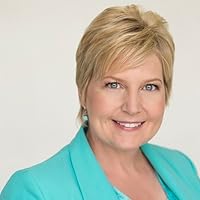
Jane Adams, PhD (Seattle, WA, and New York, NY), has been writing and reporting on personal and professional issues in the lives of women for nearly three decades. A speaker, social psychologist, and personal coach, she is a frequent media commentator who has appeared on Oprah, Good Morning America, the Today show, NPR, and CNN.
I have to be honest that I DNF this book. I closed my mind the SECOND it stated that a gay child is a cause for embarrassment. Seriously? We are in the 21st century. I tried to move past my shutting down, but the second I read the author’s paragraph trying to be cutesy I just could not do it. She lost all credibility.
I gave this book 5 stars not because it is riveting or superb prose but because it's a wonderful book that lets parents know they are not alone. If you struggle with getting your grown children to get out on their own this book will help you realize you are not alone, you don't have to keep it a secret AND - you need to move on from them. It tells you why you need to move on and why it is ok not to help your children forever. Its a good book for any parent to read, especially those with kids in high school so they can prepare themselves and start talking with their kids about this.
One of my adult children is dealing with severe mental illness and trouble with the law. In reading this book I realize that it is time to detach with love for my own sanity and that I have to let him be.
Although I was never a Boy Scout, I appreciate their motto “Always be prepared”. In that vein, I read “When our Grown Kids Disappoint Us”, which covers just what the title says. The grown kids the book talks about range roughly from 21 to their 30s (and my kids are a few years shy of this range, hence the preparation). What those kids have done to disappoint are illustrated in a number of stories, including joining cults, getting pregnant wantonly, becoming sex workers, addictions of all kinds, prison, theft from family, and the like. Strangely, nothing about kids becoming politicians. The book begins with what I suspect is the most common disappointment, adult kids moving back home. The book goes into history and looks at that problem from a lot of angles, including the obvious extended-family-under-one-roof way to live our ancestors found normal. The authors tell these true-life stories, and you can commiserate with the parents in the book. The same thing happens with the other disappointments, you can feel miserable for them but you also see that, at least in the stories, the parents can’t change their adult children, and the attempts make them upset. You also see there’s always hope. The subtitle of this could be “Disregard the Barn Door, That Horse has Bolted”. Great for commiserating, and getting a glimpse at what other parents have put up with.
No help with problems. Just a ton of stories that make you feel your situation isn’t so bad. Also makes you aware you’re not alone. In other words, misery loves company.
I was hurt when my mom mentioned she read this book but due to my anxious attachment i had to read.
I am 37 and have felt her judgement and disappointment for years. She constantly reminds me she hates the things I like & backhand compliments me. Despite doing well considering the environment. (married, never moved home after 18, paid my own way working 3 jobs in my 20s, finishing school, getting a good job).
The last time I saw her I vowed to distance myself from her. She was mean and i am just so tired. This last visit felt different like when I was a kid and she didn't hate me. (at 19 she told me how much she hated me in an argument) I had given up hope of her changing. I do think this book helped her. We spent 5 days together with no fighting which hasn't happened in 20 years. There was plenty of opportunities to criticize and she even said I handled things well. a compliment i cannot remember ever hearing!
I am hopeful for the future but keeping it in check. I am more distant which I am sure helps her as an avoidant. This book helped her and I am grateful.
I found this book very useful. It helped to hear other parents stories and how they dealt with their children (whether you agreed with them or not) ... and just as an affirmation to step back from your kid’s problems, let them deal with them, and stop rushing in to ‘save them’. Some reviewers said the book contained no actual practical solutions, but I found Jane Adams to be very practical: detach from your kid’s issues, learn to forgive, set boundaries, reevaluate your own life and move forward with your own hopes and dreams ... maybe get your own therapist rather than worrying about one for your kid!
Always looking for resources that could be used in bibliotherapy setting. This will be helpful to some and harmful for others. Helpful in the sense that the many case studies shared might resonate with issues some parents might be facing in the present or have faced in the past. Harmful in the sense that some values in lifestyle will be offensive/hurtful to the reader. Overall, I found this book to be a quick and easy read with practical reminders of the heartbreak that can occur when we neglect to set (and stick to) healthy boundaries in all types of relationships whether it be with our adult children or friends/family.
When I read such self-help books, I am routinely disappointed. No one really addresses MY issue and/or tells me exactly what to do about it. As with this book, the anecdotal stories make me feel better and as if my problems are not that bad. And I generally do take something of value from the books.
"Parents who are adept at promoting their kids' independence share certain characteristics: They're able to satisfy their own needs as well as their children's, and they have a clear sense of their own values, especially the value of autonomy, for themselves as well as their kids." (105)
"Forgiving our kids their trespasses against our values, our hopes, our assumptions and expectations is a gift we give ourselves, not them. Forgiveness allows us to let go and move on after grieveing not only the loss of our dreams for them but also those we had for ourselves. And that is a task that falls to us in this season of our life regardless of whether our grown kids are exactly who we always hoped they would be or not." (150)
"... six stages of the coping process: shock, attention, action, detachment, autonomy and connection." (151)
"We may feel cheated by their inability to realize their potential, but that job is theirs and the problem is ours." (154)
"Meanwhile, I help her out as much as I can. I don't judge her, I just love her. And I try to do what my minister suggested - let go of my disappointment, dream my own dreams for myself, and let hope be a surprise." (160)
"...but it reminds us how helpful it can be to reframe the problems facing our kids in the context of an entire life, not just a piece of it...Although we can find neither purpose or meaning in what has happened to our kids, we can find both in our response to it." (186)
My biggest problem with this book is that it's too short and pretty much sums up what everyone has been telling me for years. As a parent I didn't want my daughter to suffer the same way that I did (coming from a dysfunctional home and scrabbling for money all my life). But I've created a young adult who can't make a job decision without clearing it with Mom first. And yes, I have told her repeatedly that such decisions are HER decision. They aren't mine to make. But she's terrified of being "alone" in the world and having to make adult decisions. So now what do I do? As for money, too much of OUR money has gone to pay HER bills. She has 3 children and I've used the excuse that I don't want the kids to suffer but now I feel like I'm being held hostage by my own choices. I offer to give her money...many times she hasn't asked but I've offered to "clear the path" so to speak and make things easier on her. This book DID force me to see what I've created and so the rest of my life will be one of letting her fall down and learn life's "lessons". Pray for me, folks...this will get very rough.
This book is replete with case studies of adult children who have grieved their parents over their inability to get their lives together, and back on track, in various ways; drug and alcohol addiction, criminal activity, inability (or lack of desire) to hold a job, financial irresponsibility, domestic violence; it’s a long list. Parents’ reactions are also shown: worry, guilt (Where did we go wrong? What did we fail to do?), denial, codependency, enabling…also a long list. The result is often a mutually toxic relationship locking both parties in like two black holes revolving around each other.
The author focuses on the needs of the parents and sees the restoration of their emotional health as the key to healing the relationship with their children and assisting them with their problems. Key to this is realizing that they are not to blame for their childrens’ difficulties; that children must live their own lives and take responsibility for (and live with the consequences of) their own decisions and actions; and that limitations must be set, and boundaries drawn, wherever and whenever necessary. This could include not permitting a child to move back into the family home; the withdrawal of financial support; not posting bail; and other ways, sometimes akin to “tough love”, to make a child understand that, while he or she is still loved, there is only so much a parent can or should do. Parents may also have to let go of any expectations they may have for their children regarding life goals, career paths, financial attainment, grandchildren, and the likelihood that they will pass on any sort of emotional or spiritual heritage to the children. The letting go of hopes and expectations is perhaps the hardest step to take.
But the result for the parents will be a sort of liberation: the lifting of an emotional burden and the freedom to pursue their own goals and lead their own lives freed of the burden of shouldering and taking responsibility for their childrens’ issues; not as an act of selfishness or apathy but because it will lead to an invigorated ability to help their children within the boundaries that have been set.
Focusing as it does on intangibles of emotion and spirit, the book does not give practical advice on how to implement the necessary steps, perhaps because every case is different; but it at least does offer a ray of hope for those desiring a normalization, however modest or dramatic, of the parent-child relationship. There are many other books available which do offer concrete steps, such as “When Your Adult Child Breaks Your Heart” by Joel Young. Perhaps they should be read together!
The second portion of the title of this book is a great summary of the contents. This book is for parents of adult children who choices and behaviors are not what we hoped for and expected. This book helps us as parents let go of their problems, love them anyway and get on with our lives. There was really nothing new or earth-shattering in this book, but it was worth reading just to know that other parents have and continue to go through some of the same or similar issues with adult children that my family is experiencing. It's just good for struggling parents to know they are not alone, and it is possible to move forward and get on with living a happy and fulfilled life, despite our children's choices.
Worth a read for anyone with adult children who are (or need to be) making the sometimes difficult transition to independence. There is a lot of good advice in the book if you are willing to hear it. My biggest take away was the point that our adult kids should utilize the rest of their support network eg. bosses, partners, teachers, friends, therapists, etc and not simply go to their parents for everything. Additionally the parents should encourage this use of the whole support network so as not to “bankrupt their child” from having the support they need if they solely rely on their parents. It also prevents the parents from burning out. Lots of interesting stories about grown kids and their parents as well.
The people quoted throughout the book may have been actual patients for this counseling psychologist, but it didn't seem to read that way. My kids aren't as far in the worlds described by the 'people' 'quoted' in the book, and as a result I did get one thing out of the book that I could use for myself. That was to say to myself that 'it could be worse' the next time I worry about my one set of kids' seeming to over-spend on their house while wondering where the money comes from for it, or my oldest child over-working himself, or my third child's adjustment to living with roommates, or my youngest's slow start toward a career (while he's got one he could build, right where he is).
Very good read. Perfect timing for me. I borrowed from the library but intend to purchase a copy and underline various passages.
What I got out of it was that I am not my son or daughter . We are different people . So I need to let them be responsible for their own decisions be they good , different that mine or other. And to stop feeling guilty when I don't try to fix their problems. I realize that they made the decisions so they need to deal with the problems if they arise due to their decision. As my mom always told me, "You made your bed , now you lie in it" this book has made me realize that I can help them, but I don's have to fix their problems.
I need to help them be strong adults, and to do that they need to stand on their own two feet. I did my best. I taught them everything I know , they have left the nest , so now they must fly. No-one else can do it for them.
I love my adult children and I trust in them. I have done my best so now I will let them be who they are and who they want to be.
This.book does an adequate description of how many ways our children disappoint us. We know that all too well. That things must change--we know that too. Now here the book loses its way. It never really addresses concrete realistic ways to initiate and sustain change. Yes, parents can relate to the anecdotal experiences of problems of overly dependent children. Does this book really provide solutions -- no.
This book had some good points and good information, but the narration was NOT good. So depressing - just made the depressing topics discussed worse. I disagree with the idea that "parents are jealous of kids having more success than them"..... because I just can’t understand how any parent wouldn’t want the very very very best for their kid??!!! But, the again, our world is beyond dysfunctional.
There are many books about enabling and co-dependency, but I found this book to be the best so far in driving those points home. The focus is always on the struggling adult child, and Jane Adams presents a balanced view, often examining how well-meaning adults end up feeling guilty while they live the life grown children dictate. It's a book about taking charge of your life and stopping the guilt.
Very helpful in gaining a new perspective on parent-child codependency. I wish there were an updated version that reflected the additional challenges of the social media age and it’s impact on our relationships with our adult children, for good or bad.
This book really helped me to focus more on me and my life going forward rather than continuously trying to figure out the why or what did I do wrong and what could I have done better. It's time to let my adult child figure it out and now it's time for me to think of me.
Aimed at the Boomer generation, 20 years really dates this book quickly. There is helpful perspective for the Gen X parents in the "postparental" stage of life, but it definitely leans heavily on Boomer perspective and experience. Perhaps an update would help, but I've found many other works on the subject to be more applicable in the 2020s.
This book had some interesting anecdotes but very little in the way of logistical help. There were no specifics on exactly what you should DO if your child is in jail, but instead psychobabble on how you should FEEL about it.
I am not going to rate this book as I believe that if you are looking for answers, you will probably find some guidance here. Ratings will depend on what the issues are & whether or not you follow the advice. Codependency is not an easy habit to break.
I got nothin from this book! I so badly needed to get something from it but…nothin. Acknowledgment that these situations exist but that was it. There are no answers and nothing to make me feel any better.
I read this entire book and there were parts that were great but is very outdated. I think an updated edition that isn’t focused on how the parents reading it are The Greatest Generation would be a great idea.
While the stories were familiar, the solutions were sparse. I would have like better advice boundaries and follow-up. It was just a repeat and not a very thorough one of better stated advice.