Jump to ratings and reviews
Rate this book

A Great Place To Have A War: America in Laos and the Birth of a Military CIA

Rate this book
The untold story of how America’s secret war in Laos in the 1960s transformed the CIA from a loose collection of spies into a military operation and a key player in American foreign policy.

In 1960, President Eisenhower was focused on Laos, a tiny Southeast Asian nation few Americans had ever heard of. Washington feared the country would fall to communism, triggering a domino effect in the rest of Southeast Asia. So in January 1961, Eisenhower approved the CIA’s Operation Momentum, a plan to create a proxy army of ethnic Hmong to fight communist forces in Laos. While remaining largely hidden from the American public and most of Congress, Momentum became the largest CIA paramilitary operation in the history of the United States. The brutal war, which continued under Presidents Kennedy and Nixon, lasted nearly two decades, killed one-tenth of Laos’s total population, left thousands of unexploded bombs in the ground, and changed the nature of the CIA forever.

Joshua Kurlantzick gives us the definitive account of the Laos war and its central characters, including the four key people who led the operation—the CIA operative who came up with the idea, the Hmong general who led the proxy army in the field, the paramilitary specialist who trained the Hmong, and the State Department careerist who took control over the war as it grew.

The Laos war created a CIA that fights with real soldiers and weapons as much as it gathers secrets. Laos became a template for CIA proxy wars all over the world, from Central America in the 1980s to today’s war on terrorism, where the CIA has taken control with little oversight. Based on extensive interviews and CIA records only recently declassified, A Great Place to Have a War is a riveting, thought-provoking look at how Operation Momentum changed American foreign policy forever.

336 pages, Hardcover

First published January 1, 2017

167 people are currently reading
2289 people want to read

About the author

Joshua Kurlantzick

18 books21 followers

Ratings & Reviews

What do you think?
Rate this book

Friends & Following

Create a free account to discover what your friends think of this book!

Community Reviews

5 stars
185 (23%)
4 stars
366 (47%)
3 stars
193 (24%)
2 stars
23 (2%)
1 star
8 (1%)
Displaying 1 - 30 of 106 reviews
Profile Image for Brett C.
947 reviews230 followers
January 16, 2023
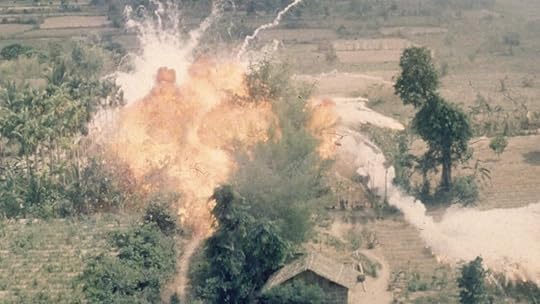
"In 1969 alone, according to several accounts, the United States dropped more bombs on Laos that it did on Japan during all of World War 2. By 1973, when the bombing campaign ended, America had launched over 558,000 bombing runs in Laos. A high percentage of these bombs were antipersonnel to fragmentation bombs—which exploded into hundreds of small, deadly metal pellets on impact—antipersonnel mines, and bombs that caused widespread fires. The antipersonnel mines thumped into the ground and were impossible to see from the surface, so that even bombers moved on to other targets, villagers—including many children—were constantly stepping on mines and being killed or maimed." pg 177


This was an excellent and shocking overview of the secret war in Laos. Joshua Kurlantzick gave a two-prong approach at telling the history of Laos and the beginnings of paramilitary CIA operations. He covered the history of Laos, the Laotian civil war, the secret US involvement in Laos, and the aftermath following the communist takeover in 1975. Secondly, he educated the CIA, the secret war in Laos led by CIA paramilitary operative, contractors, and sheep-dipped US military personnel all working with the Hmong and Laotian government to stopping he spread of communism.


American interests in Laos began during the Eisenhower administration in the 1950s as the country was seen as the pivotal stopping point for the "domino theory" in containing the spread of communism in Southeast Asia. President Kennedy pushed Laos up in priority with authorizing Operation Momentum in 1961, delegating full-authority to the CIA to enable first-ever paramilitary operations in Laos. These operatives recruited, equipped, trained, and oversaw guerrilla warfare of ethnic Hmong and Laotian government troops in combating Hanoi-led military incursions into Laos. This marked a transformation of the agency's responsibility of intelligence, spying, and political work into a war fighting entity to included launching air strikes, utilizing mass and economy of force, and management of battle strategy. (pgs 10-15)


The clandestine paramilitary operations were initially successful in the Laotian highlands yet grew into harder to manage operations. The LBJ administration authorized the air war and bombing campaign in 1964 that ran through 1973. Using justification to bomb the Ho Chi Minh Trail that snaked through Laos, the bombing gradually became indiscriminate as the CIA picked targets as Air Force bombers conducted line-bombing.
The Johnson and Kennedy administrations had, at times, acted in Laos without consulting Laotian politicians, or offered pretense of consultation, but Nixon made it the norm. His administration bombed areas of the Ho Chi Minh Trail or other parts of Laos regular without telling Laotian leaders in advance what the United States was doing. pg 154
Overtime the tide turned and Pathet Lao communist forces with the backing of the North Vietnamese overtook Laos and established the Lao Democratic People's Republic on December 2, 1975. Throughout the 1908s, 90s, and 2000s the CIA became a major player in paramilitary clandestine operations throughout the world (Nicaragua, Honduras, Somalia, Kosovo, Yemen, Afghanistan, Syria). Journalist reporting has revealed in 2015 that the CIA and Special Forces together created a kind of global super elite paramilitary force operating under their own agenda. The legacy of the CIA and aftermath of this secret war was shocking to read in the book.

This was a highly informative, well-written, and well-researched account of the CIA and the Laotian civil war. A lot of this was shocking and disturbing to read that the American government will discard the people they're trying to help when it no longer benefits American interests. Anyway, highly recommended for anyone interested in Vietnam, modern warfare and politics, and the CIA. Thanks!
Profile Image for Steven Z..
677 reviews174 followers
February 20, 2017
The majority of Americans of my generation are aware of the Vietnam War that resulted in the death of 58,315 soldiers and a 153,303 wounded, with the loss of between 1.1 to 3.2 million Vietnamese. Further, they are aware of American bombing of Cambodia and various military incursions that helped bring about Pol Pot and the “Killing Fields,” that resulted in the genocide of over 3 million Cambodians. However, that same generation was probably not aware of the civil war that raged in Laos and the American role in that conflict that witnessed 15-20 air sorties a day against that small Southeast Asian country between 1960 and 1968, that was raised to 300 sorties a day once Richard Nixon took office, resulting in the death of over 200,000 Laotians and 700 Americans.

By January 1961 Laos appeared to be on the precipice of falling to communism. Bill Lair, a ten year CIA operative flew up to the central highlands to inaugurate a bold plan labeled, Operation Momentum. The plan called for the operation and training of Hmong tribesmen, led by Vang Pao, an anti-communist officer in the Laotian army who would lead these men against the Pathet Lao who were supported by North Vietnam. The civil war in Laos had been raging on and off since the French were vanquished by North Vietnam in 1954, and Laos was declared a neutral country by the Geneva Convention of that year. Even though Laos was a small country the Eisenhower administration, firm believers in the domino theory, and that a pro-western state in Laos could serve as a buffer between Vietnam and Thailand, an American ally. Further, Laos would make it easier for the US to assist South Vietnamese forces that could help bleed Hanoi’s troops as they continued to fight the Vientiane government, and lastly it would block any communist threat to India and Southwest Asia. Joshua Kurlantzick’s new book, A GREAT PLACE TO HAVE A WAR: AMERICA IN LAOS AND THE BIRTH OF A MILITARY CIA chronicles Operation Momentum and its impact on the region and the implications for American strategy to deal with communism for decades. In addition, it raises the specter of a CIA run war through para military operators, something that continues today.

Operation Momentum was the first secret covert run war by the CIA in American history. Laos provided the CIA with the opportunity to increase the agency’s powers. According to Kurlantzick, it saw the Laotian situation as an inexpensive war in terms of money and lives to create a template for proxy wars around the world as presidents looked for ways to continue the Cold War without going to Congress for funding or involving American troops. For the CIA, after Laos, paramilitary operations would become an essential part of the agency’s mission.

Kurlantzick presents a balanced and interesting narrative as he provides the background history that led to the Laotian civil war involving the Royal Laotian Army, smaller armies of different Laotian tribes, Vang Pao’s 30,000 strong Hmong army, North Vietnamese troops, and American bombing and supplying and training of anti-communist forces. As the narrative is developed the reader is introduced to a number of important characters. First of which is Bill Lair, a career CIA operative who believed the key to helping the fight for democracy in Indochina was to allow the Laotians, Cambodians, and Vietnamese to do their own fighting. The US could assist them with equipment and training, but should not be out front and appear to replace the French as a colonial power. Lair and his CIA cohorts were thrilled with the success of Vang Pao’s army in that they finally found an indigenous force that would take it to the communists. Pao was a loose cannon, but Lair knew how to control him. This relationship was successful until Washington decided to expand its operations in Laos and Vietnam under leadership of Ted Shackley who arrived as CIA Laos Station Chief in July 1966. Lair was against an increased ground war with massive bombing as he correctly believed that it would be unsuccessful in interdicting North Vietnam’s supply efforts to South Vietnam through Laos. The author’s presentation of Lair’s story is invaluable in understanding what transpires in Laos until he resigns from the CIA in August 1968. Once Lair resigns no one can control Vang Pao, and his forces who pursue a reckless strategy that has grave consequences.

Other important figures that Kurlantzick introduces are Tony Poe, a career soldier who trained and recruited Hmong tribesmen going back to 1961. After Lair resigned he developed his own 10,000 man force made up of an amalgam of tribes who he could not hold together because tribal ethnic conflict and as a result were not an effective fighting force. Perhaps the most important character in this drama was Ambassador William Sullivan, an American Foreign Service career officer who was Ambassador to Laos between 1964 and 1969. Sullivan was sent to Laos to organize the war against the Pathet Lao and became the first American ambassador to run a war from his office. Sullivan reigned in the CIA and made all operatives report to him what their plan of action was. He would approve, and even choose targets for the war, something no ambassador had ever done before. If someone did not comply, because of his relationships in Washington, they would be transferred out. Once Shackley came aboard, Sullivan supported an expansion of the war and a massive increase in bombing which was further expanded once Richard Nixon entered the White House, as Nixon had his own realpolitik for Indochina involving Communist China, and the Soviet Union in achieving the withdrawal of American troops from Vietnam.

Kurlantzick tells a fascinating story that at times reads like fiction. There is some repetition of information, and a few factual errors, i.e.; the Viet Minh did not sign the 1954 Geneva Accords, and according to historian Fredrik Logevall, he misstates the number of American military advisors in Vietnam at the time of John F. Kennedy’s assassination, and he offers no evidence that Kennedy “repeatedly told aides he would not tolerate the loss of South Vietnam during his presidency. (Fredrik Logevall, “Laos: America’s Lesser Known Human Political Disaster in Southeast Asia,” Washington Post, February 2, 2017)

The most disturbing aspect of the war that Kurlantzick brings out has to do with the surreptitious American bombing of Laos. According to the author by 1969 the United States had dropped more bombs on Laos than it had on Japan during World War II. Further, by “1973, when the bombing campaign ended, America had launched 580,000 bombing runs in Laos. A high percentage of these bombs were antipersonnel or fragmentation bombs—which exploded into hundreds of small, deadly metal pellets on impact—antipersonnel mines, and bombs that caused widespread fires.” (177) Kurlantzick uses the massive bombing of the Plan of Jars during the summer of 1969 to highlight the devastation that resulted in the deaths and maiming of Laotian civilians. The overall bombing campaign killed civilians in disproportionate numbers and what is even more damning was the American policy of dropping excess ordinance over Laos when they could not find targets in North Vietnam and did not want to return to Thai bases with undropped bombs. In addition, Kurlantzick describes how Laos was used as a training site for bomber targeting and the indiscriminate dropping of bombs to be rid of them. America’s disdain for the Laotians can also be seen in the Paris peace talks with North Vietnam as Henry Kissinger and company sacrificed its Laotian allies in order to achieve a semblance of peace with Hanoi. By the time the Americans left Saigon, a similar withdrawal occurred in Vientiane, as by 1973 Washington had washed its hands of its former ally with devastating consequences for the tens of thousands of refugees and the poor people left behind.

Despite the fact that it appears that Operation Momentum was a failure when the Pathet Lao was victorious, the CIA saw it as an unqualified success. The CIA argued that the operation occupied over 70,000 North Vietnamese troops who might otherwise have fought Americans. Further, it allowed the CIA to develop its war fighting skills to the point where paramilitary operations equaled intelligence gathering as its joint mission. The paramilitary component could be seen during the Reagan years in arming the mujahedin against the Soviet Union in Afghanistan, and arming and training of the Contras to fight against the Sandinistas in Nicaragua. After 9/11 paramilitary operations seem to have become the center of CIA activities. Today these operations are involved in Yemen, Somalia, Afghanistan, Iraq, Mali, Syria, and Pakistan. Whether through drone attacks under the aegis of the war on terror or training and supplying weapons, Operation Momentum created the CIA template for its paramilitary wars in the 21st century.

Kurlantzick offers a well-researched narrative that helps fill the vacuum of historical monographs pertaining to the war in Laos. Recently, we were reminded of the cost of that war when Barak Obama became the first American president to visit Laos and announced an increased funding to clean up unexploded ordnance that is still plaguing the Laotian countryside. Kurlantzick has written an important book that fills in a number of gaps when one thinks back to the events in Southeast Asia between 1960 and 1975 which sadly younger generations seem to be ignorant of.
Profile Image for Kathleen.
1,728 reviews113 followers
February 17, 2017
Way back when—in the early 1980s I think—I recall an influx of Hmong refugees arriving in Appleton, Wisconsin. They were extremely poor, mostly illiterate and confused by American culture. I understood at the time that they had fought on behalf of Americans; and we owed them refuge now that the Communists had taken over their country. Little did I know how great a price the Hmong paid on our behalf during the Vietnam War.
Laos is slightly smaller than Michigan. Between 1963 and 1974, the United States dropped two million tons of bombs on the country—more than the total loosed on Germany and Japan during all of World War II; and there are still plenty of unexploded ordinance littering the landscape. Nearly 10 per cent of the population died during the war, as the U.S. sought to disrupt the Viet Cong war machine and cut off its supply line along the Ho Chi Minh Trail.
This era of CIA military involvement presaged the clandestine efforts to fight the Russians by funneling arms and equipment to Afghan fighters through Pakistan, and our current drone war in Pakistan and Yemen. Drug trafficking and corruption tainted American allies in Laos, as it has more recently in Afghanistan.
Here we are introduced to some of the key players in the Laotian effort to thwart the Communists. There is Bill Lair, a CIA officer with deep knowledge of the languages and culture of Southeast Asia, who becomes disgusted with American policy in Laos. There is Tony Poe, a shockingly brutal CIA paramilitary officer. And lastly, there is Bill Sullivan, the U.S. Ambassador, who views the whole effort from a purely bureaucratic perspective; and General Vang Pao, a psychopathic Hmong fighter. It is Pao’s pleas for more and more air support that led to the U.S. conducting as many as 300 sorties per day during the peak bombing period. This is sad tale, but an important one. Recommend.
266 reviews4 followers
September 23, 2016
Loved it! This is a fascinating look at the shadow war in Laos, staged by the CIA, during the Vietnam War. It's an extremely interesting history of the how that war came to be, some of the main people involved in that war, and the rise of the CIA as an organization conducting paramilitary operations, not just spy missions. It also relates the political intrigues of the time, and the fate of Hmong who fought for Laos, and with and for America. Many thanks to NetGalley and Simon & Schuster for allowing me to read this excellent history. 4.5 stars. Highly recommend!
Profile Image for Andrew Tollemache.
391 reviews24 followers
March 13, 2017
An interesting read detailing a chapter of the US's involvment in SE Asia that I was not all that familiar with...the CIA's secret war in Laos to threaten the North Vietnamese supply lines and thwart their attempts to overthrow the Laotian govt. Kurlantzick documents how it was the CIA's effort in Laos that transformed the CIA from a mostly analytical/intel gathering agency in the mid 1950s to a paramilitary organization by 1970. Working very closely with Hmong people and their militarty leader Vang Pao, the CIA led a guerilla war against the North Vietnamese and their Pathet Lao communist allies that tied down 10s of thoussands of troops that could have been deployed against the US effort in South Vietnam.
One of the more interesting aspects is how the CIA kept this enormous effort secret for close to a decade all the while having the US planes bombinb Laos so heavily that more bombs were dropped in Laos than in WW2. In the end for all the crowing by the CIA about how successful this operation was, the Laotian govt was overthrown once the US left Vietnam and no longer needed Laos. The Laotians just became a bargaining chip at the Paris peace talks with only Vang Pao and his top aides getting grants to go to US. The rest of the Hmong faced horrific retribution from the Vientamese and Pathet Lao.
Kurlantzick also makes the point that the war in Laos taught the CIA many of the lessons of paramilitary warfare that would carry forward into the 1980s, 1990s and the current war on terror.
Profile Image for David.
Author 35 books33 followers
November 10, 2016
Very impressive book, though very depressing. Details the rise of the CIA as a war machine during the Vietnam War, which was actually fought to a great extent in Laos. It looks at some of people involved in building the war to epic proportions, and then withdrawing, leaving the country to collapse into yet more suffering.
515 reviews220 followers
March 14, 2017
Well worth the read to broaden knowledge on U.S. activity in Indo-China. Laos rarely got extensive coverage because of the media concentration on Vietnam but it was a testing ground for CIA paramilitary operations that would wane and surface in the ensuing decades. While Cambodia and Vietnam grabbed the headlines, Laos was pulverized by relentless bombing missions that exceeded the American sorties in Japan in WW II. Beginning under Eisenhower and continuing through Nixon, Laos was considered one of the " dominoes" in the " Domino Theory" which embraced a monolithic view of communism. As with Nam, the CIA and Special Forces were merely to have an advisory role to the Hmong tribal people who resisted communist incursions from V.Nam.

Unfortunately, as with many of American blunders, the U.S. military presence grew and the air war accelerated, and as indicated, the CIA played a pivotal role. A catastrophic mistake was made when it was decided to move the Hmong from their natural terrain in jungles and mountains as defensive fighters, to offensive combat units in town settings. The inevitable transpired as they were routed by the North Vietnamese, and when the U.S. ended its presence in the region, the Hmong and allies were left to their own devices. Many would flee to refugee camps in Thailand while others would receive asylum in America. The bitterness and Laotian rivalries would continue into the succeeding generation. This is a well-told story of how American misconceptions led to enduring tragedy for Laos and created the template for further CIA intrigues.
Profile Image for Hugh Heinsohn.
238 reviews6 followers
March 4, 2017
Fascinating and well told history of US involvement in Laos. It focuses on the lives of a small group of men who had enormous impact on the country and US policy there. The whole thing started small, but led to the largest bombing campaign since WW2 (we dropped more bombs on Laos than we did on Vietnam and managed to kill 10% of the population.)

The Hmong people sided with the US and lost pretty much everything when it was all over. The US turned their backs on them once their usefulness was at an end.

Basically, US policy in Laos was driven by the desire to tie up North Vietnamese troops and leaders in a sideshow in order to keep US casualties down as the war escalated in the late 60's. It worked, but at a terrible price.

Well researched and full of information, but also not overlong (only about 300 pages) and very well written.

Hughly recommended!
1 review1 follower
March 13, 2017
True to form, Joshua Kurlantzick has once again expertly assembled cutting-edge research on Southeast Asian affairs. Known for his trenchant and perspicacious observation of contemporary Southeast Asia, this time he has plunged into historical archives and recently de-classified documents to surgically dissect the not-so-good, bad, and very ugly circumstances of American -- specifically CIA -- intervention in Indo-China, particularly in Laos. A Great Place to Have a War is undoubtedly a must-read for whoever is interested in Southeast Asia and the dark underbelly of American foreign policy during the Cold War.
Profile Image for Sleepy Boy.
1,010 reviews
January 21, 2021
Superbly written, though maddening in content at times being a US citizen. Also would say this is a must read book if anyone is interested in how the CIA became what it is today and the way it is now a paramilitary force with its own objectives and war fighting plans.

Maddening parts:
How we support locals until it is no longer convenient for us. This, understandably, leaves them completely surprised and usually turns them against us rather than keeping them as an ally.

How we don't learn from history, at all it seems. Literally just over a decade after Dien Bien Phu we pulled the same nonsense in Laos. Put a base in a bowl, that can only be resupplied by air, and decided "Oh it'll be fine because we're not the French." Welp, you guessed it, base gets wiped out and the US man responsible does everything in his power to make it about the H'Mong troops and not him. Quality leadership. I also shouldn't be surprised, from the revealing and excellent book by Jake Tapper 'The Outpost', we continue to build FOB's in bowls and then get surprised when our grunts have to call in artillery on top of themselves in a bid to save themselves. This happening in Afghanistan, again, we just think we're inherently better than common military sense.

A shorter book, but a must read for anyone interested in the time period, Laos, or how our CIA became the monstrosity it is today.
Profile Image for David.
734 reviews366 followers
October 1, 2016
Thanks to Simon & Schuster and Netgalley for an uncorrected electronic advance review copy, which contains a misrepresentation of fact, described below.

The following quotation about Ambassador William Sullivan, who plays an important role in the narrative, occurs at Kindle location 706:
Before coming to Laos[,] Sullivan had also briefly been put in charge of the American mission in Saigon. “He was the kind of person who seemed like he came carved in stone,” said an aide [footnote 55]. “He was not a man who really entertained a lot of self-doubt about what he was doing… He assumed naturally that if he did it, it would be right.”
Footnote 55 (location 4369) cites “[a]uthor interview with Ralph Boyce, Bangkok, February 2006”.
I lack the resources to determine exactly when Sullivan was in charge of the American mission in Saigon, but it was certainly before (maybe well before) 1964, when Sullivan became Ambassador to Laos. Boyce, on the other hand, was born in 1952. This means that, when Sullivan was chief of mission in Saigon, Boyce was at most 12 years old, maybe much less, so not in a position to reliably pass judgment on Sullivan's personality.

I call this a “misrepresentation” rather than a lie, because it seems likely that Boyce knew Sullivan personally, later in their lives. Boyce seems to have served as Special Assistant to Sullivan when Sullivan was the US Ambassador to Iran in 1977. I have no reason to believe that the quote is not exactly what Boyce said about Sullivan.

However, the placement of the quote, directly after stating that Sullivan had served as chief of mission in Saigon, implies that the statement was made by someone who worked with or knew Sullivan in a professional capacity at that time, which seems not to be the case. The quote cited above should either make it clear that the Boyce knew Sullivan much later in his career, or be left out entirely.

Perhaps it may seem that I am making a big fuss about nothing, but books of history should be painstakingly accurate. If a non-expert like me can spot a dodgy quote like this one, perhaps there are other occasions of less-than-perfect fidelity to the facts not quite discernible to the average reader.

This is a book that needs to be above reproach. It is the first comprehensive retelling of the CIA's “Secret War” in Laos since Shooting At The Moon: The Story of America's Clandestine War in Laos by Roger Warner (1998), which gets a well-deserved shout-out from Kurlantzick. This new book contains a lot of material from declassified sources and interviews with major players, some now dead, integrated with older material in a fresh synthesis. It purports to make a case about the relevance of the Secret War to CIA activities around the world today. The case is made in a clear and readable manner. If we are lucky, the book could make a dent in the public perception about what the US intelligence community can and should be doing. In spite of the tiny error that I worried to death above, it is certainly well worth reading.
Profile Image for Louis.
236 reviews8 followers
February 10, 2017
Joshua Kurlantzick’s A Great Place to Have a War: America in Laos and the Birth of a Military CIA provides a history of the United States’ secret war in Laos. The war had its roots with President Dwight Eisenhower, who believed that Laos, a sparsely populated country, on the periphery of Vietnam was under threat and could precipitate the spread of communism throughout Southeast Asia if it fell. The United States involvement increased after President Kennedy took office.


The CIA had been around for a while but played a relatively minor role beyond intelligence, prior to its involvement in Laos. The secret war in Laos marked the evolution of the CIA from an intelligence agency into an almost surrogate military, one which could be used to wage war in secret and without Congressional authorization. One of the more striking features of this book is the degree to which, the United States miscalculated and misunderstood Laos, especially with respect to geopolitics.

The ultimately tragedy of the secret war in Laos is that there were no real winners. Laos was devastated by the war, with massive casualties for both the military and innocent civilians. Decades after the war ended, there remain an untold number of explosives lurking in the ground, with the continued potential to injure or kill civilians. Furthermore, the key players: Bill Lair, Bill Sullivan, Ving Pao, and Tony Poe have all spent the later part of their lives as broken men, a shell of their former selves. The legacy of America’s secret war in Laos is complicated and perhaps still being written; however, history is not likely to look kindly on it.
Profile Image for Nicole.
240 reviews3 followers
November 19, 2016
A Great Place to Have a War by Joshua Kurlantzick is a book about the history of Laos. The synopsis caught by eye since I lived and worked in Laos for a year as an English teacher. The book is about the conflict which occurred in Laos roughly during the same period of the Vietnam War. This is an interesting and impressive book, yet depressing. Details the rise of the CIA as a war machine during the Vietnam War, which was fought to a great extent in Laos. It looks at some of people involved in building the war to epic proportions, and then withdrawing, leaving the country to collapse into yet more suffering.

This is a fascinating look at the shadow war in Laos, staged by the CIA, during the Vietnam War. It's an extremely interesting history of the how that war came to be, some of the main people involved in that war, and the rise of the CIA as an organization conducting paramilitary operations, not just spy missions. It also relates the political intrigues of the time, and the fate of Hmong who fought for Laos, and with and for America.

I learned a lot about the history of the conflict itself, and the characters on both sides of the war. This war which has been hidden in the shadows, and the author has given the people involved a chance to have their deeds, or misdeeds aired in the light of day. As with most of the little wars that occurred during the Cold War period, there is a lot of political manoeuvring which occurs in the background.

I received this book from Simon & Schuster via Netgalley in exchange for an honest review.
Profile Image for Aloysius.
622 reviews5 followers
February 26, 2017
We all know of the cataclysmic and consequential war in Vietnam, but how many people are really aware of the other Southeast Asian war that America fought at the same time in Laos? This book not only describes the major events and players in a struggle that involved at least four different American administrations, but also connects the tactics America used to the way that America fights the War on Terror today.
Profile Image for Dave.
259 reviews8 followers
July 26, 2016
Review originally posted at Book of Bogan.

Thanks to the publisher and NetGalley for the opportunity to read and review this book.

A Great Place to Have a War is a history of the lesser-known south-east Asian conflict which took place in Laos, during roughly the same period that the Vietnam War was going on (give or take). While post-world war 2 history really isn’t my greatest area of knowledge, I was actually quite surprised at how little I really knew about this war which went on in the background. I had not heard of the author before, but further research shows him to be a fellow with the Council on Foreign Relations, a US thinktank. The book is well-researched, and it really shines through in the quality and authority of his writing.

I learned a lot about the history of the conflict itself, and the characters on both sides of the war. This war which has been hidden in the shadows, and the author has given the people involved a chance to have their deeds, or misdeeds aired in the light of day. As with most of the little wars that occurred during the Cold War period, there is a lot of political manoeuvring which occurs in the background,

The book is a gripping and engaging read that doesn’t allow itself to get bogged down. (unlike America in the Vietnam War?)
Profile Image for Hunter Marston.
414 reviews18 followers
February 6, 2017
Kurlantzick's fresh overview of the Laos War is in many ways completely unprecedented. It was a fascinating historical analysis with a narrative non-fiction voice that gripped the reader from start to finish. Told through the story of four individuals, this is a skillful and novel approach to a complicated chapter of U.S. and Southeast Asian history.
23 reviews1 follower
February 19, 2017
I found this book extremely enlightening. I guess the secret war in Laos was still pretty much a secret to me until I read the book. And, as Mr. Kurlandzick points out, the CIA continues paramilitary operations in multiple locations essentially without oversight.
Profile Image for Katie Shuter Rompala.
16 reviews
August 2, 2016
I often find nonfiction books dry and textbooky but this read like a narrative, an extremely sad narrative. It felt well researched and was incredibly informative.
Profile Image for Steven Peterson.
Author 19 books324 followers
March 26, 2017
This is an important work. Read in concert with works on the Vietnam War, we get a sense of the lack of transparency and outright dishonesty by the Executive branch of the US government in both cases. This should come as no surprise. Many years ago (when I was a lot younger), we had access to "The Pentagon Papers," books such as "The Best and the Brightest," and so on. The US, in my mind, disgraced itself by withholding the American role in such venues.

This book explores the American--especially the CIA's--role in Laos. The book focuses on several key players: Vang Pao, leader of key Laotian troops from the Hmong people; Bill Lair, a key CIA operative in Laos; Bill Sullivan, American Ambassador to Laos; Tony Poe, a rough and ready contractor, working on behalf of the US.

The book traces the American involvement in Laos--with special attention to Presidents Eisenhower, Kennedy, Johnson, and Nixon. Each played a role. None was forthcoming about the American involvement. As the Vietnamese Civil War developed, the US saw Laos as an important strategic player. The nation invested in a CIA presence, which expanded dramatically by the late 1960s and early 1970s.

But the Laotians and other proxies (such as Thai troops) could not hold off the North Vietnamese army. The sad denouement of this story is well described.

The volume does a nice job dissecting this case study .
Profile Image for Rob.
Author 3 books36 followers
February 10, 2017
A sobering account of America’s engagement in Laos and Southeast Asia from the end of World War II forward. Our CIA secret wars started in Laos, and they continue today with the agency’s drone strikes in Pakistan and Yemen. It’s a well researched and thorough account. Starting with Eisenhower, the author does a good job explaining the political decisions that were made to try and stop the advancement of communism in Southeast Asia. For military history buffs, a good read.
67 reviews
July 8, 2024
"Former aid worker Howard Lewin remembers that when he was working on an island in the middle of the Mekong River, he saw an air force C- 130 plane fly low and suddenly strafe the island’s town— basically just shooting innocent people. The local Laotian military commander ran to Lewin, as he was the only American around, and screamed at him, “What kind of people do you think we are? Animals that you can shoot at us for sport?”"

"Nai Phoung, the leader of the Plain of Jars village of Ban Bouak, had told most of Ban Bouak’s children that when the planes swooped down, they should run into smaller holes dug in the ground. He advised them not to run for the largest underground bomb shelters, since the pilots would then know the shelters’ locations and could drop bombs that killed everyone inside. So when Nai Phoung’s twelve-year-old daughter, Sao Ba, and Nai Phoung’s nephew were caught outside as planes appeared overhead, they did not run for the biggest shelters. But the children could not find any small holes nearby, either. “Sao Ba was wearing a white blouse. The plane saw them playing in an open space . . . There were no soldiers around,” Nai Phoung said. A US Air Force plane dropped bombs right on them, killing both children."

"The bombing could be almost willfully random. In the first months of 1970, some US pilots routinely released ordnance over the kingdom [of Laos] without really locating any military target, simply because they could not find a target to hit in North Vietnam and they did not want to land back in Thailand still carrying their bombs."

"During these cease-fires, planes that would have been attacking North Vietnam bombed Laos, even without clear military targets, so the pilots would get some practice.... One US official, who made sure his name was not revealed, joked to a reporter for the prestigious Asian publication Far Eastern Economic Review that 'we couldn’t just let the planes rust.'"

“'Everything was leveled, and you could see only the red, red ground,” remembered one survivor. “The holes! The holes! During that time, we needed holes to save our lives,” remembered another survivor. “We who were young took our sweat and our strength, which should have been spent raising food . . . and squandered it digging holes” to hide in. 'Our lives became like those of animals desperately trying to escape their hunters,' one refugee from the Plain of Jars told Branfman."

10% of Laos' population was killed in the secret war in the 60’s, compared to less than 1% of Americans and 3.5% of Japanese in WWII.
Profile Image for Peyton Anderson.
41 reviews1 follower
December 6, 2024
Wow. I didn’t know any of this because it’s never taught or talked about. The US really was willing to shamelessly exploit and manipulate other countries and people to push an agenda then discard them when they’re no longer useful. Dense book that has more of an informational tone than an emotional one but the facts don’t lie and are pretty gut-wrenching.

The end spoke of how many of the tactics used in Laos is heavily utilized in foreign affairs today. This book taught me so much and gave me a lot to think about. I’d definitely recommend.
Profile Image for Joshua.
274 reviews58 followers
March 21, 2022
In this interesting book, Kurlantzick documents the transformation of the CIA from an intelligence gathering agency to a para-military organization. The starting point of this transformation was the illegal war waged in Laos prior to and concurrently with the Vietnam conflict. In Laos, the CIA provided training, weapons, and military strategy to spur on a horrific civil war between the communist and royalist groups vying for power at the time. The Agency saw its Hmong allies as a disposable bulwark against the spread of Vietnamese communism. Though the Vietnam War was a miserable failure and the Laos conflict produced an unfathomable death toll, CIA officials saw their part in the Laotian war as a success. The Agency would go on to apply the same model to many other secret foreign interventions - all without congressional authority (see e.g., South America, Angola, Iran, etc.).

America's intervention in Laos is tragically characteristic of its many unjustified (and unconstitutional) military escapades. The U.S. liberally spent its local allies' resources and people only to immediately abandon them when further intervention became politically infeasible. Recent interventions that have gone sour (e.g., Afghanistan) should provide a valuable lesson for changes in American foreign policy, but after decades of Laos-like interventions, coups, and political meddling, I have my doubts.
Profile Image for Yesh.
18 reviews
April 9, 2024
Informative and a lot of interesting information by it reads like a textbook
Profile Image for Jerome Otte.
1,916 reviews
November 3, 2019
A dense and well-written if breezy history of the CIA’s war in Laos, with a focus on its support of the Hmong in the north.

Kurlantzick’s narrative is focused on Lair, Sullivan, Vang Pao, and Poshepny,and he does a great job weaving their experiences into a cohesive story. He describes the impact of the war on Laos, and how eventually the US decided to commit huge numbers of air strikes to the war there, in part due to Vang Pao’s constant demands. The author’s coverage of the battles, such as Skyline Ridge and the Plain of Jars is vivid, and he ably describes the role of the Pathet Lao and the royalists, how the CIA often withheld the war’s details from Congress and the White House,who often showed no desire to learn them, and how small groups of US policymakers often reached decisions on Laos quickly and rarely reconsidered the basis of these decisions. Kurlantzick disputes the idea that the CIA was directly complicit in the Hmong drug trade, and also describes how Laos was receiving more US aid per person than almost any other country, while at the same time the US was spending 28 times that amount on bombing it.

There are no conclusions about potential Agency missteps, however. Kurlantzick writes that the CIA’s war in Laos gave “birth” to the CIA’s paramilitary operations, which doesn’t make much sense since such operations predated Laos. He even writes that “The agency had never mounted a significant paramilitary operation before the the secret war...afterward, its leadership would see paramilitary operations as an essential part of the agency’s mission.” Kurlantzick also seems to consider Anthony Poshepny ("Tony Poe") as one of the war's major figures, but this seems more like an excuse to tell Poe's colorful stories and to note Poe's criticisms of other figures (whom Kurlantzick also happens to be critical of); Poe didn't have much influence on the overall effort in Laos. Also, most of the book deals with Long Tieng and Operation Momentum; there is little on the other CIA bases and operations, and little on the North Vietnamese and Pathet Lao perspective. Oddly, even the roles of Air America, the Ravens, and USAID are mostly ignored. Oddly, there is no mention at all of the Thai PARU and its role (their availability was what brought Lair from Thailand to Laos in the first place). Kurlantzick also claims throughout the book that the the bombing of communist targets in Laos was requested by the CIA. There were requests from embassy officials for bombing of North Vietnamese forces, but most of the bombing was directed against the Ho Chi Minh Trail (some was also jettisoned by US pilots after unsuccessful strikes against North Vietnam) Some chapters end rather abruptly.

If you’ve read up on the war in Laos, you’ll probably catch some of the inaccuracies; this book seems full of them. While little, they do add up. For example, Bill Lair is called “fluent” in Lao, there are references to the Lao “central highlands,” that Jerry Daniels was married, that the Air Force personnel at LS-85 were “contractors,” that the North Vietnamese needed to take Skyline Ridge in order to move more supplies into South Vietnam, that Nixon’s September 1969 decisions regarding the bombing campaign endangered the ceasefire (what ceasefire?), that Laos’s infrastructure was devastated by US bombing (what infrastructure?), that Lyndon Johnson relied on Ambassador Sullivan for general advice on the war in Vietnam, that one-third of US ordnance dropped in Laos were duds, a “burst” of fire from a recoilless rifle, and a “C-130” strafing a Laotian village. Kurlantzick also writes that Lair proposed the use of American case officers in Laos; he didn’t, he recommended the Thais. There are also anecdotes about the war that you’ll find here but nowhere else, such as Eli Chavez leading Hmong and Thai troops at Skyline Ridge, or the CIA creating a fake Hmong headquarters for Vang Pao to deceive a visiting congressional delegation. Also, the lack of photos and maps is odd.

A brisk and compelling history, readable and interesting enough, but not without some issues.
Profile Image for Chad Manske.
1,396 reviews55 followers
February 19, 2023
Council on Foreign Relations Senior Fellow and Asia expert Joshua Kurlantzick penned one of the most penetrating histories on the U.S., via CIA’s, involvement in Laos in this exceptional book. Using declassified files and interviews, Kurlantzick traces the CIA’s fight against communism along a number of lines of effort that actually began under President Eisenhower in 1960. Over the next two decades and same number of Presidents, the CIA became an army of its own, not only using its nascent spy craft for which it got its start, but grew a killing element that would later become a model for proxy wars worldwide to stem communism and terrorism alike.
Profile Image for Paulina.
129 reviews
March 5, 2024
I learned a lot. I think it’s wild we’re not taught more about this in school. Laos is the most heavily bombed country in the world & still people continue to be killed/injured by remaining land mines there. The US definitely should have taken more responsibility…
Profile Image for Jeremy.
681 reviews19 followers
August 9, 2024
DNF. Wasn't adding much to my prior knowledge. Fairly dull and not well organized.
Displaying 1 - 30 of 106 reviews

Can't find what you're looking for?

Get help and learn more about the design.