

What do you think?
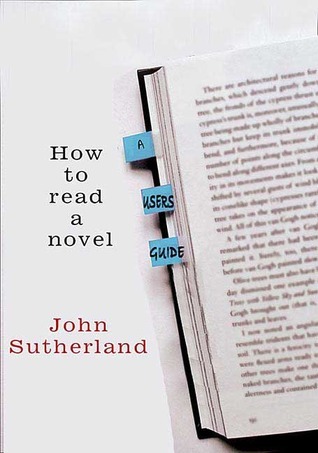
How to Read a Novel
"Do we still know how to read a novel?" John Sutherland, Chairman of the 2005 Booker Prize Committee, asks. His disheartened answer is an unequivocal, "No." But Sutherland has not given up hope. With acerbic wit and intellect, he traces the history of what it used to mean to be well-read and tells readers what it still means today. Using this delightful book as a means to an end, he reminds readers how the delicate charms of fiction can be at once wonderful and inspired and infuriating.
On one level this is a book about novels: how they work, what they're about, what makes them good or bad, and how to talk about them. At a deeper level, this is a book in which one of the most intimate tête-à-têtes is described--one in which a reader meets a novel. Will a great love affair begin? Will the rendezvous end in disappointment? Who can say? In order for the relationship to take its appropriate course all the details must be clearly acknowledged and understood for their complexities: plot, point of view, character, style, pace, first and last sentences, and even beauty.
Still, Sutherland knows a true understanding of fiction is more than a flirtation with text and style--it is a business. Taking his readers on a trip to the bookshop, he helps them judge a book by its cover based on design and color, wondering aloud what genre might be best, even going so far as to analyze one of the latest American bestsellers to further help the buying reader choose the novel that is right for him or her.
In a book that is as wry and humorous as it is learned and opinionated, John Sutherland tells you everything you always wanted to know about how to read fiction better than you do now (but, were afraid to ask).
On one level this is a book about novels: how they work, what they're about, what makes them good or bad, and how to talk about them. At a deeper level, this is a book in which one of the most intimate tête-à-têtes is described--one in which a reader meets a novel. Will a great love affair begin? Will the rendezvous end in disappointment? Who can say? In order for the relationship to take its appropriate course all the details must be clearly acknowledged and understood for their complexities: plot, point of view, character, style, pace, first and last sentences, and even beauty.
Still, Sutherland knows a true understanding of fiction is more than a flirtation with text and style--it is a business. Taking his readers on a trip to the bookshop, he helps them judge a book by its cover based on design and color, wondering aloud what genre might be best, even going so far as to analyze one of the latest American bestsellers to further help the buying reader choose the novel that is right for him or her.
In a book that is as wry and humorous as it is learned and opinionated, John Sutherland tells you everything you always wanted to know about how to read fiction better than you do now (but, were afraid to ask).
263 pages, Hardcover
First published January 1, 2006
About the author
John Sutherland
266 books200 followersJohn Andrew Sutherland is an English academic, newspaper columnist and author. He is Emeritus Lord Northcliffe Professor of Modern English Literature at University College London.
Ratings & Reviews
Friends & Following
Create a free account to discover what your friends think of this book!
Community Reviews
Displaying 1 - 30 of 85 reviews

December 26, 2011
Like many Goodreads descriptions, the one above simply reproduces the glowing jacket copy. That needs to be taken with a grain (or a block) of salt. :-( When I told my wife and oldest daughter that I'd bought a remaindered copy of this book for a dollar, they were both skeptical; they felt that since I've been reading novels for over 50 years, I don't need any instruction in that area. As a general principle, I'm sure I could benefit from more insight and systematic instruction, never having had much literary training beyond high school and college survey courses. But in the concrete case of this particular book, their skepticism proved to be amply justified.
Sutherland, a British university don and newspaper columnist who twice chaired the Man Booker Prize (England's equivalent of the Pulitzer) committee, has clearly read a lot of novels, has opinions about them, and likes voicing his opinions. Most Goodreaders can say the same, and most of us enjoy reading others' opinions, too. But even with a chapter organization that's very logically ordered, in terms of a reader's physical experience of a book, the problem is that Sutherland's opinions and factual information here don't constitute a "user's manual" for novel owners, nor live up to the advertised goal of really giving any significant practical instruction in how to read one. Nor does he give any very systematic practical guidance on how to choose novels to read in the first place, though he gives that topic more rhetorical attention than the advertised one gets. His observations on both topics are sketchy and general, boil down to glorified common sense whenever they're tangible, and are often annoyingly noncommital. (For instance, should we pay any attention to reviews? Well, yes and no. What about best seller lists? Uh, maybe; there are pros and cons. Should I buy hardback or paperback? Maybe. And so it goes.) Granted, there are complexities, and tradeoffs involved in all of these questions. But Sutherland sometimes creates the impression of being a self-appointed guide who's afraid to do any guiding. One wonders if the title here was his idea or his publisher's, and if My Random Thoughts About Novels I've Read wouldn't have been a more descriptive one, if less commercially enticing.
There are a few pluses here (not many), which is why I gave the book a second star --and it probably was a gift. For a modern academic, Sutherland writes in a reasonably accessible style, clearly meant for general readers; he very rarely uses jargon and almost always defines it if he does (though I still don't know what "GBH" stands for). His prose style tends to be witty; of course, it can also be viewed as snide and snarky, depending on how you feel about his targets (which often include Americans in general, for instance). He's secure enough in his position to take a few jabs at "political correctness," though he also has plenty of fashionable establishment prejudices. Unlike most modern pundits, he recognizes the enduring value of paper books and their intrinsic advantages over e-books, and is optimistic about their survival; and he doesn't share the cultural elite's total prejudice against popular and genre fiction, though the vast majority of modern novels that he discusses here are of the (self-styled) "literary" sort. Finally, in places, his content can be anywhere from moderately to very interesting; I did pick up a certain amount of worthwhile information here about the history of the book, the world of fiction and the current literary scene.
However, there are also significant flaws, even besides the basic one noted above. His topically arranged chapters are too short to do more than skim the surface of each of their topics, not to treat it in full. (For instance, yes, knowing something of the history of the novel is useful background for reading one; but "Fiction --a four-minute history" is too sketchy to help anybody!) As he noted, modern publishers do use sex as a blatant advertising tool, but though he didn't put a bikini-clad beauty on the cover, he tends to resort to something similar; in choosing examples to illustrate his various points, he has a marked tendency to go for the most salacious ones he can find, and that gets old quickly. More importantly, he makes some significant factual errors that I could catch in his discussion of some novels --which makes me wonder how many there are I didn't catch because I wasn't familiar with the book in question.
In summary, reading this book for me was something like kicking back and talking about novels with an opinionated friend (except that I get the distinct impression that I'm not the sort of person he'd enjoy kicking back with!) or reading the reviews and comments of a fellow Goodreader whom you know is very smart and well-spoken, but who doesn't have very similar tastes. If you read it, you might often be entertained, sometimes intellectually stimulated to agree or disagree with a thought, sometimes educated with a factoid or anecdote, and at times bored out of your skull. But what you will NOT do is learn "how to read a novel!"
Sutherland, a British university don and newspaper columnist who twice chaired the Man Booker Prize (England's equivalent of the Pulitzer) committee, has clearly read a lot of novels, has opinions about them, and likes voicing his opinions. Most Goodreaders can say the same, and most of us enjoy reading others' opinions, too. But even with a chapter organization that's very logically ordered, in terms of a reader's physical experience of a book, the problem is that Sutherland's opinions and factual information here don't constitute a "user's manual" for novel owners, nor live up to the advertised goal of really giving any significant practical instruction in how to read one. Nor does he give any very systematic practical guidance on how to choose novels to read in the first place, though he gives that topic more rhetorical attention than the advertised one gets. His observations on both topics are sketchy and general, boil down to glorified common sense whenever they're tangible, and are often annoyingly noncommital. (For instance, should we pay any attention to reviews? Well, yes and no. What about best seller lists? Uh, maybe; there are pros and cons. Should I buy hardback or paperback? Maybe. And so it goes.) Granted, there are complexities, and tradeoffs involved in all of these questions. But Sutherland sometimes creates the impression of being a self-appointed guide who's afraid to do any guiding. One wonders if the title here was his idea or his publisher's, and if My Random Thoughts About Novels I've Read wouldn't have been a more descriptive one, if less commercially enticing.
There are a few pluses here (not many), which is why I gave the book a second star --and it probably was a gift. For a modern academic, Sutherland writes in a reasonably accessible style, clearly meant for general readers; he very rarely uses jargon and almost always defines it if he does (though I still don't know what "GBH" stands for). His prose style tends to be witty; of course, it can also be viewed as snide and snarky, depending on how you feel about his targets (which often include Americans in general, for instance). He's secure enough in his position to take a few jabs at "political correctness," though he also has plenty of fashionable establishment prejudices. Unlike most modern pundits, he recognizes the enduring value of paper books and their intrinsic advantages over e-books, and is optimistic about their survival; and he doesn't share the cultural elite's total prejudice against popular and genre fiction, though the vast majority of modern novels that he discusses here are of the (self-styled) "literary" sort. Finally, in places, his content can be anywhere from moderately to very interesting; I did pick up a certain amount of worthwhile information here about the history of the book, the world of fiction and the current literary scene.
However, there are also significant flaws, even besides the basic one noted above. His topically arranged chapters are too short to do more than skim the surface of each of their topics, not to treat it in full. (For instance, yes, knowing something of the history of the novel is useful background for reading one; but "Fiction --a four-minute history" is too sketchy to help anybody!) As he noted, modern publishers do use sex as a blatant advertising tool, but though he didn't put a bikini-clad beauty on the cover, he tends to resort to something similar; in choosing examples to illustrate his various points, he has a marked tendency to go for the most salacious ones he can find, and that gets old quickly. More importantly, he makes some significant factual errors that I could catch in his discussion of some novels --which makes me wonder how many there are I didn't catch because I wasn't familiar with the book in question.
In summary, reading this book for me was something like kicking back and talking about novels with an opinionated friend (except that I get the distinct impression that I'm not the sort of person he'd enjoy kicking back with!) or reading the reviews and comments of a fellow Goodreader whom you know is very smart and well-spoken, but who doesn't have very similar tastes. If you read it, you might often be entertained, sometimes intellectually stimulated to agree or disagree with a thought, sometimes educated with a factoid or anecdote, and at times bored out of your skull. But what you will NOT do is learn "how to read a novel!"

July 21, 2018
I didn't mean to read this book when I had come across it some months ago somewhere in Bangkok but I changed my mind. Later I vaguely recalled his name from an OUP hardcover in its omnibus edition I decided to buy in 2005 at the Chulalongkorn University Book Center and read some topics I liked. The book in question entitled, The Literary Detective: 100 Puzzles in Classic Fiction (Oxford University Press 2000) has since allowed me to know him more as a renowned scholar in the name of Professor John Sutherland. Notably, the omnibus volume comprises three collections of literary puzzles: Is Heathcliff a Murderer? (1996), Can Jane Eyre Be Happy? (1997), and Who Betrays Elizabeth Bennet? (1999).
From its twenty-eight chapters, it seemed to me the readers would find reading them arguably entertaining and informational from his inspirational writing style, direct quotes, black-and-white illustrations as well as his step-by-step narratives on how to literally tackle any novel one's going to read as we can see, for instance, from the first five chapters: 1. So many novels, so little time, 2. Declarations of independence, 3. Every other thing has changed: why hasn't the book changed?, 4. Fiction - a four-minute history, 5. Targeting - first find your book.
Indeed, I found a few chapters a bit tough, for example, Chapter 27 Book of the film? Film of the book? I had no choice but kept reading on and on till I finally found some consolation in Chapter 28 After all is said and done, what use are they? in which the author has encouraged common novel readers by ending his message in the last paragraph as follows:
In brief, this A User's Guide notifying its readers as the subtitle has seemingly been adopted there like other recent popular advertising catchwords; however, I think A Reader's Guide should be equally impactful to those readers or passersby. One of the reasons is that the word User signifies something mechanic, technology or computer-oriented whereas the word Reader aims at those common readers themselves since, eventually, they would soon learn from reading this Guide to acquire better understanding as well as vision to read or not to read, that is the question they should find out some solution via their exploration, evaluation and appreciation in the world of innumerable novels.
From its twenty-eight chapters, it seemed to me the readers would find reading them arguably entertaining and informational from his inspirational writing style, direct quotes, black-and-white illustrations as well as his step-by-step narratives on how to literally tackle any novel one's going to read as we can see, for instance, from the first five chapters: 1. So many novels, so little time, 2. Declarations of independence, 3. Every other thing has changed: why hasn't the book changed?, 4. Fiction - a four-minute history, 5. Targeting - first find your book.
Indeed, I found a few chapters a bit tough, for example, Chapter 27 Book of the film? Film of the book? I had no choice but kept reading on and on till I finally found some consolation in Chapter 28 After all is said and done, what use are they? in which the author has encouraged common novel readers by ending his message in the last paragraph as follows:
Novels can do many things. They can instruct, enlighten, confuse, mislead, soothe, excite, indoctrinate, misinform, educate and waste time. Each novel has its own rewards, or frustrations. And, at the highest pitch of achievement, novels can indeed be the one bright book of light. The trick is finding which, among the millions now accessible, fits that bill. For you, that is. And that, as Virginia Woolf told us, is something no one can tell you. Or, if they do, ignore them. (p. 243)
In brief, this A User's Guide notifying its readers as the subtitle has seemingly been adopted there like other recent popular advertising catchwords; however, I think A Reader's Guide should be equally impactful to those readers or passersby. One of the reasons is that the word User signifies something mechanic, technology or computer-oriented whereas the word Reader aims at those common readers themselves since, eventually, they would soon learn from reading this Guide to acquire better understanding as well as vision to read or not to read, that is the question they should find out some solution via their exploration, evaluation and appreciation in the world of innumerable novels.

March 29, 2007
I love books about books: books telling you what to read, how to read, when to read, why to read, etc. If you don't, this is likely not your book. If you do, it's right up your alley.
This is a fun, tidbit-packed look at the modern novel. With a wry, humorous, and decidedly British voice, the author discusses the novel's history, form, and components, all with an eye toward helping the reader bring a bit more context to his/her reading. Each chapter is a self-contained essay and reads very well alone. The author lards each essay with such a variety of current-event and historical factoids that beg to be read aloud at the luch table (causing my husband, more than once, to shout "how is this book organized?").
This is a fun, tidbit-packed look at the modern novel. With a wry, humorous, and decidedly British voice, the author discusses the novel's history, form, and components, all with an eye toward helping the reader bring a bit more context to his/her reading. Each chapter is a self-contained essay and reads very well alone. The author lards each essay with such a variety of current-event and historical factoids that beg to be read aloud at the luch table (causing my husband, more than once, to shout "how is this book organized?").

February 24, 2010
WOOO I’M DONE WITH IT. I am so glad that I’m done with it!
You may think I’m being a bit dramatic, considering the book’s only 250 pages, and I spent two days reading it (not even two full days, just free minutes within them), so it’s not like it took me a long time. But it felt like time was dragging when I was reading it.
It’s not a bad book, per se. It’s just totally and utterly useless to any bibliophiles who have spent the better part of their life reading. Or anyone who reads and constantly evaluates what they’re reading, as opposed to reading masses of Harlequin romances, one genre incessantly, or just bestsellers. This is more a book for a novice, someone just beginning to take reading semi-seriously, and wants something that can only be described as a cross between a collection of essays and a narrative to himself (the author) — and not in a good way.
John Sutherland was a Prof of English at UCL, and was twice on the Man Booker Prize committee. Clearly, he has been a reader most of his life, knows a hell of a lot and wants to somehow impart this with the world. The problem is, that’s what it reads like — someone who has information but is unsure how to bequeath it, and someone who is all too self-aware.
This book was a total waste of time for me. If you’re intelligent enough to vary your reading, think for yourself whether you want to read a book instead of being pushed into it by prize-winning novels or bestsellers, or if you’ve been reading consistently longer than five years, don’t bother. Trust me, it will only serve to frustrate you.
You may think I’m being a bit dramatic, considering the book’s only 250 pages, and I spent two days reading it (not even two full days, just free minutes within them), so it’s not like it took me a long time. But it felt like time was dragging when I was reading it.
It’s not a bad book, per se. It’s just totally and utterly useless to any bibliophiles who have spent the better part of their life reading. Or anyone who reads and constantly evaluates what they’re reading, as opposed to reading masses of Harlequin romances, one genre incessantly, or just bestsellers. This is more a book for a novice, someone just beginning to take reading semi-seriously, and wants something that can only be described as a cross between a collection of essays and a narrative to himself (the author) — and not in a good way.
John Sutherland was a Prof of English at UCL, and was twice on the Man Booker Prize committee. Clearly, he has been a reader most of his life, knows a hell of a lot and wants to somehow impart this with the world. The problem is, that’s what it reads like — someone who has information but is unsure how to bequeath it, and someone who is all too self-aware.
This book was a total waste of time for me. If you’re intelligent enough to vary your reading, think for yourself whether you want to read a book instead of being pushed into it by prize-winning novels or bestsellers, or if you’ve been reading consistently longer than five years, don’t bother. Trust me, it will only serve to frustrate you.

November 8, 2009
A slightly misleading title (ironic - the back cover says the book will help us "recognize a misleading title at first glance"). This is not one of those Harold Bloom or James Woods ("how fiction works") type books. It's casual and chatty; it discusses publishing, dust covers, fonts and margins, author photographs, book reviews, awards (the author served on the Man Booker jury), whether Martians will understand Pride and Prejudice, whether John Banville understood Ian McEwan's Saturday, whether Bret Easton Ellis is telling the truth, whether we should buy hardbacks or paperbacks. After I'd gotten through the brief, stupid sections discussing e-books, Bill Gates, and Tarantino's Pulp Fiction, it became an enjoyable read.

November 2, 2007
I'd thought this book to be an exploration of the innards of a novel - plot, structure, etc - which it's not. But I found it no less enjoyable for being instead an extended love letter to the form, with such discourses as the history of the novel, the use of genres, critical receptions, celebrity authors, the hidden secrets to be gleaned from the copyright page, what to think of film adaptations or book reviews or bestseller lists, and a hell of a lot more. Some of these subjects are just 3 or 4 pages in length; some of them come closer to a dozen. It's light and breezy and - for any bibliophile, at least - fun and fascinating to boot.

September 17, 2012
I was a little surprised how negative people have been about this book, and I wonder if it is because it has been mis-titled. It's not really a guide to how to 'read' a novel, whatever that might involve, but a series of short, well written essays on novels and the book trade.
Some of the highlights? I particularly enjoyed 'I'm a Martian, will I understand Pride and Prejudice" which looked at the question of how much one's enjoyment and appreciation of a novel can depend on what you know about the world in which it is set and "Real World, Fictional World" on how reality and fiction can interact in the novel...
Perhaps my only irritation was the Sutherland's rather odd conceit that the book is some kind of 'Alien's Guide' to the novel, as if someone might conceivably pick this book up because they'd heard of these strange 'novel' things and wanted to know whether they should read some....
Some of the highlights? I particularly enjoyed 'I'm a Martian, will I understand Pride and Prejudice" which looked at the question of how much one's enjoyment and appreciation of a novel can depend on what you know about the world in which it is set and "Real World, Fictional World" on how reality and fiction can interact in the novel...
Perhaps my only irritation was the Sutherland's rather odd conceit that the book is some kind of 'Alien's Guide' to the novel, as if someone might conceivably pick this book up because they'd heard of these strange 'novel' things and wanted to know whether they should read some....
April 20, 2008
In all honesty, this strange and quirky "guidebook" didn't tell me much I didn't know already - some of it seems to be aimed at passing Martians who have never previously come across a novel! I always enjoy reading John Sutherland, though, and there are a lot of humorous comments about all sorts of books thrown in along the way.

July 3, 2022
I suspect the primary reason this was produced was to settle the score in a controversy between Sutherland and THE SEA author John Banville over Banville's review trashing Ian McEwan's SATURDAY. On page 202 the author contends he has no part in "the critical fray" over the assualt, which is hilarious given two sentences later Sutherland reveals he and Banville had a public back-and-forth arguing in NYRB editorial letters about errors in Banville's review, and whether or not Sutherland was making too much of them.
Fans of literary prizes, or those seeking gossip from behind their squabbling scenes, should particularly enjoy Sutherland's book. For the rest of us this is an amusing but insubstantial collection of short pieces on history and marketing of novels.
Fans of literary prizes, or those seeking gossip from behind their squabbling scenes, should particularly enjoy Sutherland's book. For the rest of us this is an amusing but insubstantial collection of short pieces on history and marketing of novels.

November 17, 2020
This is a series of well-written essays about books and the book trade. If you like books about books you'll like this one. It might not be a problem that you think needs solving but I happen to like books about books. There are all sorts of anecdotes about books so if you're a book nerd, you'll love it. For example, Bobby Sands used to read Leon Uris's Trinity to the other guys when they were on hunger strike. And the footnote on that comment tells of Patrick Magee Ph.D. in the literature of the Troubles.
The author attempts a snapshot in time review of technology affecting the novel in 2006. That's a risky business especially since the iPhone and Kindle were just about to come out. He mentions Microsoft and not Apple and Amazon. If he'd written it a year or two later it would have still seemed current 14 years later. Overall, his analysis of the endurability of books has held up very well. In fact, it has been better than he predicted because books have now made a resurgence with the Covid-19 pandemic. I'd love to see another edition of this book as a review of what's been happening in publishing especially since the onset of this pandemic.
He reviews how copyright has been used to give birth to novels in 1710 up to Margaret Mitchell's Estate protection of Gone With The Wind almost to trademark level. He describes different editions of famous books such as Lady Chatterley's Lover due to censorship. He covers titles that are not copyright and first lines with a great tour of many of the famous first lines. He tackles genre which is far more complicated than I thought. He describes all the different branches of genre and where they originated and how they blend. Sometimes authors cross genre boundaries.
Since he was a Booker judging chair in 2005, he's got a good insight into the process of picking a Booker winner. He makes an important point that individual choice trumps everything so beware of reviews, prizes and bestseller lists, reading groups, and many more chatterings. They are just signposts to help you. Blurbs and endorsement of novels are also something to be suspicious about and that's emphasized by his own endorsement of his own book on the dust jacket of this book.
All of the above are ingredients in a package we buy and consume. It's a strong case for going into physical book shops who take this into account when arranging books.
The author attempts a snapshot in time review of technology affecting the novel in 2006. That's a risky business especially since the iPhone and Kindle were just about to come out. He mentions Microsoft and not Apple and Amazon. If he'd written it a year or two later it would have still seemed current 14 years later. Overall, his analysis of the endurability of books has held up very well. In fact, it has been better than he predicted because books have now made a resurgence with the Covid-19 pandemic. I'd love to see another edition of this book as a review of what's been happening in publishing especially since the onset of this pandemic.
He reviews how copyright has been used to give birth to novels in 1710 up to Margaret Mitchell's Estate protection of Gone With The Wind almost to trademark level. He describes different editions of famous books such as Lady Chatterley's Lover due to censorship. He covers titles that are not copyright and first lines with a great tour of many of the famous first lines. He tackles genre which is far more complicated than I thought. He describes all the different branches of genre and where they originated and how they blend. Sometimes authors cross genre boundaries.
Since he was a Booker judging chair in 2005, he's got a good insight into the process of picking a Booker winner. He makes an important point that individual choice trumps everything so beware of reviews, prizes and bestseller lists, reading groups, and many more chatterings. They are just signposts to help you. Blurbs and endorsement of novels are also something to be suspicious about and that's emphasized by his own endorsement of his own book on the dust jacket of this book.
All of the above are ingredients in a package we buy and consume. It's a strong case for going into physical book shops who take this into account when arranging books.

Read
March 27, 2009As the title suggests, a thoroughly pretentious, often infuriating, very occasionally interesting exercise by an important critic whose name I'd never heard of. Sutherland's prose flies by (the only reason I finished the thing), and he does manage to provide some solid information on the history of the novel--though nothing that you wouldn't have learned in any decent Literature 101 class.
When discussing modern literature, his examples rely heavily and predictably on nominees and laureates of the Man Booker prize (not incidentally, an award whose committee he has chaired.) Perhaps some would find it useful--it certainly reminded me of a few things I had forgotten from a certain freshman-year seminar--but I find myself wishing that I had my four-and-a-half hours back.
When discussing modern literature, his examples rely heavily and predictably on nominees and laureates of the Man Booker prize (not incidentally, an award whose committee he has chaired.) Perhaps some would find it useful--it certainly reminded me of a few things I had forgotten from a certain freshman-year seminar--but I find myself wishing that I had my four-and-a-half hours back.

January 18, 2010
I like John Sutherland's style, his wit, and his choice of reading. While much of this book contained information that was not new to me, there were bits of wisdom about reading novels within every chapter that made the book worthwhile. Anyone who rates Raymond Chandler above John Steinbeck is okay in my book. This is a book for readers who relish the book as well as the reading of the book. If you are interested in an overview of the novel and reading along with wry and witty comments on the publishing trade this book is for you.
November 24, 2016
Well, after this, I'm going to about reading novels in my own way(which I was doing anyway)

January 25, 2016
I can consider this as a fine read.
To be honest, it is the book's title that drew my attention along with the author starting with the subject of the huge and increasing supply of novels ( books in general ) in the recent years compared to the past which readers had better time for reading. But I have to state that the title might deceive some readers looking for a step by step guide or manual of the actual reading process of the novel where this book is NOT such a guide.
But this book is still a guide and a very useful guide to the world of novels and fiction where the author guides the reader to what must be considered in reading fiction in various aspects from history, approach, actual book structure and elements, historical fiction, fiction and red areas, novels and movies, dealing with reviews and prizes and bestsellers lists ... and many more. ..
This book is inspiring full of insight where the author shares his great reading experience in all sorts of subjects he explores. ..
I have noted some useful information and quotes which I intend to hopefully share in the near future.
Please find below a sample of what I noted down from the author while reading the book :
Whatever else, book glut is surely better than book famine. The problem is how to handle that glut – either by ruthless thinning out, or by new ways of organizing the mass.
12
Two more humble assumptions are constant: 1) novels are things to be enjoyed; 2) the better we read them, the more enjoyment we will derive from them. A clever engagement with a novel is, in my opinion, one of the more noble functions of human intelligence. Reading novels is not a spectator sport but a participatory activity.
12
Woolf – one of whose more remunerative sidelines was telling people, very firmly, how they should read books – offers no advice other than ignore all advice including her own. Follow your gut ‘instinct’. Go alone into the world of fiction
14
‘Coming to your own conclusions’, with every resource of mind, intellect and sensibility, is less an act of judgement than one of self-definition. And difficult. In reading a good novel well we can discover something about ourselves – more specifically, how different we, as individuals, are from each of the other five-and-a-half billion individuals on the planet. A novel is, or can be, a kind of Rorschach Test – a reflection of us, in all our private complexities, in one of the better mirrors that contemporary life can hold up to us.
15
As George Eliot argued, modern society has no better generator of intelligent sympathy than the novel, and no more efficient dissipater of prejudice.
17
Axiomatically, a good reader (or ‘user’) of good fiction will read (use) the same novel in a uniquely different way from every other good reader – and, potentially, just as well.
21
Our reading preferences are when carefully examined, as uniquely different, and as revealing, as our fingerprints.
35
The solitariness of the reading act is its defining feature. And nowhere more than with fiction (the book which, as Paul Auster says, the reader ‘writes’) are we more truly ourselves.
36
Say ‘novel’ in 1750 and you were, probably, referring to one, or at most a small handful of things. Say ‘novel’ in 2006, and you could be referring to scores of things.
49
In many cases, the title does not make sense until you have read the novel. And even then you may not be 100 percent sure what the thing means.
91
Titles, it seems, often set out to inaugurate a game between author and reader – a game which, if the novel works, will add immensely to the reader’s pleasure. If the novel does not work, it will simply be something else to cheese the reader off.
92
Clearly it is possible to enjoy the novel even though second time round you know what is coming next. Novels, that is, may be designed to be read more than once. It is an assumption most readers are prepared to go along with. Although we may not do it consciously, most readers exercise a kind of triage: novels which, actually or metaphorically, we chuck; and novels which we keep on the shelf to enjoy again, even though we know who killed Colonel Mustard in the Library.
95
The conclusion? Don’t trust the title. But think about it.
103
Even the longest novel has to begin with a single line, and that line sets the narrative on the path to its destination. First lines, then, should never be taken at face value. But if you are applying the sniff test in the shop, the first line is always worth a quick dab at the nostrils. Best not do it with last lines as the-butler-did-it style revelations are likely to spoil your first reading.
117
The fact is novels all connect at some level and in some way – however subterranean that connection.
129
You do not have to understand all the internal wiring of a novel to enjoy the illumination it gives. But being aware of it does give the reader a pleasing sense of ascendancy, and of almost egalitarian connection with the author. In conclusion, for the ‘user’ the message is simple. The more fiction you read, and the more intelligently you do so, the richer your experience will be. Those readers who read most get most out of it.
130
In no area of fiction is the rule ‘by their novels shall ye know them’, truer than it is in genre. The only advice I can usefully give is: experiment from time to time. Who knows, old man, there may be something in the teen fiction racks; after all, Philip Pullman is there.
142
Ideally, the novel should be a whole body experience. Reading can use legs (to fetch the book down from the bookshelf, for example), arms (reaching up for it), hands (holding it), fingers and thumbs (flicking the pages), mouth (licking the finger). It can be done at the table, on the sofa, in the train, on the plane. Interestingly, among the young it seems to becoming an even more physical activity.
148
Arguably the job of the novel, done well, is to ‘transport’ us, carry us away. Those tiny black marks on an only slightly larger white surface are a portal – a kind of stargate into another world. On the other hand, from the first to the last word in a novel, it is only a typographic link which keeps us online. Once the type stops, the novel stops.
151
The advice is: always go for the hardback if you really want to read a novel. Apart from anything else, the deterrently high price will make you think carefully about whether you really want to read the thing. Which is good. And, observably, one reads a hardback more respectfully. Reserve the paperback for titles which, for one reason or another, you have missed.
159
Fiction is all about compromise: finding the precarious balance between self-expression and serving the reader.
163
Ballard meant to unsettle us. He explained what he was doing in Crash in a 1995 preface to the novel: I feel that the balance between fiction and reality has changed significantly in the past decades. Increasingly their roles are reversed. We live in a world ruled by fictions of every kind – mass merchandizing, advertising, the pre-empting of any original response to experience by the television screen. We live inside an enormous novel.
176
FICTION HAS ITS fictional licence. When it wants to, the novel can play fast and loose with fact without doing itself mortal damage. The transgressions can, on occasion, however, confuse, delude or tantalize the reader.
181
However insignificant in the larger fictional scheme of things, such slips can be unsettling. But sometimes novelists want to unsettle us – to ‘alienate’ readers, as the Brechtian critics put it – so that we are jolted into realising that what we are reading is fiction. And, even if they do not deliberately intend to do such things, a slip such as Smith’s has the same effect: keeping the reader on their toes.
182
Fiction can claim that it is particularly good at depicting the ‘fuzziness’ of history, its refusal to fall into satisfactory shapes and clear-line patterns. It is both contradictory and complementary. Its ‘licence’ allows it to stretch history, find break points, look at events from different angles and, more often than not, take unwarranted liberties in doing so. But, even at its most wrong, it is usually more readable than historical chronicle. And, of course, because it is ‘fiction’, sensible readers (not, alas, always a majority) do not take a novel as the last word on anything. Arguably, fiction – with its unique ability to ‘extend sympathy’, in George Eliot’s phrase – can deliver a different but equally valuable kind of knowledge.
187
Whether or not novels are historically accurate (historians invariably reject or qualify their depictions), there is no questioning their power to form received historical and social thinking.
191
It raises the question – if you really want to get into and on top of a novel – do you have to be intimately knowledgeable about the world in which it is set? Within reason, yes. It helps. The principle can, of course, be carried too far.
206
The more familiar or ‘inward’ you are with a novel’s world, the subtler your understanding of the novel. To put it another way, the less Martian you are about it, the less likely you are to make slips such as John Banville’s.
208
None the less, without being Leavisite about it, film rarely does full justice to good fiction. Movies have an apparently incorrigible tendency to sentimentalize, simplify and sog up the source
232
Film adaptations can stimulate, they can enlighten, but they can also rigidly format one’s sense of the printed original.
237
Novels can do many things. They can instruct, enlighten, confuse, mislead, soothe, excite, indoctrinate, misinform, educate and waste time. Each novel has its own rewards, or frustrations. And, at their highest pitch of achievement, novels can indeed be the one bright book of life. The trick is finding which, among the millions now accessible, fits that bill. For you, that is. And that, as Virginia Woolf told us, is something no one can tell you. Or, if they do, ignore them.
243
Novels, as has been said repeatedly in the previous pages, can provoke as different responses as people themselves are different. What is interesting is why, in any particular case, the response is provoked.
245
To be honest, it is the book's title that drew my attention along with the author starting with the subject of the huge and increasing supply of novels ( books in general ) in the recent years compared to the past which readers had better time for reading. But I have to state that the title might deceive some readers looking for a step by step guide or manual of the actual reading process of the novel where this book is NOT such a guide.
But this book is still a guide and a very useful guide to the world of novels and fiction where the author guides the reader to what must be considered in reading fiction in various aspects from history, approach, actual book structure and elements, historical fiction, fiction and red areas, novels and movies, dealing with reviews and prizes and bestsellers lists ... and many more. ..
This book is inspiring full of insight where the author shares his great reading experience in all sorts of subjects he explores. ..
I have noted some useful information and quotes which I intend to hopefully share in the near future.
Please find below a sample of what I noted down from the author while reading the book :
Whatever else, book glut is surely better than book famine. The problem is how to handle that glut – either by ruthless thinning out, or by new ways of organizing the mass.
12
Two more humble assumptions are constant: 1) novels are things to be enjoyed; 2) the better we read them, the more enjoyment we will derive from them. A clever engagement with a novel is, in my opinion, one of the more noble functions of human intelligence. Reading novels is not a spectator sport but a participatory activity.
12
Woolf – one of whose more remunerative sidelines was telling people, very firmly, how they should read books – offers no advice other than ignore all advice including her own. Follow your gut ‘instinct’. Go alone into the world of fiction
14
‘Coming to your own conclusions’, with every resource of mind, intellect and sensibility, is less an act of judgement than one of self-definition. And difficult. In reading a good novel well we can discover something about ourselves – more specifically, how different we, as individuals, are from each of the other five-and-a-half billion individuals on the planet. A novel is, or can be, a kind of Rorschach Test – a reflection of us, in all our private complexities, in one of the better mirrors that contemporary life can hold up to us.
15
As George Eliot argued, modern society has no better generator of intelligent sympathy than the novel, and no more efficient dissipater of prejudice.
17
Axiomatically, a good reader (or ‘user’) of good fiction will read (use) the same novel in a uniquely different way from every other good reader – and, potentially, just as well.
21
Our reading preferences are when carefully examined, as uniquely different, and as revealing, as our fingerprints.
35
The solitariness of the reading act is its defining feature. And nowhere more than with fiction (the book which, as Paul Auster says, the reader ‘writes’) are we more truly ourselves.
36
Say ‘novel’ in 1750 and you were, probably, referring to one, or at most a small handful of things. Say ‘novel’ in 2006, and you could be referring to scores of things.
49
In many cases, the title does not make sense until you have read the novel. And even then you may not be 100 percent sure what the thing means.
91
Titles, it seems, often set out to inaugurate a game between author and reader – a game which, if the novel works, will add immensely to the reader’s pleasure. If the novel does not work, it will simply be something else to cheese the reader off.
92
Clearly it is possible to enjoy the novel even though second time round you know what is coming next. Novels, that is, may be designed to be read more than once. It is an assumption most readers are prepared to go along with. Although we may not do it consciously, most readers exercise a kind of triage: novels which, actually or metaphorically, we chuck; and novels which we keep on the shelf to enjoy again, even though we know who killed Colonel Mustard in the Library.
95
The conclusion? Don’t trust the title. But think about it.
103
Even the longest novel has to begin with a single line, and that line sets the narrative on the path to its destination. First lines, then, should never be taken at face value. But if you are applying the sniff test in the shop, the first line is always worth a quick dab at the nostrils. Best not do it with last lines as the-butler-did-it style revelations are likely to spoil your first reading.
117
The fact is novels all connect at some level and in some way – however subterranean that connection.
129
You do not have to understand all the internal wiring of a novel to enjoy the illumination it gives. But being aware of it does give the reader a pleasing sense of ascendancy, and of almost egalitarian connection with the author. In conclusion, for the ‘user’ the message is simple. The more fiction you read, and the more intelligently you do so, the richer your experience will be. Those readers who read most get most out of it.
130
In no area of fiction is the rule ‘by their novels shall ye know them’, truer than it is in genre. The only advice I can usefully give is: experiment from time to time. Who knows, old man, there may be something in the teen fiction racks; after all, Philip Pullman is there.
142
Ideally, the novel should be a whole body experience. Reading can use legs (to fetch the book down from the bookshelf, for example), arms (reaching up for it), hands (holding it), fingers and thumbs (flicking the pages), mouth (licking the finger). It can be done at the table, on the sofa, in the train, on the plane. Interestingly, among the young it seems to becoming an even more physical activity.
148
Arguably the job of the novel, done well, is to ‘transport’ us, carry us away. Those tiny black marks on an only slightly larger white surface are a portal – a kind of stargate into another world. On the other hand, from the first to the last word in a novel, it is only a typographic link which keeps us online. Once the type stops, the novel stops.
151
The advice is: always go for the hardback if you really want to read a novel. Apart from anything else, the deterrently high price will make you think carefully about whether you really want to read the thing. Which is good. And, observably, one reads a hardback more respectfully. Reserve the paperback for titles which, for one reason or another, you have missed.
159
Fiction is all about compromise: finding the precarious balance between self-expression and serving the reader.
163
Ballard meant to unsettle us. He explained what he was doing in Crash in a 1995 preface to the novel: I feel that the balance between fiction and reality has changed significantly in the past decades. Increasingly their roles are reversed. We live in a world ruled by fictions of every kind – mass merchandizing, advertising, the pre-empting of any original response to experience by the television screen. We live inside an enormous novel.
176
FICTION HAS ITS fictional licence. When it wants to, the novel can play fast and loose with fact without doing itself mortal damage. The transgressions can, on occasion, however, confuse, delude or tantalize the reader.
181
However insignificant in the larger fictional scheme of things, such slips can be unsettling. But sometimes novelists want to unsettle us – to ‘alienate’ readers, as the Brechtian critics put it – so that we are jolted into realising that what we are reading is fiction. And, even if they do not deliberately intend to do such things, a slip such as Smith’s has the same effect: keeping the reader on their toes.
182
Fiction can claim that it is particularly good at depicting the ‘fuzziness’ of history, its refusal to fall into satisfactory shapes and clear-line patterns. It is both contradictory and complementary. Its ‘licence’ allows it to stretch history, find break points, look at events from different angles and, more often than not, take unwarranted liberties in doing so. But, even at its most wrong, it is usually more readable than historical chronicle. And, of course, because it is ‘fiction’, sensible readers (not, alas, always a majority) do not take a novel as the last word on anything. Arguably, fiction – with its unique ability to ‘extend sympathy’, in George Eliot’s phrase – can deliver a different but equally valuable kind of knowledge.
187
Whether or not novels are historically accurate (historians invariably reject or qualify their depictions), there is no questioning their power to form received historical and social thinking.
191
It raises the question – if you really want to get into and on top of a novel – do you have to be intimately knowledgeable about the world in which it is set? Within reason, yes. It helps. The principle can, of course, be carried too far.
206
The more familiar or ‘inward’ you are with a novel’s world, the subtler your understanding of the novel. To put it another way, the less Martian you are about it, the less likely you are to make slips such as John Banville’s.
208
None the less, without being Leavisite about it, film rarely does full justice to good fiction. Movies have an apparently incorrigible tendency to sentimentalize, simplify and sog up the source
232
Film adaptations can stimulate, they can enlighten, but they can also rigidly format one’s sense of the printed original.
237
Novels can do many things. They can instruct, enlighten, confuse, mislead, soothe, excite, indoctrinate, misinform, educate and waste time. Each novel has its own rewards, or frustrations. And, at their highest pitch of achievement, novels can indeed be the one bright book of life. The trick is finding which, among the millions now accessible, fits that bill. For you, that is. And that, as Virginia Woolf told us, is something no one can tell you. Or, if they do, ignore them.
243
Novels, as has been said repeatedly in the previous pages, can provoke as different responses as people themselves are different. What is interesting is why, in any particular case, the response is provoked.
245

January 16, 2018
A breezy turn about the literary manor, with choice glimpses of the common muck beyond the walls. It's hard not to enjoy a book written by someone so clearly enamoured with books and reading, though he is far too caught up in the catty, rarified world of letters to properly connect with the average reader (i.e. me).

May 29, 2021
Novels can do many things. They can instruct, enlighten, confuse, mislead, soothe, excite, indoctrinate, misinform, educate and waste time. Each novel has its own rewards, or frustrations. And, at their highest pitch of achievement, novels can indeed be the one bright book of life. The trick is finding which, among the millions now accessible, fits that bill. For you, that is. And that, as Virginia Woolf told us, is something no one can tell you. Or, if they do, ignore them.

December 4, 2014
I have a weakness for books about books- how to read them, the history of them, how they’re made or collected, the crazy people that would risk their lives or livelihoods for them. This one is a bit odd, in that it isn’t really about reading novels in any lit-crit or historical sense, but about how to choose what novels to read when we are inundated with so many choices. If you need an idea of the tone of the book, I’ll just say that the blurb on the back of the book was written by the author himself, and discusses how to write a blurb.
It’s always a bit strange to read books that discuss publishing in the earliest years of the new millennium; we were (are) flooded with choices, but those choices have expanded even further in the eight or so years since How to Read a Novel was published, thanks to technology and the advent of large-scale self-publishing platforms. His analysis of electronic reading and its potential to influence (or not) the world of 2006-era publishing is kind of hilarious now; this book was barely twelve months ahead of the release of Amazon’s first generation Kindle, which rendered some of Sutherland’s pronouncements obsolete rather quickly. Digital reading devices and smart phones didn’t change the game overnight, but in hindsight it kind of feels like they did, and it is both anthropologically interesting- and entertaining- to see otherwise savvy critics get their predictions so very wrong.
This can be read as a serious (though very cursory) guide- something to help you find your way through all of the overwhelming options we have available. But I don’t think it was intended that way, and I certainly didn’t read it very seriously. I don’t think anyone really interested in reading would need a guided tour through the world of literary marketing, and anyone who is NOT a serious reader (serious as in dedicated, not as in “serious” literature) would bother to read a book about books. I found the book interesting in many places, like when Sutherland discusses author reactions/feuds surrounding literary awards, or going a little inside-baseball on how bestseller lists and endorsements work. He teaches us how arbitrary it all is in the end; books rarely find their readers in the ways publishers think they will, and awards may boost sales but they never guarantee longevity. Maybe that’s why I found it more funny than useful- it’s all one big joke on the business of publishing. Readers have always known how to find what we need, even if we feel a little overwhelmed by the options.
Cross-posted at Booklikes: http://atroskity.booklikes.com/post/1...
It’s always a bit strange to read books that discuss publishing in the earliest years of the new millennium; we were (are) flooded with choices, but those choices have expanded even further in the eight or so years since How to Read a Novel was published, thanks to technology and the advent of large-scale self-publishing platforms. His analysis of electronic reading and its potential to influence (or not) the world of 2006-era publishing is kind of hilarious now; this book was barely twelve months ahead of the release of Amazon’s first generation Kindle, which rendered some of Sutherland’s pronouncements obsolete rather quickly. Digital reading devices and smart phones didn’t change the game overnight, but in hindsight it kind of feels like they did, and it is both anthropologically interesting- and entertaining- to see otherwise savvy critics get their predictions so very wrong.
This can be read as a serious (though very cursory) guide- something to help you find your way through all of the overwhelming options we have available. But I don’t think it was intended that way, and I certainly didn’t read it very seriously. I don’t think anyone really interested in reading would need a guided tour through the world of literary marketing, and anyone who is NOT a serious reader (serious as in dedicated, not as in “serious” literature) would bother to read a book about books. I found the book interesting in many places, like when Sutherland discusses author reactions/feuds surrounding literary awards, or going a little inside-baseball on how bestseller lists and endorsements work. He teaches us how arbitrary it all is in the end; books rarely find their readers in the ways publishers think they will, and awards may boost sales but they never guarantee longevity. Maybe that’s why I found it more funny than useful- it’s all one big joke on the business of publishing. Readers have always known how to find what we need, even if we feel a little overwhelmed by the options.
Cross-posted at Booklikes: http://atroskity.booklikes.com/post/1...

June 14, 2009
I tried, but I could not finish this book. It might be great for someone who has literally never read a novel, but for people who love to read, most of his "insights" are useless. For example, did you know that you shouldn't judge the worth of a book based on how many copies it has sold? Did you know that at the back of many books, you can find a little paragraph about the font? Did you know that you should take reviews of books with a grain of salt? Really?!? I had no idea! Because this is the first book I've ever touched.
I think one of the reasons I'm so disappointed with this book is that I expected it to be a Harold Bloom-style book about how to better appreciate fiction. Instead, this is a book about everything but the content of a novel. I skipped to the end, and the only reason he gives for reading novels is that it might make you a better person. Wow. Thanks.
I think one of the reasons I'm so disappointed with this book is that I expected it to be a Harold Bloom-style book about how to better appreciate fiction. Instead, this is a book about everything but the content of a novel. I skipped to the end, and the only reason he gives for reading novels is that it might make you a better person. Wow. Thanks.

August 11, 2008
This book pissed me off more than any other book I have ever read. Most books I despise at least have the decency to bore me to the point where I have to throw it across the room in a petulant fury - whereas this book teases you with a hint of insight or profundity that eventually leads to what I like to call "analytical blue-balls." I finished the book...I was cock teased the entire time...I don't normally review books I don't like, but I had to warn others about this one. It spends more time talking about the outside of the damn book than actually talking about textual analysis. This is interesting for about a chapter or two, then eventually leads you for wanting more about the actual text (not font chosen). Talk about a misleading use of a pun in the title. Bastard.

September 28, 2014
Don't get me wrong - I'm a great fan of Sutherland. His Lives of The Novelists is a lovely laid back TRAIPSE through literature, far in advance of Sam Johnson's Lives of the Poets.
The problem is that How to Read a Novel is not about how to read a novel at all. Instead, it's a jolly romp through what Sutherland knows about books (a lot) and his adventures along the way. It's lovely to learn what "copyright" means and where novels began and the ins and outs of authorical rivalry - but it ain't reading. Now and again Sutherland drops in a clue but otherwise the reader keen to learn how to read a novel will learn pretty much nothing at all. A hand book for writers though, and, as with all Sutherland's stuff, well worth the reading. Blame the publishers. 4/5
The problem is that How to Read a Novel is not about how to read a novel at all. Instead, it's a jolly romp through what Sutherland knows about books (a lot) and his adventures along the way. It's lovely to learn what "copyright" means and where novels began and the ins and outs of authorical rivalry - but it ain't reading. Now and again Sutherland drops in a clue but otherwise the reader keen to learn how to read a novel will learn pretty much nothing at all. A hand book for writers though, and, as with all Sutherland's stuff, well worth the reading. Blame the publishers. 4/5

July 7, 2016
A series of very interesting thoughts on the place of the book in today's world. Sutherland writes with refreshing clarity and characteristic humour on the literary world and how it works. He covers everything one would consider as 'bookish': from fonts to binding, from scathing reviews to film adaptations, from titles to covers.
I can judge from the other Goodreads reviews, however, that the title of the book has been quite misleading. Sutherland does not actually teach you 'how to read a novel'. He doesn't go through the motions of what you should be looking for, at what speed you should be reading or the best method of turning the pages to avoid papercuts. This is more about what the book actually has become and in what position we hold it in our rapidly changing, digital world.
I can judge from the other Goodreads reviews, however, that the title of the book has been quite misleading. Sutherland does not actually teach you 'how to read a novel'. He doesn't go through the motions of what you should be looking for, at what speed you should be reading or the best method of turning the pages to avoid papercuts. This is more about what the book actually has become and in what position we hold it in our rapidly changing, digital world.
January 21, 2016
I found Sutherland's take on reading to jive greatly with what I have been schooled in terms of reading novels. However I did learn some quirky new things about novels in terms of the font, dates, packaging and the history of selling novels over time.
Very enjoyable time spent learning to read a novel well reading a piece of non-fiction.
read 2010
Very enjoyable time spent learning to read a novel well reading a piece of non-fiction.
read 2010

November 20, 2007
I've read the first four chapters and I'm liking this because it does NOT read like a text book. There seems to be as much background information about writing and the business as instructional information on "how to."
October 14, 2011
This was not the book i expected it to be. I read it VERY SLOWLY, which is good because it's jam packed with so much information about the world of the novel. Fun funny and insightful, just like all of Sutherland's tongue-in-cheeky-ism writing.

July 27, 2019
I think the best advice in this book is to not take anybody's advice. There's some interesting history of how the book industry got started and how it continues to operate. The different chapters focus on different aspects of the book that you can pay attention to and judge thereby. There's far too many books in the world to read, so learning to intelligently discriminate is valuable.
Some of the references to (mostly British) writers were beyond my experience, though the author does a good job of summarizing the pertinent details of the plots. The overall tone is not too snobbish, since the moral boils down to "read what you enjoy, and enjoy it better by knowing more context". However there were some sentences in the chapter on genre fiction that gave me pause. "There are, loosely speaking, four main genres: women's romance; sf; horror and fantasy; male action/thriller/western; crime." First off, that's five not four. Secondly, the gender categorization smacks of benevolent sexism. See also the sentence "Gays will go proudly to their annex." Which admittedly sounds atrocious out of context, but even in the context of the departments in a bookstore does not map onto my experience. Since when is there a special section for LGBT?
John Sutherland's reminisces of sneaking banned copies of Lady Chatterley's Lover across the channel helps to place his perspective in the context of his time and place of an older generation. This book was written in 2006, and there are a few things that date it. For one, the presumption that George R.R. Martin will only matter to fantasy fans.
Some of the references to (mostly British) writers were beyond my experience, though the author does a good job of summarizing the pertinent details of the plots. The overall tone is not too snobbish, since the moral boils down to "read what you enjoy, and enjoy it better by knowing more context". However there were some sentences in the chapter on genre fiction that gave me pause. "There are, loosely speaking, four main genres: women's romance; sf; horror and fantasy; male action/thriller/western; crime." First off, that's five not four. Secondly, the gender categorization smacks of benevolent sexism. See also the sentence "Gays will go proudly to their annex." Which admittedly sounds atrocious out of context, but even in the context of the departments in a bookstore does not map onto my experience. Since when is there a special section for LGBT?
John Sutherland's reminisces of sneaking banned copies of Lady Chatterley's Lover across the channel helps to place his perspective in the context of his time and place of an older generation. This book was written in 2006, and there are a few things that date it. For one, the presumption that George R.R. Martin will only matter to fantasy fans.
May 9, 2024
The book somehow matches my expectations of a book about how to read a novel.
In a way, it sometimes reads like a novel. It's an up-to-me style. 'I will talk about whatever I want' style. And at other times, it becomes so serious, once again reminding the reader that this book is supposed to be non-fiction.
The reason I gave it 5 stars is that, in my perspective, it already gives enough insights into how to read a novel. If people expect it to be well-structured or highly scientific, it is silly of them. It is a book about how to read a novel. How on earth could it be?
Another thing about this book that I love is how the author didn't even explain much about the importance of novels. The author didn't explain why novels could be superior, a better choice compared to non-fiction books. The reason why I, instead of seeing it as a lack, like it is that it is indeed unexplainable. I have tried to write about it several times on my personal blogs. And rather than being able to make persuasive writing, it sounds more like nonsense.
For me, and maybe John Sutherland would agree, someone who can digest a non-fiction book is smart. But someone who can digest a novel well is a genius.
Why, you may ask? Why would novels or other forms of fiction be superior compared to non-fiction? The simple answer is that when one reads non-fiction books, they gain knowledge. But when someone reads a good novel, it requires all their knowledge to fully digest it.
People won't understand this fact, as many people still think reading novels is a waste of time. And I'm afraid you also don't understand.
In a way, it sometimes reads like a novel. It's an up-to-me style. 'I will talk about whatever I want' style. And at other times, it becomes so serious, once again reminding the reader that this book is supposed to be non-fiction.
The reason I gave it 5 stars is that, in my perspective, it already gives enough insights into how to read a novel. If people expect it to be well-structured or highly scientific, it is silly of them. It is a book about how to read a novel. How on earth could it be?
Another thing about this book that I love is how the author didn't even explain much about the importance of novels. The author didn't explain why novels could be superior, a better choice compared to non-fiction books. The reason why I, instead of seeing it as a lack, like it is that it is indeed unexplainable. I have tried to write about it several times on my personal blogs. And rather than being able to make persuasive writing, it sounds more like nonsense.
For me, and maybe John Sutherland would agree, someone who can digest a non-fiction book is smart. But someone who can digest a novel well is a genius.
Why, you may ask? Why would novels or other forms of fiction be superior compared to non-fiction? The simple answer is that when one reads non-fiction books, they gain knowledge. But when someone reads a good novel, it requires all their knowledge to fully digest it.
People won't understand this fact, as many people still think reading novels is a waste of time. And I'm afraid you also don't understand.
March 31, 2019
I have to admit I'm not much more aware of how to read a novel but I really did enjoy the book. Mr Sutherland has been around books for a long time, including being a judge for the Booker for 2005. He talks a lot about editions, reviewers, titles, how books are sold, some history, genres . . .
All infused with a gentle wit, a sort of amused contemplation.
Perhaps he hasn't answered my question: what is the difference between a good novel that could be classified as literature, and the schlook that comes in series but he has given me some hints.
For anyone who enjoys reading Sutherland provides great background. I'd also recommend his How to be well read: a guide to 50o great novels and a handful of literary curiosities. Put in on your desk or coffee table or somewhere you can just pick it up to browse any time. He has written a lot of books on fiction mainly, and I want to read them all. Some are available in full on Google Books.
All infused with a gentle wit, a sort of amused contemplation.
Perhaps he hasn't answered my question: what is the difference between a good novel that could be classified as literature, and the schlook that comes in series but he has given me some hints.
For anyone who enjoys reading Sutherland provides great background. I'd also recommend his How to be well read: a guide to 50o great novels and a handful of literary curiosities. Put in on your desk or coffee table or somewhere you can just pick it up to browse any time. He has written a lot of books on fiction mainly, and I want to read them all. Some are available in full on Google Books.

October 24, 2022
I bought this expecting to learn how to improve my critical faculties and therefore make the reviews in this blog sharper, better informed, more useful, and perhaps even more entertaining. I didn't. This book is mistitled. It should be called "How to Choose which Novel you are Going to Read." He starts by noting the overwhelming avalanche of novels available to the modern reader. Then he suggests how to cut that number down by considering a wide variety of things such as the author's reputation, the bestseller lists, reviews, the blurb, the title and page 69 (among other things) and more or less concludes that none of these methods is foolproof. So you don't even get helpful advice towards what the title should have been.
Otherwise he is frequently informative, mostly entertaining and sometimes amusing.
Otherwise he is frequently informative, mostly entertaining and sometimes amusing.
August 12, 2023
This is a book about how to choose a novel. The title is badly misleading. It has little to say on the act of reading itself, and what it does say about that is limited. On the difference between novels and movies, for example, the book mentions that movies are more morally restrained than novels (sanitized). It does not mention the fact that novels easily slip into the subjective mind while movies remain largely on the external. Nor does it mention, under uses of the novel, the way in which a story can engender understanding for differing points of view - it merely mentions that some novels help with facts. The hardback copy is beautifully made and printed, and it contains some interesting material and good, clear writing - this much is enjoyable. The tone suffers, however, from a 'high-horse' mentality that disdains the modern and almost tips, at times, into sneering.

January 27, 2024
The title should be "How it feels to read a Novel and what do I think about it".
Random thoughts of a literature expert from Great Britain.
He never challnges a reader to do some actions and doesn't think much beyond his view.
In particular his predictions about e-ink are laughable. He doesn't need to understand why people want or can only read from screen.
He skips graphic novels. He skips translations. He skips old editions. He notices fonts but doesn't go deep.
I can compare it to Umberto Eco's "This is not the end of the book", and this book several levels below.
The only interesting point I found in the book, was that books were read out loud for a long time. And it seems that lots of books especially old ones were written to be read out loud. Maybe this can change the way the book is understood. But the author just mentions facts and doesn't join these points.
Random thoughts of a literature expert from Great Britain.
He never challnges a reader to do some actions and doesn't think much beyond his view.
In particular his predictions about e-ink are laughable. He doesn't need to understand why people want or can only read from screen.
He skips graphic novels. He skips translations. He skips old editions. He notices fonts but doesn't go deep.
I can compare it to Umberto Eco's "This is not the end of the book", and this book several levels below.
The only interesting point I found in the book, was that books were read out loud for a long time. And it seems that lots of books especially old ones were written to be read out loud. Maybe this can change the way the book is understood. But the author just mentions facts and doesn't join these points.
Displaying 1 - 30 of 85 reviews