

What do you think?

Wagner's Ring of the Nibelung: A Companion
"An important work for Wagnerites and musical scholars."― Choice There had long been a need for a modern English translation of Wagner’s Ring ―a version that would be reliable and readable yet at the same time be a true reflection of the literary quality of the German libretto. First published in 1993, this acclaimed translation, which follows the verse form of the original exactly, filled that niche. It reads smoothly and idiomatically, yet is the result of prolonged thought and deep back- ground knowledge.
The translation is accompanied by Stewart Spencer’s introductory essay on the libretto and a series of specially commissioned texts by Barry Millington, Roger Hollinrake, Elizabeth Magee, and Warren Darcy that discuss the cycle’s musical structure, philosophical implications, medieval sources, and Wagner’s own changing attitude to its meaning. With a glossary of names, a review of audio and video recordings, and a select bibliography, this book is an essential complement to Wagner’s great epic. 16 black-and-white illustrations
The translation is accompanied by Stewart Spencer’s introductory essay on the libretto and a series of specially commissioned texts by Barry Millington, Roger Hollinrake, Elizabeth Magee, and Warren Darcy that discuss the cycle’s musical structure, philosophical implications, medieval sources, and Wagner’s own changing attitude to its meaning. With a glossary of names, a review of audio and video recordings, and a select bibliography, this book is an essential complement to Wagner’s great epic. 16 black-and-white illustrations
384 pages, Paperback
First published August 1, 1993
Ratings & Reviews
Friends & Following
Create a free account to discover what your friends think of this book!
Community Reviews
Displaying 1 - 13 of 13 reviews
September 6, 2018
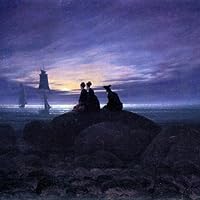
This is the single most Germanic work of art I’ve ever encountered. Wagner draws from Hegel, Schopenhauer, The Nibelungenlied, The Saga of the Volsungs, The Prose Edda, Goethe, and the Brothers Grimm. The scenery descriptions, written by Wagner, remind one of the art of Caspar David Friedrich. The libretto is steeped in 19th century Romanticism. And the music is...well, Wagnerian! His patron for
Das Rheingold
was even King Ludwig II.
You just can’t get more German than this.
The first three dramas in the cycle are exciting, adventurous, and philosophical, linking the myths of old to a burgeoning modernist sensibility. The final opera is more understated, with Wagner fully embracing Schopenhauer and returning to the idea of Wotan as tragic hero, as much as Seigfreid. While this provides nice closure and links back to the first two dramas, it does lead to a bit of an anticlimax. Still, the cycle come full circle: the foolishness of the gods, the break from the gods, the independence of the human spirit, the merging of man/woman (and the individuation of the Self), the power of love to both unify and destroy, the death of the hero that leads to a genesis of the human spirit, and the ultimate destruction the gods. It’s grand, epic, and unforgettable. I watched a staged version as I was reading the libretto to get the full impact, but Wagner’s language is so beautiful that this alone should rank him as one of the great 19th century German poets.
This edition translated by Stewart Spencer with the full German text side-by-side and extensive endnotes is essential. The opening essays and photographs of various stagings throughout the years provide excellent context.
You just can’t get more German than this.
The first three dramas in the cycle are exciting, adventurous, and philosophical, linking the myths of old to a burgeoning modernist sensibility. The final opera is more understated, with Wagner fully embracing Schopenhauer and returning to the idea of Wotan as tragic hero, as much as Seigfreid. While this provides nice closure and links back to the first two dramas, it does lead to a bit of an anticlimax. Still, the cycle come full circle: the foolishness of the gods, the break from the gods, the independence of the human spirit, the merging of man/woman (and the individuation of the Self), the power of love to both unify and destroy, the death of the hero that leads to a genesis of the human spirit, and the ultimate destruction the gods. It’s grand, epic, and unforgettable. I watched a staged version as I was reading the libretto to get the full impact, but Wagner’s language is so beautiful that this alone should rank him as one of the great 19th century German poets.
This edition translated by Stewart Spencer with the full German text side-by-side and extensive endnotes is essential. The opening essays and photographs of various stagings throughout the years provide excellent context.

March 12, 2011
I believe this is the first English translation of the full text of Wagner's Ring Cycle. It has notes, basic action description and notes on the development of the plays.
The plays based on Germanic myth are some of the most involved opera in existence and if you're not a speaker of the language in which the plays are written this is a nice "companion" to help in understanding of the extended "saga".
Not a novel, but an actual reproduction of the operas. There are some nice photos in the center of the book mainly from some historic productions as well as a photo of a page of the writing and some conception drawings.
The plays based on Germanic myth are some of the most involved opera in existence and if you're not a speaker of the language in which the plays are written this is a nice "companion" to help in understanding of the extended "saga".
Not a novel, but an actual reproduction of the operas. There are some nice photos in the center of the book mainly from some historic productions as well as a photo of a page of the writing and some conception drawings.

August 1, 2012
Great introductory scholarly essays, terrific translation by Spencer, whose goal is retaining the stabreim. Leitmotifs are annotated in the text. Includes Feuerbach and Schopenhauer endings. I use this translation and many of the essays for a college honors Ring Cycle course I teach annually. Excellent compendium to the Ring that far surpasses the Porter edition.
August 6, 2017
I read this in preparation to see the Ring Cycle at Bayreuth. In addition to the translation of text and plot synopses, essays provide greater insight to the work. This was invaluable to me as I saw the Frank Casdorf production - a controversial setting in its own right.
Informative, thought-provoking, yet accessible.
Informative, thought-provoking, yet accessible.

April 9, 2018
É uma daquelas obras magistrais que irei guardar para sempre comigo. Para além de incluir o libretto original, este compêndio possui umas notas introdutórias àquela que é a grande ópera de Wagner. Com notas complementares, bibliografia de apoio e apêndices este livro é uma leitura obrigatória para quem pretende estudar Der Ring Des Nibelungen!

March 4, 2009
Wagner is the O.G. Lord of the Ring

July 1, 2015
Best translation, so far...plus inciteful in depth analysis of the music. Make this an addition to your other volumes on the Ring. Don't make it the only one.

July 8, 2015
All it says it is, and satisfactorily so.
November 11, 2016
An excellent translation, presented alongside the original libretti.
February 6, 2024
I'm reading this with a group that has varying degrees of experience with Wagner and opera in general. It's a lively, smart bunch, and if you can find a group to read with, I think it's a great way to get more out of the text. We just finished Das Rheingold and are about to move on to Die Walküre. I'm not very familiar with German mythology though I know the basics of Norse mythology. I'm enjoying learning the old stories.
January 24, 2026
Truly a transcendental piece of art. 15 hours of pure genius.

September 23, 2025
Spencer's translated piece, intended as a companion to better grasp the German operas, is held back by this purpose, omitting complexity, detail, and nuances of the English literary language making the read less rewarding and lacking depth. While I wasn't the biggest fan of the translation, the collection brought a fantastic, twisting, intricate German narrative to the English audience. I found each play wonderfully entertaining, complex, and equally strong contributions to a 4-play epic!

August 11, 2011
Good, but not as good as I had hoped. It was a good adaptation of Siegfried’s story.
Displaying 1 - 13 of 13 reviews