

What do you think?
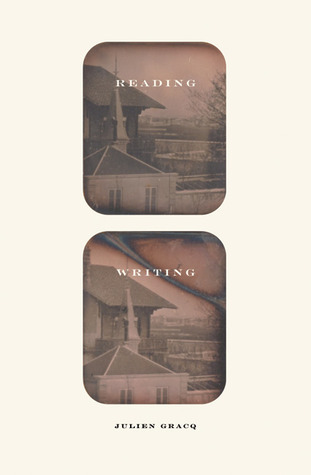
Reading Writing
Every reader is a potential writer, and every writer is a reader in actuality. Reading Writing is a subjective history of fiction and poetry and a personal meditation on the links between literature and two visual painting and cinema. Gracq’s poetics is founded upon the basic acts of reading and writing and on the relationship between the writer and his language.
This first English-language edition of En lisant en écrivant will mark a turning point in the public reception of Julien Gracq.
This first English-language edition of En lisant en écrivant will mark a turning point in the public reception of Julien Gracq.
448 pages, Paperback
First published January 1, 1980
About the author
Julien Gracq
66 books188 followersJulien Gracq (27 July 1910 – 22 December 2007), born Louis Poirier in St.-Florent-le-Vieil, in the French "département" of Maine-et-Loire, was a French writer. He wrote novels, criticism, a play, and poetry.
Gracq first studied in Paris at the Lycée Henri IV, where he earned his baccalauréat. He then entered the École Normale Supérieure in 1930, later studying at the École libre des sciences politiques.
In 1932, he read André Breton's Nadja, which deeply influenced him. His first novel, The Castle of Argol is dedicated to that surrealist writer, to whom he devoted a whole book in 1948.
Gracq first studied in Paris at the Lycée Henri IV, where he earned his baccalauréat. He then entered the École Normale Supérieure in 1930, later studying at the École libre des sciences politiques.
In 1932, he read André Breton's Nadja, which deeply influenced him. His first novel, The Castle of Argol is dedicated to that surrealist writer, to whom he devoted a whole book in 1948.
Ratings & Reviews
Friends & Following
Create a free account to discover what your friends think of this book!
Community Reviews
Displaying 1 - 8 of 8 reviews

September 8, 2026
This is just what I hoped it would be, a rarefied personal itinerary of French (and some German and Russian) lyric poetry and prose fiction; the visionary distances of passionate reading, “the adventure of the soul among the masterpieces,” in the words of Anatole France (preface to La vie littéraire), though “adventure” is perhaps too boisterous for Gracq, a writer I always picture as an oracular old man, black suit and stick, priest and pilgrim at once. Gracq’s touchstone is Stendahl, not Flaubert or Proust as I quite wrongly assumed. He calls The Charterhouse of Parma “a superbly successful novel of almost ethereal suggestion” in which
He finds a similar ethereality in Nerval, whose Sylvie prompts him to muse that lost time is the time one is just now losing, in this moment. One is not to recover losses, but to become aware of losing, as one loses:
And it seems that Gracq encountered something like that “Nervalian mist,” an affective tone and lighting, in Ernst Jünger’s On the Marble Cliffs, a novel that I had already facilely associated – because of lonesome outposts in ominous atmospheres, on barbarian frontiers – with Gracq’s The Opposing Shore and A Balcony in the Forest, but which I now suspect shares with those two novels something more than setting or mere situation:
I’m curious about the affective colors, the tints of time (as for Nabokov time had a "texture" and for Mandelstam a "noise") in The Sunset Lands, the novel Gracq abandoned between Shore (1951) and Balcony (1958), a novel whose plot mimics that of Shore, at least according to the promotional writing of Wakefield Press, which released a translation last month. We’ll see!
Some felicities of Reading Writing:
1. The dispirited retreats of 1870, in Zola’s La Débâcle, bring back the marches he made in 1940:
2. “The world’s radiant innocence, the fundamental note that every poet emits most naturally, is practically the only one he lacks.” (On Baudelaire)
3. Alain’s Propos sur le bonheur returns him to a world that “still gravitated around the bourgeois couple of France and Germany.”
4. “Part of the novelist’s equipment is a sufficiently sharpened sense of the meaning and precision of the conjectures that each of his sentences will cause to arise in the mind.”
5. I nodded in agreement at his reaction to Joachim Fest’s Hitler, still one of the most dreadful things I’ve read on the Third Reich:
6. Bibles of the Happy Few:
7. At André Breton’s house:
The Italy of the Holy Alliance is present there entirely, in its landscape and society as well as its stagnant political climate, but it is only there in a fragmented way in the individual parcels that characters transport with them everywhere without appearing hampered or weighed down: their literary fatherland remains stuck to the soles of their shoes.
He finds a similar ethereality in Nerval, whose Sylvie prompts him to muse that lost time is the time one is just now losing, in this moment. One is not to recover losses, but to become aware of losing, as one loses:
Perhaps in the haze, in the Nervalian mist that constantly blurs too much precision, there is also the sense that this delicious “fadedness,” which is the specific tint of yesteryear, would vanish in the overly mordant vivacity of Proustian resurrection, whose singularity is to transfer to memory the direct aggressiveness usually proper to sensation. The past never sings in Proust: it resurges into consciousness and almost surges into violence; in Nerval, it is less material content than tone and lighting, an affective slide toward an autumnal yellowing, a minor key that comes to tinge life the very moment it is being lived (ever so slightly and as though from a distance) with the immediately timeless colors of memory.
And it seems that Gracq encountered something like that “Nervalian mist,” an affective tone and lighting, in Ernst Jünger’s On the Marble Cliffs, a novel that I had already facilely associated – because of lonesome outposts in ominous atmospheres, on barbarian frontiers – with Gracq’s The Opposing Shore and A Balcony in the Forest, but which I now suspect shares with those two novels something more than setting or mere situation:
The terrain of reading The Red and the Black is strictly a vintage time for me that is never lost from sight, which is that of dated History; no need here to recall the subtitle: “A Chronicle of 1830.” That of On the Marble Cliffs (the vagueness of the period of the narrative has nothing to do with it) is from end to end the dreamy and temporally decompartmentalized resuscitation of memory: the affective color of the past, nothing more.
I’m curious about the affective colors, the tints of time (as for Nabokov time had a "texture" and for Mandelstam a "noise") in The Sunset Lands, the novel Gracq abandoned between Shore (1951) and Balcony (1958), a novel whose plot mimics that of Shore, at least according to the promotional writing of Wakefield Press, which released a translation last month. We’ll see!
Some felicities of Reading Writing:
1. The dispirited retreats of 1870, in Zola’s La Débâcle, bring back the marches he made in 1940:
...at the account of the lugubrious movement of MacMahon’s army between Reims and Sedan, a thousand memories reared their head. The zigzagging marches in the polders of Dutch Flanders, through the thick zone of calm, muted and green, bordering the dull rumble of explosions very far to the north, east, and southwest. Sas-de-Gand at two o’clock in the morning, all lights out, its footbridges and chimneys, its cranes and sluice-gates catching moonbeams in the dark night, like a fleet of tall ships in a black lake. The white night of Gravelines, face to the false dawn that turned the rooftops red on the Calais side. The deluge that battered the roadway from Dunkirk to Teteghem, bordered as evenly by trees as by its two rows of English trucks tossed into the ditch.
2. “The world’s radiant innocence, the fundamental note that every poet emits most naturally, is practically the only one he lacks.” (On Baudelaire)
3. Alain’s Propos sur le bonheur returns him to a world that “still gravitated around the bourgeois couple of France and Germany.”
4. “Part of the novelist’s equipment is a sufficiently sharpened sense of the meaning and precision of the conjectures that each of his sentences will cause to arise in the mind.”
5. I nodded in agreement at his reaction to Joachim Fest’s Hitler, still one of the most dreadful things I’ve read on the Third Reich:
Reading these two compact volumes suddenly resuscitated the old nightmare so brutally that I cannot bring myself to go out to the theater this evening, as I had planned; I have stayed home, huddled in a corner, my mind lifeless and shivery, like wet laundry, my brain besieged by the fluttering of ghosts and specters. I was twenty years old when the shadow of the machineel tree began to spread around us…
6. Bibles of the Happy Few:
Behind the agitation and even frenzy that can occasionally inhabit them, these books are fortunate, the ones we sense have been written from start to finish as though in gold dust, in the smiling and regret-tinged calm of the end of a summer day. The perceptive ability of their reader also seems split in two: while it follows the uncontrollable, turbulent movement and “man’s small steps,” it constantly registers the benevolence of celestial mechanics, the slow movement of the setting sun, and the increasingly saturated light being poured down upon the earth. The Charterhouse of Parma is written entirely, and stands out for me cover to cover, against this halo of ripening sun. And I would place Balzac’s Lily of the Valley and Tolstoy’s The Cossacks in this same favored lot, if only for myself. When you emerge from this backdrop of starry transparency, the admirable Dostoevsky shrinks a bit all the same: we sense the human enclosure and reenter what I want to call the hell of “souls.”
7. At André Breton’s house:
The two rooms, separated by a short staircase, always seemed dark to me, even on sunny days and in spite of the studio’s high windows. The overall tone, dark green and chocolate brown, was that of a very old provincial museum – more than a collector’s treasure-trove, the jumble of angular, light, impossible to dust objects – masks, tikis, indigenous dolls made of feathers, cork, and wisps of straw – with its glass cabinets enclosing a collection of tropical birds in semi-darkness, at first glance recall both a naturalist’s study and a disorderly storage room in an ethnographic museum. The profusion of art objects crammed against the walls gradually limited the available space; you could only walk around using specific paths established by habit, while avoiding the branches, vines, and thorns of the forest footpath along the way. Only certain rooms of the Museum, or even the ageless premises that housed the Geography department at the old university in Caen, have given me this impression of a rainy and invariable day, of light seemingly aged by the piles and dateless ancientness of wild objects.
Read
July 31, 2022It would not be inconsequential to ask oneself why, in this unending trial between word and image, the great monotheistic religions, of Israel as well as Islam, have thrown Images into the fire and kept only the Book. The word is an awakening, a call to excess; the figure a freezing, a fascination. The book opens a distant horizon to life, while the image bewitches and immobilizes it.
For me, painting remains the world that calls attention to its closed heart, at times in the form of ecstasies that may be repeated but may not resemble each other. Description is the world that opens its paths and becomes a path where someone is already walking or about to walk.
There are no saints of literature: nothing, even with the distance of glory and death, nothing but heretics locked up in their singular heresy, who do not want communion with the saints. There is a choir of dead painters in some empyrean who celebrate for us the ineffable joys of Peace in real Painting, from Vermeer to Chardin to Cézanne; neither Rimbaud, nor Baudelaire, nor Claudel, nor Racine, nor Stendhal, nor Rousseau, nor Flaubert will join anyone at all in the afterlife to celebrate some unifying life together in Poetry—and their garden of Eden will forever remain one of forking paths.
The refusal of any separation, the imperialism of the overall feeling that makes any real reading of a novel an indistinct tallying, very generally prevails over the intellectual pleasure of comprehension that disjoins, the fundamental, unitary rapture born of listening to a symphony.
For me, painting remains the world that calls attention to its closed heart, at times in the form of ecstasies that may be repeated but may not resemble each other. Description is the world that opens its paths and becomes a path where someone is already walking or about to walk.
There are no saints of literature: nothing, even with the distance of glory and death, nothing but heretics locked up in their singular heresy, who do not want communion with the saints. There is a choir of dead painters in some empyrean who celebrate for us the ineffable joys of Peace in real Painting, from Vermeer to Chardin to Cézanne; neither Rimbaud, nor Baudelaire, nor Claudel, nor Racine, nor Stendhal, nor Rousseau, nor Flaubert will join anyone at all in the afterlife to celebrate some unifying life together in Poetry—and their garden of Eden will forever remain one of forking paths.
The refusal of any separation, the imperialism of the overall feeling that makes any real reading of a novel an indistinct tallying, very generally prevails over the intellectual pleasure of comprehension that disjoins, the fundamental, unitary rapture born of listening to a symphony.

August 30, 2024
Whenever I decide to get into a new-to-me writer I always check to see if they have a collection of essays / criticism, usually pays off to prep before tackling the fiction. Great essay on Proust and the limitations of his form in here. Now that I've read Reading Writing I feel ready to read more writing

March 22, 2022
Son ensayos sobre literatura escritos en la década de 1970, cuando Gracq era ya un lector maduro y un escritor consagrado. La mayor parte giran en torno al largo siglo XIX francés, de Chateaubriand a Proust, con énfasis en Stendhal, Balzac, Flaubert y Zola. Gracq fue un prosista extraordinario, riguroso con el lenguaje como un buen poeta; por eso no extraña que los mejores ensayos del libro sean sobre la técnica de la escritura literaria. El mejor de ellos se titula simplemente "Novela". No voy a negar que puede ser denso y la traducción no es la mejor, pero sobre todo hay muchos intereses y referencias demasiado coyunturales, o que no soportaron bien el paso del tiempo, y es difícil conectar con ellos.

Want to Read
September 16, 2012(Dublinesque)

November 4, 2023
Cet essai de Julien Gracq sur la littérature nous offre le regard sur son art d’un grand praticien, dont l’œuvre strictement romanesque était pratiquement terminée à la fin des années 1970 lorsqu’il publia « En lisant en écrivant ». Il se présente comme une succession de fragments ordonnés en chapitres (il y a une table des matières) mais cependant présentés de façon continue, comme si chacun représentait une sorte de moment concentré de la pensée, dans le flux continu de la réflexion, cependant que son articulation avec ceux qui le précèdent ou le suivent en augmentent la portée.
L’ordre des verbes n’est pas neutre dans le titre : Gracq évoque ici ses lectures, et ce qu’elles lui font comprendre de l’art d’écrire, plus que sa propre pratique, et s’il tire des conséquences de ce qu’il lit sur le caractère ou le tempérament artistique des écrivains qu’il admire, il ne se risque pas à de grandes reconstitutions génétiques de telle ou telle œuvre. On est agréablement surpris de le voir se rencontrer, peut-être par hasard, avec Umberto Eco et sa réflexion strictement contemporaine sur le rôle et l’expérience du lecteur. Gracq connaît d'expérience, sans la conceptualiser formellement, la distinction entre lecteur modèle et lecteur empirique, et surtout la conception qu’a Eco du texte comme une machine paresseuse, qui incite en permanence à combler ses vides par l’inférence logique et l’imagination.
C’est ainsi que Gracq nous propose une phénoménologie de la lecture : ce que l’œuvre d’untel ou d’untel, ou même tel roman particulier, provoque en nous. De ce point de vue son évocation est d’une irrésistible finesse. Sa description des univers comparés des grands romanciers du siècle précédent est d’ordre à la fois psychologique et quasi rythmique. C’est ici que son expérience de romancier resurgit : il sait toute la part artisanale de l’écriture, l’importance de la phrase, et montre comment l’aura unique d’une œuvre naît de la dialectique entre sa composition générale et son exécution minutieuse.
Gracq ne se limite pas au genre romanesque : il évoque ici le théâtre, la poésie (où pour le coup je ne retrouve pas forcément mes sensations dans les siennes, alors même que la poésie, plus minutieuse encore que le roman, ne laisse guère à son lecteur la possibilité de s’égarer) ou le cinéma, peut-être un peu trop à travers le seul prisme de l’adaptation romanesque (forcément décevante).
Comme Virgnia Woolf, il a l’amour exigeant. Il n’évoque pratiquement, dans « En lisant, en écrivant », que des œuvres aimées et longuement fréquentées. Il se montre pourtant impitoyable pour en signaler les faiblesses, mais on sent que ce n’est pas pour se placer en juge de dernière instance, laissant tomber des verdicts de la hauteur de sa chaire, mais pour comparer l’apport de leurs auteurs : Stendhal propose ceci qui fait défaut à Balzac ; en revanche Balzac découvre cela qui manque totalement à Stendhal. Le résultat est qu’on peut les connaître mieux et les aimer mieux, sans se décourager d’écrire soi-même puisque le roman idéal est parfaitement inaccessible, même pour ces géants, et qu’il est donc légitime d’essayer.
La personnalité de Gracq se montre dans son estime bien connue pour une littérature que l’université considère parfois avec dédain comme populaire et commerciale : Simenon, Verne ou Tolkien qu’il croit même, dans son enthousiasme, déjà canonisé. Mais il révèle surtout, malgré son intérêt pour le surréalisme et son affection personnelle pour André Breton, son classicisme foncier. Gracq connaît manifestement la littérature et la foisonnante critique de son époque mais les cite peu (une référence à Jakobson par exemple). Il ne cite guère d’auteurs plus jeunes que lui : Camus (mais il est mort, son œuvre est close) et de façon rare et pour le coup très perspicace, Modiano. Le livre se termine par des réflexions sur la périodisation littéraire et Gracq avoue que son siècle d’élection reste le dix-neuvième. Son style aussi, incisif, poli méticuleusement, et bien qu’il accueille quelques audaces (des énumérations binaires sans ponctuation par exemple), a le lustré qui appelle les vieilles reliures.
L’ordre des verbes n’est pas neutre dans le titre : Gracq évoque ici ses lectures, et ce qu’elles lui font comprendre de l’art d’écrire, plus que sa propre pratique, et s’il tire des conséquences de ce qu’il lit sur le caractère ou le tempérament artistique des écrivains qu’il admire, il ne se risque pas à de grandes reconstitutions génétiques de telle ou telle œuvre. On est agréablement surpris de le voir se rencontrer, peut-être par hasard, avec Umberto Eco et sa réflexion strictement contemporaine sur le rôle et l’expérience du lecteur. Gracq connaît d'expérience, sans la conceptualiser formellement, la distinction entre lecteur modèle et lecteur empirique, et surtout la conception qu’a Eco du texte comme une machine paresseuse, qui incite en permanence à combler ses vides par l’inférence logique et l’imagination.
C’est ainsi que Gracq nous propose une phénoménologie de la lecture : ce que l’œuvre d’untel ou d’untel, ou même tel roman particulier, provoque en nous. De ce point de vue son évocation est d’une irrésistible finesse. Sa description des univers comparés des grands romanciers du siècle précédent est d’ordre à la fois psychologique et quasi rythmique. C’est ici que son expérience de romancier resurgit : il sait toute la part artisanale de l’écriture, l’importance de la phrase, et montre comment l’aura unique d’une œuvre naît de la dialectique entre sa composition générale et son exécution minutieuse.
Gracq ne se limite pas au genre romanesque : il évoque ici le théâtre, la poésie (où pour le coup je ne retrouve pas forcément mes sensations dans les siennes, alors même que la poésie, plus minutieuse encore que le roman, ne laisse guère à son lecteur la possibilité de s’égarer) ou le cinéma, peut-être un peu trop à travers le seul prisme de l’adaptation romanesque (forcément décevante).
Comme Virgnia Woolf, il a l’amour exigeant. Il n’évoque pratiquement, dans « En lisant, en écrivant », que des œuvres aimées et longuement fréquentées. Il se montre pourtant impitoyable pour en signaler les faiblesses, mais on sent que ce n’est pas pour se placer en juge de dernière instance, laissant tomber des verdicts de la hauteur de sa chaire, mais pour comparer l’apport de leurs auteurs : Stendhal propose ceci qui fait défaut à Balzac ; en revanche Balzac découvre cela qui manque totalement à Stendhal. Le résultat est qu’on peut les connaître mieux et les aimer mieux, sans se décourager d’écrire soi-même puisque le roman idéal est parfaitement inaccessible, même pour ces géants, et qu’il est donc légitime d’essayer.
La personnalité de Gracq se montre dans son estime bien connue pour une littérature que l’université considère parfois avec dédain comme populaire et commerciale : Simenon, Verne ou Tolkien qu’il croit même, dans son enthousiasme, déjà canonisé. Mais il révèle surtout, malgré son intérêt pour le surréalisme et son affection personnelle pour André Breton, son classicisme foncier. Gracq connaît manifestement la littérature et la foisonnante critique de son époque mais les cite peu (une référence à Jakobson par exemple). Il ne cite guère d’auteurs plus jeunes que lui : Camus (mais il est mort, son œuvre est close) et de façon rare et pour le coup très perspicace, Modiano. Le livre se termine par des réflexions sur la périodisation littéraire et Gracq avoue que son siècle d’élection reste le dix-neuvième. Son style aussi, incisif, poli méticuleusement, et bien qu’il accueille quelques audaces (des énumérations binaires sans ponctuation par exemple), a le lustré qui appelle les vieilles reliures.

May 5, 2022
Ce genre de livre qui réclame une telle culture littéraire qu'on s'y perd parfois et qu'on reste frustrée de son manque de connaissances pour saisir toutes le subtilités des propos de l'auteur. Un livre qu'on aborde à petite dose puisque la facture s'y prête, c'est tant mieux. Écrit en 1978 et publié en 1980, Julien Gracq ne nous épargne rien de son appréciation des auteurs du XVIIIe et du XIXe siècle, avec de petite incartades chez les philosophes Grecs de l'Antiquité. Mentions d'honneur pour Chateaubriand, Baudelaire, Mallarmé, Stendhal, Hugo et Rimbaud.

May 5, 2024
Not useful, illuminating, or even particularly interesting. Only rarely beautiful. For completists only.
Displaying 1 - 8 of 8 reviews