In The Lightkeepers, we follow Miranda, a nature photographer who travels to the Farallon Islands, an exotic and dangerous archipelago off the coast of California, for a one-year residency capturing the landscape. Her only companions are the scientists studying there, odd and quirky refugees from the mainland living in rustic conditions; they document the fish populations around the island, the bold trio of sharks called the Sisters that hunt the surrounding waters, and the overwhelming bird population who, at times, create the need to wear hard hats as protection from their attacks.
Shortly after her arrival, Miranda is assaulted by one of the inhabitants of the islands. A few days later, her assailant is found dead, perhaps the result of an accident. As the novel unfolds, Miranda gives witness to the natural wonders of this special place as she grapples with what has happened to her and deepens her connection (and her suspicions) to her companions, while falling under the thrall of the legends of the place nicknamed “the Islands of the Dead.” And when more violence occurs, each member of this strange community falls under suspicion.
The Lightkeepers upends the traditional structure of a mystery novel —an isolated environment, a limited group of characters who might not be trustworthy, a death that may or may not have been accidental, a balance of discovery and action —while also exploring wider themes of the natural world, the power of loss, and the nature of recovery. It is a luminous debut novel from a talented and provocative new writer.
Abby Geni is the author of The Lightkeepers, winner of the 2016 Barnes & Noble Discover Great New Writers Award for Fiction and the inaugural Chicago Review of Books Awards for Best Fiction, and The Last Animal (2013), an Indies Introduce Debut Writers Selection and a finalist for the Orion Book Award. Her short stories have won first place in the Glimmer Train Fiction Open and the Chautauqua Contest and have appeared in numerous literary journals and anthologies. Geni is a graduate of the Iowa Writers’ Workshop and a recipient of the Iowa Fellowship. Her website is www.abbygeni.com.
”There is a wonderful violence to the act of photography. The camera is a potent thing, slicing an image away from the landscape and pinning it to a sheet of film. When I choose a segment of horizon to capture, I might as well be an elephant seal hunting an octopus. The shutter clicks. Every boulder, wave, and curl of cloud included in the snapshot is severed irrevocably from what is not included. The frame is as sharp as a knife. The image is ripped from the surface of the world.”
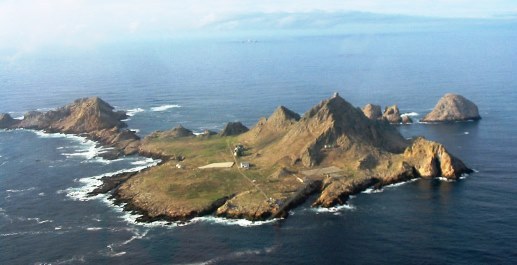
Miranda has pulled every string available, applied for all the grants, and finally receives an invite to join the scientists already ensconced in the sanctuary on the Farallon Islands. These islands are so small and so close to sea level that if the ocean rises half an inch they will disappear forever. The scientists are there to study the birds, the whales, the seals, and the sharks that all use these islands to battle for mates, to feed, to reproduce, and raise their young.
The scientists are there to record and not interfere with the workings of nature. They adhere to a prime directive that reminds me of the same command that was regularly spouted by the crew of the Enterprise. ”Star Trek, the Prime Directive (also known as Starfleet General Order 1 or General Order 1) is a guiding principle of the United Federation of Planets prohibiting the protagonists from interfering with the internal development of alien civilizations.” If a baby seal is toddling off to certain death, all you can do is watch it die.
The scientists call her Melissa, Mel, Mouse Girl, really anything but her real name. She doesn’t correct them. Being someone else for a while is just fine with her. She writes letters to her dead mother. She gives her cameras names as if they were children or pets. She has been running from any permanence in her life. Mortgages, relationships, children, picket fences, car payments are foreign concepts to her. She wants to be able to leave anywhere at a moments notice and head for somewhere else that she can capture images she has never seen before with her camera.
”Your death made me into a nature photographer.
I was always going to be an artist. There was never any question about that. I need to take pictures of the world around me the way a whale needs to come up for air. For as long as I can remember, I have been driven by beauty. I am talented; I don’t mind saying it. Photography was a given. Nature was the wild card.”
It is not that Miranda is unfriendly. She just doesn’t put any work into developing friendships. Friends become weights that can potentially keep her anchored to the Earth. The constant presence of her mother’s ghost is, in many ways, all consuming. When one of the scientists tells her about the ghost that lives in her quarters, Miranda is not scared, nor is she skeptical. ”’I believe you,’ I said. ‘I believe in ghosts.’”
The ghost of her dead mother is like an ethereal talisman. Something she doesn’t have to hold anywhere but in her mind.
Everything is going great. She is fitting in well enough with everyone. She knows where she stands in the pecking order. Everyone helps everyone else with their projects. She is capturing some amazing images.
And then a late night assault is committed.
This leads to a suspicious death, which leads to an unravelling of the symbiotic relationships they have achieved. Trust has been breached. ”In truth, there were a hundred ways to die on the islands. It was amazing that we were not all six feet under--lost to the wind, the ocean, and the dreadful, human capacity for misadventure.” The island is trying to kill them, and now no one is sure whom they can trust among the people they must trust to survive.
Look at that crazy head pecking bastard!
The most dangerous part of the island are the kamikaze gulls. ”But the gulls are the worst. They kill for food. They kill for pleasure. They kill for no good reason. They are expert assassins. They soar around the islands with bloody beaks and a mad glint in their eyes.” When Miranda is first pecked in the head, I can’t help thinking about the lovely Tippi Hedren, sitting in that small boat on the water being dive bombed by gulls in the Hitchcock film The Birds.
No, thank you. I would not be able to adhere to the Prime Directive. I’d be carrying around a blood crusted bat, waiting for the next dive bombing gull assassin.
One of the things I became aware of while I was reading this book is the powerful thirst I have for nature writing. I read a lot of Edward Abbey, Charles Bowden, and others as I was going to college in Tucson, but I haven’t really pursued the genre of nature or nature fiction much since I left the desert. I recently read Bearskin, which is set in another nature preserve in Virginia, and enjoyed it immensely. Fortunately for me and for you, Abby Geni has a new book coming out September 4th, 2018, called The Wildlands . She also has a collection of short stories called The Last Animal, which I also intend to read. Geni describes nature in vivid detail. I was transported to this wind swept, bird shit splattered, rain battered, gorgeous island. I settled in...well...not with the gulls, *shiver*, but with this dedicated crew of people intent on doing everything they can to advance our knowledge of the mystical world of nature.
”Perhaps there were only two kinds of people in the world--the takers and the watchers--the plunderers and the protectors--the eggers and the lightkeepers.”
This novel is absolutely terrific...unique...and utterly engrossing! THIS REVIEW IS SAFE...I have 'no spoilers... and even 'less' details than blurbs I've read. Let this book surprise you. I promise to share just the set up...
I'm flabbergasted by the number of outstanding debut novels I've read recently... to a point where some of the old-fart experienced authors might want to take a lesson! ( kidding)... I'm not here to 'offend'... I'm here to SCREAM- SHOUT- CHEER -and PRAISE Abby Geni's first novel.
"The Lightkeepers" takes place on an island off the coast of California. The island can be dangerous. It had once been called the "Islands of the Dead". "The archipelago is a collection of miniature islets, Southeast Farallon is the only one of the bunch that is even fit for human habitation."
Miranda, is a nature photographer...(she names her cameras and celebrates each of their birthdays - the day she purchased them). She is slated to spend a full year on this tiny island that is less than 1 square mile across with six biologist who were living there before she arrived. Her job is to take photos of the landscape and wildlife. The others were taking bets if Miranda would last a week - maybe two, tops.
The other permanent residents are sharks, sea otters, birds, whales, comb jellies, tugged puffins, and rodents. Every year there are more shark attacks than anywhere on earth. Mice were everywhere. They were the same color as rocks...giving the impression of stones moving. Given the living conditions - very tight quarters with 7 people living in one small rustic cabin together .. with mice everywhere, I couldn't help but think of the old movie called "Willard"...rats and more rats! Miranda, herself soon gets the nickname "Mouse Girl". ( yes, there is a story behind her nickname...but buy the book and you'll find out).
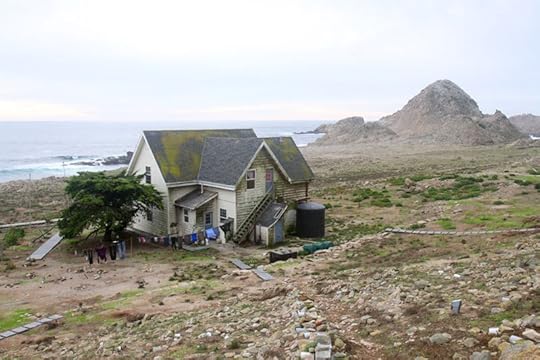
I had my doubts if their rustic cabin was going to remain standing for a year ...( kitchen sink on the brink, sensitive toilet, creaks on the stair, ... 'Rustic'... but the cabin turns out to be the least of their problems. (Again, buy the book).., I KID YOU NOT... WHAT HAPPENS ON THAT ISLAND, STAYS ON THAT ISLAND!
We learn about Miranda's past...her childhood with her parents, her 20 year letter writing which stems from her past -and her travel experience. She's the narrator whom we get close with, but all the other characters remain somewhat a mystery. (somewhat). We know that Carlene is the youngest and is an intern, and that Galen is the oldest, leader of the group, and a shark specialist. Forest only talks about work - 24/7...his focus is on whales, and also a sharks specialist. Andrew and Lucy are a couple - but are very different, yet they both study birds. Mick was the person that Miranda liked to talk with most when she first arrived and his focus is on mammals. Miranda and her roommates live life a family - good and bad- with no privacy.
However....for Miranda: "Everything about the islands seemed exquisite to me. The salt-infused air. The crash of the surf. The shimmy of the mice darting across the peripheral vision. The granite that crackled and fragmented away beneath my boots".
This is such a rare wonderful book that is bursting with creativity. It's mysterious scary, and exciting...with intriguing characters. Powerful original and meditative setting for this story. As for Abby Geni, .....she writes like an angel.
Thank You, Counterpoint Publishing, and Abby Geni ( I'm a new fan)!
I was fourteen years old. At the front of the room, there was a gleaming mound, half-obscured by flowers – your coffin. I knew what was in that coffin.
From that time on, Miranda would write letters to her mother as a way to keep her close. She wrote out her days’ activities, what she thought and felt about her daily events, and other ideas that came to her during the day. As soon as she could, Miranda began traveling the world – deserts, forests, the Arctic – photographing all her discoveries and writing about all of it to her mother.
Then, something sparked her interest in the Farallon Islands off the coast of California, approximately 30 miles from San Francisco. The more she researched the Islands, the more she felt a need to go there, to see for herself, to photograph everything she could find.
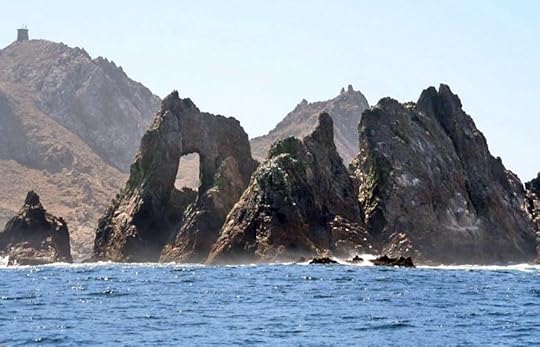
Long ago, this place had been called the Islands of the Dead. Now I could see why. Southeast Farallon was less than one square mile across. The other islets were bare, bald, and broken.
Any little islet or inlet or atoll or rock form has, over time, been given a name – and many of them are odd or outright amusing. There are more than a dozen isles. Miranda has recorded each one. Chocolate Chip Islet silhouetted against the glitter of the ocean. Sugarloaf, a puffy mound. The Drunk Uncle’s Islets poking their bald heads out of the surf. We also learn why the people in the 1800’s, who lived on the island where a Lighthouse was finally built, were called ‘Lightkeepers’ rather than ‘Lighthouse keepers’. And we learn so much more.
The islands had given me a present. There, between my feet, lay a seal stone. These were rare and precious things, left on the shore by the elusive fur seals. Gastroliths, they were called . . . carried in the belly of a seal until it was rendered flawless . . . The fur seals ate these stones, maybe for ballast, maybe for digestion. No one knew why.
The writing in this novel is poetic in description and sparkling with discovery and adventure. The story itself is not even a fraction shy of compelling, while the seven people living there are almost as fascinating as the sea creatures and birds they observe, tag, study, and record.
By the time Miranda leaves the Islands at the end of her one-year tenure, three people remain to carry on the work. Many things can – and did – happen over the course of that year. The epilogue holds a big reveal, and although I had rolled the possibility over in my mind while reading the book, it still came as a jolt – especially how it was exposed.
This novel will appeal to a broad range of people: those who enjoy learning about things while reading a story; those who enjoy adventures and discoveries. (Did I mention that my huge World Atlas does not show the Farallon Islands at all? One point for the Internet!) People who are intrigued when humans and nature are mixed together in a small space will enjoy this. So, too, will anyone interested in the lives of marine life, including aquatic animals and many avian species.
There is a dark side, too, because wild creatures and untamed places have their own rules and they are not all fair or beautiful. However, this book is called The Lightkeepers for a reason, and it’s well worth reading this dazzling novel to discover the many facets of this diamond.
With thanks to GR friend Jeffrey, whose review inspired me to read this novel.
Six biologists live on Farralon Island, an island thirty miles west of San Francisco. Miranda, a nature photographer who has traveled the world is finally approved to spend the next year in this dangerous and often violent place. Here she will encounter violence by the natural setting, sharks, whales, sea lions, seagulls, which I will never look at in the same way again but also physical violence.
This is a beautifully written book, so much information about birds, mammals and also a study about those that make this their life's work. Violence without and violence within. There are accidents, or are they? What really is happening on this island? The tension is insidious and follows the violence of the natural setting. Quite ingenious. A very slow moving story but one that is a wonder to read.
Narrated by Miranda, with alternate chapters letters to her mother that she never mails who had died when she was a young teen. A mother and a connection that she sorely misses. The last chapter narrated by Galen, the longest resident biologist on the island will finally reveal, answers to some of our questions. An amazing début novel and so looking forward to her next book.
Miranda is nature photographer who has traveled all over the world, and her assignment, this time, is on the Farallon Islands, outside of the coast of California. She is there to stay for 1 year. The only other people on the island are scientists studying the fish and bird population around and on the island. Through letters to her deceased mother, we get the full story about what happens during the year.
This book took me by surprise! I started to read this book a while ago, couldn't get into it. Only managed a couple of pages. Picked up where I left the other day and the story just floored me! it's not a very cheerful story, but it's captivating.
I think that reading a book through letters is an interesting choice, and it gave the book a very special way of retelling what happened on the island. For one thing, Miranda is writing letters to her mother that did when she was a teenager and it's a way for her to communicate with her mother and throughout the book one realize that Miranda has never really been able to let her mother go, to get on with her life. She has spent her life moving around the world, writing letters that no one will read. But on Farallon Island will actions against her and things she does change everything for her.
The writing is superb, it draws you into the story. One can really feel the isolation on the island. The harsh world. The merciless world. And, the loneliness there, despite the little group of people. I would never manage a year out there, well not without a pile of books at least.
I was really impressed with the book and I want to read more by Abby Geni.
4.5 stars
I want to thank the publisher for providing me with a free copy through Edelweiss for an honest review!
It is set on Southeast Farallon Island, one of a group of islands, thirty miles west of San Francisco. The islands are a National Wildlife Refuge. The only inhabitants are researcher stationed on this one island. The island is closed to the public.
This is a fictional mystery story and nature writing combined. Nature is both a tough battle for survival and filled with beauty and wonder. I saw no beauty in this book only the ceaseless struggle. The central character tells us that she loved the island but all I heard were complaints. I saw no beauty.
Then there is the story of what happens on the island. There are six residents. Accidents and death occur. I do not deny that what happens could not happen, but the character portrayals fail to convince me that what happens would happen. I am trying not to sound terribly critical but let’s just say I am very surprised by the actions taken by the characters. (For those who want specific details, please see the spoiler below.) For me the story itself and the character portrayals don’t mesh. The bottom line is that which happens does not ring true. These characters would not behave as they do.
The book touches on several themes: -the role of a mother / the absence of a mother -the character of a “biologist” -nature -rape -homosexuality -photography None of these themes were properly handled. I felt they were only skimmed.
The audiobook is narrated by Xe Sands. My view of the narration does not affect my rating of the book. The central character is emotionally disturbed. While this could very well affect her voice, the primary job of a good narrator is to let the listeners hear the words written in the book! Much is slurred, quavering and shaky. The only clear voices read were those of the men. The story is dark and the narration is depressing. I agree that the two fit, but I want always to hear the words. I prefer clarity over dramatization.
ETA: Don't read this if you want to read the book!
Abby Geni’s debut novel The Lightkeepers began as a three-star read that blossomed into a heartfelt four-star surge of satisfaction when all the pieces so exquisitely fell into place in the final chapter and the epilogue. I’ve never read a book where the epilogue so neatly and conclusively brought a story to its close.
Miranda is an accomplished nature photographer bitten by wanderlust when she was fourteen. From arctic cold to jungle heat, she has traveled the world capturing nature on film and digitally, all the while writing letters to her mother for the past twenty years, no matter where she was on the planet. Miranda loves her mother dearly! Conversation through letters … with the exception of the prologue and the epilogue, the entire story of Miranda’s yearlong residency on the Farallon Islands is told through letters from Miranda to her mother, letters that sometimes take months to be delivered given the limited and often erratic ferry service to Southeastern Farallon Island.
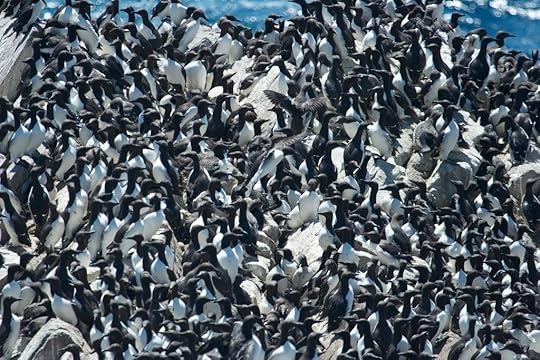
At a very young age Miranda knew she would be a photographer; the only question was in what capacity – weddings, real estate … advertising? As a child living with her parents in DC, one wintry day determined the course of her life, a course that was violently and irrevocably changed during her yearlong photographic exploration and documentation of life on the Farallon Islands, a group of islands and sea stacks just thirty miles east of San Francisco off the California coast in the Pacific Ocean. Despite the relative proximity of the Farallons to the coast (on a clear day the islands can be seen from the Golden Gate Bridge), the islands feel remote, desolate and dangerous but exotically beautiful and full of life. After reading about the Farallons and viewing images of the porous and rugged granite surfaces, the massive colonies of western gulls, pigeon guillemots and common murres and the migration of ocean mammals, Miranda is hooked. The islands are calling her!
Southeastern Farallon Island is the only inhabited island of the Farallon chain, known to native Americans as the Islands of the Dead, and home to six biologists sharing spartan living quarters. Assimilation into this group is slow and uncertain for Miranda but the violence of the island is quick to impose itself. Sexual assault, a deadly fall from an island cliff and an accidental drowning cast fear and suspicion among the dwindling cadre of scientists. Miranda uses the letters to her mother to talk through the stress and anxiety she experiences but also to share the beauty and wonder of this extraordinary place. Not until she inadvertently photographs the physical changes in her body and fully understands the implications of these changes, combined with the loss of life on the island, does she feel the urgency to leave the Farallons.
This novel is sensory! I could feel the crunch of crumbling granite under foot, smell the ammonia wafting from the piles of guano accumulated under the massive bird colonies, hear the incessant howling of the wind and pounding of the surf and experience the skin crawling disgust of hundreds of rodents running over Miranda’s fallen body … gross!
Time on the island is marked by seasons – shark season, whale season, seal season, bird season – and Geni does a remarkable job describing these seasons and the interaction of Miranda and the biologists with these majestic albeit perilous and often cruel migrations. The islands are a place of birth and death not exclusively limited to the birds and oceanic wildlife. Each of the resident biologists experience their own encounter with loss and death which brings into question the idea of when does one give up on past losses and live for today? How long does one hold onto love that can no longer be reciprocated and shared?
One year after her arrival on Southeastern Farallon Island, Miranda prepares for the arduous trek to meet the ferry for her trip back to California. She has answered these very important questions!
I learned so much from this book and absolutely loved the story. Even if you decide this story is not for you, I highly encourage you to hop on your favorite search engine and explore the Farallon Islands.
The Lightkeepers is a really excellent novel. My library has it in the mystery section, and while there is some of that, it is not really a mystery in the traditional sense.
The main character is Miranda, a nature photographer, who arrives on the desolate and remote Farallon islands, thirty miles off the coast of California. Already living there are six biologists who study the wildlife year round. They all live in pretty primitive circumstances, all of them in one old cabin, without very many amenities.
During Miranda's stay on the island, many things happen, some of which are quite brutal in nature, and you don't find out until the very end of the book what really went on. As this book is about a nature photographer and biologists there is a lot (and I do mean a lot) of description and information about the many species of wildlife that inhabits the islands. Seals and sea lions, great white sharks, whales and many thousands of birds. Not to mention Oliver the octopus. So if that doesn't interest you, you probably won't like the book.
I, on the other hand, found it to be totally engrossing, and read the whole 358 pages in one sitting. As I said, a fine novel, especially for a debut, and I can't wait until she write her next book.
THIS BOOK! This debut is a slow burn. So beautifully written and descriptive. Lyrical really. The plot is so basic, YET NOT. I felt myself amongst the people frequently; the island always. Without a doubt, this is a favorite of mine this year. Probably always!
Fabulous debut novel. Read during a couple of grey and fogging sleet days- this book responded in both atmosphere and heaviness of cold damp air.
The placement is within a group of 6 biologists on the Farallon granite peaks that are 30 miles West of S.F. in the ocean. Miranda is the photographer come to stay a year and catch the sublime multitudes of nature that live on and surround those small and dangerous granite islets. She's not whole piece in emotion or self-identity. A reader may grab that immediately from the get-go. From the second page you are pulled into the ending too. It's her leaving the Farallon isolation and her state of the "afterwards". What has caused this?
Masterful how this novel is arranged. Never is the creepiness or karma of nature and natural events ever lost. Not for a paragraph. The writing and the creatures of air and sea- they just flow, fly and follow their natures. In glorious sunshine of delight to manic activity for breeding or meals. And are humans apart from this?
Until the 120 something page I thought it was going to be like a "closed room" scenario Agatha Christie. But quite soon afterwards I realized it was quite a bit deeper. In fact she has turned that classic form around and upside down. Was there a crime? With such history of accident in Farallon's past centuries, is this just another? Is the art of the photo just a skill of the visual eye? Or does the placement of capturing two others in front of the lens or putting oneself into the picture oneself; does that add more than just the sum of the chromatics to the outcome?
This is the fourth "new author" novel that has impressed me as outstanding within the last year. She has done magnificent work here in both form and in imagination. Miranda is nailed. Why she does what she does, why she is apart!
At page 200 I thought I had figured out what had occurred. But I doubted myself. I assumed I was too cynical and too filled with mistrust to be an accurate evaluator. But I was. This time I truly surprised myself at surmising sequences.
Just as Miranda writes her letters, that is exactly how our human memory works. We remember factors of what was responsive or was important to us. Never impartially as a camera's eye. And important often not for that time of the action itself, but at for the minute of the memory's retrieval. And in majority that can be inaccurate to great spans and details of the event reality.
Mood piece and science of birds, whales, sea lions supreme too.
Highly recommend this one. 4.5 star
It was near perfect but I wanted to know a bit more about Forest and Galen a little earlier than I did.
This novel is entirely "grown-up". Nature in tooth and claw.
She went to Oberlin and lives in Chicago. She has got to be a biologist beyond the immense word skill. I'll be reading all of hers.
“To remember is to rewrite. To photograph is to replace. The only reliable memories, I suppose, are the ones that have been forgotten. They are the dark rooms of the mind. Unopened, untouched, and uncorrupted.”
There is something utterly terrifying, yet strangely alluring to being in complete and desolate isolation… If this is a thought that is familiar, or even just sounds interesting to you: do yourself a great favor and pick this book up.
I sat on this review for a while, as I struggle to put into words why I loved this so much. It’s easier for me to nitpick at flaws and go from there, but this book is so damn near perfection (especially for a debut!!), that I find myself at a loss of words. The Lightkeepers is a novel about the unforgiving, bleak- and callousness of nature, in the broadest sense. Not just the nature that surrounds us, but also the human nature inside the protagonists. We follow Miranda, a thirty-something old nature-photographer, as she embarks on a yearlong residency at the treacherous and rocky archipelago of the Farallon Islands. Isolated from the rest of the world, with only a handful of fellow scientists and nature-observers, Miranda sets out to document true nature through her camera, without interfering, but soon discovers much about herself and her fellow islanders in the process. Setting plays a very large role in The Lightkeepers, to the point where the islands themselves are almost characters in their own right. Geni does a fantastic job of combining and paralleling the nature writing elements with character development. The harsh weather and grim conditions seem to erode not only the rocks, but also the layers of our characters away, to reveal their bare-bone emotions, motivations and the truth behind the narratives they have created for their own life. The novel is divided in four major sections, based on four seasons (sharkseason, birdseason, whaleseason and sealseason), and the transition of each season parallels a development of plot and character as well. The cyclical nature of the seasons, is also mirrored in Miranda’s internal conflicts, most prominently the grief over losing her mother at a young age. It’s not your typical “gloomy-setting-for-gloomy-character-story”, but a well-timed combination of two dynamic units. I was so blown away by how much this all makes sense, that I may have even over-analyzed this a little, so I will spare you the details, as it’ll go into gushing territory.
To sum up most of my gushery for this novel: - a haunting and dynamic setting that both terrified, and intrigued me at the same time. It’s been a long time since I pictured a books background so vividly. - character dynamics that felt as real and claustrophobic as I’d imagine the situation to be. - excellent portrayal of themes such as grief, isolation, denial and more in our protagonist. - prose that is beautiful on its own, but binds it all together to one of the best reads of this year for me.
If I had to name a point of criticism, it would be that the plot is fairly simple. The Lightkeepers is somewhat set up as a mystery-novel, but in my opinion it doesn’t succeed in the “mystery aspects”, as much as it does in everything else. To me, the events surrounding the mysterious and possibly accidental death, were a little to obvious, and the inevitable conclusion didn’t surprise me. For a mystery-novel this might be detrimental, but for the way I read the story, it felt right. It made sense in the context of the story, and was in line with the characters, which was why I still enjoyed the ending. In my opinion, the plot, in all its arguable simplicity, was executed to near perfection, and I enjoyed every page of it. I feel this review hasn’t even done justice to half of the things I loved about it. Please read it for yourself: this one comes with my highest recommendations, especially around this gloomy time of year. .
Note: If you are sensitive to some topics, please do your research regarding trigger warnings on this book. I don’t want to include them in my review, as some are heavy plotspoilers. If you are worried about this, please look into this elsewhere, or ask me. I may include a “spoilersection” just for this if need be
“O Brave new world, That has such people in’t.” Those words were uttered by Miranda – a princess who was banished to a strange island in Shakespeare’s The Tempest.
The main character here is also named Miranda and that famous quote could be turned on its ear. The island that Miranda, a photographer, chooses for what amounts to a self-imposed exile can be monstrous – with heavy mist, menacing and ruthless nature, guano everywhere. Its inhabitants appear to be caught (as with Prospero and Caliban) in a conflict between educational enlightenment and base desire. Except, possibly, for the intern, all harbor deep wounds and secrets.
Miranda’s deep wound is the death of her mother in a tragic accident when she was at a particularly tender age. The scar has never healed; Miranda writes scraps of letters to her mother on a regular basis, never sending them, to maintain the illusion of a connection. A violent incident opens the wound further, making her increasingly emotional fragile. One of the strongest images is when one person captures a tiny octopus and confines it to a cage, to be studied and brought out at will, and treated with benign neglect. It’s a metaphor for Miranda herself
Galen, the oldest of the six inhabitants, asks her, “What is your nature?” As a landscape photographer, this is how Miranda describes part of it, “My work is the enemy of memory. People often imagine that taking pictures will help them recall exactly what happened. In fact, the opposite is true…I can either have the impression in my brain or the image in my hand—not both.”
So what is the truth about Miranda? What is the truth about any of the six inhabitants who willingly turn their back on the past? Is there, indeed, a “truth” or is the untamed human psyche part of the untamed natural world? When does the concept of noninterference – the job of photographers and biologists – go too far? And ultimately, if there are only two kinds of people in the world – “the takers and the watchers—the plunderers and the protectors”—what side should a person be on?
All of these concepts are explored beautifully in this gripping novel that fashions a petri dish of sorts – a restrictive and hostile environment with unknowable characters. Like in The Tempest, the audience – we, the readers – determine if anyone is truly free.
I brought this home from the library because it was on the Tournament of Books longlist, but kept it and read it after it didn't make the shortlist because of the setting. It was pleasing to read this so soon after The Outrun, which is a memoir on the Orkney Islands, because of my absolute fascination with cold weather islands and their impact on humans who attempt to inhabit them.
This is a novel, set in the Farallon Islands, 30 miles west of San Francisco in treacherous waters. Officially in real life, these islands are uninhabited. In the novel, the southeast island is lightly inhabited by scientists there to study sharks, whales, birds, sea lions, seals, and any other creatures they can find. Miranda, the central character, has been accepted to live there to photograph the life of the island in a year.
Where The Outrun was a memoir and focused on nature, this novel also has some thriller elements. While I loved the nature descriptions and the characterizations of the people (what kind of people would live in such a place?), the thriller elements were less successful for me.
I still want to go there. I don't need to walk up the guano-stained crumbling walks, but just to get on a boat and see them with my own eyes. Just to feel this virtually uninhabited space that used to be the home of pirates and entrepreneurs.
I received this via Goodreads Giveaways in exchange for an honest review. All my opinions are my own:). ----
Writing: 2.5 to 3 stars Characters: 3 stars Plot, where the story went: 2.5 stars ---
2.5 stars overall
To be clear up front... this rating doesn't mean the book was bad or unbearable, just means that for me... it was simply "okay.", or in the middle. While I enjoyed the story somewhat, the pace was a bit too slow and I was never completely engrossed.
The setting itself is mainly why I kept going... the islands and animals fascinated me more than the people inhabiting it, doing their jobs did.
Miranda I didn't feel anything strong toward. At first, the letters to her mother in the form of telling the story was something different but it got old after awhile and I kept waiting for Miranda to break out of the shell she was in.
The relationships between the biologists didn't feel as close as the writing was suggesting(more telling than showing in most cases). We spend more time in Miranda's thoughts than anything. While she wasn't a bad choice for a narrator, she wasn't great either... we're relegated to the sidelines a bit and I think this hurt the story some... at minimum in regards to the others.
Some things that happened in the story strained my credulity (right word?) but I kept going, not wanting to give up on the book.
A couple things I had guessed at and even though I was wrong on one, it was all still underwhelming for me.
Some stuff near the end with a certain someone were surprising, yet unsurprising at the same time... all I will say about that.
All in all, this is not a book for everyone...most likely, you will either love it or think it 'Meh." *shrugs* I wish you good luck with it *waves*
This is a bold statement, but this may well be the most beautifully written book I've ever read. Geni's prose is a luminous, living entity that dances across the page. I've never known a book to paint its setting more vividly, or to better encapsulate the raw beauty, daunting power, and savage menace of the natural world. There were times the writing left me feeling literally breathless.
At its heart, this is a book about stories; the ones we must tell ourselves to survive. This is where the parallels with the natural world work so well. Geni shows us the various instinctual ways that the islands' indigenous animal species cope with the harshness of their environment, suggesting in turn that storytelling is our own highly honed method of survival.
Indeed, all of the characters are telling a version of the truth to cope with pain, with Miranda in particular exhibiting this technique. Writing the story of her life to her deceased mother is her way of grieving; and her way of processing traumatic events that unfold on the islands is testament to the power that stories have to shield us from the ugly truths we simply cannot cope with. In this respect, Miranda is a fantastic example of a deeply sympathetic yet unreliable narrator. By the end of her story, we are left questioning just how much she has twisted her narrative, and whether any concealment of the truth was deliberate or pure instinct. This in turn means that the book can essentially be read in two ways, with Geni getting the balance between what she gives us, and what she holds back, completely spot on.
Miranda's career as a nature photographer is also used to heighten this idea. She ruminates often not only on the idea that memories warp over time (like those she holds onto of her mother - "To remember is to rewrite"), but also on the idea that she can distort the truth of what she sees by choosing what she includes in her photographs, and how she frames an image. She tells us directly: "I can only see what I want to see - what I choose to observe through my lens - what I decide to record for posterity." ... "The photographer can cherry-pick what will be included in a collection of images; they can be selected or omitted with purpose, then assembled and arranged so that, as a whole, they might suggest any story at all." It begs the question: is she doing the same with her version of certain events? How much is truly forgotten, and how much is being deliberately held back?
The structure of the book is also interesting, with the story being split into seasons, depending on which species dominates the islands at that time (Shark Season, Whale Season, Seal Season, and Bird Season). This idea of a ceaseless cycle again reflects the notion that both grief and our ties to nature are timeless parts of humanity, as well as the concept of healing being a natural process we must all go through to be able to move on.
With the mystery of the truth at its core; an isolated island setting; a group of enigmatic characters keeping secrets from each other; and violence visiting their shores; there are some fantastic nods to the classic literature of Agatha Christie, notably And Then There Were None; another layer that is sure to please many, and which certainly pleased me.
This was a phenomenal read. I was enthralled the entire way through, transported wholeheartedly to the Farallon Islands. My appreciation for its richness, complexity, and deft handling of fantastic ideas merely grows the more time I take to let the weight of it sink in. It is, above all else, a powerful reminder that we do not have ownership over the laws of nature; that we too are just animals, doing what we have to do to get by - however ugly it might be.
I really enjoyed this book, more than I thought I would!! The narrator did a fabulous job...her voice was a great match to the slow and meandering way of the novel. Since I don't read General Fiction as often as I used to, I'm finding it hard to convey a decent review! This book touches on so many genres, it's hard to pin point which area I enjoyed the most. I have definitely lost my twist mojo as there were 2 things that happened that I didn't see coming..and I probably should have!! I can't really classify this as a thriller, even though it is quite mysterious. This isn't a romance at all, although there are numerous relationships. It's not horror or fantasy, although at times it's a bit morose and ghosts are included.
It definitely has a lot of imagery, especially when it comes to the island and the biology of the work. But at the same time it carefully delves into a lot of things - people, feelings, consequences, roles in life, parents - many parts of life that slowly criss-cross. Maybe it's the psychologist side of me that really connects? I love when books bring out that anthropologist feel to a book! Especially when it's in an exciting way. This novel was slow and unfolding, but not boring at all!! It carefully unravels and comes back together through the letters Miranda wrote to the mother she lost as a child. A great read!
Ένα βιβλίο που με εξέπληξε πολύ ευχάριστα! Εξαιρετικές περιγραφές της άγριας φύσης, των καρχαριών, πουλιών και άλλων άγριων ζώων. Εκπληκτική η γραφή της συγγραφέως την οποία δεν γνώριζα μέχρι τώρα. Ένα βιβλίο που αγάπησα πολύ!
“Perhaps there were only two kinds of people in the world—the takers and the watchers—the plunderers and the protectors—the eggers and the lightkeepers.”
What is our nature, as human beings? When it comes right down to it, are we really much different from animals? These are a couple of the themes at the heart of this dazzling, atmospheric novel about a nature photographer who joins a group of biologists in one of the harshest and most inhabitable places in the world, the Farallon Islands.
Miranda feels like she was called to the island. Like she belongs there. For decades following her mothers death, she has been living inside her mind—all thought, no physicality. An observer hiding behind the lens of her camera. Here, on the Farallon Islands, she is forced to confront the primal, instinctual, physical parts of herself that she has suppressed for all this time.
The Lightkeepers explores the inherit harshness, cruelty and indifference of nature. As the inhabitants of the island endure a series of violent tragedies and conflicts, life on the island continues in spite of them. Perhaps most striking of all is how closely these events mirror that of the animal world that surrounds them.
I couldn’t put this book down. It’s gripping, hypnotic and ominous from beginning to end, with vivid descriptions of the island’s geography and the sharks, seals, whales and birds that live there. Amid all of this is a central mystery at the heart of the story, simmering beneath the surface up through the final revelatory pages.
Miranda, a nature photographer, begins a one year assignment on the famously dangerous and brutal Farallon Islands off California. The islands are isolated, and her only companions a handful of mostly unwelcoming scientists. Miranda’s troubled inner life matches her new environment, a brutal landscape. As she arrives, she is already struggling to come to terms with long term loss and grief. She attempts to immerse herself in her photography work in the savage Farallon Islands. Before long, she and her roommates are facing accidents of nature on the rugged islands. As if that isn’t enough to deal with, a brutally violent attack occurs inside the house. Without revealing more than I should, let me just say this is magnificent storytelling incorporating the beauty and brutality of both nature and humankind.
A beautiful novel about Miranda, a nature photographer on the Farallon Islands off the coast of California. (I'd never heard of the Farallon Islands, but Abby Geni provides such vivid descriptions that I could easily imagine it.) Miranda is there with a handful of biologists studying the island's life and landscape. Miranda suffers an assault and then her assailant is found dead. Descriptions calling this novel a "murder mystery" do the book a disservice. Geni's novel is literary fiction and as such the plot is more subtle and quiet. Yet this novel is indeed spellbinding. I loved how the natural world turns hostile and itself becomes a character. Overall I really enjoyed this one.
This is a weird novel about a mixture of different scientists who are each doing their own research on a creepy island. There is one character who is permanently there and who oversees the living quarters and occupants. One night there is a sexual attack after too much drinking, no one sees or hears it. Soon after, the attacked woman ends up pregnant by another woman's significant other. The violated woman hides her pregnancy and the attacker ends up dead. Accident or murder? A strange mix of people and a dark sullen place. Almost a DNF for me but I had to finish it just to find out what happened.
I was really excited when I first heard about this book – I’ve been fascinated with the Farallon Islands myself for a while. I first learned about them from Susan Casey's book, The Devil's Teeth. Then when I was living in San Francisco, I finally got to go out and visit (on a boat). The islands have this air of mystery and are almost always surrounded by gray skies and fog, and I was excited to photograph that, but the day I went, we were greeted by the most unusual, calmest seas and bright sunshine.
The book is about Miranda, a nature photographer who goes to the Farallon Islands for a year for personal photography project. She lives in a small house that’s occupied by 6 other people – biologists and one intern. A couple months into her project, she’s assaulted by someone and the story depicts the events that follow.
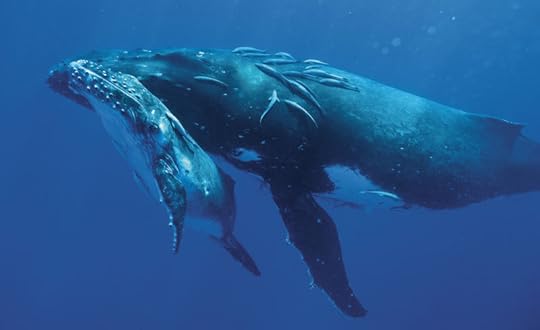
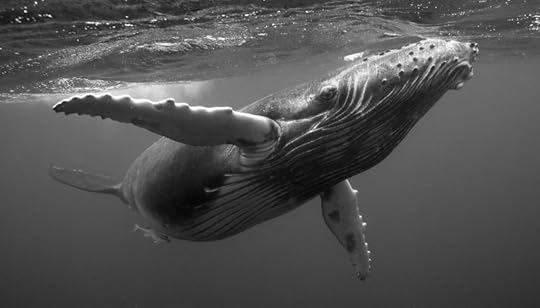
From my initial understanding, the book was obviously a mystery but was supposed to be infused with nature writing. It delivered on that but unfortunately, some of the facts that were presented weren’t quite accurate. For example, humpback whales do not have lasting mates nor do they follow a strong leader. And her characterization of some animals, like the octopus and whales as “monstrous” seemed quite off for someone who was supposed to be a nature photographer and had been doing that work for a while. I was also annoyed by this description of humpback whales: “There is something inartistic about their bodies, too. […] Even the babies aren’t photogenic.”
Say what?! Again, coming from someone who’s supposed to be a nature photographer, this just doesn’t sound right. Tell me these photos are of something “inartistic.”
Anyway… The story was fine, it was entertaining, but the thing that really just annoyed me was the amount of incidents that happened in the short time that Miranda is on the island crosses the line into unbelievable. Some of it made sense but then some of it crossed over into sensational and ridiculous. So I had to knock off some stars.
I very much enjoyed Geni's short story collection, The Last Animal, and couldn't wait to read her debut novel. My parents scoured The Strand for me on a recent trip to New York, and I couldn't have been happier when they presented me with it (and three other equally wonderful tomes). Geni's novel explores similar themes to those in her story collection - nature, humans, and the effects of one upon the other.
Geni's writing is electric. Such emphasis has been placed upon every single sense that the whole springs to life immediately. You can almost smell the salt on the breeze, taste the stale crackers and tuna macaroni, and, despite living on an isolated island with just a few others, feel their eyes on you as you read. Geni uses both the first and third person perspectives effortlessly, and even the more simplistic or mundane elements of life on the Farallon Islands feel extremely creative due to the way in which she presents them. Everything here feels original. The Lightkeepers has been so well researched, particularly with regard to the nature around Miranda, and the photography techniques which she utilises. The Lightkeepers is exquisite.
It was a mystery...but not. It was stunningly written...but needed a better editor. I liked parts of it...but certainly not all.
Honestly, the story was probably closer to 2-star territory, but the writing itself was so incredible (even though she desperately needed SOMEONE to go, "Hey, you realize you already told them this like 10 pages ago? So you don't need to do it again, probably.") that I knocked it up a star. Particularly when it came to the nature and animals, her words were absolutely stunning, each one chosen and arranged with care, sure to evoke the most visceral response possible. They were unflinchingly brutal one moment and conveying a breathless sense of awe the next. Regardless of my overall feelings on the book, I am impressed by Geni as a writer and will be on the lookout for more books by her.
The BEST novel of the season and one of the most beautiful stories with a gripping mystery inside. WOW. --- „Strażnicy światła” oczarowują grozą, wywołują dreszcze niepokoju, niezmiennie hipnotyzują narastającym napięciem, a Wyspy Farallońskie jeszcze nigdy nie miały takiego wspaniałego kronikarza po swojej stronie. Podczas lektury, tak jak tam, u boku Mirandy, czas płynie inaczej. Staje się gęsty, namacalny, niemal plastyczny. Dajcie się pochłonąć lodowatej wodzie, pozwólcie wichrom oczyścić się do kości, zatopcie się w niekończącej się mgle. Może Wam uda się dostrzec światełko na szczycie skał?
To bez dwóch zdań NAJLEPSZA powieść roku 2017 do tej pory, porównywalna w emocjach, opisach przyrody i ludzkich dusz z niezastąpioną „Euforią” Lily King.
The Farallon Islands, 30 miles off the coast of San Francisco, is a remote archipelago teeming with marine life. Once called “Islands of the Dead,” it is composed of craggy, rotting, ancient granite, adverse to civilization, with the animals as sovereign entities. In summer, the islands are covered in a wall of fog. During bird season, the gulls will crack your skull and peck out your eyes if you fail to wear protective gear. The islands are overrun with rodents, and a pungent stench dominates the air--of guano, ammonia, mice, salt, and mildew. Scientists take a back seat to wildlife, and are there to observe without interference.
Despite its hardship, the untamable landscape inspires six marine biologists and the novel’s protagonist, Miranda, a nature photographer. The scientists--Mick, Galen, Forest, Lucy, Andrew, and Charlene--are tasked with studying marine life, each according to their specialties. A few have stayed for years, and some live here indefinitely. They dwell in a crudely built cabin, and survive without technology, (other than a TV that emits only sound). There’s a walkie to the mainland for emergencies.
Time is measured by the cycles of mating seasons--sharks, seals, whales, and sea birds. “The islets are central stars in a galaxy of marine life. The birds and seals are the inner constellation—…great white sharks…pulled out of their mysterious orbits to linger offshore. Whales, like far-flung comets….” The archipelago is a self-contained universe, and the marine life is the hub of importance. The scientists study the animals with reverence, without corrupting or altering the ecosystem.
Miranda is a recent arrival, just starting her yearlong assignment. There’s a tacit agreement, she discovers, not to talk about your past and to keep your personal business private. To her, the residents act as remote as the islands, and come across almost as ciphers.
Interspersed with the scientists’ daily life are Miranda’s interior monologues, written as melancholy missives to her long deceased mother. For the past twenty years, she has been sending the letters from all over the world, addressing them to “Mom,” knowing they will end up in the Dead Letter Office. Her relationship with her father is cordial but aloof, always at a distance. She is searching for home and stability, but so far, a sense of permanence eludes her.
In the prologue, Miranda is leaving the islands, a sense of malevolence and danger personified by the savage behavior of the gulls as she races to the ferry. Geni’s image-laden prose, at turns clipped, ephemeral, and visceral, commands the story from the opening pages. The author’s photography leitmotif maintains its dominion throughout. For example, Miranda recalls learning the Dutch angle: “Used for dramatic effect. A tilt that leaves the viewer off-balance. It can convey disorientation, unease, intoxication, even madness.” And this is the realm of the narrative’s propulsion.
Miranda’s compulsion to write to her mother and her shutterbug passion are inextricably bound together--to archive memories--or create them. “Each time we remember something, we change it…I imagine my recollections like rooms in a house. I can’t help but alter things when I step inside…My work is the enemy of memory…” “To remember is to rewrite. To photograph is to replace. The only reliable memories…are the ones…forgotten. They are the dark rooms of the mind.”
Between the savage wildlife and the secretive scientists, the reader will experience an unsettling presence in the absence of explanation. Moreover, a mythic ghost is said to wander the premises, often seen during times of stress. Within the haunting atmosphere of the story, violence comes early and mysteries escalate with the seasons.
The themes of loss, recovery, redemption, and the ghosts that follow you are played out in this mixed genre, eerie narrative. Geni juxtaposes a meditative story of the natural world with a suspenseful mystery. The islands themselves are conveyed as a principal character. Don’t expect an outcome tied up in a bow, but its provocative resolution underscores the allusive rules of the isolated island dwellers—“Noninterference is the core of their belief system.”
Each snapshot seems like a benediction. We may never know what another person is thinking- never truly get into anyone else's head but photography brings us as close as anything can. When members of an audience at an art gallery look at a picture, they can for a moment step inside the mind of the artist.
This one took me by surprise, from the blurb you'd expect a fast-paced, thriller-like book about violence, and propelled by a mystery but it's about the natural world, grief, our connection with nature.
Miranda, a nature photographer is weirdly drawn to the Farallon Islands, a strange and beautiful place that hosts various creatures and is also cohabited by four biologists who study the animals and surroundings. We quickly find out that she's still grieving her mother's death and has never felt grounded anywhere but something sinister occurs on the island that shifts her life.
A chilling atmosphere and picturesque descriptions of the wildness of the island paired with introspective character study elevate the reading experience. I absolutely loved it.