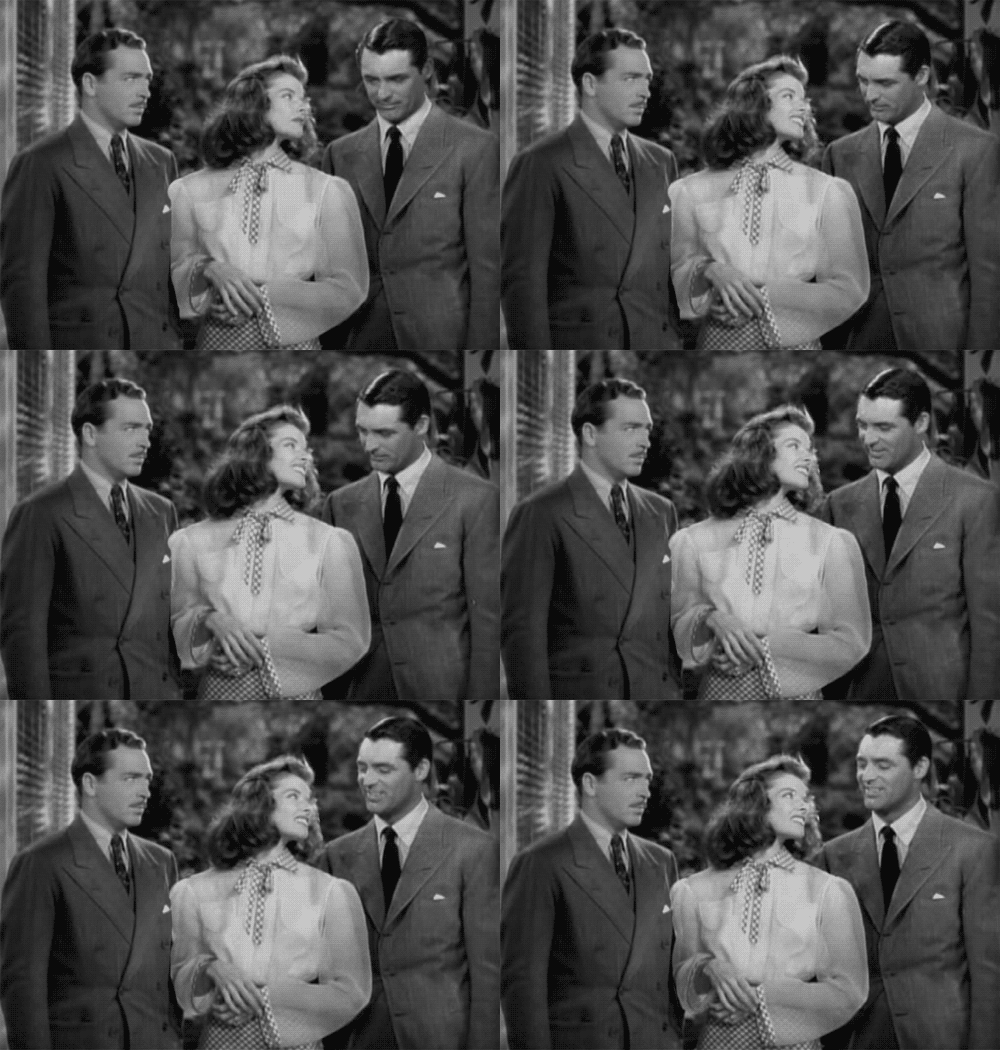
Overall, this was a fast read for anyone looking to think critically about the media we consume on a daily basis. Movies like Pretty Women, Knocked Up, Thelma and Louise, The Stepford Wives... TV shows like Mad Men, The Bachelor, Inside Amy Schumer... All are dissected and analyzed critically. Carina Chocano had a career as a movie critic. Almost every essay uses TV/film examples to illuminate her thoughts.
Here's what I didn't like...
1. Chocano paints a vivid picture of the roles assigned to heterosexual, white women. No essay in this book includes examples of women of color or women in the LGBT+ community and how they are portrayed in films/television. Why did The Princess and the Frog perform poorly in the box office compared to Frozen, Tangled, and others? If white women are assigned roles in Hollywood and elsewhere, what roles are assigned to non-white women? She talks briefly about women in the sex industry -- particularly Playboy -- but how are lesbians portrayed in porn and male-consumed media? Chocano missed a huge opportunity here.
2. Most of her essays had excellent thesis statements. But most of them fell flat. I would come across the final few paragraphs of the piece, thinking, "She's going to end this with a bang!" And she wouldn't. Most of her essays involved facts, facts, facts, minor opinion, facts, end. I finished some of the essays like, "I genuinely don't know how Chocano feels about this." The Amy Schumer chapter, for instance. Halfway through the piece, she's criticizing Trainwreck, then she's praising Inside Amy Schumer, then she's praising Trainwreck. It brought up some great points that reaffirmed my love of Inside Amy Schumer but just didn't feel cohesive. Does Chocano think Amy is a feminist we should look up to or simply an unrelatable woman looking to cash in on being a hot mess? I genuinely don't know. (My personal thoughts are a combo of the two, leaning more toward the former, but I'm not the one who wrote a book here.)
3. The Frozen essay. This one got on my nerves.
•In one chapter, Chocano is praising women for being openly sexual and themselves. In this one, she sees Elsa's transition into a "sexy" outfit during 'Let It Go' as out-of-touch. "[Highly stylized hotness] demonstrates how transforming yourself into a trophy is a good outlet for any strength of will or creativity you may have been cursed with at birth... It teaches girls that self-objectification is a great strategy for neutralizing the qualities others may find threatening, and deflects attention away from them." Or perhaps Elsa's stripping of her coats symbolizes her acceptance of her powers -- "The cold never bothered me anyway" -- and her attractive new getup displays her newfound confidence and empowerment, which is synonymous with her femininity rather than her masculine/gender-neutral attributes (as the empowered Mulan and Merida have displayed in their respective films). Plus, don't we want to empower our daughters that the most "beautiful" women are the ones that are empowered and truly themselves? Materializing this inner beauty into outer beauty gives our daughters multiple reasons to say, "I want to be like Elsa!"
•As for the language of 'Let It Go,' Chocano says, "Is she submitting or rebelling? 'Let it go' isn't what anybody says when they want to encourage you to own your strength... It's what people say to other people when they want them to get over themselves, to move on, give up. 'Let it go' is silencing." Actually, letting go can be quite empowering for some people. For people with anxiety, letting go means not sweating the small stuff, not allowing what people think to ruin their whole day. For others, letting go can be ignoring other people's thoughts and preconceptions about them, so they can be themselves. Elsa is telling herself to let it go. In fact, this is one of the first times in her life she isn't being told what to do. 'Let It Go' is the modern-day 'Hakuna Matata,' but with a powerhouse vocalist and catchier melody.
•Chocano considered it non-feminist of Elsa to return to her sister rather than living independently and creatively. This, to me, is interesting, as one of the essays in the book talks about how Disney princesses' villains are almost always female because, well, female rivalry. To me, Frozen is a breath of fresh air. The whole ending involves the mending of a relationship between two females. Sure, Kristof is there, but it's clear that Anna and Elsa's relationship trumps Anna's relationship with Kristof. Rather than pitting women against each other (Rapunzel vs. Mother Gothel, Cinderella vs. stepmother, Ariel vs. Ursula, Aurora vs. Malificent, etc.), Disney has finally pushed for female empowerment in the form of female bonding.
It's not that I disliked this book. I didn't. It's simply that I expected more.