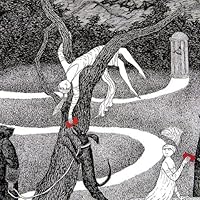
A sinister web of blackmail, adultery, and poisoning is uncovered after Beatrice's husband suddenly becomes sick and dies and her mother, the heiress of Albert House, develops the same mysterious symptoms
Julian Gustave Symons is primarily remembered as a master of the art of crime writing. However, in his eighty-two years he produced an enormously varied body of work. Social and military history, biography and criticism were all subjects he touched upon with remarkable success, and he held a distinguished reputation in each field.
His novels were consistently highly individual and expertly crafted, raising him above other crime writers of his day. It is for this that he was awarded various prizes, and, in 1982, named as Grand Master of the Mystery Writers of America - an honour accorded to only three other English writers before him: Graham Greene, Eric Ambler and Daphne Du Maurier. He succeeded Agatha Christie as the president of Britain's Detection Club, a position he held from 1976 to 1985, and in 1990 he was awarded the Cartier Diamond Dagger from the British Crime Writer.
Symons held a number of positions prior to becoming a full-time writer including secretary to an engineering company and advertising copywriter and executive. It was after the end of World War II that he became a free-lance writer and book reviewer and from 1946 to 1956 he wrote a weekly column entitled "Life, People - and Books" for the Manchester Evening News. During the 1950s he was also a regular contributor to Tribune, a left-wing weekly, serving as its literary editor.
He founded and edited 'Twentieth Century Verse', an important little magazine that flourished from 1937 to 1939 and he introduced many young English poets to the public. He has also published two volumes of his own poetry entitled 'Confusions about X', 1939, and 'The Second Man', 1944.
He wrote hie first detective novel, 'The Immaterial Murder Case', long before it was first published in 1945 and this was followed in 1947 by a rare volume entitled 'A Man Called Jones' that features for the first time Inspector Bland, who also appeared in Bland Beginning.
These novles were followed by a whole host of detective novels and he has also written many short stories that were regularly published in Ellery Queen's Mystery Magazine. In additin there are two British paperback collections of his short stories, Murder! Murder! and Francis Quarles Investigates, which were published in 1961 and 1965 resepctively.
This is the first time I've read anything by Julian Symons and I enjoyed this first exposure. I found that The Blackheath Poisonings: A Victorian Murder Mystery was a bit of a slow developer, but it just got more interesting and more interesting as I got into it. Basically, the story revolves around a wealthy Victorian family who live in Blackheath; sharing two estates. They manage a toy factory and as the story progresses, one of them, Roger Vandervent, the manager of the business, dies. The circumstances are curious but, ultimately, the family doctor writes the death as due to a gastric problem. His son, Paul, suspects that his father might have been murdered. The disappearance of letters belonging to his aunt cause further suspicion and the police get involved in the investigation. With the occurrence of a second death, the investigation becomes more involved with the arrest of a suspect. The development of this story was excellently done and the characters are all interesting, even if they aren't necessarily all likable (I mention the 'Caterpiller' in this context). As I delved more and more into the story, I found the book difficult to put down and also found the ending a nice surprise and also nicely satisfying. Well worth reading. (4 stars)
"The extraordinary series of crimes popularly called the Blackheath Poisonings took place in the early 1890s, at the time when the Mortimer family had lived in that suburb on the edge of London for nearly half a century."
So begins Julian Symons' The Blackheath Poisonings (1978), subtitled A Victorian Murder Mystery. The adjective "Victorian" made me quite apprehensive as in the past I had been unable to enjoy or even finish many period-piece mysteries. But this novel by Symons is among the best of the many books of his that I have reviewed so far on Goodreads. Very well written, with captivating plot, it does not feel dated at all - not really surprising as the prose is not even 40 years old - and the characters read quite contemporary despite obvious differences in social norms and cultural expectations between the 1890s and today.
The events take place mainly in the suburbs of London, in two splendid houses where the members of the extended family of Charles Mortimer's descendants reside. The mansions are so peculiar and full of character - one is colloquially called "church" and the other "white elephant" - that they almost seem to be actors in the plot. While the first death caused by a sudden gastric problem is originally attributed to natural food poisoning, the circumstances of the second death force the police to commence an investigation. Eventually the mystery morphs into a court drama as we witness the trial of one of the main characters on the charge of poisonings. Most of the plot is told in the third-person narration, but a substantial portion is presented through the diaries of a young man just entering his adult life.
I like the novel more as an account of well-to-do peoples' everyday lives in the Victorian times than as a mystery. Two scenes make the strongest impression given the vivid prose and the author's sharp eye for details. The extended sequence that portrays the last day of the victim's life shows the whole process of dying with brutal candor and reminds me of Tolstoy's masterpiece; I wouldn't be surprised if Mr. Symons had used the Death of Ivan Illich as a source of inspiration for his writing: he did quite a brilliant a job. The other memorable passage is the poetry evening scene - a program of recitation and songs - so life-like in its portrayal that I feel I have personally participated in the event that happened over 120 years ago.
In the trial part of the novel the reader has an opportunity to meet Sir Charles Russell, the famous barrister who leads the defense team. Sir Charles reminds me a little of Rex Stout's Nero Wolfe character: his presumed genius and somewhat pompous behavior bring the comparison. The verdict in the trial does not end the plot: in a sense it only provides the setup for the denouement, which is a peculiar mixture of the somewhat unexpected and the somewhat disappointing.
Overall the novel is a very good read and in places it seems close to real literature thus transcending the mystery genre. And that the ending fizzles a little? I would like to see a modern-day bestseller than does not disappoint in the end.
The scariest thing I realized while reading the novel is that the year of my birth is closer to Victorian times than to today. Ugh.
I couldn't finish this story. From a technical standpoint--structure and quality of the writing--it's fine, if somewhat old fashioned. The characters are the sticking point--they're all so twee, and none of them is particularly likeable. In addition to being a whodunnit, it is also a coming of age story. Because I don't really like any of the characters, I don't care whether the boy in question grows up or how he grows up.
Perhaps this deserves more than 3 stars. I'm faced with the difficult task of averaging the excellent prose with what I felt to be an underdeveloped plot, and characterization that didn't live up to its promise. The atmosphere was brilliantly evoked, simultaneously luxurious and claustrophobic, and I loved the pseudo-Victorian prose, both taut and ornate. It was a fascinating book, but I also found it a disappointing one.
Classic neo-Victorian mystery, written fairly well, but it peters out badly in the second half, by which point any suspense the book may have had was completely gone. By the time the police began to investigate, what should have been the most exciting part of the book only left me cold, and I abandoned it at page 172. Read “Death at the Priory” for a superior look at Victorian murder.
I was a little disappointed. The murderer was not clear until the very end. And the motive did not seem really that strong. But I did keep reading. And I changed my suspects several times during the book, which a good mystery should do.
A slow moving Victorian mystery involving two families who live together in two homes on the same estate.
The 1890s in the upscale London suburb of Blackheath the wealthy Collard and Vandervent families (these are definitely messed up families!) have shared a large estate for 50 years. It's now the 1890s, and over the decades the families near-incestuous entanglements have grown into a toxic web of lies and bitterness. A mother with an iron grasp on the family purse strings, an unmarried daughter feeding on her own disappointment, an incompetent weak willed son, a snide sneaky cousin and a daughter-in-law who flirts. Throw in the old family doctor who is incompetent and you have all the ingredients for disaster. Let the murders begin!
A family in a posh house and a series of deaths. The lady of the house is changing her mind and her garden a lot, taking up flowerbeds and hedges to suit her latest readings. She's got staff, they are getting paid so they don't complain. Other people are taking it easy and playing lawn tennis. Then a woman starts feeling ill after eating her meals. As the title tells us there are poisonings, we are not in suspense. I didn't like anyone and did not get into the story. The type is very small, making it hard to read, and there are long passages in italics, even harder on the eye.
1890 Blackheath UK Thanks to @gradcat for prompting me to read this book as I am mailing it to her this Friday. I never read a Julian Symons book before and enjoyed this very much. It had a surprise ending and the reader was given clues but they went right over my head. I look forward to reading another Symons book soon. I would highly recommend this novel as I thought it was very cleverly written!
Ahh the joys & perils of family relationships no different then than now. Each character is fairly well defined and their roles within the familial hierarchy, as well as within the family toy business, serve to highlight status, values of the day, and to help cast doubt on the whodunnit the reader may have in mind.
An excellent writer and a decent mystery, set into a family in which each character is so accounted for you almost claustrophobic and very much inclined to accuse the obvious victim. It was hard to guess the truth. Also, interesting addition of travesti characters, even though not in a positive light.
This was an unexpectedly decent read, I found out about this book by chance and I'm so glad I did! I didn't like the ending, and I wish the novel ended without revealing the killer. But I'm forever a sucker for everything a well-written 19th century mystery
The Collard and Vandervent families live in Blackheath; in one house live the Vandervents & the Collards, in another, Harriet Collard & her daughter Charlotte & nephew Bertie. Harriet is one of those very matronly, old-school elderly women; she tries to run her family with an iron hand and a tight fist on the pocketbook. The families all get together for lunch every Sunday, but that's as far as family togetherness goes. After one such Sunday, Roger Vandervent is stricken with what seems to be a "gastric fever;" eventually he dies. The doctor in charge is prepared to swear that he died of said gastric fever, but his young colleague thinks that it may have been foul play. However, there is no doubting the next death -- definitely not from natural causes. This time the police are called in, and arrest a suspect. But one of the family is not sure that the right person has been taken in; his own personal investigation uncovers some shocking secrets that he knows would serve as a motive for murder.
Julian Symons has long been one of my favorite crime authors and did not let me down in this case. He manages to set a gloomy & foreboding atmosphere that is just the right setting for this novel and keeps you guessing until the very last.
Recommended, most definitely. If you have a chance to do so, please don't miss the PBS series based on this book.
Classic mystery with multiple murders, numerous red herrings, a trial and a surprise solution. The story revolves around a cobbled together family which owns a toy business. Two oddly-designed homes in the Blackheath area house the family which shares a past filled with bad luck that continues as three members are poisoned. Victorian culture and etiquette, police procedures, English laws/court and family secrets are deftly combined with an intriguing mystery. It kept me guessing until the end though I did have an inkling as to part of the solution. It is easy to see why Symons was popular in the past and merits another look today.
This was a surprisingly good Victorian murder mystery which I devoured in less than 24 hours. This book, along with two others are being discussed at bookgroup in very early January so I knew I had best get started now. The book really takes off after the main characters are introduced and the first death occurs. I was totally blown away by the ending! Highly recommended!
Symonds does a great job with the atmospherics in this mystery which takes place during an era when if a woman committed adultery and enjoyed it, it naturally must follow that murder would be something she was capable of and likely to commit.
Shoulda known - "Julian Symons... editor of Twentieth Century Verse, a magazine which published most of the young poets outside the immediate Auden Circle"