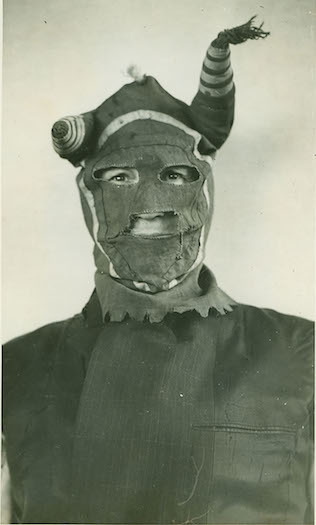
In the 1880s, the Ozark hills around Taney County, Missouri, echoed with the sound of Winchester rifles. Men were lynched from tree limbs by masked night riders. Bundles of switches were tossed on the porches of "loose" men and women as a grim warning to reform or leave the area. In this action-filled saga of the notorious eight-year career of the vigilantes, journalist Mary Hartman and historian Elmo Ingenthron have produced the most comprehensive account of the Bald Knobber era. They trace the roots of the group in the region's border struggles during the Civil War, and examine the organization of anti-Bald Knobbers which sprang up to oppose them. Giant Nat Kinney founded the Bald Knobbers, and led them in their violent campaign for law and order. Andrew Coggburn wrote satirical songs to infuriate Kinney and the other vigilantes. Seventeen-year-old Billy Walker murdered an innocent family and was hanged by the beleaguered authorities. Five opponents of the Bald Knobbers vowed to kill Nat Kinney, and played cards to decide who would do the deed. Elmo Ingenthron was an Ozarks historian, and collected Bald Knobbers lore for more than thirty-five years. Mary Hartman is a veteran journalist and freelance writer.
When I was a teenager I was reading every book I could find in our library that was on mountain people. Ihad in fact become fascinated by their lives, and that fascination has never left.
One of the librarians in Paso Robles, Ca had introduced me to these books, and I believe her name was Virginia Scott. I have a feeling that she introduced me first to “The Shepherd of the Hills,” maybe because she was religious, and maybe because it was popular in her day and still was. After reading my first book, I kept going up to the front desk to ask her where I could find more like it. Later on I found my own books, one titled “Tobacco Road” which my mother took out of my hands.
This is one that I must have found on my own. When I first read it I was all for vigilantes. I remember how they would warn wrongdoers first by putting a bundle of sticks at their front door. Finding one would mean you had better change your behavior or else.
Then several years ago I searched for this book,found it and another one on the subject and bought them. When I read it this time, I learned that the vigilantes had overstepped their bounds, and now they had to be subdued. So much for viligantes.
One year when my sister and niece came to visit me in Oklahoma where I live now, we took a trip to Kirbyville, Missouri where the Bald Knobbers had first congregated. They just happened to have a Bald Knobbers play in the small town, and it was fun to watch amateur actors. I came home with a tee-shirt that had a Bald Knobber with a dark hood over his head. Looks like a gunny sack to me. Then we found the mountain where they met, Snapp Bald. We couldn’t drive up it because the owner was not friendly, so we were told. Then we found the little church where they also met. After that we drove on to West Plains, MO because when I was 16 my uncle and grandmother had taken me there to visit relatives. At that time in my life it was so exciting to be able to see the Ozark Mountains that I had been reading about, and now I live in them.
The main actions described in this book occur in the aftermath of the Civil War, in counties of southwest Missouri along the Missouri-Arkansas state line. The people were mostly poor farmers and there were a lot of outlaws among them. In the years after the Civil War there were many murders for which no one was convicted, as well as other crimes. In early 1883, a Union Army veteran named Nathaniel Kinney settled in Taney County and he was appalled by the crime and general lawlessness. In 1884, after a jury acquitted a man of murder, many thought wrongfully, a citizens' committee met, with Kinney the primary leader, and the following April 1885, they held a mass recruitment meeting at a bald knob site and so they got the name the "Bald Knobbers". Later that month, they broke into the Taney County jail and grabbed two brothers, Frank and Tubal Taylor, and lynched them.
The next several years' events are described. The Bald Knobbers rode their horses at night wearing masks and disguises and would leave warnings for people they disapproved of and would often give them a whipping if they didn't shape up or leave. The Bald Knobbers organization spread to neighboring counties. Not all citizens approved of their methods and so anti-Bald Knobber groups arose. The two sides quickly became political rivals, affecting local elections, jury selections, etc. There were more murders. Three men were convicted of first-degree murder and were eventually hanged (legally). By the 1890's much of the violence had run its course - it became a subject people didn't talk about much, although most local people had strong opinions one way or another. This book can be read as the story of vigilantism gone wrong as it so often can. People need to be very careful before taking the law into their own hands.
Recommended to anyone who enjoys local history and true crime. The book has maps and is illustrated with many portraits of the prominent individuals of the time. At the back is a timeline of events, a bibliography and an index.
A little history about my neighbors to the south of me here in Missouri. Good historical information about vigilantes and anti-vigilantes that reigned in Taney, Christian and Douglas counties. Question was and probably still is would be who was really who? Many times I've been in Branson, MO and watched a Bald Knobber show that was on the famous Branson strip and never knew this history of a "Bald Knobber". Interesting read.
You might think that in the 1880s the Ozarks of South Missouri were a peaceful backwater. You'd be wrong. Homesteaders were taking advantage of Federal law to take up lands bypassed by earlier migrations or abandoned during the Civil War. Bitterness from the Bushwhacking days of the war lingered. Crime, ranging from moonshining, horse-stealing, to homicide, was on the upswing. In the midst of this Nathaniel McKinney, a Union veteran and bare-knuckle boxer, stepped in and organized the Bald Knobbers. They were a vigilante movement dedicated to driving out anyone they identified as a criminal by any means necessary.
The Bald Knobbers made their mark by lynching suspected criminals and intimidating others. They were noted for the elaborate devil-mask disguises they wore.
As was so often the case, the vigilantes soon considered any opposition to their reign to be the same as criminal activity. Throughout S. Central Missouri the Bald Knobbers and their foes waged a covert war of assassination, threats, lynchings, and gun battles. Hartman & Ingenthron document the events in excellent detail with impartiality. A timeline of events is included along with numerous maps & illustrations. Though some might say this is more Southern than Western history, one can argue these categories are not entirely separate.
I highly recommend Bald Knobbers for anyone looking into Ozark history.
This book is very informative if you are interested in the history of the West (this takes place mostly in the midwest which was considered the west at the time). It speaks mostly of vigilantes and the lack of law in those days.
Really interested in this period in history after visiting the area. This was a pretty good account of what happened during that time. It was a bit dry in parts and a bit too much information in others, but overall a good read.
One of the best books on the Baldknobbers. I have read it before back when it first came out but had to read it again now that I'm doing Genealogy to see if any of my family was involved.