Jump to ratings and reviews
Rate this book

One Hundred Twenty-One Days

Rate this book
"Audin plays with codes, numbers and dates to create a fascinating and unsettling story."—Le Temps

This debut novel by mathematician and Oulipo member Michèle Audin retraces the lives of French mathematicians over several generations through World Wars I and II. The narrative oscillates stylistically from chapter to chapter—at times a novel, fable, historical research, or a diary—locking and unlocking codes, culminating in a captivating, original reading experience.

Michèle Audin is the author of several works of mathematical theory and history and also published a work on her anticolonialist father's torture, disappearance, and execution by the French during the Battle of Algiers.

184 pages, Paperback

First published January 1, 2014

21 people are currently reading
702 people want to read

About the author

Michèle Audin

48 books21 followers
Michèle Audin is a French mathematician, and a professor at l'Institut de recherche mathématique avancée (IRMA) in Strasbourg, where she does research notably in the area of symplectic geometry.

Born in 1954, she is a former student of l'École normale supérieure de jeunes filles within the École normale supérieure Sèvres. She became a member of l'Oulipo in 2009.

She is the daughter of mathematician Maurice Audin, who died under torture in 1957 in Algeria, after having been arrested by parachutists of General Jacques Massu. On January 1, 2009, she refused to receive the Legion of Honour, on the grounds that the President of France, Nicolas Sarkozy, had refused to respond to a letter written by her mother regarding the disappearance of her father.

(from Wikipedia)

Ratings & Reviews

What do you think?
Rate this book

Friends & Following

Create a free account to discover what your friends think of this book!

Community Reviews

5 stars
69 (26%)
4 stars
91 (34%)
3 stars
76 (29%)
2 stars
21 (8%)
1 star
4 (1%)
Displaying 1 - 30 of 58 reviews
Profile Image for Jim Fonseca.
1,163 reviews8,486 followers
May 29, 2020
The basic story is of French (mainly, but some German) mathematicians and their lives. Many were Jewish and suffered various forms of discrimination as well as persecution and deaths from the Nazis in pogroms and concentration camps.

One example is the German mathematician Friedrich Ulrich who was allowed to continue to teach in Nazi Germany because he had fought in World War I. But he was terminated after Nazi students boycotted his classes. When he knew he would be arrested and deported to the camps, he and his wife committed suicide in 1942.

description

In Germany and in Vichy France, journals would not accept submissions from Jewish scholars so the authors adopted pseudonyms or had others publish their work under a colleague’s name.

Another fascinating story is of the French mathematician Robert Gorenstein. After WW I he suffered PTSD from an explosion that destroyed much of his face and much of his mind. He wore a mask to hide his facial deformity. (As did another scholar in the book, also injuries from WW I.) Gorenstein killed his family and spent the rest of his life in what was then called a “lunatic asylum.” But he continued his mathematical work through correspondence, continued to publish in math journals, and received visits from other prominent mathematicians until his death in 1949.

It’s a different kind of book. The author is a member of Oulipo, a literary group that deliberately tries to write in creative and constrained styles. Almost every chapter is in a different form: a fairy tale, a diary, a list of significant numbers like a Harper’s Index, a collection of newspaper articles, a psychiatrist’s notes, brief news articles. Other chapters are notes from a mathematical meeting and a collection of notes found in personal effects of scholars.

The title is taken from the 121 days of happiness enjoyed by one couple, a Jewish man who married his Catholic nurse.

description

The author, of Jewish ancestry, has her own fascinating but tragic story dealing with her father’s death. There is a lot on the web about it called the “Audin Affair.” Wikipedia tells us that the author, Michele Audin, herself a mathematician, is the daughter of mathematician Maurice Audin, who died under torture in 1957 in Algeria. He was an activist supporting independence for Algeria. In 2009 Michele Audin refused to receive the French Legion of Honor medal, on the grounds that the President of France, Nicolas Sarkozy, had refused to respond to a letter written by her mother regarding the disappearance of her father. Finally in 2018, French president Emmanuel Macron admitted that Maurice Audin was tortured to death and apologized on behalf of France.

Top photo from sciencealert.com
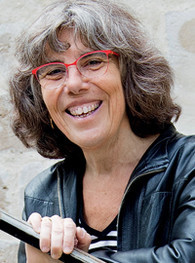
The author from gallimard.fr

Profile Image for Antonomasia.
986 reviews1,490 followers
Read
April 10, 2016
This Oulipian novella by a mathematician, about mathematicians, doesn't require a maths degree to read it. Yes, some allusions are opaque or hidden for the less mathematical reader, whilst they will be apparent, maybe amusing, to those who studied maths at tertiary level (and the book may be of particular interest to them; as a friend observed a couple of months ago, not much literary fiction engages with the sciences). But foremost, this is a book about people in history, one which belongs to that subgenre of convincing "biographical" novels about fictional academics, complete with footnotes &c.

Advertised as a narrative [which] oscillates stylistically from chapter to chapter, I had high hopes based on the first three chapters. The Senegalese colonial childhood of a budding mathematician is told in the style of Kipling's Just So Stories, complete with addresses to the reader as 'best beloved'. The story is continued by a young First World War nurse, a deferential, religious woman of her time, who meets the same chap, now a graduate of a French university, conscripted to fight in the trenches. Both chapters feel absolutely immersive as if the whole story is meant to be in their respective modes. The next section (which, due to its title mentioning 'Three Murders', I hoped would be constructed as a detective story) contains newspaper clippings and excerpts from interviews with one of the mathematician's descendents. I was looking forward to the book continuing to shift between different literary genres, fully engaged with each. (I have vague memories of having read a[nother] book, title forgotten, which was supposed to shift between genres, but it was never really obvious in the style.) But rather than incorporating further styles of fiction and non-fiction, covering the 103 years of life of its main character from various perspectives, succeeding chapters of 121 Days contained more snippets of journals, letters, interviews, interspersed with Oulipian lists, based around themes such as numbers used in the story (121 days is the length of two characters' romance, cut short by the Second World War), or street names in Paris. (I find Perec's lists both charming and poignant, as were these - but I had expected something different.) The novel peters out into jottings for a biography which cannot be published; the sense of "petering out", of disappointment, is undoubtedly deliberate, due to publication veto from a minority of the heirs. But like Siri Hustvedt's The Blazing World, also framed as bits of a biography of a person who moved in a painstakingly constructed fictional coterie, the form on the page does not convincingly fulfil the conceit, because it does not stick to it throughout. I find both books essentially likeable, whilst being frustrated that they did not take the idea to its absolute logical conclusion.
It's very possible that I've missed something in Audin's novel, however, so will be interested to see what further reviews find in it. (I'd also love to know how the book's fictional constants and theorems relate to real ones.)

Coincidentally - for I was meaning to read this little book today anyway - the Complete Review review of 121 Days appeared this morning. (The book's title is intentionally in words, not numbers, but it sets my teeth on edge to write the American wording sans 'and', and no British edition exists, so I am saying '121'.) That review has information about the Oulipian constraints which I won't repeat in detail.
It also mentions chapter titles alluding to other Oulipo works; I've been looking through lists to try and pinpoint more of them, and replace the unlikely and irrelevant echoes evoked in my head including Paul Morley's Words and Music: A History of Pop in the Shape of a City and Romanian New Wave film 4 Months, 3 Weeks and 2 Days.

Besides first and last lines, there are are other recurring motifs which one chapter passes to the next like a baton; often, though not always, a main character in one chapter becomes a minor one in the next, or vice versa, but these do not make such consistent patterns as they might. (Another recent English-language novel, Donal Ryan's The Spinning Heart, whilst not 100% consistent in this respect, carried on a similar pattern for longer before shifting.)

The First and Second World Wars, the foci of this book, are obviously pivotal points in the history of twentieth-century France, but as they are well-covered in literature already - albeit not from the novel perspective of mathematicians who weren't codebreakers (the only similar material I'd encountered was the BBC film Einstein and Eddington) - it would have been good to hear more about the second half of the century via these characters too.

Despite not being everything I hoped for, this was still an intriguing and unusual angle from which to look at the history, and I'd particularly recommend 121 Days to Oulipo fans and to those with knowledge of pure maths, who will pick up extra jokes and allusions.


Thank you to Edelweiss and the publisher Deep Vellum, from whom I received an advance copy in exchange for an honest review.
Profile Image for Elizabeth☮ .
1,816 reviews14 followers
February 6, 2023
I called Deep Vellum in Dallas and said, "Tell me what to read." This was one of the recommendations. Incredible. This is a translated work and one that I imagine would have been difficult to work with given the various formats in which the story is told.

This follows various mathematicians in France during both world wars. We begin the story with one young man in Africa that ventures to Europe to study. This man, M, becomes the apex of the stories that then unfold.

We get journal entries, descriptions of the contents of an envelope and even one chapter that is told with numbers and their significance. It is a brilliant way to read through the lives of people so affected by the work these men completed.

I would have appreciated some kind of diagram with a list of the mathematicians (I found I had to return to previous chapters to keep the narrative straight), but that is just a simple wish. This is an interesting way to tell a story and one that I really enjoyed. I'm always in awe of authors that can put something so complex together and make it seem so simple.

Thanks to Deep Vellum for publishing and recommending.
Profile Image for Jim Elkins.
361 reviews454 followers
Read
May 14, 2025
Why Can't Novels Include Mathematics?
-

Michele Audin's One Hundred Twenty-One Days (2014, English 2016) is an experimental novel, the second in English by a female member of Oulipo. It is about the lives of several French mathematicians, and the author herself is a mathematician.

Given the many mathematican investments of Oulipo, and especially given the book's subject matter, it's disappointing there's no mathematics in the book. I am interested in writing experimental fiction, and I would like to be able to continue expanding what can be included in novels. All sorts of technical matter has found its way into fiction, and there's no reason why mathematics shouldn't be included. There are scattered equations in modern novels from Döblin to Pynchon and Yoko Ogawa, but those are either isolated equations or verbal approximations. Why should there be a limit on what can be included in fiction?

I disapprove of the way the novel excludes the actual terms of the one discourse it privileges the most, mathematics. I'll expand on that in the last section. The first sections here are about the two principal ways readers have approached this novel.

1. Reading the book as politics and history
The central non-mathematical, non-Oulipian theme of the novel is the distance between the nominally unpolitical world of mathematics and the atrocities and horrors of both World Wars. Some of the mathematicians in the novel were in the resistance in WWII; some were collaborators; one was Jewish; another was horribly wounded in WWI. There are intrigues and politically motivated actions of various kinds, but the idea is that despite it all, people were still doing mathematics.

It is possible to read this as primarily a book about the identities and lives of people compromised by war. In France, Audin is known for refusing the Legion of Honor because, she said, Sarkozy failed to answer a letter she wrote asking for information about her own father's disappearance (he was a well-known mathematician). A review by John Taylor in Boston's Art Fuse describes the novel along these lines, as a matter of politics and identities:

"[Audin's] spirited Oulipian gambits stand out and may irritate some readers. They keep the emotions from building up and making this novel thoroughly gripping. Feeling is in shards, as it were... a strong point is being made: what matters is not emotional connection, but rather gathering scattered bits of fact, piecing some of the puzzle back together, and restoring the identities and thus the full-blooded faces of those whom the Nazis sought to efface."

2. Reading the book as a structural accomplishment
It is also possible to read the book as a structural puzzle. It's divided into eleven Roman-numbered chapters, each of which takes a different form (diary, myth, dossier, chronology). After chapter XI there is a "Supernumerary Chapter," dated 2009-2013, in which Audin lists some of the book's sources (including Le Lionnais, Queneau, and, curiously, Perec's Gallery Portrait but not ). She lists the chapters that include material from each source, but it is often impossible to say how the material appears in a given chapter. The "Supernumerary Chapter" also lists all the place names mentioned in the book, even though that information is also impossible to use. The book ends with an "Index of Proper Names," just as in many older nonfiction books.

The translator, Christiana Hills, appends a brief essay that mentions, in passing, that she read most of the books mentioned in the "Supernumerary Chapter" and did extensive research on the geography, biography, and chronology of the book, but she doesn't say how any of that helped the translation, or might affect the reader's experience. The result is a complex structure, reminiscent of the back matter in Perec's , which is difficult to interpret.

This sort of evidence of planning, coupled with a lack of information about how to use it, has led several readers to see the book as a puzzle. This is Felix Hass, writing in Bookslut:

"You cannot read Audin's masterfully written book as you would any other work of fiction. Rather, you need to approach it as you might a book of science or mathematics. You underline, you comment, you take notes. In a mathematical proof, you might try to fill in a technical step that was left to the reader by the text itself. With One Hundred Twenty-One Days, you want to capture detail mentioned about seemingly unimportant characters, to serve as cross-references when they are broken out as heroes of a new chapter, which, on first glance, might strike you as an entirely new book.... So, at the end, it is not a man's rebellion against or another man's complacency with fascist oppression, nor is it a triple homicide committed by a third or the combined mathematical genius of all three that lends itself as the focal point of Audin's novel. Rather, she wants us to see that it is a young woman's love, her '121 days of happiness' which is truly remarkable, 'the fabric of history.' Audin lets her fictitious author put this theory forward in one of her last pages and underlines it by her choice of title. Still, it remains difficult to see the importance of this love episode, which is laid out in merely one of her eleven chapters."

In this kind of reading the book becomes a puzzle that is solved: the vicissitudes of history and politics are less important, or more fragmentary, than a moment of love. Yet I don't find Hass's solurion any more convincing than he does. Oulipean texts have plenty of puzzles in them, but Oulipo isn't about solving mysteries: it's about constraints, understood as revealig the "potential" for new forms.

3. Combining both strategies of reading
Other reviewers don't decide between reading the structure and reading the history and politics.

In The Complete Review Michael Orthofer hedges these issues. He says the book "can't easily be reduced to a 'story about' some-(or many) things," but those things are what interest him, and in the end the book is a "puzzle."

Another inconclusive review is Karl Wolff's in The New York Journal of Books; he concludes by asking "What is storytelling, if not a futile grasp to interpret the accumulated detritus, ephemera, the junk of civilization?" -- a question that is not specific to this book.

According to John Russell Clark, in The Kenyon Review "the novel’s implicit view of history" is that "it is vastly more complex than any single point-of-view, or any one narrative (or, shit, any fifty narratives, 121 narratives) could ever come close to grasping." But again this observation doesn't account for this particular book: it could be said of any complex book on twentieth-century politics. A reasonable conclusion might be that this book -- and by extension other Oulipo texts -- creates a frame of mind in which the novel's content and its structure may or may not work, together with a kind of critical exhaustion that prompts readers not to press the connection.

In theory, I think the two strategies of reading could be combined. Hills notes that she used Google maps, Pinterest, and other sources to try to elucidate the book's metafictional sources: much more could be done in that vein, and it might be possible to work on the very Oulipian problem of justifying the form, in all its artificiality and constraints, as an optimal solution to expressing the book's real-world themes.

4. Representing mathematics
A review by Corine Tachtiris in World Literature Today notes that "With powerful effect, Audin demonstrates that math can be both poetic and political." A strange claim given that mathematics is not actually present. A book as complex as this one, with a full range of Oulipean constrained writing, appropriated styles, multiple chronologies, and densely allusive prose, should be able to present mathematics more fully. Instead we get hackneyed gestures in the direction of mathematical beauty: a character muses that pi is exquisitely beautiful. There's a chapter on numbers that includes a dozen mathematical constants without explanation, and there are hints of "genius" throughout.

But why should mathematics be reduced to those "Beautiful Mind" kinds of evocations? There are many ways to show the significance of constants like the square root of two, e, and pi, without requiring advanced mathematics or even trigonometry. There are continued fractions, infinite series, analogies and illustrations of all sorts. This is a book of unusual literary complexity. Many passages in it are not wholly comprehensible because they depend on texts (as in the "Supernumerary Chapter") that provide structure, content, allusion, and wordplay without revealing themselves. Why, then, not include actual equations? If readers are temporarily but repeatedly lost by the book's allusions and its collage of literary styles, why shouldn't they be temporarily blocked by the presence of "illegible" equations? What is Oulipo if not the presentation of "inert," unexpected, illegible, "inexpressive," appropriated, rule-bound material in the body of fiction? Why not complement the "technical" apparatus of the novel with actual mathematics (or chemistry, or engineering, or any other "technical" discourse)? Why should an Oulipo project -- or any other demanding, experimental work of fiction -- restrict itself to literary discourse?

Just to be clear about my concern: I wouldn't count books like Richard Powers's as examples of novels that incorporate science or mathematics. Like most literary novelists interested in science, Powers conjures the science in nontechnical language. Examples of experimental writing that include science are Christian Bok's Crystallography and Xenotext. David Foster Wallace almost showed it was possible to mix mathematics and literary prose in his book on infinity: it isn't fiction, but hs voice is recognizable the same as in his novels and stories.

So my question here has to do with a reluctance, on the part of some writers, to cross from what the classicist Wesley Trimpi, in a book called Muses of One Mind, called "literary" discourse (beginning with Plato and including philosophy and fiction) to "geometric" discourse (beginning with Euclid, and including mathematics). I do not see why readers shouldn't be challenged in all possible ways, using all possible strategies.
Profile Image for Ronald Morton.
408 reviews206 followers
September 21, 2016
I can find very little about the author in English in my brief google search, but this fact stood out (the last line) as particularly bad-ass (but overall also depressing):
She is the daughter of mathematician Maurice Audin, who died under torture in 1957 in Algeria, after having been arrested by parachutists of General Jacques Massu. On January 1, 2009, she refused to receive the Legion of Honour, on the grounds that the President of France, Nicolas Sarkozy, had refused to respond to a letter written by her mother regarding the disappearance of her father.
Damn.

Side note: I've had one of her books (Geometry) on my Amazon wishlist for over five years now, and didn't connect this book with her until about 2 minutes ago.

The opening few chapters of this book are exceptionally strong. Solid-five-star-strong. The book isn't able to keep that level of intensity going, but I was hooked from the opening 50 pages or so, and went ahead and blew off work for a few hours to knock this out. Damn glad I did.

It starts as a fairy tale - specifically, explicitly, as a fairy tale - and ends as a historic record, a notebook/scrapbook of exploration of intertangled lives of fictional mathematicians through (mostly) World War I and World War II. It's playful in it's storytelling; hopscotching through different methods and presentations and voices and perspectives; the writing is strong and focused, infused with warmth and insight and compassion; and the book ultimately manages be a joy to read while also being tragically sad.

Michèle Audin is a member of Oulipo, though I never really felt that I was reading a Oulipo work (they can certainly stand out at times). The playfulness of structure makes sense in the Oulipo context, but it's certainly not specific to it, and this particular structure has been done elsewhere, by non-Oulipo writers. I mention this only because, if you're reading this for the Oulipo connection you might end up disappointed, which would be a shame, as this is a damn strong work.
Profile Image for Book Riot Community.
1,084 reviews302k followers
Read
May 18, 2016
This dazzling work tells the story of French mathematicians during World Wars I and II, with the writing style varying from chapter to chapter. It is told in diary form, in novel form, as historical research, and more. This is an inventive novel from Audin, a mathematician and Oulipo member. This is a little gem of a book – expect to see it on lots of lists at the end of the year.

Backlist bump: Einstein’s Dreams by Alan Lightman


Tune in to our weekly podcast dedicated to all things new books, All The Books: http://bookriot.com/category/all-the-...
Profile Image for Ami Rebecca.
68 reviews4 followers
February 21, 2017
I am a history lover and my husband is a maths lover. This book so beautifully blended both that I had to buy my own copy of this book, borrowed from a friend.
Profile Image for Yasamin Kashfi.
33 reviews48 followers
November 24, 2024
نویسنده ریاضی‌دان و جزو گروه اولیپوست؛ گروهی از نویسنده‌ها که در هر اثر محدودیت خاصی رو برای نوشتن کتابشون انتخاب می‌کنند و در کارشون اعمال می‌کنند. (گویا ایتالو کالوینو هم جزو این گروه بوده). هدف از این اعمال محدودیت‌ها ایجاد ایده‌های جدیده. مثلا یکی از محدودیت‌هایی که نویسنده‌ی این کتاب انتخاب کرده این بوده که هر فصل کتاب باید در ساختار متفاوتی روایت بشه، حکایت، خاطره‌ی فرد، بریده‌ی‌روزنامه‌ها و … همین‌طور اعداد تو فرم و محتوای این کتاب مهمند.
داستان روایت زندگی ریاضی‌دان‌هایی در دو برهه‌ی جنگ جهانی اول و دومه. از کسانی که به جنگ می‌رن، کسانی که تو گروه‌های مقاومت شرکت می‌کنند و کسانی که با نازی‌ها همکاری می‌کنند.
برای تجربه‌‌ی جدید خوندن کتاب جالب بود. اما در نهایت فصلی که بیشتر از همه تو‌ ذهنم می‌مونه همونه که خاطرات یک پرستار دوران جنگ رو با با ساختار ساده‌ی اول شخص روایت می‌کنه. بریده‌ی روزنامه و آرشیو خیلی جاها خسته‌کننده می‌شد. سوال اینه که ارزش این محدودیت‌ها یا الگوهای تکرارشونده تو کتاب چیه؟ چیزی به داستان اضافه می‌کنه یا نه. در مورد استفاده از اعداد، به طور خاص در فصلی که عناصر مختلف داستان رو با عدد توصیف می‌کنه تکون‌دهنده بود و به کمک داستان میاد، ولی خیلی جاها در حد دکور می‌مونه.
Profile Image for Will.
307 reviews83 followers
January 18, 2016
Brilliant hybrid novel by mathematician Michèle Audin, coming from Deep Vellum in April, only the second book in English ever published by a woman member of the Oulipo!

"She had so few of his words left. She also had a couple of photographs, the note thrown from the train, a mathematics article, and the book he had let her borrow which she hadn’t been able to return to the family. Almost all of the young, carefree people in the photograph from the picnic were dead: that scatterbrain Madeleine, Simone, and André, André who had said, “I’m totally safe, because I’m publishing under the name of Danglars.” So few saved, so many drowned. A verse from André’s Dante came back to her as she looked at this photograph:
And thus the Yawning Deep forever o’er us closed.
in dodecasyllabic verse—even though the original Italian verses of the Divine Comedy all have eleven syllables. She had looked in the Sorbonne library for other translations of the end of Canto XXVI,
Until the sea above us closed again.
Hell and the sea, the meter of the poetry, the words and the numbers…"
Profile Image for Gemma.
86 reviews12 followers
July 8, 2016
Disclosure: My dear friend, Christiana Hills, translated this book. We have known each other since sixth grade and I'm very proud of her and also very jealous of her accomplishments with this novel.

I say that I'm jealous because this can't have been an easy book to translate. Each chapter is a different style, a different sort of writing. There's a fairy tale, a selection of newspaper articles, a diary from WWI. Each chapter stirs the surface of a deeper story, kicks up dust and unveils bits and pieces of the intertwining lives of a group of European mathematicians and how they lived from WWI - WWII and after. Since this book is by an Oulipo writer, you can expect some stylistic fireworks. It's not A Void -- it's quite a bit more subtle -- but you shouldn't count on a straightforward narrative.

But I genuinely loved this book, and would have with or without my friend's involvement. Each chapter lays out a little more information the people involved. It's like glimpsing just a part of a painting out of the corner of your eye, and by the time you reach the end of the book, you feel you've seen almost the whole thing. But the incompleteness is pleasing because it gives you room to wonder about what the entire picture might be.
Profile Image for Justin Evans.
1,716 reviews1,133 followers
April 16, 2017
Solid, readable, but not all that exciting: a French mathematician writes a kind of Oxen of the Sun from Ulysses, only without the literary-historical smirking; or perhaps just writes a souped up version of Queneau's Exercises.

As for content, there's surely something odd in a novel by a mathematician, about mathematicians, in which all the mathematicians are fictional, but all the literary figures are historical--so you get Desnos and Balzac, for instance, alongside 'Mortfaus' (and its variant spellings) and Silberberg. Is this meant to be a grand intellectual statement about the complicity of science with fascism? Or is it just futzing around? Your answer to that question will no doubt depend on how high your regard is for Oulipo literature more generally.
Profile Image for Melissa.
93 reviews
August 9, 2020
Wow. This was such an amazing book, really difficult to put down. Makes me really want to read Calvino now...

Second read was just as amazing...
Profile Image for Kit.
38 reviews
July 10, 2023
I didn't know this was experimental fiction going in so that's my bad, but is a book still a book if it fails to make any emotional connection with the reader? I was considering giving up 80% in.

I feel like I should close with some sort of math joke, but I can't bring myself to care.
10 reviews18 followers
August 25, 2016
I went into One Hundred Twenty-One Days not knowing it was an Oulipian novella, let alone what makes fiction Oulipian to begin with. I enjoyed the stylistic and structural experimentation, at least at first, but the more the story expanded, the more rigid and irritating the formula became.

The story concentrates on a handful of families in France, beginning in the early 1900s and ending in the early 2000s. World War 2 is the gravitational center. Everything builds to or reflects upon that war. The closer the novella is to first-hand accounts from that period, the richer the characters. But ultimately, the meta-tale of a modern day researcher strips away the dramatic oomph.

By the end, I found myself thinking more about the process behind the story than the story itself: an English translator translating short fiction written by a French mathematician in a literary style developed by real mathematicians and about a fictional researcher studying countless catalogues of diaries and interviews with fictional mathematicians.

Maybe that's the point: the most precious events of the past are concealed by endless layers of human interference.

Whatever the case, the translation itself is phenomenal. I can't imagine taking on such a task, and it's handled masterfully.
Profile Image for Annie.
2,318 reviews149 followers
September 23, 2024
Michèle Audin’s One Hundred Twenty-One Days is the first Oulipo novel I’ve ever read, though not the first experimental work of fiction I’ve read. Experimental fiction plays with form more than characterization and plot to get readers to think about story in completely different ways—but Oulipo fiction goes further and plays when authors choose not to use the letter e in their story or write an entire novel as a palindrome. For me, a good story revolves around plots, characters, setting, and good writing and not trickery. Literary gimmicks usually drive me up the wall. And yet, I was intrigued by what Audin was doing with her blend of epistolary, documentary, and Oulipo techniques in One Hundred Twenty-One Days. If this is truly representative of Oulipo, I might have to take a deeper dive...

Read the rest of my review at A Bookish Type.
Profile Image for Betawolf.
390 reviews1,481 followers
October 3, 2017
Less a book and more of a sketch-piece for various stylistic approaches to a subject. The fairly-plausible story buried in there, a history of a great French mathematician and his collaborationism during the occupation in World War II, was somewhat interesting and not a topic I've read much of before. Unfortunately, the author wasn't inclined to really develop this much, more consumed with their experiments, presenting some chapters as collections of documents, some as diary entries or letters, etc. None of this was particularly unexpected or novel, and I found the occasional repetition of various facts -- probably intended to enrich the picture by approaching events from different perspectives -- to actually be quite dull, as the story wasn't allowed to go anywhere that made these facts significant. A crust of references and some lists of artifacts do not make something detailed. I'm left with an overall feeling of 'so what?'.
Profile Image for Sarah-Hope.
1,469 reviews208 followers
April 14, 2016
One Hundred Twenty-One Days is a novel that is so original it almost defies description. The characters are an assortment of mathematicians. The time period spans World Wars I and II. The style—well, the style varies depending upon which chapter you’re reading. As the reader works her way through the book’s many voices, the reader experiences a depiction of the processes by which we make choices and compromises during difficult times. Some of our mathematicians collaborate with occupying forces, some don’t. Some speak out when they see incipient fascism, some don’t. All of these actions are presented obliquely, requiring close attention. Given its intellectual and stylistic richness, I don’t doubt that this title will be one of my favorites of the year—and one I’ll be rereading sooner, rather than later.
Profile Image for Stacy.
1,944 reviews
March 18, 2019
I can safely say this was unlike any other book I've read. Each chapter is told different, whether as a fairy tale, research notes, a list of numbers, etc...The author is a member of Oulipo which was not a group I was familiar with until now. I should have been since Italo Calvino is also a member and I'm a big fan of his work. I gather that their goal is to set certain writing constraints for their stories which leads to some really creative writing. If someone has more knowledge on the group, please feel to share and educate me. Audin is also a mathematician and uses that knowledge to good effect here. She weaves a story about several mathematicians, their families, work and lives during WWI and WWII. Not too much math for those who don't enjoy it but enough to give it a solid background.
Profile Image for outis.
532 reviews2 followers
July 21, 2016
Pretty impressive. This book seems to create the impression of people, places, ideas and feelings by talking around (or near) those things without describing them directly. You get the sense of the subject matter through the juxtaposition of what I came to think of as many sets of fuzzy foci that blur towards each other - rational and irrational, France and Germany, WWI and WWII, man and woman, right and wrong, math and humanities. Not an easy read (and I know that I missed most of the stylistic tricks and treasures in this first read-through), but for all the intimidating literary background, this was still a really compelling and engaging, and occasionally devastating, experience. Recommended to anyone willing to put in a little work.
Profile Image for Cindy Leighton.
1,097 reviews28 followers
March 24, 2017
I was not familiar with oulipian novels - but can't say I became a fan after reading this one. Seems like a bizarre constraint and not sure what the point is? I loved the first two chapters- and the idea is interesting to write a novel that is part novel, part mathematical something, part diary, news clippings, etc. but it didn't work for me. I have read much more compelling books about the impact of the WWs on Europe.
Profile Image for Sookie.
1,325 reviews89 followers
June 19, 2024
This work has left me a bit unsettled. Its fictional but not entirely, its conversational but really its not, there is plot of sorts but its just string of events. It speaks of events known in history, of wars fought, of people suffering, but it also tells a story of two people who are from different parts of world; of life.

There are various formats used with two figures, two wars, and mathematics being the heart of it. A man moves from Africa to Paris to study maths. This Oulipian novella presents various plays on numbers - 121 days of romance, the discouragement of a young girl around PI, and an entire chapter dedicated to numbers and their meanings. Mathematicians appear now and then and get lost in appendices and afterthoughts.

I am still not sure what it made me feel.
Profile Image for GailW.
491 reviews
February 24, 2023
This is the debut novel of the French mathematician, Michèle Audin, who is a member of Oulipo. "Oulipo... stands for Ouvroir de littérature potentielle, the French for Workshop for Potential Literature. It was founded in 1960 by a group of writers and mathematicians, as a sub-committee of the College of Pataphysics. Its aim was to invent new forms and structures for literary works, as well as bring back old ones." (themodernnovel.org) And I can explain the style as only a non-mathematician and non-Oulipoian can: It's weird. It's weird to me for no other reason than because it is quite different from anything else I have ever read. So I don't mean "weird" negatively.

I toyed with my rating - 2 because the style confused me so much, 5+ because the story itself was heartbreakingly beautiful if you don't let the style throw you off balance. So I decided on a 5.

Although called a novel, the style is a combination of novel and diary and historical research, so much so that at a number of points I thought it was actually non-fiction. The book follows the lives of three fictional French mathematicians through the debasement of WW1 and WW2.

This is a book I would like to read again.
Profile Image for Jordan Villanueva.
230 reviews3 followers
January 14, 2020
I loved the structural variations in this book. The author executed so many different styles yet made the book feel cohesive. I would say that the structure hindered the character depth, but the craft itself was impressive enough to make this a joy to read.
162 reviews1 follower
Read
April 23, 2019
Boring even if she is Maurice audin’s daughter
Profile Image for Ell.
53 reviews28 followers
June 2, 2020
Written by a mathematician and a member of the Oulipo, One Hundred Twenty-One Days experiments with form in order to tell an oral history of several French mathematicians spanning the two World Wars through a fairy tale, a catalog of photos, postcards, and letters kept in a binder, interviews, among others.

Despite this, the book's strength does not come from the simple fact of its experimentation. There are parts in the novel where the prose sags and drags on. The translation is masterful in navigating the changes in register and tone, but the form does not always enhance what is being told.

However, the book pulls through in the end. In true Oulipian fashion, its strength is derived from its ambition of executing, through multiple layers and voices, one fine truth: that all men and women, no matter how brilliant, savage, burdened, or knowing, are all characterized, recounted, and reconfigured for the present and the future through the documentation and memory of multiple fallible people, spanning several generations. For Audin, the authority to reveal us comes with the passage of time--the book takes care in ensuring that while in the end we do not know all about the individual mathematicians (for we are simply given patches of their lives through documents and testimonies, often riddled with "tides of forgetfulness"), we are gifted the impression--the certainty--of their presence in at least one point of life as it has come and will come to be.
Profile Image for Kazen.
1,475 reviews314 followers
May 9, 2016
One Hundred Twenty-One Days starts with a bang - a fairy tale introduction followed by an intriguing diary and newspaper articles. It makes the story wonderfully plotty as we follow Christian, an African boy that makes his way to Paris thanks to his mathematical ability.

From there the scope widens and the pace slows. Immediate accounts give way to lists, interview transcripts, and research materials, taking us further away from the story. What felt close and real in the first 50 pages fades away into historical analysis and hearsay. One World War turns into a second while the cast of characters (mostly mathematicians) grows and individual people become less memorable.

The Oulipo constraints, such as starting each chapter with the last words of the previous one, are fun and interesting. Some jokes are aimed at mathematicians but this language major never felt left out. Christiana Hills handily deals with numerous translation puzzles while maintaining different voices and registers for each section. But while the word candy kept my brain happy the diffuse plot kept me from falling in love.

Thanks to Deep Vellum and Edelweiss for providing a review copy.
Profile Image for Eric.
318 reviews20 followers
October 5, 2019
One of the most magical & rewarding reading experiences in recent memory. Audin utilizes a number of styles & formats to create a fragmentary, patchwork narrative that is surprisingly & stunningly evocative & affecting. Giving us only scant details of a number of intersecting lives that stretch across most of the 20th century & thru its terrible, turbulent centerpiece, World War II, those details become charged with an unexpected profundity. Thru the use of diary entries, letters, photograph analysis, newspaper reports & more, her characters gain added dimension each time they appear. A fascinating kind of alchemy takes place in the reader's mind, having to put clues together rather than being handed everything on a dull & convenient plate. Audin is a mathematician & one of the newer members of the experimental writing group OuLiPo, & this first fictional effort shows a remarkable confidence & maturity that belies her inexperience in this realm. As befits a OuLiPian project, this subtle masterpiece brims with with sly humor, meaningful asides & playful references that subtly enrich its every crevice. An amazing & weighty novel despite its small size... Not to be missed.
Profile Image for jeremy.
1,202 reviews309 followers
April 17, 2016
stylistically interesting, michèle audin's one hundred twenty-one days (cent vingt et un jours) is only the second work from a female oulipian to appear in english translation (after anne garréta's sphinx — also published by deep vellum). think bolaño's nazi literature in the americas but about french mathematicians in the the war-torn early half of last century, written with oulipian constraints. there is much to like in audin's debut novel, but despite the varied formatting and the many mathematical intricacies and asides, one hundred twenty-one days is all but devoid of feeling, even as it contains a cleverly constructed and intriguing story of war, history, romance, and genealogy.
hell and the sea, the meter of poetry, the words and the numbers...
*translated from the french by christiana hills
Displaying 1 - 30 of 58 reviews

Can't find what you're looking for?

Get help and learn more about the design.