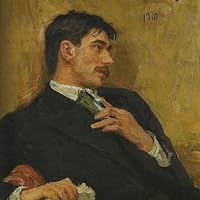
Sophie Rostopchine, comtesse de Ségur, née Sofia Fedorovna Rostoptchina (1799-1874), est une femme de lettres française de naissance russe. Le cas de la comtesse de Ségur montre qu'une vocation très tardive d'écrivain peut être particulièrement ré elle a en effet écrit son premier livre à cinquante-huit ans. Ses romans furent publiés entre 1857 et 1872. On raconte que elle a commencé à se consacrer à la littérature pour enfants quand elle a écrit les contes qu'elle racontait à ses petits-enfants et qu'elle les a regroupés pour former ce qui s'appelle aujourd'hui Les Nouveaux Contes de Fées (1857). Lors d'une réception, elle lut quelques passages à Louis Veuillot pour calmer l'atmosphère qui était devenue tendue. Ses oeuvres Les Malheurs de Sophie (1859), Mémoires d'un Âne (1860), Les Deux Nigauds (1863), Le Général Dourakine (1863), Un Bon Petit Diable (1865) et Le Mauvais Génie (1867).
Sophie, Countess of Ségur (née Countess Софья Фёдоровна Ростопчина; Saint Petersburg, 1 August 1799 - Paris, 9 February 1874) was a French writer of Russian birth.
She is best known today for her novel Les Malheurs de Sophie ("Sophie's Misfortunes"). The action takes place in a castle in the French countryside during the Second French Empire, where Sophie lives with her parents Mr and Mrs de Réan. Curious and adventurous, she does one silly thing after another, with the critical help of her cousin Paul, who is good and tries to show her the right path. She has two friends, Camille and Madeleine de Fleurville, 'good little girls' whom she tries hard to imitate. But she will learn that life is not a bed of roses ... Therese Martin (1873-1897), known as St. Therese of Lisieux, was an avid reader as a child of the novels of the Countess of Segur.
The novels of the Countess of Ségur were published from 1857 to 1872 in the "Bibliothèque rose illustrée" by the publishing house Hachette. They were collected together in 1990 under the title Œuvres de la comtesse de Ségur in the collection "Bouquins" (publisher: Robert Laffont).
Un bon petit diable Les Malheurs de Sophie Diloy le chemineau Mémoires d'un âne Jean qui grogne et Jean qui rit Le Mauvais Génie François le bossu Les Caprices de Gizelle Pauvre Blaise La Fortune de Gaspard Quel amour d'enfant ! Les Petites Filles modèles La sœur de Gribouille Blondine Après la pluie, le beau temps
Books by Comtesse de Ségur always take me years back, when I was a child, and at that time I loved reading them. But I've grown up and her Manichean stories now trouble me. Although I enjoyed reading General Dourakine, the world isn't just black and white and I'm concerned with what this teaches children. - 'Bad people' must be punished (and in this story, the punishment does seem a little severe). - Don't try to explain to those 'bad people' what they did wrong or why their behaviour or actions are bad. - And apparently, you should not give them the smallest chance of redemption. - When people are bad, they're bad, end of story. It's sad in a way. It doesn't teach anything about forgiveness and the importance of repenting, or how you can learn from what you did wrong so you can do better next time.
So two stars because I did enjoy reading the book (very easy read, entertaining and funny enough). Besides I loved the Russian background and especially Romane's bit about escaping from the labor camps. I just didn't exactly like the perspective on the overall story.
The second part of “L’auberge de l’Ange Gardien”, where the General and his French aide, along with all his family, return to the General’s state near Smolensk. The general has two nieces, one disagreeable and cruel, only interested in the General’s inheritance, and one loving and charitable. When a Siberian escapee (based on Rufin Piotrowski’s story My Escape From Siberia) is found in the gardens, the General faces a denunciation that could cost him all his property.
Ah! Général Dourakine! Always self-critical of himself while still being the most childishly malicious character Comtesse may have ever created, maybe even more than our bon petit diable. Everything about his characteristics, from the outside to the inside, from his plumpness to his unstable anger, makes him one of the goofiest, silliest, stupidest characters of Comtesse's creations. He never knows what he wants, he constantly asks for advice, he's old, he loves (almost) everybody all the time, he is stubborn in his decisions, he wants no aid whatsoever, he seems young, he gets angry at everything for no reason sometimes, and in this enumeration, I feel the funny paradox that set him apart as a unique character, and his irony, and his schemes, and his frottement de mains too.
For once, the reader is transported outside of France and goes back with the authoress herself to her old home, Russia. One may think that, through the lens of her own characters, she represents different parts of her identity: through Dourakine, the old général, her old present self revisiting from far away her not so beloved motherland; through Jacques, one of the children, her younger self, not just being a completely austere Catholic mindset, which she was raised in, but mingling Catholicism and French Revolution values such as liberty. Thus, she tries to defy Russia's Orthodoxy and misconception of servitude with what she has learnt with her mother and in France, and she becomes Dourakine's alter ego, somewhat missing her homeland all the while admiring a new homeland's religion and values.
The book itself becomes, therefore, a distorted diptych of L'Auberge de l'Ange Gardien, which is away from the général's home, although a paradise; meanwhile, Gromiline is home, although a hell, or made hellish by the presence of the fofolle Papofski who symbolises the devil with her constant obsession and fantasies of yielding the knout on her children, on her servants, on her own uncle and sister. It is then imperative to flee from this hell in order to regain paradise, to trick and fool the devil in a divine comedy in order to follow the path towards paradise. Russia, the supposed motherland, is consequently a land of torment and injustice criticised by a writer of its own birth: Catholicism clashed with Orthodoxy, France with Russia, freedom with servitude, and more importantly — yet maybe a bit far-fetchedly and especially more fatally — the authoress with herself. Something, though, aches in me when I write this affirmation, for it is scariest when identities mingle, and even so, identities should not be plural...
And I noticed, at the end, that, as several Comtesse books end with the resolution of a wedding — weddings that I don't quite approve of — her novels could take the form of tales, folk tales of the modern era, and not solely the role the literary tradition assigned to her as a "Balzac pour enfants". That is why I still find some lingering charm in her work, beyond realism, beyond christianity, even beyond some sort of spirituality. The folkish that fully expanded in her first novel and only diminished afterwards is at least implicit in rurality and comedy.
Quelle bonne idée de commencer ma journée de ce vendredi 16 avril 2021 par la relecture de Le général Dourakine, roman de la Comtesse de Ségur et suite de L’auberge de l’Ange-Gardien. Le général Dourakine, qui a toujours été l’un de mes personnages préférés de la Comtesse, réussit toujours l’exploit de me mettre de bonne humeur. Profondément bon, quoique très vif et pouvant se laisser aller à des colères redoutées par ses ennemis, il n’en demeure pas moins un homme généreux et épris de justice, et le type d’allié que l’on aimerait avoir à ses côtés en cas de besoin. Dans cette suite, Dourakine retourne sur ses terres en Russie avec la famille Dérigny. Il y est rapidement rejoint par ses nièces, l’affreuse Mme Papofski, qui lorgne sur sa fortune, et la douce Natalie, qui a sa préférence. Lorsque l’horrible Papofski fomente un plan diabolique pour dénoncer son oncle et les étrangers qui l’accompagnent - dont le mystérieux professeur Jackson -, le général Dourakine devra s’allier à son fidèle Dérigny pour donner à sa nièce une leçon dont elle se souviendra longtemps... Redécouvrir cette histoire a été un réel plaisir.
It's a 3.75 for me, I've loved the arory it was quite a quick read but I can't rate it higher cause "les petites files model" et "les malheurs de sophie" are my favorites 💓