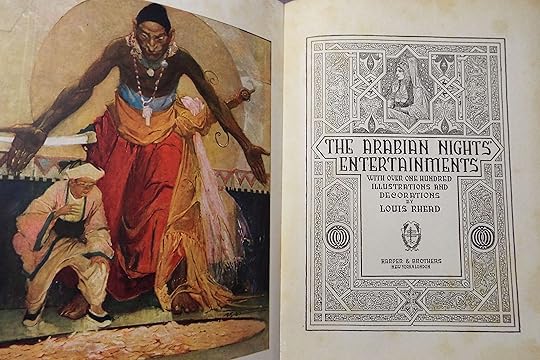
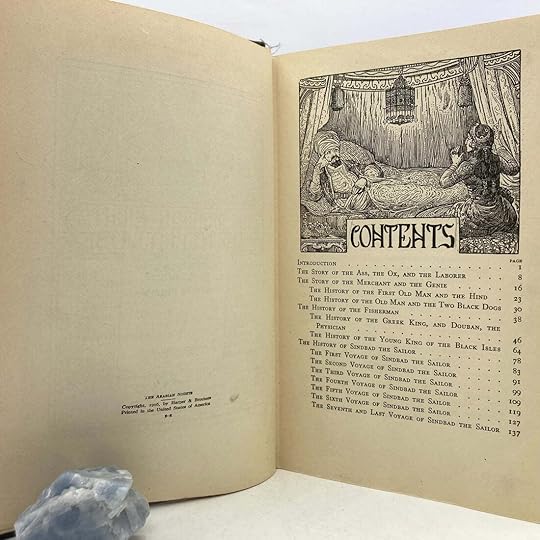
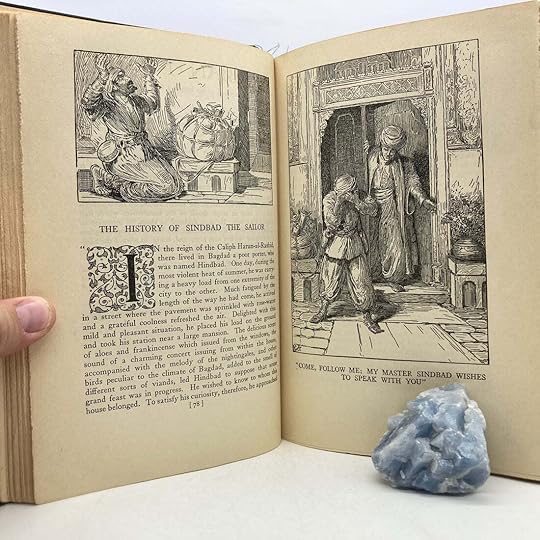
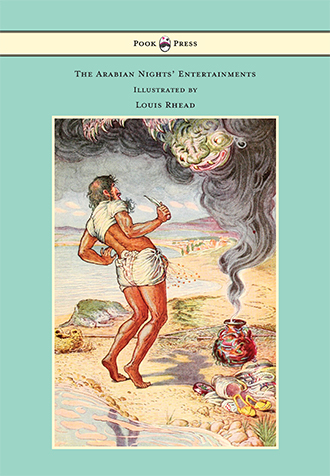
One Thousand and One Nights ( كتاب ألف ليلة وليلة Kitāb alf laylah wa-laylah) is a collection of Middle Eastern and South Asian stories and folk tales compiled in Arabic during the Islamic Golden Age. It is often known in English as the Arabian Nights, from the first English language edition (1706), which rendered the title as The Arabian Nights' Entertainment.
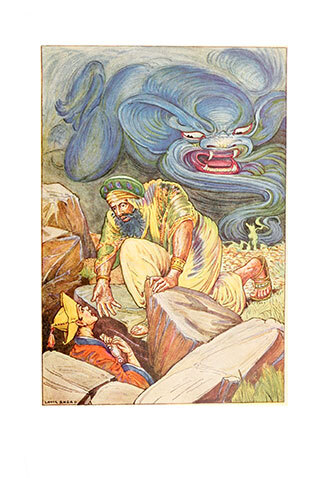
Louis John Rhead (November 6, 1857 – July 29, 1926) was an English-born American artist, illustrator, author and angler who was born in Etruria, Staffordshire, England. He emigrated to the United States at the age of twenty-four.
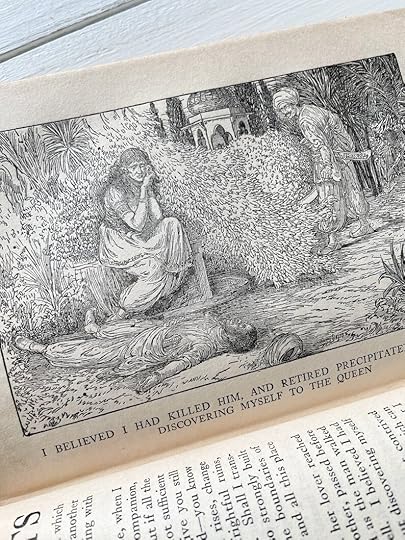
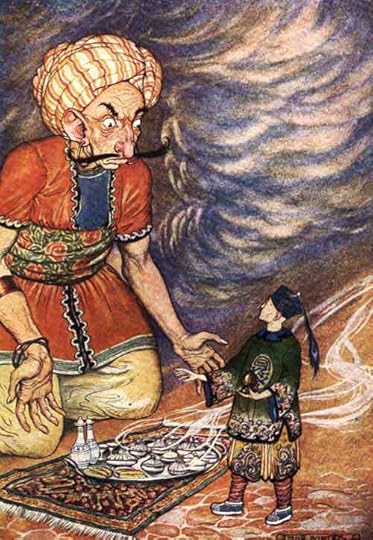
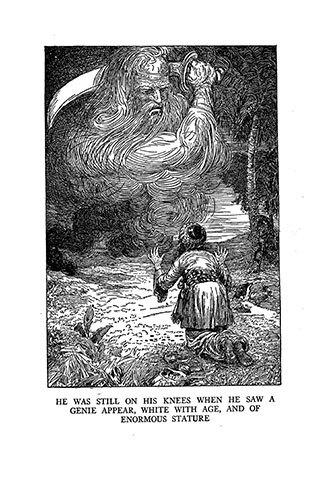
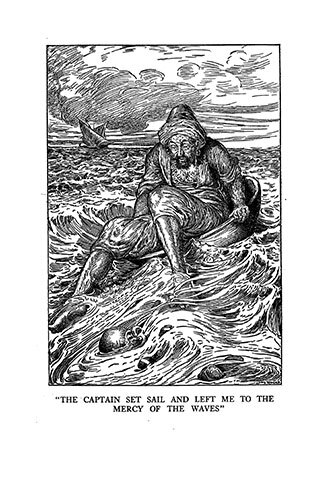
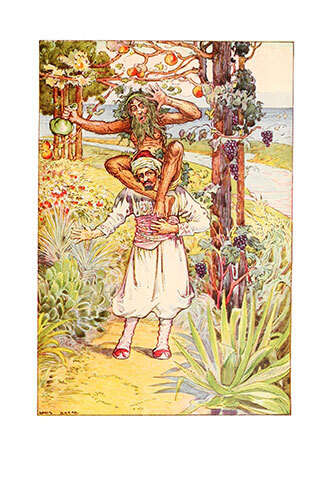
Everyone has heard of Aladdin and Scheherazade -- read the original tales! My edition (inherited from my grandfather) published in 1916 is free of today's concerns about political correctness or prejudice about Arabs, and the color illustrations are amazing!
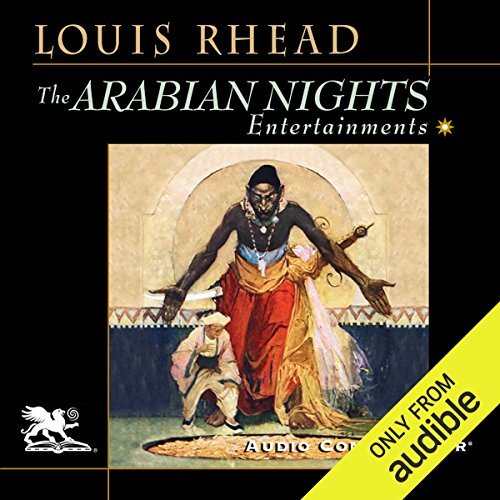
Stories from the Thousand and One Nights appears in volume 16 of The Harvard Classics. I’ll admit - rather than reading the edition in my Harvard Classics ebook, I listened to the audiobook of Louis Rhead’s 1916 version called The Arabian Nights’ Entertainments, performed by Charlton Griffin. This book - whatever version - is a classic of world literature and most people in both the “West” and the “East” have some familiarity with it. I’ve only read parts of the book before this time. I loved learning the “full” history of characters such as Sinbad the Sailor, Aladdin, and Ali-Baba. I was most surprised by how duplicitous Sinbad was in his voyages, even resorting to murdering innocent people to maintain his life. No wonder most of us get sanitized versions of The Arabian Nights as children! Just like with famous European storybook Grimm’s Fairy Tales.
On a more negative side, not all of the stories here are top-notch. Many of the tales in the middle part of the book bored me. Still, the frame story was always compelling: a clever woman named Scheherazade keeping the cruel ruler Shahryar at bay with the power of her storytelling.
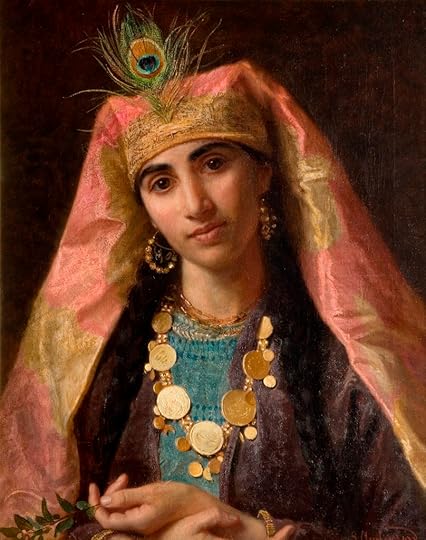
[Image: Scheherazade (circa 1850-1900) by Sophie Gengembre Anderson]
The introduction in the Harvard Classics provides some useful background information. The Arabian Nights was first published in English in the early 18th century and is a compilation of Middle Eastern folk tales compiled in the Arabic language during the Islamic Golden Age (8th century to 13th century). The stories were collected over hundreds of years and were composed by many different storytellers. As such, they are a window into the medieval Islamic world that included North Africa, Western Asia, South Asia, and Central Asia and represent many of the values and prejudices of those cultures. At the very least, this book is of historical interest.
I had high expectations for these tales. I enjoyed the stories of both The Aladdin and Ali Baba very much, but the other stories did not hold my interest. I'm glad I read them, but I don't anticipate reading them again.
What can I say? It’s the Arabian Nights. Scheherazade’s many tales. Stories within stories, some of them entertaining and fun while others are… less so.
There’s a series of stories in which seven brothers experience nothing but misfortune with rotten corrupt people winning in the end and no real point to any of it. Was this intended to teach that life sucks? Also, of course, there are the classic stories of Sinbad, Aladdin, and Ali Baba.
Maybe would have been a three if I didn't have such high expectations for this. Not sure if I possibly chose a bad translation or what, but really didn't enjoy it.
Ok, now that I've finished this audiobook, I am hesitant to say that this version is better than Burton's, but it was certainly easier to listen to. Also, it wasn't boring to listen again to the same stories because they were told differently, with different details, and also because I loved the stories so much that I didn't mind hearing them for the second time in such a short span. Anyways, I recommend it, especially if you can get an illustrated version (there is one on the internet archive for free, it's from 1916).