Jump to ratings and reviews
Rate this book

C.O.W.L.

C.O.W.L., Vol. 2: The Greater Good

Rate this book
With super villain threats a problem of the past, a strike on his hands, and scandal on the horizon, Geoffrey Warner has taken drastic steps to breathe life back into the Chicago Organized Workers League. But how far will his false-flag operation reach? Is there any line he won't cross for "the greater good?"

Collects C.O.W.L. #7-11.

136 pages, Paperback

First published December 24, 2014

2 people are currently reading
99 people want to read

About the author

Kyle Higgins

581 books302 followers

Ratings & Reviews

What do you think?
Rate this book

Friends & Following

Create a free account to discover what your friends think of this book!

Community Reviews

5 stars
50 (13%)
4 stars
155 (40%)
3 stars
141 (37%)
2 stars
31 (8%)
1 star
3 (<1%)
Displaying 1 - 30 of 50 reviews
Profile Image for Anne.
4,807 reviews71.4k followers
October 18, 2016
So this was the end?
Huh. That's kinda sad, because I thought volume 2 was pretty cool!
Principles of Power, while not bad, didn't really grab me quite as much as The Greater Good. I mean, it felt like this one was just sorta taking off, and then...poof! Done!

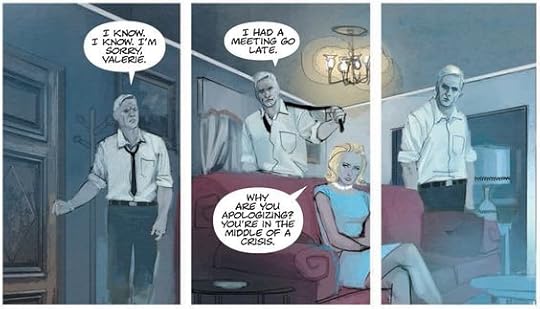
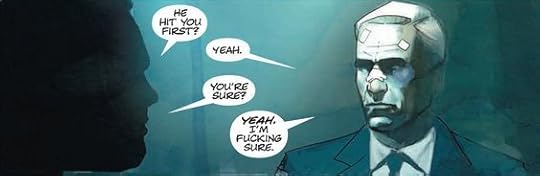
description

Well, that's ok, I guess. At least it went out on a high note, you know?
Everything shady that went down in volume one comes to a head in this one. Not everybody gets what they deserve, but for the most part it all gets wrapped up in a way that allows the reader to imagine a pretty straight path toward what is going to happen down the road.

description

If you don't want to invest a lot of time, and looking for something with a short run, this is a good choice. Plus, that art is purdy...
Profile Image for Stewart Tame.
2,495 reviews121 followers
December 28, 2015
And again I'm embarrassingly ambivalent. I really want to like this series more than I do. The writing and art are top notch. A lot of work and dedication went into telling this story. For some reason, it's just not a story that I care strongly about. So I don't think it's revealing too much to say that a contract is signed. I like the idea of a superhero union, and the backroom political maneuvering feels real. It just seems that those ideas could be put to better use than they are here. I'm not sure what I was expecting, but it apparently wasn't this.
Profile Image for Sara J. (kefuwa).
531 reviews49 followers
January 20, 2016
A bit on the fence with how things wrapped up here. While it did seem "realistic" it was done in a way that made it seem like it was wrapping it up too nicely (trying to be too "realistic"?) - having said that somehow it didn't really give me that satisfying chomp at the end. Or maybe it was just that halfway through I found myself getting a little annoyed at Warner and his whole shizbang way of achieving his ends. But I suppose that is part of the premise of this title - superheroes as a job title/paid police force and less of an altruistic shtick (and scrapping by to make ends meet to boot - which brought to mind a Nicolas Nassem Taleb article about being a gentleman on the treadmill).

I still like the art style though.

Disclaimer: From le Netgalley in exchange for an honest review.
Profile Image for The Lion's Share.
530 reviews91 followers
October 13, 2015
This was the second and last instalment of C.O.W.L unfortunately.

This volume concentrates on Warner getting C.O.W.L a decent contract and manipulating criminals, heroes and the government to get his own way. If this series hadn't ended here I think we could have ended up with a seriously good mastermind criminal. Heroes and criminals get killed in this volume and it gets progressively more violent, which gets a big thumbs up from me.

Speaking of criminals there is a villain in this called Doppler, damn he's got some cool powers. He can bend, shape and direct sound to his will. I really wanted to see more of him I thought he was excellent, c'est la vie.

That's the thing with this series, it had so much potential. I'm sad to see it go. :(
Profile Image for Wayne McCoy.
4,325 reviews32 followers
December 13, 2015
I liked the first volume of 'C.O.W.L.' and I like the second one a little bit more. The story is serious enough and the art is really stylish and great to look at.

The members of C.O.W.L. (Chicago Organized Workers Lead) have gone out on strike on the go ahead of their boss Warner. They want better contract with the city and police department. Some people want to cross the lines, and one of them ends up dead with the word "scab" etched in his forehead. Also, in order to force the mayor's hand in the contract talks, there may be some shady dealings going on with the city's villains. When one of the city's leaders is taken hostage, things come to a boil and decisions are made that will change things forever. Thus ends the series.

Which is kind of sad because I was really enjoying this one finally. The story takes place in Chicago in the 1960ss and the art by Rod Reis is just stunning. I wish some storylines were a bit more rounded out. It sometimes gets bogged in the procedural end of things, but I like what they did this time around. It's like they finally were able to figure out what direction to head into with the various plots and they turned out something that feels like what would happen if superheroes really walked among us.

I received a review copy of this graphic novel from Diamond Book Distributors, Image Comics, and NetGalley in exchange for an honest review. Thank you for allowine me to review this graphic novel.
Profile Image for CS.
1,216 reviews
April 27, 2017
Bullet Review:

Note to self: Your memory is fading. Don't read volume 2's before rereading volume 1's.

I spent a goodly portion trying to remember what happened in volume 1, which is 100% my fault, not the comics. But once I got the flow, it was really pretty good - I'd say better than volume 1. The story goes deeper, sure, there aren't any tidy bows on all these loose ends, but the story winds up nicely and I actually appreciate how it's more of "and life goes on". No one is 100% good; no one is 100% bad.

Does give me "Watchmen" and "Jupiter's Circle" vibes, but I think it builds off that concept not just being another clone. And this ends, which I definitely appreciate an author who can end a series instead of stretching it out until it looks like Stretch Armstrong.
Profile Image for Craig.
2,947 reviews31 followers
September 22, 2015
I really liked this series. The idea of a union of superheroes is a great one. What happens when they go on strike? Couple that with the inner workings of (corrupt) government in Chicago and you've got the basis for a series that should last a good long time. That this series is now kaput is a very sad thing, since this volume doesn't really tie things up (will there be a third?). The artwork is beautiful and the story is sometimes a bit hard to follow (characters tend to blend together a bit), but the overall story is unique and engrossing.
Profile Image for Bailey Ford.
106 reviews1 follower
December 26, 2024
Higgins knocks it out of the park again with an amazing script, but the real star here is Rod Reis on art. The way he drew Doppler’s powers in particular was incredible.
Profile Image for Online Eccentric Librarian.
3,408 reviews5 followers
September 15, 2015

More reviews at the Online Eccentric Librarian http://surrealtalvi.wordpress.com/

More reviews (and no fluff) on the blog http://surrealtalvi.wordpress.com/

I ended up liking Volume 2 of C.O.W.L. much better than its predecessor and do feel a bit sad that the series has ended. Many of the issues that I had with the first volume - anachronisms in speech/mannerisms/fashion, overly wordy text, filler info that could have been told in a much more interesting way - were less frustrating in The Greater Good. The focus on politics, grafting, and 1960s Chicago shame is still here but we are given a bit more personality behind the characters to offset the malaise.

Story: C.O.W.L. head Warner has pushed the strike and even manipulated events to ensure the mayor gives the team favorable terms for a new contract. But not all are toeing the line; and ultimately will the cost of Warner's machinations be justified in the end if they do get a contract?

This second volume made much more use of the 1960s milieu - something I enjoyed greatly. And the payoffs to events earlier also help lift this volume into a much more interesting and intriguing plot line. I still would have liked to see more focus on Radia, Eclipse, etc. rather than the politicing and how it affects them. But the final denouement works perfectly by not being a standard happy ever after and leaving some loose ends for readers to extrapolate their own futures.

Although I didn't love the series, I do have to give kudos to those involved. This was very well written and illustrated and I am very glad to have had the opportunity to read both volumes. Reviewed from an advance reader copy provided by the publisher.
Profile Image for Zedsdead.
1,393 reviews84 followers
October 31, 2016
Volume 2 appears to be the conclusion to Higgins’s tale of superhero labor unrest in ‘60’s Chicago.

It’s a neat idea, superheroes crossed with dirty union politics. And in spite of its overabundance of characters who look the same in shadowy alleys and dark rooms, it totally succeeds. C.O.W.L. reminds me a bit of season two of The Wire: everyone has a different agenda, and decent people sometimes do horrific things for (what they think are) good reasons. Lots of moral complexity.

I LOVE the way superpowers are depicted visually. A telekinetic woman’s abilities, instead of standard dramatic force lines and closeups, are shown as thin, perfect, unobtrusive circles around her hands and whatever she’s manipulating with her power. A villain who controls sound grabs a letter out of a word balloon, thickens it, and bashes someone in the head with it. It sounds silly as I write it, I think, but on the page it makes for an excellent metaphor. Genius.
Profile Image for RG.
3,084 reviews
April 25, 2020
Again another solid book. Something about the characters never really gets me excited about their world. I also feel like theres noone to get behind, really no protagonist. Would have loved one more volume to see where this would have gone, but I guess its done now
Profile Image for Aildiin.
1,488 reviews34 followers
January 23, 2016
Top notch like the first volume.
It's a pity the serie is ending here due to poor sales.
Profile Image for Eric Mesa.
849 reviews26 followers
January 6, 2016
This review was originally published at http://www.comicpow.com/2016/01/06/wh... (go there to see images). This review covers both volumes (which is the entire story), but is extremely light on plot spoilers, so don't worry too much about that.
----
Two things attracted me to C.O.W.L.: the subject matter and the author. I knew Kyle Higgins from Nightwing Vol 3 (AKA New 52 Nightwing) where I enjoyed his writing. C.O.W.L. takes place in Chicago in 1962 when unions are still strong and the Chicago Organized Workers League (C.O.W.L.) happens to be the superhero union. Similar to Watchmen, and very in vogue right now, the heroes are not pure of heart; some of them are just shy of being sadists.

The main plot of Watchmen is two-fold, someone is investigating hero murder and someone is trying to create a tragedy to unite humanity and end the Cold War. But knowing that doesn’t take away from the story, which is a deconstruction of Super Heroes and is focused on their stories and personalities. Similarly, the main plot of C.O.W.L. is a negotiation with the city about whether to continue the contract with C.O.W.L., but the story is about the characters Higgins has created. If I may continue the comparison for one more subject, I’d say that both Watchmen and C.O.W.L. benefit from being self-contained stories of about the same length. It allows Higgins to focus on the story without worrying about the long-term implications for his characters.

We tend to take it for granted that those with super powers (especially if they aren’t gifted in tragic circumstances) become heroes. There are very few stories in which those gifted with powers decide to simply take because they can or use their powers for selfish gain. Heck, we rarely see heroes for hire (despite a perennial Marvel title with that name). This is why it hit me so hard when the head of C.O.W.L. mentions during negotiations that one of the benefits to the city of Chicago is that C.O.W.L. gives super humans a productive way to use their powers rather than turning to crime. I’d never thought of it that way before – our classic heroes and villains tend to be pretty black and white. The villains were either criminals before their got powers or felt they were wronged by society and heroes just chose to be good. Most of the good guys have regular jobs for their regular human personas, but what about the supers in a bad economy? Would they simply let themselves starve? One of the oldest ethics debates I ever remember having is when it is OK to steal – like for sustenance. What if your powers meant you’d likely never be caught, wouldn’t you use them to make sure you didn’t die? And once on that slippery slope, might you simply use your powers to become middle-class?

Setting the story in 1962 allows Higgins to explore unions at the pinnacle of their power, but it also allows him a significant B-story about sexism. The 1960s were a weird time for women in the workplace. World War II had taught them they were just as capable as men in the workplace, but Eisenhower’s America needed them to go home so that the economy could absorb the men who’d come back. But their daughters were having none of that and found themselves in a world that was begrudgingly accepting them while treating them with condescension. After all, if women were equal to men, where had they been all these years? (Of course, ignoring that women not working was an anomaly when viewed against the whole of human history) Radia, the seemingly sole woman in C.O.W.L. finds herself in the especially frustrating position of being treated like a woman in the workplace while having super powers, making her stronger than most men. I don’t want to spoil how she deals with this issue because it ends up playing into the narrative in a few key points, but it’s definitely an idea that Higgins explores rather well.

And now we arrive at the crux of this book, the negotiations between C.O.W.L. and the city of Chicago. There will be spoilers here, but as I said before, I don’t think they take away from the actual story and characters of C.O.W.L.. As I mentioned above, it’s rare for super heroes to find employment as super heroes. Most of them are essentially moonlighting as heroes and some of the drama in their book comes from that balancing act. The closest two I can think of are the X-Men and the Fantastic Four. The X-Men are employed because they are supers, but not to be supers. Officially, they’re employed as teachers. The Fantastic Four similarly are all working for a foundation, but I’ve always been under the impression that their income comes from Reed Richards’ inventions or other scientific contributions. So why is it that we never see super heroes getting paid for being super heroes? Well, for one thing, it doesn’t jive with our image of hero purity. The bad guys are in it for the money and the good guys are in it for justice. But C.O.W.L. reveals a different issue with heroes getting paid to be heroes – unintended consequences.

Channeling a lot of what’s been in the air over the past decade or so, Higgins essentially sets up C.O.W.L. to be a unionized government contractor. As super villain crime has fallen, the mayor of Chicago is under pressure to negotiate terms that are more favorable to the city at the expense of C.O.W.L. Unions have really only one real bargaining chip – to strike. So C.O.W.L. orders its supers to strike in order to get the city to meet its demands. It has to do this in order to do what’s right for its employees and keep them gainfully employed. But it’s one thing when car factory workers strike, it’s something entirely different when public safety officials strike – people can get hurt or die. And so this radically changes the super hero equation. Imagine Superman letting Lex Luthor take over the world unless his bills are paid.

But the incentives become even more perverse. There will always be fires and petty criminals. But if there are no super villains, what does the city care if super heroes are on strike? So the head of C.O.W.L. makes a deal with a mob boss who’s been employing super villains to make sure the villains wear costumes so they are recognized as super villains. In a nutshell, this provides the leverage C.O.W.L. needs, but at the expense of terrorizing the public.

There are lots of other small subplots within these eleven issues (or two trades) that make it worth reading – Higgins has created a fascinating world with very believable characters aided by popping art by Rod Reis and Stephane Perger.

I enjoy discussion, so join me wherever you happen to read this.
Profile Image for Alan.
2,050 reviews16 followers
July 10, 2024
Personally, I think the superheroes in a real world setting statement is abused and overused. First, said statement kind of presumes certain changes that are unlikely (such as extreme influence over world events). Does this mean Pantheon, Watchmen and Squadron Supreme are not good reads-no. I just think the real world statement fails.

The second, and to me, more interesting premise, is superheroes having to adjust to being "normal" Such as sending your super power kid to school (PS238) or day/night care (Xion Comics Night Care). So why wouldn't super heroes unionize, and that's the basic premise of this series.

The Chicago Organized Workers League is at a turning point. Using some real life figures and settings, there's a contract showdown between the city's infamous/famous mayor Richard Daley and former costumed hero, now union organizer and leader, Geoffrey Warner.

I mean super heroes actually go on strike and walk a picket line.

Chicago has a colorful reputation as a city, much of it tied to to criminal activities and corruption. One theme here is how much does it take for an ostensibly good man to become corrupted, for good intentions to actually pave the road to hell.

The best realized characters are Warner and Radia. Radia is portrayed almost as a 2024 woman stuck dealing with 1963 morals and thought process (a tragic figure arguably).

Confession, I moved this up the TBR list because I swear I read online Higgins was planning to tie this into his Radiant Black universe.
Profile Image for 47Time.
3,521 reviews95 followers
June 13, 2019
Grey Raven's origin story is told using the look and feel of 60's comics. I should know, I read some years ago. The young Geoffrey Warner always wanted to be a policeman like his decorated father, but he reconsiders when he witnesses his father receiving a bribe. He gets on the road that eventually leads him to becoming the first hero in Chicago history.

Back in the present Warner makes a deal with mob boss Camden Stone to reveal the latter's superpowers individuals to the public, thus creating a need for COWL's protection. Eclipse and Radia threaten the deal when they act against Camden on their own.

Profile Image for Ana López Gómez.
Author 4 books13 followers
October 4, 2024
La historia no está mal, (me gustó más el primer tomo) pero si es el final es muy flojo como tal
Profile Image for Kenny.
866 reviews37 followers
October 3, 2015
What if superheroes are unionised and they go on strike.
Excellent story, characters and art.
Profile Image for Earchiel Johnson.
3 reviews11 followers
October 27, 2022
A nice change from typical superhero comics

Cowl has been one of my favorite series to read. I have strayed away from most mainstream comic because they tend to tell the same stories and revert to the status the status quo. Characters get resurrected and teams reform back to their classic roster. Everything in cowl has actual stakes. People die and stay dead, you feel the emotions of the characters because there isn't time travel to make things better. Some of the good guys aren't so good and it makes them more human.
Profile Image for Bradley.
1,194 reviews12 followers
Read
March 5, 2024
A comic that features superheroes with superpowers and does not utilize either sufficiently enough for my tastes…is not to my tastes lol. I skimmed heavily. Probably has to deal with a lot of my dislike. Honestly, from a surface level it doesn’t end so differently from the first. I didn’t see anything that should really give me pause to stop skimming. I liked the intro more than anything. COWLdn’t see what made this one more enjoyable for everyone else. Tapping out.

On to the next!
Profile Image for Santiago Girón.
175 reviews7 followers
May 21, 2025
actually a pretty fun ending
kinda wish there was more but also know i would loose my mind if I had to wait any longer to keep reading Radiant Black
While I felt the way the first volume handled the premise wasn't very good, i think the way this second volume dealt with the consequences of the previous one really elevated the story and managed to actually make it pretty compelling.
The story suffers a bit from having to many characters to juggle around, not allowing the story to really dive deep into any of them and leaving some to feel a bit underdeveloped, but it keeps all of their perspectives and motivations clear.
I read some people saying this story feels like it ends just when its beginning, i a really do agree. I know there's a sequel (C.O.W.L. 1964) but by what I hear, it's really more of a new start rather than a direct continuation.
In any case i like that i live in a world where COWL exists. Higgins is really out there trying to wright some special stuff and we should all be thankful for that.
Profile Image for John.
1,272 reviews30 followers
December 6, 2016
A very different take on capes and tights, centering on a labor strike by Chicago's supers. This is a trope-heavy Chicago crime story & the good guys are using pretty mundane tactics to force Daley to the bargaining table. Overall less impressive than the first volume, and maybe the artwork seems a little less dazzling.
Profile Image for Jason Scott.
1,296 reviews22 followers
April 11, 2018
it's an interesting take on capes vs labour relations and unionization (but seriously, more interesting than that).

It suffers in that it is hard to keep track of all the charaters, and there is a lot of history and mythology that is hinted at but not explored.

It felt like it also suffered from the usual "artist changed midway"
Profile Image for Mohan Vemulapalli.
1,194 reviews
January 25, 2021
"C.O.W.L.: The Greater Good" is a decent book and an adequate resolution for a promising series. This volume adds very little by the way of plot or character development to the contributions of the original volume. It does tie up a few loose ends but all in all it is a disappointing end to a series that never quite attained the heights that it was capable of and should have had a longer run.
Profile Image for Mandy.
411 reviews18 followers
June 19, 2017
Like the majority of this volume more than the first, but it sure had a lackluster ending. Hopefully we'll get a little more some day.
26 reviews
March 1, 2018
A great choice if you like The Watchmen or Jupiter's Circle. Shows what would happen if real-world politics and tribalism affected the superhero world.
1 review
April 11, 2018
Well written

Very well done and unique comic. Fun to listen to the soundtrack while reading as well. Creates a nice ambiance.
Profile Image for Scott.
Author 1 book6 followers
November 10, 2018
3.5 stars. Like Mad Men, but for superheroes.
Profile Image for Steven W.
1,032 reviews1 follower
July 21, 2022
I enjoyed this but had a hard time remembering what happened in the last arc. They need to do a better job of catching their readers up to speed.
Profile Image for The_J.
2,919 reviews9 followers
April 12, 2023
The capes in the 50s in a union in corruption and big city politics, but it moves so slow with so little being actually done.
Displaying 1 - 30 of 50 reviews