Τα γρήγορα και μακριά δάχτυλα του γήινου πολιτισμού άγγιξαν πολλές γωνιές του Γαλαξία. Ανάμεσά τους κι ο όμορφος πλανήτης Γιάν. Εδώ οι άποικοι ζούσαν μια ειρηνική, σχεδόν ειδυλλιακή ζωή ανάμεσα στα λείψανα ενός αρχαίου και μυστηριώδους πολιτισμού, πλάι στους περίεργους και μειλίχιους ντόπιους. Μόνο ο ερχομός του Γκρέγκορυ Τσάρτ, του μεγαλύτερου δραματουργού όλων των εποχών μπορούσε ν' αναστατώσει τον πλανήτη. Σκηνή ήταν ολόκληρος ο ουρανός και ηθοποιοί το ίδιο το κοινό του...
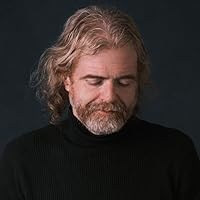
John Brunner was born in Preston Crowmarsh, near Wallingford in Oxfordshire, and went to school at St Andrew's Prep School, Pangbourne, then to Cheltenham College. He wrote his first novel, Galactic Storm, at 17, and published it under the pen-name Gill Hunt, but he did not start writing full-time until 1958. He served as an officer in the Royal Air Force from 1953 to 1955, and married Marjorie Rosamond Sauer on 12 July 1958
At the beginning of his writing career Brunner wrote conventional space opera pulp science fiction. Brunner later began to experiment with the novel form. His 1968 novel "Stand on Zanzibar" exploits the fragmented organizational style John Dos Passos invented for his USA trilogy, but updates it in terms of the theory of media popularised by Marshall McLuhan.
"The Jagged Orbit" (1969) is set in a United States dominated by weapons proliferation and interracial violence, and has 100 numbered chapters varying in length from a single syllable to several pages in length. "The Sheep Look Up" (1972) depicts ecological catastrophe in America. Brunner is credited with coining the term "worm" and predicting the emergence of computer viruses in his 1975 novel "The Shockwave Rider", in which he used the term to describe software which reproduces itself across a computer network. Together with "Stand on Zanzibar", these novels have been called the "Club of Rome Quartet", named after the Club of Rome whose 1972 report The Limits to Growth warned of the dire effects of overpopulation.
Brunner's pen names include K. H. Brunner, Gill Hunt, John Loxmith, Trevor Staines, Ellis Quick, Henry Crosstrees Jr., and Keith Woodcott. In addition to his fiction, Brunner wrote poetry and many unpaid articles in a variety of publications, particularly fanzines, but also 13 letters to the New Scientist and an article about the educational relevance of science fiction in Physics Education. Brunner was an active member of the organisation Campaign for Nuclear Disarmament and wrote the words to "The H-Bomb's Thunder", which was sung on the Aldermaston Marches.
Brunner had an uneasy relationship with British new wave writers, who often considered him too American in his settings and themes. He attempted to shift to a more mainstream readership in the early 1980s, without success. Before his death, most of his books had fallen out of print. Brunner accused publishers of a conspiracy against him, although he was difficult to deal with (his wife had handled his publishing relations before she died).[2]
Brunner's health began to decline in the 1980s and worsened with the death of his wife in 1986. He remarried, to Li Yi Tan, on 27 September 1991. He died of a heart attack in Glasgow on 25 August 1995, while attending the World Science Fiction Convention there
aka K H Brunner, Henry Crosstrees Jr, Gill Hunt (with Dennis Hughes and E C Tubb), John Loxmith, Trevor Staines, Keith Woodcott
Winner of the ESFS Awards in 1980 as "Best Author" and 1n 1984 as "Novelist"..
An elusive novel, The Dramaturges of Yan boasts big ideas, sensitive characterizations, and a vivid locale, but after setting the stage in painstaking fashion races to an overly discursive and disappointing ending. One would have to think a novelist of Brunner's obvious talents could have done more with this material. I'm giving it a generous four stars, though, because I enjoyed it so much up to a point, and the novel is too slender to wear out its welcome.
To some degree, I guess that I just disagree with the choices Brunner made for where this book should go, choices which must count on some level as an author's prerogative, of course. There is no doubt but that this story could have gone in many different directions. But even if one accepts the validity of Brunner's choice of what story he wished to tell, the execution is rushed and makes little use of the interesting cast of characters Brunner assembled.
An intriguing book, though, that brought to mind another I'd read recently, Embassytown by China Miéville. One could measure the changes in the philosophy of mind since Brunner's day by noting the extent to which the role played in Dramaturges of Yan by consciousness and its physiological ground, is played in Miéville's novel by language as constitutive of consciousness and even, in a certain respect, determining biology.
About 320 members of the human species settled on Yan where they live in harmony with the planet's original inhabitants. In fact, there is a big faction of the Yanfolk that celebrate all earthly customs and habits. However, there is only limited direct interaction between the (for them) alien settlers and the peace-loving Yans. Still, some individuals dare to seek sexual and cultural ascension.
The story is told with this delightful ease that characterizes the John Brunner novels I've read so far. In the beginning we learn much about the Yan way of living, which clearly mirrors the 1970s vision of love, peace, and harmony – and just a little bit of drugs to take off the edge. Oh wait, that's not it at all: apparently the Sheyashrim drug turns them into blood-thirsty animals to perform their brutal duties of population control.
At its core, The Dramaturges of Yan is a mystery novel, though it took me a couple of chapters to figure out what it really was all about. Actually, it's dressed up in the arrival of the extremist performance artist who attempts to stage the Yan's epic tales. Naturally, it's a difficult project, not the least because of the obvious difficulties of interspecies translation of verse (a fascinating idea).
It's all very pulpy, but I highly enjoyed how the pompous douche, the schemings, the silly failure of the human superintendent, the silly fellow who arrived to experiment with the local drugs, and especially the big revelation about the alien species and its past and intended future all come together in the multi-threaded plot. You vividly feel the novel's age on every page, not the least because of the perfectly unmemorable non-characters, but it's really much fun to read.
Some reviews on here express disappointment with the ending. To be honest, I don't fully see why. The Yan's collective and archaic consciousness is the big twist in a climax that involves other minor reveals that all contribute to the overall grandeur of the silly. How can you not love the psychedelic finale and its stumbling attempt at mind-bending retrospect?
review of John Brunner's The Dramaturges of Yan by tENTATIVELY, a cONVENIENCE - August 31, 2014
As w/ so many Brunner bks, most of what I potentially have to say about this 1 wd contain too many spoilers so I'll approach it somewhat abstractly instead. I've been on a Brunner review spree ever since my review of The World Swappers of February 18, 2013 ( http://www.goodreads.com/book/show/23... ). This is approximately the 39th bk I've read & reviewed by him so far & I'm still enjoying it so Brunner hasn't disappointed me (cf Keith Laumer whose work I got sick of pretty quickly).
Right off the bat, before we even have a chance to run for home-plate, or even to nibble off of it, there's 'wild vs gene tinkering', a subject of some interest to me since I tend to be an 'endless' object maker (&, hence, material-manipulator) who has deep respect for wildness:
"A few years ago he had decided to tinker with the faulty gene in the original species which sometimes caused it to revert to the wild state, its flowers mere balls of characterless green fluff, and achieved spectacular success" - p 5
Loaded words! "faulty gene"! What makes a gene "faulty" exactly?! In this case, its no doubt healthy reversion to its "wild state" wch, however, humans find aesthetically unappealing b/c its flowers become "characterless green fluff"!!!!! Ah, the endless myopic selfishness of humanity.
But that has nothing to do w/ anything so let's move on.
"He half-turned in his chair, stretching out a hand to prod Pompy, and froze in mid-motion. Over the distant silhouette of the Mutine Mandala the white disc of the moon was rising.
"But there was no moon on Yan, and had not been for nearly ten thousand years." - p 11
Now we've furtively groped our way to home-base & the story's beginning to pant or to be pantless.
"Briefly, he found himself wondering what it would be like to make love again with a girl having breasts and a skin all of one colour, who needed sometimes to break off from a kiss because she had to breathe in through her mouth. But that had nothing to do with his problem. Nothing at all. It was irrelevant." - p 12
Yes, we're at home base - or are we in left field? Regardless, add this one to the list of SF bks that touchdown upon sex between humans & humanoids (or non-humans) from other planets - the yr of publication being 1972: not the earliest such story but still having a place in this history before more recent, & probably more pretentious, contenders. But let's kick off elsewhere now:
"The notion of "carving softness" lacked the paradoxical quality of the original, because carving suggested knives or chisels, hard sharp edges, whereas the root associations of the Yannish words implied that the tool was softer than the material being worked—like water eroding a rock. Yet "eroding" had overtones of long patient geological processes, while the Yannish verse made it clear that what happened took place instantly!" - p 17
Translation thrown a curve ball, the broom of the curling iron, the grid-iron has got me by the short-hairs, a hairy predicament this mixed metaphors translation biz, a real KO. But Brunner's always higher than par for the course (of the River Smor):
"Now, as though a supernal finger had beckoned them equatorwards, the potential gradients of the polar stratosphere stretched into long easy declines down which poured the brilliant discharges of the arctic night. Huge draping curtains of luminosity shook out their folds along the course of the River Smor, bluish and yellowish and occasionally shifting without warning into deep red. Free radical sown from above sparked fresh reactions, so that the curtains seemed to draw apart, looping upwards and becoming vast double inverted rainbows with the colours interchanged. On the airy stage for which the aurora now formed a sort of proscenium arch, magnificent pyrotechnics began. Intangible jewels glittered, fiery wheels resolved, blasts of lightning threaded whiter than the eye could bear down the black-with-silver background of the night." - p 21
Love those fireworks after the game but is it really appropriate for checkers? Maybe it's b/c "They did not educate their children in groups; instead, they transferred them—starting the day after birth—along an incredibly subtle network of relations, which might easily taken them to a dozen cities or villages, to let them gradually absorb the "life-style" of their race." (p 36) One of those relatives being Dr. Lem, whose name is the spitting image of a certain Dr. Stanislav Lem, Polish SF writer extraordinaire. But I'm getting out of the ball-park here. These sportscasters are a pain-in-the-ass while the plaster-casters are something else entirely:
""Oh, it's only a news-machine," he said after a pause. "What's wrong with that?"
""You'll find out," Ducci said grimly. He had his own premonitions of what was going to emerge from all this, and they weren't pretty. "Get over there and inactivate it."
""But that's illegal! They're allowed to go anywhere, if they don't invade privacy," Guiseppe pointed out.
""I don't mean wreck it," his father snapped. "Just delay it for a while." Retrieving the binox, he studied the thing's angular, glinting form, long legs tipped with climbing hooks and suction-pads disposed around the self-powered motor unit and the cluster of extensible sensors. "Luckily it's one of the old marks, an Epsilon, not a recent one like a Kappa or Lambda. It'll take a while to orient itself. Go on—feed it a rumour or something, send it on a false trail. It's important!"" - p 38
That's right, it's "illegal"! Three strikes & you're out! But it's not really foul play. But I'm giving you a bad tip on the horses, the cock fights, the fowl play.
""Alchemy," Chart said, "Are you familiar with the magical and alchemical manuals they wrote on Earth some fifteen hundred years ago?"
[..]
""They were composed in a sort of association-code, using agreed conventional images—dragons, astrological figures, various oblique references of that kind. Provided one had been trained in the jargon, one could read them with relative ease. Outsiders, however, found only obscure and baffling nonsense.["]" - p 84
Like Crowley's "drinking the elixir from the curcubite", eh? Witness "The Postman Always Rings the Homunculous of Woody Allen & Hollis Frampton Twice" here: https://www.youtube.com/watch?v=ovbUq... . "["]Is there a human culture in the galaxy? If there is, then I built it."" (p 90) Home run!!
Until a somewhat rushed and annoying ending, I had planned to give it 4 stars. The basic concept, of man encountering intelligent aliens who were at one time more advanced than mankind, but now apparently are not, has been done many times. The reason for their stagnation, as it finally developed, was fascinating. The interaction with "art at all costs" entertainer was a clever plot twist, at least at first, as it echoed the circumstances which had supposedly brought the folks of Yan to a halt, 10,000 years in the past. Ten millenia in the past, the folks of Yan had an amazingly advanced technology. Then something or someone destroyed their planet's moon, turning it into a close-in ring which still drops small bits of rock, an ongoing meteor storm that divides the planet into two safe zones. A small human enclave has colonized the world, and views the natives as being backwards and primitive, but in possession of odd artifacts and an eleven-volume poem from the old culture. The folks of Yan are so humanoid that the Yan folks view humans as something worth imitating, and yet... I think that Brunner wrote this book as a "time out" from his longer works done around the same time.
This is almost the opposite of space opera, yet this compact novel is filled with original ideas. What if an alien species behaved in ways baffling to humans? What does it mean to perform on a planetary scale? Can ancient wonders be resurrected? Can humans coexist with an alien species?
The back cover description is rather strangely constrained on my copy: It talks about a far flung galactic civilisation but it does not really mention any of the interesting features of said galaxy. In this future, space travel in actual 'star ships' has become rare. Instead, on settled planets - of which there are around a hundred - Earthmen use a 'go-board' thingie to travel from location to location. Brunner postulates that you pay to have a location memorised under hypnosis, you then punch the coordinates into the go board and emerge at your destination. We learn this through a character called Erik who is a freelance drug experimenter who has come to Yan.
The world of Yan, which is where the story is set, is quite fascinating. Brunner describes a world with aliens who are biologically very different from humans but physically resemble them in many ways of bilateral symmetry and he discusses the fact that while bilateral symmetry seems to be a bit of a rule in the known galaxy, finding a race as physically compatible with humans is uncommon. Psychologically, however, much less compatible. The Yan are believed to have had a larger, much more advanced, technological civilization at one time, as there are monuments scattered around the world, but by the time Earthmen arrived they had a smaller, incredibly socially stable and remarkably content society.
The Yan, for the most part are polite, hospitable and uninterested in human technology except for a small number of younger Yan who are fascinated by humans, mimic many elements of their culture and a couple have even entered into relationships with humans. Yes, there is sex with aliens, though it is not especially graphic.
The world is fascinating; some time in the past an exploding moon created a spectacular and unique ring in the sky, but for he planet it was a bot of a disaster and probably the end of the high civilization of the Yan. There is a very narrow band of liveable area on the planet with the equator and other regions being subject to huge numbers of meteorites and catastrophic disturbances. And everything is beautifully, lyrically decried in an intensely visual way that takes time to absorb and is delightful to read (if you are in the mood for this kind of book).
There is a significant, SIGNIFICANT quirk to the writing. There are many characters and points of view and the author skips from one to the other without even a paragraph break, no warning at all. He uses this technique to create a very rounded view of any scene and while I don't quite see how he does it, this tactic did not bother me at all. Normally I would not be crazy about this, but here I never really had any doubt as to which perspective I was seeing things from. It is really weird though. This is a really unusual reading experience in that sense.
Having set us up with the world and it's Earthmen inhabitants, we get a night when a huge moon rises in a sky that has not had a moon for decades. This moon is eventually revealed as the star-ship of Gregory Chant an interstellar 'artist' who creates world altering spectacles which include dramatizations of illusion in which the audience are actually participatory. He has been known as the most amazing artist ever, but also as someone who has shattered worlds and societies. So it is not with unbridled enthusiasm that everyone sees this 'the greatest artist of all time' arrive on the quite Yan. One of our protagonists is a poet, Marc Simon, who has gone native, lives with a Yan woman and specialises in translating Yan mythology and epic poetry. He is disturbed by Chant's arrival, but as an artist himself, gives him credit for inventing a whole new medium in which he is the unchallenged leader.
So from here on we have a pretty interesting story, with lots of different stakes, parts, intersecting plots and characters. I don't want to say too much about it, because this is totally a book that needs reading without too much bias.
However, after a while the different factions of human for or against a performance find they have no actual influence, when the YAN themselves ask Chant to perform. We eventually find that the real story Brunner is telling is about life, what an alien civilisation or consciousness could look like and it unfolds beautifully and unexpectedly and very believably.
Toward the end the Psychologist Dr Lem and the poet Marc, are in an observation dome together waiting for the performance to begin which may unleash/reprogram/heal the Yan into becoming all they can be and what they once were. That is what they talk about; civilisation and consciousness.
The ending is rather explosive,
This is a book one would have to be in a significantly specific mood to appreciate. It is not a fast read, because you have to be in a mood to immerse yourself in the descriptions. Without them, there is no level this book would work on that I can see because Brunner does an amazing job of unfolding the whole novel through dialogue, events and descriptions. It is a completely "show not tell" reading experience and I was really impressed and thoroughly enjoyed it.
Big ideas, interesting ideas, but fairly muddled, and with characters that are just sketches. I don't want to get into spoilers, odd/interesting aliens and sex with aliens: that's mostly a waste of time. But one dead horse to flog is this. To reiterate from the perspective of a biology professor who is understands evolution fairly well: no, sex with alien species is not happening. Just cross that out of any book you pick up. You'd think common sense would get people there.
Ducks of different species that appear and act nearly identical will not mate with each other because those cues are VERY deep-seated and essential for a successful species. To put it further into perspective, bestiality with a mammal on earth is MUCH more likely than sex with an alien species, and the overwhelming majority of individuals find inter-species sex with other mammals repelling. OK, convergent evolution might make some species more "palatable" than others, but it's really a preposterous notion. I cannot jump in the WAYBAC machine and imagine what writers were thinking in 1972, except something along the lines of "Sex is edgy, let's write about that!" Some did this with a modicum of taste, but nearly always you have ab exceedingly male view, and virtually none of it aged well if it is cast outside of romance that is reasonable within the plot, or even plot driving. Oh, and intra-specific.
But if I had such a WABAC machine, my goal would be to crash a late 60s Sci Fi convention and say, "Stop it. Cut it out. Just, no." If people pride themselves on inventing a "what if?" and then spinning out the consequences, then please think through the consequences of this. It is ludicrous, almost as bad as saying "what if there were no gravity?!?!" Suspending disbelief is fine, but does not dispel all reason.
The rest is moderately entertaining for the ideas. That notion describes a lot of basic science fiction from strong writers. And Brunner can hold his own enough to churn out a mildly entertaining and fairly brief novel.
Brunner has written some excellent science fiction, but this book is not one of them. A small enclave of humans live on another planet that is the home of an enigmatic alien species called the Yan. The Yan are very similar to humans and are sexually (but not reproductively) compatible with humans. The Yan seemed to have had a remarkable civilization because their planet is littered with impressive artifacts of forgotten function. The Yan seem to be content to merely exist. A famous human artist comes to the planet to stage a multimedia performance for the Yan with the topic being their own history. This triggers a series of events that causes a conflict between Yan and humans. This story had potential, but it is underdeveloped. This seems to be a potboiler for Brunner and not one of his serious books like Stand on Zanzibar or The Jagged Orbit. For hardcore Brunner fans only.
Imagine a universe where art has evolved to the point where a single man can utilize images, computers, mythology, drugs, history etc to single handily bring about a monumental shift in a culture’s society––even bringing about a past “culture/realization of past” that had long since dissipated on a planet. All this, as one might imagine, for a gigantic price.
So far so good!
But:
John Brunner (of Stand on Zanzibar, The Sheep Look Up, The Shockwave Rider, and The Jagged Orbit fame) weaves (or rather lumps together) a narrative" [...]
I loved the premise and buildup of the story, and the ideas it works with are unique and powerful, but it really falls flat on the execution. It feels like the author gave up on trying to find interesting ways to reveal information, and just started exposition-dumping in the last third. Arguably, this might be somewhat in the book's favour, as it allows it to cover a lot of ground in relatively little text, where otherwise the author may have lacked the skill to reveal information in a way that didn't become tedious. Either way, it comes across as quite clumsy. That being said, I still loved this book and would happily recommend it for the ideas alone.
This is a hard book to review as there is very little to compare it to. The best word I can probably use to summarize it is 'different' which is no small accolade in the world of science fiction. The aliens are far from the best I have come across but have their own motivations. The universe has hints of the darkness which sometimes infuses Brunner novels but isn't explored very well. The main sequence of the story is different to anything else I have come across but seems to lack depth somehow. Entertaining enough but lacks the spark which normally sears Brunner's work across your mind.
Some strong strengths and weak weaknesses. Cool idea, and once it pulls together it is strong, but a very slow start, poor scene breaks, and a constant insistence on "Oh, what was that word they used to have... *insert common word, to show it's the FUTURE*"
I really wanted to give this 4 stars. I really did. Based on the second half of the book it could have extended to five but the first half spoiled the experience. It was a bit dense with viewpoint characters changing without line breaks. It all calmed down in the end and became less confusing.
Yan was the home of an old culture, where the humanoid ntives walked in the shadows of immense artifacts, the dramatic legacy of history long forgotten. Only myths remained to tell of the dramaturges, the great heroes of ancient yan
Η πρώτη μου γνωριμία με αυτόν κλασικό Βρετανό συγγραφέα επιστημονικής φαντασίας και με άφησε σχεδόν απόλυτα ευχαριστημένο, και ας είναι αυτό το βιβλίο από τα λιγότερο γνωστά και καλά που έχει γράψει.
Σαν σκηνικό έχουμε τον πλανήτη Γιαν πάνω στον οποίο ζουν Γήινοι και Γιανιανοί (ιθαγενείς κάτοικοι του πλανήτη). Οι άνθρωποι δεν είναι πολλοί, μόνο τριακόσιοι και κάτι που ζουν σε μια μικρή παροικία, δίπλα στην πόλη Πρελ των Γιανιανών. Οι Γιανιανοί είναι ένας ήσυχος, μειλίχιος και περίεργος λαός, με μια πολύ μυστηριώδη και περίεργη προϊστορία που είναι χαμένη στη λήθη (μπορεί και όχι). Η συνύπαρξη Γήινων και Γιανιανών καλή, με τους Γιανιανούς να είναι οι μοναδικοί εξωγήινοι που έχουν μια κάποια ομοιότητα με τους ανθρώπους (οι διαφορές στις λειτουργίες του σώματος πολλές, αλλά και πάλι έχουν ομοιότητες) και που μπορούν να έρθουν σε σεξουαλική επαφή με τους ανθρώπους. Ξαφνικά στον πλανήτη Γιαν καταφθάνει ο μέγας Δραματουργός Γκρέγκορι Τσαρτ που έκανε παραστάσεις σε πολλούς πλανήτες και μόνο για ανθρώπους, αλλά τώρα, για πρώτη φορά, θα έκανε παράσταση μόνο για εξωγήινο λαό, με απρόβλεπτες και επικίνδυνες καταστάσεις. Σκηνή των παραστάσεων του Τσαρτ ήταν ολόκληρος ο ουρανός και ο πλανήτης και ηθοποιοί το ίδιο του το κοινό.
Δεν πρέπει όμως να πω περισσότερα γιατί πραγματικά εκεί έγκειται το όλο μυστήριο της ιστορίας και που θα καταλήξει αυτή η παράσταση του Τσαρτ (πάντως αφορά πολύ το μυστηριώδες αρχαίο πολιτισμό του πλανήτη...).
Στα τεχνικά ζητήματα, η γραφή πάρα μα πάρα πολύ καλή κατά τη γνώμη μου, όχι άριστη όμως, οι χαρακτήρες πολλοί και χωρίς ιδιαίτερη εκβάθυνση, αλλά δεν με απασχόλησε και τόσο πολύ αυτό, η όλη γενική ατμόσφαιρα πολύ ωραία και με έκανε να ξεχαστώ από την καθημερινότητα, οι περιγραφές της ζωής στον πλανήτη Γιαν αλλά και του ίδιου του πλανήτη πολύ ωραίες και παραστατικές, και οι περιγραφές των σχέσεων που είχαν οι άνθρωποι μεταξύ τους αλλά και με τους Γιανιανούς πολύ ενδιαφέρουσες, αν και χωρίς πολύ βάθος.
Από τα διάφορα σχόλια από δω και από κει που βλέπω για το βιβλίο αυτό, καταλαβαίνω ότι πολλοί είναι λίγο απογοητευμένοι επειδή το όλο κόνσεπτ του βιβλίου είναι τόσο μεγάλο που θα μπορούσε να έχει θεαματικά αποτελέσματα, αλλά δεν είχε και τόσα πολλά. Εμένα πάλι μου άρεσε η ιστορία και με τα αποτελέσματα που είχε, σίγουρα δεν είναι αριστουργηματικό ή εξαιρετικό βιβλίο, αλλά σίγουρα είναι πολύ ενδιαφέρον.
É Brunner, mas ainda não o escritor experimentalista que corre riscos de Stand on Zanzibar. Neste livro segue uma estrutura mais clássica de ficção científica, focado numa história de contacto entre a humanidade e uma inteligência alienígena.
A pequena colónia humana do planeta Yan convive amigavelmente com os curiosos costumes dos nativos do planeta, herdeiros estagnados de uma civilização avançada que legou misteriosas estruturas. Há um erro de identificação na natureza da civilização alienígena. O que parecem ser indivíduos são células de uma consciência planetária dormente, que desperta com o contacto com a humanidade. Ao despertar, prossegue com o plano de viajar pelo espaço da única forma que concebe, usando o planeta como veículo. Esta impossibilidade física aniquilará o planeta e exterminará a inteligência colectiva conhecida como Dramaturga de Yan.
Apesar de assente num intrigante e convincente mundo ficcional, e numa narrativa bem estruturada que revela os mistérios ao ritmo certo, é um livro demasiado normal, dentro dos parâmetros da FC.
The end is weirdly prescient of one of the concepts in Cameron's Avatar--that of a world-sized collective entity composed of discrete smaller organisms. Proof that this is not exactly a new concept. Brunner, of course, does it better and without any of the violence.
The other interesting thing is that one of the main characters is a (sympathetically portrayed) poet, and said world-consciousness winds up being an artist, albeit an insane one. Brunner doesn't try his hand at any actual poetry, though, which is a shame.
Απίστευτες ιδέες και εξαιρετικοί χαρακτήρες συνοδεύουν μια ήπια, στα όρια του πράου προσέγγιση του τι θα πει εξέλιξη και τι θα πει τέχνη. Ένα από τα κείμενα εφ που δεν προδίδουν την ηλικία τους παρά μόνο από μικρολεπτομέρειες, συμπύκνωσε σε ελάχιστες σελίδες, μικρότητες, πάθη, κολλήματα και λανθασμένες αντιλήψεις ενός ολόκληρου είδους και τα έθεσε σε αντιπαράθεση με τα αντίστοιχα ενός άλλου είδους, ένα είδος που θεωρεί τον εαυτό του πιο εξελιγμένο.
Η κλίμακα μεγέθους των γεγονότων είναι κυριολεκτικά πλανητική. Όπως και η αναγνωστική ευχαρίστηση.