'But I, while vineyards ring with the cicadas' scream, Retrace your steps, alone, beneath the burning sun.'
Virgil's lyrical, wistful and often witty pastoral poems.
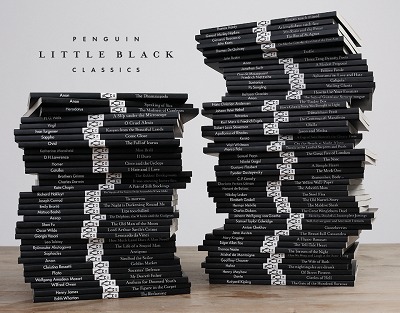
Introducing Little Black Classics: 80 books for Penguin's 80th birthday. Little Black Classics celebrate the huge range and diversity of Penguin Classics, with books from around the world and across many centuries. They take us from a balloon ride over Victorian London to a garden of blossom in Japan, from Tierra del Fuego to 16th-century California and the Russian steppe. Here are stories lyrical and savage; poems epic and intimate; essays satirical and inspirational; and ideas that have shaped the lives of millions.
Publius Vergilius Maro (70-19 BCE).
Virgil's other works available in Penguin Classics are The Aeneid, The Eclogues and The Georgics.
Roman poet Virgil, also Vergil, originally Publius Vergilius Maro, composed the Aeneid, an epic telling after the sack of Troy of the wanderings of Aeneas.
Yes, I am still going- just barely though. I have nine left after this one. It’s been over two years. I will have a party when I finally finish, a bookish party involving me and a few books that don’t bore me.
So here I am about to complain about another edition. The point of this collection is to try and tease the reader, to give him/her a taster of a work before trying the whole piece. It may come in the form of a few poems or short story or novella. In truth, there’s not much material in them, but enough for a reader to decide whether they want to read more of this writer or not. I bought this collection to increase my literary knowledge, to get a feel for different genres and literary eras and perhaps find some great texts.
I have found a few, but not many. As time has gone on my enthusiasm for reading this collection has waned, mainly because I mistakenly cherry picked the ones I knew I would like first. What are left are the dull ones I simply don’t want to read. This is one is no exception. The poetry is fairly pleasant to read, but there is absolutely no context. Without any form of introduction, even a paragraph or two would suffice, I have no idea where this sits in relation to the rest of the work. It's like opening a five hundred page book on random page (let’s say 234) and expecting to understand what’s happening. It doesn’t work. This edition doesn’t work, yet another bad egg in the collection.
Penguin Little Black Classic- 76
The Little Black Classic Collection by penguin looks like it contains lots of hidden gems. I couldn’t help it; they looked so good that I went and bought them all. I shall post a short review after reading each one. No doubt it will take me several months to get through all of them! Hopefully I will find some classic authors, from across the ages, that I may not have come across had I not bought this collection.
Virgil was a master of evocative pastoral verse, nature is well defined and he adores it completely. His Georgics, most delightful, speaking of bees in the same vain as Charles Darwin did in On The Origin of the Species, granting us knowledge that bees are the most important thing in nature. The Eclogues were much harder to get through and often felt pointless, but on occasion there was the masterful description of nature that he is so wonderful at.
Waaaay back in the mists of time, in forgotten corners of my mind a vague event lurched forward... I remember now when at the ripe olde age of twelve I read some Virgil and enjoyed it so much I learned a little of the native writings to get by.
This is not Virgil! While the Eclogues are passable, the translations of the Georgics by Kimberely Johnson are terrible. The poetic flow disappears frequently to points of unreadability. Dragging through this I screamed at her lack of skill in translating this beautiful work, modern wording that does not work and jarring to the senses.
A sad an sorry mess that spoils the Eclogues by Guy Lee.
There are far better and older translations by more skillful people.
One thing I have learned from the Little Black Classics - Pastoral is not my thing. I can't stand the naivety and more. This collection of Pastoral poems from Virgil was up against some very bad odds for me to like it. The fragments included were rather random and the poetry didn't seem that inspired. I am sure they could have found better pieces to introduce readers to Virgil.
Virgil is highly evocative but I had the same problem I had with Herodotus' The Madness of Cambyses: disconnection.
I do think the little black classics are great when dealing with short stories but not so great when including only excerpts of bigger works. Or at least, they don't work for me.
Don’t judge this book based on interest or difficulty. It’ll be hard to do but …. This is ancient writing. A different world almost. This poetry is not for the faint of heart. Also - very pastorale themed which I didn’t not know so I actually learned a lot. It just, wasn’t for me in the end but I do recommend trying. More so at least for the last part.
Difficult to read is putting it mildly. Not because it’s boring or dull but rather the content and the diction. Virgil is ancient poetry and thus, a lot of the metaphors are lost if you don’t know ancient mythological lore.
For the Ecologies, keep your phone handy to reference/look up names. You will find it gets tedious. So maybe you don’t. These took me forever to get through. Thus, My second recommendation, read these like your reading them out loud at a poetry slam session. It helped with pacing, inflection and understanding. Be slow. Take time.
The only reason this got a 2 was because of The Georgics book 4 (which I would give a 3). It is all about bees and orpheus. Quite cute! Spoiler here: Virgil talks about king bees and patriarch societies. We are all enlightened here and know queen bees rule the colonies. So don’t get to angry here, breathe and realize that it was a different time. If you want, substitute the word king for queen and it’s quite good.
I wanted so much to love this book on principle, but it was mediocre at best. I liked the idea of this book so much, but not the execution of it. I don't know if it's down to a lackluster or below par translation taking away from the original, or if the originals simply lacked the quality that their concepts deserved, or if it was a poor selection of works that were chosen...
No matter which way you look at it, this collection only just scraped together enough intrigue, and peak enough of my curiosity, to earn it a 3rd star. It's not a book I can imagine I would ever recomend.
Penguin put out this little book to give a small taste of Virgil’s writing. However, with no accompanying context, most of it was not accessible to me and, I imagine, to most people. I’m not a big poetry fan to begin with, and this did not make me want to delve further into Virgil’s work. 2 stars because there was some beautiful imagery, even if I wasn’t always able to connect with it.
Enjoyed this very much - wanted a little read which didn't feel overwhelming, both in terms of length and themes, and this really delivered on both counts. It was nice to lose myself in this poetry, particularly the descriptions of nature that felt very transporting. I'd recommend this to anyone who needs a little something to unwind with, or to break up bigger reads with!
'The pastoral verse steeped in wit and nostalgia, from one of ancient Rome's greatest poets.'
Publius Virgilius Maro (70-19 BC) was a Roman poet who is known to have influenced and inspired works of Western literature. One must read Aeneid, considered the national epic of Rome, which is modeled after Illiad and the Odyssey, to understand this book in all its plenitude.
'This I sang, about the care of fields and flocks and about trees, while Caesar the great thundered in war beside the deep Euphrates, and conqueror dealt out laws to ready nations and pursued his course to heaven. I,Virgil, at that time by sweet Parthenope nurtured, flourishing in the study of inglorious leisure, I who toyed with shepherd songs, and bold with youth, sang you, Tityrus, beneath a vault of spreading beech.'
This book is such a breath of fresh air. It comprises of beautiful verses on herding, natural landscapes, and life of bees. The book started with Eclogues, which felt disconnected from one another although it has recurring themes and characters. I failed to understand most of it due to the characters from Aeneid, which I haven't read.
'The wondrous spectacle of a tiny world - bold hearted princes, a whole nation's customs and passions and citizens and wars I will describe for you. In miniature my labour, but no miniature glory, if adverse divinities allow it, if Apollo hears my prayer.'
The second part of the book, The Georgics: Book Four, thoroughly captured my heart with its elaborate poetry on the work and lifestyle of bees. This part too had some character references that went beyond me, but I was able to enjoy most of the natural references. It was Wordsworth in Latin.
A lovely intro to Virgil's pastoral poems. Virgil does write beautifully about nature- I loved The Georgics IV- his description of bees is just outstanding. The earlier sections of the collection were a little flat for me, but perhaps need to be read in their original context to be best appreciated. Not quite the epic of the Aeneid- but beautifully written nonetheless.
Nahhh DNF😭✋🏻 the first two Eclogue had my brain fried. Pastoral poems aint my thing ig. Plus there’s zero context on what they’re yapping about. Maybe penguin publications could’ve given a small introduction or something so it would be easier to understand. Never thought my first dnf of 2025 would be a classic😭
I can appreciate Virgil’s work for what it is, but that doesn’t mean that I found it particularly interesting. It could also have done with an introduction or some further context. I’ll read more one day.
no sé realmente porque esperaba algo distinto, pero la lectura de Virgilio no era para nada lo que imaginaba. No es malo, pero está muy lejos de lo que otros escritores Italianos han hecho para trascender en el tiempo.
I was around halfway through my struggle with Virgil’s pastoral poetry when a brand new idea occurred to me. Perhaps my recent lack of enjoyment with the Little Black Classics range isn’t my own fault. Could, perhaps, this be the fault of Penguin?! The more I considered this, the more I realised it was most likely a joint fault, however, I would like to discuss Penguin’s shortfalls and lack of foresight with this range. Sorry, Virgil.
Firstly, my main motivator in purchasing these tiny vignettes of hell, was to learn more about different genres, authors, countries, and people. I wanted to broaden my literary experience, and potentially find new loves. Penguin has prohibited me in doing so by making these so utterly horrible to read.
Take Virgil here; the poetry flows beautifully, his words are lyrical, and the scene setting glorious. Did I enjoy the poems? Did I hell. In many of these instalments, Penguin seem to have just randomly selected a chunk of text from a larger work, and deposited it within their eye-catching black covers. No context is provided, no explanation, nothing that will help the reader absorb and learn. That’s all, folks.
Secondly, translation. I’m no expert on this, but for many of the instalments I’ve absolutely despised, other reviewers are slating translation. Why would Penguin allow poorly translated works to be included in, what is effectively, a collection of the greats? Why sully their name, and make fools like me believe their work to be disengaging?
So – not my fault. Or partly not my fault. I’m sick of journeying through this bloody collection believing myself to be thick as mince, when in actual fact I am not entirely to blame.
Though worthy of much praise due to Virgil's inspired verse, sadly, this book wasn't for me. I don't know if it was the overly bucolic tone, but the book seemed mostly uninteresting to me, which is a shame. In the first part, you will find a lot of rural imagery and poetry competitions among sheperds and not much else happening. The second part of the book was basically about ancient beekeeping and a myth on top. I think I'll have to read more of Virgil's work to reach a final verdict on whether I like the themes he explores. Hopefully, I'll have a better experience next time.
Aku semalam random banget nonton youtube “Living Alone Girl” dan ternyata aku menikmatinya. Ide meromantisasi kehidupan menurutku ide yang paling masuk akal hari ini untuk bertahan waras. Soalnya makin hari hidup semakin tidak mudah (read: climate crisis) dalam gempuran ekonomi yang nggak murah juga, jadi meromantisir apa yang kita punya untuk menikmati hidup adalah solusi paling mudah. Lalu aku kepikiran pastoral poem yang mengawali semua ide meromantisir hidup ini. Waktu aku cek rak buku ternyata aku punya bukunya Virgil ini.
Virgil nulis karya ini mungkin masih di fase sebelum masehi yang mana Kutai Kartanegara aja baru muncul 5Masehi. Fase itu Virgil menulis puisinya untuk meromantisir kehidupan di desa: percakapan soal kenapa kok kamu nggak pindah ke Roma aja biar lebih bebas atau jualan budak aja di Afrika ya sama kayak pertanyaan hari ini di desaku kenapa kok kamu bertahan di desa jadi buruh; dan atau ungkapan soal kehidupan domestik perempuan tuh yang layak ditiduri yang bisa masak yang masih ada sampai sekarang. Modernisasi tidak merubah apapun sepertinya waktu baca Virgil, bahasa aja yang beda tapi isinya masih kurang lebih sama.
Paling yang beda adalah kemampuanku membaca Virgil karena dulu zama pertama kali kenalan aku tuh terkagum-kagum tapi sekarang aku merasa Virgil ya sama seperti penulis geguritan gagrak lawas yang masih memakai fenomena alam dan kebijaksanaan spiritual untuk meromantisir keadaan. Berikutnya sekarang aku punya waktu baca bukunya lebih santai jadi agak kontemplatif.
Eight tenths of the The Eclogues and a quarter of The Georgics: A Poem of the Land, this Penguin Mini works well as a sample of two thirds of Virgil's works. I found the Eclogues to be mostly meaningless as I was overwhelmed with names that meant nothing to me which obscured what was being discussed. Book IV of the Georgics was more enjoyable, with a prolonged metaphor of a bee hive, complete with king and not queen, as the ideal society and a retelling of Orpheus and Eurydice. I'll likely read the rest of The Georigcs at sometime, but not The Eclogues - a useful sample indeed.
with the Eclogues and the Georgics, Virgil has proven how the cottage core aesthetic always has been a queer dream! this little hut in the woods, the animals, the flowers, the quiet fields – it's where love can exist freely, away from the world's rules. reading about Corydon carving his impossible love for Alexis into tree bark, it hit me: queer longing has always belonged in the pastoral. this is more than aesthetic – it's history, poetry, and desire all wrapped into one. cottage core isn't new; it's the homoerotic pastoral tradition in its final form and we can thank virgil for that
The writing was beautifully lyrical and it flowed pretty well (especially the eclogues) but tbf its old writing a lot of based on old myths and tellings with a very outdated view on the world (The Bees). I enjoyed it they def have a beautiful way with words especially when he describes nature but tbh i just wasnt interested in it maybe it was the choice of collection they chose to introduce Virgil but it felt more Random and too out of context.
This entire review has been hidden because of spoilers.
“For God moves through all things - Lands and the sea’s expanse and deepest heaven. Flocks, herds, men, all breeds of beasts ... From Him each at birth draws it’s fine-spun life, It seems, and to Him all return at last: all things undone restored, no place for death, but alive they fly into the station of a star and mount to heaven’s zenith.”
2.5 really. Couldn't put my finger on why but after reading some reviews I get it. The Eclogue's are good and work well, the translation seems to translate well, but the Georgics part confused me and didn't seem to flow quite as much. Makes sense now that I know two different people translated the parts. Would recommend the first but not the latter really






![Profile Image for [ J o ].](/_next/image?url=https%3A%2F%2Fi.gr-assets.com%2Fimages%2FS%2Fcompressed.photo.goodreads.com%2Fusers%2F1673171874i%2F4639825._UY200_CR4%2C0%2C200%2C200_.jpg&w=128&q=75)


