Jump to ratings and reviews
Rate this book

Very Short Introductions #125

يورجن هابرماس: مقدمة قصيرة جداً

Rate this book
ورجن هابرماس واحدٌ من أكثر الفلاسفة تأثيرًا في عالمنا المعاصر. تمزج كتاباته بين النظرية الاجتماعية والأخلاقية والسياسية والقانونية، وفيها يبحث في موضوعات شتى تبدأ من الماركسية وصولًا إلى الاتحاد الأوروبي، والدور الذي يلعبه التواصل والخطاب في العالم الحديث. وفي هذا الكتاب يوضح المؤلف بلغة واضحة سلسة، كيف أن نظرية هابرماس تجيب على أسئلة مهمة حول طبيعة المجتمع الحديث وكيف يمكن أن تشكل رؤانا عن القضايا والأحداث المعاصرة.

160 pages, ebook

First published May 26, 2005

107 people are currently reading
983 people want to read

About the author

James Gordon Finlayson

9 books4 followers

Ratings & Reviews

What do you think?
Rate this book

Friends & Following

Create a free account to discover what your friends think of this book!

Community Reviews

5 stars
86 (17%)
4 stars
205 (41%)
3 stars
174 (35%)
2 stars
25 (5%)
1 star
7 (1%)
Displaying 1 - 30 of 55 reviews
Profile Image for Turbulent_Architect.
146 reviews54 followers
October 25, 2024
A pretty decent introduction to one of the most prominent philosophers of the last fifty years or so. I don't have a very high opinion of Finlayson's scholarship and I think a couple of pretty egregious errors do make their way into this volume. That said, Finlayson manages to do justice to the relationships between the different aspects of Habermas' thought. He also does a really good job of situating Habermas' work in the broader context of Frankfurt School critical theory. Probably a good place to start if you're interested in Habermas.
Profile Image for Jonfaith.
2,150 reviews1,748 followers
January 20, 2023
I didn't care for this book, which may be a judgement towards either the author or Habermas. It was enervating wading through the analysis to see how the philosopher's linguistic theory, ethics, morality, political theory, legal theory, and treatment of religion coalesce. Like other Frankfurt School hijinks I remain suspect about the alleged finesse necessary to critique from outside the System. Without having much of a grasp of Habermas it remains difficult to assess this book as a primer or introduction.
Profile Image for robin friedman.
1,949 reviews417 followers
May 22, 2025
Habermas In The Very Short Introduction Series

Jurgen Habermas (b. 1929) is a German philosopher and sociologist whose thought receives a great deal of attention. In his book, "Habermas" (2005) for the Very Short Introduction Series, James Gordon Finlayson successfully undertakes the challenging task of writing succinctly about the large body of Habermas' work in a way understandable to new readers. Finlayson, Lecturer in Philosophy at the University of Sussex, has written extensively on Habermas. He has recently written a study of the philosophical debate between Habermas and the American political philosopher, John Rawls, "The Habermas-Rawls Debate" (2019). Another recent scholarly book by Marcin Kilanowski, Professor of Law at Nicholas Copernicus University in Poland, explores the debate between Harbermas and the American neo-pragmatic philosopher, Richard Rorty, "The Rorty-Habermas Debate: Toward Freedom as Responsibility" (2021). I have read a small amount of Habermas, and my interest in this "Very Short Introduction" to his work stemmed from my interest in his interaction with American philosophers, including Rawls and Rorty.

Habermas' thought is dauntingly complex in its length, erudtion, and breadth. He draws heavily on the German Kantian tradition, on the works of sociologists including Marx, Weber, and Durkheim, and on the pragmatism of American philosophy, among much else. An introduction to Habermas may be short, but it cannot be simple. Habermas is a broad, systematic philosophical thinker of a scope that is uncomfortable to the more analytically-oriented approach of most American and British philosophy of Habermas' time. Still, Habermas draws effectively on analytical philosophy, including the work of J.L. Austin and the philosophy of language.

Finlayson places Habermas within the Frankfurt School of German philosophy and sees Habermas as taking a more hopeful view of the possible success of democracy than his predecessors. Most of his book is devoted to Habermas' mature work, dating from about 1980 in developing its themes and their interrelationships. The book develops in its central chapters what Finlayson describes as Habermas' "Five Major Research Programmes". Finlayson also offers a summary of each programme in an Appendix, which might serve as a good place to start following the two opening chapters.

The first two programmes "the pragmatic meaning programme" and "the theory of communicative rationality" are the most difficult and broadest. They involve traditional metaphysical issues of the nature of consciousness and of understanding reality and Habermas' approach to and rejection of traditional philosophical answers. He develops a theory of meaning based upon his reading of the American pragmatists, including John Dewey and George Mead. The third programme, devoted to social theory combines philosophy, influenced by Edmund Husserl's concept of the life world, wirh social theory as Habermas works to explain the possibility of social order in a modern, diverse, complex world. The fourth programme deals with what Habermas terms "discourse ethics" and deals with philosophical questions of the nature of right and wrong, from a perspective heavily influenced by Kant. The fifth programe of "political theory" discusses the prerequisites of a well-ordered, functioning political system and of the rule of law.

With respect to each programme, Finlayson endeavors to explain Habermas' thought, its influences, and its goal in clear language with useful examples. He also discusses the many criticisms that other philosophers and social theorists have made of Habermas' efforts. As the book proceeds, Finlayson works to integrate Habermas' later programmes with what his preceeded them, which is far from an easy or clear task. In his final chapter, Finlayson explores some of Habermas' views on key political issues of his time, including German reunification and the integration of Europe. Habermas is a critic of nationalism and he develops an intriguing concept of "Constitutional patriotism" in its stead.

Finlayson's short introduction is difficult in its own right, but it helped me and I think will help other seriously interested readers approach Habermas. The book will be best suited for readers with a strong background in philosophy and social theory. The book will help me understand the relationship of Habermas' thought to that of Rorty and Rawls.

Robin Friedman
Profile Image for Omar Kassem.
614 reviews195 followers
September 26, 2023
مقدمة قصيرة عن يوهان هابرماس ، الفيلسوف وعالم الاجتماع الألماني المعاصر ، وواحد من اهم الباحثين في المجالين الاجتماعي والسياسي ، وصاحب نظرية الفعل التواصلي..

يمكن النظر إلى هذا العالم عبر منظارين:
أولا : باعتباره متماسكا بتصور يزاوج بين البنية والفعل في نظرية كلية واحدة..
وثانيا :بوصفه مدافعاً عن مشروع الحداثة، بالأخص عن فكرتي العقل والاخلاق الكليين..
أما حجته في ذلك فهي أن مشروع الحداثة لم يفشل بل بالأحرى لم يتجسد ابداً، ولذا، فالحداثة لم تنته بعد. ويظهر أن هذا الموقف يضعه في اتجاه معارض تماماً مع أسلافه بالنظر إلى موقفهم من نقد عقل التنوير، إلا أن موقفه يتضمن الإصرار على جدل التنوير، أي أن عملية التنوير لها جانبان: يتضمن أحدهما فكر البناء الهرمي والاستبعاد، في حين يحمل الجانب الآخر إمكانية إقامة مجتمع حر يسعد به الجميع على الأقل.إن نظرية ما بعد الحداثة تفتقد حسب هابرماس إلى هذا العنصر الأخير

اهم الانتقادات التي وجهت له :
1- لم يثبت ولا يستطيع أن يثبت أولوية فعل التواصل على الفعل الاستراتيجي.
2 – مرتبط بالنقد الأول، أن أطروحته حول الانعتاق والتحرر لم تثبت، ليس هذا فقط، بل إن محاولة إقامة النقد على التفرقة بين النقد والحياة اليومية تقوض وضع التحرر الذي يزعمه والمشكوك فيه أصلاً..

تتلمذ على يديه العديد من الأساتذة المعروفين من أبرزهم:
عالم الاجتماع السياسي كلوس أوفّ ، الفيلسوف الاجتماعي يوهان أرناسون ، المنظّر الاجتماعي هانز جوس.
Profile Image for vanessa.
54 reviews18 followers
February 4, 2021
The author obviously likes Habermas. That would not be an issue in itself, but the lack of critical engagement with some of Habermas’s problematic and frankly unsustained assumptions (eg. 1) the acceptance of instrumental rationality and the inevitability of the market economy and the bureaucratic state - this seems to me as pure capitalist realism tho, 2) moral universalism based on “consensus”, and 3) the modernisation theory of liberal modernity) make the book more of an apology for Habermas’s “centre-left German social democracy” ideal, than an introductory analysis of his thought.

Nevertheless, a very good summary of Habermas’s social, moral and ethical theory.
Profile Image for Jenni Zeller.
65 reviews10 followers
October 23, 2018
I am currently working on a philosophical piece on political communication and social media for which I have heavily relied on Hannah Arendt's understanding of the political and the public sphere. After being advised to also take Habermas' philosophy in consideration, I started reading "The Structural Transformation of the Public Sphere" and "The Theory of Communicative Action II". Both of these books are highly intriguing and informative from a historical, social, discursive and political standpoint. However, Habermas' habit of elaborating on history, taking up theories of others, criticising them, comparing them to other theories (...) makes it difficult to keep track of his own actual philosophical goals and perspectives. More often than not, I had to read a dozen pages of him rambling about history and other theories until I finally got the core of his argument. Only reading chapters of his books is nearly unfeasible as well as the titles of his chapters are rather ominous if you are not (yet) acquainted with his theory and terminology. Time constraints and pressure added to this problem, in my case. This is why I am very glad I picked out Finlayson's introduction on Habermas based on past positive experiences with Oxford's Very Short Introductions. I found Finlayson's work to be incredibly helpful to gain a systematic overview of Habermas' philosophical endeavours and make more sense of what I have read so far. He does a great job at explaining Habermas' background as well as theoretical aims without over-simplifying the matter. For anyone getting started on Habermasian philosophy, I would 100% recommend this work!
Profile Image for Brad Lyerla.
222 reviews245 followers
February 13, 2022
This introduction is not exactly “very short”. Of course, as prolific (and as wide-ranging) as Habermas’ schlolarship has been, it would be unrealistic to expect that it could be fairly introduced in many fewer pages than Finlayson has done here. He packs in a lot.

I recommend this volume for readers who, like me, are just beginning to wade into Habermas’ philosophy. I add, perhaps unnecessarily, the usual caveat that a lot of nuance is ignored in the Very Short series, and that is especially true with Habermas. It could not be otherwise.
Profile Image for Tobi トビ.
1,116 reviews95 followers
December 8, 2023
author: this philosopher was the first to raise this question

the philosopher in question: *white european rich man*

the philosophy in question: who causes all these problems?!?!
Profile Image for Arm Patsawut.
49 reviews11 followers
Read
March 9, 2020
ไม่ขอให้คะแนน เพราะรู้สึกว่าแปลไม่ดีเลย ไม่ยุติธรรมกับนักเขียนถ้าให้คะแนนแย่เพราะการแปลที่ไม่ดี
.
อย่างน้อยได้เรียนรู้อย่าง ว่าเวลาจะอ่านงานแปลต้องดูนักแปลดีๆ ไม่ใช่เอาใครที่ไหนมาแปลก็ได้ โดยเฉพาะงานวิชาการแบบนี้มันไม่ได้เป็นงานที่ง่ายเลยนะ ต่อไปต้องพลิกไปดูประวัตินักแปลก่อนอ่าน(ซึ่งเล่มนี้ก็ไม่มีจ้าต้องไปหาเอาเอง ซึ่งเขาเป็นอ.สอนรัฐศาสตร์ซึ่งไม่จบอักษรและไม่เคยแปลงาน)
.
หลังจากนี้ ถ้าไม่ใช่นักแปลอาชีพโดยตรงอย่าง ภัควดี หรือ นักเขียนที่ไปทำงานแปลอย่างสฤณี หรือ โตมร ที่เข้าใจภาษ���คน เข้าใจว่าเขียนยังไงให้อ่านรู้เรื่อง... คงต้องไปอ่านงานต้นฉบับเอา
.
เพราะจริงๆ เราก็อ่านภาษาอังกฤษได้..เพราะที่อ่านงานแปลก็เพื่อจะได้อ่านได้คล่องขึ้นเร็วขึ้น..แต่ถ้าไม่..แล้วจะทำไปทำไม..?
15 reviews
June 5, 2012
A fine introduction to Habermas, this book is considerably more technical than other "Very Short Introductions" I've read. But in a very short volume, the author genuinely engages with Habermas' arguments, and he points out many of their major gaps and weaknesses. The book is particularly strong on how Habermas's linguistic theory, ethics, morality, political theory, legal theory, and treatment of religion all fit together. I didn't previously realize the extent that Habermas has developed a complete system, and I greatly his ambition, even if I'm not quite that human beings communicate as well as Habermas hopes.
Profile Image for Derek.
1,861 reviews140 followers
October 2, 2021
If you read the Structural Transformation of the Public Sphere, you might be forgiven for thinking that Habermas’ other books were equally readable. You’d be wrong. Non-philosophers may need this book, and others like it, to make sense of the communication theories. I sure did.
Profile Image for Stephen Wong.
121 reviews37 followers
December 11, 2013
The book gets to the architectonic of Habermas's ideas influenced by critical theory and hermeneutics and then methodically exposes the Habermasian projects on pragmatic meaning, modernity, communicative action, discourse ethics, and democracy and law. What the reader begins to understand is how significant Habermas is as a thinker about communication not as theory but as fundamental logic in the structure of meaning, truth, right, society, and freedom. The author also fairly lays out criticisms of Habermas's constructivism (in my view) which are generally complaints about coherence rather than difficult knots to untie. The reader with some background of Aristotle, Kant and Heidegger (and perhaps of logical positivism) will also benefit and delight in the threads which the author helpfully exposes along the way.

This short introduction to Habermas provided me with a number of new ideas. Some of these concern ethics in particular and its distinction from morality. I would take a new perspective on what I have understood as generally ethics such as Aristotelian virtue or aretaic ethics, Augustinian ethics based on coherence of ethics to metaphysics and not to the pre-Socratic cosmos, Nietzschean eternal return, the utilitarianism of Bentham and Mill, the deontology of Kant, and the pragmatic constructivist ethics of experimenting with what works as good. To all this is to be added Habermas's discourse ethics which may adequately function in some moment when the various ethics or moral guides have become too simplistic or clichéd, or too heuristic to be of any real philosophical meaning. For discourse ethics precisely can rescue meaning perhaps in the way that Hannah Arendt practised.

The book should be taken as a good first glance into Habermas, who is still living and writing and actively involved in public life in Germany. Indeed, he had much to say about German reunification after the fall of the Berlin wall, on whether or not Article 23 of the Basic Law for the Federal Republic of Germany imposed by the Allies at the end of World War II is sufficient a basis to grant accession to the East German states of the German Democratic Republic.
Profile Image for Rhys.
89 reviews2 followers
August 13, 2017
As in the title - it is a very quick introduction to the major concepts of Jurgen Habermas, a critical theorist with a background in the Frankfurt school. Unlike a lot of philosophical books, it is legible and unpretentious, designed for beginners who do not have any background understanding in who Habermas is or what he stood for. It lightly touches on his background and the dialectic that formed his thought, but is principally concerned with his own ideas and contributions.
Profile Image for Alexander Cruz.
140 reviews3 followers
August 9, 2017
Although Habermas's thought is complex, and any approach looks like a nearly impossible endeavour, this book shows a accurate picture of the interconnections between his five major research programmes. A comprehensive book, maybe too watered down, but still a useful introduction to Jürgen Habermas's philosophy.
Profile Image for Jacob.
109 reviews
January 16, 2016
A nice introduction to Habermas, though the author does tend to misrepresent the views of Habermas's critics, characterizing them as post-modern relativists.
Profile Image for toots.
32 reviews4 followers
April 2, 2025
DNF at 65%. i don’t like liberalism.. i’m not reading any more of that and i don’t know what made me think i’d like habermas so MY BAD (actually, it was excerpts of his “structural transformation of the public sphere”, which is a more agreeable material component of his social programme.) his theory is idealistic, it privileges reason and communication as the basis society and morality naturally arises from/relies on, but reason itself is shaped by discursivity and contingency. it can’t be neutral or ensure justice or fairness in itself, so to claim that all fair and good society rests on reason-as-such and that society (or lifeworld) is only perverted by a colonizing system sounds like bull to me.. the colonizing system was created by those same “reasonable” subjects. the other objections included also pretty much gathered his arguments right then and there. idk, there’s lots of theorizing and work dedicated to his ideas, but what does it amount to? just because something is complicated and well-wrought doesn’t mean it’s worthwhile, at least for me.
Profile Image for Ermina.
318 reviews2 followers
November 4, 2020
Nažalost, ovu knjigu moram ocijeniti po vlastitim potrebama: trebali su mi određeni dijelovi o Habermasu, našla sam ih i mirna Bosna. Ovo ostalo mi nije bilo potrebno, a ni zanimljivo.
Profile Image for Daniel Wright.
624 reviews89 followers
November 18, 2023
Chapter 1: Habermas and Frankfurt School critical theory
Chapter 2: Habermas's new approach to social theory
Chapter 3: The pragmatic meaning programme
Chapter 4: The programme of social theory
Chapter 5: Habermas's theory of modernity
Chapter 6: Discourse ethics I: the discourse theory of morality
Chapter 7: Discourse ethics II: ethical discourse and the political turn
Chapter 8: Politics, democracy, and law
Chapter 9: Germany, Europe, and post-national citizenship
Profile Image for Nick.
708 reviews194 followers
December 5, 2016
If this author is to be believed, Habermas is pretty much wrong on most things. His moral theory is just as much baseless gobbledygook as any other moral theory I've ever read, though it is also a great deal more onerous to explain and understand. His whole schematic of action vs discourse and the colonization of the "lifeworld" by systems just seems like a more jargon-filled rehash of Marx, but I guess there is some value there. His theory of "linguistic meaning" was actually somewhat interesting, and provides a good way of thinking about what is happening in any given discourse. There are really 3 things going on, a debate on the truth of something, a debate on the morality of it, and a debate on how genuinely the person is advocating for it. But his political program is totally at odds with everything we understand about what has formed stable and prosperous nations in the past. Good thing it is getting increasingly BTFO'd by populist right-wing nationalism.

There is something gross to me about this philosophy. It seems like it is secretly dishonest. Yessssss, globalization is inevitable, might as well advocate for the best possible version of it (which just so happens to be the most highly variant form of modernism, i.e. one which destroys the concept of the Nation. How convenient!) Yesssssss, political problems should be solved by a free and open discourse within civil society to discover mutually agreeable norms (except certain norms are just off the table and won't be considered because they violate "morality." And certain groups [i.e. privileged groups] deserve less of a voice because they are "confused" about their "self-conception" How convenient!). I actually think that some of these points could have actually gone somewhere interesting if the spooky moralistic blinders were taken off. Motivated reasoning, Jargon, Europeanism, Dogmatic egalitarianism, extreme multiculturalist optimism, anti-organicism, basically it's TRASH. This might have seemed cutting edge in 2014, (or even more so in 2005 when this was written) but in the current year of 2016 it is merely another heresy to be expunged.
Profile Image for Tom Pepper.
Author 10 books31 followers
January 13, 2020
Overall, a great introduction to Habermas. Well-written and clearly organized. I’ve only read a few essays by Habermas, and have been thinking about reading some of his more substantial works. This book really helped give an overall picture of his work, so I know where to start and what to expect.

The only reason it’s four stars instead of five is that there just aren’t enough citations in the text. Finlayson summarizes Habermas’s arguments, but almost always without clearly indicating what specific text a particular argument comes from. More citations would help, if I wanted to look at the original argument myself. Also, he does a great job of outlining major objections to Habermas’s positions, which is very helpful before beginning engaging with a thinker—what are the common objections? However, he never gives citations to indicate exactly where and by whom those objections were raised.

So, overall, a great example of the Very Short series, helpful introduction for what is likely to be the target audience of such a book—people like me who are not philosophers but want to explore some particular thinker. More in-text citations would have made it great—although there is a helpful “further-reading” guide a the end of the book.
Profile Image for Bry Willis.
143 reviews13 followers
January 10, 2018
This was a nice introduction to Habermas, and the narration was decent. Habermas is a prolific cross-disciplinary polymath, so a very short introduction can hardly provide much more than a survey. My only somewhat critical comments are (1) the first chapter, serving to provide a bit of backstory, was more about Adorno and Horkheimer. Although I appreciated the context, I might have preferred it to be viewed more through a Habermas lens. (2) The last chapter was more of a deep-dive into Habermas' tail-end and beyond of the Cold War years—giving me an uneven impression of the book on the whole. (3) A relatively large proportion of the book was the critical reaction to his position. Again, whilst appreciated, it was unexpected.

These said, and hardly a show-stopper, this work—as the author states up-front—allows the person, who has only encountered Habermas in one or two of his disciplines, to gain a broader perspective of this scholar.
Profile Image for Kevin Dingess.
212 reviews1 follower
July 6, 2023
Gordon Finlayson's book, "Habermas," offers a comprehensive and insightful analysis of the renowned philosopher's work. The author delves into Habermas's key ideas and concepts, providing a clear and engaging overview of his influential contributions to social theory and political philosophy. Finlayson skillfully navigates through Habermas's complex theories, making them accessible to both scholars and general readers. The book not only provides a thorough examination of Habermas's intellectual development but also explores the practical implications of his ideas in contemporary society. Finlayson's nuanced and thought-provoking analysis makes this book a valuable resource for anyone interested in understanding the work of one of the most influential thinkers of our time.
Profile Image for Ana Ruiz.
231 reviews38 followers
Read
April 1, 2020
I honestly can't really tell if this -or any Very Short Introduction- was good or bad. I always listen to them on audiobook, which perhaps isn't the greatest of ideas, because I eventually doubt whether I am learning anything or not. Anyways, I might re-read/listen to this, to give the final verdict.
Profile Image for Thomas Cafe.
51 reviews8 followers
October 7, 2020
Listened to this on Aubible during rides and commutes. The parts I needed for an assessment were great, a lot of it I had no idea what was going on. Partly due to my lack of attention and also having little prior knowledge on logic and moral and ethics. So in that light, this gets 3 stars.
Profile Image for Jenny  Wakefield.
3 reviews3 followers
May 30, 2011
Great introduction to Habermas. This is a great way to get introduced to his theory and thinking.
Profile Image for Abi Rhodes.
49 reviews
December 22, 2014
Fantastic, concise introduction to Habermas and his essential theories.
Profile Image for Zahraa زهراء.
481 reviews324 followers
September 4, 2025
Modern and Postmodern Architecture
محاضرة ألقاها الفيلسوف الألماني يوجن هابرماس، عام 1981، في معرض يحتفل بعمارة مابعد الحداثة في عمارة مدينة ميونخ.
وقد شكل هابرماس صدمة لمعاصريه، في كونه من رواد تأييد الحداثة (برومودرنسم) في فترة صعود ما بعد الحداثة في العالم الغربي. تلخص ذلك في وصفه للحداثة بأنها (مشروع غير مكتمل)؛ فوصف المشروع حررها من أن تكون حقبة تاريخية؛ فالحداثة حركة ثقافية تنشأ
ٍ استجابة لمشكلات بعينها تتسبب فيها عمليات التحديث. ووصف المشروع بأنه (غير مكتمل) لأن المشاكل التي يتناولها مشروع الحداثة لم تحل بعد، فيعتقد هابرماس أنه من غير المجدي تعطيل أو عكس اتجاه عملية التحديث الجارية، ولأنه يعتقد أيضا أن البدائل المطروحة للحداثة والتحديث أسوأ. ومن بين هذه البدائل السيئة مناوأة الحداثة( انتايمودرنسم).
Fallingwater, Frank Lloyd Wright
يجادل هابرماس بأن العمارة الحديثة، التي ترجع أصولها لعمارة فرانك لويد رايت، وادولف لوس، وطورها ميس فانديروه، ولو كوربوسيه، والفار التو؛ عضوية، وعقلانية، وكونت أول نمط مترابط، وأنها شكلت الحياة اليومية للأفراد، وانطلقت من روح الطليعية، وكانت من القوة لدرجة أنها كونت نموذجا كلاسيكيا(مودل)، وتمكنت من أن تنتشر عبر الحدود الجغرافية والثقافية.

فهل تعبر العمارة عمارة بعد الحرب، بمشاريعها المسعورة الكئيبة، عن عمارة الحداثة؟ أم أنها تشويه لها؟ وهل الأفضل أن ننأى عن الحداثة، ونهرب منها، باستخدام حروف الجر (بعد الحداثة)، من خلال التقاليد والتارخانية، أو العمارة الشعبية (فيرناكيولار) ربما؟

ويقود النقاش هابرماس إلى العودة إلى المشاكل التي نشأت الحداثة كحل لها.
التحديات التي أقامتها الثورة الصناعية، والتحديث، للعمارة في القرن التاسع عشر، تمثلت أولا، بقيام استعمالات جديدة، لم تعرفها العمارة، كالمصانع، والمخازن، وسكك الحديد، والأبراج، وصالات العرض. وأدت زيادة الكثافة السكانية في المدن إلى الحاجة للإسكان الجماعي، ومثل صعود الطبقة الوسطى على حساب قمة الهرم الاجتماعي، النبلاء، تغيير هائلا في نمط الحياة السائد في المجتمع؛ فاحتاجت الطبقة الوسطى لعمارة ترفيهية تمثلت بالمسارح ودور الأوبرا والفنون.
التحدي الثاني كان استحداث مواد بناء جديدة، وطرق بناء جديدة، غيرت العلاقة بين العمارة والإنسان- كالجدران الزجاجية الستائرية. ومثل التحدي الثالث التعبئة الرأسمالية للقوى العاملة، والأرض، والبنايات، وشروط الحياة الحضرية بشكل عام.
تبرز تلك التحديات من خلال تأمل التخبط الذي يبدو في عمارة القرن التاسع عشر، وفي ذلك يقول هابرماس أن البؤس المرافق لحركة التصنيع المبكرة، شغل الناس عن الاهتمام بالجماليات.
The social misery of early industrialism took precedence over its ugliness; its problems called into action the state, bourgeois social reformers, and finally a revolutionary labor movement, not the shaping fantasy of architects
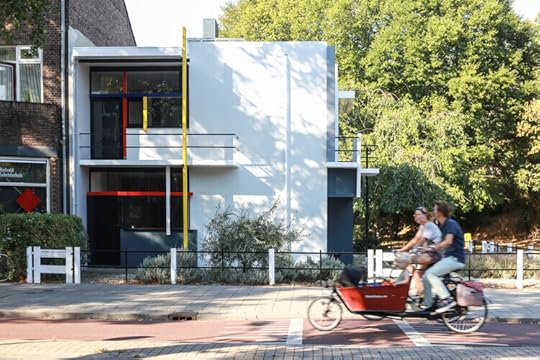
ظهر الفصل لأول مرة بين النفعية والجمالية، فصارت الواجهات قشورا زخرفية تماشي البرستيج التقليدي، بغض النظر عن العمارة الداخلية التي لا هم لها سوى تحقيق الفائدة والنفع. هنا بالتحديد كان الفصل بين العمارة والهندسة.

تغلبت العمارة الحديثة على هذه التحديات التي فشلت في الاستجابة لها عمارة القرن التاسع عشر، فتجاوزت التعددية النمطية، بالانسلاخ من الاختلافات الثقافية، والخروج بنمط معماري ملائم للرأسمالية الصناعية، موظفا تقنياتها، مناسبا للتكرار في عمارة المجمعات السكينة ونحوها، ولم يكن نمطا خاصا بالأبنية العامة، بل ممتدا لكل مجالات الحياة اليومية. ويبين هابرماس أن (الوظيفية) في العمارة الحديثة، تقوم على أساس منطق جمالي متضمن، inherent aesthetic logic، بمعنى أن العمارة التي تحقق الوظيفة بشكل جيد، تبدو جيدة، فأصبحت العمارة الحديثة امتدادا للفن الطليعي (افانتكارد)

إذا كان كل هذا صحيحا، فما الخلل الذي حدا بالعمارة الحديثة"للموت" في نظر بعد الحداثويين؟
إن فكرة تجاوز التعددية النمطية، واعتماد الوظيفية كمصدر للجمالية، وادماج العمارة بالحياة اليومية، بدا واعدا لدرجة أن آمن الكثير من المعماريين بقدرتهم على تشكيل الحياة الانسانية كما تهوى تصاميمهم. على المستوى الحضري بالدرجة الأساس، ازدهرت التصاميم الطوباوية، التي أساء المعماريون أمثال لوكوربوسيه، فهم حدود إمكاناتهم، فتصوروا أن لديهم القدرة على تقرير أشكال الحياة وأنماطها، وأن الناس سيوافقون على مايملى عليهم من تصاميم متعجرفة، لمصممين ظنوا أنهم آلهة.
أزمة العمارة الحديثة إذن، أنها أثقلت نفسها بمهام أكبر منها.
The current manifestations of a crisis in modern architecture derive less from a crisis in architecture than from the fact that architecture voluntarily allowed itself to become overburdened.

على أن الحل لأزمة الحداثة، لا يتمثل بتاتا بالعودة لما قبل التحديث، برأي هابرماس؛ لأن ظروف الحياة الحديثة غير قابلة للانعكاس بتاتا. بناء على ذلك، لا يمكن أن نقيس مدن اليوم بالمدن الأوربية التقليدية، فنحاول محاكاتها، وهي المدن التي تطورت على مدى قرون طويلة، في تصاميم المدن الجديدة، والتي تقوم على نمط حياة مختلف للغاية. وتعلمت العمارة بالتجربة المريرة، أن الحياة الحضرية، تقوم على علاقات نظامية، غير شكلية بالضرورة.-وهذا كان حلم العمارة الحديثة.

-----
هذه المحاضرة المثيرة للاهتمام موجودة في كتاب Architecture Theory Since 1968درستها في مقرر نظريات التصميم المعماري ضمن السنة الخامسة في هندسة العمارة. وكنت محظوظة بوجود استاذ ساحر تتبدى في عينيه لمعة الشغف عندما يدرس، شرح قصة الحداثة وبعد الحداثة في العمارة برشاقة بالغة.

أما هذا الكتاب، مقدمة قصيرة جدا عن هابرماس، فهو -كما صرت أتوقع من المقدمات القصيرة جدا- ليس سهلا، بل مكثفا، وغالبا لا يخاطب القارئ غير المتخصص، فهو مثقل بالمفاهيم الفلسفية، التي تحتاج مني لو أردت فهمها، كتبا كاملة ووقتا طويلا لا أملكه لاستيعابها. فهابرماس في النهاية ليس فيلسوفا سهلا، إلى ذلك، فهو متخط للاختصاصات؛ له آراء في العديد من المعارف، فهو في العمارة مثلا، يصعب أن تميز بينه وبين معمار أكاديمي. شمل الكتاب تلخيصا سريعا مكثفا لأفكار هابرماس الفلسفية، متجاوزا بذلك آرائه السياسية والثقافية:
1 النظرية البراغماتية للمعنى
2 نظرية العقلانية التواصلية
3 برنامج النظرية الاجتماعية
4 برنامج أخلاقيات الخطاب
5 برنامج النظرية الديمقراطية والقانونية، أو النظرية السياسية

سأكذب إن قلت أني فهمت أيا مما تعنيه هذه المسميات الرنانة، لكن ما استفدته من الكتاب هو التعرف على سيرة حياة هابرماس، وفهم مدى ثقل وزنه بين المفكرين والفلاسفة، وأفادني الفصل الذي تناول رأيه بالحداثة بطبيعة الحال.
Displaying 1 - 30 of 55 reviews

Can't find what you're looking for?

Get help and learn more about the design.