Poet, playwright and author Denis Johnson was born in Munich, West Germany, in 1949 and was raised in Tokyo, Manila and Washington. He earned a masters' degree from the University of Iowa and received many awards for his work, including a Lannan Fellowship in Fiction (1993), a Whiting Writer's Award (1986), the Aga Khan Prize for Fiction from the Paris Review for Train Dreams, and most recently, the National Book Award for Fiction (2007).
Train Dreams is one of those books where you finish, stare at the wall for a minute, and think, I don’t know what I just read… but I’m pretty sure it was intentional.
Denis Johnson’s prose is undeniably skilled—spare, atmospheric, and often beautiful in a cold, distant way. The novella drifts through time and memory more than it tells a traditional story, which can feel meditative if you’re in the right headspace… or mildly disorienting if you’re not.
I kept waiting for something to grab onto—an emotional anchor, a narrative thread—but instead, it floated just out of reach. That may be the point. Still, I’ll admit: the fact that this book is short feels merciful. Three hundred pages of this haze might’ve been more than I could endure.
There’s talent here, no question. I just don’t know if I liked the experience—or if I merely survived it.
3.5 rating. We enjoyed the movie which is filmed and set in the PNW. I wanted to read the book to see if it was as good. The movie did follow the book pretty well. I enjoyed both but the visualization of the times and evolving history came through better on screen. It's a bittersweet story and a good story about surviving without little (money, family or education) in a time with rapidly changing world.
“He’d started his life story on a train ride he couldn’t remember, and ended up standing around outside a train with Elvis Presley in it.”
The story starts with a bang! That poor "Chinaman"!
Loved the little story about the dog-shot man! “It was self-defense.” 😀
And, the wolf-girl.
I enjoyed the whole read, the loneliness, the wilderness, the wonder and meaninglessness of it all. It's the story of a man and his world and life. It felt nice to be in his world!
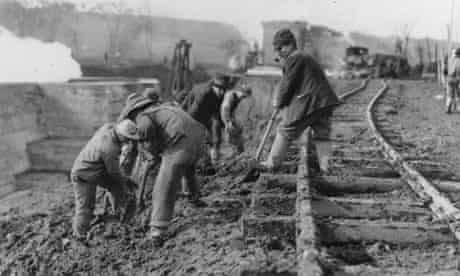
Train Dreams follows Robert Grainier, a day laborer and railroad worker living in the early 20th-century American West, whose life unfolds against a backdrop of logging camps, railroads, wildfires, and vast, indifferent landscapes. The book traces his sparse inner world through decades of physical labor, loss, isolation, and fleeting connection, capturing a life that that feels somewhat ordinary and largely unremarkable in a way that keeps you in a distant haze.
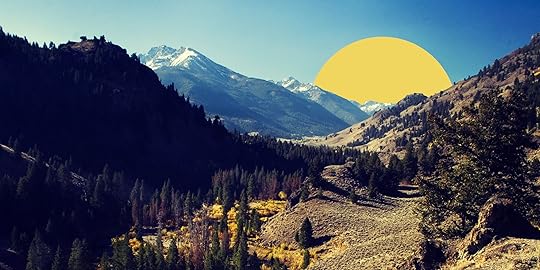
“All his life Robert Grainier would remember vividly the burned valley at sundown, the most dreamlike business he’d ever witnessed waking—the brilliant pastels of the last light overhead, some clouds high and white, catching daylight from beyond the valley, others ribbed and gray and pink, the lowest of them rubbing the peaks of Bussard and Queen mountains; and beneath this wondrous sky the black valley, utterly still, the train moving through it making a great noise but unable to wake this dead world.”
What struck me most about this book is how little it asks of the reader in terms of plot, and how much it asks in terms of attention. Grainier is not a man who explains himself, and the novella doesn’t try to do that for him. Meaning accumulates slowly, through work, weather, memory, and long stretches of solitude. His life feels shaped less by intention than by circumstance, as if he is moving through history rather than directing it.
There’s a deep loneliness at the center of this story, but it isn’t treated as something to be resolved. Loss arrives without ceremony, and grief doesn’t transform into insight or redemption. Grainier keeps living simply because life continues. The grittiness of that persistence feels something closer to endurance than hope. This is a portrait of a man not taking control of his life so much as enduring it as it unfolds, shaped by forces larger than himself.
Train Dreams ultimately reads as a meditation on impermanence: on how entire lives can pass with little witness, how progress reshapes the world without regard for those moving through it, and how memory becomes the final place a person inhabits. This isn’t at all what I was looking for, but that’s why I picked it up; the existentialism running through it is what kept me engaged and thinking long after finishing. It’s a quiet, haunting story, less concerned with meaning-making than with the simple, unsettling fact of existing at all.
I liked the descriptions of the man, the people and animals he met and the countryside in which he lived. I found it interesting and different from the descriptions of many other characters in many other books. I found his life reasonable for the times and not outlandish. I thought it was pretty good, more interesting than the movie.
3.5/5, and I think the film adaptation is far superior, but I can’t round it down. At times this reminds me of some of the shorter works of Norman Maclean and parts of A River Runs Through It, but parts are such a meditation on grief.