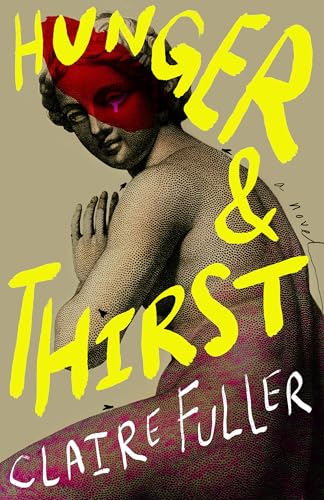
1987: After a childhood trauma and years in and out of the care system, sixteen-year-old Ursula finds herself with a new job in the postroom of a local art school, a bed in a halfway house, and—delightfully— some new friends, including wild-child, Sue. When Ursula is invited to join a squat at The Underwood, a mysterious house whose owners met a terrible end, she can’t resist the promise of a readymade, hodgepodge family.
But as Sue’s behaviour and demands become more extreme, Ursula who has always been hungry—for food—and more importantly for love, acceptance and belonging, carries out her friend’s terrible dare. It's a decision that will haunt her for decades.
Thirty-six years later, Ursula is a renowned, reclusive sculptor living under a pseudonym in London when her identity is exposed by true-crime documentary-maker who is digging into an unsolved disappearance. But it is not only the filmmaker who has discovered Ursula’s whereabouts, and as her past catches up with her present, Ursula must work out whether the monsters are within her or without.
From critically acclaimed and award-winning author, Claire Fuller, Hunger and Thirst is a compelling and chilling tale of loneliness and female friendship, of the dangerous line between wanting and needing, and of how far a person will go to truly belong.
Claire Fuller is the author of six novels: Hunger and Thirst, forthcoming in May / June 2026; The Memory of Animals; Unsettled Ground, which won the Costa Novel Award 2021 and was shortlisted for the Women's Prize for Fiction; Our Endless Numbered Days, which won the 2015 Desmond Elliott prize; Swimming Lessons, shortlisted for the Encore Prize; and Bitter Orange longlisted for the International Dublin Literary Award.
Oh my goodness! This freaking book absolutely blew my mind! Please don’t just add it to your TBR — put it at the very top and jump in immediately. This book isn’t just good… it’s AMAZING. It’s horrifying, insane, eerie, and deeply gothic. It makes your blood run cold, delivers real jump scares, and has you sleeping with the lights on while your imagination runs wild, convinced there are shadowy entities lurking in every corner. This is the kind of story that makes you paranoid — feeling like someone’s watching you, locking your door not once but three times, then sprinting to your bed and hiding under the blankets without daring to look back. Pure, shivery terror — and I loved every second of it.
I adored the characterization, the slow-burn mystery, and the way the eerie paranormal elements slowly creep under your skin. The horror doesn’t rush at you — it crawls, tightening its grip, blurring the thin line between reality and delusion in the most haunting way. And honestly, The Underwood itself feels like the true main character: a sinister, haunted house where every step makes you nauseous, where you’re torn between pushing deeper into the darkness or running away without ever looking back. The tension builds relentlessly, strange events pile up, and in the final quarter — when past and present collide — everything explodes. The revelations are wild, twisted, and shocking, and when things finally hit the fan, you’ll want to slam the book shut, drop your e-reader, and start planning your own escape. That’s how intense it gets.
The story unfolds across two timelines. In the present, we follow Uschi, a famous sculptor in her mid-fifties, still carrying the scars of a past she’s tried to bury. Her life is thrown into turmoil when documentary filmmaker Emma Zahini begins investigating the mysterious events of 1987 — the year Uschi, then known as Ursula, left Dougherty House. Back then, at just sixteen, Ursula was living in a group home with ex-criminals and addicts, waiting for her caseworker Joy to find her something better. Instead, she made the fatal mistake of moving into The Underwood — an abandoned house already steeped in tragedy.
Ursula’s life had been shaped by loss from the very beginning: orphaned, never knowing her father, witnessing her young mother’s death in Morocco as a child, then being sent to England and shuffled through foster homes before landing at Dougherty House. She worked in the post room at an art school, where she met Sue, a secretary with big dreams, and Sue’s erratic boyfriend Vince — the one who first suggests Ursula move into The Underwood, rent-free. Drawn like a moth to a flame, Ursula falls into a complicated, intense friendship with Sue: unreliable, eccentric, adventurous, and determined to become a horror film director in the States, always railing against inequality and championing women’s power.
Desperate for love, compassion, and acceptance, Ursula finds herself pulled into Sue’s dysfunctional inner circle. She even develops a tender crush on Raymond — Sue’s intelligent, observant brother — the one person who truly seems to see her. But Sue’s reckless dares and obsession with The Underwood push them into terrifying territory. Soon, they begin to suspect they’ve awakened something dangerous — something still living within the walls of the house where an entire family once died tragically. Or are they? Is it real, or is it all in their minds? In The Underwood, the veil between reality and delusion is impossibly thin.
Then someone disappears. A body is never found. And nearly forty years later, the unanswered questions still haunt Ursula. Can she finally outrun her past — or is it about to catch up with her for one last, devastating confrontation?
Overall: This book is incredibly unique — unlike anything I’ve ever read. I can honestly say it’s already one of my favorite books of 2026, and it might even become my all-time favorite horror novel (though it’s probably too early to declare, with so many more books ahead of me). Still, I’m certain it’s earned a permanent place in my top ten. This is an absolute MUST READ. Do not miss it!
A huge thank you to NetGalley and Zando for sharing this AMAZING HORROR BOOK as a digital reviewer copy in exchange for my honest thoughts.
Follow me on medium.com to read my articles about books, movies, streaming series, astrology:
I have loved Claire Fuller’s novels for a number of years now and so hugely anticipate her latest novel which immediately hooks me in. 1987. After years in the care system following a trauma, sixteen year old Ursula is found a new job working in the post room of an art college. She makes a friend in Sue who could be a bit of a wild child but has ambitions for a future in Hollywood making films. As Ursula is currently living in a grotty halfway house, she’s invited to join Sue and a fellow worker Vince at a squat – The Underwood on Barrow Road. The events of that summer will define Ursula‘s life. In the present day, documentary maker Emma Zahini is pursuing Ursula now known as Uschi, and is a successful sculptor. Emma unleashes the past in her film Dark Descent which catches up with Ursula, meaning she must dig deep to work out where the truth lies. You can change your name but you can’t change the past or what lives in your head.
This novel really is the very definition of a chiller which is extremely well written. At the start when Ursula meets Sue, you are lulled into a false sense of security with some lively scenes at a family lunch at Sue’s home. Here, Ursula meets Raymond, Sue’s brother, who is clever and kind and will a become pivotal character in future events. There are suspenseful hints at Ursula’s traumatic past, she’s a damaged soul, desperate for acceptance, friendship and above all to survive. All the characters are exceptionally well portrayed with some intriguing dynamics between them.
The mood darkly changes once Ursula, Sue and Vince arrive at Underwood and this is a stark contrast to the start. It becomes so tense, scary and claustrophobic with some scenes in which I can scarcely breathe. Underwood is an ever-changing malignant character in its own right. Is it a “bad place” or is it the people? Here, there’s everything from fun and friendship which morphs to alcohol fuelled antagonism, to the sinister and downright eerie, it’s puzzling and enigmatic. At the very least it’s unsettling making me question what’s real and what not, giving it a very surreal feeling in parts. The Gothic under and overtones are done exceptionally well. I heave a sigh of relief once Ursula leaves that “haunted” property, but it will continue to hang over her life.
Not only has the author created a real horror of a mystery but it also includes thought provoking issues such as mental health and attitudes towards those who are in care or who have been through the system.
This is a novel I won’t forget in a hurry and as for the ending, wow, it’s so good I have icy tingles up and down my spine.
With thanks to NetGalley and especially to. Penguin General. UK. for the much appreciated early copy in return for an honest review.
Thank you to NetGalley and Zando | Tin House for providing me with the ARC. I have to stop getting fooled by beautiful covers. Who paid all of those people to write five star reviews, such that lead me to expect the next great literary sensation, lol? Not to be rude, but this is not a book for me. I have a rule of mine to dnf any book that doesn’t get to me in the first 20% - it’s quite enough time to decide if a book will be a hit or a miss. And that was maybe the most boring first 20% I’ve read in a while. This has everything that bores me to death in a “horror” – a dull and painfully one note main character, mundane everyday activities, painfully slow set up and a long list of characters being introduced. My first DNF of the year.
This is a dark story. I think it will appeal to those who enjoy ghoulish, mysterious, edgy reads.
I’ve read and enjoyed a few of Claire Fuller’s books. She is a talented writer and sets a specific mood with her descriptions. This book was just a tad too twisted for me to fully embrace it.
The protagonist is orphaned as a child and grows up in care homes. Her tragic early years are only suggested for quite a bit of the book but as they are revealed more fully her actions as a 16 year old begin to make more sense. If they are her actions? Is she imagining things and blaming herself unfairly?
There are a few unanswered questions or perhaps some magical realism in this story.
I’m probably just too concrete for the ending that the author chose.
Thank you to NetGalley for an ARC in exchange for my honest review.
This was definitely a slow burn, but it the pace worked out with what the story was telling here. A lot of build up of the characters and each relationship, but it never felt like it dragged. If you go in expecting a straight forward horror story, you're not going to enjoy this. It needs to simmer.
I found myself so wrapped up in the story and the characters. It made me ache in the worst way. Ursula is such an interesting main character. She wasn't perfect by any means and I always understood the choices she made. She felt real to me. The story itself was tense and atmospheric. Confusing and jumbled but in a way that worked, if that makes any sense.
I think Claire Fuller is brilliant and I can't wait to read more from her.
There’s a particular kind of hunger that comes from growing up without love. Not just the empty-stomach kind, but the deeper ache for belonging, for being chosen, for being seen. Claire Fuller understands that, and in Hunger & Thirst, she feeds it something dark, unsettling, and impossible to shake.
We meet Ursula in 1987, sixteen and fresh out of the care system, with nothing solid to lean on. A job in the postroom of an art school, a bed in a halfway house, and then Sue, reckless, magnetic, dangerous Sue, who offers Ursula what looks like family. Together with Vince, they form a fragile, toxic unit and take up residence in a condemned squat ominously named The Underwood. A house with history. A house that still feels inhabited by its past. A house that watches back.
The summer that unfolds there is slow, deliberate, and deeply wrong. Fuller lets the unease seep rather than scream. The characters are unlikeable by design, their relationships warped by need and power, but the writing is so haunting I couldn’t stop reading. Sickening. Incredibly sad. Horrifyingly addictive. Reading it at night with a tree branch tapping the window was a terrible life choice.
Thirty-six years later, Ursula is a renowned but reclusive sculptor living under a pseudonym, her art seemingly arriving from somewhere beyond her conscious mind. When a true-crime documentary begins digging into an unsolved disappearance and an amateur horror film made during that summer, Dark Descent, the past comes clawing back. The question at the heart of the novel tightens: is Ursula an unreliable narrator, or is reality itself fractured by trauma?
Told across dual timelines, the tension is sustained beautifully. Fuller has a gift for atmosphere that creeping sense that some places absorb what happens inside them, and never quite let it go. The Underwood feels like another character entirely, its violence lingering in flies, silence, and rot. And once again, Fuller writes outsiders with compassion and clarity, particularly those shaped by the care system, without romanticising their pain.
This is a slow-burn psychological horror that asks uncomfortable questions about shared reality, about how differently we can experience the same moment and still believe we’re connected. About how far someone will go, what lines they’ll cross just to belong.
I inhaled it. Bitter, bleak, beautifully written stuff.
Huge thanks to the publisher for the opportunity to read via NetGalley — all opinions are my own.
Thank you to NetGalley, Zando, Tin House, and the author Claire Fuller for gifting me with this ARC to review!
I really struggled with getting through this book and unfortunately didn’t love it as much as I thought I would.
Liked:
-the uncertainty of what actually happened in 1987. Did it happen the way Ursula said it did? Or was she actually suffering from a psychotic break and replaced what actually happened with her version of events to help her cope with what happened?
Disliked:
-the writing style/format. At times it was too confusing for me to follow what was going on. The conversations didn’t flow naturally and they were disjointed which threw me out of the story a couple of times. I just kept thinking that “this isn’t how people talk in reality.”
-the pacing. The major event happens right in the middle of the story and then it kind of falls off from there. In my honest opinion it probably should’ve happened later in the story and then the last couple of chapters could’ve been about Ursula’s life after the event. I personally think that would’ve flowed better.
-Sue’s behavior wasn’t as extreme as it should’ve been. Yeah she wasn’t the greatest friend but I was expecting so much more from her character. I wanted to be more manipulative and vindictive and try to disguise that as being a good friend to Ursula. In all honesty all the characters were a bit of a let down personality wise.
I found myself craving Claire Fuller’s words when I wasn’t reading them. One might even say that I hungered for them.
While the subject matter of Hunger and Thirst is dark and often profoundly sad, the storytelling trickles out like a gentle stream. Its melancholy quietly broke my heart, and I somehow manage to come alive when books slay me like this.
What’s more, this layered story exceeded my expectations, utterly shocking me. I thought I was entering into a dramatic suspense. I did not know that Fuller was dragging me down into a black hole of horror. But it’s horror that means something, as it can be interpreted as both a literal haunting, and as the figurative ghosts that keep returning for the troubled Ursula.
Please know that just like Ursula, I will forever feel the shadow of this unsettling beauty lurking behind me.
I am immensely grateful to Zando Books for my copy. All opinions are my own.
Hunger and Thirst begins with Ursula, a woman who recounts her impoverished adolescence and a traumatic event that haunted her for the rest of her life.
In the first few chapters, the author tells a sad story with elements of a young adult novel; however, around the middle of the book, the story transforms into a horror story, and it is here that the story truly shines. The author has an exceptional ability to describe chilling and captivating scenes, and from that point on, we witness the main character's descent into madness and how, despite Ursula's brilliance, regret never allowed her to live a fulfilling life.
Thank you, NetGallery and Zando Publishing, for allowing me to read an advanced copy of this book.
Absolutely loved Ursula’s character and her friendships. When the book jumps to the later years, I was captivated by how Ursula had changed as a person. I enjoyed the true crime sleuth aspect when she’s exposed and they start digging into her past all those decades ago. This is truly a book that shows how things can haunt us. What a strong female lead character! I received an advance review copy for free, and I am leaving this review voluntarily.
This is a literary fiction/horror story about a teenage girl, Ursula, who has experienced a lot of tragedy and been in and out of foster and group homes in the mid-80s. She has a desperate need to belong and is easily led. She falls into a troubled friend group and makes a friend (Sue), an aspiring horror filmmaker and all around fascinating character. Sue is a malignant character but also a muse to Ursula, a budding artist. Sue suggests that Ursula live in a squat with Vince, a man with violent tendencies who is chasing after Sue. Turns out, the squat is more troubled than any of them. A haunted house story is not particularly new, but the way this house is haunted is. I don't want to give anything away, but it does particular damage to this young girl who tends to feel guilt for things she did not do and who needs desperately to belong. The characters in this book are vivid. That is the author's strength. I think the last third of the book meandered a bit and the book lost its momentum once it left the house.
Ughhh her best yet!! No one does creeping dread like Claire Fuller. I gasped several times. Actually scary, actually heart breaking. She’s my modern Shirley Jackson.
Past POVs weren't really my favorite. It felt kinda off maybe bcs I know the characters are still young? Idk. It felt like YA sometimes. I prefer the present day POV more, 36 years later. Skimmed a lot.
Claire Fuller's latest novel, Hunger and Thirst, tells the story of Ursula, a troubled teen growing up in the 1980s, and thirty six years later, as a reclusive artist whose past is about to catch up with her through a documentary film about an event at a squat. the Underwood.
This is a dark tale, which drifts close to becoming a full blown horror, and is full of great character details. Ursula is a character easy to feel sympathy for - even if she wants to be distant - and her descent into the madness of youth is well captured.
Fuller is an extremely talented writer -if you haven't read Our Endless Numbered Days or Unsettled Ground they are highly recommended. Hunger and Thirst continues her winning streak, and is well worth diving into it's darkness and depth.
Thanks to Netgalley and the publishers for the ARC.
Thank you, NetGalley, for this advanced reader copy.
The book starts off strong, we are sure that we are untangling a mystery, but then the suspense just keeps building on until around 50% of the book.
That’s when the book actually starts and introduces more background to the characters, actual suspense and a desire to read on.
Although I saw predominantly positive reviews of “Hinger and Thirst”, I myself cannot bring myself to rate it more than 2-2,25 stars. The reason is that my expectations from the first 50% of the book did not match the outcomes of the next 50%. The book is a slow-burn psychological horror, yes, but in this case, I did not feel like we were building up to the horror part at all. It all just sort of happens out of nowhere and then shifts the rest of the book suddenly, but not quite convincingly.
The book was easy to read, but not that easy to follow. The characters felt semi-completed, even in 1987 when they were teenagers.
You may be left with a feeling that you don’t actually really get to find out what happened back in 1987 when you reach the present-day narrative. For some readers, open interpretation will be a big bonus; I myself lean towards this as well.
If you enjoy slow-burning psychological horrors, you may really enjoy this book as well. For me, it has a 3/4 star plot idea and a 2-star execution. With characters having limited development in the 30 years that follow the events of 1987.
I don’t know how I managed to get so extremely lucky with my first ARC (courtesy of NetGalley) but GOD… I did.
This is the first horror book I’ve read in years that truly scared me. Like, I’d have to pause before continuing to read a paragraph because surely not??? I think what makes this so effective is the fact that whatever the fuck is going on is never ever explained or rationalised.
I will admit it took me a while to get into this book - the horror is slow, seeping in from the edges from about 20% of the way through. Once I hit it, I couldn’t stop. I found myself racing home from the gym to get back into the story. The spook would ebb and flow and you’d think it was totally done - until all of a sudden it wasn’t and you were back shaking in your boots again. Deliciously done!!!
Claire Fuller is so talented at creating complex characters living the most incredibly awful lives lol. I really like that she doesn’t shy away from the despair of ordinary life and that really comes through in these characters. Ursula, Sue, Raymond and Vince are all troubled people, misunderstood, with horrible childhoods and family histories, but all so different in their individual pains. She also appears to be a real purveyor of mommy issues, which as an eldest daughter, I will always be buying.
This was a spectacularly visual, visceral and emotive horror that I ADORED. I don’t want to add any spoilers because I don’t want this review censored but wowee. This is an instant classic for me. The vibes were awful (complementary) and this is already one of my favourite books of the year!!
Thank you to NetGalley and the publisher for this ARC!
It is odd that I didn’t enjoy this book more. I generally love a good slow-burn psychological horror with undertones that carry a sense of nastiness with them, but this just didn’t quite do it for me.
I definitely enjoyed parts of it, like the watching of the documentary and the slow catch-up of the past to Ursula, but I did feel like a lot of the story was still fairly nebulous. The start of the novel I found quite slow, and then the middle really pulled it together, but the end of the book really didn’t give me what I was looking for.
I think the thing I wanted more than anything else was answers. There were definitely elements of this that bore the potential to be rollicking horror pieces, but they were lacking simply due to the vagueness of the whole thing.
Sue I feel like didn’t go as weird as she could have in some ways either- I almost expected something more severe. It was definitely the bones of something great, but it didn’t quite get there for me.
Fans of Claire Fuller’s earlier work may be disappointed, as I was, with Hunger and Thirst. Previous books have centred around a mystery, which I have enjoyed. Whereas Hunger and Thirst borders on horror. Sixteen year old Ursula is living in a halfway house in the 1980s and has spent most of her life in care. Ursula’s social worker finds her a job in the post room of an Art School where Ursula meets Sue and her extended family and finds the friendship that she has hungered for. When Ursula moves into a squat, a haunted house, things start to go terribly wrong. The first half of the book was a slow burn and I nearly put it down. The pace picked up in the second half and compelled me to read to the end, despite not really enjoying it. Not a book I would have chosen, if it were not a Claire Fuller novel.
Thanks to NetGalley and the publishers for an early ebook to review. Published 7th May 2026 in the UK.
I am so thankful to have received an ARC from netgalley! unfortunately this book wasn’t for me .
It was pitched as a horror with very extreme characters , as many others have said it didn’t seem to ever reach those standards for me. It wasn’t ever tense in a way that made me feel scared for our characters . The timelines got a bit wonky and it was frustratingly difficult to get into because we got so much dumped on us at the beginning.
The cover is beautiful, the writing had several beautiful quotes- especially this one about horror movies - “You watch it because you love being terrified . The same reason Sue and I watch horror films. But at least they’re fiction. You watch because you want to know the worst that can happen, and if it happened to someone else then you’re happy it didn’t happen to you.”
at the end of the day this book is one several people will love it’s just not for me!
This entire review has been hidden because of spoilers.
Thank you Net Galley for the ARC! A slow burn, indeed! There are so many excellent elements-horror, the haunted house (it’s not overdone or cliche), the narrator - do we trust or not? And the ending- I might have to re-read this!
Thank you NetGalley and Zando for the ARC! All opinions are my own.
I love when horror works as metaphor — when a haunted house isn’t just a house, but the parts of ourselves we’ve buried.
Going into Hunger and Thirst, I expected something sharp and overt. Instead, the haunting is more internal. It lingers.
Set in 1987, the story follows Ursula, a foster care kid who falls into an all-consuming friendship and ends up squatting in a house with a dark past. Thirty-six years later, under a new identity, she’s forced to confront whatever happened there.
At its core, this is a story about abandonment. Ursula is described again and again as hungry — for safety, for belonging, for someone to choose her. It’s an insatiable ache. She wants connection so badly she’s willing to live with the rot.
The horror remains ambiguous; we’re never given clean supernatural answers. The first half moves slowly, humming at a low frequency. Beautifully written, but subdued.
If you’re expecting loud scares or sharp twists, this may feel too subtle. If you love melancholic, creeping gothic stories about loneliness and the need to belong, this one lingers.
I am not easily scared by books, but this one creeped me out so much I had trouble falling asleep. I crammed this in in under 24 hours, frantically reading during any spare minute of my day. Perfectly Gothic and absolutely chilling, definitely read this one if you’re a horror fan.
“Hunger and Thirst” di Claire Fuller è un romanzo di incredibile complessità psicologica, volto ad approfondire la privazione (materiale, emotiva ed esistenziale) nell’arco di un’intera vita, seguendo il percorso di Ursula, una donna colpita da traumi precoci e da una conseguente fame di appartenenza.
La vicenda si apre nell’Inghilterra della fine degli anni Ottanta, quando Ursula aveva sedici anni, appena uscita dal sistema di accoglienza sociale e impegnata a ricostruirsi una vita, pur in una condizione precaria economicamente, oltre ai pesanti strascichi emotivi e fisici. Il lavoro in una scuola d’arte la introduce a un gruppo di giovani la cui apparente libertà la coinvolge immediatamente, quasi una promessa di cambiamento rispetto alla sua situazione precedente di costante abbandono. Centrale è la figura di Sue, il cui carisma e la cui volatilità attraggono Ursula in una forma di convivenza improvvisata all’interno di una casa occupata, segnata da una storia oscura non meglio specificata.
Il romanzo compie poi un salto di oltre tre decenni, mostrando una Ursula adulta che vive sotto pseudonimo come scultrice affermata ma reclusa a Londra. Questo nuovo equilibrio attentamente costruito viene incrinato quando una documentarista di true crime inizia a indagare su una scomparsa irrisolta legata al passato della protagonista. A questo punto la trama si addensa in una lenta convergenza di passato e presente e delle consequenziali risonanze psicologiche a seguito delle scelte compiute, senza ricorrere subito a rivelazioni esplicite, in un crescendo di tensione.
Uno dei temi centrali è quello dell’amicizia femminile, che emerge come un qualcosa di instabile, capace di offrire riconoscimento e, al contempo, di approfondire ferite preesistenti, in un gioco di potere asimmetrico.
La caratterizzazione di Ursula è il fulcro del testo. L’autrice la costruisce non come vittima passiva, ma comunque caratterizzata da un’atavica fame (di cibo, di affetto, di riconoscimento), motivo ricorrente in tutto il testo. Sue, per contrasto, incarna l’eccesso (di desiderio, di carisma, di richieste imposte agli altri), senza essere banalizzata quale semplice antagonista, bensì come specchio che rimanda ed evidenzia le vulnerabilità di Ursula. Inoltre, il contesto legato al sistema di case accoglienza e affidamento dei minori sottende una critica al sistema inglese.
Centrale è anche l’elemento dell’“infestazione”, inteso sia in senso letterale sia metaforico, incarna gli irrisolti interiori, suggerendo che il sé è un accumulo di momenti che esigono riconoscimento, e che i “mostri” interiori sono spesso le emozioni interiorizzate di colpa e di paura.
La prosa dell’autrice si distingue per chiarezza e precisione, con un linguaggio attentissimo alla materialità degli spazi, dei corpi e degli oggetti, cosa che crea una densità sensoriale che rispecchia l’ipervigilanza percettiva di Ursula. La sobrietà stilistica rafforza il nucleo tematico del romanzo, fondato sulla tensione tra freno ed eccesso, fame e disciplina.
“Hunger and Thirst” è un romanzo che si insinua nella convivenza inquieta di bisogno e pericolo, amore e coercizione, sopravvivenza e auto-cancellazione, in una narrazione in cui l’appartenenza non è mai innocente e l’isolamento non è mai completo, in cui il passato non si chiude come un capitolo concluso ma fa ancora pressioni sul presente.
La fame, centrale e martellante, è una forza che definisce i contorni di un’esistenza, ma nella risonanza del finale vuol anche suggerire che vivere significa portare con sé i propri fantasmi e i propri vuoti, che non sono nemici, ma ombre da guardare e dalle quali imparare su noi stessi.
*Grazie a Netgalley e all’editore per la copia digitale utile per questa recensione.
Thank you to NetGalley and Claire Fuller for this ARC in exchange for an honest review!
Hunger and Thirst introduces you to a young girl in the 1980s, who is starting a new job and living in a halfway house after years of being in the foster system. Ursula is timid, yearning, and lonely, but everything seems to change when she strikes a friendship with Sue, an exciting and brash coworker. Ursula is invited to move into an abandoned house called The Underwood, where the history of the previous occupants lingers in the house like a stain.
Ursula's life slowly becomes more entwined with Sue and her ragtag but likeable family, which is tantalising for someone like Sue who lacks familial bonds in her own life. Because of this, Ursula puts up no defences as her friendship with Sue becomes more codependent and extreme, and the narrative becomes heavy with the foreboding feeling that something bad is going to happen.
In the present day, long past the terrible decision that changed everything, Ursula has changed her name and enjoys a comfortable life as a renowned sculptor. However, with a true crime documentary coming out about that day at The Underwood, she still feels the looming threat of her past catching up to her.
This book has an incredible sense of space. Particularly in The Underwood and at times when traumatic memories are being revisited, there is a pervasive feeling of filth that jumps out of the page. The ground is a seething mass, smell is overpowering and ripe, and the crawling of mould or insects makes your skin crawl. You feel like something bad is going to happen at all times, because the setting is overwhelmingly wrong. This feeling of wrongness is emphasised by the sparse, direct style of prose. Every line is grounded and speaks directly to you; there is no meaningless or fluffy prose to allow your attention to wander.
Ursula herself is a gripping, sympathetic character. She begins the story as a timid, quiet thing, and slowly becomes more confident in herself, yet is caught between the strange influences of Sue and The Underwood. She craves the feeling of belonging, and this often leads her to go down paths we scream against as readers, which only serves to make her feel more real. Sue is another fascinating character. Her staunch feminism mixed with a sharp, cruel streak makes her addictive on the page.
I found this story claustrophobic in every sense of the word. My emotions felt shattered and stretched, and I was unable to put the book down once I began it. The Underwood felt like its own character, a dark and gothic presence that seemed to communicate without a mouth of its own. I craved learning more about the strange history of the house and its occupants, but this sense of mystery definitely adds to the feeling of Ursula being out of her depth. As things began to heighten, it's hard to comprehend what is real and what is a solidified representation of trauma and pain. While the story feels truly gothic in its setting and outlook, the magical realism that muddies the waters feels perfectly utilised.
This is a chilling story that draws you in with the strength of its character writing and atmosphere. I would definitely recommend this book to anyone who enjoys horror or to those who gravitate towards stories that don't give you all the answers.
Thank you NetGalley and Tin House for the ARC in exchange for an honest review!
Set largely in 1987, “Hunger and Thirst” by Claire Fuller follows sixteen-year-old Ursula, a damaged and deeply vulnerable girl who has grown up in the care system and slipped through its cracks. Recently placed in a halfway house and working a menial job in the post room of an art college, Ursula is desperate for belonging. She finds it in an unlikely friendship with Sue, a volatile but charismatic young woman with dreams of Hollywood, and Vince, another care-leaver. Together they move into an abandoned squat known as The Underwood, a bungalow shrouded in rumors after the sudden and possibly violent death of its former occupants. That summer, made out to be claustrophobic, intense, and deeply unsettling, will come to define the rest of Ursula’s life.
Fuller tells the story through a slow-burning, character-led narrative that shifts subtly between past and present. In the present day, Ursula is now Uschi, a successful but reclusive sculptor, still haunted by what happened at The Underwood as a documentary filmmaker begins to excavate her past. These brief glimpses of the future never overwhelm the main story, instead adding a quiet sense of dread as you begin to understand just how inescapable those formative events truly are.
This is not a straightforward horror novel, though it is undeniably chilling. The first half reads almost like literary fiction, carefully building relationships, insecurities, and power dynamics, particularly within female friendship. Fuller excels at capturing Ursula’s aching need for acceptance and the ways trauma shapes her choices. The tension simmers rather than explodes, creating an atmosphere that is eerie, confusing, and emotionally heavy. When the story darkens, and it does, the shift is deeply effective. The Underwood itself feels like a living, malignant presence, raising unsettling questions about whether the true horror lies in the house or in the people drawn to it.
Fuller’s writing is elegant and immersive, making even the most depressing moments compulsively readable. Her depiction of life in care, squatting, and poverty is unflinching; the dirt, neglect, and discomfort feel almost physical. Her handling of mental health and loneliness is subtle and compassionate. The 1980s setting, without mobile phones or easy access to information, heightens the isolation and sense of danger.
“Hunger and Thirst” is bleak, emotionally draining, and at times deeply uncomfortable, but it is also powerful and unforgettable. The ending lingers long after the final page, delivering a quiet, icy shock rather than a loud payoff. Claire Fuller once again proves herself a master of exploring damaged lives and the quiet horrors that grow from neglect, longing, and the past we can never quite escape.