

What do you think?
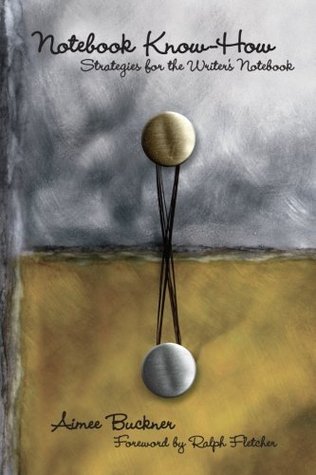
Notebook Know-How: Strategies for the Writer's Notebook
A writer's notebook is an essential springboard for the pieces that will later be crafted in writers' workshop. It is here that students brainstorm topics, play with leads and endings, tweak a new revision strategy, or test out a genre for the first time.
In Notebook Know-How, Aimee Buckner provides the tools teachers need to make writers' notebooks an integral part of their writing programs. She also addresses many of the questions teachers ask when they start using notebooks with their students, including:
How do I launch the notebook?
What mini-lessons can be used throughout the year to help students become more skilled in keeping notebooks?
How do I help students who are stuck in writing ruts with notebooks?
How do I help students use their learning from notebooks for other writing?
How do I organize notebooks so that the design is flexible, yet still allows students to access information easily?
How can writers' notebooks help students become better readers? How do I assess notebooks?
This compact guide is packed with lessons, tips, and samples of student writing to help teachers make the most of writers' notebooks, without sacrificing time needed for the rest of the literacy curriculum. In fact, Notebook Know-How shows how smart and focused use of writers' notebooks enhances and deepens literacy learning in both reading and writing for students in grades 3–8.
In Notebook Know-How, Aimee Buckner provides the tools teachers need to make writers' notebooks an integral part of their writing programs. She also addresses many of the questions teachers ask when they start using notebooks with their students, including:
How do I launch the notebook?
What mini-lessons can be used throughout the year to help students become more skilled in keeping notebooks?
How do I help students who are stuck in writing ruts with notebooks?
How do I help students use their learning from notebooks for other writing?
How do I organize notebooks so that the design is flexible, yet still allows students to access information easily?
How can writers' notebooks help students become better readers? How do I assess notebooks?
This compact guide is packed with lessons, tips, and samples of student writing to help teachers make the most of writers' notebooks, without sacrificing time needed for the rest of the literacy curriculum. In fact, Notebook Know-How shows how smart and focused use of writers' notebooks enhances and deepens literacy learning in both reading and writing for students in grades 3–8.
136 pages, Paperback
First published January 1, 2005
Ratings & Reviews
Friends & Following
Create a free account to discover what your friends think of this book!
Community Reviews
Displaying 1 - 30 of 124 reviews

Read
July 21, 2017So, the book is about teaching grades 3-8 strategies to use a writer's notebook for idea development, inspiration, draft development etc etc. I thought this might be pretty useful for me as an adult trying to use my own notebook more effectively, but this was not entirely true. A fair 1/3 to 1/2 of the book is about strategies for teaching basic grammar, spelling, punctuation, paragraph structure etc using the writer's notebook as a tool. This is not quite what I expected. It's not that the description was misleading, only that I incorrectly thought the uses of the writer's notebook might be explored in a way I could adapt for my own inspiration. This is a five-star book for teachers or parents, but much less so for adult trying to develop a useful writer's journaling practice. That shouldn't have been as much of a disappointment as it was: my fault for expecting more than the book intended to deliver.
No rating because of this mismatch.
No rating because of this mismatch.

August 16, 2009
Reread for the third time. A classic in my teacher toolbox!

August 12, 2019
I have been using Penny Kittle structures for the last few years but have been challenged to fit more writing into my program. I felt this book provided a way to bridge many of the units I cover throughout the year into the writing program. I think this book is a key component for a writer’s notebook. The assessment pieces are logical. Excited to implement this in the upcoming year! It’s another layer to what I’m already doing.

July 20, 2012
This book explained all the ins and outs any teacher of a writer’s workshop would want to know. I chose this book because I was intrigued by the concept of a writer’s notebook, but I wanted to learn more practical and realistic ways it could be utilized in the classroom to truly engage students. How can I avoid the writer’s notebook turning into a mundane requirement that students only fulfill to please the teacher?
This book was geared toward intermediate and elementary students due to the fact that the examples were drawn from Buckner’s fourth grade classes, however the content seemed easily applicable to upper level students with a bit of tailoring. Buckner’s format for writing this book was breaking it down into chapters that showed the evolutionary process of writers as they engage with their writers notebook and the writing process. Within each chapter, she provided several strategies/techniques to foster a given part of the process. Buckner then backed up each strategy with real conversations that took place in her classroom when she implemented these techniques. Buckner delved head first into the various stages of engaging with writing, including launching the writer’s notebook, expanding topics, selecting genres, and shorter sections on editing and assessment. Structuring the book in terms of writer evolution was very effective because I felt that I was learning along with the book: I started off not knowing where to begin with implementing a writer’s notebook, moved on to how to expand and get the most out of writing, and I came full circle with understanding how to assess it.
There were innumerable great strategies that I could see myself implementing in the classroom, but there were several that really stuck out to me. I took a lot from Chapter 2: Launching the Notebook because I imagine that hooking students into this idea will be the most challenging part of the process; I can see 30 indifferent teenage faces staring back at me while I hold up an overflowing bag of marble composition books with a big smile on my face. Buckner shared her technique for introducing the writer’s notebook, which was to demonstrate writing in it during class discussions and then waiting for the class to get animated about a subject; when it seems like they all have a story to tell, she introduces the writers notebooks. This usually happens toward the end of the first week of school.
In general though, I can absolutely visualize the writer’s notebook as something I utilize in my classroom. I believe it is effective because it is a truly free space; Buckner emphasized to her students that it is okay to “fail” or “mess up” in the writer’s notebook—it may be the one space in a student’s life that it’s okay to do so. This in itself may be the most valuable aspect of the writer’s notebook, because students are taught everywhere else that good writing needs to be flawless. The writers notebook is a place to play with words, genre, style, and topic. Other critical elements of writing are also taught via the writers notebook, such as the importance of rereading our work, revisions (vs. editing), reflection and self-evaluation. All of these important parts of growing as a writer are easily accessible through the writers notebook, making it an efficient and useful tool for both student and teacher.
“You won’t know what you have to say until you write.” –p. 4
“Lean into your students writing and say WOW. Even if there isn’t a lot of wow there.” –p. 116
This book was geared toward intermediate and elementary students due to the fact that the examples were drawn from Buckner’s fourth grade classes, however the content seemed easily applicable to upper level students with a bit of tailoring. Buckner’s format for writing this book was breaking it down into chapters that showed the evolutionary process of writers as they engage with their writers notebook and the writing process. Within each chapter, she provided several strategies/techniques to foster a given part of the process. Buckner then backed up each strategy with real conversations that took place in her classroom when she implemented these techniques. Buckner delved head first into the various stages of engaging with writing, including launching the writer’s notebook, expanding topics, selecting genres, and shorter sections on editing and assessment. Structuring the book in terms of writer evolution was very effective because I felt that I was learning along with the book: I started off not knowing where to begin with implementing a writer’s notebook, moved on to how to expand and get the most out of writing, and I came full circle with understanding how to assess it.
There were innumerable great strategies that I could see myself implementing in the classroom, but there were several that really stuck out to me. I took a lot from Chapter 2: Launching the Notebook because I imagine that hooking students into this idea will be the most challenging part of the process; I can see 30 indifferent teenage faces staring back at me while I hold up an overflowing bag of marble composition books with a big smile on my face. Buckner shared her technique for introducing the writer’s notebook, which was to demonstrate writing in it during class discussions and then waiting for the class to get animated about a subject; when it seems like they all have a story to tell, she introduces the writers notebooks. This usually happens toward the end of the first week of school.
In general though, I can absolutely visualize the writer’s notebook as something I utilize in my classroom. I believe it is effective because it is a truly free space; Buckner emphasized to her students that it is okay to “fail” or “mess up” in the writer’s notebook—it may be the one space in a student’s life that it’s okay to do so. This in itself may be the most valuable aspect of the writer’s notebook, because students are taught everywhere else that good writing needs to be flawless. The writers notebook is a place to play with words, genre, style, and topic. Other critical elements of writing are also taught via the writers notebook, such as the importance of rereading our work, revisions (vs. editing), reflection and self-evaluation. All of these important parts of growing as a writer are easily accessible through the writers notebook, making it an efficient and useful tool for both student and teacher.
“You won’t know what you have to say until you write.” –p. 4
“Lean into your students writing and say WOW. Even if there isn’t a lot of wow there.” –p. 116

August 13, 2012
I absolutely loved this book! I feel like it is a great supplement to Lucy Calkins and Leograndis' "Launching the Writer's Workshop." I don't think it would be a very good resource without a working knowledge of the writer's workshop, but it doesn't pretend to set up the writer's workshop, it gives you help on what your writer's notebooks could like like in your classroom.
To start, I adored the easy way that Aimee Buckner wrote. I stayed up until past 11:30 reading this because it was so easy to get caught in her words. She makes everything so understandable and relatable. She offers a lot of strategies for helping students begin writing in their notebooks. I have tons of sticky notes placed all over this book that I plan on using as mini-lessons. She also talks about how she divides the notebook up in her class, and I am definitely taking the idea of having the students use the book from front to back for writing and back to front for taking notes during mini-lessons. I think one of the most helpful parts for me, however, was how to assess the notebook. The thought of giving a grade to my children's personal thoughts terrified me, and I feel that I now have the tools I need to measure growth in my kids' writer's notebooks without having to hurt my children in any way.
Awesome book full of tools for any teacher using writer's workshop!
To start, I adored the easy way that Aimee Buckner wrote. I stayed up until past 11:30 reading this because it was so easy to get caught in her words. She makes everything so understandable and relatable. She offers a lot of strategies for helping students begin writing in their notebooks. I have tons of sticky notes placed all over this book that I plan on using as mini-lessons. She also talks about how she divides the notebook up in her class, and I am definitely taking the idea of having the students use the book from front to back for writing and back to front for taking notes during mini-lessons. I think one of the most helpful parts for me, however, was how to assess the notebook. The thought of giving a grade to my children's personal thoughts terrified me, and I feel that I now have the tools I need to measure growth in my kids' writer's notebooks without having to hurt my children in any way.
Awesome book full of tools for any teacher using writer's workshop!
July 26, 2016
Through my readings, in particular Notebook Know How, I have developed my professional understanding of writing instruction. I believe that establishing a place, such as a writer’s notebook, to give students regular and flexible time to practice writing, and develop their writing skills and strategies is a best practice. I found Aimee Buckner’s book, Notebook Know How, to be very practical and relevant to my own writing instruction. I plan on using this book as a resource to plan mini lessons for launching the writer's notebook, as well as, lessons on writing skills and strategies, writing from a text, lifting a line, and many more.
Aimee Buckner introduces the book by defending why writer’s notebooks are so important to writing instruction. Buckner writes, “That’s what notebooks help students do: use the world around them - their own lives and perspectives - as a supply of writing idea” ( page 3). Though, it is equally important that teaches write daily with their students. Teachers and students can use notebooks to “experience the writer’s joy of discovering something you didn’t know you knew” (page 7). Buckner then goes into detail about how she launches writer’s notebooks in her own classroom. Using literature in a mini lesson with think alouds Buckner explains how she models introducing the concept of writer’s notebook to her students. She also lists thoughtful considerations for the types of notebooks students should use, and how the notebooks could be organized.
Once the notebook producers and expectations have been established, mini lessons in writer’s workshop can be taught. Buckner includes many examples of mini lessons teaches can easily implement in their own classroom. A lesson I often struggle with is teaching students how to expand topics and build a collection of ideas from writing. In chapter 3, Buckner describes how to “knead” writer’s notebooks with strategies to teach expanding on topics and building a collection of ideas. Building a collection of ideas “is an important step; students are merging thoughts collected over time” (page 44). She insists that students reread their own writing over time to find patterns, and pieces to edit/revise, and expand on. “By the time students have kept a notebook, reflected, found a pattern, and collected entries around a chosen topic, they are ready to write” ( page 52).
Another important skill for young writers is learning and observing patterns of story structure, styles of mood and tone in author’s writing. Teachers can use author studies to help reinforce how authors each have a unique writing style. “As students use their notebooks to collect their ideas and observations about how other authors writer, they begin to see patterns in writing and story structure, to recognize different styles of creating mood and tone, and even to identify their own writing style” (page 57). Students’ collection of ideas and observations serve as a resource to springboard their writing throughout the year.
Another important use of notebooks is to help students understand genre. “As writers, we need to understand how to build a strong structural foundation for writing before we decorate it. This structure, is known as genre” (75). This structure, genre, helps readers predict and create a framework for the story within their minds. Student do not naturally think about what they know as readers to help them write. This is also important to consider when having students edit, correct/ find spelling and punctuation errors.
Students want their writing to be perfect the first time, but they need to understand how, when and why to revise and edit their writing. The notebook is a learning process that provides a space where students can grow and develop their writing. Becoming proficient readers can allow students to become more fluent spellers, which in turn allows them to focus more on their own writing style and craft. In the conclusion of the text, Buckner describes how to assess students’ writer’s notebook using an evaluation rubric. She also suggests having students complete formal self-evaluations on their notebooks and writing progress. I think self-evaluations are powerful tools for students to see their improvements and areas of growth. “The best way for anyone to become a better writer is to write a lot” (page 125).
Throughout the book Buckner answers many questions teachers have about using writer’s notebook, and writer’s workshop. I found this book to be not only easy to read, but relevant to my instructional practices in writing. I feel there are numerous aspects of this book that teachers can use in writing instruction. I plan on using this book as a resource to develop, organize, and structure my own writing instruction and writer’s notebook. Below I’ve created a chart with a few of my favorite strategies that I will use in my future writing instruction.
Strategy Name
Strategy Description
Page
Daily Pages: Fluency Writing
Daily Pages is an idea from Julie Cameron, students write a whole page before writing workshop. It’s a fluency strategy to help students “clear out the cobwebs” so they are clear headed for writer’s workshop.
23
Writing from Another Point of View
Writing from another point of view is a strategy for childhood memories or events in students’’ lives. “Being about to write from a different viewpoint opens writing to details, emotions, and events that may have been forgotten” (page 48). I could see myself reading aloud the text Three Little Pigs by Jon Scieszka to help students practice writing about an event from multiple perspectives.
48
Charting Author’s Styles: Read to Write Strategy
Using chart paper, create a chart to record the different author styles, students can keep a chart in their notebook. This strategy requires students to synthesize what what they have learned from each author’s writing style, and can be used as a reference tool for students (page 72).
72-73
Nonfiction Chart: Understanding Genre
Have students create 3 column t-chart in their notebooks. Teachers should use chart paper to create the chart and leave as an anchor chart. The three columns are: What I can expect as a reader…, Elements of nonfiction writing.., What I need to know was a writer… Keeping this chart in the writer’s notebook reinforces connection between reading and writing.
76
Paragraph Editing Guidelines
(1) Topic Sentence - green for start; The topic sentence is beginning sentence that hooks readers. (2) Detail sentences - yellow for slow down to give information and details; The detail sentences are your “proof” that your topic sentence is true. You give reasons to support your topic sentence. (3) Ending Sentence - red for wrap up; The ending sentence ends the paragraph and may lead the reader to the next paragraph (page 98).
98 - 99
I think professional educators can use this book at almost any grade level to scaffold their writing instruction, and use of writer’s notebook. Even though, Buckner is a fourth grade teacher many primary and secondary students still lack the basic understanding of how to organize and structure a text with multiple paragraphs. As a second grade teacher I spend my year helping students expand their writing from sentences, to paragraphs, to texts with multiple paragraphs. I will use this book to develop lessons that are based on best practices and research. Yet, Buckner still recognizes the true importance of writing instruction, “helping students believe in themselves as writers” (page 9). It is with time and structure students can grow as writers. Notebook Know How: Strategies for Writer’s Notebook, is a guide with lessons, ideas, and samples of student work which can help teachers get the most of writer’s notebooks, without sacrificing time needed for literacy instruction. From this book I have gain an understanding of how I will launch my own writer’s notebook, but also how I will maintain the use of writer’s notebook throughout the whole year. “The writing will happen, it will get better, and you will learn along with your students the excitement that comes from having filled a notebook and the true joy from having written well” (page 125).
Aimee Buckner introduces the book by defending why writer’s notebooks are so important to writing instruction. Buckner writes, “That’s what notebooks help students do: use the world around them - their own lives and perspectives - as a supply of writing idea” ( page 3). Though, it is equally important that teaches write daily with their students. Teachers and students can use notebooks to “experience the writer’s joy of discovering something you didn’t know you knew” (page 7). Buckner then goes into detail about how she launches writer’s notebooks in her own classroom. Using literature in a mini lesson with think alouds Buckner explains how she models introducing the concept of writer’s notebook to her students. She also lists thoughtful considerations for the types of notebooks students should use, and how the notebooks could be organized.
Once the notebook producers and expectations have been established, mini lessons in writer’s workshop can be taught. Buckner includes many examples of mini lessons teaches can easily implement in their own classroom. A lesson I often struggle with is teaching students how to expand topics and build a collection of ideas from writing. In chapter 3, Buckner describes how to “knead” writer’s notebooks with strategies to teach expanding on topics and building a collection of ideas. Building a collection of ideas “is an important step; students are merging thoughts collected over time” (page 44). She insists that students reread their own writing over time to find patterns, and pieces to edit/revise, and expand on. “By the time students have kept a notebook, reflected, found a pattern, and collected entries around a chosen topic, they are ready to write” ( page 52).
Another important skill for young writers is learning and observing patterns of story structure, styles of mood and tone in author’s writing. Teachers can use author studies to help reinforce how authors each have a unique writing style. “As students use their notebooks to collect their ideas and observations about how other authors writer, they begin to see patterns in writing and story structure, to recognize different styles of creating mood and tone, and even to identify their own writing style” (page 57). Students’ collection of ideas and observations serve as a resource to springboard their writing throughout the year.
Another important use of notebooks is to help students understand genre. “As writers, we need to understand how to build a strong structural foundation for writing before we decorate it. This structure, is known as genre” (75). This structure, genre, helps readers predict and create a framework for the story within their minds. Student do not naturally think about what they know as readers to help them write. This is also important to consider when having students edit, correct/ find spelling and punctuation errors.
Students want their writing to be perfect the first time, but they need to understand how, when and why to revise and edit their writing. The notebook is a learning process that provides a space where students can grow and develop their writing. Becoming proficient readers can allow students to become more fluent spellers, which in turn allows them to focus more on their own writing style and craft. In the conclusion of the text, Buckner describes how to assess students’ writer’s notebook using an evaluation rubric. She also suggests having students complete formal self-evaluations on their notebooks and writing progress. I think self-evaluations are powerful tools for students to see their improvements and areas of growth. “The best way for anyone to become a better writer is to write a lot” (page 125).
Throughout the book Buckner answers many questions teachers have about using writer’s notebook, and writer’s workshop. I found this book to be not only easy to read, but relevant to my instructional practices in writing. I feel there are numerous aspects of this book that teachers can use in writing instruction. I plan on using this book as a resource to develop, organize, and structure my own writing instruction and writer’s notebook. Below I’ve created a chart with a few of my favorite strategies that I will use in my future writing instruction.
Strategy Name
Strategy Description
Page
Daily Pages: Fluency Writing
Daily Pages is an idea from Julie Cameron, students write a whole page before writing workshop. It’s a fluency strategy to help students “clear out the cobwebs” so they are clear headed for writer’s workshop.
23
Writing from Another Point of View
Writing from another point of view is a strategy for childhood memories or events in students’’ lives. “Being about to write from a different viewpoint opens writing to details, emotions, and events that may have been forgotten” (page 48). I could see myself reading aloud the text Three Little Pigs by Jon Scieszka to help students practice writing about an event from multiple perspectives.
48
Charting Author’s Styles: Read to Write Strategy
Using chart paper, create a chart to record the different author styles, students can keep a chart in their notebook. This strategy requires students to synthesize what what they have learned from each author’s writing style, and can be used as a reference tool for students (page 72).
72-73
Nonfiction Chart: Understanding Genre
Have students create 3 column t-chart in their notebooks. Teachers should use chart paper to create the chart and leave as an anchor chart. The three columns are: What I can expect as a reader…, Elements of nonfiction writing.., What I need to know was a writer… Keeping this chart in the writer’s notebook reinforces connection between reading and writing.
76
Paragraph Editing Guidelines
(1) Topic Sentence - green for start; The topic sentence is beginning sentence that hooks readers. (2) Detail sentences - yellow for slow down to give information and details; The detail sentences are your “proof” that your topic sentence is true. You give reasons to support your topic sentence. (3) Ending Sentence - red for wrap up; The ending sentence ends the paragraph and may lead the reader to the next paragraph (page 98).
98 - 99
I think professional educators can use this book at almost any grade level to scaffold their writing instruction, and use of writer’s notebook. Even though, Buckner is a fourth grade teacher many primary and secondary students still lack the basic understanding of how to organize and structure a text with multiple paragraphs. As a second grade teacher I spend my year helping students expand their writing from sentences, to paragraphs, to texts with multiple paragraphs. I will use this book to develop lessons that are based on best practices and research. Yet, Buckner still recognizes the true importance of writing instruction, “helping students believe in themselves as writers” (page 9). It is with time and structure students can grow as writers. Notebook Know How: Strategies for Writer’s Notebook, is a guide with lessons, ideas, and samples of student work which can help teachers get the most of writer’s notebooks, without sacrificing time needed for literacy instruction. From this book I have gain an understanding of how I will launch my own writer’s notebook, but also how I will maintain the use of writer’s notebook throughout the whole year. “The writing will happen, it will get better, and you will learn along with your students the excitement that comes from having filled a notebook and the true joy from having written well” (page 125).

July 11, 2019
I know the summary up above says this book is for teaching writing to students grades 3-8, but I really think I can adapt it for my 9-12 graders as well. Of course I can’t do things the exact same way, but the writer’s notebook is a fantastic tool I think will heighten my almost nonexistent writing instruction.
The strategies and insights Aimee shares are great. I liked her ideas and highlighted my book all over the place. The only thing I wished there was more of was a step by step guide of how she sets up her writer’s notebooks. Is there a table of contents? She mentions they do their revisions in the back and do grammar exercises in a another section. How do you keep the sections separate and know how many pages you’ll need for each portion? I’m going to need to do more research on the writer’s notebook, which I didn’t think I would need to do after finishing this book.
It is really short though, so of course it couldn’t tell me everything about the writer’s notebook. I’m glad I read this and that I have more strategies in my teacher toolbox for next year!
The strategies and insights Aimee shares are great. I liked her ideas and highlighted my book all over the place. The only thing I wished there was more of was a step by step guide of how she sets up her writer’s notebooks. Is there a table of contents? She mentions they do their revisions in the back and do grammar exercises in a another section. How do you keep the sections separate and know how many pages you’ll need for each portion? I’m going to need to do more research on the writer’s notebook, which I didn’t think I would need to do after finishing this book.
It is really short though, so of course it couldn’t tell me everything about the writer’s notebook. I’m glad I read this and that I have more strategies in my teacher toolbox for next year!
July 29, 2019
I really enjoyed this book as a teacher. Instead of telling the reader what to do, this author gave the reader a glimpse into her daily writing lessons and gave practical tips of things you can take and use right away. Never once in the book did she have a superiority complex. As a teacher you feel so isolated as to what other teachers are doing on a daily basis, so I love books like this that make you think about how you can improve on in your teaching. Would recommend for elementary teachers!

July 20, 2018
I wish some of my old grade school teachers had used some of the ideas in this book!

March 1, 2026
read it for one of my classes and it gave me some good ideas

July 25, 2016
Aimee Buckner does a fantastic job providing numerous strategies for teachers to implement in writer’s notebooks during writer’s workshop. Buckner really teaches you how to begin the writer’s notebook as well as maintain it. Each chapter has a theme from launching the writer’s notebook to assessing your student’s notebooks. Throughout the chapters Buckner gives multiple tried and true strategies, as well as evidence based strategies to help you help your students keep successful notebooks. Buckner talks about how keeping notebook is a process and there is not “right” way to do it (pg. 7). I really appreciated this as a teacher since no one classroom or group of writers is the same. The book also focuses on connecting reading and writing. I have learned the more that we model for our students with our own writing and mentor texts, the better writers our students will become. Buckner provides many examples of great texts to use with your students. Every strategy that Buckner shares is well thought out, well explained, and enjoyable to learn about. The book is a narrative as well as a teaching tool which makes it really fun to read and easy to relate to as well. Whether you’re trying to start writing notebooks, teach students to play with genre, or help students become better editors, this is a book you won’t want to put down.
I really look forward to implementing a majority of these strategies in my own classroom. I think all classroom teachers, regardless of what grade you teach would benefit from having these strategies in your teaching toolbox. One really great strategy Buckner describes is the “Try Ten” strategy (pg. 62). Here she talks about helping students develop better, more creative leads. She has students start on a new page and write their lead for a story they’re working on as number one on the list. Then she challenges her students to write the sentence nine other ways to see what creates the best lead or hook. Often times Buckner suggests letting students try these strategies with a partner, this allows the process to be more enjoyable and less daunting for students. She also provides extensions for the strategies she explains. Another fun strategy she discusses is the “Genre Switch” strategy (pg. 84). With this strategy Buckner has her students start writing a story with a specific genre and then every couple of minutes calls out a new genre for the students to keep writing their story about in. Students get to play around with genres and learn what genres they write best in. These strategies are just two great strategies of over 25 that she describes in detail throughout the book.
I really enjoyed learning from Aimee Buckner and seeing how she grew as a writer from other great teachers and authors. This book is grounded in theory while also being a very teacher friendly book for someone who is looking for ways to begin or enhance writer’s notebooks in the classroom. While Buckner teaches 4th grade and has taught other upper grades her strategies seem to be ones that I could use as a 2nd grade teacher. While there are some strategies that I know wouldn’t work with my younger students or would take modification, for the most part they would all generally work in any classroom. Sporadically she makes note of how to modify the strategies for younger learners. It would be nice if there were more suggestions throughout the book for this so that all the strategies could be implemented anywhere. Overall this is a great book that I really enjoyed reading as a reader and a writer. The flow of the book is engaging while being informative and well thought out.
I really look forward to implementing a majority of these strategies in my own classroom. I think all classroom teachers, regardless of what grade you teach would benefit from having these strategies in your teaching toolbox. One really great strategy Buckner describes is the “Try Ten” strategy (pg. 62). Here she talks about helping students develop better, more creative leads. She has students start on a new page and write their lead for a story they’re working on as number one on the list. Then she challenges her students to write the sentence nine other ways to see what creates the best lead or hook. Often times Buckner suggests letting students try these strategies with a partner, this allows the process to be more enjoyable and less daunting for students. She also provides extensions for the strategies she explains. Another fun strategy she discusses is the “Genre Switch” strategy (pg. 84). With this strategy Buckner has her students start writing a story with a specific genre and then every couple of minutes calls out a new genre for the students to keep writing their story about in. Students get to play around with genres and learn what genres they write best in. These strategies are just two great strategies of over 25 that she describes in detail throughout the book.
I really enjoyed learning from Aimee Buckner and seeing how she grew as a writer from other great teachers and authors. This book is grounded in theory while also being a very teacher friendly book for someone who is looking for ways to begin or enhance writer’s notebooks in the classroom. While Buckner teaches 4th grade and has taught other upper grades her strategies seem to be ones that I could use as a 2nd grade teacher. While there are some strategies that I know wouldn’t work with my younger students or would take modification, for the most part they would all generally work in any classroom. Sporadically she makes note of how to modify the strategies for younger learners. It would be nice if there were more suggestions throughout the book for this so that all the strategies could be implemented anywhere. Overall this is a great book that I really enjoyed reading as a reader and a writer. The flow of the book is engaging while being informative and well thought out.

April 11, 2008
A good book about teaching an effective writing workshop. It has a lot of practical strategies, which are useful and can mostly be implemented easily with classes. It fits in with writing theories/ideas of Donald Graves, Lucy Calkins, Ralph Fletcher, Katie Wood Ray and others. I originally read it in August of 2006 but have reread it recently and found new links to other authors I have read since Aug 2006.

August 16, 2012
I love the way Amiee writes and organizes her books. She gets right to the strategies and how they work without sounding pedantic or like a dry textbook. At the same time, she includes enough academic context to explain what makes her strategies work. If I taught the younger grades, I would certainly rate this higher, but I did find that a fair amount of the strategies were suited more for the 3-6 classroom.
y

August 9, 2008
This is a great resource for using writer's notebooks with students. The author is a writing teacher that gave a lot of strategies to use with students. It was organized really well with lots of charts that I will be able to refer to during the school year. Great resource for language arts teachers.

July 3, 2015
Teacher book I read for a summer class. Great introduction into using a Writer's Notebook with fourth graders. It will definitely come in handy as we implement the Lucy Calkins curriculum next year. It had a lot of practical applications for getting kids into writing and making daily writing apart of the school day. Great for any elementary teacher.

August 6, 2007
Aimee Buckner has such a realistic view of the classroom, and how being a writing teacher works into that. I loved all of her suggestions for ways to implement writer's notebooks in the classroom. She brought some structure of thinking to this topic -- much appreciated!

August 16, 2007
I love it. Aimee Buckner writes from the teacher's perspective, providing readers with teacher-student dialogue and practical ideas to get students writing. I will be using a good deal of her ideas in my classroom next year.

September 9, 2007
This is possibly the best book on keeping a writer's notebook I have ever read. I think any teacher of writing will find powerful strategies to help students develop as writers. Aimee Buckner writes in a way that draws you into her inners circle of teachers of writing.
August 16, 2019
Subtitle 'strategies for the writers notebook' is perfect. This book is a clear,. concise and actionable collection of ideas and suggestions for how to integrate and maximize the use of a writers notebook in a classroom setting.
I read this with one key question: What exactly was a writers notebook and how was it any different to a student's regular writing book? While I am still not exactly sure the difference, it this book certainly made it clear that a writers notebook is akin to a scrapbook of writing ideas and practices generated by students.
I appreciate this book didn't wander into wider topics such as workshop models and reading strategies. It remains focused on the topic of Writing and how the notebook is used in this domain.
A useful collection of teaching ideas and easily referable.
I read this with one key question: What exactly was a writers notebook and how was it any different to a student's regular writing book? While I am still not exactly sure the difference, it this book certainly made it clear that a writers notebook is akin to a scrapbook of writing ideas and practices generated by students.
I appreciate this book didn't wander into wider topics such as workshop models and reading strategies. It remains focused on the topic of Writing and how the notebook is used in this domain.
A useful collection of teaching ideas and easily referable.

July 20, 2018
I love Buckner's approach to using the writing notebook to nurture and grow student-writers. The key to her brilliance -- and the reason I rated this title at 5 stars -- is that she empowers students to generate their own writing content using a small arsenal of highly effective and adaptable strategies, essentially creating a conceptual toolbox that can be mined endlessly. Her strategies transcend the elementary classroom and I look forward to implementing many of them at the middle and high school levels.

January 13, 2021
This was a fabulous and quick read, and has quickly earned its place on my everyday reference shelf. Aimee Buckner explains the use of writer's notebooks and explores some excellent and achieveable teaching strategies for use in the classroom. As a secondary school teacher, most strategies will be applicable for my Year 7 and Year 8 students, though I am keen to find a resource that supports the use of writer's notebooks with senior students. Highly recommend for all teachers of English and Literacy.
June 18, 2025
Even though this pedagogical text was more focused for upper elementary/middle school writer's notebook strategies, I found it very helpful with thinking about how to implement notebooks in the high school English classroom. The ideas, prompts, and strategies are transferable and laid out really well! I also loved how Buckner used examples of student dialogue during her activities to help think about the potential of how students will respond verbally or in writing to the writer's notebook lessons and routines.

November 5, 2018
Extremely great resource for elementary teachers utilizing a writer’s journal! It lays out the setup of a successful journal (entries in front, notes in the back), and presented a total of 30 different strategies to teach students- and those were just the ones I found worthy of writing down. I show this book to my class when I pull out our strategy for the day and they get excited, because the strategies are all unique and exciting to kids!
This entire review has been hidden because of spoilers.

February 21, 2019
I found this book immensely helpful for my teaching profession. It provided many excellent and useful examples for choosing, implementing and reflecting on the Writer's Notebook.
I have borrowed it from a teaching colleague but I have every intention of now purchasing it for myself to use as a continuous reference. Thank you for providing a text that is both educational for the teacher AND useful to implement within the classroom!
I have borrowed it from a teaching colleague but I have every intention of now purchasing it for myself to use as a continuous reference. Thank you for providing a text that is both educational for the teacher AND useful to implement within the classroom!

August 31, 2019
This book is fantastic and has given me a lot of ideas to work with, especially as I tried writing journals last year and found that they were brilliant for one class and awful for another. I recognised that there was a lot of structure I was probably missing, and I've found a lot of interesting things to throw into my writer's notebook.
It's definitely a book I'd recommend for anyone looking to use writing journals (any format) with their students.
It's definitely a book I'd recommend for anyone looking to use writing journals (any format) with their students.

August 2, 2017
While I am not ready to move to a complete writer's workshop in my ELA classroom, Buckner offers a lot of great strategies to get students thinking about and practicing writing. The larger focus on narrative writing makes this book feel a little more elementary level, but again, there are a number of strategies that I am looking forward to trying in my 8th grade classroom.

June 20, 2018
This book is a great guide to implementing a writer’s notebook in the classroom. Buckner teaches 4th grade and I teach 8th, but I still found most of her strategies helpful and adaptable to most grade levels. This is a quick read with very specific instructions and how-tos. A little more narration that I would have preferred, but it was easy to skim through.
March 8, 2021
I ended up skimming the second half of the book, as it was even more directed to teaching in the classroom than the first half. But I very much enjoyed the writing strategies and prompts from the first half, and think they would be useful for any writer struggling to have something to write about consistently every day, or just to help mix it up.

June 21, 2018
As a writer and a teacher, this was very helpful with a ton of practical strategies for writer’s notebooks. As a Spanish teacher taking a course on writer’s notebooks, it was difficult to apply at times.
February 8, 2018
Best book ever for getting students to become good writers.
Displaying 1 - 30 of 124 reviews