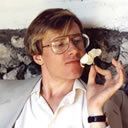
Russell Braddon wrote The Naked Island in 1950. By 1968 it had been reprinted eleven times and sold one million copies in Britain alone. As the author states, 'It was written to tell the world what sort of people the Japanese can be. It was written to explain what they did in the war and what they might well do again.'
There are numerous books on the war in the East but this is one of the greatest. Often hilarious, even amidst the horror, this is the story of what the Japanese did to those they captured. It is written in prose all the more effective for its dry understatement and sharp observation by a man who never lost his will to live even in the most terrible circumstances. Braddon's story is however not that simply of a prisoner of war. In his comments on the equally brutal Japanese treatment of native workers and indeed any who were not Japanese, he reveals the hollow reality of the 'Greater Asian co-prosperity sphere' promised by the Japanese, and attempts to understand how one group of human beings could behave in such a way towards another and the inhuman ideology and fanaticism which drove the Japanese on.
Even today the subject of Japanese war guilt is never far from the headlines and it was only last year that a deal on compensation was arrived at for surviving POWs.
Russell Reading Braddon was an Australian writer of novels, biographies and TV scripts. His chronicle of his four years as a prisoner of war, The Naked Island, sold more than a million copies.
Braddon was born in Sydney, Australia, the son of a barrister. He served in the Malayan campaign during World War II. He was held as a prisoner of war by the Japanese in Pudu and Changi prisons and on the Thailand-Burma Railway between 1942 and 1945.
In 1949, Braddon moved to England. He described his writing career as "beginning by chance". The Naked Island, published in 1952, was one of the first accounts of a Japanese prisoner of war's experience.
Braddon went on to produce a wide range of works, including novels, biographies, histories, TV scripts and newspaper articles. He was also a broadcaster on radio and television.
Proud Australian Boy: A Biography of Russell Braddon by Nigel Starck was published in Australia in 2011.
Mans inhumanity to his fellow man looms large in this raw telling of four years as a POW under the Japanese. Author Russel Braddon tells of his time with nothing left for the imagination. He covers his horrific tale of endurance with all emotions from cynicism through to utter despair and weariness. At the conclusion of this book I was caught by a certain sense that his incarceration may have also become a way of life. He wrote about the breakup of his fellow POWs as they were about to return home and made comment that “The careful fabric of one’s personal life, built up over four years, (was) disintegrated at a single blow.” Nostalgia? But as he left for home he wrote “And with that I brightened. After all, the sea was green and dear: the sun was warm and free: there was food aplenty and no need for anxiety as the old ship ploughed her confident way eastwards, away from Singapore. We were all going Home. That, for the moment, must be enough.” Mixed emotions run the full gamut in this book.
Russell Braddon wrote of his experiences while they were still fresh in his mind as this memoir was released 1952. Braddon was someone I had never heard to prior to reading this book and on finishing I read of his life. He became a prolific author but he did at one time suffer depression and attempt suicide. His war time experiences were the issue and his doctors at the time suggested he recuperate away from Australia.
Based on his writing he seemed to me to not have been the military type in the first place. He joined to “kill Germans” but his writing gave the impression he may not of been aware of what that really meant nor the discipline required, he even notes the bad language by his comrades and seemed surprised by it; "I heard sufficient foul language in five days to deter me from ever using anything but the king's English (though not enough to blind me to the fact that on occasions the Australian uses his 'bloodies' and 'bastards' with a rhythmic grace which I - in my more orthodox style - could never be capable)”.
His war itself was short as his capture was early. He did describe his first kill though. “…in desperation, I moved alone to the trees in front of me and, as the Jap ran crouching towards it, stepped out from behind it and presented him with a firmly held rifle and bayonet. Upon this he promptly impaled himself with a firmly held rifle and bayonet. At the moment of impact, as I tucked my right elbow securely against my hip and moved to my left foot slightly forward, I found myself thinking ‘Just like a stop volley at tennis’ - and spent the next hour musing, rather confusedly, over the unpleasantness of a situation which compelled one to apply the principles of a clean sport to the altogether dirty business of killing”
Not long after he began the rest of his war, POW camps on the Malay Peninsular and on the construction of the Thailand Railway. He actually volunteered for the railway to be with a mate. The descriptions of his time in Thailand are some of the most brutal I have read.
I read that this book has had multiple reprints and sold over 2 million copies since its release. I understand why. This is a genuine must read for anyone even remotely interested in a firsthand account of the brutality of life under Imperial Japanese forces for those captured. It is raw and emotional, as well as very well written. Highly recommended.
I read this book every couple of years as it's so extraordinary. Whilst it was written 60 years ago and some readers might find its content uncomfortable or even politically incorrect, it is an immensely accessible tale of 21-year old Braddon's experiences as a POW in Singapore during WW2. The tale is dramatic, terrifying, incredibly moving, occasionally funny and very raw in its almost unemotional recounting of what Braddon and his friends dealt with during their years of imprisonment. Any time you're feeling a tad sorry for yourself, read this book and you'll shut right up.
Knowing the Australian sense of humour I can believe it.
(I recall the young Aussie nurse in new Guinea being herded off with her co-workers to be shot, saying in that laconic offhanded manner: "Trust my Luck to be finished off by a bloody Jap!!")
But at the moment I am having a National Self-Crisis, one of those "Oh-ye-of-little-faith" moments, and wonder how Russell is going to DO it!!! Why??? I know only too too well the horrific treatment the Japanese dished out in Asia to the civilian populations and to captive soldiers and nurses - Australian, Indian, New Zealand, British and American. It is NOT Politically Correct to talk about it now. HOWEVER the problem is that the Japanese have NEVER apologised, even admitted to their gruesome savagery the massacres, death marches, etc unlike the Germans who have had a National and Public struggle to face up to the Holocaust. Unfortunately the civilian population has been kept in ignorance of the ferocity with which their soldiers behaved in Asia. The so-called Rape of Nanking when an entire Chinese city was practically slaughtered has still not been acknowledged by any Japanese government. Only recently elderly Dutch ,English, Korean ,Chinese women were presenting their cases of being forcibly used as comfort women in army brothels for Japanese soldiers in World War Two. They were young women then. A Dutch girl who complained to the Japanese doctor at her brothel was immediately raped by him. She was one of the speakers at the hearing and I have read her autobiography. Come on Russell, make me laugh! Or at least grin.
PS. (added 1/1/2015) I fail to mention TV documentaries of recent years, interviews with elderly Japanese, those involved in rape, murder and massacre at infamous sites as young soldiers, telling how their superiors brutalised and threatened them into barbaric acts ...their guilt and relief at at last speaking out. Their sadness.Tremendously moving. Governments might deny. The man and woman in the street is another matter entirely. Russell Braddon loathed the Japanese well after the war. It was in writing his biographies of Nancy Wake and Cheshire V.C that he found himself able to forgive.
SEE my review of "Proud Australian Boy" by Nigel Starck, a very recent biography of Russell, and an excellent one!!
A brilliant memoir. Braddon manages to convey the horrors of a prisoner of war camp in Malaysia with its rigid rules, the inevitability of sickness, the fear of inclusion in work parties and the tenuous hierarchy of both guards and inmates, all the while holding on to his own humanity and even sense of humour through the ordeal. The startling shift from visceral depiction of parasites and physical ailments to the joyous occasion of performing some interior design on a prison cell is one example of how this book ends up being a great read. It always feels somewhat perverse to have enjoyed a book about war, pain and atrocities but Braddon is such a writer that he can turn what could be a harrowing memoir into a work filled with wry jokes, well worked characters and a driven plot, always steering towards the hope of freedom. I highly recommend this both as a historical learning experience and as an emotional, compelling and surprisingly amusing read. And this is why it is so worthwhile to take a £1 risk in a charity shop purely based on an eye catching title. Certainly not what I expected from "The Naked Island" but certainly worth it.
A superb books on the life of Prisoners of War under the Japanese in Changi in Singapore. It starts with the disastrous campaign in Malaysia British, Indian & Australian forces were soundly defeated by the gumption & tactics of the Japanese army. But also largely by inept Allied generalship. No one, even the author in the midst of repeated retreats before the Japanese expected Singapore to fall, but it did.
The authors life as a prisoner started in Malaysia and then he was moved to Singapore and eventually the famous Changi prison. The telling of their plight, first there, and then during the horrors of the camps building the Thailand-Burma railway, is superb. Most stirring was the spirit of the prisoners, and how their bodies (and minds) survived, and even thrived during this ordeal.
Excellent book, extremely well written! Most POW books tend to be repetitive stories of survival. This book is full of incredible stories and characters. Even among all the misery the author often finds some humor. Best POW book I have read and one of the best books of any genre that I have read.
One of those books that leaves you agape. Suffering, brutality and the dogged wills of those who survive. A very important entry in Australia's library of war.
I've read many books on the American experience in the Pacific Theater of WII but after recently watching Sisters of War about a group of Australian nurses on Vunapope held for 4 years in a POW camp, I decided to seek out a book from an Australian soldiers POV. This is one of the most well written accounts of any POW situation I've ever read.
It is not a sanitized memoir for mainstream consumption. It is a raw account in the authors native style of writing that lends not only realism but slows the reading pace and makes the occasion of it all stand out, front and center. I was deeply and profoundly moved by the authors recounting of his and his fellow soldiers experience. After researching what became of the author, I was certainly not surprised to learn he had a complete emotional breakdown after the war and attempted suicide. The writing of this book was part of his healing process, although, one wonders how anyone can truly heal after witnessing such atrocities and barely eking out a living while literally everyone around you is dying a slow and painful death.
The author does not wallow in self pity, however, he attacks his memories head on with wit, irony and the ever present Aussie sarcasm & macabre humor. He's clearly an educated man and the prose is delightful (if one can use that word to describe a POW memoir) and at times, very matter of fact but that tone never hides the underlying horror of his ordeal.
We demand that we "Never Forget" the memory of the millions of Jews murdered in Europe by the Germans during WWII (and rightly so) but how the Japanese treated their POW's was equally inhuman. This book is a must read lest we forget the atrocities inflicted on the men and women of the Pacific POW camps.
My lone regret is that my copy of The Naked Island did not contain the illustrations of fellow camp inmate, Ron Searle.
A great work, by a writer who was a teenage prisoner-of-war of Japan in Asia. The title would appear to be a double-entendre referring to Singapore's lack of defences and the way the pows worked unclothed on the railway. Braddon was taken prisoner in Singapore, survived a tour on the Thailand to Burma railway works, and returned to Singapore. There are some strange stories that appear macabre humour. This book was apparently unpopular in Australia, where it was supposedly felt the image of the Australian military had been tarnished. Later Braddon was characterized as a weirdo, almost a pre-vietnam hippy trooper. The author felt he had to leave to live in London. Decades later he generously bequeathed the manuscript to the Australian National Library.
An utterly magnificent statement about tenacity, courage, determination, indomitable humour, and the ability of men to cooperate and pull together for the benefit and survival of the group. It's also, of course, a very human documentation of the evils to which a people can be subjected and which corrupt human potential, reducing whole populations to political pawns who are raised to obey and who can readily justify the subjection of their enemies and opponents to barbaric cruelty and heartless abuse. A magnificent statement, and a blunt one - there is no 'human nature', we are the products of the societies in which we're shaped, even if that society is a haphazard, temporary one sharing the privations of encarceration in a PoW camp and struggling simply to stay alive in mind and body, even if that society is an army convinced that it has the right to torture and murder at will. I first read this book, aged 15 or 16, in the 1960s, in a Scotland still recovering from the experience of two World Wars. My family had fought in those wars, most adults I met had vivid memories of war. And stories about the last war were familiar fare, in bookshops or cinema, or in children's comics. From the outset, "The Naked Island" became (and would remain) one of my all-time favourites. Russell Braddon was 21 when he was captured by the Japanese. He was the son of a barrister, he'd had a fairly comfortable upbringing - nothing, you'd imagine, that could prepare him for more than three years of hideously brutality meted out by the Japanese military. And yet he got through - thousands of others did ... thousands didn't. The experience scarred him - he suffered a breakdown once back in Australia, there was (apparently) a suicide attempt. And he seems to have written his way out of it, written his way back to sanity and a determination to get a grip back on life. Published in 1952, a rapid if surprise best-seller, it was probably the first and most vivid exposé of the brutalities inflicted by the Japanese. And reading it again - symbolically as my 100th book of the year - I know precisely why I loved it from the first. The humour, the humanity, the directness, the quality of the writing. It's a book which makes me laugh out loud. It's a book which regularly had tears coursing down my cheeks. It's a book which, from time to time, still makes me want to stand up and cheer. It's obviously a book detailing Braddon's own experiences, but he hardly makes himself the hero of the tale. In the main, it's self-effacing - matter-of-fact accounts of the agonies and humiliation he endured on a daily basis, matter-of-fact accounts of the daily resilience, courage and humour he had to demonstrate. And he wasn't alone, he lived in a society of men who simply wouldn't quit, who couldn't lose the ability to laugh, who contrived to get through. And don't complain that the language is politically incorrect - Braddon and all the other PoWs earned the right to call their Japanese captors every name under the sun. [My daughter worked in Japan for some time; blonde, pale skinned, obviously a Westerner, she was treated with outstanding kindness and hospitality. Societies produce good and evil according to their contemporary political ideologies, it's not something inherent in the genes.] One of the great war books, absolutely one of the great war books - and, if you want to read something truly inspirational, read this and not the motivational trash churned out by so many publishers and so-called 'inspirational speakers' today.
I discovered this book in the most roundabout way possible.
I am a fan of MST3K and MST3K like things. Agonybooth.com did a mocking of Night of the Lepus, starring poor old DeForrest Kelly of Star Trek fame. I did some looking into this ridiculous movie, and found that it was based on a book,and that the author was actually (usually) a very good writer who had even written about his experiences as a WWII Australian POW under the Japanese in Malaysia and Thailand. Amazingly, my library had a copy of it, so I checked it out.
This book is shockingly droll. In fact, in the beginning, before he is a POW, the book is SO funny I almost wondered if I had picked up the wrong one. The book was written in 1951 (?) however, and often times the author uses terms that are no longer accepted, and his hatred for basically anything non-European often shines through. (On the one hand, it's hard to blame him when you read his experiences, on the other, it made me feel guilty for reading this right after the Japanese tsunami). Although it drags in some places, and other times I couldn't keep up with what was going on, in many ways this book is worth it because it's the only book I've come across so far looking at WWII from an Australian point of view, especially an Australian POW trapped in Malaysia under Japanese control point of view.
POSITIVE 1. Wow. Poignant. More than once during the read, I was shocked at the capability of humans to treat other humans so horribly. 2. The author's deep emotional involvement seeps into the pages.
NEGATIVE 1. Due to its writing style, the book feels like a slight trudge. Looooooooooooong sentences must be reread and reread to parse the multiple ideas contained therein. Convoluted word order in some sentences. Abbreviated sentences. Occasional blatant errors such as the location of the heart in a human body; arctic versus antarctic; and flippant, inappropriate use of English vocabulary. 2. For pages 193-197 of the edition "1974, Pan Books in English - [New ed.]" on Open Library, the scan is not good. Words on the left and right margins have been clipped. I needed to switch to a different edition for a while.
OVERALL Better than Catch-22. Not as good as several Vietnam War P.O.W. books that I've read. Braddon has a fascinating story to tell. Then, I learned about his psychological struggles following World War II. For overcoming these trials by becoming a successful writer, Braddon deserves utmost respect.
Braddon's account of his life as a POW in Singapore, Malaya and Thailand vividly conveys both the horror and the astounding will to survive of some of the men who suffered unimaginable hardship and cruelty. Many of the most horrific episodes are described in an oddly 'matter-of-fact' way, much as you or I might describe a hard day at work! And they are all the more striking and memorable for it. This was one of the first books ever published about the experience of a POW of the Japanese. It was a best-seller in its day. It deserves to be more widely read now. If you want to gain some small insight into the extremes of human behaviour, both good and bad, read this book.
A really brilliant book! Probably one of my favourites! Filled with little snippets of humour and talks a lot about how they lived as POWs, the thick impenetrable jungles of Malaya and Thailand, the fever stricken jungles and the creeping vitamin deficiencies. This book is all true memories of a young Australian, who was determined to do whatever it took to stay alive and how important the company of all the other men were. It talks about the poor conditions of the 'camps' or 'gaols' and how they soon called it their 'home' for the next three years. Extremely well written and detailed making the imagery vivid.
I read this book soon after it came out, and some time later I read, "The End of a Hate". I have been unable to find this book via Goodreads, but if you google : abebooks.com, you will be able to find that it is available from a number of used bookshops in several countries. Do read this book after reading "The Naked Island". This man realised that foregiveness clears the mind; check out "The Railway Man" by Eric Lomax. Also in my list see "Hiroshima".
just got back from Australia where every town (no matter the size) has a memorial to the WWs; this book made me realize how close Australia was to WWII and how unprepared some of the men were for the Japanese and how cruel the Japanese were to their POWs; first hand report of the Aussie spirit of making the best of a bad situation;
A no-holds barred account by a young Australian soldier who fights in Malaya and is taken prisoner-of-war by the Japanese. He is forced to work on the infamous Death Railway in Thailand, before being returned to Singapore, where he is held until the end of WW2 in August 1945.
A wonderful book. Written by someone who lived thro’ one of the most dreadful episodes of the Second World War. There is a surprising amount of humour in this book, not all the way thro’, but this is a real tribute men trying to survive against the odds. Highly recommended….
While I was hoping to not do much at all between Wednesday and Friday on either side of ANZAC day, which was on the Thursday - besides watch the traditional Roosters v Dragons, and switch over to Essendon v Collingwood in between - I began reading The Naked Island on the Wednesday evening and finished it on Friday morning, so that most of it I read on the ANZAC day Thursday. I must say that I’ve never ever experienced a more reflective Anzac Day than this one. I barely left my apartment. I intentionally traded in the dawn service for the reading of this book. It occurred to me that I didn’t know any stories relating to Australian (I’m a New Zealander, but same same in this regard) or Kiwi engagements in any war, so why not change that over three days of leisure, while enjoying the footy. So close Warriors, so so close.......
The Naked Island by Russel Braddon was the best place to begin. I was in Kanchanaburi a few years back, but I just didn’t quite get the significance of it all. Now I do, and Braddon is one of those guys you’d give a week’s pay to spend ANZAC day with, down at the RSL, throwing back schooners, listening to his story about the time the Japs turned up in Parit Sulong, or the theatre stage they built at Changi, or the hope that seemed to somehow find a form of expression in the Kanchanaburi malaria huts. I’ve learned a lot from this book. Not just war facts, but also about the courage and determination that can be found in the most threatening of situations.
It really brought back this sense of identity to me, because I remember these Russel Braddon types from my childhood in New Zealand, these tough buggers, and I miss them. This book made this year’s Anzac Day something special, probably the most educated, meaningful reflection upon war, something that’s an absolutely terrible business, but it has happened, and helpless young men recruited themselves, guys like Braddon, who went from Sydney schoolboy to killing with a bayonet in disease infested jungle, all on behalf of state interests. If you want to understand war from a soldiers perspective, then this is a book I highly recommend.
In fact I would recommend any Australian or New Zealander to read The Naked Island over the Anzac Day period. It’s a true classic of storytelling and antipodean literature.
Wonderful and eye opening book that is palatable as it’s shrouded in comedic relief. One of my favorite quotes from the boat is “get the boat! never mind get the bucket.” It is a bit racist (as to be expected of the time due to dehumanizing and racist training and anti japanese propaganda during WWII). Not 5 stars because I wanted a little more at the end. It ends rather abruptly and I would’ve loved to see a brief afterword describing injuries/ health journeys and adjustment back into civilian life. Overall an amazing testament to human resilience and what one will do to protect one’s chosen family.
This is a good read, written by the author in what I believe is understated concerning the hardship experienced. I prefer subtly myself so all good. This is the experience of being a POW from a POW. I read the 1959 version which has a few what would be deemed politically incorrect remarks these days. Hey,I have the capability to understand what drives the remark back then and reminds me a lot has changed for good.
Raw detailed story of the savagery experienced by prisoners of war at the hands of the Japanese. Made me incredibly angry at how cruel the prisoners of war were treated. I’m I’m
I will have to read this again in order to write a fair review as I read this year's ago
Here we go folks. I found this book well and intelligently written and funny in a bitter sweet way. In response to the cries of racism from the revisionists and apologists I would merely say that Braddon had written this with very fresh memories of a brutal, uncaring regime, less than five years before. Also the European settlers of Malaya didn't come across with much credit.
I do not typically read non-fiction, especially war non-fiction. However, I found this book to be an intriguing and (strangely) humorous first-hand account of the horrors of experiencing war imprisonment. It is very exact and details of the horrors of overcrowded prisons. Highly recommend.