Wilderness Plots is made up of fifty brief tales that chronicle the period of settlement of the Ohio Valley, roughly 1780 to 1850. Beginning with the discovery of the Ohio River by La Salle and ending with the Civil War, this region was the West, the exciting new frontier. Written with the power and compression of folklore, these tales bring to life the unmemorialized common folks who carried out this epic adventure. In these pages, you will meet preachers and profiteers, the boy who saved Cleveland, a love-crossed carpenter, generals and journalists, a hermit and a lawyer, farmers and bone collectors, lovers, layabouts, and a host of other high-spirited characters the kind of people who, in all ages, have made history. These stories, which condense entire lifetimes into single paragraphs, come out of a distinctive tradition in American literature. For this book reflects the experience of settling our entire wild, raucous, dangerous, and glorious continent. Our ancestors went through very much the same trials everywhere, from New England to California and Alaska. They wrestled with the land and its inhabitants for more than two centuries before there were any cities or industries to speak of, and since we have all been shaped by that prolonged wrestling, this encounter with the wilderness is one of the deepest, truest, and most abiding subjects in our literature.
Scott Russell Sanders is the award-winning author of A Private History of Awe, Hunting for Hope, A Conservationist Manifesto, Dancing in Dreamtime, and two dozen other books of fiction, personal narrative, and essays. His father came from a family of cotton farmers in Mississippi, his mother from an immigrant doctor’s family in Chicago. He spent his early childhood in Tennessee and his school years in Ohio, Rhode Island, and Cambridge, England.
In his writing he is concerned with our place in nature, the practice of community, and the search for a spiritual path. He and his wife, Ruth, a biochemist, have reared two children in their hometown of Bloomington, in the hardwood hill country of southern Indiana. You can visit Scott at www.scottrussellsanders.com.
In August 2020, Counterpoint Press will publish his new collection of essays, The Way of Imagination, a reflection on healing and renewal in a time of climate disruption. He is currently at work on a collection of short stories inspired by photographs.
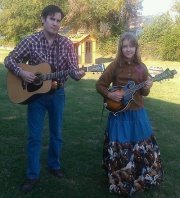
Great snipetts into life from the 19th centruy. Also, local musicians(Bloomington, IN) have turned it into a music project and they present their songs inspired by the stories, while Scott is the narrator (haven't yet seen this, but watched the documentary on how it was made). Anyways, this is a short and enjoyable read; one of my favorites!
A moving collection of very short episodes in the early settling of the Ohio River valley. Reminded me of the travails of settling a new frontier. A good read.
In some respects unanticipated by most Americans, Ohio’s history is America’s history. These days, America pays attention to the Buckeye state about once every four years when seeking to elect a President. But Ohio has delivered more than its share of Presidents and Generals, and for a time Ohio served as the frontier, then the wild West, then the gateway to it. Scott R. Sanders’ documents the rise of Ohio in this odd little book, delivering a collection of vignettes that is each about two pages long. Together, the vignettes form a rather complete chronicle of Ohio’s transformation from wild, overgrown forest primeval into the heartland.
But Sanders writes on an intimate scale, abandoning the distance of history for the up-close scrutiny of narrative. Each vignette’s story is self-contained, titled and conclusive. The stories are all tinted by history, obviously drawing upon careful research without citing sources. Sanders is a talented storyteller, capable of both beginning his stories with a mystery and ending them with a twist. “Elijah Alford,” starts one tale, “[who was] first justice of the peace in Liberty Township, lost $3 to an otter.” Other first sentences take readers directly into the story, such as the first sentence of “Clearing for Sunlight:” “As a veteran of the revolution, Ethelbert Baker was granted one hundred acres of land in the Western Reserve.” From their first lines, such stories move quickly toward their conclusions, never wasting time nor space, each sentence propulsive.
From these densely paced stories, a bright picture emerges of the ordinary men and women who fought to carve out their lives on the wild frontier. Although an occasional war hero or politician wanders these pages, they are no brighter stars than the weird hermit living in a cave by the canal or the father trying to carve a road out of the forest along which he might take his pigs to market. Sanders writes of the real folks who make history, workers who toil and suffer without acclaim or notoriety, salt of the earth and makers of civilization. This attention to common folk produces a collection of stories that communicate Ohio’s roots as a state, its earliest days when men and women brought their hopes to the frontier and struggled to realize a brand new American dream. Many of them died. Some of them left. But the ones who stayed made a path that opened up the rest of our continent, cleared farmland out of the tree-choked country, fought Indians and British and predators and each other.
This book does not seem to take any political stances concerning whether the settlers had a right to carve up the Ohio countryside. Nor does the book assert any polemics on the horrific treatment European settlers inflicted upon the natives or the slaves. But these stories don’t exactly ignore those issues, either. Sanders’ writing is too focused, too intimate, too individual to qualify as any argument. Thus “Savages” details a specific encounter between settlers and natives, which turns out to show how the people named in its title are not the Indians. And another story begins, “The gravest mistake the Indians made was suffering any white man who had once viewed their plantation to escape with his tongue in his head.” The Indians named in that sentence are not the Native Americans as a whole but a portion of a tribe, people who freed a particular spy and suffered the consequences of their mercy. Any polemics are contained in the events of the story, not the sentiments of the author. And that makes all the more powerful its depiction of America’s war on the natives, which, together with slavery, represent our country’s original sin.
Always charming, thought-provoking, and packed with folksy wisdom, these are the kinds of stories that teach Americans who we are and where we come from. For that reason, they are also the kind of stories that one generation hands down to another, which explains why an evening of musical theatre and storytelling has been adapted from this book. Sanders understands that the story of a nation can only be told through the stories of individuals. A writer and a professor of writing, Sanders has mastered the paradox that readers can identify with someone else only when they are given abundant, carefully selected details about that person’s unique circumstances. In the last piece, “The Manner of Their Dying,” the collection reveals its populist aspirations by listing the various, breathtaking circumstances in which settlers met their ends, culminating in an elegant but beautiful line: “Their dying was as various as their living, such a compost of souls.” This is where the book reveals itself as more than mere chronicle, as a tribute to the settlers of Ohio who fought hard every day to build the bones we stand with now. Rarely does such light reading deliver so much.
This is a lovely little inspired book of short fiction based on real people. The author, when researching the history of the Ohio Valley, found himself inspired by the stories of some of the early settlers, most of whom were mere "footnotes" in the pages he was reading. I totally understand this impulse. In my genealogical research, I find myself similarly inspired by something as simple as a line on a census or a sentence in an official record. For instance, the stillborn twins of ancestor in the late 1800's of whom someone had written in careful letters in the county Death Record, "wrapped in same blanket."
These little stories range from the humorous to the heartbreaking--a little heavier on the heartbreak than humor. Reading them, it is impossible to ignore the hardships inherent in being a settler. The people who chose to move west had to be tougher than the land they cleared.
The carefully detailed illustrations are wonderful and make the people come to life even more.
This book would appeal to more than just the student of Ohio history. Anyone interested in human struggle, in family drama, in the gritty reality of Manifest Destiny will be enthralled by these tales.
Very short pieces with plots, but more vignettes than stories. I adored this when I read it.
From the forward: "These tales concern people who actually lived in the Ohio Valley, and events that actually ocurred there, during the period of the Valley's settlement... But they are still tales, stories provoked by germs of fact, rather than history. When... I turned up a character whose exploits or sufferings touched me, I wrote a narrative about him or her. Often I had no more than a sentence to work from, rarely more than a paragraph, because the people who appealed to me most were the obscure ones, whose names show up only in out-of-the-way chronicles... I have written about the unmemorialized common folks,... the sort of people who, in all ages, have actually made human history."
Any native Midwesterner curious about their pioneer heritage would enjoy this brief collection of bite-size (yet well-seasoned) historical-fiction vignettes. The author combed through country/township records and newspaper clippings from the period between the end of the American Revolution and the start of the Civil War to uncover snippet of information about real residents of the Ohio Valley--then added enough imagination to their succinct histories to bring them to life in a series of 2- to 3- page vignettes.
This is a small book and a quick read. I would say it's more flash fiction tales about the Ohio Wilderness than short stories--whatever you call them, they are a great read.
Because each story is so short, each word counts. SRS does well nailing the cadence and idioms of the time--the result is, each story sounds like it's being told by a storyteller of the time.
Each tale has a twist or an ending that you really didn't see coming, which speaks to the power of the writing in such short, short pieces.
Read this when I was thirteen and wrote a review of it for my junior high-school newspaper. I don't believe I said anything defamatory. One of the stories herein, "Aurora Means Dawn," was adapted into a children's book in the early 1990s.
I thought this book was true history of the Ohio Valley but soon learned that is fiction. There are so many good non-fiction books of the Ohio Valley history. It's a good read but I want real history!
A fascinating set of 1-2 page stories about the settlement of the Ohio Valley. A number of these stories were turned into songs by some of my favorite folk singers (Carrie Newcomer among them), which is how I found it. I love the CD by the same name, and found the book to be just as intriguing.