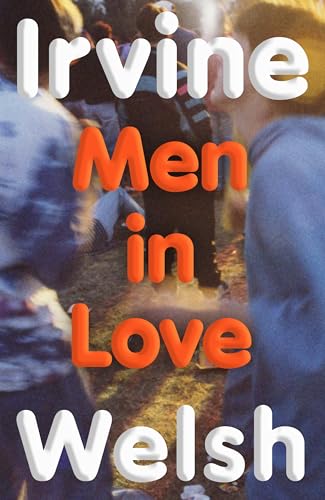
It is the late 1980s, the closing years of Thatcher’s Britain. For the Trainspotting crew, a new era is about to begin – a time for hope, for love, for raving.
Leaving heroin behind and separated after a drug deal gone wrong, Renton, Sick Boy, Spud and Begbie each want to feel alive. They fill their days with sex and romance and trying to get ahead; they follow the call of the dance floor, with its promise of joy and redemption.
Sick Boy starts an intense relationship with Amanda, his ‘princess’ – rich, connected, everything that he is not. When the pair set a date for their wedding, Sick Boy sees a chance for his generation to take control at last. But as the 1990s dawn, will finding love be the answer to the group’s dreams or just another doomed quest?
Irvine Welsh’s sequel to his iconic bestseller Trainspotting tells a story of riotous adventures, wild new passions, and young men determined to get the most out of life.
Probably most famous for his gritty depiction of a gang of Scottish Heroin addicts, Trainspotting (1993), Welsh focuses on the darker side of human nature and drug use. All of his novels are set in his native Scotland and filled with anti-heroes, small time crooks and hooligans. Welsh manages, however to imbue these characters with a sad humanity that makes them likable despite their obvious scumbaggerry. Irvine Welsh is also known for writing in his native Edinburgh Scots dialect, making his prose challenging for the average reader unfamiliar with this style.
Fans of the movie may not know this, but there are a lot of Trainspotting novels. Like, a lot. A prequel, multiple sequels, and now a midquel.
It’s been a well that author Irvine Welsh goes back to a lot, the prolific writer who has created his own sort of universe populated with fringe characters popping in and out of his array of novels about the dregs of Scottish society.
The truth is, none of them are as hard-hitting as the original. Still, that’s a high bar, and leaves for a lot of excellent writing to enjoy. Besides all those other books, the internal chronological order for the core Trainspotting series is currently as follows: Skag Boys, Trainspotting, Men in Love, Porno, The Blade Artist (just about Begbie), and Dead Men’s Trousers.
In our real-world timeline, it’s weird not only to think that Trainspotting came out in 1993, but that its first sequel Porno came out in 2002. That was decades ago. The characters—good ol’ Renton, Sick Boy, Spud, and psychopath Begbie—were still young then! It was 2018’s Dead Men’s Trousers that was about coming to terms with themselves at middle age, which corresponded more to the legacy sequel film that was released at nearly the same time.
The latest book is Men in Love, a period piece taking place as the 80s end and the 90s begin, which takes place directly after the events of Trainspotting. In fact, if someone was only familiar with the classic movie, that’s all they would need to know to understand this book. While the first one was more of a series of interconnected short stories, Welsh’s writing had become more plot-based in the years since and Men in Love is a much more formalized novel than what came before. The core four characters have arcs, obstacles to overcome, with an exciting climax.
(By the way, it is interesting to see how it all works with Porno’s continuity, as Sick Boy gets into his pornographic film-making career while Renton finds his way into working the Dutch club scene. And Begbie ends up in jail, of course. But, as it should be, the novel stands on its own and it isn’t absolutely necessary to be a super-fan knowing all of next books to just enjoy this one.)
What you do need to know is, Renton has stolen the drug money from his friends and abandoned Scotland to hide out in Amsterdam. This leaves an impact on his friends. Sick Boy hates him, Begbie wants murderous revenge, and Spud is just depressed about it. Since they are at that age in life, and it is called Men in Love, most of the stories are about falling in love.
Renton’s own chapters about falling in love and going sex clubs are actually the briefest, apparently Amsterdam is not Welsh’s town and there’s not as much to say about it. The protagonist is in fact Mr. Simon David Williamson, a.k.a. Sick Boy. His love story is the most detailed, in which he meets a posh Londoner at a rehab meeting and then forms a life and family with her. All while being sleazy and cheating on her whenever he can, because that’s what he does. Spud’s story is sadder, as he disappoints his partner and frets over the stolen money Renton sends him. Begbie’s story is pure ultraviolence fun, and the least sentimental of all of them.
The narrative culminates in Sick Boy’s epic wedding, an expensive event paid for by his loathsome new in-laws, which gets downright hilarious as his grimy tribe from Leith inevitably crash the ceremony and chaos ensues. More funny than disturbing, Men in Love jumps from meditations on the nature of love to the imaginative and messed-up scenarios of which Welsh is known for.
It’s also far too long. This is a common issue with successful writers as they get older: Nobody edits anymore and they become too wordy. Honestly, this book could have been cut by a lot. There’s no reason it needed to be the longest, by far, in the entire series. The wedding alone is nine chapters.
It is always an engaging ride to see Irvine Welsh return to these characters who started his literary career. In Men in Love, they grow up. Or, at least, they attempt to grow up, with varying degrees of success. Sometimes they find themselves in new, unexpected paths. And other times it seems they cannot escape who they are deep down. It may not be the most necessary read, compared to Porno and Dead Men’s Trousers, but there it is a rewarding journey therein for the completist who keeps reading, filling in the details and getting deeper into what makes that iconic crew tick. I’ll give this iteration 3.5 stars, rounding up.
Totally absorbing and brilliant. The insight into a monster like Sick Boy was frightening. As usual, with Irvine Welsh’s books, I was laughing out loud before feeling appalled within half-a-page. Shows the worst of men and yet the touches of humanity are superbly used like the most beautiful salt and pepper. Not for everyone but definitely for me!
Win ah opened this book ah wis like “wha the fooks goan oan here?”. Likesay them cats fer Trainspotting are back, but they disnae do skag like the jakeys they wis back inae day. Now thuv goat jobs and ther all aboot ridin and workin like but the bam Franco’s still a heidcase and Sick Boy’s goh issen a posh burd and a semi fer every other lass too. Renton’s still innit but he sorta disnae feature as much but Spud’s back on the chorie in Lundun nae Embra along wid some other gadges fer Leith. It’s fair funny and ends in a barry wedding as explosive as a Begbie nut. I ken the lingo after a bit and the fitba helped us; as a slice of 1980s culture clash I thought that yin Welsh writes pretty wide. Fair play.
A blast from the past - author Irvine Welsh popped up in my feed recently with his sequel to Trainspotting, titled ‘Men In Love’. I haven’t picked up one of his novels in, I’d say almost 20 years, when I was a rebellious, innocent teen, entering adulthood, and looking to expose my young self to the ways of the real world, beyond the very sheltered Christian environment in which I had been raised.
At 18, influenced by a boy crush, I purchased every one of Welsh’s catalogue of absurd, filthy, yet strangely, emotion-inducing novels for $5 each on eBay, and couldn’t put them down. Day and night, on the train and in bed, I devoured the contents of his stream-of-consciousness style of writing, a style that had not been present in my high school set readings, or in my safe, wholesome home library. Back then, I had been unable to envisage even half of what was occuring in his stories, as I’d yet to be introduced to that kind of world, and had never even the shores of Moreton Bay, where I was born and raised. After renting ‘Trainspotting’ on video cassette from Video EZY one night in 2005 with my boy-crush-turned-boyfriend, and I was even more obsessed with Welsh’s stories and the wild scenes within. I was fascinated at this other world of parties, housing schemes, sex beyond missionary style, hardcore drugs and violence- although- from a distance and the safety of my book covers.
Unfortunately now, picking up ‘Men In Love’ as a near 40 year old woman, who has now traveled the world, worked as a nurse for 15 years, the most part in emergency medicine, and having studied and taught criminology at university - my appreciation for Welsh and his themes in his novels, has inherently changed.
Yes, I still enjoy Welsh’s classic style of writing, I which he employs vernacular language of the characters of Leith, as I read while poorly imitating a Scottish accent in my head (one which would have my Glaswegian grandfather turning in his grave if he heard it), I am far less enthralled or excited by the contents and same-same themes within the covers of another book in this series of horny, criminal junkies in Scotland & England in the late 1980’s.
Maybe it’s been too long between drinks for me to remain captured by the characters, or perhaps after 20 years of adulting, I’m no longer excited by themes of immature drug addicted men disrespecting, using and disposing of women while engaging in petty crime. Or, maybe it’s the way that Welsh still pens these sex scenes, which feel quite outdated, and leave me feeling like it’s been 20 years since Welsh himself had a shag. Smut has come a long way- and the scenes in this book feel almost vanilla now, in nature.
The only saving grace of this book for me, was the author’s note at the end, which probably should have been a foreword, and would have saved me my ‘once loyal customer’ approach to this review- which I started to write at about 20% of my way through 😬
The storyline continues in a way which leaves space for another in the series, and I did find myself begging for closure. Or at least the death of Begbie- he is the worst.
Do I recommend it? Sure. It was nostalgic, and an easy read. 3/5 stars.
The least successful instalment of the Trainspotting saga but, for long time fans, it is worth reading and it has a few standout moments.
As the title suggests the overarching theme is love and romance.
Men In Love is too long, too baggy and frustratingly inconclusive. In terms of the timeline it slots between the original novel Trainspotting and immediately before Porno.
Renton is in Amsterdam, Sick Boy is in London, and Spud and Begbie are back in Leith. Spud trying to better himself and settle down despite never quite escaping addiction. Begbie in and out of jail, as psychotic as ever, and obsessed by Renton’s betrayal.
Sick Boy relentlessly pursues women whilst also falling in love with one in particular. His numerous sex scenes are described with tedious detail. These become really wearing early into the novel and felt increasingly superfluous and gratuitous.
Spud’s sections are amongst the best. I’ve always enjoyed his inner thoughts and his sections are highlights.
The novel is episodic with no overall narrative and no satisfying conclusion. By going back to a period already covered in the timeline there’s no new insights or character development. Men In Love just reiterates and underscores what we know already, almost to the point of parody in the case of Sick Boy and Begbie.
The latter part of the novel includes a wedding which is by far and away the best and most memorable part of the narrative. This is the only part that contains laugh out loud moments. Begbie’s antics will live long in the memory.
Overall Men In Love is an unnecessary instalment. Just about worth it for long time fans and completists but best skipped by the casual reader and newbie.
3/5
It is the late 1980s, the closing years of Thatcher’s Britain. For the Trainspotting crew, a new era is about to begin – a time for hope, for love, for raving.
Leaving heroin behind and separated after a drug deal gone wrong, Renton, Sick Boy, Spud and Begbie each want to feel alive. They fill their days with sex and romance and trying to get ahead; they follow the call of the dance floor, with its promise of joy and redemption.
Sick Boy starts an intense relationship with Amanda, his ‘princess’ – rich, connected, everything that he is not. When the pair set a date for their wedding, Sick Boy sees a chance for his generation to take control at last. But as the 1990s dawn, will finding love be the answer to the group’s dreams or just another doomed quest?
Irvine Welsh’s sequel to his iconic bestseller Trainspotting tells a story of riotous adventures, wild new passions, and young men determined to get the most out of life.
In terms of just this series, Men in Love is up there with Welsh's Trainspotting, Skagboys, and Porno, and above the misfires Dead Man's Trouser's and The Blade Artist. Really the book is great, building a very strong farce, barrelling towards a disaster we can all see coming at the wedding––but I really thought he'd find a way for Renton to be there (I know that he's separate from the group in this period, but still, it would've been a much more satisfying way of setting off Begbie, even if they just catch a glimpse of him or something, maybe sailing by on the Thames? I dunno). So yeah, most of the book is great but I found the ending was a bit of a misfire.
Always fun to get back together with the gang from Trainspotting. How Irvine Welsh gets away with some of the potentially offensive language and situations in this PC era is amazing but he makes his valid excuses in the Author’s Note at the end of the book. None of the characters have redeeming qualities but it’s always entertaining to see what they’re up to. Slightly overlong but never boring. Second prequel in the series. Would like to see what became of Sick Boy after his ending in Dead Men’s Trousers though. Men In Love is set in between Trainspotting and Porno.
L’infelicità vuole la compagnia, l’amore vuole solo l’amante
Mi capita raramente di attendere con trepidazione l’uscita di un libro. In passato mi è successo per l’ultimo coniglio di Updike, l’ultima fuga di Nesi, l’ultimo M di Scurati. In ogni occasione si è trattato dell’ultimo libro di una saga, proprio come “Mens in love” (*1) di Irvine Welsh. La narrazione è incastrata fra Trainspotting e Porno. Questo significa che Welsh ha dovuto spostare le lancette del proprio orologio, del proprio lessico, della propria quotidianità a quei giorni là, quelli che condussero dal 1988 al 1990. Via i telofonini, via internet, per trovarsi occorre andare al pub a farsi almeno due Stelle (Artois). I protagonisti principali son sempre loro: Rent Boy, Sick Boy, Beggar Boy e Spud. Un capitolo ciascuno, devi riconoscerli dal loro modo di parlare, devi capire da solo in quel capitolo a chi è affidata la narrazione. Toccherà al traditore, al manipolatore, allo psicopatico o al ladro? Dimenticate i buoni sentimenti, qui va in scena il lato umano peggiore. Non so se in tutta la letteratura esista un personaggio più squallido di Sick Boy. E Begbie invece? Se volete farvi un’idea di come possa ragionare un tuonato, leggete le emanazioni del parlamento del suo governo. Begbie è uno a cui non è sufficiente neppure dare ragione, un folle che si ingozza di violenza come i suoi amici si ingozzano di droga. L’alcool invece è trasversale, lo consumano tutti: violenti, drogati, donne e ragazzini. Il problema di “Men in love” secondo me è non essere l’ultimo libro della saga. Per collocare questo pezzo del puzzle Welsh ha dovuto smussarne gli angoli ed inventarsi un improbabile romanticismo sfoggiando decine di citazioni dei mostri sacri della letteratura inglese, dei quali lui, negli anni a venire, non potrà far parte; lui rimarrà il cantore del proletariato degli anni ottanta, delle sostanze con cui i ventenni volevano rendere la vita più tollerabile e se la sputtanavano completamente. Ci sono stati dei passaggi in cui ho riso di voglia: quando succede ciò, sono grato al libro che sto leggendo. Le interazioni fra il manipolatore e lo psicopatico sono le più riuscite. Il primo deve far credere al secondo di essergli amico, il secondo deve dimostrargli di esserlo. Franco diventerà il testimone di nozze di Simon, gli esiti saranno catastrofici.
Tutto quello che poteva andare storto si è tuffato a pesce in un casino fatto e finito, tritato, deprimente. E questo soprattutto per colpa del cacodemone più maligno di una compa nutrita.. è lo stronzo che adesso pattuglia la pista da ballo tenendo l’occhio sulle carni delle amiche di Amanda come il kapò di una piantagione schiavista. Begbie. Niente finezza. Niente classe. Niente di niente. Non posso crederci che quello scassacrani fulminato di Begbie voleva che io mollavo il mio viaggio di nozze, cazzo… per andare a Manchester con lui in un’assurda ricerca di Renton!
Sarà difficile apprezzare questo libro se non si sono letti gli altri della saga. Il presupposto su cui si fonda è la fuga di Renton con i soldi (proventi di spaccio) che avrebbe dovuto dividere con i propri amici. È il presupposto su cui si reggono almeno altri due libri della saga. Chiunque volesse affrontarla è opportuno che si attenga all’ordine di pubblicazione e non a quello cronologico. È necessario partire da Trainspotting, tutte le altre sono fioriture successive, talvolta esperimenti condotti in serra.
Musica: (Ho fatto una cernita, nel libro ce n’è molta di più)
(*1) Ordine di scrittura e pubblicazione: Trainspotting (1993) Porno (2002) Skagboys (2012) L'artista del coltello (2016) Morto che cammina (2018) Men in Love (2025)
Ordine cronologico: Skagboys (2012) – Prequel. Trainspotting (1993) – Il romanzo originale Men in Love (2025) – Ambientato subito dopo Trainspotting, Porno (2002) – Ambientato circa dieci anni dopo il primo libro. (The Blade Artist, 2016) – Spin-off. Incentrato interamente su Begbie (Dead Men's Trousers, 2018) – Capitolo finale
The two authors I seem to get into trouble the most reading are Welsh and Frankie Boyle, every time I find myself laughing aloud I draw yet another suspicious look from TOH. Yet again from the opening page Welsh demonstrates a fine lesson in how to write – his sharp, funny, bitter commentary and terribly addictive characters make for highly entertaining reading as ever - though one criticism would be that this is slightly overwritten and strangely enough quite a lot of typos got through the net too?...
I'm torn with this one. it's a worthy follow up to Trainspotting - irreverent with hilarious class divides. However, there was far too much sexual violence in it for my taste. A bit too disconcerting at times.
Super disappointed. I love Sick Boy but this was a tough read. Genuinely felt like very little happened. Nothing deepened our understanding of these iconic characters and nothing helped to bridge the gap between Trainspotting and Porno.
I loved checking back in on Sick Boy, Renton, Spud and Begbie. If you enjoyed Trainspotting you will enjoy this. Welsh writes excellent, character driven novels that are full of life.
I loved ‘Trainspotting’ - the movie as much as the novel - so any prequels or sequels will always be welcome. ‘Men In Love’ focuses on the 80s post ‘Trainspotting’ and Sick Boy in particular. The union of Simon to society beauty Genevieve is comedy gold and, with Begbie as best man, Irvine Welsh delivers the glorious dialogue that such a momentous occasion warrants. If the characterisation wasn’t so spot on, then ‘Men In Love’ would be overlong, but we know and care about these people. They feel like old friends who we can simultaneously laugh with and be outraged by and the 500 odd pages just fly by.
Ho letto Trainspotting più o meno a diciott’anni e, a essere sinceri, non avevo capito granché. Lo trovai un libro confusionario, caotico e mi chiedevo sempre come fossero riusciti a tirar fuori da un testo del genere quel capolavoro che è il film omonimo. Tornare a leggere di Renton, Sick Boy, Spud e Begbie mi ha dato una sensazione strana: da una parte ho riprovato quella confusione estrema del racconto, dall’altra ho ritrovato quelle voci indimenticabili che, ribadisco, nel film sono espresse magnificamente. Mi sono anche però domandata perché scrivere questo libro: per un ritorno sul viale dei ricordi? Per colmare le lacune lasciate dagli altri seguiti? Sinceramente non ho trovato una risposta adeguata e ammetto che il libro in alcuni punti mi sia risultato un po’ noioso, ma i pezzi di Spud e Begbie hanno sicuramente colmato la noia provata nelle parti di Renton. Ah, non posso evitare di fare un’ulteriore osservazione: Irvine Welsh, secondo me, descrive malissimo i personaggi femminili. Se gli uomini hanno tutti una propria voce caratteristica, subito distinguibile, le donne sono più o meno tutte uguali. Peccato. Nonostante tutto, questa lettura mi ha fatto venir voglia sia di rileggere Trainspotting, sia di scoprire gli altri seguiti. Speriamo di non rimanere delusi.
I first read Trainspotting around 1993 and have read each subsequent novel since, enjoying each in particular Skagboys (which I personally think is the authors finest work (alongside Glue). I cried when I finished Dead Mens Trousers, thinking this would be the last novel featuring these vile (but lovable) characters. Now reading this I wish the previous novel had been the last. I am really struggling with this, 335 pages in & I'm thinking of abandoning it which saddens me. It takes place directly after the events of Trainspotting, telling of the trials and tribulations of each character's romantic exploits, but did we really need this novel or is Irvine Welsh flogging a dead horse? That being said I will grudgingly persevere until it ends in the hope that Welsh lays these characters to rest . However as much as I dislike this novel it is a must read for those who have read the previous four novels in the series.
Sick Boy might genuinely be the most hilariously written character in history. So totally fascinating is his descent into full-blown narcissism. So insane and hilarious. I love and hate all these guys. So goddamn much.
This book felt a little like an ode to Sick Boy’s character. And Christ, he deserves it. Mark was undoubtedly the lead in Skagboys and Trainspotting, but I’ve just been gagging for more and more Sick Boy in the 3 novels that succeeded them. And we fuckin got it.
Here's Irvine Welsh flogging the Trainspotting horse for the umpteenth time and this installment is by far the least enjoyable. There are some brilliant parts, but too few and far between to mark this book as something more than mediocre at best. Almost every other chapter includes mostly unsavoury sex scenes, which becomes tedious after the second or third instance. The title reads "Men In Love" but "Notes of a Dirty Old Man" would be a tad bit more appropriate. If you are not a Welsh fan you can safely skip this one.
Lions of Longleat mentioned 🗣️‼️ no cap, the wedding sections is one of my fave pieces of literature ever written. My driller Irvine (I’ve met him twice now so we’re on a first name basis) doesn’t Bombaclart miss
oh i just LOVED this! wasn’t sure how a sequel written so many years later and one set before an existing sequel set much later would fare but Irvine is just so brilliant and i loved every character’s arcs pretty equally whereas i never cared much about Begbie before (not that i CARE about such a monstrosity but i read every single word about him this time)
Seems was released earlier in paperback at airports so took advantage of this, finishing on the plane back. think a 5* but the Murphy sections got on my nerves, and the lack of any conclusions means I’ll need to read Porno again…
I'm torn between 4 and 4.5 stars. I really enjoyed this and it was fun to get the Trainspotting gang back together again, it's not quite as striking as Trainspotting but I think that's because I had a very good idea of the levels of depravity within Irvine Welsh books. I thought it was well worth staying up until 1am to finish reading.
All the male characters in this are very flawed and in some cases downright unpleasant but that's the point and sums up Welsh's entire bibliography.
I'm an enjoyer of Welsh's incredibly dark humour but at points in this book I found it incredibly grating, because of this I felt a sense of relief after finishing the book.
This book, to me, is incredibly cynical about love (well perhaps right up until the end) but it's the source of a lot of this books humour. But this is hardly surprising given Irvine Welsh's recent collumn in The Guardian: https://www.theguardian.com/books/202... .
It's strange to read a book that is simultaneously a sequel and a prequel (sequel to Trainspotting, prequel to Porno (which I'll likely read very soon)).
Towards the end of this book I was beginning to feel quite claustrophobic and Frank Begbie's mindless violence + paranoia was, although entertaining, becoming quite annoying.
Usually my criteria for a book to be 4 stars or more is that it has to make me feel some sort of emotion (not necessarily a positive one). This book meets that criteria by a country mile - unfortunately the main emotions are discomfort and disbelief at certain ludicrous occourances.
A lot of people won't like this book as Welsh has (unsurprisingly) not yielded to political correctness and it is littered with slurs that will likely offend every single demographic - Welsh argues that this is the point as it's a snapshot of the 90s but I've not quite decided how I feel about this yet.
Throughout reading this book I was continually thinking of Mark Fisher's writings on the slow cancellation of the future - essentially the idea that it is impossible to advance culturally and politcally due to stagnation induced by neoliberalism. Fisher argues that this cancellation began in the late 80s and early 90s (when this book is set). There's many moments within this that feel like they have been plucked out of the present day, very much supporting Fisher's theory.
Was looking forward to this. It's been a while since I've read his books and certainly ages since Trainspotting and Acid House. And I loved them.... I'm sure I did, would I now ...I'd hope so. But this just seems to go on and on and never really engages or takes off.
Irvine Welsh got it exactly right, wrote the best book in the world and then decided to write about 2000 pages altogether of prequel/sequel lore and it’s beautiful
Con Men in Love, Irvine Welsh torna nel suo territorio più familiare e riprende i suoi personaggi esattamente dove li aveva lasciati alla fine di Trainspotting, invece di proseguire cronologicamente come aveva fatto con Porno. L'idea funziona: è interessante colmare quel vuoto narrativo e ritrovare Renton, Sick Boy, Spud e Begbie in una fase di transizione, ancora alle prese con le conseguenze delle loro scelte. È un ritorno che incuriosisce e che ha un evidente valore per chi conosce già questo universo.
Il problema è che il romanzo fatica a costruire una direzione: più che una storia compatta, sembra una successione di episodi spesso sfilacciati, che si rincorrono senza un vero filo conduttore. Welsh conserva il suo stile, il suo umorismo nero e l'orecchio straordinario per i dialoghi, ma questa volta la narrazione lascia la sensazione di non sedimentare: finito il libro, per me sono rimaste poche scene davvero memorabili.
Alla fine, Men in Love vive quasi esclusivamente della forza dei suoi protagonisti. Ritrovare quei personaggi è sempre un piacere, perché continuano a essere tra le creazioni più iconiche della narrativa britannica contemporanea. Ma è anche il limite del romanzo: se amate Irvine Welsh e il suo mondo, probabilmente vi divertirete a passare ancora un po' di tempo con loro; se invece cercate una storia capace di reggersi da sola, questo ritorno rischia di lasciare un'impressione più tiepida che duratura.
“You need to decide whether you’re a shagger or a lover. A shagger will get the most women but when a shagger faws in love, it’s game over.”
Full disclosure; I’m a massive Irvine Welsh fan. The enjoyment he clearly gets from writing about these characters just leaps off the pages. Dead Man’s Trousers wasn’t my favourite in the series but Men in Love is a return to Welsh’s best form. Renton grows as a person without the influence of a heroin habit, Spud remains naively hopeless whilst struggling with a relationship and his addiction, and both Sick Boy and Begbie are as monstrous as ever.
There is a real earnestness to these characters and how their egos respond to the concept of love. You are very likely to see yourself in some of these characters; do you approach love in a cautious and guarded way, do you inexplicably self-sabotage or do you completely surrender yourself to the concept of love?
Underscoring it all is Welsh’s trademark jet black humour. Begbie as best man was a personal highlight for me, you know it’s going to be a disaster but that doesn’t blunt the impact of his behaviour and speech at the wedding! His “redemption” in The Blade Artist was a fun concept to explore but there is something wildly entertaining about chaotic and paranoid Begbie. I’ll never be able to eat a Cadbury’s flake again without pishing myself laughing!
I really enjoyed this one and the expansion of the themes explored in the rest of the series was very welcome. If you’re a fan of these characters, I don’t think you will be disappointed.
This entire review has been hidden because of spoilers.
Interesting to see what happened between Trainspotting and Porno, but doesn’t really add anything great to the series. Had to force myself to finish it.
The boys are back in town. Separate towns mostly, but still. It goes without saying that when earlier this year Irvine Welsh announced he’d be releasing a new novel centered around the Trainspotting gang I was thrilled - these degenerates are probably my favourite band of characters in fiction, or in any case they’re the ones I’ve spent the most time with, and therefore feel closest to and most invested in. I’ve been reading Welsh for about eleven years now and the boys fae Leith feel, in that undoubtedly corny but wholly sincere way, like an extension of me. But excitement aside, I was a little surprised by the news because the last installment, 2018's Dead Men’s Trousers, felt so decidedly final, and though I enjoyed it, I was a bit skeptical what more Welsh could really do with these young men who have grown old. But this new book is not a continuation of the series so much as a filling in of some gaps. There were a handful of unwritten about interim years between the events of Trainspotting and it’s first official sequel, 2002's Porno, and this new one fits snugly in between the two, being set a few months after Renton absconded with the skag-deal money to Amsterdam, leaving his ‘friends’ (a debatable term) in the dust. Men in Love spans over a couple years so that our favourite Leith miscreants are still young, on precipice of a “new” decade: the 90s. So youth revisited. But You Can’t Go Home Again, etc. I re-read Trainspotting (for the third time but first in more than a decade) in prep for this (I’d instinctively snatched it off my big bookshelf when I was back in Canada last May), and while it definitely helped with bringing me up to speed with the characters and events that had transpired, it did make for a somewhat jarring read at first. There are 32 real-life years between Trainspotting and Men in Love and you can feel 'em, even if only a few months of in-universe time has elapsed. Welsh must know these characters like the back of his hand by now, but the fact is that a working-class, non-famous/not-yet-successful writer in his late 20s/early 30s will approach things a little differently than a famous and very successful writer now in his mid-60s. Some edges softened, some urgency lost, etc. It's inevitable, and I accept that. The most diplomatic way I can address my reservations is to say that Men in Love feels more like a prequel to Porno than a sequel to Trainspotting. Some may see that phrasing as completely benign, and all the power to 'em. A harsher way for me to put it is say that if Trainspotting was like straight whiskey (or maybe more fittingly some cheapo rot-gut wine or some nasty Scottish spirit I'm not even aware of, in the best way possible) then Men in Love is more akin to a Coke. Or like comparing uncut skag to some stepped-on stuff, or marijuana even. Or some other asinine comparison - the point’s been made (I think). Things are inherently a little softer (when not aiming for pure comedy) now but thematically it makes sense with that Welsh is going for here. And Welsh is, of course, still a fine writer (although I'd argue there's a bit of bloat here and it could've been tighter). But really I wanna try and ease off on the comparisons because they do no good and anyhow my so-called criticisms of this will inevitably end up being little more than inadvertent praise for Trainspotting (although naturally some comparisons, or references, will crop up). My recent run-through of that book solidified my all-time love for it. There was a real intimacy to it despite (or perhaps because of) its down-and-out characters and a depressed setting that felt so lived-in in a way it hasn’t since. It’s a remarkable, singular work and I’m sorry that I can’t help but stack it up in unfair favor against Men in Love (I mean is a literal continuation, so I don’t feel I’m totally off-base but also…32 years apart so).
But that’s not to say I didn’t enjoy it! Or there’s not a lot of great stuff here! Because I did! And there is! I simply love these characters too much. Well, ‘love’ is a sort of way to put it, I guess. Maybe it’s more like a kind of Stockholm Syndrome at this point, but. Spending too much time in Sick Boy’s stream-of-consciousness can get tiresome, if only because he’s honestly one of the most despicable characters in fiction, only making up for it because he is pretty fucking funny at times. - what a headspace to be in. Hell he makes Begbie almost likable by comparison. Begbie’s just a regular pyschopath who gets off on violence - there are moments (few and far between mind you) where flickers of humanity seep in (or out) of his hardened exterior. But Sick Boy’s just a pure sociopath of the highest order, a manipulative, conniving con-artist whose Modus Operandi is to extract as much as entirely possible out of every single person he comes in contact with, to use up and discard when they are no longer of benefit to him. It’s all entertaining as hell - don’t get me wrong - but it does wear on ya a bit. I mean, there was actually a split-second here where I actually found myself feeling sorry for his posh OBE soon-to-be-father-in-law, and this is a guy who’s (apparently) cronies with Jimmy Savile! That’s a testament to the power of Sick Boy’s utter dispicability. Hell of a character but, I just prefer him in small(er) doses.
Begbie could well be the star of the show here. After writing himself into somewhat of a corner with the character in 2015's The Blade Artist by having him do a complete 180 and become this (semi)reformed artist-type, it’s nice to have classic psycho Bebbie back in action. He’s in absolutely fine form here - especially at Sick Boy’s wedding, ah telt ye thit fir nowt! The Best Man speech is an all-timer, and the whole context of the situation is among the most humorous passages and scenarios Welsh has written (Franco calling the bridesmaids ‘ridesmaids’ simply had to be written and I’m glad it was). I enjoyed the Begbie segments here quite a bit - scum ay the highest order, thit yin!
Spud is one of my favourite characters in literature, I just love the gadge. Heart ay gold, a purring kitten amongst lions. Effortlessly and unintentionally hilarious. He doesn’t get a whole lot to do here, but whenever I reached a Spud chapter my mood would lighten. I suppose the most underwhelming aspect here would be Renton’s parts, if only because he’s the heart and soul of Trainspotting (and arguably the whole series), the anchor, and his segments paled in comparison to his former incisive and painfully introspective narrations. With characters like Sick Boy and Begbie you can tell Welsh is having a blast writing them and drawing from an endless well of material. They’re both such outstretched personalities that I imagine it’s easier to do. But Renton’s narration here feels tamer, like Welsh has lost a foothold on the character almost. Even just in small continuity things, like Renton saying he’s never paid for sex before when he’s well on record saying he blew all (or most) of his college grant money on prostitutes. Stuff like that bugs me a little more than it should and more than I’d like, especially because Welsh tends to be pretty good with remembering small details and the like (at least he remembered Renton’s a vegetarian). The push-and-pull relationship stuff with Mark and Monique here is interesting, at least thematically or on a surface level, but felt like it just never went deep enough. I guess I just really took to Renton’s narration in Trainspotting, how soul-bearing it was, how harsh yet tender, how honest he was with and about himself, how clearly he saw despite the fog all around him and his in brain. Taking Mark out of Leith and having him be on his own in a new country can account for some of it I guess. He’s off the skag here, enjoying freedom, rekoning with some guilt and shame but unshackled from the lead chains that were his friends ('acquaintances' might be more apt in most cases - people you’re wasting away with). I would have small epiphanies nearly every Renton chapter in Trainspotting, but here they’d often pass unceremoniously, even formulaically almost. Which is why I was pleased and relieved with Mark’s final couple chapters, where he muses on love and relationships. I think the novel suffers a little from an anti-climactic ending (perhaps inevitable given it doesn't really ‘end’ as there are future installments already out there), but for a few fleeting minutes I felt those old stirrings, the open-heartedness and naked vulnerability, but with an new found hope in the face of cynicism that felt earned and in-character.
So, despite whatever reservations I may have had with Men in Love, the pang I felt when I turned the final page - the knowledge that I have to put these characters back on the shelf (for now) - was all the proof I needed to reassure myself it was worth every moment I spent with it. Not that I ever doubted it too much. What can I say - I'm a fan.
Couple more notes & stray observations that came about during my reading:
- Welsh seems to have fell in love with the word “doolally” because it’s used here about a thousand times, and almost every character says it. I don’t ever remember him using this word. I’m don't even think I knew the word before encountering it here (clearly I am not from the UK).
- Nice to see minor character Stevie get more page-time. I love his oddly wholesome chapter in Trainspotting (“Victory On New Year’s Day”) and I appreciated the references to that night with Stevie going up to Scotland for NYE (and I’m happy to see him still with Stella). I wish Skagboys was fresher in my mind (it’s been 10 years) so I’d have more of a frame of reference regarding Stevie and Mark’s musical collaboration history - I’m fuzzy on those details.
- Reading this one really made me hone in on the timeline of all this, as a lot of dates and years are specifically mentioned. I’d always thought Trainspotting take a little later than it did, around '88-'90 (references to Iggy Pop’s 1990 song ‘Neon Forest’, Jean Claude Van Damme on VHS, etc) though it’s all but confirmed it takes place in '86-'87, because Mark rings in '88 here in Amsterdam. Sick Boy’s wedding is summer 1990, and the book concludes not long after that. Given that Porno is set in '98, that’s still 7-8 years of room for Welsh to play around with should he want to return to these characters again. I’ll happily lap it up still, but I wonder what more can ya really do, what with Begbie in jail and Mark in Amsterdam? Sick Boy’s intervening years creates probably the most fertile ground in terms of story potential, but I don’t know. A Sick Boy-centric novel doesn’t exactly thrill me, although I know others might feel differently.
It's only getting 4 stars for old school Begbie.....
*Nae fucking buts about it. N dinnae fuckin well puff n sigh like an auld hoor, ah tells um, then I looks over tae Spud, nodding at Sick Boy. - Sitting thaire puffin n sighin like an auld fuckin hoor.
N dinnae dae that through-yir-teeth shite, ah tells the cunt. - Some cunt knocks thum oot, yi'll no be fucking daein that.*
This takes a while to get going. Initially I was reading and thinking this all seems so unnecessary to the series, and I nearly stopped reading because Renton and Sick Boy's stories just didn't seem believable to me. Then Spud and Begbie show up and it starts getting better and better. The Trainspotting lads are always at their best when they're together - when they're bouncing off each other is when the magic really happens and thankfully we get some of that here. The last couple of hundred pages of this are some of the very best of classic old school Begbie you will read.