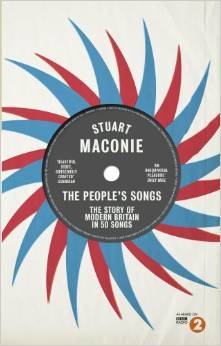
In The People's Songs, Stuart Maconie argues that what we call pop music has a defiant, unsanctioned concept at its heart: the ability to speak to people, to affect people, to transform their lives. This book tells the story of modern Britain via the records that soundtracked this dramatic and kaleidoscopic period. The story is told chronologically over 50 chapters. At the heart of each is one emblematic song that is discussed fully. These are not the greatest songs ever recorded. But the records that tell us something about how we feel and have felt about work, war, class, leisure, race, family, sport, drugs, sex, spirituality, politics, patriotism and more. These are the songs that people listened to, laughed to, loved to and laboured to, as well as downed tools and danced to - from Telstar to Y Viva Espana, Bluebirds Over The White Cliffs Of Dover to Ghost Town, Wham Rap to A Whiter Shade of Pale, Two Tribes to My Girl Lollipop, God Save the Queen to Blue Monday, Do They Know Its Xmas to Candle In The Wind.
Stuart Maconie is a TV and radio presenter, journalist, columnist and author.
He is the UK’s best-selling travel writer of non-TV tie-in books and his Pies and Prejudice was one of 2008’s top selling paperbacks. His work has been compared with Bill Bryson, Alan Bennett and John Peel and described by The Times as a 'National Treasure'.
He co-hosts the Radcliffe and Maconie Show on BBC Radio 2 every Monday – Thursday evening, as well as The Freak Zone on 6Music on Sunday afternoons, and has written and presented dozens of other shows on BBC Radio. His TV work includes presenting the BBC's On Trial shows, Pop on Trial and Style on Trial, as well as Stuart Maconie’s TV Towns, a popular gazeteer of major British cities and their roles in modern cultural life for ITV 4 and The Cinema Show/The DVD Collection on BBC 4.
As well as a popping up in Peter Kay's Phoenix Nights, and on Never Mind the Buzzcocks, Stuart was a favourite on hit TV series such as the BBC's I love the 1970s' , I love the 1980s , and is now in variously Grumpy... . His other books include the acclaimed official biographies of both Blur and James. He can name GQ Man of the Year and Sony Awards Radio Broadcaster of the Year amongst his accolades. He has regular columns in The Radio Times and Country Walking and writes for WORD magazine and The Mirror.
The children now love luxury; they have bad manners, contempt for authority; they show disrespect for elders and love chatter in place of exercise. Children are now tyrants, not the servants of their households. They no longer rise when elders enter the room. They contradict their parents, chatter before company, gobble up dainties at the table, cross their legs, and tyrannize their teachers.
Attributed to Socrates by Plato, Republic, Book 4.
You can tell The People’s Songs isn’t a proper history because there are no acknowledgements, not one, even though Stuart Maconie quotes entire paragraphs from other books; there’s no bibliography; no index. And you can tell this isn’t a muso-critical 50 Greatest British Songs, because even though every chapter is named after a song, he only mentions casually who recorded it and when it was issued. The songs are just hooks. And there’s a liberal sprinkling of turkeys – Radio Ga Ga, Another Brick in the Wall, The Ying Tong Song. (And Je T’aime :
because of all those liquid consonants, breathy fricatives and soft-slurred non-guttural syllables, even when saying
Like the irresolute wave I go I go and I come Between your kidneys)
What this seems to be, and I’ve read it but I’m still not 100% sure, is a gallop through British youth movements, interesting personalities like Joe Meek (shoots landlady, then self) and Morrissey (“I’m not afraid to say that I think Band Aid was diabolical or to say that I think Bob Geldof is a nauseating character”) and major political events since 1940 in the company of a motormouth who occasionally says surprising things (such as a very uncompromising defence of prog! – yes, Yes!) but mainly appears not to be pushing any particular line except one which says that British pop culture is always alive, always well, always in your face, and always casually brilliant. After all, the British invented so much – heavy metal, rave culture, gay pop stars – what’s that? Oh yeah. Where else could George Michael, Elton John and Freddie Mercury come from? Not to mention Boy George, Holly Johnson from Frankie Goes to Hollywood, the Pet Shop Boys…. The list goes on. (Not so much for girls though. ) Er – where was I? I got distracted. It’s that kind of book.
Teds, baggies, crusties, laddism, Northern soul, mods, skins, goths, ZZT, 2-Tone, merseybeat, glam, new romantics, hardcore handbag, dub, bhangra, miners’striketoriesFalklandswarpirateradioacidhouselabourlandslideinvasionofiraqecowarriorsfootballohfookinasis – he crams it all in and hurtles off to the next song, next chapter, next pivotal moment, next… oh…just a moment till I catch my breath…let me sit down for a mo, I’m not as young as the youth movement I was once part of anymore.
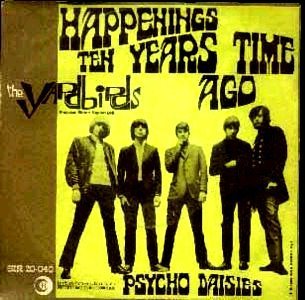
I’m not sure who this book is for but it’s pretty good. 3.5 stars and Happenings Ten Years Time Ago from me.
This wonderful book covers seven decades of music, looking at songs that have tracked the changing times of the country. It is a people's history of modern Britain, told through shared musical memories and each chapter has an emblematic record. Of course, this book accompanies the radio series by Stuart Maconie, and, if you enjoyed that, then you will certainly like this too. It is not only a musical history of the country, but also a social history, encompassing many different aspects of our shared memories as a nation.
The book begins with "We'll meet again" and ends with hip-hop. In between, many different musical styles are represented, including skiffle, rock and roll, progressive rock, heavy metal, folk music, disco, Britpop and punk. Some songs are truly universally known, such as "She Loves You" by the Beatles - an euphoric beginning to the Sixties. Others are of importance for other reasons - "Move it" by Cliff Richard, which kicked off British rock or "Rock Island Line" by Lonnie Donegan, which started the skiffle boom and caused so many great future artists to form groups all over the country. Other songs are truly of their time, and not remembered widely now, unless you were actually around at the moment - for example, Dickie Valentine's "In a Golden Coach", which was hugely popular during the Coronation in 1953.
This is a fascinating account of the times and encompasses diverse events, such as package holidays, education, the home and family life, Thatcherism, Band Aid, talent shows and music festivals. It charts not only the history of the country, but that of our music; looking at the first singles chart, radio, those whose influence lasted and musical trends. From Joe Meek, the Beatles, Bowie, the Bay City Rollers, boy groups to pop divas, musicals and novelty records, all are covered in this celebration of our musical tastes. Stuart Maconie writes with humour and intelligence and this is a great read for music lovers.
The People's Songs: The Story of Modern Britain in 50 Records would probably appeal most to those people who know very little about pop music. I came to it as both a music addict, and a music book addict, and discovered very little that was new to me. That said, I really enjoyed the trip down memory lane.
The People's Songs: The Story of Modern Britain in 50 Records is essentially music as social history: 50 essays about 50 records. Sometimes the song under discussion barely warrants a mention, and is more of a springboard for a broader discussion. The topics include subjects like mass tourism, racism, folk devils and moral panics, football etc. The songs start with Vera Lynn's "We'll Meet Again” and end with Dizzee Rascal's “Bonkers”, with a final, 50th, tacked-on chapter, voted for by the public, which covers Slade’s “Merry Xmas Everybody” and, Xmas songs more generally.
Towards the end of the book the concept began to pall, and I wonder if even author Stuart Maconie began to have second thoughts about the concept.
Overall though, I am very glad I finally read this book. A splendid blend of music history and social history and, whilst the actual selections might not always be the most obvious, the broad coverage of the period c1940-2012 is very good, and packs a lot in.
An interesting choice of music covering seven decades, but lots of rather dull background history. The songs were the authors personal choice, not sure I'd have chosen "Y Viva Espana" as a memorable and significant song but there you go!
Pretty boring. Song choices good, mainstream; but Maconie tends to focus too much on giving us lumpy and dreary chunks of social history, interspersed with more or less extended discussions of other artists that the one nominally under discussion reminds him of. In most cases a rather low proportion of the chapter discusses the actual song in question. And then what he has to say is of little interest.
He also spends an unnecessary amount of dull bookspace discreetly making the point that he is a good modern liberal anti-elitist man of the people, which is very nice for his neighbours I'm sure but neither relevant nor interesting here.
This wonderful book covers seven decades of music, looking at songs that have tracked the changing times of the country. It is a people's history of modern Britain, told through shared musical memories and each chapter has an emblematic record. Of course, this book accompanies the radio series by Stuart Maconie, and, if you enjoyed that, then you will certainly like this too. It is not only a musical history of the country, but also a social history, encompassing many different aspects of our shared memories as a nation.
The book begins with "We'll meet again" and ends with hip-hop. In between, many different musical styles are represented, including skiffle, rock and roll, progressive rock, heavy metal, folk music, disco, Britpop and punk. Some songs are truly universally known, such as "She Loves You" by the Beatles - an euphoric beginning to the Sixties. Others are of importance for other reasons - "Move it" by Cliff Richard, which kicked off British rock or "Rock Island Line" by Lonnie Donegan, which started the skiffle boom and caused so many great future artists to form groups all over the country. Other songs are truly of their time, and not remembered widely now, unless you were actually around at the moment - for example, Dickie Valentine's "In a Golden Coach", which was hugely popular during the Coronation in 1953.
This is a fascinating account of the times and encompasses diverse events, such as package holidays, education, the home and family life, Thatcherism, Band Aid, talent shows and music festivals. It charts not only the history of the country, but that of our music; looking at the first singles chart, radio, those whose influence lasted and musical trends. From Joe Meek, the Beatles, Bowie, the Bay City Rollers, boy groups to pop divas, musicals and novelty records, all are covered in this celebration of our musical tastes. Stuart Maconie writes with humour and intelligence and this is a great read for music lovers.
This is a social history of Britain from WWII to the present day, told chronologically in 50 chapters, with each chapter centred around a song that represents its theme. The themes cover topics ranging across post-War austerity, immigration, unemployment and riots, but also lighter subjects such as package holidays and the rise of electronic music.
The book is a companion to a Radio 2 series from 2013, which included opinions from members of the public, and the inclusion of some of these in the book would have enhanced it. While I liked Maconie's wry style, and felt he dealt with the controversial topics in a balanced and informative way, his views did become slightly repetitive over the course of 50 chapters. Nonetheless, this is an interesting and thoughtful book, which I found hard to put down, especially once it reached the era of my own musical memories.
There are a few inaccuracies in the book, such as describing the Queen of Tonga as a guest 'from the Caribbean', and a sackful of typos - some are amusing like 'scoolchiden' and 'unconcoious' while those involving missing words are distracting and irritating - so better editing would have helped. Overall, well worth a read if you are interested in modern social history or the history of popular music.
If I could give half stars this would be a three and a half star review. This book isn't bad, and if you are looking for a nostalgic, undemanding read, it's probably worth buying. It's just that it isn't as good as I hoped it would be.
This is a tie in to a BBC radio series and that is probably key to the weakness of the book which, without being a massive coffee-table endangering tome, is going to struggle to have the depth and richness of a 50 part radio series. I didn't hear the radio series, but the blurb about it on the BBC website suggests that it was centred around listeners's views. Crucially that is an element missing hear.
On the plus side, Maconie is an interesting and engaging writer, although perhaps not quite at his waspish best. There is nothing here quite as funny or scurrilous as his comparison of Chris de Burgh writing Lady in Red and the leader of the Third Reich, a comparison in which the former fares badly. Furthermore any book of lists always generates the pleasure of disagreeing with inclusions and exclusions. One undoubted strength of this collection is the extent of Maconie's net which spreads from the Bay City Rollers to Black Sabbath, from My Boy Lollipop to Ebeneezer Goode. A fascinating exclusion is a song which, when I got to the end of the book, I thought, "How can he call this the people's music and omit that?" However the book which claims to be the 50 people's songs only includes 49. For the radio series, listeners were invited to propose the final entry. Given the timing of the final show, the identity of the chosen song was utterly inevitable.
Being that eclectic is also one of the weaknesses of the book. The vox pops of the radio series probably gave it a coherence which this doesn't have. The stated aim in the introduction is that this will be the people's choices, the pop music which meant something to the people of Britain. That is certainly the case with some of the the choices which wouldn't appear in a classic rock history (We'll meet again, Don't cry for me Argentina), but that doesn't tell the whole story. The book is veers between that and A straight history of British musical genres (heavy metal, punk, goth, rave etc etc) A history of pale and interesting young men's music, Bowie's Starman, Bronski Beat, and of course the mandatory inclusion, under the Representation of Self-important Misanthropes Act 1986 which states that no British musical book can omit Manchester Miserablist Morrisey, of the Smiths A social history of post war Britain, Silver Jubilee, miners strike, Labour's 1997 election victory Songs included simply because the author likes them and/or the artist. The most glaring example of this is Solsbury Hill, excellent song though it is, justified on the wafer thin basis that people like to go on country walks to think things through.
Another disappointment after the descent from breadth into lack of coherence is the fact that one would guess that the target demographic, particularly as this was a Radio 2/6 project, is people in their 40s to 60s, but the book contains very little that has not been repeated many times before and is not already well known to a large proportion of the readership. Again, I suspect the problem here is that the missing new material was in the popular interviews in the Radio Series. That said, it is always entertaining to be reminded that the guitarist on 60s hit Telstar was George Bellamy, father of Muse's Matt.
One of the pleasures of listening to Maconie is his iconoclastic view the world. Here he seems to adopt some boringly currently trendy views. Prog was actually quite good (thoroughly sound position). Live Aid is rubbished to an extent as ineffective, mainly serving to promote the careers of washed up rock stars, and amazingly being responsible for the birth of celebrity culture and middle class music festivals. Gosh, and I. Thought it was a bloke trying todo some good after being shocked by a catastrophe. Oasis, rather than being musical magpies who produced two stonkingly good albums and little else of note, were in fact single handedly responsible for the downfall of decent society and the growth of lad culture.
While giving views with which one can disagree could actually be one of the pleasures of the book, lazy inaccuracies are less ambivalent. In the second chapter, there is the stunningly crassly inaccurate description of the Queen of Tonga as being from the Caribbean. He also quotes Jon Savage linking Nick Hornby with laddishness. Anyone who has actually read Fever Pitch knows that while it could be accused of contributing to football becoming more middle class, it is very definitely anti-lad.
In summary, while this book has its faults, it is very readable, and reading it really made me wish I'd heard the radio series. So a request to the BBC, if issues with rights allow it, can we have a download or a CD box set please.
In the hopes that Maconie sees this: what are you on about? You are supposed to be a respected music journalist.
And yet in a whole chapter about The New Wave Of British Heavy Metal the words "iron" and "maiden" are noticeable only by their absence.
How can anyone, even anyone with a passing acquaintance with British music, believe any of the rest of it is in any way accurate? Glaringly stupid omission and for that reason one star and I'm not writing about any of the rest of it.
An excellent read from start to finish, it's as much a social history of Britain as a treatise on significant pop songs. Normally, each of us would disagree with any such list but this one we have to accept because it was voted for by "the people", but the way Stuart Maconie has extrapolated from each a slice of the seventy years the book covers is clever in itself, but each segment has been well written and researched too. I wish I'd read it years ago. Don't know why I didn't really. I'd love to read an update covering the last seven years but nothing similar exists. That may be the magic of this book, apart from the quality of the writing - nothing similar (to the best of my knowledge) exists. If you know better, please let me know.
I did not buy very many of the singles Stuart Maconie chooses for his trawl through the musical and social history of Britain, some were before my time, some I bought the vinyl or CD album and others I was perhaps not in touch with the zeitgeist of that year (one I had never even heard of). It does not matter, it is his choice and it is not just about the music anyway. This is social history told through music. It is light and accessible, an easy and enjoyable read, but it does manage to cover the major events of the time as well as all the major musical trends. I might have chosen some different songs, but I could not have tied them into the social trends so well. The chapters vary in emphasis. Sometimes the particular track chosen is just a hook for a subject he wants to discuss: 5:15 is not mentioned in the chapter it heads, the ravers in the chapter on Ebeneezer Goode and the second Summer of Love were not buying the track, ten-year younger fans bought it three years later, usually in an attempt to annoy their parents, but it gives a good 'in' to discussing draconian legislation which even the normally rabid Daily Mail thought went too far (and he does mention a few of the tracks they were dancing to). Other tracks, Rock Island Line, Move It, She Loves You, Living in the Past, Paranoid, Starman, Don't Cry for Me Argentina, You Should be Dancing, are emblematic of a musical trend. A few, Telstar, Bye-Bye Baby, Rehab, Bonkers, contain personal biographies of the artists concerned as well as their musical credentials. Most tie the chosen song to the social conditions and events of the time. There are a few musical icons, some one-hit wonders and a few oddities. Overall it is a mixed bag, like any good DJ's collection; I enjoyed most of it.
Shocking! Outrageous! Scandalous! Not the book. The book was great, but the fact that I find myself agreeing with Someone from The Daily Mail! On the back blurb, "journalist" Marcus Berkmann describes this book as "One of the most insightful and purely readable books on pop music I think I have ever encountered" and he hasa point. It is an enjoyable and interesting read using a different song as the starting point to discuss various aspects of Britain from the Second World War to the present day. Sometimes the song itself only actually gets a sentence or two within the chapter, but that's not the point, the song encapsulates the theme but is not the be and end all of it. In many way this is more of a social history of Britain than a musical one and very interesting it is too.
I'm recording this as read even though I only read half of it because so much effort went into getting even that far because goddam.
This writer clearly knows his music, but really he should stick to that. This book has an interesting topic but presents it in a way that is so unbelievably, mind-numbingly dull. The knowledge was there, the writing was not. Maybe just find the list of songs online and listen to them?
Obviously, my kind of book. With a chapter per song, Mr Maconie is in his usual approachable style. Perhaps there's no earth-shattering analysis here but he as usual does a great job of painting the social and musical context of the songs he's talking about. By no means did I like all the songs (that's not really the point) but this was a very good read.
Excellent piece of nostalgia providing vignettes about the life and times of popular songs. All in all a terrific piece of cultural journalism. Highly recommended.
I've read several of Stuart Maconie's books recently as I enjoy his writing style and way of looking at things. This one is slightly difference from his other books as it's the written version of a radio series which looked at Britain's history through the medium of popular songs. Each chapter looks at a particular song and considers what it tells us about the UK of the time. It's written with perception and humour, and I found much to like in each chapter - even when I wasn't a fan of the song which was its subject. I think it's a book for dipping into over a long period rather than one to race through from cover to cover as there's so much to enjoy in the discussion of each song that it would be a shame to dilute that by reading too much at a time.
Given that this is supposed to be a book about songs there's a surprising lack of song-related material. Maconie isn't a particularly good writer - some of his facts are just plain wrong and based on received wisdom rather than him making any effort to do research. He doesn't give any new insights into "modern" Britain and the song choices are not that exciting either. Why did I buy it and read it? It was a quid and I love music - but it wasn't a great experience.
Really interesting collection of vignettes about the history of music, but where this falls down is that it's not what its advertised at all. Every chapter whines and ponders on music and never gets to the point. Its completely frustrating, not that I want a whole fucking chapter talking about 'Wannabe' by The Spice Girls. But give me that if that is what you are gonna do...
The chapters (one for each song) were much more concise and readable than in ‘Hope & Glory’ and ‘The Nanny State…’ The songs themselves served as interesting starting points for discussing a plethora of musical and social trends although in places, Maconie repeated almost word for word comments made in the aforementioned books.
Based on a script for a BBC radio series, Stuart uses his encyclopaedic knowledge to pull together a list of songs that soundtracked the pop era. Some thrilling choices!
Published in 2013 this book accompanied a 50 part radio series of the same name. Stuart Maconie is always an engaging read but I didn't quite enjoy this one as much as I expected. The book looks at 50 songs (well, we only get 49 for reasons I can't be bothered to go into right now) from the last 7 decades (at the time of publishing). It's not picking the best songs per se but uses significant songs that tell the social history of Great Britain, which is a welcome change from the many lists and books that tell us the songs we have to hear before we die, I'm sure you've come across such books, at best these are subjective and only the opinions of one person. This is a different approach as it's more interested in looking at the story of modern Britain through these songs (as the subtitle suggests).
The songs Maconie looks at are wide ranging going from Vera Lynn - We'll Meet Again in the first chapter and ending with Dizzee Rascal - Bonkers and every type of genre in-between.
The problem with the book for me is largely the fact that the radio series was so good. I listened to it when it was first broadcast round about 10 years ago now and Stuart's thoughts were only a short part of the program, the rest contained thoughts of ordinary men and women looking back at the period time and the subject matter of the songs (Shipbuilding by Robert Wyatt looked at the Falklands War, Ghost Town by the Specials looked a t Thatcher's Britain in the 80's, We'll Meet Again by Vera Lynn looks at life during World War 2 and the families separated, Rehab by Amy Winehouse looks at a number of sadly short lived lives and how the press revel in watching self destruction. You get the idea). I think it's the thoughts of the ordinary people that made the show what it was. With the book we are just left with Stuart Maconie and his thoughts.
As I said Maconie is an entertaining writer sand broadcaster. He knows his music but what we have in the book doesn't equal the radio series as what made it so good can't be put in the printed form. Also the chapters are of necessity fairly brief meaning each subject can't be looked at in any great detail. Occasionally Maconie can seem to come across as a little smug, and while he rightly criticises musical snobbery in the chapter looking at ...Kylie Monogue's - Can't Get You Out Of My Head It's not something that he's not immune to himself (No mention of Iron Maiden in the chapter looking at Heavy Metal ... Black Sabbath's - Paranoid)
As it's not actually a book looking at the songs themselves but using each song as a springboard to a wider subject, many of the songs that give their names to the chapters often don't get a mention until right at the end of the chapter. This isn't necessarily a bad thing however it is rather strange that 5:15 by The Who doesn't even get mentioned in the chapter that it gives it's name to, the closest it get in that chapter looking at the Mods and Rockers is in the very last line of the chapter when Pete Townsend gets mentioned along with the name of another Who song "The Kids are Alright."
By no means is this a terrible book. it is entertaining, Maconie knows his stuff and it does give a few interesting snapshots at the social history of Great Britain from 1939 onwards. It's just not as good as I was hoping for.
However what I would recommend to anyone who is at all interested is the radio series that inspired the book. Stuart Maconie's The People's Songs is still available to listen on Spotify. The complete 50 episodes are there and I'd recommend them to anyone, they really are a fascinating listen.
Firstly, I enjoyed this book. Stuart Maconie has an engaging style, and what he does really well is create a sort of loose associative collage around each of the 50 featured songs, that builds up a picture of some of the social, cultural and gossipy/anecdotal strands that weave around these genuinely popular tunes. And the songs here are real pop, in the sense of records that were bought and listened to in their millions. He makes the case well for some critically unpopular genres: metal, disco, europop, prog, even the Bay City Rollers and 1D. He's clearly a true fan of the music, and that enthusiasm shows through. The chapter on Amy Winehouse's 'Rehab' was genuinely moving. It does read like a monologue, however, and in places could have done with a really good editor to sharpen it up, deal with some repetitiveness and vagueness, and see off the occasional inaccuracy. What works in a broadcast does not always work in a book. His sense of history, for example, is baggy rather than precise, and is certainly not sequentially ordered. Far too often, he backtracks to something that fits in with a stream-of-consciousness argument, rather than demonstrating a chain of case and effect. I'd have liked a clearer sense, too, of how one tune-story links with another, to provide a clearer through narrative. Did Britpop, for example, really follow a grey era of popular music? And if so, how does that fit in with the chapter on rave that focuses on incidents only a few years before Oasis and Blur rode the airwaves? Meanwhile, to claim that Christy Moore failed to sing about 'the troubles' is plain bizarre: I can think of few singers who have addressed them more directly, and with a greater degree of personal engagement. Maconie loves a good place name in which to root his narrative, but sometimes his sense of geography goes really quite awry. Is Whitby really West of Haworth? Tonga in the Caribbean? And can we really claim WB Yeats and Kylie as 'British'? OK, these criticisms are a bit nerdy, but the problem is that if you start mistrusting the information you are being given, then that starts to undermine the argument as a whole. Which is a shame, because it's an engaging argument, free of snobbery and mostly well-made, and it did make me want to check out many of the tunes again. It even has something in common with Richard Hoggart's great 'The Uses of Literacy' in its sympathetic understanding of popular culture. "Y Viva Espana" as a cultural text? Why not? Merry Christmas, everybody.
Stuart Maconie’s history of post-war popular music written to accompany the 2013 BBC radio series of the same name, is an enjoyable read, though ultimately vaguely unsatisfying. The book (and radio series upon which its based) takes fifty significant songs of the post-war era as starting points to explore different aspects of British music, culture and social history, from “Move It” and the early days of British rock’n’roll, through “Shipbuilding” exploring Thatcherism and the Falklands War, to “One Day Like This” and the burgeoning British music festival scene.
As always in his work as a writer and broadcaster, Stuart Maconie deals with the subject matter in a deft, knowledgeable and entertaining fashion, mixing elements of social history with the background behind the songs and artists. Whilst purists might quibble about some of the songs selected, the format actually works extremely well in providing a very readable overview of British popular music and the society that created it. Maconie also illustrates each song with some fascinating anecdotes and well-chosen quotes - particularly apposite is music journalist Mark Ellen’s accurate but affectionate definition of the Goth.
Where it falls down is the sheer scope of the book renders some chapters rushed and occasionally superficial in their treatment of each song and topic, with often only occupying a handful of pages, borne out by the most successful chapters being the longer ones. These shortcomings are almost certainly due to the book being based on Maconie’s narration from the radio series, which only makes up a third or so of each programme, the remaining being a series of interviews with members of the listening public about their memories of the times and music, and most importantly, the songs themselves. The necessary omission of these last from the book renders Maconie’s narration slightly insubstantial, something which it doesn’t suffer from in its original context.
Whilst this book is certainly diverting enough as an overview, I’d strongly recommend anyone with an interest in the subject matter to seek out the BBC radio series of the same name online.