

What do you think?
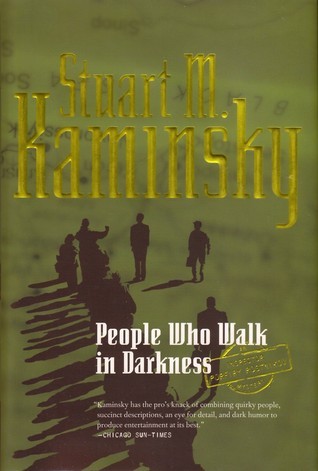
Porfiry Rostnikov #15
People Who Walk in Darkness
In People Who Walk in Darkness, Rostnikov travels to Siberia to investigate a murder at a diamond mine, where he discovers an old secret…and an even older personal problem. His compatriots head to Kiev on a trail of smuggled diamonds and kidnapped guest workers, and what they discover leads them to a vast conspiracy that not only has international repercussions but threatens them on a very personal level.
288 pages, Hardcover
First published January 1, 2008
About the author
Stuart M. Kaminsky
166 books224 followersStuart M. Kaminsky wrote 50 published novels, 5 biographies, 4 textbooks and 35 short stories. He also has screenwriting credits on four produced films including ONCE UPON A TIME IN AMERICA, ENEMY TERRITORY, A WOMAN IN THE WIND and HIDDEN FEARS. He was a past president of the Mystery Writers of America and was nominated for six prestigious Edgar Allen Poe Awards including one for his short story “Snow” in 1999. He won an Edgar for his novel A COLD RED SUNRISE, which was also awarded the Prix De Roman D’Aventure of France. He was nominated for both a Shamus Award and a McCavity Readers Choice Award.
Kaminsky wrote several popular series including those featuring Lew Fonesca, Abraham Lieberman, Inspector Porfiry Petrovich Rostnikov, and Toby Peters. He also wrote two original "Rockford Files " novels. He was the 50th annual recipient of the Grandmaster 2006 for Lifetime Achievement from the Mystery Writers of America.
Received the Shamus Award, "The Eye" (Lifetime achievement award) in 2007.
His nonfiction books including BASIC FILMMAKING, WRITING FOR TELEVISION, AMERICAN FILM GENRES, and biographies of GARY COOPER, CLINT EASTWOOD, JOHN HUSTON and DON SIEGEL. BEHIND THE MYSTERY was published by Hot House Press in 2005 and nominated by Mystery Writers of America for Best Critical/Biographical book in 2006.
Kaminsky held a B.S. in Journalism and an M.A. in English from The University of Illinois and a Ph.D. in Speech from Northwestern University where he taught for 16 years before becoming a Professor at Florida State. where he headed the Graduate Conservatory in Film and Television Production. He left Florida State in 1994 to pursue full-time writing.
Kaminsky and his wife, Enid Perll, moved to St. Louis, Missouri in March 2009 to await a liver transplant to treat the hepatitis he contracted as an army medic in the late 1950s in France. He suffered a stroke two days after their arrival in St. Louis, which made him ineligible for a transplant. He died on October 9, 2009.
Kaminsky wrote several popular series including those featuring Lew Fonesca, Abraham Lieberman, Inspector Porfiry Petrovich Rostnikov, and Toby Peters. He also wrote two original "Rockford Files " novels. He was the 50th annual recipient of the Grandmaster 2006 for Lifetime Achievement from the Mystery Writers of America.
Received the Shamus Award, "The Eye" (Lifetime achievement award) in 2007.
His nonfiction books including BASIC FILMMAKING, WRITING FOR TELEVISION, AMERICAN FILM GENRES, and biographies of GARY COOPER, CLINT EASTWOOD, JOHN HUSTON and DON SIEGEL. BEHIND THE MYSTERY was published by Hot House Press in 2005 and nominated by Mystery Writers of America for Best Critical/Biographical book in 2006.
Kaminsky held a B.S. in Journalism and an M.A. in English from The University of Illinois and a Ph.D. in Speech from Northwestern University where he taught for 16 years before becoming a Professor at Florida State. where he headed the Graduate Conservatory in Film and Television Production. He left Florida State in 1994 to pursue full-time writing.
Kaminsky and his wife, Enid Perll, moved to St. Louis, Missouri in March 2009 to await a liver transplant to treat the hepatitis he contracted as an army medic in the late 1950s in France. He suffered a stroke two days after their arrival in St. Louis, which made him ineligible for a transplant. He died on October 9, 2009.
Ratings & Reviews
Friends & Following
Create a free account to discover what your friends think of this book!
Community Reviews
Displaying 1 - 30 of 52 reviews

June 7, 2026
People Who Walk in Darkness, by Stuart Kaminsky is book 15 in the Chief Inspector Porfiry Rostnikov Moscow mysteries series. Rostnikov and his team are on a deadline assigned by Yak, Yaklovev -Director of the Office of Special Investigations, to solve murders and diamond thefts, or the unit will be dispersed to other authorities. Diamonds are a dirty business: exploitation, theft and murder, part and parcel of the trade.
“Twenty percent of all diamonds mined worldwide were from Russia and all of the mines- were located in Siberia. — The price paid by the world for diamonds allowed Russia a preferred seat at the table. The value of diamonds -was not dependent on their rarity, but on the ability of the diamond cartel to control their flow and price. Luc was a geologist—His job was to find out if the mine was so tapped out that it would not pay to keep it operating. —He had a job to do, plain and simple. He would get it done and get out of here, e-mail his report to London, let DeBeers deal with it… The more Boris warned, the more determined Luc had been to go this way. —inside a cave that extended about six feet into the rock. An untrained eye would see nothing. Luc saw everything. It was, if he were not mistaken, a reasonably rich outcropping. someone had removed millions of rubles worth of uncut jewelry-quality diamonds from— … It sounded like the voice of a child, a child singing in Russian in a beautiful, clear voice that echoed sweetly through the tunnel. — Then she appeared. Alone. Small. Hair brushed down, dark, streaming over her shoulders and down the front of her white, white dress. The child smiled at him —She couldn’t have been more than ten or eleven years old. —turned his back on the girl, aimed his flashlight toward wherever disaster was lurking, and took a step. Behind him the girl started to sing again.” …
“What do you know of diamonds, Porfiry Petrovich Rostnikov?” They were seated in the office of Igor “the Yak” Yaklovev, Director of the Office of Special Investigations. — “They are valuable as jewels and for industrial use. We have diamond mines in Siberia,” —And then the connection came. “You are going to Siberia, to a diamond mine where a man, a Canadian geologist, died two days ago. You will determine if he was murdered. If he was, you are to tell me who killed him.” —There is a supply load of medication for the mining town, Devochka, leaving at nine by plane. You will be on it.” “I will take Karpo.” —the oddity of the name Devochka, a man’s name that meant “little girl.” — “Your lesson,” said the Yak, handing Rostnikov a file folder. Rostnikov took it. “Devochka is one of the oldest diamond mines in Siberia. It dates back to 1887 —It is estimated that as many as 40,000 people died looking for jewels — “I see.” But what I see is not what you are seeing, Rostnikov thought. You want me to deliver to you the key to control a crumbling diamond mine and the possibility that one more vein will be struck and bleed. —“We are taking on two other cases related to this investigation. Assign who you will to them and have those doing the investigation report to you and only you. You, in turn, will keep me informed on a daily basis.” “The connection of sorts between the cases,” said the Yak, “is not a coincidence.” Two more folders appeared. “The cases must be resolved in nine days,” — “General Frankovich would like to incorporate the Office of Special Investigations into the Division of Murder,” said the Yak. “We have been too successful. —General Frankovich will bid to take over this Office. It is possible he will succeed, unless . . .” “You present evidence of a success so great that the General will have to withhold his bid,” —“You and your detectives would be reassigned, as would I.” The Yak had delivered what the Americans called “a pep talk.””
“Rostnikov sat at his desk reading the information in the folders he had been given. —the assignments. Iosef and Zelach would investigate the torture-murder of two black South Africans. — the other case involved a murdered woman found in a train compartment when it pulled into Moscow from Kiev. Nobody really delved into the murder of prostitutes. But this Moscow prostitute had been found murdered in the most expensive private car on a train. Rostnikov gave the case to Sasha Tkach and Elena Timofeyeva.
Assignments given… time limit: 9 days … a cast of characters in Siberia, Kiev, London and Moscow to investigate and determine the crimes and criminals … to arrive at the conclusion- “Let us see where you have been, Vladimir. Paulinin reached down to explore the wound in the dead man’s hand with a long finger. “. . . you are, like so many of those who pass through this room, definitely one of the people who walk in darkness.”
Book 15 is an excellent read. You may also, if you choose, explore further my highlights—
https://www.goodreads.com/notes/10653...
“Twenty percent of all diamonds mined worldwide were from Russia and all of the mines- were located in Siberia. — The price paid by the world for diamonds allowed Russia a preferred seat at the table. The value of diamonds -was not dependent on their rarity, but on the ability of the diamond cartel to control their flow and price. Luc was a geologist—His job was to find out if the mine was so tapped out that it would not pay to keep it operating. —He had a job to do, plain and simple. He would get it done and get out of here, e-mail his report to London, let DeBeers deal with it… The more Boris warned, the more determined Luc had been to go this way. —inside a cave that extended about six feet into the rock. An untrained eye would see nothing. Luc saw everything. It was, if he were not mistaken, a reasonably rich outcropping. someone had removed millions of rubles worth of uncut jewelry-quality diamonds from— … It sounded like the voice of a child, a child singing in Russian in a beautiful, clear voice that echoed sweetly through the tunnel. — Then she appeared. Alone. Small. Hair brushed down, dark, streaming over her shoulders and down the front of her white, white dress. The child smiled at him —She couldn’t have been more than ten or eleven years old. —turned his back on the girl, aimed his flashlight toward wherever disaster was lurking, and took a step. Behind him the girl started to sing again.” …
“What do you know of diamonds, Porfiry Petrovich Rostnikov?” They were seated in the office of Igor “the Yak” Yaklovev, Director of the Office of Special Investigations. — “They are valuable as jewels and for industrial use. We have diamond mines in Siberia,” —And then the connection came. “You are going to Siberia, to a diamond mine where a man, a Canadian geologist, died two days ago. You will determine if he was murdered. If he was, you are to tell me who killed him.” —There is a supply load of medication for the mining town, Devochka, leaving at nine by plane. You will be on it.” “I will take Karpo.” —the oddity of the name Devochka, a man’s name that meant “little girl.” — “Your lesson,” said the Yak, handing Rostnikov a file folder. Rostnikov took it. “Devochka is one of the oldest diamond mines in Siberia. It dates back to 1887 —It is estimated that as many as 40,000 people died looking for jewels — “I see.” But what I see is not what you are seeing, Rostnikov thought. You want me to deliver to you the key to control a crumbling diamond mine and the possibility that one more vein will be struck and bleed. —“We are taking on two other cases related to this investigation. Assign who you will to them and have those doing the investigation report to you and only you. You, in turn, will keep me informed on a daily basis.” “The connection of sorts between the cases,” said the Yak, “is not a coincidence.” Two more folders appeared. “The cases must be resolved in nine days,” — “General Frankovich would like to incorporate the Office of Special Investigations into the Division of Murder,” said the Yak. “We have been too successful. —General Frankovich will bid to take over this Office. It is possible he will succeed, unless . . .” “You present evidence of a success so great that the General will have to withhold his bid,” —“You and your detectives would be reassigned, as would I.” The Yak had delivered what the Americans called “a pep talk.””
“Rostnikov sat at his desk reading the information in the folders he had been given. —the assignments. Iosef and Zelach would investigate the torture-murder of two black South Africans. — the other case involved a murdered woman found in a train compartment when it pulled into Moscow from Kiev. Nobody really delved into the murder of prostitutes. But this Moscow prostitute had been found murdered in the most expensive private car on a train. Rostnikov gave the case to Sasha Tkach and Elena Timofeyeva.
Assignments given… time limit: 9 days … a cast of characters in Siberia, Kiev, London and Moscow to investigate and determine the crimes and criminals … to arrive at the conclusion- “Let us see where you have been, Vladimir. Paulinin reached down to explore the wound in the dead man’s hand with a long finger. “. . . you are, like so many of those who pass through this room, definitely one of the people who walk in darkness.”
Book 15 is an excellent read. You may also, if you choose, explore further my highlights—
https://www.goodreads.com/notes/10653...

May 12, 2012
People Who Walk in Darkness has a fast paced plot involving many threads. The plot and characters hold much potential, but the narrative failed to deliver in many ways. The storytelling felt workman-like and rushed, with not enough attention to detail. My suspicion is it was written to a formula, by an old hand who has a track record of churning out a couple of books a year – others of which are much more finely honed. The result is flat prose, under-developed characters and scenes, and a lack of context and story scaffold. This was a real shame as the bones of a decent caper/police procedural novel are here. An interesting enough read, but not out of the top draw.
September 11, 2008
Rosnikov is a great character and the setting of present-day Russia is fascinating, but don't start with this book. The earlier ones are better and worth a try if you read mysteries for setting.

June 9, 2024
I was a bit concerned towards the beginning of the book. It seemed that Kaminsky had expanded his misspelling of Russian names by having two characters with the same father... but different patronymics. (Russians with the same father would have the same "middle name", a patronymic based on their father's name.) But all was explained, and the two men had a legitimate reason for the difference in name.
I was also concerned that there were a lot of different plot lines going on, with a lot of different characters, but (almost) everything was cleared up by the end.
On the plane to Siberia, Rostnikov is reading the last 87th Precinct book written by Ed McBain before his death, and he dreads not having any more to read from his favorite author. With only one more book left for me to read in this series, I feel his pain.
I was also concerned that there were a lot of different plot lines going on, with a lot of different characters, but (almost) everything was cleared up by the end.
On the plane to Siberia, Rostnikov is reading the last 87th Precinct book written by Ed McBain before his death, and he dreads not having any more to read from his favorite author. With only one more book left for me to read in this series, I feel his pain.

May 14, 2012
I enjoy these Russian mystery stories (as in Martin Cruz Smith). At first I didn't like the Kaminsky books as much but I've changed my opinion of them. Post Communist Russia is as dark and brooding as it was during the socialist regimes. The plots aren't that great but the atmosphere makes the book compelling.
April 7, 2010
This is the 16th Inspector Rostnikov book. Always a good read. Rostinikov survived bureaucracy in the Soviet days and continues to solve crimes in the post-soviet environment. Interesting take on immigration in the new Russia.
August 1, 2011
I read a review that gave this author a hard time for inaccuracies regarding names and places in the former U.S.S.R. I have read a few Russian authors and the details in these books never tarnished the thrill. I really love this series.

April 7, 2026
Russian police confront diamond smuggling and murder in Siberia
The independence of Chief Inspector Rostnikov’s cozy little squad is on the line. “The Office of Special Investigations was at the very bottom of the Moscow police force. The Office had been created solely as a receptacle in which to dump unsolvable and politically sensitive cases filled with a high likelihood of failure.” Now, despite—more likely, because of—the squad’s remarkable success a senior politician threatens to absorb the office into his own sprawling empire. General Mihail Frankovich, Director of the Division of Murder, has informed Rostnikov’s boss, Igor Yakovlev (“the Yak”), that he will take over command in nine days if his office doesn’t solve the case of an impossibly complex diamond smuggling operation. Naturally, then, the Yak assigns the case to Rostnikov. And thus begins the inspector and his colleagues’ venture into the world of the “People Who Walk in Darkness” in the worldwide diamond trade.
A complex case set in Siberia, Botswana, Kiev, Moscow, and London
The Yak commands Rostnikov to travel immediately to investigate a murder at Devochka, one of the oldest diamond mines in Siberia. There a Canadian mining engineer had been brutally knifed to death deep underground. The inspector will travel there with Emil Karpo (“the Vampire”). But Rostnikov must also detail the rest of his squad to take up other aspects of the case in Kiev and Moscow, where the same network of smugglers has been active. Together, the six members of the squad will collide with a half-dozen Botswanans, a gorgeous Russian supermodel, a corrupt Kiev police detective, two assassins in the pay of a Russian master criminal masquerading as a British aristocrat, a Siberian bodybuilder on the way to the Olympics, and Inspector Rostnikov’s long-lost brother.
A cast of familiar characters
Readers of Stuart Kaminsky’s Porfiry Rostnikov novels will enjoy seeing how the Chief Inspector and the members of his squad tackle the daunting investigations that the Yak has now assigned to them.
They’re all here. Emil Karpo, the cadaverous and humorless obsessive who pines for the days of Communist rule.
Sasha Tkach, the handsome young philanderer whose wife has fled to Kiev with their children.
Elena Timofeyeva, daughter of the chief Moscow prosecutor who was once Rostnikov’s boss.
Elena is now engaged to Iosef Rostnikov, the inspector’s former playwright son, who is also a member of the squad.
Zelach, the hulking, uneducated police officer who works with Iosef and continues to surprise with new, hidden abilities.
And Paulinin, the mad but brilliant pathologist who runs the squad’s morgue and talks to corpses—and gets answers.
After Rostnikov divides them into three teams to pursue different aspects of the case, we feel them growing even closer.
You’d be hard-pressed to find a more colorful cast of characters than Stuart Kaminsky offers up in People Who Walk in Darkness.
The truth about diamonds
For more than 3,000 years, humans have valued diamonds for their brilliance and peerless hardness. While the stones are found in small quantities all over the globe, the greatest sources are Russia, Botswana, Canada, Angola, and the Democratic Republic of Congo. But Russia is the world’s top producer by volume, supplying roughly 35% of global rough stones. Botswana is the second-largest producer. It’s known for high-value and large diamonds. And both countries dominate the story in this novel.
However, the value the market assigns to diamonds is artificial. A single company, DeBeers, effectively sets the world’s price. De Beers Group is a British multinational diamond company that specializes in the mining, trading and marketing of diamonds. The company is active in 35 countries. It’s effectively a monopoly, controlling 90 percent of the market. And it creates artificial scarcity by stockpiling rough stones its vaults, thus maintaining high prices by limiting the supply.
About the author
During his long career, the late Stuart M. Kaminsky (1934-2009) wrote sixty-three novels and eleven nonfiction books. In addition to the Porfiry Rastnikov series, he wrote three other widely read detective series. Kaminsky won the 1989 Edgar Award for Best Novel for the Porfiry Rostnikov novel A Cold Read Sunrise. And the Mystery Writers of America awarded him the Grand Master Award from before his death.
The independence of Chief Inspector Rostnikov’s cozy little squad is on the line. “The Office of Special Investigations was at the very bottom of the Moscow police force. The Office had been created solely as a receptacle in which to dump unsolvable and politically sensitive cases filled with a high likelihood of failure.” Now, despite—more likely, because of—the squad’s remarkable success a senior politician threatens to absorb the office into his own sprawling empire. General Mihail Frankovich, Director of the Division of Murder, has informed Rostnikov’s boss, Igor Yakovlev (“the Yak”), that he will take over command in nine days if his office doesn’t solve the case of an impossibly complex diamond smuggling operation. Naturally, then, the Yak assigns the case to Rostnikov. And thus begins the inspector and his colleagues’ venture into the world of the “People Who Walk in Darkness” in the worldwide diamond trade.
A complex case set in Siberia, Botswana, Kiev, Moscow, and London
The Yak commands Rostnikov to travel immediately to investigate a murder at Devochka, one of the oldest diamond mines in Siberia. There a Canadian mining engineer had been brutally knifed to death deep underground. The inspector will travel there with Emil Karpo (“the Vampire”). But Rostnikov must also detail the rest of his squad to take up other aspects of the case in Kiev and Moscow, where the same network of smugglers has been active. Together, the six members of the squad will collide with a half-dozen Botswanans, a gorgeous Russian supermodel, a corrupt Kiev police detective, two assassins in the pay of a Russian master criminal masquerading as a British aristocrat, a Siberian bodybuilder on the way to the Olympics, and Inspector Rostnikov’s long-lost brother.
A cast of familiar characters
Readers of Stuart Kaminsky’s Porfiry Rostnikov novels will enjoy seeing how the Chief Inspector and the members of his squad tackle the daunting investigations that the Yak has now assigned to them.
They’re all here. Emil Karpo, the cadaverous and humorless obsessive who pines for the days of Communist rule.
Sasha Tkach, the handsome young philanderer whose wife has fled to Kiev with their children.
Elena Timofeyeva, daughter of the chief Moscow prosecutor who was once Rostnikov’s boss.
Elena is now engaged to Iosef Rostnikov, the inspector’s former playwright son, who is also a member of the squad.
Zelach, the hulking, uneducated police officer who works with Iosef and continues to surprise with new, hidden abilities.
And Paulinin, the mad but brilliant pathologist who runs the squad’s morgue and talks to corpses—and gets answers.
After Rostnikov divides them into three teams to pursue different aspects of the case, we feel them growing even closer.
You’d be hard-pressed to find a more colorful cast of characters than Stuart Kaminsky offers up in People Who Walk in Darkness.
The truth about diamonds
For more than 3,000 years, humans have valued diamonds for their brilliance and peerless hardness. While the stones are found in small quantities all over the globe, the greatest sources are Russia, Botswana, Canada, Angola, and the Democratic Republic of Congo. But Russia is the world’s top producer by volume, supplying roughly 35% of global rough stones. Botswana is the second-largest producer. It’s known for high-value and large diamonds. And both countries dominate the story in this novel.
However, the value the market assigns to diamonds is artificial. A single company, DeBeers, effectively sets the world’s price. De Beers Group is a British multinational diamond company that specializes in the mining, trading and marketing of diamonds. The company is active in 35 countries. It’s effectively a monopoly, controlling 90 percent of the market. And it creates artificial scarcity by stockpiling rough stones its vaults, thus maintaining high prices by limiting the supply.
About the author
During his long career, the late Stuart M. Kaminsky (1934-2009) wrote sixty-three novels and eleven nonfiction books. In addition to the Porfiry Rastnikov series, he wrote three other widely read detective series. Kaminsky won the 1989 Edgar Award for Best Novel for the Porfiry Rostnikov novel A Cold Read Sunrise. And the Mystery Writers of America awarded him the Grand Master Award from before his death.

January 24, 2018
Stuart Kaminsky is an Edgar Award winner and a MWA Grand Master; in short, he's got game and is one of my favorite authors. Within his body of work, which includes the Abe Lieberman and Toby Peters series, the Inspector Porfiry Rostnikov mysteries tend to be the most serious, and this one, People Who Walk In Darkness, fits right in with that pattern. It is, perhaps, the best of this particular series, with no less than 4 (or maybe 5 or 6) sub-plots that all dovetail into one another to form a well crafted whole.
Inspector Rostnikov is a smart, humble bear of a man who must contend with a bad leg (now, replaced with an artificial limb that still gives him no peace), a corrupt gov't and police force, complete with bosses that would sacrifice him in a Moscow minute for personal gain, and a team that is as charming and quirky in its own way as the detective squad of Ed McBain's 87th precinct (referenced in the series as Rostnikov's favorite author).
This novel deals with diamond mining & smuggling in the colds of Siberia (who knew that region produces so many of the world's diamonds?) and, of course, the murder of at least two who happen to stumble onto things within the mine they shouldn't have seen. Rostnikov and team have but nine days in which to discover the answers and put a stop to the problem, and the book moves along with excellent pace accordingly. There are sufficient red herrings to keep one guessing until the end, and Kaminsky has a few twists up his literary sleeve to surprise even the astute reader.
One might argue that I'm biased in favor of Kaminsky's writing, and that would be a legitimate observation. However, I'm objective enough to recognize one of his best works from some of his more average efforts (e.g., some of the Toby Peters series), and People Who Walk In Darkness is clearly in the former category. Four and a half stars rounded up to five for this very enjoyable visit to mother Russia.
Inspector Rostnikov is a smart, humble bear of a man who must contend with a bad leg (now, replaced with an artificial limb that still gives him no peace), a corrupt gov't and police force, complete with bosses that would sacrifice him in a Moscow minute for personal gain, and a team that is as charming and quirky in its own way as the detective squad of Ed McBain's 87th precinct (referenced in the series as Rostnikov's favorite author).
This novel deals with diamond mining & smuggling in the colds of Siberia (who knew that region produces so many of the world's diamonds?) and, of course, the murder of at least two who happen to stumble onto things within the mine they shouldn't have seen. Rostnikov and team have but nine days in which to discover the answers and put a stop to the problem, and the book moves along with excellent pace accordingly. There are sufficient red herrings to keep one guessing until the end, and Kaminsky has a few twists up his literary sleeve to surprise even the astute reader.
One might argue that I'm biased in favor of Kaminsky's writing, and that would be a legitimate observation. However, I'm objective enough to recognize one of his best works from some of his more average efforts (e.g., some of the Toby Peters series), and People Who Walk In Darkness is clearly in the former category. Four and a half stars rounded up to five for this very enjoyable visit to mother Russia.

August 8, 2020
I have loved the entire series up to this point, and have been parceling out reading the books slowly, to prolong the time when I have another Rostnikov story to look forward to reading.
But with this volume, something seems oddly changed in the writing.
What hasn’t changed is that the characters and plot are quite recognizably developing along consistent lines with their previous trajectories, and the various plots and crimes are quite Rostnikovian.
But there are some very distinct changes in the actual writing, which I found jarring. It didn’t give me the same experience as a reader. And I wonder if anyone else feels the same.
One example, the first that really made me say “this book feels different from all its predecessors” was the uncharacteristic capsule introductions of each character at their first appearance, including not just their role and description, going into small biographical essays, with psychological profiles explaining each of the characters’ histories, motivations, weaknesses, and proclivities. I wondered if a new editor had taken over the series and insisted that Kaminsky had to do this to orient readers who were, through some mishap, starting the series at volume 15. And Kaminsky, like Porfiry with the Yak, recognizes the futility of arguing about something that isn’t that important in the larger scheme of things, and complied.
Aside from that specific item, throughout, the writing feels oddly ... direct? Characters explaining the reasons and steps and consequences of actions to themselves or to others in very concrete and explicit terms, for example. And I think this is a change for the worse, for my reading enjoyment.
I’ll certainly finish the series, but I am not so sure what to expect with subsequent volumes. I will still read those and finish the series, so please don’t let me know what to expect in regards the writing style in subsequent volumes if you reply here.
But with this volume, something seems oddly changed in the writing.
What hasn’t changed is that the characters and plot are quite recognizably developing along consistent lines with their previous trajectories, and the various plots and crimes are quite Rostnikovian.
But there are some very distinct changes in the actual writing, which I found jarring. It didn’t give me the same experience as a reader. And I wonder if anyone else feels the same.
One example, the first that really made me say “this book feels different from all its predecessors” was the uncharacteristic capsule introductions of each character at their first appearance, including not just their role and description, going into small biographical essays, with psychological profiles explaining each of the characters’ histories, motivations, weaknesses, and proclivities. I wondered if a new editor had taken over the series and insisted that Kaminsky had to do this to orient readers who were, through some mishap, starting the series at volume 15. And Kaminsky, like Porfiry with the Yak, recognizes the futility of arguing about something that isn’t that important in the larger scheme of things, and complied.
Aside from that specific item, throughout, the writing feels oddly ... direct? Characters explaining the reasons and steps and consequences of actions to themselves or to others in very concrete and explicit terms, for example. And I think this is a change for the worse, for my reading enjoyment.
I’ll certainly finish the series, but I am not so sure what to expect with subsequent volumes. I will still read those and finish the series, so please don’t let me know what to expect in regards the writing style in subsequent volumes if you reply here.

May 1, 2024
This mystery set around 2008 in Russia features Inspector Porfiry Rostnikov, the wily, one-legged Moscow police special investigator. This time he must solve a complicated murder/diamond smuggling case in a quick turn-around time (9 or 11 days) or risk having his special unit dissolved. Because the elements of the crime are scattered and time is short, various of the team are deployed in different places — Iosif Rostnikov and Zilch in Moscow, Sasha and Elena in Kiev, and Porfiry Petrovich and Emil Karpo in a diamond mine in Siberia. Various of the smugglers, Botswanans, are found in Moscow, and the story is told from multiple vantage points. Although this makes it a bit hard to follow, the crime is interesting when finally put together in the end.
August 30, 2026
I have been binge reading the Porfiry Rostnikov series. It is addicting. You must start with the 1st book. They build on each other. Saying that they also have discrepancies - Time lines of characters are often off, Circumstances alter but the stories are compelling. They mysteries are often hard to figure out. Series started in 1981 USSR setting and has evolved with the changes from USSR and communism to Russia and the changes they are still going through. They are well written and intriguing, and I feel blessed for having discovered this series this summer.
Don't look for perfection just enjoy the series. Start with the 1st one and read in order. They come to life in your mind.
Don't look for perfection just enjoy the series. Start with the 1st one and read in order. They come to life in your mind.

August 13, 2018
I guess it's weird that I started on the 15th installment of this detective series - however, I got the gist of the characters and had no problems following the story.
I totally thought this was a Russian novel translated into English but then I found out it was written by a red-blooded American who enjoys Russian literature! Super interesting setting in the diamond mines of Siberia and a fun twist at the end as the one-legged inspector Rostnikov solves the mystery.
I will for sure read the other 14.
I totally thought this was a Russian novel translated into English but then I found out it was written by a red-blooded American who enjoys Russian literature! Super interesting setting in the diamond mines of Siberia and a fun twist at the end as the one-legged inspector Rostnikov solves the mystery.
I will for sure read the other 14.

September 19, 2017
My reading of this series is rather random, but it seems the early entries written during the time of the Soviet Union are superior. I should read the entire run, though. Kaminsky is dependable for a good mystery and Porfiry is always an interesting character.

September 3, 2021
I have enjoyed all of the previous books in this series and I found this one to be very interesting and fun. I wish there was more than 1 book left in the series. I will miss Porfiry, and the rest of the crew.

July 7, 2023
I haven't read any of the Porfiry ROstnikov series in years. I've missed the characters. I'm a little out of touch with them in that I've missed several books in the series. I listened to this on one a CD that skipped quite badly, so I missed some of the story. Still a great read!
May 28, 2018
Continued good writing and fun read.
June 16, 2019
I really enjoyed this book. I am enjoying the whole series but this is the best one I have read.
May 18, 2020
This is an easy read with a plot that’s somewhat scattered. The earlier books in the series are better, I think.
March 30, 2022
Read it for the setting (Russia) and pleasantly surprised by the very fine writing. Also learned about the Russian diamond industry.

September 22, 2024
I miss the voice of Mike Hammer, who read many Rostnikov mysteries.

September 5, 2025
Too many characters, not well developed. Storyline was slow and the ending was disappointing. Did enjoy reading about the Russian scene.

December 22, 2025
Penúltimo livro da série Rostnikov, uma trama que vê a equipa dividir-se por diferentes localizações para desmantelar uma rede de tráfico de diamantes.

October 19, 2013
There is apparently a diamond smuggling ring operating in post-Soviet Russia – not surprisingly, it is a murderous diamond smuggling ring. Inspector Rostnikov has been sent to a small, old diamond mine in Siberia to investigate – where he also encounters an issue of a more personal nature. Meanwhile, his colleagues are following up leads in Moscow and in Kiev, involving sahdy diamond merchants suffering from DeBeers Envy and cover models and Botswanian nationals and organized crime. All the while, his boss is attempting to save his department and team from political takeover in a little over a week's time.
The word that comes to mind while reading this book is “busy”. There are a lot of characters, and a lot of plot threads, and somehow they all manage to run coincidentally – finally coming together in the end of what is a relatively short book. (Or, in my case, set of 7 CDS, since I listened to it on Audio.) Overall I enjoyed the book, but I was often confused by sudden changes in scene. (Perhaps this is clearer in the print version of the book.) I also found some of the conclusions reached by the police in their quest for answers to be not fully substantiated. (Either I missed, or some of the evidence they used to draw their conclusions was obtained “off camera”, so to speak.)
RATING: 4 Stars. I'm glad I read/listened to the book, and I'm planning to obtain other books in this series. However, I have to rank it at only 4 stars due to the factors mentioned above.
The word that comes to mind while reading this book is “busy”. There are a lot of characters, and a lot of plot threads, and somehow they all manage to run coincidentally – finally coming together in the end of what is a relatively short book. (Or, in my case, set of 7 CDS, since I listened to it on Audio.) Overall I enjoyed the book, but I was often confused by sudden changes in scene. (Perhaps this is clearer in the print version of the book.) I also found some of the conclusions reached by the police in their quest for answers to be not fully substantiated. (Either I missed, or some of the evidence they used to draw their conclusions was obtained “off camera”, so to speak.)
RATING: 4 Stars. I'm glad I read/listened to the book, and I'm planning to obtain other books in this series. However, I have to rank it at only 4 stars due to the factors mentioned above.
January 25, 2016
A decent part of the Kaminsky's "Porfiry Rostnikov" detective series, of which I am a fan. The three connected mysteries, with three teams of detectives working on them, jell well together. Overall, the plot makes sense.
Three criticisms: one, the torture of some of the Botswanans is too explicit for me. I can be told that someone was tortured without getting quite so much detail. This detracted.
Also, the whole singing child in the mines never made sense to me. Did I miss something?
Lastly, when we have stable of recurring characters they can become somewhat cookie cutter. This book leans in that direction - many behavior patterns are going from charming idiosyncracies to schticks.
On the positive, besides the tautly interwoven crimes, the new character of Balta was pretty dynamic and presented a bit of a surprise at the end. The crimes were believable and the conclusion rang true.
Three criticisms: one, the torture of some of the Botswanans is too explicit for me. I can be told that someone was tortured without getting quite so much detail. This detracted.
Also, the whole singing child in the mines never made sense to me. Did I miss something?
Lastly, when we have stable of recurring characters they can become somewhat cookie cutter. This book leans in that direction - many behavior patterns are going from charming idiosyncracies to schticks.
On the positive, besides the tautly interwoven crimes, the new character of Balta was pretty dynamic and presented a bit of a surprise at the end. The crimes were believable and the conclusion rang true.

February 8, 2010
By my count, this is the last book that prolific writer and Northwestern University Professor, Stuart Kaminsky, published before his death to hepatitis in October 2009 (A Whisper to the Living was published posthumously in 2010). Although People who Walk in Darkness (a reference to both the criminally minded and diamond miners--both the subject of this book) is not Kaminsky's best work, it does not disappoint. Kaminsky had an amazing gift for sentence construction, and his insight into the Russian psyche is unparalleled by any American writer. I do strongly recommend getting all of Kaminsky's books in the Inspector Rosnikov series (including this one) on audio because the stories are better plays than books. Also, I love the fact that the audiobooks have all the characters speaking with fabulous Russian accents (ala Moose and Squirrel).

June 26, 2009
This is a v. popular book with great reviews. Not as good as the excellent Child 44, last summer's mystery set in Russia. I guess there must be one each summer... :) It was OK, but I didn't like the v. frequent (every 3-5 pages) action shifts between the mine in Siberia, Moscow, Kiev and London. It made it seem more like a script for a thriller movie than a novel. The mystery is almost irrelevant as the focus seems to be on the very quirky characters (main hero talks to his wooden leg and visits his cut off leg in a Moscow crime lab) though, and rich details especially re food - these quirky people seem to be eating all the time!!
July 5, 2015
[library audiobook, plot summary elsewhere]
I felt some remorse about totally trashing this audiobook, I've read other Kaminsky and liked them. This had the virtue of a narrator who did some interesting Russian accents. The Russian setting had some interest as well, although I don't remember any explanation the Ukraine as a separate nation. BUT the book jumps from one character and place to another, I couldn't keep the names straight (maybe not paying enough attention to the spoken narrative), the brutality, torture and murder without qualm was a little off putting. I decided to move on to something else.
I will likely read another Kaminsky before writing him off.
I felt some remorse about totally trashing this audiobook, I've read other Kaminsky and liked them. This had the virtue of a narrator who did some interesting Russian accents. The Russian setting had some interest as well, although I don't remember any explanation the Ukraine as a separate nation. BUT the book jumps from one character and place to another, I couldn't keep the names straight (maybe not paying enough attention to the spoken narrative), the brutality, torture and murder without qualm was a little off putting. I decided to move on to something else.
I will likely read another Kaminsky before writing him off.

March 7, 2012
Keeping track of multi-syllable names in another language is always a challenge for my already challenged brain, but I stuck with it and enjoyed this tale of diamond smuggling from Siberia. The twists and turns kept me hanging, but I wanted a little more explanation at the end.
This was, however, the first book I'd read in this series, so the fault for that could be mine for not "doing my homework" and starting with book I.
This was, however, the first book I'd read in this series, so the fault for that could be mine for not "doing my homework" and starting with book I.
August 10, 2016
It is always good to follow the characters and how their lives evolve. These inspectors continue to evolve. Three new cases, intertwined but separate. Some parts make you wonder if our inspectors are going to survive and what will come of those around them. The stories move right along to the end. The endings are more gentile then some of the previous books, each with its own surprise. A good read and well done.
Displaying 1 - 30 of 52 reviews