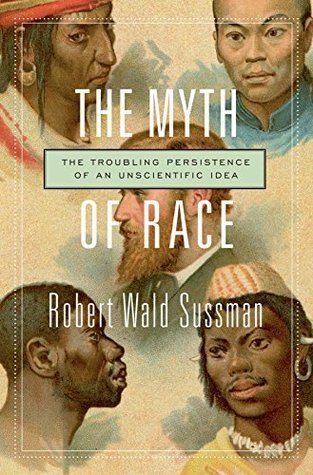
The vast majority of anthropologists, geneticists, biologists, and psychologists who have researched the subject have agreed for decades: the concept of biological races holds as much weight as the theory that the Earth is flat. Defining biological race (or just race) starts with understanding the evolutionary process of speciation. This process occurs when various members of the same species become separated and confined to certain areas. Over time (tens of thousands of years), as breeding occurs and genes are exchanged only between members in the same geographical region, these separated populations of what were once the same species begin evolving discernible differences. These differences usually are produced by ecological constraints inherent to the different regions these populations have made their homes. Eventually, the differences will become so great that (as long as little to no genetic exchange occurs between the separated populations) these distant groups will no longer be able to breed and reproduce with one another, and have in effect become a whole new species; this is the essence of speciation. The pseudoscience of biological race theory contends that different ‘races’ are the result of ongoing speciation, and that humanity’s various races are in an intermediary stage of the process where, although there are genetic differences between races, the various races can still exchange genes and breed together. Therefore, biological race posits that races are subspecies of humans which are genetically, biologically, and morphologically different, and this difference is due to the vast amounts of time (10,000 plus years) that these races were separated and therefore unable to breed and swap genes with each other. A problem quickly arises when one realizes that this theory rests on the assumption that there are distinct and discernible differences in genetics between so-called races; an assumption that proves to be untrue once one realizes that there is just as much, if not more, genetic variation within ‘races’ than between ‘different’ races. Anyone with even a rudimentary understanding of human history such as myself also realizes that it is simply impossible to argue that large populations of humans have remained isolated from others for tens of thousands of years. From the beginning, humans have been a migratory species that has continuously migrated back and forth, to and from regions. Migration between regions and populations is one of the most consistent aspects of human history, and there is no evidence on record of any long term geographic isolation for any large population of humans. Thanks to our advances in science, scientists have long been able to measure the genetic diversity within and among both human and animal populations. We can readily determine the degree to which different populations of a species differ from one another, and how these differences came about. By examining molecular data, scientists have come up with a “genetic threshold” to determine the bare minimum genetic difference there needs to be between two populations for them to be considered subspecies. Compared to other large animals with wide geographic distributions, humans don’t even come close to reaching the subspecies genetic threshold despite having the widest geographical distribution of any animal on the planet. All this is to say that there is no evidence for a biological basis for race, and that there race and racism are a sociological phenomenon rather than a biological one.
This book traces racism to the Iberian Peninsula, much like Gerald Horne; except where Horne traces the origins of racism towards anti-black sentiments emanating from the Catholic’s conflicts with Muslims on the Peninsula, this book believes the embryos of biological racism grew out of conflicts between Catholics and Jews. As some Jews gained wealth (and therefore power) on the Peninsula, they were able to use this to convert to Catholicism and socially integrate themselves into the population. As this conversion process took place it became necessary for Spanish Catholics to distinguish Jewish converts from long-time Catholics. Tracing someone’s bloodline became the way to do this. Anyone who had a Jewish ancestors in the previous 5 generations was considered a “new Christian” and subject to restrictions that “old Christians” were not, like restricting new Christians from attending college or holding certain government positions (it should be noted that Horne also pointed out that anti-semitism played a crucial role in the origins of race and racism, especially during the Protestant Reformation). Racism became concretely traced to blood when certificates of “purity of blood” were issued to non-Jews so that they could prove they were not a member of the “inferior” group. The Spanish Inquisition of the 1400s used systematic violence to enforce this new-found ideology of blood purity. This book doesn’t delve into why the Inquisition occurred, but reading Horne fills in the gap. As he explained it, the Inquisition was a response by Catholic Spain feeling tightening pressure from both Muslims and Protestants, which therefore elicited a violent and draconian response of forced Catholic conversion and brutalization of non-Catholics/those who refused conversion. Either way, this violence soon made its way to the Americas as Columbus’ voyage to the New World ushered in the “apocalypse of settler colonialism”.
Interaction with indigenous Americans naturally brought up questions by Catholics as to who these people were. Since the overall goal of Spanish colonialism was conquest, the answer to this question fell into two camps, both of which functioned as a way to dehumanize Native Americans and thus justify their genocide and enslavement. Theory 1 (degeneracy theory) posited that these men had once been biblical peoples who had migrated to the New World and then “degenerated” into something subhuman. Theory 2 (pre-Adamite theory) said that American Indians did not descend from Adam and Eve, and instead had an origin which came before the two, making them a completely different species from those who had descended from the ‘first man and woman’. Either way, each theory boiled down to the belief that American Indians were sub-human, incapable of being Christians or governing themselves, and therefore could be mistreated horrendously without moral consequences.
These two theories had remarkable staying power and their threads still remain when it comes to racial theory. The degeneration theory was originally the more popular of the two, as it didn’t challenge Christian orthodoxy as to the origins of all of humanity. Instead, it argued that climate and isolation from Christian civilization had corrupted Americans from their Adam and Eve origins. This turned out to be the more liberal theory, as its proponents argued that their degeneration could be reversed by providing them the benefits of European civilization, even against their own will (AKA white man’s burden). Elements of this can be seen in the OG imperialist philosopher John Locke, who justified taking Native American land on the basis of the “fact” that they had failed to adequately improve their land (read Ellen Meiksins Wood’s “The Origins of Capitalism” for a more thorough critique of Locke). He accepted that all men had been created equal under God, and yet the degeneracy of Natives, as evidenced by their failure to properly improve the land, meant they had devolved into lesser beings than the Europeans, and therefore lost their previously inalienable God-given rights. Other signs of this degeneracy were their change of skin color which, according to Montesquieu, was caused by climate. Montesquieu then set out to create a climate-based theory of race, which obviously assumed the climates of Europe produced the best and “most beautiful” races. Various Enlightenment thinkers then added a pseudoscientific gloss over the climate-based degenerate theory (for deeper critiques of the Enlightenment and liberalism, read Domenico Losurdo’s “Liberalism: A Counter History”). The most influential of these was Johann Friedrich Blumenbach, who both coined the race of ‘Caucasian’ to mean white people, and hierarchically ranked races based on various subjective measures (for example beauty, which Blumenbach considered white people to be the most beautiful, was based on nothing more scientific than his personal preferences), with Caucasian being at the top of the hierarchy and all others having degenerated from the original and superior Caucasian race.
Early believers of the pre-adamite theory believed that Native Americans were akin to giants, fairies , and other creatures that today would be called mythical (for more on this read the excellent book “American Holocaust”). The theory was given a new lease on life during The Enlightenment, as its heterodox view of Christian origins became less taboo due to the general anti-religious zeitgeist of the movement. As slavery proliferated and the Enlightenment’s fetishization of science grew, it became popular for academics to view Black people as a sort of intermediate species between ape and human, adding a scientific veneer to what was essentially still the pre-adamite theory. Studies of skull sizes also began to be used as ammunition for the pre-adamite theory. Arguments for this pseudoscientific theory, which would eventually morph into phrenology, argued that human skull sizes have always been different across different regions from the beginning of time, using ancient Egyptian skull sizes to ‘prove’ the validity of this theory. The differences in skull sizes shows that human races have therefore always been different and some (i.e. the non-white races) have always been inferior, withthis inferiority being directly traced to their skulls. A feature of the pre-adamite theory that still lingers today was the idea that, as distinct species, each race has its own strength and weaknesses; obviously, it followed that the white race has the best strengths compared to the other races. Following this belief, pre-Adamite racists, who were often also staunch imperialists, believed that non-white races such as the black race were incapable of forming civilizations. They bolstered this belief through deliberate misreadings of history and general historical ignorance, and argued that any mixing of races would ‘de-civilized’ the white race, and was therefore bad.
In the 1900s the discovery of Mendelian genetics posited that traits are genetically passed down from parent to offspring, and these “genes” are neither unaffected by overuse/underuse nor are they influenced of the environment (as opposed to the previous popular Lamarckian genetics, which believed traits that are used more are more likely to be passed down). Racists took this to mean that the differences between races were biologically determined and unaffected by environmental conditions. This idea fit in with the framework of Social Darwinism, or a conservative theory used to promote the status quo which, through vulgarizing Darwin’s works on evolution, argued that the world’s hierarchies were a result of natural selection; the “most fit” (the strong) should dominate, since they are “naturally adapted” to do so, while the “least fit” (the weak) naturally belong at the bottom rungs of society. Social Darwinism fit in nicely with the centuries old “might makes right” justifications of European imperialism, and combining this with biological determinism created fertile intellectual grounds for the eugenics movement. If you accept (as Social Darwinists did) that it is “morally wrong” to support the “weak”, since that would promote the “reproduction and survival of the less fit”, and if you believe that whether you are strong or weak is determined solely by biological means that are unchangeable, this leads you to the nasty conclusion that some people are naturally less fit, this cannot be changed, and they therefore should be extricated from society. The eugenics movement (“eugenics” was coined in 1883 from the Greek words “well born”) formed as a proactive form of Social Darwinism, and it sought to ensure that the state would prevent those with supposedly undesirable traits, especially races with these traits, from passing them down and allowing them to fester in future generations. This could be done through either “positive eugenics”, which called for controlling breeding so that only the best traits would be produced, or “negative eugenics” (as the Nazis would eventually try), which called eliminating “biologically inferior people” and excluding them from the population altogether through means such as segregation, castration, deportation, and outright genocide. These were very mainstream ideas espoused throughout some of the most powerful institutions and by some of the most well respected minds in the West and especially in America.
America’s eugenics movement was more vicious than Europe’s in the 1900s, likely as a reaction to the presence of Native Americans, African Americans, and vast influxes of migrants. More college courses were taught on Eugenics in America than in Europe, and theories of biologically determined mental traits became popular, including the idea that the majority of the poor and criminals were mentally deficient (the word ‘moron’ was coined at this time); many of these theories would lay some of the groundwork in fields such as evolutionary psychology and anthropological criminology. These ideas were so popular that, in 1907, U.S. president and eugenicist Woodrow Wilson passed legislation in Indiana that made sterilization of certain “undesirable individuals” compulsory; eventually over 30 states adopted similar laws. By 1930 there were over 300 college courses on eugenics, while almost every high school textbook had a section on eugenics in the United States. The stage was now set for scientific racism to intellectually come into its own.
Scientific racism was based on three beliefs: 1: that humanity is divided into many subspecies, all with distinct traits, with the Nordic race being the top subspecies
2: that moral and intellectual traits correlate with physical traits, which are all due to genetics, and these traits are unchangeable
3: that the mixture of races always results in degradation of the better race, which leads to eugenics becoming a necessity.
Scientific racism maintained a veneer of being an actual science through the creation of IQ (intellectual quotient) tests. These tests, which were originally created and written by eugenicists, attempted to quantify intelligence and boil it down to a single number (eugenicists believed that intelligence was a singular inheritable trait determined solely by genetics). Questions of early IQ tests included things such as: “which one of these plays does Becky Sharp play in?”; “the Ford arrow is produced where?”; ”which Sport has pitchers?”; “how many legs does a copier have?”; and “who wrote Robinson Crusoe?”. When white Americans (specifically rich white Americans) scored better in these tests than anyone else, IQ strengthened ideas of ‘Nordic superiority’ as well as general conservative viewpoints that the superior man naturally rises to the top. It should be no surprise that eugenics therefore became common sense and “popular wisdom” that was financed by powerful oligarchs, espoused by politicians, believed by the most leading academics of the 1800-1900s, and used as the backbone for countless laws.
It is at this point that the book completely falls apart and never recovers. It gets completely lost in the weeds of various personalities associated with eugenics. The author seems to be operating under the assumption that all racism after the eugenics movement is the work of a small cabal of neonazis and eugenicists, along with their various media outlets and propaganda programs. He makes a very uninspired claim (that also takes way too many pages to expand on) that the eugenics movement died because it was out-contested by a more accurate school of anthropology. There is no real materialist analysis at play here, and the impact of mass movements by the peoples eugenics was designed to suppress is never discussed. Instead, the entire discussion is framed around various clashes between the founders of eugenics and anti-eugenic anthropologists, and this takes up about half of the total book! What a fucking waste of time!