A richly informed, up-to-date performance guide to more than 140 favorite ballets, from the classical era to the present day
This engaging book is a welcome guide to the most successful and loved ballets seen on the stage today. Dance writer and critic Zoe Anderson focuses on 140 ballets, a core international repertory that encompasses works from the ethereal world of romantic ballet to the edgy, muscular works of modern choreographers. She provides a wealth of facts and insights, including information familiar only to dance world insiders, and considers such recent works as Alexei Ramansky's Shostakovich Trilogy and Christopher Wheeldon's The Winter's Tale as well as older ballets once forgotten but now returned to the repertory, such as Sylvia . To enhance enjoyment of each ballet, Anderson also offers tips on what to look for during a performance.
Each chapter introduces a period of ballet history and provides an overview of innovations and advancement in the art form. In the individual entries that follow, Anderson includes essential facts about each ballet’s themes, plot, composers, choreographers, dance style, and music. The author also addresses the circumstances of each ballet’s creation and its effect in the theater, and she recounts anecdotes that illuminate performance history and reception.
Reliable, accessible, and fully up to date, this book will delight anyone who attends the ballet, participates in ballet, or simply loves ballet and wants to know much more about it.
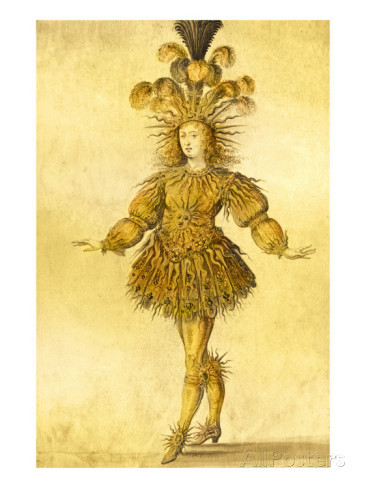
Ballet began at court during the Italian Renaissance and flourished after Catherine de Medici took it to France, where Louis XIV performed the role of a sun God in Le Ballet de la Nuit and earned the nickname Le Roi Soleil:
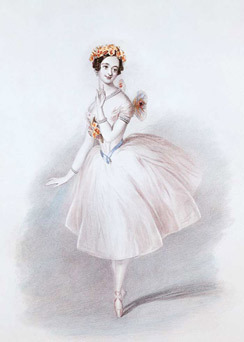
Two centuries later, Marie Taglioni revolutionized ballet "literally overnight" with the lightness and apparent effortlessness of her dancing, so different from the formal court performances once staged to entertain royals during elaborate banquets. Taglioni danced the role of a supernatural spirit in the first romantic ballet La Sylphide, which was staged amid Europe's craze for Walter Scott novels and had Highland undertones and touches of folk dance. Atuned to the zeitgeist, ballerinas of the time were feather-light, delicate or exotic creatures, performing in ballets that dealt with the obsessions of the age: distant cultures, wild and irrational love, the otherworldly and the unattainable ideal:
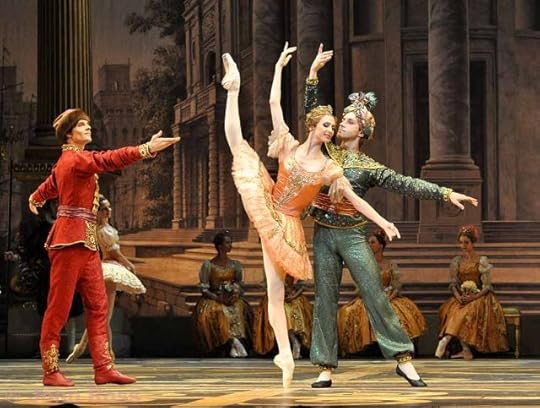
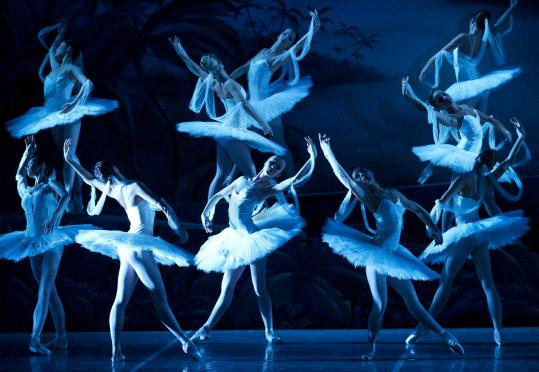
What most people think of as ballet - the lines of dancers in stiff tutus, librettos based on fairy tales, two-hour lavish spectacles - is largely the creation of choreographer Marius Petipa at the legendary Mariinsky Theatre in St. Petersburg, where he staged three iconic ballets to Tchaikovsky music: Swan Lake, The Nutcracker and The Sleeping Beauty. Petipa was the first in a line of Russians who would steer the course of ballet's history for more than a century:
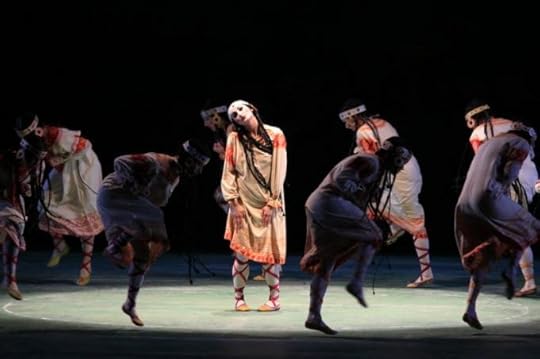
The Ballets Russes de Monte Carlo, made up of Russian exiles living in Paris after the Bolshevik Revolution, again showed that ballet not only embraced the spirit of the times but also pushed the limits of modernism by staging gutsy ballets set to Igor Stravinsky with sets designed by Picasso and Leon Bakst, among others. Nijinsky's Rite of Spring ballet, with its pounding drums and shrieking violins, portrays a pagan ritual where a sacrificial virgin is chosen to dance herself to death for the good of the tribe. This shocked the theatre-going public to the extent that Nijinsky had to shout the counts to the dancers from backstage over the hissing and booing of the audience, who later broke out into a riot:
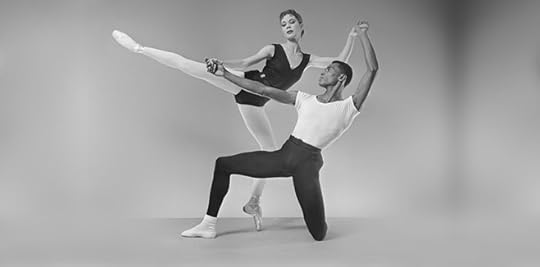
When he brought ballet to America, streamlining and modernizing it further, George Balanchine was again ahead of the times when he paired a mixed couple in a sight that shocked the 1950s audience:
What's been unfairly regarded as a stuffy and boring art form has proven remarkably resilient and unafraid to take risks, grow and develop while respecting the foundations laid down by Louis XIV's dancing master. And it's moving forward still in an age when it's regarded as old-fashioned. The book's prologue explains that:
"Ballet may be venerable, but it isn't a museum art form. In the twenty-first century it has found a fresh lease of life, with excitement generated by new works and new choreographers. There's another chapter to add to the existing story of ballet's roots in sixteenth-century European courts, its development on the gaslit stages of the Romantic era, its reflections of the grandeur of Imperial Russia, and the adventures of the twentieth century. By the end of that century, there were fears of ballet's decline: a generation of major choreographers had died, leaving its future uncertain. Since then, however, there's been a burst of energy, with the emergence of leading names such as Alexei Ratmansky, Christopher Wheeldon, and even newer names such as Justin Peck and Liam Scarlett. Ballet is busy again."
The Ballet Lover's Companion narrates ballet's turbulent and fascinating history in eight chapters that each deal with an influential era, like Romantic Ballet, Imperial Ballet or The Ballets Russes. Each chapter contains a brief overview of the historical period followed by an extensive list of all the major ballets staged during that time. This set-up lets you easily place each ballet in its historical context and gives you an understanding of the wider cultural forces (like Romanticism or The Russian Revolution,) that lead to changes and reinventions on the dance stage.
That being said, The Ballet Lover's Companion probably isn't the best place to start if you're clueless about ballet, because most of its 300 pages is a list of ballets with their history, background, and plot synopsis. This companion probably works best as a reference guide for those who want to delve deeper. It makes for dry reading if you're looking for non-fiction to read straight through.
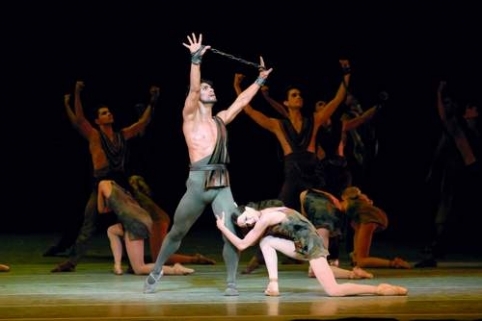
Very uncommonly, there's an entire chapter on Soviet ballet that offers fascinating insights into this little-explored (at least in the books I've read) period of ballet, going beyond a brief mention of its masterpiece ballet Spartacus:
This guide paints an uncharacteristically positive picture of Russia post-1919, before the Stalin terror, that shows it's concerned with artistry and not post-Cold War stereotypes:
"The revolution had unleashed a rush of experimentation in art. The new Bolshevik government took the arts very seriously, seeing them as a vital part of the transformation of Russia's culture, identity and social structure. The artists who responded to the call of Narkompros tended to be young and radical. This generation developed new forms and movements, exploring futurism, constructivism, industrial forms and atypical combinations. They soaked up Western artistic influences from jazz and foxtrots to Hollywood movies."
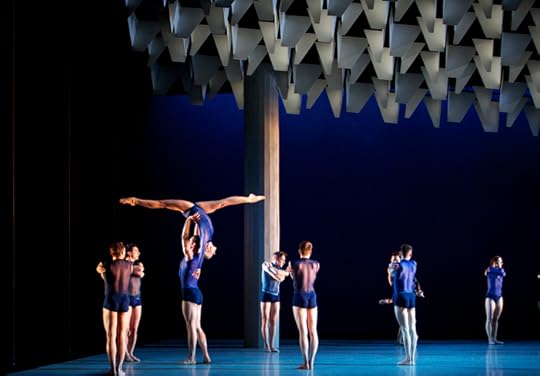
A big chunk of this book, the last 60 pages or so, deals with contemporary ballets from the early 1980s until 2014. If you're like most ballet fans, you probably don't need a guide to navigate through an evening of Giselle or The Sleeping Beauty. But the past several decades, with the boom of avant-garde, lyrical and at times downright strange ballets, may be more difficult to sort through. Author Zoe Anderson is an established dance critic, and her selection of what's worthy is reliable for anyone wanting to catch up on the newest productions.
This guide's only downfall is that it contains no illustrations or photos. Since ballet is so visual, I can't fathom how anyone could read about Taglioni or Balanchine for the first time and understand their work without also seeing it. Can you even begin to write about Bakst without showing his hyper-coloured, wildly-ethnic costumes? Why waste space on awkward descriptions of the placement of the corps de ballet in La Bayadere, and how they snake their way down to the stage, when a photo would suffice?
Aside from that, this guide is an anecdote-rich and extensive companion that's a valuable tool while theatre-going (or YouTube-watching,) that enriches the experience and provides a fuller understanding of an art that can be difficult to grasp.
An engaging journey through the history of ballet, with its brilliant artists and glorious performances, revealing the wonderful world of this beloved art form since its beginning at the Italian and French Renaissance courts.
[ I received this book free from the publisher through NetGalley. I thank them for their generousity. In exchange, I was simply asked to write an honest review, and post it. The opinions I have expressed are my own. I am disclosing this in accordance with the Federal Trade Commission’s 16 CFR, Part 255 “Guides Concerning the Use of Endorsements and Testimonials in Advertising]
"All art forms look at their past through the lens of the present; ballet does this more than most..The book is designed as a guide to ballet as it is now"
Arranged chronologically, the book sets ballet's response to the world situations. Each chapter introduces broad concepts that narrow into the indivdual ballets describing the development of the art form and the stories' response to the times. Most of the old, folkloric foci were giving way to modern interpreters like Jerome Robbins, Twyla Tharp and Martha Graham. It is truely a textbook of the history of ballet as well as politics that affected it.
This is much more than a history. Anderson, much as Milton Cross did for Opera, gives us the original production notes accompanied not only by synopses of the storylines, but where they sat in time, who were the stars, whether the ballet was given good or bad response. Each chapter takes a time frame and many historical productions "Cinderella tales" of reviving long forgotten works. Anderson concludes her last chapter's introduction with a 2-fold observance:
"One answer to the problem of repertory was to look to the ballets that really were made in another era. Ballet has always been a fragile art, living in performance and losing many of its greatest works. Since the 1980s it’s been working furiously to record and recover them".
As a child, I took ballet in my family's hope that a clumsy large child could find some grace in movement. Although it did not change me into a swan, it gave me a love if beauty and ballet and the historic role it played in the world. Some 50 years later, I am still in awe of the vivid, athelticism of anyone devoted to the art. This book allows me a chance to revisit my passion as needed/ wanted. Thank you Zoe Anderson for this lovely book.
The Ballet Lover's Companion is a great non-fiction book on the subject of ballet. In my opinion, although it is not a book, which you could easily read as a complete beginner who knows nothing about ballet, it is very well written. And for the readers, who already know something of the subject it is a really unique book that you will read with delight from beginning to end. The book is also well-arranged and divided into several parts according to the main periods or eras of ballet art. In every main chapter there is part about a historical background of the era, and a lot of information about specific ballets. To each ballet there is its detailed description, including tips on what to look for and many interesting details. Only negative for me is the lack of photos or images. I definitely recommend this book to anyone who is interesting in ballet, and it might even be described as "a mandatory part of their bookshelves".
---I recieved my copy via Netgalley in exchange for honest review.---