Jump to ratings and reviews
Rate this book

Ferment: The Life-Changing Power of Microbes

Rate this book
**As seen on Channel 4’s What Not to Eat**

‘A super healthy and tasty gift for you and your gut microbiome – discover the joy of fermenting’ Dr Clare Bailey Mosley

From the world-leading gut scientist and no. 1 bestselling author of Food for Life, comes an introduction to the life-changing benefits of fermentation.

Of all the ways to prepare food, fermenting is surely the most mysterious, miraculous and misunderstood. As Tim Spector shows in this groundbreaking book, the science is now clear that adding fermented foods to our diets brings an astonishing range of benefits for our health.

Drawing on his own cutting-edge research, and including practical tips for buying and making fermented foods, Tim demystifies the world of ferments, and introduces us to some of his favourites – from homemade kombucha and kefir, to sourdough, miso and coffee.

He explores the extraordinary science of fermentation and the transformative role of microbes, in our kitchens and in our guts – and reveals why fermenting is the key to good food and good health.

Ferment is the ultimate gift for anyone who wants to eat better and feel better.

Praise for Tim Spector:

‘One of the visionaries leading the way. His writing is illuminating and so incredibly timely.’ Yotam Ottolenghi

‘No fads, no nonsense, just practical, science-based advice on how to eat well’ DAILY MAIL

‘Tim Spector has been exploding the myths around food and health for years’ THE TIMES

‘The man changing how we eat’ TELEGRAPH

309 pages, Kindle Edition

First published September 11, 2025

300 people are currently reading
500 people want to read

About the author

Tim Spector

64 books427 followers
Tim Spector is Professor of Genetic Epidemiology at Kings College, London and Director of the TwinsUK Registry, which is one of the worlds richest data collections on 11,000 twins. He trained as a physician with a career in research, which since 1992 has demonstrated the genetic basis of a wide range of common diseases, previously thought to be mainly due to ageing and environment. Most recently his group have found over 400 novel genes in over 30 diseases, such as osteoporosis, osteoarthritis, melanoma, baldness, and longevity. He has published over 600 research articles in prestigious journals including Science and Nature. He coordinates many worldwide genetic consortia and is currently at the forefront of research with a highly competitive European Research Council Senior Investigator award to study Epigenetics – a new exciting research area into how genes can be altered. He is the author of several books for the scientific and public communities and presents regularly in the media.

Ratings & Reviews

What do you think?
Rate this book

Friends & Following

Create a free account to discover what your friends think of this book!

Community Reviews

5 stars
48 (29%)
4 stars
75 (45%)
3 stars
33 (20%)
2 stars
8 (4%)
1 star
0 (0%)
Displaying 1 - 28 of 28 reviews
Profile Image for K.J. Charles.
Author 66 books12.5k followers
Read
January 22, 2026
Reasonably persuasive on the importance of eating lots of fermented food. I'm currently fermenting garlic in honey because he really pushes that one, we will see how that goes.
263 reviews
November 11, 2025
I enjoyed reading this as an avid fermenter, and there are a couple of recipes I will add to my already (some might argue) excessive fermentation repertoire. Marked down because as with all Tim Spector’s books he quotes a lot of unpublished studies, states a lot of opinion as fact and I worry that everyone believes everything that he says (because he’s a prof) without questioning any of the evidence.
Profile Image for Marie.
26 reviews
March 9, 2026
I thought this book was a good intro into most of the different fermentations that we can get our hands on, how to make them and why they work. I wanted a bit more from this book to be honest though, I think it could have been a little more thorough and also I feel like some of the research referenced and the way he summed it up was vague. Even though I do not doubt the power of fermenting foods and love the idea of fermentation improving gut health, I felt like some of the facts mentioned was like a confirmation bias and correlation vs causation vibe. There were some recipes in the back though that I definitely plan to try!
Profile Image for Cav.
913 reviews214 followers
March 17, 2026
"Of all the ways to prepare food, fermenting is surely the most mysterious, miraculous and misunderstood, yet humans have been finding ways to ferment plants, dairy and meat for thousands of years as a means of preservation and enhancing flavour..."

Ferment was an interesting look into an emerging field of inquiry. Much of our current understanding of health is being rewritten by microbiome research, which has moved from the fringes of biology to the center of nutritional science. Modern science is slowly beginning to understand that our bodies are complex ecosystems with trillions of microbes that influence everything from our immune systems to our mental health.

Author Tim Spector is a Professor of Genetic Epidemiology at King’s College London and a co-founder of the ZOE nutrition app. He has spent years debunking common food myths, and here he turns his focus to the "microbial pharmacy" found in fermented foods.

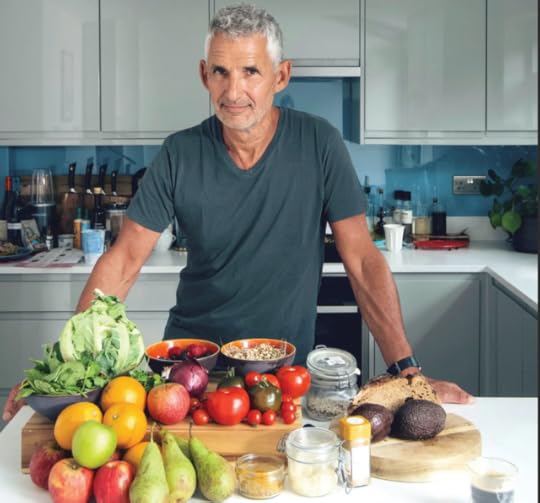
Tim Spector:
Screenshot-2026-03-17-114040

Specter writes with a decent style, and this one shouldn't struggle to hold the finicky reader's attention. He drops the quote above, and it continues below:
"..Fermentation simply means the chemical transformation of any food or drink, with the help of yeast, bacteria or other microbes, often producing bubbles or heat. Whole foods already contain hundreds of compounds; however, once bacteria or fungi have worked their magic, these compounds multiply and foods become vastly more complex... We now know that this ancient process of alchemy not only transforms the flavour of the food, making it more complex, varied and delicious, but it also brings a multitude of additional health benefits."

He talks about the aim of the book here:
"In this book, I want to demystify fermented foods and explore why it is that they bring so many benefits. In fact, I hope to convince you to throw away your vitamin supplements and instead try thinking of fermented food as a vastly more nutritious and tasty supplement, with many more proven benefits for your health."

Spector also addresses the "sanitization" of the modern diet, noting how scientific orthodoxy has historically viewed all microbes as enemies:
"Doctors like me used to be taught that all microbes were dangerous and our job was to wipe them out... with antibiotics and antifungals, and that our food should effectively be sterile in order to be safe... We have forgotten that for millennia... our ancestors purposefully added natural live microbes to make their food safe to eat. They understood what we have since forgotten: that microbes are generally our friends."

The book provides a comprehensive deep dive into:
• The Science: Probiotics, prebiotics, and the emerging field of postbiotics (the "living and the dead" microbes).
• The Communities: How SCOBYs, yeasts, and viruses interact to create stable food environments.
• The Food Gallery: Detailed chapters on yogurt, kefir, cheese, kombucha, vinegar, natto, miso, sourdough bread, and even the fermentation involved in tea, coffee, and alcohol.
• The Future: How personalized microbes might one day be used to treat specific conditions like depression or menopause.
• Fermenting at home: How the layperson can begin their own fermenting journey. Many different recipes are included throughout the book.

********************

Ferment was a well done book. It manages to walk the line between being evidence-rich without being dry, which is rare for a science book (in my experience). I found lots of interesting info throughout. I would recommend this one.
5 stars.
Profile Image for Laura Haynes.
48 reviews2 followers
December 8, 2025
I picked this up to learn more about gut microbes and the science behind fermented foods. The science-y sections were really interesting and explained the benefits of different foods. I also loved that Momo Kombucha got a shout-out, as it’s something I buy from time to time, so I was glad to see it make the cut!

But most of the book is recipe-focused, and I’m just not someone who’s going to ferment things at home… I’d rather spend the money buying good fermented foods than make them myself, so a lot of those sections weren’t really relevant for me. So, I enjoyed the educational side but didn’t get much use from the DIY recipe!
Profile Image for Mariella.
23 reviews
January 20, 2026
nice little book dedicated to the topic rather than being lumped in with general health eating advice. personally enjoyed the deep dive into the individual ferments with recipes and some of Tim's anecdotes from a past life. some readers may have wanted more labouring of the science and referencing. it was enough to convince me to have a go!
Profile Image for Jonas.
3 reviews
January 2, 2026
Some good and forward thinking ideas, but too focused on climate worries and self promotion via ZOE
Profile Image for Andrew Westle.
253 reviews7 followers
February 14, 2026

As someone who makes sourdough, has fermented all sorts of things over the years, and tries to include fermented food in my diet, this book felt both affirmation and gentle prod.

The core argument is persuasive, microbes are good for your gut and gut health is good for all health. Not in a wellness-trend way, but in a fundamental, human way. But fermentation is not just about gut health. It is about connection to time, to process, to food that is alive.

There are moments where the book leans heavily into Zoe, and at times it reads a little like an advert. That is a shame, because the underlying principles are strong and make sense without the branding. Some sections are firmly rooted in science; others feel more speculative. I guess this is the part of where this field sits, emerging, evolving, still being understood.

The recipes at the end are refreshingly simple. They lower the barrier to entry. No mysticism, basically just jars, salt, patience.

What stayed with me most was the cultural irony. Fermented food now feels like a middle-class lifestyle pursuit, something aesthetic and curated. And yet it used to be ordinary, ordinary and necessary. A way of preserving abundance and surviving winter. Slowing down, making food at home, working with microbes rather than against them, none of this is new. But this is something everyone can afford, because it’s something people can make themselves and with some ease.
Profile Image for Jordan.
184 reviews14 followers
February 18, 2026
This was Fine. I've always loved fermented and pickled foods, though lately I've been getting into making them myself more, so I thought this would give me a good understanding of what actually happens during the process to make them so Good. It was an interesting read, and a good start for dipping toe into the benefits, history, and some science of fermented foods. However it did feel like one long subtle ad for the author's company, ZOE.
Profile Image for Kirsty.
266 reviews30 followers
January 27, 2026
A great resource into gut health and the future of fermentation to create non-meat foods and more medical compounds (so far only insulin).

What I like about all of Tim’s books is the hours of real life experience, experimenting, and research that goes into making them so you get the condensed version.

Tim is honest about the medical research still being in it’s infancy but there’s a lot of indicators that we should be embracing more fermented food. It makes perfect sense that our ancestors would have eaten more fermented foods, then our current modern diet, to get through the leaner months.

He’s preaching to the converted but ferments can be time consuming so I personally prefer a single ferment. I already make Milk kefir, which is a simple single ferment which I keep in constant production as I enjoy it every day with breakfast. But when I made water kefir, although an amazing replacement for fizzy drinks which I miss (IBS), having to constantly burp in the second fermentation was a pain and non-adherence caused messy explosions. I also experimented with sourdough from scratch last year but thought the resulting taste didn’t justify the time or mess, but I might have another whirl with an already mature starter.

Based on my experience and time, the book’s recipes for single ferments I’m looking forward to making are: kimchi, tomato ketchup, and the honeyed garlic. I’ll probably have a crack at Kombucha at some point until I get bored with how much time it takes up.
Profile Image for Rachel.
1,242 reviews
March 10, 2026
Definitely planning on making some of the recipes especially honey fermented garlic if I can get hold of raw honey.

~~~

There is such a lot of repetition in this book!

Part three describes different kinds of fermented food and how to make them, however I don’t really understand why there is information about how to make them as the sketchy descriptions are replicated albeit with a little more detail in part five which provides fermenting at home recipes.

In part three ‘How to eat kefir’ suggested uses are listed. This is almost exactly replicated in the recipe section, but without giving any actually helpful quantities for making the green goddess style dressing – the cynic in me says this is because it is probably included in the Food for Life cookbook!

Ferment is so padded out that it makes reading somewhere repetitious and irritating. It also contains multiple references to Tim Spector’s company Zoe. In the case of research undertaken I find it interesting, but less so where there are some thinly veiled adverts for products available in supermarkets….
Profile Image for Tamsin.
177 reviews1 follower
February 17, 2026
This book did for me what I really value in a non-fiction read: it made me make changes in my life and see things differently. In this case, I actually made my own sauerkraut and yogurt before even finishing the book.
That being said, for a book by a scientist, there were some unconventional parts, such as giving vague units in the recipes like 'makes 1 jar' and some instructions seemed ambiguous to me. I was also sometimes confused with the seemingly contradictory health advice, it's better to keep it straightforward and not muddy the waters with too much information. Also, he very much goes all in on the acidic fermented foods and skims over the downsides of eating tons of salty acidic cabbage. Finally, there are a lot of subtle and unsubtle plugs for Zoe products.

I do overall have a positive impression of the book, but would urge everyone to always keep their critical thinking hats on while reading (anything really), especially when you consider making lifestyle changes.
1,301 reviews6 followers
March 26, 2026
Well if you are interested in gut microbes then this is the book for you! I thought I was but it turns out as I went along that I'm not. Anyway Mr Tim Spector is a professor of gut microbes and is telling us about fermentation. To be honest I fell asleep before I got too far in and even when I woke up in the night I still couldn't really fathom it all out. He does give out recipes for making your own kefir, kombucha, sourdough, miso and coffee but at the end of the book I discovered that I did not fancy making any of these as it happens, so have shelved this book as just, read. (This must be the shortest review I've ever written).
13 reviews
January 31, 2026
Is a nice book, not comprehensive, not systematic, but nice.
I’m skeptical about his opinion on the benefits of alcoholic fermented foods but at least he put an effort on saying POTENTIAL. What bugged me the most is (1) how he generalized the effects of neurotransmitters like GABA on our phisiology when the reality is much more complex; and (2) how he reproduced the old myth of not using metal materials to ferment, without questioning it. These metals are non reactive alloys unlikely to interact, not saying impact, on the quality of ferments.
Profile Image for Andrew.
966 reviews
February 28, 2026
I used to ferment Kombucha a while back, and this last year have been fermenting Water Kefir (Tibicos), Tepache and Ginger Bug. Having read books by Tim Spector before, I was interested to read this book.

Overall, I found it very useful, and the book covers the benefits of fermented foods, dealing with fermentation problems, the interesting topic of the future of fermentation, and a number of recipes, some of which I intend to try.
Profile Image for Anita.
163 reviews
October 8, 2025
Will rate a 2 as for me personally I wouldn't dare make anything from book.
It was interesting but not as helpful for me as the last book I read by Tim
' Food for life ' or something.
Yeh didn't really learn anything I dont already know.
Profile Image for J.T..
76 reviews6 followers
November 18, 2025
Good information about a variety of topics, but more focused on the science than being a hands-on volume. The audiobook is a solid long-form podcast, but I find Sandor Katz's books on the topic far more useful.
236 reviews
February 16, 2026
Easy to read, split into three sections; general information about fermentation and it's benefits, specific information about the different types of ferments and finally recipes. Informative, easy to read with good tips on how to increase the amount and quality of fermented food in your life.
5 reviews
February 24, 2026
A fantastic book about the health benefits of fermented food, with the studies provided to show the science behind the claims. Great for beginners and those who are regular Zoe podcast listeners. Includes recipes at the end to help you start making your own fermented foods and drinks.
Profile Image for KFK.
475 reviews6 followers
March 5, 2026
A fantastic book with great tips and recipes. As a fermentation enthusiast this book is making my brain work hard and I am already planning on taking over the bottom shelf of the fridge with my jars.

Can't wait to try all of the recipies!
Profile Image for Clare Staines.
91 reviews1 follower
December 20, 2025
Good book to keep coming back to. Needs another edit. Spaces are missing in one spot and I think tablespoons were mistakenly used rather than teaspoons in one of the kombucha recipes
Profile Image for Sam.
172 reviews2 followers
January 4, 2026
Very useful book. I liked all the science behind different sorts of ferments and recipes easy to follow.
4 reviews
March 17, 2026
Loved reading a bit about the history of fermenting. Also love that it includes recipes and already tried a few of them.
Profile Image for Naomi.
1,170 reviews6 followers
March 29, 2026
Very interesting, although more than enough promotion for Zoe throughout.
Displaying 1 - 28 of 28 reviews