Jump to ratings and reviews
Rate this book

The Night Stages

Rate this book
A female pilot recalls her affair with a man obsessed with the disappearance of his brother

After a tragic accident leaves Tamara alone on the most westerly tip of Ireland, she begins an affair with a charismatic meteorologist named Niall. It’s the 1950s, and Tamara has settled into civilian life after working as an auxiliary pilot in World War II. At first her romance is filled with passionate secrecy, but when Niall’s younger brother, Kieran, disappears after a bicycle race, Niall, unable to shake the idea that he may be to blame, slowly falls into despondency. Distraught and abandoned after their decade-long relationship, Tamara decides she has no option but to leave.
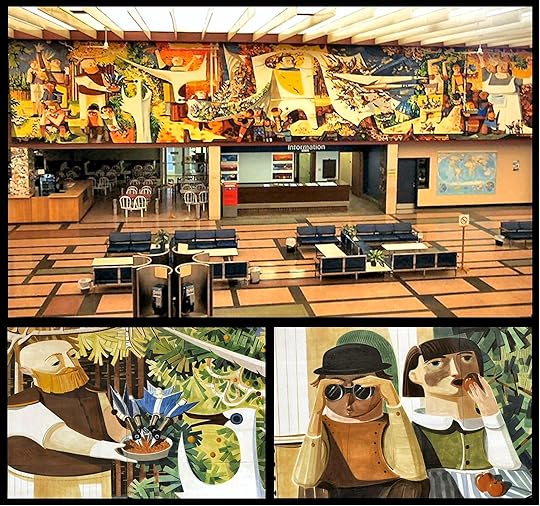
     Jane Urquhart’s mesmerizing novel opens as Tamara makes her way from Ireland to New York. During a layover in Gander, Newfoundland, a fog moves in, grounding her plane and stranding her in front of the airport’s mural. As she gazes at the nutcracker-like children, missile-shaped birds, and fruit blossoms, she revisits the circumstances that brought her to Ireland and the family entanglement that has forced her into exile. Slowly she interweaves her life story with Kieran’s as she searches for the truth about Niall.
     With The Night Stages, this celebrated bestselling author has written a magnificent, elegiac novel of intersecting memories that explores the meaning of separation and reunion, the sorrows of fractured families, and the profound effect of Ireland's harshly beautiful landscape on lives lived in solitude.

396 pages, Hardcover

First published April 7, 2015

37 people are currently reading
1983 people want to read

About the author

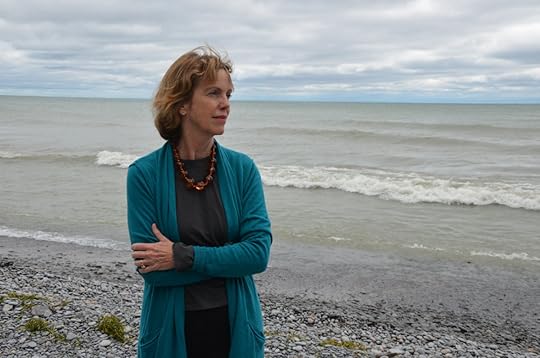
Jane Urquhart

41 books378 followers
She is the author of seven internationally acclaimed novels entitled, The Whirlpool, Changing Heaven, Away, The Underpainter, The Stone Carvers, A Map of Glass, and Sanctuary Line.

The Whirlpool received the French Prix du Meilleur Livre Étranger (Best Foreign Book Award). Away was winner of the Trillium Book Award and a finalist for the prestigious International IMPAC Dublin Literary Award. The Underpainter won the Governor General's Award for English-language fiction and was a finalist for the Rogers Writers' Trust Fiction Prize.

The Stone Carvers was a finalist for the Giller Prize and the Governor General's Award, and was longlisted for the Booker Prize. A Map of Glass was a finalist for a regional Commonwealth Writers' Prize for Best Book.

She is also the author of a collection of short fiction, Storm Glass, and four books of poetry, I Am Walking in the Garden of His Imaginary Palace, False Shuffles, The Little Flowers of Madame de Montespan, and Some Other Garden. Her work has been translated into numerous foreign languages.
Urquhart has received the Marian Engel Award, Calgary's Bob Edwards Award and the Harbourfront Festival Prize, and is a Chevalier dans l’Ordre des Arts et des Lettres in France. In 2005 she was named an Officer of the Order of Canada.
Recently, she was named the 2007 Banff Distinguished Writer.

Urquhart has received numerous honorary doctorates from Canadian universities and has been writer-in-residence at the University of Ottawa and at Memorial University of Newfoundland, the University of Toronto, and the University of Guelph.

She has also given readings and lectures in Canada, Britain, Europe, the U.S.A., and Australia.
In 2007 she edited and published The Penguin Book of Canadian Short Stories, and in 2009 she published a biography of

Lucy Maud Montgomery as part of Penguin’s “Extraordinary Canadians” series.

Urquhart lives in Northumberland County, Ontario, Canada, and occasionally in Ireland.

http://en.wikipedia.org/wiki/Jane_Urq...

Ratings & Reviews

What do you think?
Rate this book

Friends & Following

Create a free account to discover what your friends think of this book!

Community Reviews

5 stars
210 (18%)
4 stars
419 (35%)
3 stars
374 (32%)
2 stars
127 (10%)
1 star
36 (3%)
Displaying 1 - 30 of 243 reviews
Profile Image for Roger Brunyate.
946 reviews746 followers
August 26, 2017
Imagine picking this up in a bookstore, as if from an unknown author, and opening a page at random: "This is what Keiran could not see as the road under his wheels rose through the haze toward the top of the headland. He could not see Ballinskelligs Bay, or Horse Island curving like a smile in its centre, or the old castle walls on a smaller island near the shore. He could not see the ruined abbey or the many graves that surrounded it, the cliffs that stood angry and dark, and the inlets that narrowed toward hidden sea caves."

So this is Ireland, then; County Kerry on the southwest corner, with nothing between its rocky shores and Canada. How Irish to describe the mist-shrouded landscape in terms of what the young man could not see, yet how immediate and tactile the sensation of the road rising beneath the wheels of his bicycle! The enthralled reader perhaps turns a page or two, to where Keiran, right out on that headland, comes across a very old man and his wife, weeping because a locked gate is separating them from their strayed cattle. He offers to climb over the gate and round them up: '"Ah no," said the man, "it's myself they know. They, being the final cattle of Europe, out there on the farthest western edge of everything and all, would never permit themselves to be driven by any other."'

I grew up in Ireland myself, a different part, but I recognize passages like this as more than folkloric imitation by a transatlantic visitor. There is a primal quality to much of the writing, in which geography becomes a mythic stage for a drama in which things that happened half a century before are as yesterday, and the living and the dead are as one. Literary folk might call it Magic Realism, but you could also say it was the spirit of Ireland.


Jane Urquhart

Of course, I started reading at the beginning, picking up the scent of Urquhart's abiding themes, her interest in emigration and memory, her concern with the visual arts, and her habit of including real people in her fictions; more on all that in a moment. I was soon imagining a review comparing it in subject and setting to Colum McCann's Transatlantic, one of my top books of 2013, as this surely will be for 2015. But very soon, all this analytical activity fell away. I was swept up by my joy in the book as a song of love. Love for Ireland, obviously. Love for human beings. Love that special people have for something bigger than themselves, the love that turns them into artists. And I suppose the love between men and women, though the conventional love stories here, though intense, are strangely elusive.

A very little about the plot. The book opens in Saskatchewan with a glimpse of a young Canadian artist named Kenneth. Attention then shifts to Ireland, where Tam, an Englishwoman in her thirties, is fleeing some kind of unsatisfactory relationship. She takes a plane from Shannon bound for New York, and when it lands at Gander, Newfoundland, to refuel (this is the late 1950s, just before the era of one-hop flights), it is fogged in for close to two days. Tam begins to study the vast mural in the new airport lounge, painted by Kenneth. As she does so, she speculates about the events in the artist's life that might have inspired the painting. She also thinks back on the past two decades in her own story: her career as an auxiliary pilot in the war, her two marriages, and her recent life in Ireland. But neither Tam nor Kenneth are the principal characters in the novel, nor is Niall, the man that Tam is fleeing. The protagonist is surely Niall's estranged brother Keiran, a wild creature who follows his own star -- an ancient star in a troubled galaxy.


The Gander Airport mural, and two details

Urquhart's early Changing Heaven is, I think, her only precedent for The Night Stages in being set almost entirely in Europe. Its Irish roots and the touches of magic link it to the first section of Away, although this time she begins at the opposite corner of Ireland and never fully leaves it. Her characteristic themes of translocation and memory are here in full force; her environmental and political concerns are here too, though you have to look for them. But primarily what I see is poetry: poetry in the prose, in the freedom of construction, and the relative unimportance of plot; I even see a thematic connection to some of Urquhart's actual verse. Only the early Whirlpool comes close in this regard, though this latest work is far more assured. Readers who know of Urquhart's interest in the visual arts from, say, The Underpainter or A Map of Glass will be fascinated by the sections on the artist Kenneth and the development of his craft, and find a book that is itself constructed like the painting it contains: "She allows its chaos and its odd calm to enter her mind. Some of the figures are so emplaced they seemed to be wholly defined by the act of absolute arrival. Others are caught in the process of moving away. And far back in the trees, rendered in shades of grey, one or two appear to be poised on the edge of full disappearance."

For of course the Gander mural is real and can be found on line. The artist, the late Kenneth Lochhead, was apparently a friend of the author's husband's. This is an odd novel in that respect, in that Urquhart is dealing with a real figure, but nonetheless making up large swatches of his early life. Lochhead is one of the three dedicatees of the book. The others are Michael Kirby, who appears in the novel as a fisherman-poet and life coach for Kieran, and Vi Milstead Warren, an aviator who was presumably a part-model for Tam. Who could be surprised that a book written with such love should be inspired by affection for real people? Or that the author herself has a home in Kerry?
Profile Image for Sandy .
394 reviews
January 2, 2016
I felt somewhat embarrassed about my initial impulse to give this book a two-star rating. Being a "newbie" reviewer, any attempt on my part to assess a seasoned author like Jane Urquhart -- one of the "sweethearts" of CanLit -- seems presumptuous. Add to that the fact that, in an interview with Times Colonist reviewer Adrian Chamberlain, Urquhart confessed to having reached "a liberating stage where her chief concern is to please herself" (http://www.timescolonist.com/entertai...), I can't help but wonder if my opinion is irrelevant and inconsequential.

I have spent the morning reading and pondering reviews of this book on Goodreads and in the media. Predictably, the media reviews are for the most part glowing accolades about another wonderful book by a celebrated author. By contrast, some of the reviews by Goodreads members present, in my opinion, some valid comments about the book -- for example, among others, the weak development of one of the main characters (Tamara) and the questionable importance of the vignettes about the mural and the life of Canadian artist Kenneth Lochhead.

Urquhart is famous for her lush descriptions of place and her ability to evoke a misty, detached, and melancholy mood. In this department, The Night Stages does not disappoint the reader. But the reader who enjoys a plot-driven, fast-paced adventure will probably abandon the book long before reaching the very exciting climax of the story.

In the end, in spite of my disappointment with the book, I decided (a) to trust that Urquhart (with her many years of experience as a writer) has intentionally succeeded in pleasing herself and (b) to believe that it is my lack of experience as a critical reader that leaves me feeling displeased.

Profile Image for Friederike Knabe.
400 reviews188 followers
April 24, 2015
Wonderful, engaging, moving, achingly beautiful language, poetry in motion...

Old man Kirby is a fisherman and a poet - but only when he thinks in Irish - or possibly a painter, when he thinks in English. What he can evidently do in both languages is give wise counsel, especially to young and wild Kieran. And, if he had met the other central characters in Jane Urquhart's stunning new novel, they could have learned a thing or two from him also. Take the image of "riding the donkey of the imagination..." It can take you anywhere you want to go. Brilliant! Why a donkey? While the last donkey on the sacred islands of the Skelligs in County Kerry, Ireland, died centuries ago, his spirit can live on in the mind of those who are open to his guidance.

Imagination, whether in poetry, the visual arts or in a person's reflection on life, is a central theme of Jane Urquhart's NIGHT STAGES. Urquhart herself is a poet at heart and her writing brings out her rich imagery and her lyrical expressions that delight in the cadences of the Irish language, transposing them into an English that in turn delights the reader. You don't need to look at photographs while you read (do it later) to visualize her evocative depiction of landscapes of County Kerry with its hills and valleys, its remote villages, rolling pastures, and its dramatic coastline. And not to forget the often wild and stormy weather patterns in this southwestern corner of Ireland. County Kerry with land, natural environment and its locals is like a character in its own right...

Love is another big theme in NIGHT STAGES. Complicated romantic love, unrequited love, sibling rivalry or even love-hate, love lost and found,... Urquhart explored the rainbow of human emotions, delving into the past of her characters and to some degree into their future. A wise counsel of old man Kirby again: "The future," Kirby continues, "is the geography with which we are sometimes most intimate, having gone over every version of it inch by inch in our minds. […]When I begin to compose a poem, I do so because in the future, I imagine, there will be this wonderful poem. When I look at the sky, I do so because of future weather. Prediction is one of our most natural states of intimate concentration; it is our conversation - our argument on occasion - with the future."

Three narrative strands are woven into a tapestry of human experiences, hopes and challenges, set against the backdrop of colours, shapes and sounds. The story is told from different perspectives, sometimes these run in parallel, or are separated by time and space or they are overlapping. Each feeds more context to the other. In the beginning you will ask yourself how the seemingly independent strands can come together to form the essential elements of an integrated, totally absorbing novel: a large mural in the airport of Gander, Newfoundland, a young woman waiting in that airport to catch her connection flight to New York, having arrived from Shannon, Ireland, and Kieran, the young Irish boy who finds his life turning around when he moves to live in the rough terrain of the Kerry mountains and discovers that riding a bicycle is easier than riding the donkey of imagination. But one can lead to the other also.

It would be a pity to tell you much about the characters and what, in different ways can and will tie them together... the exploration of the story is part of the excitement of reading. Urquhart's characters are very well drawn, their stories that have brought them to a crucial point is their lives are often dramatic and always affecting; the end... nothing should be said about that at all. You might wonder about the title. The image on the cover gives you one clue...

Imagination is essential for artistic expression... Jane Urquhart weaves her own thoughts on art subtly into the story. Two real life personalities are fictionalized in the novel: the Canadian painter Kenneth Lochhead,who painted the mural in Gander Airport and the Irish poet Michael Kirby. Both are remembered in the dedications. Tamara, the young woman in the airport lounge, a link between different worlds, is also inspired by a real life person, namely the aviator Vi Milstead Warren, who shared many stories of her life with the author. She was one of the first woman aviators who flew as an auxiliary pilot during WWII, able to fly more than 40 different aircraft types.
Profile Image for switterbug (Betsey).
937 reviews1,513 followers
July 30, 2015
“Kenneth’s [Lochhead, the Canadian artist] shadow is a thin ghost on the quay. But there are thousands and thousands of miles inside him.”

This passage, to me, is a poignant metaphor for Urquhart’s latest novel, which takes place largely in Ireland, with a layover in Gander, Newfoundland. The central characters could be said to be ghosts of their selves, almost stand-ins for the miles of revenant other selves that live within, and haunt them. They are living half-filled lives, with a past that is gone but still wielding power—“the presence of the absence” (another ghost). Too, Ireland’s past of famine, hardship, and emigration is braided through the story, another specter, so that the novel is often like a diaphanous, haze-filled palimpsest, but one whose relic texts reveal themselves, and whose narrative pages are made of fog, mist, and ghosts. The word “ghost,” in fact, is probably the most oft-repeated noun in the novel.

Ghosts, fog, art, arrival, departures, and that half-formed self, represents the tragedies of the past that continue to embark on the present, rendering an inertia to two of the characters, and pointing to the disappearance of a third. Moreover, the novel evokes a sense of the temporary, and a painful feeling of loss for the presence of something permanent:

“You bide your time in a temporary place like this…You make no commitment. This is the geography of Purgatory…”

As the novel opens, Tam, an Englishwoman, is trying to escape her personal Purgatory by leaving her married lover, Niall, a meteorologist (and son of a meteorologist) in southwest Ireland, a peninsula in the Iveragh mountains, in County Kerry. It is the 1950’s, when planes from Ireland stop to refuel at Gander. However, due to fog conditions, she is stranded there for two nights, and in this interim, she ponders the airport’s mural, painted by (real-life) Kenneth Lochhead, and internalizes and interprets the figures in the mural in relationship with her own melancholy existence.

Niall, in turn, wrestles with his demons, and his refusal to take decisive action is rooted in the guilt, shame, and loss he feels for the vanishing of his younger brother, Kieran. Kieran, who is the most compelling character, had temper tantrums as a child, and went to live with the family housekeeper after the tragedy of his and Niall’s mother’s death. Tam recently learned about the reason for Kieran’s disappearance, a miasma that follows Niall like a ghost, and that pursues and prevents his ability to be intimate with others.

Speaking of thousands of miles within one, Tam was a pilot in WW II, part of the woman’s air transport auxiliary. She reflects on the many planes she flew back and forth, and the fact of her full engagement 15 years ago, with her work. And here she is now, in a temporary hold (such as the planes she flew), but distanced from her life, as such. Other than her periodic lovemaking with Niall, she feels empty, hollow. Tam also examines and contemplates Lochhead’s mural (which you can view online). Urquhart’s enchanting understanding of the visual arts were evident in The Underpainter and even The Stone Carvers (and probably others that I haven’t read)—and, in this novel, she has a way of observing Lochhead’s mural and not only placing it at the center of the novel, but also building the novel like the mural is painted. Take this passage:

"She allows its chaos and its odd calm to enter her mind. Some of the figures are so emplaced they seemed to be wholly defined by the act of absolute arrival. Others are caught in the process of moving away. And far back in the trees, rendered in shades of grey, one or two appear to be poised on the edge of full disappearance."

I’ve not talked much about Kieran, because almost anything I say about him would spoil the act of discovery. However, it is safe to say that Urquhart’s fictionalized history of the artist, Lochhead, and how he came to break over 5000 eggs in this tempera-based mural, “Flight and Its Allegories,” and the mural itself, evokes the lives of Tam, Kieran, and Niall. And, too, it echoes the ghosts of Ireland’s past. This book, too, is an allegory of Ireland and its people.

The presence of the absence, and the miles and miles of the past, seeps through the fog. Urquhart has a preternatural sense of when it is time for her characters to leave Purgatory and give up the ghosts. Even the airport at Gander is a ghost, now that refueling isn't necessary. Metafiction? Or metaphor?

Highly recommended. A++
Profile Image for Jill.
Author 2 books2,069 followers
April 27, 2015
While still under the spell of my recent Ring of Kerry vacation, with its lakes and mountains, brilliant yellow firs and emerald fields, seaside villages and old monasteries dancing in my brain, I immersed myself in The Night Stages…frankly, hoping to prolong the magic of my trip.

And indeed, Jane Urquhart knows her territory, literally and figuratively. A poet herself, Ms. Urquhart’s tale of sibling rivalry and Irish legacy is exquisitely and lyrically written, a homage to southwest Ireland embodied in her key character, Kieran.

Then why did I somehow not feel completely satisfied with The Night Stages, despite an abundance of admiration for it? I suspect the answer lies largely in the aloofness of the characters that often come across as glorious but inert, not unlike the personages who are frozen within Kenneth Lochhead’s much-lauded mural, Flight and its Allegories, displayed in Gander, Newfoundland’s airport lounge.

Flight and inertia are indeed omnipresent throughout this book. It interweaves several characters, connected only by tenuous threads: world war aviator Vi Milstead Warren (the inspiration for her character Tam), the aforementioned famous Canadian artist Kenneth Lochhead, the insightful Irish poet Michael Kirby, and two fictional brothers, the meteorologist Niall and has tantrum-plagued and estranged brother, Kieran.

Considering Kiernan is one of the few completely-imagined characters, it is amazing how he lifts up and transforms the narrative. He is bigger than life, as big as Ireland itself: searching for home, place and self, Trapped in his loneliness and eager to prove himself as a bicyclist and to feel “whole” again, Kiernan dominates his pages and at the start, calls to mind another fictional character: Healthcliff of Wuthering Heights.

But not unlike another lyrical writer who tackles Irish themes, Colm McCann in his latest novel Transatlantic, Jane Urquhart weaves in three stories: that of Kiernan, that of Tam the aviator who is engaged in a long love affair with an emotionally remote Niall, and lastly, the painter Kenneth Lochhead, whose mural Tam views when her plane is grounded in Gander due to fog. While the other two are fascinating characters, particularly since they’re based on real-life counterparts, they remain rather static. (For example, I never particularly understood or felt the motivation for Tam – an adventurous risk-taker – placing her life on hold for a man who is emotionally and legally incapable of giving her much more than physical passion.) Kenneth Lochhead’s sections, while beautifully rendered, seem extrinsic to the narrative for a good portion of the novel.

Without spoilers, I will say that the last 25% of the book more than fulfills its promise, revealing the inspiration behind the book’s title, and highlighting universal themes that weave in all narratives and reveal a bigger picture. To me, this final stretch was that most satisfying of reads, when the real world goes away and the reader feels “at one” with the printed page. I’m very torn between 4 and 5 stars and may be switching this rating as time goes on.


Profile Image for Cher Staite.
288 reviews
January 11, 2019
There was no beginning nor no end with this book....nor for characters or for reader.

Descriptions of countryside were lovely.
One or two of the characters were somewhat described but their storylines were weak and kept bouncing around. Every time I thought something might happen more beautiful descriptions of countryside took over.

I cared what happened to the the two main characters.
I cared about their relationships and I stuck with it to the bitter end wanting at least one of them to triumph.

But there is never any happiness, never any triumph ... just bitterness to the bitter end where everything is left hanging.

I don't care how much acclaim this writer has, I'm not going to be intimidated into "liking" this book.
Sorry.
Profile Image for Julie.
561 reviews311 followers
August 27, 2015
The Night Stages is another lyrical accomplishment by Jane Urquhart, inventor of myths and legends and songs that one carries in the heart for a lifetime. Once again, I am delighted with the journey: she's led me through the fog and mists of the heart, seeking love in its many forms, sometimes finding it, and sometimes falling far short of the prize. One becomes as possessed as a revenant by the haunting beauty of the pilgrimage.

The duality of possession: of holding something concrete in one's hand, and of it slipping away, or shattering; and then, the other meaning, of being fully owned, fully possessed by something outside of oneself which one just can't shake comes to heartbreaking collision in Urquhart's words:

After years of restraint, the relationship had slipped over an unacknowledged edge and quietly deepened for her so that everything they had missed -- a child, shared sleep, the comfort of morning rooms -- began to feel like possessions wrenched unfairly from her rather than those she had never owned.

What does one ultimately own, in this condition called love? Everything is an illusion, and one can only rescue oneself from total despair, by giving it a name. In effect, we build our own castles, either of granite or whimsy, depending on our own convictions.

The "donkey of the imagination" is what saves us -- that steady, reliable animal which pulls us out of bleakness, and sets flowers on morning tables, "morning rooms" and makes it all worthwhile.

The novel isn't for everyone: if you're looking for a straight-highway narrative, with a heavy plot line, and a GPS, this is not the work for you. If, on the other hand, you're "really serious" about suspending your disbelief, you will be richly rewarded.
Profile Image for Penny (Literary Hoarders).
1,305 reviews166 followers
June 24, 2015
I was looking for a good read, a good story that wasn't too heavy, but not too fluffy. I found that here in The Night Stages. An inventive story really that contained truly beautiful writing, sometimes dream-like. But I also felt like the story or people in it weren't fully realized and the inventive story started to drag on and not connect with me, or keep my interest until the end.
751 reviews16 followers
August 14, 2015
Jane Urquhart is one of Canada's most beloved authors, according the the blurb on Amazon--an award winning author and a poet. I haven't read her other work, but I think The Night Stages is an epic fail. The story is contrived, built around a mural painted by one of "Canada's best painters", Kenneth somebody. The mural sits in the Gander airport in Newfoundland, which at one time was a major refueling stop for commercial airliners flying to and from Europe. You may remember it as the place that many European flights ended up on 9/11 when US airspace was closed. This mural is probably a beloved Canadian national treasure, but I think it's awful in itself, and awful as the contrivance around which this book revolves. Urquhart tells her story from several perspectives, and the least interesting journey is that of the artist, who has no connection whatsoever with the rest of the action. He is there because he made the painting using eggs and it is there so that one of the other characters, former female WWII pilot from England, can contemplate it as she mourns her lost love affair on a layover in Gander. The real story is about two brothers and a bicycle race. There is lots of Irish stuff and depression and mysticism and it's a mess. I skimmed the last half just to see who won the race. Skip this one.
Profile Image for Lisa Nikolits.
Author 24 books390 followers
March 22, 2015
What a beautiful book. It's my favourite read of 2015 and it's going to be a hard one to top! Here are two passages that I loved - I hope they'll give you a good idea of how lovely this book is…

"I want you to be able to name everything, animate and inanimate, that you cycle past, and be grateful for most of it, and outraged at that which no sane man would be grateful for."

"The future is the geography with which we are sometimes most intimate, having gone over every version of it inch by inch in our minds. We spend inordinate amounts of time anticipating it, picturing it, trying to control it, measuring it, taking it apart and reassembling it. When we are preparing food, we are preparing for the future. When we are travelling, we are travelling into the future. When we wake in the morning, we step onto the floor and into the future. When I begin to compose a poem, I do so because in the future I imagine there will be this wonderful poem. When I look at the sky, I do so because of future weather. Prediction is one of our natural states of intimate concentration; it is our conversation - our argument on occasion - with the future."

And make no mistake, it's a gripping story too - I could hardly breathe during the final scenes, waiting to see what happened.
Profile Image for Emmkay.
1,397 reviews144 followers
November 15, 2015
As I read, I veered between 'liking' this novel, and at least being appreciative of Urquhart's use of language, and being rather guiltily bored and impatient. A very stately tale, its themes are writ much more firmly than its characters or its plot. It's set in Ireland and Canada, in the 1940s through I would say the early 1960s. A woman is fogged in for several days at Gander airport after a transatlantic flight from Ireland. Through a series of recollections, we learn of her background, and of the relationship with a married Irishman which she is leaving, as well as of his relationship with his younger, troubled brother. Interspersed are episodes from the life of the painter of the mural in the airport (and I was interested to look up the mural and learn a bit more about that). There's lots of musing.
Profile Image for Krista.
1,469 reviews861 followers
June 26, 2017
We called the evening drinks the Night Stages and found that powerfully amusing...(T)he race was divided into eight stages. “A series of punishing distances,” he said. “Like stations of the cross.” The nightly sessions in the bar were an antidote of sorts to the day's suffering and, he added, an acknowledgement of more to come.
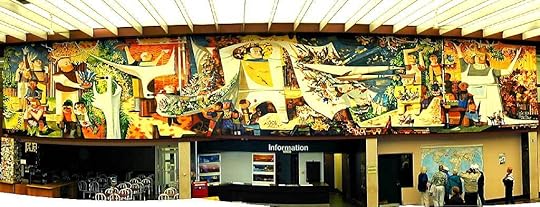
Jane Urquhart's The Night Stages weaves together three disparate plotlines, from three different points of view, and provides a glimpse into three worlds of which I had previously known nothing: the efforts of the women who worked as Auxiliary Pilots in England during WWII; Canadian artist Kenneth Lochhead's painting of a giant mural in Gander's International Airport; and the An Post Rás, a gruelling annual Irish bike race. While all three storylines were interesting in themselves, in the end, I'm uncertain as to how well Urquhart succeeded in making a cohesive whole out of these unrelated materials.

description

Tamara – a British woman from a priviledged background who spent WWII ferrying fighter planes to the various runways where they were needed for missions – is running away from an unhappy love affair a decade after the war. Fogbound while refuelling in Gander, she is forced to spend three days in the airport, studying the Lochhead mural and recalling the events that had led her here. In a separate storyline, we follow Kenneth Lochhead as he learns the art of painting murals, ending with his completion of the Gander commission. In the most exciting and emotional plotline, we learn of the childhood, coming of age, and bike training of Tamara's lover's younger brother, Kieran. While Tamara might be considered the main character of the book, it's Kieran who stands out as the most fully realised character, and as these two never actually meet, I had a vague feeling of dissatisfaction when the book was done.

And yet...Jane Urquhart is a beautiful writer, and as she has shown before, she has a rare gift for translating the geography and weather and atmosphere of place – and perhaps especially of Ireland – onto the page. Line by line, this was a lovely read, and I would have been totally satisfied if this book had focussed on Kieran alone. His experiences were heartbreaking but believable, I adored his relationship with substitute mother Gerrie-Annie, his was the only love story I felt engaged in, and the facts and metaphors of his bike training – even the overwrought presence of his Miyagi-like cycling coach (who turns out to have been a real person with no connection to cycling; poet Michael Kirby) – I found his whole story to be completely compelling. And the bike race itself was exciting, bordering on the mythic:

It was said that there was a dark blood feud between the brothers of each generation of the Cahersiveen Riordans going back to Norman times, when one member of the tribe had betrayed another in battle. It was also said that there was traveller blood in the family, and it was this that caused the youngest boy in each generation to “go wild”, to run away to the mountains as soon as he could walk to be suckled by feral goats. It was said that the blood feud would, in each generation, be played out by a test of skills, a fiddling or piping contest during famine times when the men would have been weak from hunger, but most often by a sporting event; foot races, hurling or Gaelic football.

I did like Lochhead's story and was interested in the journey that led to him finding his own artistic vision (and apparently he was a real life friend 0f Urquhart's husband, so it may not all be conjecture). I had never heard of this mural and its inclusion is definitely timely: within only two years of painting Flight and its Allegories, transatlantic flights no longer needed to stop in Gander for refuelling and artwork that was meant to greet millions has been seen by a small fraction of that number. Long underused, “the single most important modernist room in Canada” has become endangered. But as interesting as I found it, and as worthy as the subject matter might be for its own book, these sections of The Night Stages just didn't relate to the rest. Also, I couldn't quite get a handle on Tamara – this former pilot and independent thinker who eventually allowed her life to be ruled by less than satisfactory romantic entanglements. I suppose she's present to link the bike race with the mural, to interpret elements of the painting and to draw conclusions that have a larger meaning to the overall themes of the book:

She looks at the mural, moving her head from left to right, taking in the full brunt of it in the rich, low morning light. She allows its chaos and its odd calm to enter her mind. Some of the figures are so emplaced they seemed to be wholly defined by the act of absolute arrival. Others are caught in the process of moving away. And far back in the trees, rendered in shades of grey, one or two appear to be poised on the edge of full disappearance.

These three storylines could have made for three interesting books, but put together, they just don't seem to mesh. I did enjoy the journey, learned many interesting things, but am left scratching my head. (And yes, I do get how that's very much the same response I have while looking at Lochhead's mural; and yes, that's likely the point.)
Profile Image for Lara Maynard.
379 reviews184 followers
February 25, 2019
This is a densely layered book. The editor in me wanted to pull this book apart into two different sections, leaving one as the story of Kieran and his family and building a whole novel around that. And the second would be a novella about the artist Kenneth Lochhead and the Gander Airport mural. That said, I thought the whole thing was a bit brilliant, and I get what Urqhuart is up to with this exploration of the creative process.

Protagonist Tamara is a former WWII auxiliary pilot with a talent for drawing and a series of relationships (family and romantic) behind her - but what lies ahead? While the reader spends a lot of time with Tam, Kieran's story is really the star of the book - along with County Kerry circa the 1940s and 50s. I enjoyed the Irish life and landscape - both gritty and real, or supernatural and imaginative - that Urquhart portrays. And the great characters - like the intuitive, earthy Irish woman who essentially adopts troubled young Kieran; the odd tailor who fits him out for a coat; or the poet who never rode a bicycle but is somehow a great cycling coach and mentor, turning Kieran into an outstanding competitive cyclist. And I enjoyed the sort of folktale quest upon which young Kieran is sent - to maybe soothe and find himself, to maybe find glory in sport, to maybe find love, and to encounter various challenges and characters along the way.

The portions of the book about real-life Canadian artist Lochhead are less engaging. But throughout, the writing is so fine, so often. Let me share just one of the many keeper sentences: "He knew that the hardship of caring for someone was the way that caring insisted on breaking through the skin of even the most ordinary day."
145 reviews1 follower
September 17, 2016
I was disappointed in this book. Had great expectations as I think Urquhart is an excellent writer but I felt as if each of her characters were adrift and ghost like. The only one that seemed to have any substance at all was Kieran. Disjointed without any real cohesion...this might have worked better as a series of short stories with a common connection.
Profile Image for Alexander Kosoris.
Author 1 book24 followers
April 15, 2019
It feels like quite some time since a book came along and both delighted me and terrified me through its superb writing, making me glad that high art still exists in contemporary Canadian literature, though worried that I’m nowhere near creating anything comparable in quality. It should go without saying, then––but I’ll say it anyway––that Urquhart’s masterpiece is fabulous in every sense of the word.

The story follows multiple characters through interweaving plotlines. Tam, who was an auxiliary pilot during World War II, flees Ireland and her lover, Niall, to North America. The thick fog keeps her stranded at Gander Airport in Newfoundland, where she has plenty of time to study a curious mural and her memories. We also explore the lives of Kenneth, the man who painted the mural, and Kieran, Niall’s estranged brother. The Night Stages leads us through its complex story with the best pacing out of any book I’ve read in recent memory. The author never gives away too much, but she will let slip important information that gives the plot much more weight, and often without ceremony. Urquhart doesn’t artificially present things in such a way that they feel as though they should be significant; she actually makes things significant through this incredible pacing, effective characterization, and prose that is both delicate and precise. What remains is a narrative so rich, so full of life and heart, that I absolutely will revisit it.
Profile Image for Lauren Nisbet.
112 reviews7 followers
April 20, 2015
When the back cover of a book describes it as ‘at once intimate and epic in scope’, I’m going into it with a certain set of expectations. I’m looking for a story that will have characters with engaging personalities, or at least characters who I will be able to get to know, whose personal lives will pull me in and make me care about what happens to them and where they end up. I’m looking for a story that spans different generations, different times, different places, all of which are connected by a strong theme or plot. The narrative should run through a diverse set of circumstances to bring together all of the intricately related elements that make up the book, with the significance of each piece being revealed at the end and helping me finally understand how all of the distinct pieces add up to a whole story. Maybe that’s a lot to ask, but to be both ‘intimate’ and ‘epic’, I think this is a pretty fair set of requirements. Unfortunately I didn’t feel like Jane Urquhart’s The Night Stages delivered.
http://somebookishthings.com/2015/04/...
Profile Image for Dsinglet.
335 reviews
September 12, 2017
A beautifully written story of the lives of two brothers Niall and Kieran, Tamara a lover of Niall, and an artist who has painted a mural in the Gander New Foundland airport. How the stories part and intersect makes up the magic of this book. The countryside of Ireland is described in detail, taking the reader on a journey with one brother Kieran as he prepares for a cross country bike race. Kieran has been estranged from his family but finds peace for himself as he rides the back roads in preparation for the race. In the end, his greatest triamph is lost to his brother. What follows is a gentle and flowing ending.l
Profile Image for Ellen.
497 reviews
June 1, 2015
Beautiful writing. Urquhart can write such gorgeous descriptions of anything, it seems, she puts her mind to. I found the novel a little slow to engage me, but by half way through the book, I was hooked on the characters and their stories. I was disappointed, however, that all the stories didn't eventually tie together. I don't want to give anything away, but I found that a huge downfall of the book.. Overall, however, it was a lovely read.
Profile Image for Jane.
1,202 reviews1 follower
May 15, 2018
I loved this book so much. It's dense. I was reading books a day at a time. Page turners: mysteries, quick dramas. I couldn't do that with The Night Stages. This book demanded a certain kind of attention.

My husband and I are going to Ireland soon. I didn't know that when I started, but having visited this part of Ireland before, I was caught immediately...and still...the writing and the complexity of the book demanded a bit of thoughtfulness I haven't needed as I've read books for the Popsugar Challenge.

I'll some passages to give a sense of the style. I won't share if they give away the plot... but for anyone who loves gorgeous Irish writing, these might give a bit of a sense:

There are three stories going on. One is the story of a painter who paints a mural in an airport in Newfoundland. He meets a critic who gives him ABSOLUTE advice about the mural. "...in the beginning, it had given Kenneth great pleasure to make a portrait of the critic by breaking every rule the critic had tried to enforce, making him vivid, real, ignoring pure shape, pure colour, making him speak, pretentiously.

Kieran, who I see as the hero of the story, goes to live with Gerry Annie after his mother dies. Here's a sense of her: "That Joe Shehan has a terrible quantity of talk in him," Annie said, as they resumed walking. "He could talk the hind legs off a chair."

As they walk by the village of Mastergeehy, Annie says to Kieran, "That's not the school you'll be going to when you get over your stubbornness. All that noise. I'm thinking they teach shouting and screaming there."

And now Tam, the character Kieran's brother, Niall, falls in love with. She has left him and is in the airport where Kenneth Lochhead's mural fills the wall. Here are her thoughts: She sees her younger self now in the mural before her, a girl with outstretched arms and a rapt expression launching out of a dense foliage, a black-and-white stream lined bird-form with red-and-blue markings as if she were helping to guide it through a troubled atmosphere and into the clear air. And the girl herself is caught in this gesture of ascension. She will follow that bird. Everything about her is connected to flight. Looking at her, Tam thinks of the enormous, roaring sense of freedom on take-off, then a sky full of stars and wind...and he recalls her own helplessness in the face of such ridiculous joy.

You're a climber, Gerry-Annie told him. Always heading for the sky. No wonder you have all these collisions with the wind and rain.

He like it when she said that, savoring, as always the way that Annie explained him. There was something bout the word collision that was just right as well, for when he was on the bicycle, mountains, pools of rainwater, gullies, groves of trees, exploded around his swiftness. As he closed his eyes just before he went to sleep, the images of the day would rush towards him and he would collide with them, but softly, as if they were made of nothing but light.

He (Kieran) heard his brother laugh in a way that was full of happiness. He realized that he himself rarely laughed, even when his workmates teased or joked with him and he wondered about the origins of his spontaneous expression. The word delight came into his mind. and 196/197

After Kenneth learned that Harding had done works in the North Philadelphia Station Post Office, he would go there to look at two works he knew Harding had done there. The bigger mural was soft in color and seemed to be pregnant with the same kind of dusty sunlight that fell through the upper windows...(202)

Fierce Lonely, Kieran thought. It was true that he was becoming more confident about the Ras. But fierce lonely described the rest of his life very well.

He was high enough now that when he turned to gaze down at Derriana Lough it had the same dimensions as the basin or water he washed with, mornings at Gerry-Annie's house. It wasn't long before he reached Tooreenbog Lough, the first of five lakes that climbed up like jewels on a necklace, each one smaller that the one before, beaded together by the thread of the stream and knotted by knotted by a succession of diminutive waterfalls, not one of which was taller than his shoulder. 309

Once he (Kieran) had added the dung, he beat the mixture with his boots in a kind of joyful dance until it reached the right consistency, then applied the resulting paste to the wattled walls one handful at a time, while the sheep watched him with a bemused curiosity. The child in him loved the process, and the next morning when he saw the walls had hardened, he was ridiculous with pride.

326 Yes she was there in the mural, the one significant event that never happened. The path that hope had walked and she had never turned.

It was his place, Niall had often reminded her...What was an English toff like her doing there anyway? (this entire page gives the sense of the struggle).

She asked Niall once about meteorological predictions: how accurate were they when all was said and done? The good weather, he told her, the high weather systems, sometimes change their minds and drift off to other zones. " But you can count on the gales," he had said. "The storms. The bad weather arrives right on time."

354-355 describes the Ras (the race) and the hardship of it. "The only hope," Niall said,"was to wear the wretched articles of clothing at the bar in the evening where there might be a fire. We called the eveing drinks the Night Stages (the "eight stages" are the daily stages of the Ras, like the Stations of the Cross). Kieran's accident is described on page 355.
Profile Image for Jess.
8 reviews
March 22, 2015
I received a free advance copy of "The Night Stages" through a Goodreads giveaway.

This is a beautifully written book that tied together the lives of Kenneth Lochhead, the real-life artist who painted the mural at the Gander Airport; Tam, a former English pilot who, as a passenger, is laid over in Gander during a flight from Ireland to New York; Niall, the Irish meteorologist she is leaving behind; and Kieran, Niall's complex and troubled younger brother.

Kieran's character, by far, is the most fleshed-out of the bunch. While the novel is framed by Tam's history and her current travels, the complicated stories of Kieran's life and experiences are centre stage for most of the novel and are certainly the most captivating. Tam is given some depth early on, but her character development takes a back-seat to Kieran's reasonably quickly. With the exception of Kieran, the characters' stories unfold more as through the recounting of various series of events involving the character than by providing any significant insight into the character itself.

The chapters concerning the painter, Lochhead are the most guilty of this; while there are some interesting vignettes that introduce the reader to some of the inspirations for his epic mural, the painter is largely an empty vessel acted upon by external forces rather than a robust and essential part of the narrative, worthy of his own dedicated chapters. As his mural is to Tam, the Lochhead "character" is, to the reader, interesting but inconsequential background. I realize that, as an historical person, this character was probably more difficult to write than the fictional ones. That said, I can't really say his sections added a great deal to the story as a whole.

The writing itself is descriptive and eloquent. This is what kept me engaged during the lulls in the plot. The latter half of the book was more engaging, and is a reward to the reader who trudges through the first chapters and makes note of how the various elements intertwine.

Overall, a good and enjoyable read.
Profile Image for Micha.
737 reviews11 followers
January 21, 2016
I read this for a book club, which means that I started it on the day the book club was meeting and didn't finish it in time, and perhaps if I hadn't been rushing so much I would have been able to relax and enjoy it more, or perhaps if I didn't get as far as I had I wouldn't have bothered finishing it this morning. Hard to say.

This is the second Urquhart novel I've read, and while Away was alright in retrospect, it was more for other readers than myself. Like, when I read it I was actually someone else, someone I know, reading it, because she would've liked it, and I had this weird sense not of enjoying it, but of entering into my friend's consciousness and seeing what she'd find in it, while at the same time my personal consciousness was critical.

This time around I didn't get into that friend's head, and am not sure if she'd have enjoyed it even if I had. Tam was a far from interesting character, the Kenneth anecdotes are not bad but belong somewhere else entirely, and the storytelling frames were all wrong.

And the romanticized Ireland! Man. I mean, I know I'm pretty biased because my Irish Experience came with a load of Harsh Realities, and I know she's writing about an Ireland of The Past, but I don't think it existed as she imagines it even then. It was weird, having lived in County Kerry, having been on those hills, having worked with those farmers and sheep, having known the Irish Fuck-Ups. Sometimes I saw my experiences, but most times I didn't and couldn't believe the story I was being told on account of it.
Profile Image for David.
158 reviews29 followers
June 10, 2015
I feel rather mean only giving this three stars as it is a lovely read: nuanced, layered and full of gorgeous writing. But Urquhart simply crams too much in, her various narrative strands often feeling like pieces from different puzzles that refuse to entirely cohere, the result being that her message becomes somewhat lost. The novel is also slightly uneven in that only one strand (Kieran's) feels fully realised; the characters elsewhere feel underdeveloped in comparison. I was very interested in the story about the artist Kenneth Lochhead and his mural "Flight and its Allegories" at Gander airport but, as the only Canadian element in an otherwise Ireland-set story, it felt shoehorned in - an interesting tale that possibly deserved a book of its own.
Finally, I was frequently tripped up in my reading by Urquhart's use of North Americanisms in relation to English and Irish characters (though not quite to the extent that Kyo Maclear was guilty of the same in Stray Love, a book to steer well clear of if this is something that irritates you) - I'm sure it can't take much research to know that in England we don't call the autumn "the fall" or the rear of a car the "trunk", nor do we typically talk about "sidewalks" or "candy" (Urquhart apparently knows that last one but is inconsistent - early on she talks about sweets but later in the novel she reverts to candy).
Profile Image for Lisa.
18 reviews
February 27, 2015
I received an Advance Reading Copy of this book and am writing this unbiased, unsolicited review.
This was the first book I have read by Jane Urquhart so I didn't know what to expect. I love stories that have characters whose lives intersect and overlap with each other in ways both expected and unexpected. This was the case in this novel and I was surprised to like the secondary character of Kieran more than I liked the main character Tamara. I found her lacking depth and her fascination with aircraft seemed like an unnecessary addition.

There are beautiful, descriptive paragraphs describing Irish countryside and Canadian prairies. This is where Urquhart makes up for her at times lacklustre characters. The various landscapes and locations are unique and ones that readers aren't always privy to.

Overall, I enjoyed this book but it really held my attention in the last 100 pages. Prior to that I was becoming bogged down with the lovely descriptions and scenery.
Profile Image for Ann.
Author 3 books23 followers
March 26, 2017
If I had written this book I would be supremely satisfied with my life even if no other person read it.

Jane Urquhart writes like a dream. Each scene felt poetic and I slowly savoured each one, before emerging foggily back in the real world.

Set primarily in Ireland following World War II, the countryside provides a lush backdrop for the longing of Tam, a transplanted English woman who misses her flying days, for her illicit lover. His brother, though, the mysterious Kieran shines brightest in this story. His life in the hills with Gerry-Annie following the tragedy of his mother's death captured my full imagination. Then there is the story of Kenneth Lochhead and his creation of the captivating mural at Gander airport.

These tales weave together a brilliant tapestry that culminates in a grueling competition that pits the brothers against each other.

I didn't think I could be more delighted with this book until the ending. It was pitch perfect.
Profile Image for Tammy Lee.
146 reviews24 followers
February 18, 2017
I received this ARC from a Goodreads First Reads giveaway. How exciting it was for me to have the opportunity to read the newest from one of my favorite literary fiction authors before the publication date!

The Night Stages is vividly written; the story, and the characters, run parallel to each other. The chapters alternate between time and perspective of individual characters, putting the story (and understanding each character) together like pieces of a puzzle. An in-depth read that is vibrant, emotional and really clearly invoked each time, place and character, making the story very real for me. I was wrapped up in the pages from start to finish!

I loved it :)
Profile Image for Daniel Kukwa.
4,756 reviews124 followers
October 5, 2016
The writing style is exquisite, and many of the characters are facinating...but other characters and plot lines don't connect with me on the emotional level I was anticipating. The story of Niall and his wife Susan feel insubstantial, in comparison to tortured brother Kieran and frustrated, bolting lover Tamara -- both of them far more compelling. Meanwhile, try as I might, the story of the artist behind the Gander Airport mural travels a parallel track that never consciously links itself to the rest of the novel in a satisfying way...at least, certainly not for this reader. A beautiful mixed bag.
Profile Image for Donna Wellard.
345 reviews12 followers
November 11, 2015
a gorgeously written novel about connections, Ireland, art, sibling rivalry and a bicycle race. It's a quiet, powerful story full of lush language that slowly builds as it relays the intersecting memories of Tam and Niall, Niall and Kieran and the artist Kenneth Lochhead. it has such intensity, weaving its way between time and place and the hearts of the characters. In awe and reminded once again why Jane Urquhart is one of my very favourite authors. Oh and that mural in Gander airport by the artist Kenneth Lochhead, i've got to go see it now!
Profile Image for Clkay.
190 reviews
May 18, 2015
Jane Urquhart is one of my favorite writers and I found this book difficult to rate. I love Jane's artistic writing style. I love the pictures she creates and appreciate her beautiful prose. This is not a page turner; I found it difficult to reconcile the Tam of current day with the brave, strong and bright Tam of her youth when she taxied airplanes during the war. I enjoyed Tam's observations of the mural in the Gander airport and tried to relate them to the characters in the story. I enjoyed following Keiran but felt cheated when he suddenly appears at the end of the novel.
Profile Image for Beth.
678 reviews16 followers
December 6, 2015
At first I was so happy to be reading the gorgeous lush language and thought I would love this book. But as the different peoples stories emerged, they were so tangential that the author lost me. I kept reading to see if the mural at the train station that intertwined artist and person leaving their family would ever make sense. To me it didn't; I guess I need more plot that goes forward one chapter at a time rather than one with one story and the next with a different character's story. So I quit about midway. I am sorry that the language wasn't sufficient to keep me going longer.
Displaying 1 - 30 of 243 reviews

Can't find what you're looking for?

Get help and learn more about the design.