When Dougy's sister Gracey is picked for the state athletics championships, not everybody in their small bush town in pleased. 'Aborigines get special treatment', some of the angry white people say. The championships change everything for Gracey and trigger dramatic events in the town black and white relations reach explosion point. The time is ripe for the mysterious Moodagudda to seek a victim...
In the end, it's up to Dougy to save his family � and to prove himself.
My full name is James Francis Moloney and I was born in Sydney, Australia on 20 September, 1954. When I was seven years old, my family moved to Brisbane and except for the odd year or two, I have lived in Brisbane ever since. At school, I was into every sport going - cricket, footy, swimming - you name it. It's hard to believe now but in High School, I was a champion Long Jumper! After University I became a teacher and then a Teacher Librarian. I moved around from school to school and in 1977-8 found myself in Cunnamulla, a little "outback" town where many Indigenous Australians live. These turned out to be important years for my writing.
In 1980, I look a year's leave, stuffed a backpack full of clothes and went off to see the world. Got to do it, guys! There's so much out there, from things to uplift your spirit to things that make you question the humanity of your fellow man. I stepped over rotting dog carcasses in Mexico city, got all weepy in a roomful of Impressionist paintings and met some fascinating people. Hope you'll do the same one day.
1983 was another big year. I got married and started work at Marist College Ashgrove, an all-boys school in Brisbane, where I stayed for fifteen years. During this time, I became interested in writing for young people, at first using the ideas and experiences gained from my time in Cunnamulla, mixed in with the thinking and wondering I'd done overseas. After my early attempts were rejected, the first of my novels, Crossfire , was published in 1992. In 1997, my fifth novel for young adults, A Bridge to Wiseman's Cove won the Australian Children's Book of the Year Award. At the end of that year, I decided to leave teaching and become a full time writer.
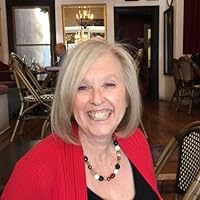
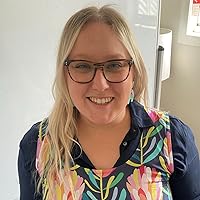
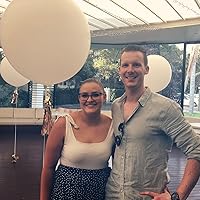
In the mean time, my wife and I have produced three great children, two of whom are currently studying at University. Photos of them to the right, along with my lovely wife, Kate, who has encouraged me along every step of the way.
Now that I have turned my hobby into my job, I have had to develop some other interests. For exercise, I go cycling along the bike paths around Brisbane. I'm also into great books, great food, movies, travelling, learning to speak French and I dabble in a little painting. In recent years Kate and I have spent an extended period in France, cycled through Vietnam and soon we will be off to the USA.
You don't have to look hard for stereotypes, they jump out at you from the first page. Even if this was written to make people think and reflect, a lot of problematic things are left unchecked in the novel.
Apart from the fine characterisation and convincing depiction of relationships, this is a fascinating portrayal of the organic nature of violence, how it feeds on fear and suspicion and how it grows. This is the sort of story that leaves me thinking that, yes, this could have happened.
I am enthralled by the levels of complexity delivered in this book, finding myself increasingly engaged in the emotions emitted within the storyline. The audio delivery remained consistently brilliant throughout helping maintain a wonderful and exciting story. I loved the way Dougy, a simple kid was handled, with humour and Candice but never any hint of shame or disdain. The ending, even the last sentence, was a masterful end to a great experience.
I looked for this because a young person in my family will be reading it as part of their high school curriculum. My main concern is introducing high school kids to stories like this that tell a story from a First Nations viewpoint when they are not written by First Nations authors. It felt like cultural appropriation to me, and some of the stereotypes grated.
Only read because trying to work out if read at school. Made me think of stuff they would get us to read at school. So guessing I did. Bit dated but the themes still relevant. Interesting look at racism. Even dated these issues are still rife. Would like to see a newer version of similar book from an indigenous author as well. I’ll look into that.
Teaching this for the first time but have heard good things about it over the years. A good middle school text that has not dated since its release. Plenty of issues to work on at that level. The only problem is that I now feel the need to follow the story on. Trilogies are a real trap.
While some of the terms used in the book made me feel uncomfortable, I think they are typical of the realities in small Queensland towns. I only hope young people who read this see beyond the tale and truly reflect on how racist attitudes still need much work in this country.
My Year 8 students enjoyed this text with the audiobook version playing over the top. Many themes explored around racism, family and finding your voice.
I’m always trying to read books from around the world and I thought this would be a great own voices read. That it is not. This is a book written by a white author who lived in an Aboriginal community for a couple years and decided he should be the one to tell a story about them. It never feels right when a story like this is one taught in schools (apparently) and has won awards when it wasn’t written by the community in question. I listened to this on audio and definitely struggled with the mc, he was incredibly irritating at times but had some good moments which made the story bearable. I was mainly interested in his sister Gracey, and I would’ve continued with this series perhaps if it was own voices. I just feel a bit ick about the whole book tbh, especially the casual racism throughout, which I understand is ‘realistic’ for these communities, but with a white man writing it it’s just weird af. 1.5 for some interesting elements
Interesting book to read. It had all the elements of a great story line, but was a little difficult to get into, due to being read in the characters voice, and due to having a lot of Indigenous related issues that unless you understood what was going on, you would have missed the hidden message behind them. Very much a story that draws you into the emotions and racist treatments against the Indigenous person, which makes you feel uncomfortable and guilty with some aspects of the story. Definitely a good book for older teenagers to read, as they would be able to understand the reasons behind some of the actions better.
Wow. Devoured this book in one sitting. Intense, violent, brutal and yet shockingly realistic. It was a simple story, but much of its raw power was derived from its simplicity. Points the finger at an unnerving trait in men, that is their inability to think clearly and rationally in times of great conflict and tension. Sadly, there are many parts of our country where you could imagine this story still happening.
I listened to this audiobook whilst painting. The story was a shorter book that highlighted some of the racism faced by the indigenous people. Would be a great story for high school reading. Am curious as to where the story would go from here. Was an easy listen and dealt with heavier topics whilst also telling a story about families.
Dougy was a great Book to read. It kept me interested threw the story, I really liked how there was lots of tension with the characters and lots of mysteries. I would defiantly recommend Dougy to my friends and family
An easy to read book that the high schoolers are reading for English. It was an interesting story of the struggles of aboriginals to succeed against predudices, told from the perspective of a young aboriginal.
Already struggling with this. All fiction writers can write fiction with whichever characters they like - but I'm not convinced a first-person First Nations narrative should be written by, and read by, a couple of white blokes.
Though the story may have highlighted issues in relation to racism, the storyline itself was not very engaging, and it often did not seem to flow very well.
I was not gripped or wowed, and I would have really liked to see these issues presented in a fascinating, well-developed story. Unfortunately, this was not what I got.
However, I did appreciate Maloney's work with developing the characters in relation to these kinds of issues - this, at times, made the story engaging to read.
So it was not a bad read, but it could have been much better.