Stories, works of noted British writer, scientist, and underwater explorer Sir Arthur Charles Clarke, include 2001: A Space Odyssey (1968).
This most important and influential figure in 20th century fiction spent the first half of his life in England and served in World War II as a radar operator before migrating to Ceylon in 1956. He co-created his best known novel and movie with the assistance of Stanley Kubrick.
Clarke, a graduate of King's College, London, obtained first class honours in physics and mathematics. He served as past chairman of the interplanetary society and as a member of the academy of astronautics, the royal astronomical society, and many other organizations.
He authored more than fifty books and won his numerous awards: the Kalinga prize of 1961, the American association for the advancement Westinghouse prize, the Bradford Washburn award, and the John W. Campbell award for his novel Rendezvous with Rama. Clarke also won the nebula award of the fiction of America in 1972, 1974 and 1979, the Hugo award of the world fiction convention in 1974 and 1980. In 1986, he stood as grand master of the fiction of America. The queen knighted him as the commander of the British Empire in 1989.
One of the overlooked gems of Clarke's oeuvre. A very atmospheric first contact story, with a really unexpected (and cautionary) twist ending. Though the past or present existence of life on Venus is a big enigma, this is a great bit of hard SF on the topic. Read it (or listen to it) with an open mind and you'll be pleasantly surprised.
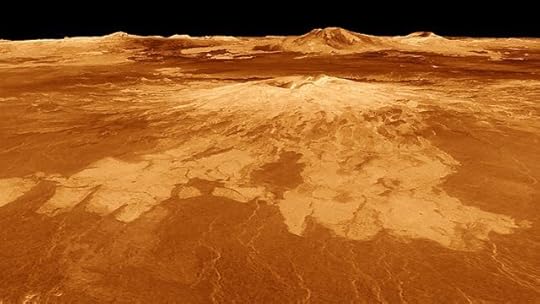
From BBC Radio 4 Extra: Scientists stationed on Venus battle to find signs of life, but what about the impact of their quest? Read by Tim Pigott-Smith.
A cautionary tale that warns against the dangers and unintended consequences of exploration. What happened on Venus has probably occurred already on earth, mars, or any other place that humanity has interacted with.
This was a short story, A more realistic view of the type of life that real scientist expect to find on other worlds. Not a great ending but still, This was a good read.
Space travellers exploring Venus reach the South Pole and discover signs of life. The story, written when speculation about Venus was based entirely on observations from Earth, describes what the environment on the planet's surface could be like. A consequence of interplanetary contamination is imagined here and I found it truly amazing that 70 years later there is now talk that our probes to other words may have already done this. Really fun read I enjoyed it!
A short story about finding ... life on Venus - in the form of a moving "carpet" of something alive. Only to end with the idea that .... men that found it and left Venus, had left over some remains that contained certain viruses, resistant to the high temperatures of the environment of Venus and .... that; is the end of that life on Venus :-D
Captivating story of pioneering the planet Venus… and the unintentional thoughtless consequences of a temporary visit. “In this day and age to be out of touch with one’s fellow-man was a unique and unsettling experience.” ***
The short story took me to another world, introduced me to a couple of earth men, mostly defined by their job roles rather than any personal characteristics, and it showed me their encounter with an alien life form who consumes them.
Before Eden is a classic and legendary novella by the scientific great Arthur C. Clarke. This is a futuristic story that touches on first contact. The story takes place on Venus. This short story is a fun look at a very realistic situation with an equally plausible conclusion. A great read.




 http://www.bbc.co.uk/programmes/b007jvt0


