Jump to ratings and reviews
Rate this book

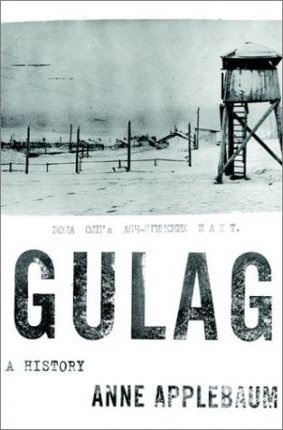
Gulag: A History

Rate this book
The Gulag—the vast array of Soviet concentration camps—was a system of repression and punishment whose rationalized evil and institutionalized inhumanity were rivaled only by the Holocaust.

The Gulag entered the world's historical consciousness in 1972, with the publication of Alexander Solzhenitsyn's epic oral history of the Soviet camps, The Gulag Archipelago. Since the collapse of the Soviet Union, dozens of memoirs and new studies covering aspects of that system have been published in Russia and the West. Using these new resources as well as her own original historical research, Anne Applebaum has now undertaken, for the first time, a fully documented history of the Soviet camp system, from its origins in the Russian Revolution to its collapse in the era of glasnost. It is an epic feat of investigation and moral reckoning that places the Gulag where it belongs: at the center of our understanding of the troubled history of the twentieth century.

Anne Applebaum first lays out the chronological history of the camps and the logic behind their creation, enlargement, and maintenance. The Gulag was first put in place in 1918 after the Russian Revolution. In 1929, Stalin personally decided to expand the camp system, both to use forced labor to accelerate Soviet industrialization and to exploit the natural resources of the country's barely habitable far northern regions. By the end of the 1930s, labor camps could be found in all twelve of the Soviet Union's time zones. The system continued to expand throughout the war years, reaching its height only in the early 1950s. From 1929 until the death of Stalin in 1953, some 18 million people passed through this massive system. Of these 18 million, it is estimated that 4.5 million never returned.

But the Gulag was not just an economic institution. It also became, over time, a country within a country, almost a separate civilization, with its own laws, customs, literature, folklore, slang, and morality. Topic by topic, Anne Applebaum also examines how life was lived within this shadow country: how prisoners worked, how they ate, where they lived, how they died, how they survived. She examines their guards and their jailers, the horrors of transportation in empty cattle cars, the strange nature of Soviet arrests and trials, the impact of World War II, the relations between different national and religious groups, and the escapes, as well as the extraordinary rebellions that took place in the 1950s. She concludes by examining the disturbing question why the Gulag has remained relatively obscure, in the historical memory of both the former Soviet Union and the West.

Gulag: A History will immediately be recognized as a landmark work of historical scholarship and an indelible contribution to the complex, ongoing, necessary quest for truth.

677 pages, Hardcover

First published April 15, 2003

2681 people are currently reading
39560 people want to read

About the author

Anne Applebaum

36 books3,245 followers
Anne Elizabeth Applebaum is a Polish-American journalist and writer. She has written extensively about Marxism–Leninism and the development of civil society in Central and Eastern Europe. She has worked at The Economist and The Spectator, and was a member of the editorial board of The Washington Post.

Ratings & Reviews

What do you think?
Rate this book

Friends & Following

Create a free account to discover what your friends think of this book!

Community Reviews

5 stars
6,459 (47%)
4 stars
4,993 (36%)
3 stars
1,665 (12%)
2 stars
298 (2%)
1 star
118 (<1%)
Displaying 1 - 30 of 1,140 reviews
Profile Image for Ana.
811 reviews717 followers
March 8, 2017
I read history books because of my undying belief that as a human being, I am responsible for anything that humans do. If murder happens, it is because I have it in me as well. If kindness happens, it is because I am capable of kindness. This belief does not put me or humanity at the center of anything - I think anthropocentrism is one of the worst ways of explaining our existence - but rather connects me to every other human being that has ever lived, or will ever live. I believe in patterns - and totalitarian patterns have a particular tendency to devolve into heinous, soul-crushing, lethal regimes, run by maniacs who indulge in their darkest sides.

Applebaum seems to think along the same lines. This book is written with such delicacy towards the victims and innocents, but it also lays down facts with the weight of iron with regards to what actually happened. Myths are debunked, correctness is preserved, truth above all is searched for, because in knowing the truth about things such as the Gulag, we are better prepared to deal with ourselves in the future. Applebaum believes the Gulags will exist again (albeit in any future form they might morph into), she believes massacres, genocides, totalitarianism, mass murder happen and will continue to happen for as long as we are human - and I agree. That is why we must read history, that is why we must expose ourselves to the most uncomfortable facts about ourselves - because we will meet with this again. And the best weapon against anything human-made is knowledge of everything human-made.
Profile Image for Matt.
1,052 reviews31.1k followers
February 8, 2025
“The more we are able to understand how different societies have transformed their neighbors and fellow citizens from people into objects, the more we know of the specific circumstances which led to each episode of mass torture and mass murder, the better we will understand the darker side of our own human nature. This book was not written ‘so that it will not happen again,’ as the cliché would have it. This book was written because it will almost certainly happen again. Totalitarian philosophies have had, and will continue to have, a profound appeal to many millions of people. Destruction of the ‘objective enemy,’ as Hannah Arendt once put it, remains a fundamental objective of many dictatorships. We need to know why – and each story, each memoir, each document in the history of the Gulag, is a piece of the puzzle, a part of the explanation. Without them, we will wake up one day and realize that we do not know who we are…”
- Anne Applebaum, Gulag: A History

History can be pretty grim, a seemingly endless catalogue of war, famine, plague, and misfortune. Even in the midst of all this suffering, the Gulag – the Soviet Union’s vast network of concentration camps – manage to stand out. At their worst, they combined cold, hunger, overwork, sexual assault, and outright murder. At their best – well, they really didn’t have a best. It was, after all, a capricious system intentionally designed to coerce labor, stifle dissent, and calm the paranoic urges of Soviet leadership, especially Joseph Stalin.

According to Anne Applebaum, around 476 distinct camp complexes existed at one time or another. In an average year, around two million prisoners occupied them, with around eighteen million people passing through them, and other six million forced into exile. Conservative estimates for total deaths are just under three million.

In the Pulitzer Prize-winning Gulag, Applebaum tells the woeful tale of the rise and fall of the Glavnoe Upravleni Lagerei – the Main Camp Administration – and some of the people who endured its nightmare existence. Obviously, it is not a feel-good story, focused as it is on arbitrary arrests and slave labor, on lives lost and shattered, on individuals faced to resort to their most primitive state. But it demonstrates the extraordinary human will to survive in even the most hopeless of conditions.

***

Gulag has an interesting structure, one that attempts to capture both the evolution of the camps over time, and the experience of being within them. To that end, the book is divided into three parts. The first and third are chronological, covering the periods from 1917-1939, and from 1940-1986. In other words, it takes you from the Gulag’s birth during the Bolshevik Revolution, all the way to their dismantlement under Mikhail Gorbachev.

Sandwiched in-between is a thematic section, in which Applebaum describes different aspects of camp life, such as arrest and transport, the different types of work, and survival strategies. This part of Gulag was my favorite, if “favorite” is the right word to use in a description of hell. It takes the enormous, impersonal statistics – numbers that get so large they start to lose meaning – and translate them into intimate moments of existence that give them resonance.

***

At almost 600 pages of text, Gulag is not small. Applebaum’s main achievement is in covering a huge, complicated subject with consistent lucidity. As she notes early on, it is tempting to compare the Gulag system to the concentration camps of Nazi Germany during the Second World War. While there are notable similarities, there are just as many differences. These differences make a coherent chronicle difficult.

For example, the Soviet camps existed for decades. During that time, they changed often, and not linearly. Some camps were better than others, with better being an extremely relative term. They reached their nadir under Stalin’s pathological rule, and improved somewhat following his death. Unlike the Nazi’s victims, the prisoners in the Gulag were serving legal sentences, however ridiculous, and they were released upon finishing them. On occasion, there were even amnesties. Deathrates at the camps spiked and fell, and Soviet authorities attempted – ostensibly – to keep people alive, if only to accomplish their labor. Oftentimes, as Applebaum notes, it can be hard to separate the cruelties of the camps with the cruelties of “normal” life in the Soviet Union, especially following Adolf Hitler’s invasion in the Second World War. During the war, many prisoners starved to death, but so did many free citizens. In addition, rather than targeting a discrete group, the Gulag swept up a huge sampling of the population, including political prisoners, foreigners, people who looked at Stalin the wrong way, people who got snitched on by jealous neighbors, and Russian soldiers returning from the West. From start to finish, she does a really good job of parsing all of these nuances.

Applebaum also excels at incorporating individual experiences into the narrative, not just in the middle section of Gulag, but throughout. She provides a wide variety of perspectives, as reactions were remarkably varied. Some prisoners worked hard and actually became guards or administrators themselves. Others maintained their faith in the very system that betrayed them. A lot of different people marked time in the Gulag, and there are a lot of different responses.

***

Applebaum is highly qualified to write Gulag. She is a longtime foreign journalist, has written extensively about the Soviet Union, and speaks Russian. According to Applebaum, she first conceived this project after the fall of the Berlin Wall. It was eventually published in 2003. As such, Applebaum worked on it during a thaw in East-West relations. However, research remained difficult. Some records have been lost or destroyed. Others remain locked away. Sometimes the records are a tissue of lies, with figures massaged by camp commanders trying to keep their jobs. While there are endnotes, Applebaum does a good job within the text of discussing what evidence does and does not exist, and noting the credibility of what is available. She also makes wide use of prisoner memoirs, from the famous – including Alexander Solzhenitsyn – to the less well-known.

***

The Gulag represented both a massive system of repression – controlling society through terror and dislocation – and a way to get free labor for enormous construction projects, such as the building of the near-useless White Sea Canal. It was also one of the world’s great crimes. Despite this, it is not nearly as well-known as some of the 20th century’s other tragedies. Indeed, the political framework that created it is still defended, even today. Gulag provides some measure of correction to this. It is judicious, well-researched, occasionally moving, and altogether damning.
Profile Image for Nika.
250 reviews316 followers
July 28, 2023
3.5 stars (rounded up after some hesitation)

Anne Applebaum did a good job recounting the history of the Gulag (the Main Camp Administration). She describes in detail how the life of prisoners was organized in the Soviet camps.
We learn how prisoners of the Gulag worked, what they ate, where they slept, and how they were treated by their jailors. We explore what those camps were and how they transformed with time.
As the author points out, the 1940s was the decade when the camp system reached its zenith. After Stalin’s death, the Soviet camps began to be dismantled, but this was a process that required time.

Whereas the labor camps were scattered all over the vast territory of the Soviet Union, the living conditions in the Gulag were dictated by the center in Moscow. Numerous reports and letters sent by camp directors to their superiors in Moscow prove this. The rules in camps were deliberately shaped to debase prisoners, especially political prisoners.

The book is divided into three large parts. The first part examines the origins of the Gulag. The second deals with life and work in the Soviet camps. The last part examines the rise and fall of the camp industrial complex.
The author belies the myth of the so-called economic efficiency of the forced labor system in the Gulag.

Applebaum uses extensively the first-hand accounts of victims of terror, prisoners memoirs, and the available archival documents (many archives are closed for researchers in modern Russia). She tries to present as many individual stories of the victims as possible. Many of those stories are heartbreaking. This approach helps us to get into the authentic experience that people who endured imprisonment in the Gulag must have had.

However, along with the first-hand accounts and documents, the author frequently referred to fictionalized accounts, such as Aleksandr Solzhenitsyn's books. My appreciation of this non-fiction book would have been higher if it did not have many such references to fictionalized accounts.
Another issue I had with this book was that I felt it was too lengthy. Had the book been condensed, it would have become more digestible, in my view.

Gulag: A History is also a book about the legacy of the camps. The author touches upon the memory of the Gulag and how the remembrance of the troubled past might affect the present time.

Interestingly, Henry Wallace, Vice President of the United States, visited Kolyma in May 1944. He did not even know that he was visiting a labor camp. The author explains that this visit coincided with the height of Soviet-American wartime friendship and "Wallace was inclined to look kindly upon the Soviet Union even before he arrived."
Profile Image for Wren.
1,212 reviews148 followers
July 30, 2008
I have been reading some memoirs about the Soviet Gulags, and I discovered that I didn't have enough knowledge of Russian history to process what I was reading about individual experiences. Consequently, I picked up Applebaum's book.

Her book was precisely what I needed. She presents a very systematic explanation of the gulags in three sections: 1) the historical precedents prior to Stalin's regime and the rise of their power under Stalin; 2) Day-to-day life in the gulags; and 3) the dismantling of the Gulag's after Stalin's death and their diminishing presence through several other Soviet leaders and into 21st century Russia politics and judicial / penal system.

At times the amount of detail was close to overwhelming, but Applebaum places all the facts into strong frameworks without losing the debates and ambiguity present in the field because of incomplete and missing information. She blends data, history, politics, personal history, and even a few exerpts from literary works to create her history.

I expected to see cruelty depicted, but what shocked me the most was the arbitrary manner in which arrests, labor, torture and even releases were conducted. It would be maddening to live under a regime that weilded so much power in ways that were incomprehensible to its people. Anyone could be arrested and placed in labor / death camps: criminals, dissidents, and even members of the Communist party.

Were the gulags so heavily populated because Stalin wanted cheap labor as a way to industrialize the Soviet Union? They never were cost effective. Was he trying to brow beat people into submission? They created strife between people and government. Was he trying to reform criminals and political dissidents? Few if none of the gulag prisoners became better people because of their time in the camps -- if they lived through it. The accounts made me wonder how human beings could descend into such irrational mistreatment of one another and made me wonder if such nonesense still persists in other countries - even in small ways (even in our own).

Before this summer, I could fit everything I knew about the gulags on a postage stamp. Applebaum gave me a wealth of knowledge and much to ponder. I'm glad that I found this book -- even if her book was the antithesis of a "summer read."
Profile Image for Vasilii.
Author 2 books106 followers
December 14, 2025
3.5⭐

"Gulag: A History" by Anne Applebaum is a sweeping and at the same time intimate exploration of one of the darkest systems of the 20th century – the Soviet labor camps. This work can hardly be defined as just a historical study; it is also a moral verdict and a warning about the dangers of an ideology that subordinates human life to a collective abstraction.

The book combines the documentary precision of archives with the personal testimonies of survivors. It is precisely this blend that makes the text so powerful. The cold statistics of millions imprisoned and dead take on human faces – people sent away because of political denunciations, for an "inappropriate" joke, or simply at the whim of those in power.

A central question Applebaum raises is: how could an entire society accept such a system and even normalize it? Here lies the paradox – the camps were not a hidden secret but a publicly known institution, presented as a necessary part of building socialism. The system was maintained not only through violence but also through consent, fear, and silence.

On a personal level, the work is a reflection on human resilience. Some of the most heartbreaking pages are the stories of those who, even under camp conditions, managed to preserve their dignity – through mutual aid, through secret poetry, through the simple act of survival. Applebaum avoids sentimentality, yet she does not leave the reader in utter despair – even in the darkest hell, glimpses of human light shine through.

The symbolism of the Gulag can also be read more broadly – as an allegory of any system in which the individual is erased in the name of a collective "truth." The camp is not only a geographical place but also a metaphor for how power can turn all of life into a prison if allowed.

Conclusion:
Gulag: A History is a work that cannot be easily forgotten. It is both a lesson in history and in morality, but also a warning: civilization itself is no guarantee against barbarism. Human life can be humiliated and destroyed if we allow fear and indifference to silence the voice of conscience. In this sense, Applebaum’s book is not only a story about the past but also a reminder for the present and the future – of what we are willing to endure, and how far we can go in the name of an idea.


Pre_read

The Gulag camps—something that isn’t talked about enough, or maybe I’ve just missed all the movies and shows that exist about them.
Profile Image for Mikey B..
1,136 reviews481 followers
December 4, 2019
Page 102 (my book) from Stalin and Beria
“an enemy of the people is not only one who commits sabotage, but one who doubts the rightness of the Party line.”... women were arrested as “wives of enemies of the people” and the same applied to children.

Page 241 Vladimir Bukovsky
“In our camps, you were expected not only to be a slave laborer, but to sing and smile while you worked as well. They didn’t just want to oppress us; they wanted us to thank them for it.”

This is a book that is horrific in scope as it details the history of the Gulag in the Soviet Union from its beginnings under Lenin.

The author, who writes with great eloquence, takes us through the various stages of what occurred. The Gulag itself was a vast slave labour system that had two basic purposes: to incarcerate anyone who was perceived as a threat to the system and to use the slave labourers (the prisoners) to industrialize and modernize the Soviet Union – to build roads and railroads, work in mines, chop down trees for lumber – in other words to exploit the almost endless resources of the country.

Ms. Applebaum takes us through the entire sequence of events: the arrest, interrogation, imprisonment, transport to a camp, and the camp itself. Millions passed through this system, some more than once.

When examined individually these steps could be compared to imprisonment in other countries – for instance the food is atrocious. But it is the vast scale of the Gulag that sets it apart - not only in terms of human dignity, but as a crime against there own citizens. One aspect that is beyond the compare is the transport to the labour camps. Many would die during this long journey to the outer reaches of the Soviet Union where they could be locked in cattle cars or the bottom of ships and given little food and clothing. Many of the prisons were in the far north where the prisoners were forced to work long hours in the cold with inadequate clothing and small rations, even in the summer they were decimated by hordes of mosquitoes.

Of interest is that the camps were controlled by the Russian mob which has a long history, as they started in the days of the Czar. These real criminals held brutal sway over the political prisoners. The number and types of prisoners were vast – “political” prisoners, exiles (as in a national group relocated for ethnic cleansing) consisting over the years of Poles, Lithuanians, Chechens, religious people, kulaks... One is never quite sure of the distinction between an exile and prisoners – in remote locations neither, due to geography, had freedom of movement. Maybe prisoners had an advantage because they were fed, usually with a bowl of watery soup.

Page 421 in 1939
With no warning, the NKVD had plucked these newcomers – Poles, Ukrainians, Belorussians, and Moldavians – out of their bourgeois or peasant worlds after the Soviet invasion of multiethnic eastern Poland, Bessarabia, and the Baltic States, and dumped them in large numbers, into the Gulag and exile villages.

What is most sad and atrocious is the treatment of the children (which I dare say was even worse than the way women were treated). They were at the bottom of the ladder in a “society” where work was rewarded with food.

Page 333
Decades of propaganda, of posters draped across orphanage walls, thanking Stalin “for our happy childhood”, failed to convince the Soviet people that the children of the camps, the children of the streets, and the children of the orphanages had ever become anything but full-fledged members of the Soviet Union’s large and all-embracing criminal class.

Ms. Appleton humanizes all with emotional quotes from several people, including Aleksandr Solzhenitsyn and Varlam Shalamov. The author discusses how the Gulag changed after Stalin. For instance, during the Brezhnev era Joseph Brodsky (a poet) was arrested and imprisoned on charges of “parasitism”.

This book furthered my understanding of the Soviet Union and its’ successor Russia. This is not a book of numbers. It is intense and extremely well written. We are provided not just with a history of the Gulag, but of the entire country. Highly recommended for any who are interested in this important historical era. As the author mentions, it gives us another view of the Cold War – and why there was a Cold War.

Page 515 Olga Adamo-Sliozberg arrested in 1936 – released in 1956
“There was no one home and finally I was able to weep freely.
To weep for my husband, who perished in the cellars of the Lubyanka, when he was thirty-seven years old, at the height of his powers and talent; for my children, who grew up orphans, stigmatized as the children of enemies of the people; for my parents, who died of grief; for Nikolai who was tortured in the camps; and for all of my friends who never lived to be rehabilitated but lie beneath the frozen earth of Kolyma.”
Profile Image for Brett C.
947 reviews233 followers
May 9, 2021
I learned a great deal from this book. This is a well-researched and scholarly book about a subject that is rarely discussed. The introduction was enough to sell me into wanting to know more. This book lays it all out: the beginnings of the penal system of Czarist Russia, the revolution, and into the apex of Gulag atrocities. The most informative was the life inside the camps: arrests, the prisoners, the guards, women & children, survival, and rebellion & escape.

The book goes all the way through to the Gulag system's demise with Gorbachev's end and the fall of the Soviet Union. Interesting fact is GULAG is an acronym—Glavnoe Upravlenie Lagerei, or Main Camp Administration. Recommended for anyone interested in Russian/Soviet history. Thanks!
Profile Image for Maziyar Yf.
813 reviews631 followers
August 1, 2025
گولاگ کتابی است از ان اپلبام ، نویسنده آمریکایی . او در این کتاب با اتکا به اسناد ، خاطرات زندانیان، مصاحبه‌ها و بازدیدها تاریخ اردوگاه‌های کار اجباری شوروی را از زمان لنین تا فروپاشی آن‌ها پس از مرگ استالین و در سالهای پس از آن روایت کرده. خانم اپلبام نشان داده که گولاگ نه یک انحراف، بلکه بخشی از ساختار اصلی حکومت شوروی و همانند ابزاری برای سرکوب، مهندسی اجتماعی، و تأمین نیروی کار رایگان بوده .
گولاگ را به سه بخش اصلی می توان تقسیم کرد :
ریشه‌ها و شکل‌گیری

در این بخش، اپلبام شرح داده که گولاگ، تنها محصول استالین نبود؛ بلکه از دوران لنین ریشه گرفت، زمانی‌که اردوگاه‌های کار اجباری به‌عنوان ابزاری برای کنترل مخالفان سیاسی و تصفیهٔ اجتماعی مورد استفاده قرار گرفتند. نقش حزب بلشویک در این دوره با تأسیس نظام اداری‌ای که خشونت را نهادینه کرد، و زندان را تبدیل به ابزار اصلاح انسان از منظر ایدئولوژیک نمود ، تعیین‌کننده است .
اوج فعالیت

در این دوره، گولاگ تبدیل به شبکه‌ای عظیم از اردوگاه‌ها شد که در سراسر شوروی گسترش یافت. زندانیان از روشنفکر تا کشاورز، از نظامی تا زن خانه‌دار در پروژه‌های صنعتی و نظامی به‌کار گرفته شدند. کتاب، با استناد به خاطرات و گزارش‌ها، روایاتی از گرسنگی مزمن، شکنجه‌های سیستماتیک، مرگ‌های خاموش ، و مقاومت‌های بی‌صدای انسانی ارائه داده ؛ روایاتی که در مرز بین اسناد رسمی و صدای فردی شکل می‌گیرند.
افول و فروپاشی

گرچه پس از مرگ استالین، نظام اردوگاه‌ها به‌تدریج ضعیف شد، اما هیچ‌گاه به‌طور کامل منحل نگردید. اصلاحات ناچیز و کم مایه خروشچف و بعدها گورباچف، تلاش‌هایی برای تغییر ظاهر ساختار بودند، نه حذف بنیان‌های آن. سرانجام در دوران گورباچف بسیاری از اردوگاه‌ها به زندان‌های معمولی تبدیل یا به‌کلی تعطیل شدند .

اما نوشتن در مورد خود گولاگ و آن چه بر میلیونها زندانی آن گذشت ، کاری است سخت و پرچالش ، به این دلیل که ابعاد کتاب از یک روایت تاریخی صرف فراتر رفته و وارد قلمروهایی شده که پر از پیچیدگی‌های انسانی، سیاسی و اخلاقی‌اند . در حقیقت هم خواندن کتاب و حتی نوشتن ریویویی ناچیز برای کتاب مانند مواجهه با زخم‌هایی‌ می ماند که سال‌ها در سایهٔ سیاست و انکار، خاموش مانده‌اند. اپلبام، با قلمی بی‌رحم و سخت خشن ، نه‌ تنها تاریخ را روایت کرده، بلکه صدای خفهٔ شده میلیون‌ها انسانی را بازتاب داده که در اردوگاه‌ها زندگی کردند، تحقیر شدند، ، گاه در سکوت مطلق محو شدند وسرانجام فرو ریختند .
این میلیونها قربانی را نباید عدد دانست ، هر یک از آنان داستانی دارند سرشار از درد و غم ، که چگونه به پست ترین مراحل انسانی سقوط کردند . هر کدام انسانی بودند با حافظه‌ای احتمالا پر از دوست‌داشتن، عشق و امید . اما ناگهان داستان‌هایشان تنها غم و درد و رنج و نکبت و سرما شد .
برخی‌ روشنفکرانی بودند که فقط نوشتند؛ و برای آن مجازات شدند. برخی کشاورزانی که گرسنگی را دیدند، و برای فرار از مرگ، به مرگ از نوع دیگری محکوم شدند. برخی کارمندانی که بیشتر از دو بار دیر به سر کار رسیدند و یا کارگرانی که به آمار تولید نرسیدند .
در گولاگ، میلیونها انسان‌ها نه با گلوله، بلکه با فراموشی کشته شدند. نه در میدان جنگ، که در دل برف و یخ ، سرانجام تبدیل به عدد شدند و رویا و داستان هایشان ، نشنیده باقی ماند که هر انسان، داستانی‌ست؛ و هر داستان، شایستهٔ شنیده‌شدن.
بار اخلاقی کتاب، از جنس عدد و آمار نیست؛ بلکه از جنس پرسش است. پرسشی که در هر صفحه تکرار می‌شود: چگونه انسان می‌تواند هم‌نوع خود را به سطح ابزار و عدد تقلیل دهد؟ و چگونه جامعه‌ای می‌تواند این جنایت را نه‌فقط انجام دهد، بلکه برای دهه‌ها از آن چشم بپوشد؟
کتاب پرسش دیگری را هم طرح می کند ، اگر آنجا بودیم، کدام‌ خاموش می‌ماندیم و کدام‌ شهادت می‌دادیم؟
این جا را باید همان نقطه‌ای‌ دانست که کتاب از یک تاریخ‌نگاری صرف فراتر رفته و به قلمرو اخلاقی وارد شده .
از سوی دیگر ، در بیشتر داستان های کتاب ، حکایت تلخ جدایی را می توان دید ، جدایی از همسر و فرزند یا مادر و پدر و حتی شهر و خانه . جدایی که معلوم نیست کی به وصل برسد . به سختی می توان در گولاگ امید را پیدا کرد و اگر هم امیدی باشد بسیار دور و کم رنگ است . اپلبام اینگونه خواننده را نه تنها با تاریخ بلکه با رنج انسانی روبرو می کند .

غزه وحشتناک تراست یا گولاگ ؟


در تاریخ، گولاگ نماد سرکوب خاموش بود؛ اردوگاه‌هایی که انسان را به ابزار تبدیل می‌کردند، در دل نظامی بسته، بی‌صدا و تاریک. اما امروز، در غزه، رنجی جریان دارد که نه در سایه، بلکه در روشنایی رخ می دهد و انسان امروزی، با تمام ادعای شفافیت و حقوق بشر، تنها تماشاچی بی تفاوت ا‌ست .
غزه، در این سالها، شرایطی را تجربه می‌کند که از بسیاری جهات، بدتر از گولاگ است. در گولاگ، زندانیان با کار اجباری و گرسنگی خاموش می‌شدند؛ در غزه، کودکان از گرسنگی جان می‌دهند، در حالی‌که تصاویرشان در شبکه‌های اجتماعی دست‌به‌دست می‌شود و هیچ قدرتی برای توقف فاجعه اقدام نمی‌کند.
در گولاگ، سکوت اجباری بود؛ در غزه، سکوت جهانی داوطلبانه است. در گولاگ، مرگ در تاریکی اتفاق می‌افتاد؛ در غزه، مرگ در نور، در برابر چشم جهانیان، با توجیه سیاسی و بی‌تفاوتی اخلاقی رخ می‌دهد.
در گولاگ، انسان‌ها به عدد تبدیل شدند؛ در غزه، انسان‌ها به آمار. و این‌جاست که جمله غزه شرایطی بدتر از گولاگ دارد معنا پیدا می‌کند ، تقریبا از همه نظر .
گولاگ کتاب تلخی است ، تقریبا از هر صفحه کتاب غم و غصه و رنج و درد انسانی است که بیرون می زند ، گولاگ تنها صدای گذشته نیست ، همانند آن چه در غزه می گذرد ، صدای حال و آینده است . شوربختانه این کتاب نه یادگار رنج، که صدای زخمی‌ست که همچنان حرف می‌زند از دیروز، امروز، و آن فردایی که شاید دوباره تکرار شود.
342 reviews12 followers
May 12, 2025
Gulag is a comprehensive history of the labor camps created by Stalin as a means to isolate potential threats to his regime and develop the vast resources of the Soviet Union. Filling the camps involved arresting Soviet citizens for real and imaginary charges and transporting ethnic minorities that Stalin did not trust. Joseph Stalin believed in the power of forced labor but the reality was these camps were not profitable and needed subsidies to continue their operation. The Gulags were places where only the strong survived with many dying of starvation and overwork. Real criminals were used to keep other prisoners in line especially the political prisoners or the so called enemies of the state. Anne Applebaum did extensive research to give us a book that stands as one of the best about how slave labor became part of the Soviet economy and its eventual end. Many Russians probably will not like the book because it does not give them something to be proud of in their history. I feel this story must be told because it shows how a leader with absolute power is dangerous.
Profile Image for William2.
859 reviews4,045 followers
Want to read
March 14, 2024
Applebaum descibes the harrowing start of the Gulag on Solovetsky and neighboring islands in the White Sea. This was the archipelago that Aleksandr Solzhenitsyn wrote so famously about. In the chapter "The Camps Expand" there is further discussion about how the Gulag grew. It was in part supposed to be an economic engine, in part a way of populating Russia's inhospitable and virtually unpopulated eastern territories.

Astonishingly, these shanghaied innocents were sent to the Gulag before facilities even existed. Barracks, hospitals, libraries, dining halls—there was nothing. Just mud. The prisoners were made to build everything from scratch. There was little food. In winter temperatures reached -60F. They died in droves.

The chapter titled "Arrest" is about how imprisonment was quota based and free of evidentiary burdens required elsewhere by due process. Stalin told his secret police not to pick up so-and-so. Few were actually named. No, he gave his secret police quotas. Pick up X numbers of people with foreign connections, people who speak a language other than Russian, relatives of persons who illegally tried to cross the border, so-called kulaks (well off peasants), etc.

Stalin thought slave labor could advance the Revolution. The idea of incentivizing people to pursue professions and be in charge of their own lives was unknown to him. Vainly one looks for a historical parallel. I think of Mao and the 70 million killed, most starved to death. Stalin outright murdered many too, but perhaps most had to confess to crimes they had not committed. They had to finger their so-called co-conspirators. This traumatized them for life. At least Mao's victims were dead. By comparison, weren't they more fortunate?

Need to finish.
Profile Image for J.
730 reviews553 followers
July 19, 2014
Jesus Christ. With the possible exception of a few books on the Holocaust, this is the single most painful work of non-fiction I've ever encountered. The portrait of the Soviet work camp system that Applebaum develops examines, in painfully minute detail, every single aspect of life in and around the Gulag system, from the highest levels of Soviet politburo administration, down to the lowliest starving, walking damned in the most far flung Siberian penal cell. And she brings a staggering deluge of historical records and personal testimonies from people involved at all levels of the Gulag system to bare witness and de-mystify what was for decades an almost completely hidden world.

And what a nightmare of a world it all was, all the more so because the criminal unfairness of the whole enterprise was never mandated, never required, never written into laws or decrees in any way, they just didn't care at all what really happened to all of these people they arrested for nothing and charged with nothing and shunted around the Russian wastes and sent to dig limestone out the arctic with their bare hands with no shelter or warm clothing...

In some ways, and I doubt Applebaum intended this, this is a work of supreme political nihilism. It doesn't merely call into question the practical ramifications of the ideology of the soviet union/socialism, it calls into question the entire concept of sane, humane governance in the modern age period. As long as something this crushingly atrocious is able to sustain itself for decades on end, how can we possibly have faith in anything that any national entity ever does?
Profile Image for Chrissie.
2,811 reviews1,421 followers
June 26, 2016
A third to a fourth remains when I write this. I have 8 hours left of 27 hours and 45 minutes!

I am chugging along, but I'll tell you Gulag: A History is an exceptionally hard read. The topic is dark, and I am usually fine with difficult subjects, but this proves to be harder than I thought! The book is VERY thorough. Chapter after chapter covering every possible aspect of the Gulag camps. I have read a lot previously on the topic. References are made to much of what I have read before.....and yet still there is more. The material presented is well organized. The author analyzes the evidence; she doesn't simply accept what is being said but compares information with other sources. Yet there is so much information you get drowned by the details and what is discussed is so very horrible.

Here is one example of the meticulous analytical manner in which facts are studied. The food eaten in the camps is discussed, so of course food portions in grams must be listed too - for each and every prisoner type. On top of that the water content, which skews the nutrient content for the given weight, is documented. See what I mean by thorough?! Phew. Thoroughness on top of being a very difficult subject makes this a hard read. It is a clinically accurate and an encyclopedic tome.

Tons of references to particular individual experiences. This I like.

********************************

On completion

I want to re-emphasize what I noted above. The book is well organized, well researched, thorough, meticulously documented and encyclopedic in content. Multiple references to particular individuals' experiences are sited. Statements are not taken at face value; instead each is evaluated to discover the real truth.

How is the book organized? There are three sections. The first covers how the camps came into being and developed with time. The central section covers life in the camps divided into chapters focusing on different themes, i.e. different aspects of the camps. Here are some examples of the themes: arrest, interrogations, incarceration in prisons, transport to the camps, intermediary transit camps. Once in the camps the following themes are equally meticulously documented - freedom of movement, classification of the incarcerated, bathing, dining, food, sleeping facilities, work, propaganda, punishment and reward, communication with the outside world, spiritual issues, criminals versus political prisoners, women and children and births and nurseries and sex and rape and prostitution and love and homosexuality...... I simply cannot list everything! What is essential to understand is that every aspect is meticulously documented. There are statistics and quotes from the incarcerated. The third section is about the dismantlement of the camps and the situation at the end of the 20th century. Finally there is an epilogue that focuses on why the author felt the book needed to be written. The first and the third section are in chronological order.

Numerous references are made to authors such as Aleksandr Solzjenitsyn, Yevgenia Ginzburg, Osip Mandelstam, Andrej Sacharov, and others.

I found the war years and the treatment of Poles, Crimean Tartars, Ukrainians, Chechens and other Caucasians, seen from the perspective of current events, particularly interesting. Also Putin’s background.

The book's organization and clear writing makes it easy to follow. BUT.....you can feel at points that you are drowning in all the information. It is like reading an encyclopedia section of over 600 pages. If I were writing a research paper, this would be a fantastic resource. It is itself a bit like a research paper. I would have appreciated a bit more editing. Even if it is easy to understand, it doesn't read as a book for the general public, in that it is so comprehensive! I do think there was a real need for such a book. How you rate a book depends on what you personally are looking for. My three star rating is by no means a judgment of the book’s quality; my rating only shows my personal appreciation of the book. I liked it and would definitely recommend it to others, along with a word of warning that it is at times tedious and often relates horrible events.

The narration of the audiobook by Laural Merlington was absolutely excellent. I cannot judge her Russian pronunciation. I liked the speed at which it was narrated and the ease at understanding each word. Clearly narrated. This is essential in a book of non-fiction. I am giving the narration five stars.
Profile Image for Eric.
Author 3 books14 followers
May 20, 2008
This is a fantastic book. It is a must-read for anyone who has any illusions about communism. It sucks. It is evil. It belongs in the dustbin of history.

Anne Applebaum tells the story of the gulag in fascinating detail, using newly available Soviet archives and published and unpublished memoirs from those who survived the camps. Their stories are chilling, to say the least.

In the Introduction, Applebaum discusses the differences and similarities between the Nazi death camps and the Soviet camps. She also explains why so many on the Left were willing to excuse Soviet communism (and particularly Stalin) for its crimes.

She then delves into a general history of the camps, explaining that they were, at heart, an economic enterprise. The first official camp, Solovetsky, spread out over a group of islands in the White Sea, was meant to be profitable. Later, Stalin insisted that the entire gulag must turn a profit, which it never did. But no one had had the guts to tell Stalin that.

But I'm getting ahead of myself. Applebaum shows how many prisoners were used for grand construction projects like canals and railroads, with the predictably disappointing results and thousands of lives lost (suffice to say that OSHA would not be pleased with the working conditions).
She writes how the camp system expanded throughout the 1930s until it obtained its permanent form. By 1940, hundreds of camps imprisoned millions of people, many of them criminals, many of them politicals, those whose only "crime" was some sort of dissent against Stalin and the Soviet Union. Many of these politicals were innocent, of course.

In Part Two, in my opinion the heart and most compelling section of the book, Applebaum delves into the minutiae of the camps, chronicling prisoners' experiences through the arrest, transport, and imprisonment in the camps. This is where you get the sense of the monstrosity of the system and the government that ran it. Space doesn't permit me to go into all the details. Suffice to say that as a horror writer, there's enough material to write dozens of short stories and novels, with no need for any supernatural element to make them scary.

In the third section, she switches back to general history and covers the rest of the 20th century, from the death of Stalin to the death of the Soviet Union. The gulag survived Stalin's death, but it did shrink as Soviet leaders were then free to address the unprofitably of the system. Many camps were closed and many prisoners were released, though many of those were later re-arrested.

But the suppression continued. Innocents were still jailed for speaking out for freedom and still forced to endure hard labor in horrific conditions.

This is the story of oppression on a massive scale. But it's also a collection of gritty and inspiring stories of survival by those lucky enough to live through the experience. Unfortunately, millions did not.
Profile Image for Margarita Garova.
483 reviews264 followers
October 29, 2020
“Обществото е безразлично към престъпленията от миналото, защото в тях са участвали прекалено много хора.” (Александър Яковлев)

Мащабите на описаното злотворчество в тази книга надхвърлят човешките представи, особено тези, култивирани в по-добри времена.

Изобретяването на лагерите, тяхната еволюция като източник на безплатен робски труд, дългия им живот, продължил и след края на СССР (последните политически лагери в Перм са затворени едва през 1992 г.), “успешния” им експорт към другите, поробени от съветската идеология народи, са доказателство за устойчивия корен на една система, която няма равна по човеконенавист.

Книгата на Ан Апълбаум не е за слаби сърца, нито се чете бързо и лесно. Системата от лагери, наречена съкратено ГУЛАГ, изниква пред смелия читател като жив, дишащ организъм, като митично чудовище от онези, с които са се борели древногръцките герои. Срещу ГУЛАГ и подобните нему обаче единствената борба са книги като тази и превръщането на темата за тоталитарното минало в активна част от обществения дискурс. С една дума – паметта.

Историята на ГУЛАГ е донякъде и история на самия СССР. За система, през която в различно време и в различни форми (изгнаничество, принудителен труд, филтрационни лагери, наказателни килии) минават по приблизителни оценки 28,7 милиона души и в чието административно ръководство, пряко стопанисване и поддръжка са въвлечени огромен брой хора, да не говорим за косвените жертви на лагерната система – семействата на “враговете”, става ясно до каква дълбочина стига преплитането на лагерния и извънлагерния живот в СССР.

Противно на първоначалните ми представи, разказът не спря със смъртта на Сталин – главният творец и идеен архитект на ГУЛАГ. Злото мимикрира, но си остава зло – в огромната си част напълно безмислено, непредвидимо, абсурдно, недискриминиращо като обхват.

Опирайки се на голямо количество архиви, интервюта с оцелели и служители “от системата”, както и на лагерни мемоаристи като Солженицин, Варлам Шаламов и Евгения Гинсбург, Ан Апълбаум създава нещо повече от поредния исторически труд. “ГУЛАГ” е разкостен фактологично и оценъчно, подробно и безпощадно, превърнат е в метафора на най-извратените и уродливи форми на власт – тези, които не само се разпореждат произволно с човешките съдби, но които увличат огромен брой съучастници; които покваряват цели поколения с печата на срама, забравата, страха, мълчанието, идеологическата промивка и обърнатите ценности.

Лагерите ги няма, но наследството им е тук.
Profile Image for Mircea Petcu.
211 reviews40 followers
October 19, 2023
Gulagul își are originea într-un arhipeleag, în Insulele Solovețki din Marea Albă. Aici a fost mutat accentul de pe ”reeducare” pe rentabilitate. Tot aici a fost implementată regula conform căreia distribuția hranei se face proporțional cu volumul de muncă prestat, care va duce la multe decese. În practică însemna că cei slabi vor deveni și mai slabi.

Partea a II-a întrerupe cronologia și se concentrează pe viața în lagăr. Autoarea descrie în amănunt spațiile de dormit, de lucru, regimul de detenție și modurile în care deținuții ocoleau regulile.

Gulagul a atins dezvoltarea maximă puțin înainte de moartea lui Stalin, în 1953. Perioada cea mai letală a fost cea din timpul războiului.

O istorie completă a Gulagului. Recomand.

Profile Image for Anthony.
375 reviews153 followers
September 22, 2025
Too long/too repetitive

I made my way to Gulag: A History by Anne Applebaum via eminent historian Simon Sebag Montefiore’s list of essential reading on understanding Russia, which for me is a gold mine of great historical and cultural works recommended by someone I have a huge amount of respect for. I had also read Applebaum’s Red Famine which I found decent, if not mind blowing.

From reading the reviews, seeing the great names (Antony Beevor, Richard Overy, Adam Zamoyski etc) written all over the cover of the book exclaiming how great it is, that it won the Pulitzer Prize in 2004 & even being recommended by my boss I sincerely thought this would be a great book. A history of one of the USSR’s darkest stains, the Gulag camps would surely be an exciting tale of unimaginable suffering and horror. From the ‘knock’ on the apartment door in the middle of the night to interrogation, uncomfortably long travel to eventually back braking work and fending off fellow prisoners from theft, rape and murder.

Unfortunately Gulag: A History is too tedious and too long. There is only so much can be said in the end about this topic. There is actually nothing really groundbreaking or gripping about it, in my opinion. I have indeed learnt a lot, about the history, the set up, why they were instigated, what they were for and how they were different from traditional Western prisons. Individual stories are poignant and some of the stories are enough to keep one awake at night. For example another prisoner betting another’s items, mass rapes and extreme cold which forced inmates to self defecate as going to the toilet would have meant certain death. True, all the important questions are answered, including how many died or were interred, the dynamics between the prisoners themselves and if people escaped and what happened to them. However, in the end I found the book too repetitive and a slog to finish. It actually took me a couple of days to trudge through the last 40 pages as by that time I’d lost all interest. In all I am glad I have read the book, it’s definitely essential for understanding Russia and the Soviet system, but I doubt I will revisit it again.
Profile Image for Lauren .
1,834 reviews2,548 followers
February 1, 2024
"No one wants to be told that there was another, darker side to Allied victory, or that the camps of Stalin, our ally, expanded just as the camps of Hitler, our enemy, were liberated... No one wants to think that we defeated one mass murderer with the help of another."

▪️GULAG: A History, by Anne Applebaum, 2003.

Appleabaum's exhaustive history of the network of forced labor camps/prisons that operated for decades across the whole of the USSR, in "every one of the USSR's twelve time zones" (pg15) after the purges of the late 1930s, from the notorious camps of Siberia to urban factory camps in Leningrad and Moscow, to the deserts in Kazakhstan.

Familiar with Applebaum's impeccable and organized writing from my reading of IRON CURTAIN earlier this year, GULAG still astounded me in the level of research, and her attention to many facets that have not been largely covered and discussed: the incarceration of children in various camps, the lives of incarcerated women, the various kinds of camps and the social hierarchy and interworkings, the criminal versus political prisoners that were incarcerated side by side, and the vast numbers of disappeared and never-accounted for casualties in the camps.

Unsurprisingly, Applebaum uses a lot of prison memoir sources: Aleksandr Solzhenitsyn, Varlam Shalamov, Evgeniya Ginzburg and others, with some sources from state and local archives, and press reports from the time.

The long shadow of these decades still felt and present at this very moment, the impact on countless lives and families generations later.

GULAG was the well-deserved recipient of the Pulitzer Prize in 2004.

📚 Related reading I've shared here:
▪️SECONDHAND TIME by Svetlana Alexievich, tr. Bella Shayevich, 2013.
▪️NEVER REMEMBER: Searching Stalin's Gulags in Putin's Russia by Masha Gessen, 2018.
▪️ONE DAY IN the Life of Ivan Denisovich, by Aleksandr Solzhenitsyn, tr. H.T. Willets, 1962.

READ OCTOBER 2021.
Profile Image for Tasha .
1,126 reviews37 followers
March 17, 2013
A 5 star read without a doubt. This book impacted me on so many levels, I was absorbed and utterly fascinated with every word I read. My family is from Russia (I am a first gen American) and many of the events and situations which occurred in this book related to my family history. It's impact was tremendous as I learned so much of what had happened and what it must have been like for my family living (and eventually escaping) during Stalin's reign. As a young girl I heard stories of my grandfather having been in a "labor camp" but until I read this, I never knew what that really meant. My family knew a dissident who vacationed in the same resort we did every year, until I read this I truly did not understand what that meant either. Of course, we all can intellectually know what that means but Applebaum brings it to light on so many levels. I feel like I had the best Russian history lesson yet was emotionally engaged the whole time. What better way to learn about history?!

Anne Applebaum is truly a talented writer. It is evident how well-researched this book is and she is able to present it in such a wonderfully engaging and readable format. Speaking for myself, other than knowing that labor camps existed, I had NO idea to the extent and to the length of time they existed. I am sure I am not alone in this and this book brings so much to our understanding of the world. I feel it is a very important contribution to history and a wonderful memorial to those who experienced these miserable situations. I feel it also brings an understanding of the Russian people both past and present.

I highly recommend this book.
Profile Image for nastya .
388 reviews521 followers
March 28, 2021
The more we are able to understand how different societies have transformed their neighbors and fellow citizens from people into objects, the more we know of the specific circumstances which led to each episode of mass torture and mass murder, the better we will understand the darker side of our own human nature. This book was not written “so that it will not happen again,” as the cliché would have it. This book was written because it almost certainly will happen again. Totalitarian philosophies have had, and will continue to have, a profound appeal to many millions of people. Destruction of the “objective enemy,” as Hannah Arendt once put it, remains a fundamental object of many dictatorships. We need to know why—and each story, each memoir, each document in the history of the Gulag is a piece of the puzzle, a part of the explanation. Without them, we will wake up one day and realize that we do not know who we are.
Profile Image for Dawn.
1,441 reviews79 followers
September 29, 2014
I highly recommend this book to anyone interested in the era, country, politics, WWII or even just the Gulag itself.

The vastness of the Gulag is astounding. From small camps to giant and from city prisons to tents in Siberia and all sizes in between. The variety of work that was required was also quite extensive, from manufacturing to logging to mining to channel building.
With the quality of life that prisoners had to endure and how unprepared both they and their captures were I am surprised that so many people survived to tell their tales.

I had no issues with the history, it was extremely well researched but the layout of the book held a few issues for me. Part 1 was a great introduction but I found Part 2 was a bit confusing as it switched from years and camps with such rapidity. I couldn't always remember what had happened in that year or that camp as it switched from subject to subject.
But I loved the epilogue and the summation was very thought provoking.

The story was depressing and shocking and disturbing. At the same time it was fascinating, enthralling and makes me want to know even more about the legacy of Lenin, Stalin and the Communist Party.


Profile Image for Jakub Horbów.
388 reviews177 followers
March 23, 2022
Nie spodziewałem się, aż tak aktualnej książki, biorąc po uwagę to, kiedy była pisana i jak wydawałoby się wąskiego tematu dotyczy. Jednak Anne Applebaum potrafiła przez pryzmat historii GUŁagu ukazać twarz Radzieckiej (swoją drogą irytujące było uparcie się na przymiotnik sowiecki) Rosji, ale i na koniec stawiała odważne, ale trafne tezy na temat Federacji Rosyjskiej znanej nam dzisiaj i to już na początku XXI wieku.

Jeśli miałbym się do czegoś przyczepić, to nie rozumiem po co rozdzielać zwięzłą i dobrze prowadzoną historię drugim rozdziałem, który jest jakimś topornym i okropnie nudnym archiwalium zajmującym 30% objętości książki, które z powodzeniem można było zawrzeć na końcu książki. W tej formie byłem bliski odłożenia jej na półkę po zaledwie nieco ponad 100 stronach.

Niech nie pieprzą
Więcej głupot
Jesteśmy dziećmi kultu
Z krwi i kości

Wychowano nas we mgle
Dwuznaczności
Gigantomanii
I ubóstwie myśli...


Andriej Wozniesienski, Dzieci kultu , 1967
Profile Image for Петър Стойков.
Author 2 books328 followers
September 12, 2025
Често се говори, че психопатите-диктатори се възползват от популистки идеологии, за да ги оглавят и да вземат властта. Че за тях тия идеологии са просто средство за постигане на целите им и те не вярват наистина в тях.

Специално за Сталин, мнението на (според мен) повечето историци е друго - че наистина е вярвал в комунизма и е смятал, че всички средства си заслужават постигането му. За Сталин реално има писмени сведения както за практически всеки ден от живота му, така и запазени невероятно количество негови писма и документи, разговори с негови съмишленици - те, както и действията му, потвърждават тази теза.

Сравнението на трудовите/наказателни лагери зад Желязната завеса (вкл. и нашите, създадени по подобие) както с действията на Сталин и цялото ръководство на съветската компартия спрямо Украйна, така и с нацистките лагери (доколкото можем да вярваме на историята, писана от победителите) показва особено ясно една безчовечна, тромава, некадърна, корумпирана система ... която обаче очевидно не е насочена към нарочното избиване на хора.

Милиони измират в лагерите на ГУЛаг - но, както и в книгата за лагера в Белене постепенно се промъква усещането, че тия хора не умират защото целта на лагерите е тяхното изтребление, а по-скоро заради неуредиците с храна, лекарства, дрехи и персонал в тия лагери. Че Сталин и другите висши комунисти наистина са вярвали, че тия хора могат чрез пропаганда и труд до границата на смъртта, да се превърнат в истински "съветски хора", или най-малкото, че трудът им е бил нужен за въздигането на СССР.

Усилената "образователна" дейност в тях, фокусът върху производителността на труда, постоянните циркулярни докладни записки от съветското ръководство за условията - това са прекалено много тревоги за система, която е можела просто да заведе всички "неудобни" в Сибир, да ги разстреля и зарови в масови гробове. Както е правила на моменти, но по-скоро инцидентно.

Спомените на преживели лагерите, за отношенията в тях, за отношенията на надзирателите към тях, за мързел, човещина и жестокост, определено съвпадат с професионалните ми впечатления от системата на затворите и на тази база смятам както тия спомени, така и изводите на авторката за достоверни и вероятни.

Книгата е много подробна, но не е академично, а съвсем разбираемо написана. За мен изненадата в нея беше Берия, образът на който по принцип е на безмилостния палач зад Сталин, докато според Ан Апълбаум, като ръководител на лагерите по-скоро подобрява условията в тях чрез много нужни реформи които намаляват смъртността и увеличават производителността (вкл. чрез вкарване на още хора в тях де).
Profile Image for Scottnshana.
298 reviews17 followers
April 25, 2015
It would be easy to stop reading after the introduction, where she tells us that "the Gulag did not emerge, fully formed, from the sea, but rather reflected the standards of the society around it. If the camps were filthy, if the guards were brutal, if the work teams were slovenly, that was partly because filthiness and brutality and slovenliness were plentiful enough in other spheres of Soviet life. If life in the camps was horrible, unbearable, inhuman, if death rates were high--that too was hardly surprising. In certain periods, life in the Soviet Union was also horrible, unbearable, and inhuman, and death rates were as high outside the camps as they were within them." Applebaum argues through the narrative--describing heartbreaking transits on boats full of mass rape and murder to desolate corners of the USSR; families shattered as spouses break it off at conjugal "House of Meetings" visits and orphans end up on the streets as a festering class of homeless/brutal/carnal criminals; and the awful/truly gross things people would do to smuggle grain alcohol into the camps--that when there were periods war and famine outside the system deaths inside it would spike. Along the way, there are some very interesting historical gems, too. I've been to Joint Base Dix-McGuire-Lakehurst many times, but I didn't know that in 1945 145 Russian prisoners of war housed there rioted and killed themselves rather than go back to the USSR and atone for their collaboration with the Nazis via the Gulag. I didn't know that in 1944 U.S. Vice President Henry Wallace visited the camp at Kolyma and was completely duped Potemkin-style into thinking it was a worker's paradise in "the Wild West of Russia". I learned that if you're a fat guy and two other prisoners suddenly invite you to do a big cross-country escape opportunity you're probably going to get eaten. I think that, after accompanying Applebaum on this well-researched history--meeting Solzhenitsyn, seeing the comparisons and contrasts to the Nazis' camps, and watching the ways that every Soviet leader after Stalin's death tried to deal with this system that absolutely wasted so much blood and treasure--that the ugliest but most useful part of this book occurs in the epilogue. After describing all the soul-searching and efforts to heal that took place in Germany in the wake of the Holocaust (which are ongoing, by the way), she points out that "Half a century after Stalin's death, there were no equivalent arguments taking place in Russia, because memory of the past was not a living part of public discourse... the goal has been to end discussion of the past, to pacify the victims by throwing them a few extra rubles and free bus tickets, and to avoid any deeper examination of the causes of Stalinism or of its legacy." While Applebaum laments the fact that Russians don't want to talk about the crimes of the past, she doesn't let the other Cold War camp off easy, either: "Already, we are forgetting what it was that mobilized us, what held the civilization of "the West" together for so long: we are forgetting what it was that we were fighting against. If we do not try harder to remember the history of the other half of the European continent, the history of the other twentieth-century totalitarian regime, in the end it is we in the West who will not understand our past, we who will not know how our world came to be the way it is." I found this book insightful and interesting, if a little depressing (I read it in Garmisch-Partenkirchen, one of the most beautiful places in the world, so that I could occasionally take a reality break from the uglier bits in the pages like forced feedings and self-mutilation) and I think that its subject matter is timely, given what we're seeing lately in the international news.
Profile Image for Elena Sala.
496 reviews93 followers
July 6, 2020
GULAG (2003) is an impressive, documented history of the Soviet concentration camps. Anne Applebaum, a former Warsaw correspondent for The Economist, describes how a regulated, centralized system of prison labor—unprecedented in scope—gradually arose out of the chaos of the Russian Revolution. Applebaum researched newly accessible Soviet archives as well as camp memoirs and interviews with survivors to trace the Gulag's origins and expansion.

Although the Gulag reached its cruellest and most extreme form under Stalin, it was not invented by Bolshevik revolutionaries but by the Tsars. However, after 1929, Stalin shaped the Gulag into an enormous machine which provided an inexhaustible source of free labour to the Soviet State. Prisoners began to be used as slaves, working for forestry, construction, mining projects and many other activities. The camp population grew in 1937-8, the years of the Great Terror, but the severest time was 1941-2, when prisoners were worked to death to support the Soviet Union's war against Nazism.

Nearly 30 million prisoners passed through the Soviet Union's labor camps in their more than 60 years of operation. "Fed" by waves of capricious arrests, this vile system of prison labor actually became the foundation of the Soviet economy just as Stalin desired.

GULAG is a riveting, grim and terrible book. I read it as a companion to Varlam Shalamov's KOLYMA TALES, and I am so glad I did because it provided context to some of Shalamov's stories and deepened my appreciation and understanding of his book. The Gulag was "the longest-lived experiment in rationalized evil the world has ever known", Applebaum pronounces, and who could disagree after reading this book? Her book ends with large, uncomfortable questions lest you feel too comfortable thinking all this is past history, over and done with.
Profile Image for John.
226 reviews130 followers
April 2, 2008
Among the best accounts of Stalin's system of concentration and labor camps that I know of. She describes not only the organization, operations of the camps as well as life within them, but she also explains the role of slave labor in the development of the Soviet economy and in war production. Very well written, and entirely engaging - despite the horror in the tale. Clearly deserving of the Pulitzer Prize that she was awarded - if I recall correctly.
Profile Image for John Devlin.
Author 121 books104 followers
September 10, 2025
‘Russia was an evil empire”
“No honest man survived Stalin”

Signposts to remember when studying the wreckage that was life in Soviet Russia…

Applebaum deserves the Pulitzer. If I were King I’d demand the best historians picked a topic and wrote a single masterful book that encapsulates a topic…well this is one

“To condemn the Soviet Union too thoroughly would be to condemn a part of what some of the Western Left once held dear as well.”

Applebaum’s assertions has a parallel..
Read Bryan Burroughs Days of Rage and the book’s coda about how the bombings have been forgotten by America and a veteran cop opined that’s bc these were left wing terrorists and the media is in sympathy with their ideals at least…

One of the great ironies amongst many is that the single most powerful socialist state almost immediately started using folks for slave labor…the worker’s party became the party of concentration camp work. The one saving grace of the Soviet concentration camp? Well, they weren’t setting up the camps so they could genocide folks. The Russians simply wanted to work folks as hard as possible as long as possible.
“Guards shuttled them around at will, loading and unloading them into cattle cars, weighing and measuring them, feeding them if it seemed they might be useful, starving them if they were not. They were, to use Marxist language, exploited, reified, and commodified.”

Someone should tell Zohran Mahmdani
“Some of the language in the Bolsheviks’ first criminal code would have thus warmed the hearts of the most radical, progressive criminal reformers in the West. Among other things, the code decreed that there was “no such thing as individual guilt,” and that punishment “should not be seen as retribution.”

The sunnis hate the Shia, the Protestants hate the Catholics, and the leninists hate the Trotskyite’s
“In part, this particular category of prisoner bothered Lenin because, like all leaders of exclusive sects, he reserved his greatest hatred for apostates.

This reminds me of all the LGBTQ rainbow propaganda that one sees in American grammar schools
“One survivor of that era remembered marching around his kindergarten classroom, carrying a little banner and chanting: Five in Four, Five in Four, Five in Four And not in five! Alas, the meaning of this phrase—that the Five-Year Plan was to be completed in four years—escaped him entirely.”

Reminds me of the huge complexes that China is now doing, “world’s largest steelworks at Magnitogorsk, huge new tractor and automobile works, and vast new “socialist cities” planted in the middle of swamps. Nevertheless, even among the other offspring of the gigantomania of the 1930s, the White Sea Canal stood out…”

See Malcolm Gladwell recent mea culpa that he lied about what was a woman
“is an extraordinary testament to the corruption of writers and intellectuals in totalitarian societies.”

“Party functionary went on to write, nearly 4,000 of the original 6,114 “settlers” were dead. The survivors had lived because they ate the flesh of those who had died.”

The Soviet socialist paradise…
“Through Labor—Freedom!”—a slogan which is about as uncomfortably close as it is possible to get to the slogan that hung over the gates of Auschwitz: Arbeit Macht Frei—“ Work Makes You Free.”

…the factory is barely functioning, in the shops there is nothing to buy, old ladies cannot afford to heat their apartments, yet in the streets outside, banners proclaim the “triumph of socialism” and the “heroic achievements of the Soviet state”

“In our camps, you were expected not only to be a slave laborer, but to sing and smile while you worked as well. They didn’t just want to oppress us: they wanted us to thank them for it.”

Didn’t know about Japanese POWs
“the Japanese, a staggering 600,000”

“He marveled at their ability to explain away even their own arrest, torture, and incarceration as, alternately, “the very cunning work of foreign intelligence services” or “wrecking

“These repressions are a historical necessity for the development of our society.”

well as whole new categories of child criminals: underage workers who had run away from their factory jobs—sometimes


gavnoedy “shit-eaters” good to know Russian swear words

The more daring criminal would steal a syringe and inject melted soap into his penis: the resulting ejaculation looked like venereal disease.

“Decades later, Andrei remembered that his father had believed he could change the world’s view of Soviet Russia if he wrote a book about his experiences. He did. It did not.”


“Pairs of criminals would agree in advance to escape along with a third man (the “meat”), who was destined to become the sustenance for the other two on their journey. Buca also describes the trial of a professional thief and murderer, who, along with a colleague, escaped with the camp cook, their “walking supply”


So what to take from the depravities of the Russians…

Unfortunately, Russia has always been the red headed step child of Europe…their inferiority complex is mammoth…they still cling to their Soviet accomplishments…all three…we won the great patriotic war, we were the first in space, and we have nuclear bombs on missiles..

All of the last century can be explained by understanding Russian inferiority…they grabbed communism bc they were so far behind the capitalists that it offered them a quick way to salve their fragile psyches. They were the kid who was barely doing algebra but decided over summer he’d crush calculus.

They engaged in massive public works project like electrification at Magnitogorsk and Baltic Sea canals to nowhere…and then shouted their triumphs to the world.

When their missionary zeal for socialism showed signs of failures they concocted wreckers and saboteurs to further their excuses…even now when folks of that time talk of socialism they admit its abject failure but their rejoinder is “at least we believed in something”

The gulag imprisoned 30 million and killed 8 million…and all these folks were made to do slave labor…there can be no bigger irony in that the country that was trying to make a workers paradise rounded up its citizens to cut down trees twelve hours a day in -30 degree heat…a gilded age titan of capitalism would blush with envy.


Profile Image for Czarny Pies.
2,828 reviews1 follower
April 5, 2021
Winner of the Pulitzer Prize for General Nonfiction (2004), the Duff Cooper Prize (2003), and the Samuel Johnson Prize for Non-Fiction Nominee (2004) easily merits a five-star rating on the Goodreads scale. Published in2003, forty years after Solzhenitsyn' "Gulag Archipelago", Applebaum was able to draw on an extensive body of academic works and memoirs written in Russian and Polish in order to bring the Anglo-Saxon world up to date on the state of knowledge of a remarkable and horrifying phenomenon.
While Solzhenitsyn describes the Gulags as they were in the 1940s and 1950s when he was interned, Applebaum begins her book with the creation of the camps shortly after the Bolshevik Revolution of 1917 and goes right up to the end of the 20th century. (Although the central Gulag administrative authority was dissolved in 1960, Applebaum argues that some of the prisons continued to house political dissidents including the famous Jewish Refuseniks into the 1990s.)
Applebaum's work is similar to Solzhenitsyn's in that it is focussed on the daily experience of the detainees. Solzhenitsyn is one of the memoire authors that Appelbaum often quotes from. Among the other published authors that she frequently cites are Yevgenia Ginzburg, Gustaw Herling-Grudziński, János Rózsás, and Frantsishak Alyakhnovich. Moreover she quotes from scores of unpublished authors whose memoires can be found in various archives. In addition Appelbaum conducted many interviews with survivors of the Gulag. The result is a masterful synthesis portraying life inside the Gulags.
While Solzhenitsyn describes the Gulags as they were in the 1940s and 1950s when he was interned, Applebaum begins her book with the creation of the camps shortly after the Bolshevik Revolution of 1917 and goes right up to the end of the 20th century. Although the central Gulag administrative authority was dissolved in 1960, Applebaum argues that some of the prisons continued to house political dissidents including the famous Jewish Refuseniks into the 1990s.
In addition to examining the lives of the prisoners, Appelbaum also attempts to analyze the history of the institution. She argues that Gulags were operated as death camps only during the Great Terror of the late 1930's. For most of their history, the Gulags were intended to be economically productive digging canals, building railroads, operating mines and logging. In fact, due to their dreadful management, they were an enormous drain on the Russian economy which most administrators saw and which none were foolish enough to bring to the attention of Stalin.
There was thus universal consensus in the Communist Party that the Gulags needed to be closed. Doing so however proved to be difficult once Stalin died. The re-integration of the inmates into normal society was done with the same incompetence that had characterized the operation of the camps.
Applebaum also noted that she was regarded with hostility in Russia whenever she revealed that she was researching the Gulags and that the majority of Russians would prefer that there be less discussion of the topic. Applebaum speculates that in some cases, the people that she encountered simply resented a foreigner publicizing Russia's dirty secrets. In other cases, they may have had good reasons to prefer silence on the topic. Whenever someone was sent to the Gulags someone else would get their position and apartment.
Anne Applebaum's "Gulag" is an intelligent and informative book. However, it is not for faint-hearted reader as the topic is very tough.
479 reviews414 followers
September 9, 2018
What an unbelievably grim book. Dark topic non-fictions always take me a while to get through, especially when it's 600 or more pages.

People were ripped from their families for being too rich, something I didn't know about, with the rise of communism there was a harsh outlook on those living in luxury or above the means deemed appropriate and many of them were rounded up and put into these prisons, along with political opponents, petty criminals and anyone else the regime found to be bothersome. The conditions weren't all that different from the concentration camps in Germany and it's astounding to me that a country would do this to its own people, although, maybe I shouldn't be all that surprised given the times and the leaders.

Life for women could be markedly different than it was for the men in this prison, some made attempts to get into relationships with the guards - but that didn't spare them when the higher-ups wanted them dead. I like the fact that she went and personally interviewed people who lived through this rather than just going on second hand reports, it gave a lot of more intimate insight into the day to day living.

This was an easily accessible book, you don't have to have a lot of background on the topic to get a lot out of this book, and I didn't find myself getting confused by references to events I wasn't familiar with, everything that was stated was explained - which is also why it's so long. So, perhaps this wouldn't be a book for people already well versed on the topic, it could be considered remedial in places. Overall, this was well written, if a bit verbose, it maybe could have been shortened a bit in places, but having it all laid out in painstaking detail made for a horrific read.


Profile Image for La Crosse County Library.
573 reviews202 followers
June 16, 2022
Review originally published September 2015

In 2017, a mere two years away, the world will recognize the one hundredth anniversary of the Russian Revolution: a violent, prolonged event that saw the demise of the nation’s once great tsarist empire and the rise of what would eventually become the Soviet Union. The first Soviet forced labor camps were established as early as 1918, and would quietly exist (in one form or another) for the next sixty-eight years, until Mikhail Gorbachev approved a general pardon for all Soviet political prisoners in 1986.

The Gulag, as this stunningly complex web of camps and government bureaucracy would become known, took the lives of millions of Soviet citizens and foreigners alike. It is estimated that between 1929 and 1953 alone, at least 18 million people were sent to the camps, and another six million exiled (actual numbers can never be known due to imprecise Soviet documentation and the destruction of records).

Yet, despite such staggering statistics, most people in the Western world have little, if any, knowledge of the Gulag system. It is a hidden history, but one that receives the delicate, insightful treatment it deserves in the well-researched Gulag: A History by Anne Applebaum.

For a history buff like myself, Applebaum’s book is a diamond in the rough, providing extensive survivor interviews, historical photographs and diagrams, and excerpts from poetry and prose written by both survivors and victims alike. The author reminds readers early on that this is not simply a technical, chronological history of the Gulag, but “[a]t the same time, this is a book about life in the Gulag” that explores every corner of a person’s time served in a camp.

In fact, Applebaum devotes an entire section of Gulag to this human aspect of the Soviet labor camp system, with chapters like “Work in the Camps,” “Women and Children,” and “Strategies of Survival.”

While perhaps not the cheeriest of reads, Gulag: A History provides a much needed introduction for general readers to an important facet of modern history that has remained incredibly enigmatic, even been avoided, for far too long. As Applebaum states, “[t]his book was not written ‘so that it will not happen again,” as the cliché would have it. This book was written because it almost certainly will happen again.” A thorough understanding of the past is therefore the only way to truly comprehend our future.

Find this book and more like it through the La Crosse County Library system, with locations in Holmen, Onalaska, West Salem, Bangor, and Campbell.

Find this book and other titles within our catalog.
Profile Image for Nathan.
17 reviews2 followers
April 4, 2007
In one of my college history classes, a student asked the professor who killed more people - Stalin or Hitler? The answer: we don't know and it doesn't matter - they were both the embodiment of evil. This book is very detailed history of the physical form of that evil and does an amazing job of detailing both the causes and effects that the system had on everyone involved from the police, to the guards, to the horrific effects on the prisoners. It is extremely well written - I had a hard time putting it down during all 600 detail filled pages.
Displaying 1 - 30 of 1,140 reviews

Can't find what you're looking for?

Get help and learn more about the design.