Jump to ratings and reviews
Rate this book

End zone

Rate this book
Ci sono solo tre tipi di persone tra i giocatori di football, solo tre: i sempliciotti, i pazzi scatenati e gli esiliati. E se le prime due categorie sono abbastanza facili da capire, i più affascinanti sono gli uomini che eleggono a patria il geometrico poligono del campo, coloro che nel gioco trovano una distanza in cui scontare l'esilio dalla Storia e dalla colpa. Gary Harkness è uno di questi uomini. Running back della squadra del Logos College - un posto in mezzo al deserto, «nella periferia della periferia del nulla, circondato da un terreno roccioso cosí piatto e brullo che evocava immagini da fine della Storia» -, Gary ha girato molte squadre e università prima di arrivare lí. Questo perché per applicare le regole di un gioco, sia esso il football o la scuola o la vita, bisogna crederci almeno un po' a queste regole: e Gary invece sembra dotato di un'enorme, inesauribile incredulità. End zone è il racconto di una stagione di vittorie senza precedenti per la squadra della Logos, vittorie che però non danno a Gary quell'agognata pace spirituale che invece trova, inaspettatamente, in un altro «gioco». Proprio in quest'annata di trionfi, Gary inizia a sprofondare nello studio - uno studio che rasenta l'ossessione, la contemplazione, l'estasi - delle armi nucleari, delle strategie militari di annientamento globale, delle prove generali di apocalisse. Quella di Gary è una fuga dalla paura della morte, dal terrore del tempo e delle passioni, è la ricerca di una dimensione in cui «i pensieri siano improntati a una sana ovvietà, le azioni non siano gravate dalla Storia, dall'enigma, dall'olocausto o dal sogno». Ma nel momento in cui manca la morte, manca anche la trascendenza e quindi l'accesso al sublime: il linguaggio non trasmette più niente - il senso passa da una parte all'altra come una palla stretta da un giocatore impazzito - e l'apocalisse diventa un'opzione come un'altra. È questa la grande sfida, la partita decisiva, giocata da Don DeLillo fin da questo suo secondo romanzo (End zone è del 1972 e oggi tradotto per la prima volta in italiano) e che fa dell'autore di Underworld e Rumore bianco il grande cantore della contemporaneità.

256 pages, Hardcover

First published January 1, 1972

100 people are currently reading
3154 people want to read

About the author

Don DeLillo

106 books6,486 followers
Donald Richard DeLillo is an American novelist, short story writer, playwright, screenwriter and essayist. His works have covered subjects as diverse as television, nuclear war, the complexities of language, art, the advent of the Digital Age, mathematics, politics, economics, and sports.
DeLillo was already a well-regarded cult writer in 1985, when the publication of White Noise brought him widespread recognition and the National Book Award for fiction. He followed this in 1988 with Libra, a novel about the Kennedy assassination. DeLillo won the PEN/Faulkner Award for Mao II, about terrorism and the media's scrutiny of writers' private lives, and the William Dean Howells Medal for Underworld, a historical novel that ranges in time from the dawn of the Cold War to the birth of the Internet. He was awarded the 1999 Jerusalem Prize, the 2010 PEN/Saul Bellow Award for Achievement in American Fiction in 2010, and the 2013 Library of Congress Prize for American Fiction.
DeLillo has described his themes as "living in dangerous times" and "the inner life of the culture." In a 2005 interview, he said that writers "must oppose systems. It's important to write against power, corporations, the state, and the whole system of consumption and of debilitating entertainments... I think writers, by nature, must oppose things, oppose whatever power tries to impose on us."

Ratings & Reviews

What do you think?
Rate this book

Friends & Following

Create a free account to discover what your friends think of this book!

Community Reviews

5 stars
777 (18%)
4 stars
1,653 (40%)
3 stars
1,276 (31%)
2 stars
317 (7%)
1 star
73 (1%)
Displaying 1 - 30 of 467 reviews
Profile Image for Vit Babenco.
1,781 reviews5,777 followers
December 13, 2025
End Zone is an anti military black comedy.
End Zone is the area at each end of a football field bounded by the end line, the goal line, and the sidelines…
Football players are simple folk. Whatever complexities, whatever dark politics of the human mind, the heart – these are noted only within the chalked borders of the playing field. At times strange visions ripple across that turf; madness leaks out. But wherever else he goes, the football player travels the straightest of lines. His thoughts are wholesomely commonplace, his actions uncomplicated by history, enigma, holocaust or dream.

There is a team… The task of the team is to send the ball into the goal… The narrator is on a team…
Being so tired and sore at night that I could not raise an arm to brush my teeth. Being made to obey the savage commands of unreasonable men. Being set apart from all styles of civilization as I had known or studied them. Being led in prayer every evening, with the rest of the squad, by our coach, warlock and avenging patriarch. Being made to lead a simple life.

Everything that happens is simultaneously surreal and absurd… There is a lot of violence… There is a lot of hurt… This is the essence of the game… This is the way of existence… The protagonist daydreams of total war… And the game is combat…
The special teams collided, swarm and thud of interchangeable bodies, small wars commencing here and there, exaltation and firstblood, a helmet bouncing brightly on the splendid grass, the breathless impact of two destructive masses, quite pretty to watch.

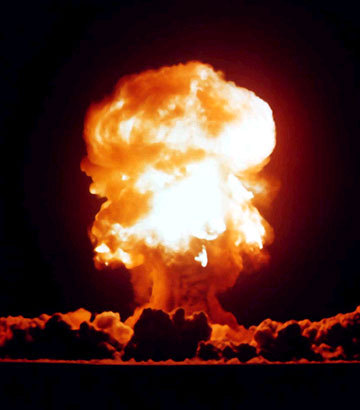
You either kill or be killed – life is warfare.
Profile Image for Steven Godin.
2,782 reviews3,373 followers
October 9, 2023

When it comes to sport stateside I don't mind baseball and basketball, but have next to zero interest in American Football. Might watch the Super bowl once in a blue moon, but don't really understand the full set of rules apart from knowing that a touchdown or field goal equates to points on the board. Had End Zone come from any other writer then I wouldn't have even considered it, but my aim is to read all of DeLillo's novels — only three to go — so would have had to get to this one eventually. Around the 100 page mark there was quite a long section of narrative that went into details of a game during play, of which I may as well have been reading Cantonese as I didn't have a clue what was going on. Thankfully, apart from a few other smaller passages that delve into the specifics of the game, I surprisingly found a good deal still to like about this. The camaraderie between players and staff off the field was definitely a highpoint, and parts of it were also genuinely funny — I can only think of White Noise when he's been this funny. His runningback hero, Gary Harkness, who I really took to actually, is clearly a young man at odds. On the one hand football is his life, but on the other he is scarily obsessed with the technology and theory of thermonuclear war — neatly done, DeLillo throws in parodies fusing technical in-game slang with atomic elements like plutonium. Even Gary only really hooked up with his overweight and haphazard girlfriend as a result of the mushroom cloud on her dress — my mind immediately got to thinking of the great mushroom cloud scene in Underworld. The team is rocked also by some strange occurrences where one seems to follow the other, like a fatal car accident, a plane crash, an unexplainable brain fever, and a star player quitting the game for ascetic mysticism. On a deeper level the football side of the story in End Zone plays second fiddle. While this was only his second novel, and didn't feel like the DeLillo I know and love from later novels, there were still signs that this is a writer heading towards greatness. Like he was warming up on the runway ready for take off. In fact, it was only a year or so later that he wrote Great Jones Street, which I thought walked all over this. That just leaves Ratner's Star, Zero K, and his latest The Silence, which I think would be fitting to save until last.
Profile Image for Darwin8u.
1,835 reviews9,034 followers
September 17, 2023
football

"The language game is so to say something unpredictable. I mean, it is not based on grounds. It is not reasonable (or unreasonable). It is there—like our life" - Wittgenstein

Once in Jr. High, I was playing a game of rugby (or as close to a game of rugby as you can get weighing 95lbs at a small private school in Provo, UT) and was totally blindsided during the 'game'. There was a moment after I pulled my face out of the dirt where I tasted both blood and clarity. Everything seemed at once to possess a pure obviousness and explode at the same time. Yes. That is the same feeling I got after I put down 'End Zone'. I shouldn't be surprised. I've been nailed by DeLillo before. Many times before. 'Mao II' and 'Libra' both laid me flat. 'White Noise' and 'Underworld' both hinted at, promised some grand apotheosis about life or the world.

'End Zone' is about language and war and men and death. It is about football. But don't get confused because war is not football, only football is football and only war is war. DeLillo wants to play linguistic games at Logos College. He wants to push language across the field. He wants blood in the syntax and grass in the prose. He wants his gladiators speaking prose poems, taking courses in "the untellable", discussing Wittgenstein, or screaming in German. DeLillo wants a university separated from the world. Isolated in Texas. In a space that exists separate from almost everything but football and fat girls. He wants to explore the chants of men. The dialogue of competition. The book could have easily slipped into a silly farce, a parade of prose, an onanistic literary game, but DeLillo comes at it with such subversive energy that he makes you forget who is holding the ball, or why the game even matters.
Profile Image for Read By RodKelly.
281 reviews803 followers
July 12, 2023
Don DeLillo is a difficult writer for me to review. His way with language is so magisterial and unique and I've had a time discovering where and why my own words fail in trying to dissemble his novels into meager reviews. In essence, his writing skips over plot in favor of something like a pure exercise in the delights of language. He riffs. He plays. Whatever the chosen subject, he bends his peculiar stylistic idiosyncrasies around the form of that subject and generates a hybridized and altogether new vantage point from which the reader may view the subjects of his focus.

In the case of End Zone, DeLillo's second novel, the concerns are mainly football and war; he carefully constructs a book length metaphor which also becomes a broader commentary on sociological behavior, and empires, and mass hysteria, and death, and (always circling back here) language. DeLillo's sentences are both lyrical and stilted, his dialogue is an approximation, human𝘰𝘪𝘥𝘴 rather than humans conversing, with black humor always undercutting the seriousness of his authorial pursuits. He is the king of set pieces, of which End Zone includes two chapter-length play-by-play of football games that are breathtaking examples of what a writer can do with language, no matter the topic.

End Zone is a spectacular leap from DeLillo's first novel, Americana. He rids himself of the derivatives and more concsiously and confidently constructs his brilliant digressions and asides. It is a great feeling to encounter a writer with whom I can engage in a sort of intellectual conversation as I read, and DeLillo's peculiar and scintillating brilliance provides what, for me, is the ultimate literary reading experience.
Profile Image for Violet wells.
433 reviews4,480 followers
November 5, 2015
For someone who knows virtually nothing about American football this wasn’t an easy novel for me to read. The only two Delillo novels I hadn’t read were this and Americana, his first and I’m determined to complete the set. I think it was Martin Amis who said that when we say we love an author we generally mean we love half of the novels written by them. This is certainly true for me with regards DeLillo. I hated Ratner’s Star and was left indifferent by Point Omega, Cosmopolis and Players. However Underworld, Mao 2, White Noise and Libra are all among my favourite novels of all time.

This was DeLillo’s second novel and there’s a sense of him straining to find his stride and voice. The mesmerising urban lyricism of his middle period is not quite on display here. There are, though, several of his favourite motifs – most prevailingly his use of jargon to create an atmosphere of misinformation, disenchantment and detachment. “The pattern match begins with a search for a substring of a given string that has a specified structure in the string manipulation language”
It’s essentially a novel about power. The yearning to acquire power and the means available to us for acquiring it nowadays. The central character is a star running back for a collegiate football team. He’s ambivalent in his strivings for power. He has a penchant for self-destruction. For sabotaging his prospects. Football, like war, is a power struggle of synchronised strategy, bluffed manoeuvres, ordered systems of advancement and a constant parallel is both drawn up and deconstructed in the novel between football and war. “War is the ultimate realization of modern technology. For centuries men have tested themselves in war. War was the final test, the great experience, the privilege, the honour, the self-sacrifice or what have you, the absolutely ultimate determination of what kind of man you were. War was the great challenge and the great evaluator. It told you how much you were worth. But it’s different today. Few men want to go off and fight. We prove ourselves, our manhood, in other ways, in making money, in skydiving, in hunting mountain lions with bow and arrow, in acquiring power of one kind or another. And I think we can forget ideology”

The central female character is massively and purposefully overweight. She is wilfully renouncing the power of her beauty. “It’s hard to be beautiful. You have an obligation to people. You almost become public property. You can lose yourself and get almost mentally disturbed on just the public nature of being beautiful. Don’t think I haven’t thought about it. You can get completely lost in that whole dumb mess. And anyway who’s to say what’s beautiful and what’s ugly?”

One hugely memorable scene is an impromptu game of football played in driving snow. There’s a lot of humour and wilful absurdity (one character is learning by heart Rilke’s Duino elegies in the original despite not knowing a word of German; another collects insects).

I’m finding this is one of those novels that seems much richer and cleverer in retrospect when I think about it than it did while reading it.
Profile Image for Ian "Marvin" Graye.
948 reviews2,783 followers
June 10, 2017
An Explosion Over the Desert

You could spend weeks or even months inside this short novel.

It's as rewarding as it is challenging.

There are multiple characters with multiple points of view. It's not clear whether any are supposed to represent DeLillo's reconciled or concluded views, or, rather, whether it's the debate that matters (and that that debate could and should continue).

The debate concerns reality, consciousness, identity, silence and language. Oh yeah, and war and football and weight loss and orange dresses (“You look like an explosion over the desert”).

description

Inside the Language of Logos

This is just as much a metaphysical novel as it is a metaphorical one.

Everything happens within language, not just within the language of the novel.

Silence seems to be the absence of language, or the exile from community and language. Without language, there is no society or discourse. As Wittgenstein remarked:

"Whereof one cannot speak, thereof one must be silent."

DeLillo's protagonist, Gary Harkness, says, "Of all the aspects of exile, silence pleased me least."

As David Foster Wallace inferred from his reading of the novel, "SILENCE = HORROR."

It's the horror of separation from and the destruction of society.

One way of viewing exile is that it is "the state of being separated from whatever is left of the center of one's own history."

Exile and silence, therefore, de-centre the individual consciousness.

The Complication of the Exile

Harkness is one of the exiles in (and from) the Logos College football team.

He's physically talented enough to earn a place, but he doesn't really fit in. He's not simple enough. As his coach says:

"You're more the complicated type."

As a result, he's regarded as an outcast or an exile. Most of the rest of the team are crazy. In a way, you can either be sane outside the team/crowd or insane within it.

The Simple Life of the Warrior

Harkness' coach urges him to become more simple, to "lead a simple life":

"Oneness was stressed - the oneness necessary for a winning team. It was a good concept, oneness, but I suggested that, to me at least, it could not be truly attractive unless it meant oneness with God or the universe or some equally redoubtable super-phenomenon. What he meant by oneness was in fact elevenness or twenty-oneness."

Harkness seems to crave oneness with something more than mere people or community or society.

At a previous college, he accidentally killed another player. Now, he "liked reading about the deaths of tens of millions of people. I liked dwelling on the destruction of great cities..."

This is one of the first connections between war and football:

"I felt that I was better for it [football], reduced in complexity, a warrior."

Between Silence and Violence

Harkness seems to inhabit the space between silence and violence (apologies for the rhyme!).

"I respect Tweego in a way. He thinks in one direction, straight ahead. He just aims and fires. He has ruthlessness of mind. That's something I respect. I think it's a distinctly modern characteristic. The systems planner. The management consultant. The nuclear strategist. It's a question of fantastic single-mindedness.
That's something I genuinely respect."


For all his complexity, Harkness is still captivated by simplicity and single-mindedness, qualities that are often associated with the violence of both sport and war. Yet it's also fundamental to nature:

"The universe was born in violence. Stars die violently. Elements are created out of cosmic violence."

The mantra for their football team is:

"Hit somebody. Hit somebody. Hit somebody."

However, Harkness' problem is, in the words of his coach:

"You're just too damn nice...You people got a long way to go in meanness."

Still, football provides some comfort:

"Life was simplified by these afternoons of opposites and affinities."

Opposites being the opposition, and affinities being your own team.

War and Football

DeLillo equivocates over any possible analogy between war and football. He describes the action of the game in militaristic terms:

"The special teams collided, swarm and thud of interchangeable bodies, small wars commencing here and there, exaltation and firstblood, a helmet bouncing brightly on the splendid grass, the breathless impact of two destructive masses, quite pretty to watch."

On the other hand, one of his characters (Alan Zapalac) proclaims:

"I reject the notion of football as warfare. Warfare is warfare. We don't need substitutes because we've got the real thing."

Later, he describes some of the unique features of football:

"Football is discipline. It's team love. It's reason plus passion. The crowds are fantastic. They jump and scream."

Zapalac is less enthusiastic about wars between nations:

"A nation is never more ridiculous than in its patriotic manifestations."

Technology and Language

DeLillo does however explore some differences and likenesses between war and football.

On the one hand, "War is the ultimate realisation of modern technology.”

In a way, for all the noise, technology destroys language and creates silence. In a scene that preempts “Infinite Jest”, it’s this silence that causes Gary Harkness’ breakdown:

“In the end they had to carry me to the infirmary and feed me through plastic tubes.”

The Exemplary Spectator

On the other hand, DeLillo sees football in terms of organisation, language and spectators:

"The exemplary spectator is the person who understands that sport is a benign illusion, the illusion that order is possible. It's a form of society that is...organised so that everyone follows precisely the same rules; that is electronically controlled, thus reducing human error and benefitting industry; that roots out the inefficient and penalises the guilty; that tends always to move toward perfection.

"The exemplary spectator has his occasional lusts, but not for warfare, hardly at all for that. No, it's details he needs - impressions, colors, statistics, patterns, mysteries, numbers, idioms, symbols. Football, more than other sports, fulfils this need. It is the one sport guided by language, by the word signal, the snap number, the color code, the play name. The spectator's pleasure, when not derived from the action itself, evolves from a notion of the game's unique organic nature. Here it is not just order but civilisation. And part of the spectator's need is to sort the many levels of material: to allot, to compress, to catalogue."

Language is the vehicle within which the game operates:

"Each play must have a name. The naming of plays is important. All teams run the same plays. But each team uses an entirely different system of naming...No play begins until its name is called."

“End Zone” therefore appears to be the first of DeLillo’s novels in which his focus is the essence of language and names (names, for DeLillo, are the wording of the world), as it would continue to be for the rest of his writing career, hence the influence on more post-modernist authors like David Foster Wallace.

June 12, 2016
Profile Image for Lee Klein .
911 reviews1,055 followers
August 19, 2020
Loved re-reading this after 25 years or so. Had nearly no memory of it. Finished it the day after the first NBA playoff games, mid-August in a "bubble," the court and jerseys emblazoned with social justice slogans, all of which relates in a way to this unique, accessible, totally enjoyable distillation of DeLillo's typical themes and approaches. It's a systems novel (collegiate football program) largely about death, spirituality, manliness, language (and the unspeakable), and global thermonuclear war. It's dated to a degree, seeming very late '60s/early '70s, but still feels contemporary and relevant. The characters are mostly surnames, other than the narrator and his picnic-partner girlfriend and co-running back Taft Robinson and a few other players and coaches, teachers, a major in the ROTC for example. It's difficult to summarize other than simply saying that to a degree it's sort of a perfect novel, maybe overlong by thirty pages, the language honed, surprising, meaningful, beautiful but not pretty or lyrical; the themes always explicitly in play but never excessive or totally tied up; the setting of a desolate West Texas campus consistently reinforced and represented as a sort of blast zone; the characters physical and palpable, even when it's a person reduced to number 77 on the opposing team's defense. It has some good narrative drive, too, as the Logos College Screaming Eagles gear up to take on Centrex, the first real challenge on their schedule after a series of initial cakewalks. The game itself is described play by play in detail over maybe forty pages. And then it decays and resolves, the last section climaxing in an extracurricular snow football game, a simulated nuclear war game, and a quiet conversation with the star running back, the sole black player on the team. Later elaborated in Underworld with its focus on baseball and the bomb, this is the earlier incarnation, the proto-masterpiece, tighter than Americana or Ratner's Star but hitting the same high points -- and maybe better for its concision and humor throughout. Definitely recommended as a DeLillo entryway or the second step after White Noise. Fans of Coover's The Universal Baseball Association, Inc., J. Henry Waugh, Prop. will love this too.
Profile Image for Jay Sandover.
Author 1 book182 followers
August 31, 2022
Great book. 5 stars easy. Like DeLillo's other novels The Names and White Noise, this book is extremely interested in observing the impact words and how languages work (and don't). There are "alien sounds" and wall tappings and German language hilarity and talking mouths and weirdness about vowel sounds and, perhaps above all, jargon. Science and military and football. It's all pretty compelling. I'll be writing a longer piece about DeLillo when I finish White Noise.

This book is clearly a foundation for Wallace's Infinite Jest, the latter is sort of unimaginable without this precursor. Similar concerns. The Eschaton stuff, etc.
Profile Image for Cody.
984 reviews300 followers
November 22, 2017
Third read of this, each time moving higher up my DeLillo-meter. This is directly proportionate to the less seriously I take myself and/or life. End Zone is the one instance where Don's patented 'approximating humanoid' dialogue really serves a function. Of course no one talks like the characters in DeLillo's books, but here that is sort of the joke. Still one of his best endings, and in my Top 5 by the Don.
Profile Image for W.D. Clarke.
Author 3 books350 followers
July 2, 2019
First half was 5* all the way, as Double-D made a massive leap forward in just about every sense imaginable from his first novel Americana (& in fact I'd say he sets up not only his recurring themes in this book for all of those that follow it, but his narrative techniques as well, and his amazing ventriloquizing of all of these strange vectors of the American experience that as readers we may have had our intimations of at one point or another, but only when DD sets them down on paper do they enter the culture and are they able to come off our tongues for the first time, but as if they had always been there—such that (and as I said in an update) I could have quite literally quoted something at you from just about every page in the first half of the book. The man just does not seem to be capable of thinking a cliche thought or composing a boring sentence, and if his football players, coaches and hangers-on sometimes come across like PhD students making what protagonist Gary Harkness calls his emotionally detached "spurious inquiries" whilst on Quaaludes or something, they also speak the kind of dumb-ass jock-talk we've all heard before, except here it also makes them seem like culturally plugged-in, antennas-on, Zen masters composing algorithmic-yet-self-scrutinizing koans for the age of mutually-assured mass destruction somehow.

Second half, beginning with the virtuoso (if to me kinda boring, TBH) full-on enactment of a to-the-team-crucial football game, I began to think that organizationally or structurally or something-elsingly there might be some issues, crafting a coherent unified whole out of all of the preceding amazing parts, but so what. What a blast! And to think that by the end of it, 36 year old Don DeLillo was now pretty much a fully-formed writer, only partially recognizable as the guy who published his first book the year before. Wow. A true John Keats "Chapman's Homer"-type initiatory/transformative experience—for us readers as well as the author himself to marvel at, that.
4.5*
Profile Image for Nick Wellings.
91 reviews77 followers
August 13, 2013
Splendid book, near perfect in places.

Sterile declarative verbal utterances imitate speech and unfurl as prettily as perfect football plays. However, meaning teeters on the edge of blank tautology that in the end declares only the unsaid: the core of modern angst that is Delillo's abiding theme in most of his books. This is speech that does violence to language as the footballers of Harkness' college do violence to each other both on and off field.

In places the novel is hilarious. The football game is a tour-de-force miracle of faux-jargonned gibberish-cum-threnody. There is no thrill to this game. The play is related dispassionately. One character on the bench wonders what they are missing on TV, and in a truly beautiful page protagonist Harkness has a profound religious experience after recovering from a crunching tackle, soul meeting soil.

Reading these interchanges, the phrase 'Loss of affect' comes to mind: the reflective mind protected by carapace of language for speakings sake, just as body armour protects fielded player from aggressive opponent.

Everywhere off the field of play, there is deferral. Characters forgo the world of study to undertake bizarre self appointed projects. The players marvel at a huge insect collection one member starts after he's hunted his specimens all night. Another player tries to learn a Rilke Elegy despite having no German (I recall he did this just for the sonority). Protagonist Hakness becomes a diletante devotee of the nature of total nuclear war, and also devotes himself to learning a new word ever day. Certain members team up to form a society devoted to 'the untellable' where making sense means failure. A team member wants to grow a beard but wonders whether to and wanting to because he needs the change it provokes, wanting the 'reality increment' it promises. (The use of Rilke here, that unsurpassed poet of Becoming is not accidental and it is a sly deft touch by DDL.) Further, as if to make this all explicit, a poster of Wittgenstein is pinned up in player-poster-boy Taft's room: the figure of destabilisation and titan of analytic method being cute iconic comment to both players' lives and Don's book.

The spectre of language games, or sense divorced from content haunts all DDL novels, especially in White Noise, The Body Artist and Point Omega. Here in End Zone, as surely the football college is placed in a desert, as surely as desertification and Wasteland follows Mutually Assured Destruction, is language similarly dessicated.

Not for nothing does star player Taft reveal at the end of the book that he has given up football to study. Mentation is all in the hyper cerebrated world of End Zone. However his choice of subject is intended to chill us: he reads about the Holocaust, thirty or forty books he tells us, but most recently has focussed on the instances of infanticide during the Shoah. If Harkness' focus is on systemic unfathomable violence of total thermonuclear obliteration, Taft's is on the smaller but no less apalling enormities of Mankind, more chilling precisely because the participants deal on a human to human and not the massive level. Even so, the numbers serve to shock us. Gigadeaths from nuclear exchange and millideaths from human cruelty backed by gas and bullets. It is as if DDL is reminding us of Benjamin's famous utterance of post Auschwitz poetry, as well as warning us about the dangers of the 'military industrial complex' (Zyklon B, we recall was made by mega industrial entity IG Farben which became Bayer, produces ironically enough of aspirin and the like, as if seeking to atone for their destructive past ...)

Most pointedly though, DeLillo might be showing us that a disenchanted age makes disenchanted people: in End Zone, reflection concentrates on the most viscerally real of possibilities and histories - large scale death and suffering- not as morbid obsession but so as to goad a desensitise self into feeling something and anything.

It is to DeLillo's great credit that he makes his dispassionate voice succeed and that his narrative is so compelling. (It is clear that Wallace learned a lot and consciously or not imitated Don. )

The book was ramping itself up to five stars til about 15 pages from the end, notching itself down to four by books close, but they are four gleaming stars, let's say 4.998 of 'em.

Though we might rightly or wrongly, imagine that nuclear destruction has gone the way of the USSR, DeLillo shows us that there's a worse malaise, the diseased self. White Noise was to be the peak of expression for this, End Zone a station on the way to that wonderful book. As it stands, this is a deliciously thought-provoking book, the moreso because this is apparently regarded as one of Delillo's minor works.
Profile Image for Lee.
381 reviews7 followers
May 2, 2017
“I have a deep thought for you. Science fiction is just beginning to catch up with the Old Testament. See artificial nitrates run off into the rivers and oceans. See carbon dioxide melt the polar ice caps. See the world's mineral reserves dwindle. See war, famine and plague. See barbaric hordes defile the temple of virgins. See wild stallions mount the prairie dogs. I said science fiction but I guess I meant science. Anyway there's some kind of mythical and/or historic circle-thing being completed here. But I keep smiling. I keep telling myself there's nothing to worry about as long as the youth of America knows what's going on. Brains, brawn, good teeth. tallness.”
Profile Image for sologdin.
1,855 reviews873 followers
August 27, 2025
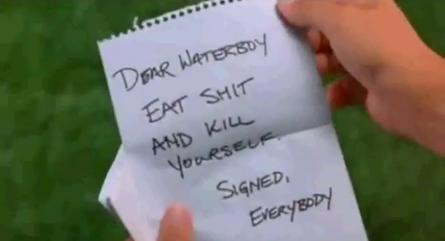
I must be a complete cock, because whenever anyone talks about football—including, as here, the august DeLillo—I immediately revert to my Waterboy roots:
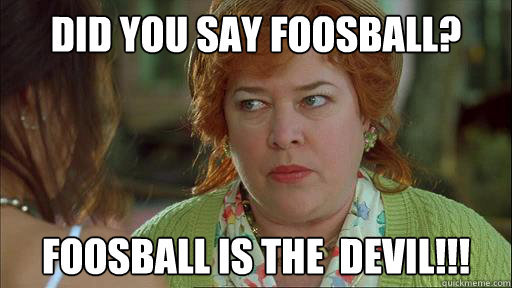
Foos-ball? Buncha overgrown monsters man-handlin' each other... 'Member when dat man wanted you to play foos-ball, Bobby?
As I’ve said elsewhere, it’s more probable than not that I’m an original goodreads asshole. For this review, at least, this is because I was traumatized by high school foos-ball and still have fucking nightmares about it, except that I’m me, now, 40 fucking years old, getting ritually abused by the same coaches and upperclassmen and whatnot. By the gods, it’s horrible. When foos-ball ended, I felt just like the guy in the novel: “No more football. No more hitting. No more sweat and pain. No more fear” (179).
That cleared up, same format here as will have been used later for White Noise: three sections, each of which is broken into shortish chapters; second section is the shortest section, but is also coterminous with one chapter, the longest in the novel; middle section/chapter is furthermore the novel’s thematic center of gravity (the ‘airborne toxic event’ in WN, recall), and as such is a howl of such outrage as to stitch a caesura in the pulsebeat of the novel, to paraphrase Cormac McCarthy.


Opens with the great premise of “the first black student to be enrolled at Logos College in West Texas” (3) as the new star tailback, along with narrator being an “exile or outcast” (6). These are haunted figures of thought, perhaps, through the novel, but it’s not a sustained examination of either thing, sadly. (Tailback “rightly or wrongly, no more than haunts this book” (3), NB, a derridean non-presence/non-absence.) We might note that narrator is homo sacer within Agemben’s meaning:
The protagonist of this book is bare life, that is, the life of homo sacer (sacred man), who may be killed and yet not sacrificed, and whose essential function in modern politics we intend to assert. An obscure figure in Roman law, in which human life is included in the juridical order solely in the form of its exclusion (that is, of its capacity to be killed) has thus offered the key by which not only the sacred tests of sovereignty but also the very codes of political power will unveil their mysteries. (loc. cit. at 12)
No son of mine is gonna play any foos-ball, perhaps? Early meditation on “the modern athlete as commercial myth” (3), maybe, also? When narrator proclaims “My life meant nothing without football” (22), he is invoking the agembenian distinction between bios and zoe, no?


The tailback and the exile are tied closely together in “Technically you’re integrating the place but that’s only because nobody else ever wanted to come here. Who the hell would want to come to a place like this?” (26). Narrator’s exile is generally not unaesthetic, except “silence pleased me least” (30). The locus: “We were in the middle of the middle of nowhere, that terrain so flat and bare, suggestive of the end of recorded time” (id.), which is a decentering so radical that it places the apocalyptic therein. This is the imaginary of Blood Meridian and The Road, yes?
Exile in a real place, a place of few bodies and many stones, is just an extension (a packaging) of the other exile, the state of being separated from whatever is left of the center of one’s own history. […] Day after day my eyes scanned in all directions a stunned earth, unchangingly dull, a land silenced by its own beginnings in the roaring heat, born dead, flat stones burying the memory. (31)
Dude walks in the desert as “demanded by the mythology of all deserts and wasted places” (42), wherein “all colors were different shades of one nameless color” and “water would have been a miracle or mirage.”



Text is reminiscent of Ratner’s Star to the extent that narrator trips along from one extraordinary confrontation to the next, some of whom are “a voluntary exile of the philosophic type” (14). Some are just silly names (E.g., “Onan.” FFS. Onan!) Best is dude’s roommate, who has come into exile in order to “unjew” himself:
You go to a place where there aren’t any Jews. After that you revise your way of speaking. You take out the urbanisms. The question marks. All that folk wisdom. The melodies in your speech. The inverted sentences. You use a completely different set of words and phrases. Then you transform your mind into a ruthless instrument. You teach yourself to reject certain categories of thought. (46-47)
He’s “tired of the guilt,” “the guilt of being innocent victims” (47). (Yeah, I’m WTFing, too.) Anyway, “the desert was an ideal place in which to begin the process of unjewing” (187).

Also prescient of Ratner’s Star insofar as “Our radio astronomers will communicate with beings at the very ends of the universe” (78).


Delillo must’ve played the foos-ball at some point, as his coach characters capture all of the annoying coach mantras that horrified me in my six-year juvenile foos-ball durance: “You’re saying that what I learn on the gridiron about sacrifice [NB!] will be of inestimable value later on in life. In other words if I give up now I’ll almost surely give up in the more important contests of the future” (19), which is pure foos-ball coach ideology. There's plenty more, but that captures it.


Contemporaneous to the foos-ball, narrator takes some military theory courses (“modes of disaster technology” (20), technically) and becomes enamored of “contemplation of millions dying and dead” (21). The marketing copy for the text in a publisher advertisement in the end flyleaves notes “the barriers of language collapse and the games of football and warfare become virtually indistinguishable” (243). This is of course a horrible interpretation of this text, and those who think that warfare is a game or indistinguishable from foos-ball are fucking crazy or fascists or something I don’t know what. The text shall manifestly reject this interpretation: “I reject the notion of football as warfare. Warfare is warfare. We don’t need substitutes because we’ve got the real thing” (111). Likewise, at a wargame exercise in narrator’s military theory course: “one of the major problems with war games, whether they were being played at the Pentagon, at NORAD or Fort Belvoir, at a university or think tank, was the obvious awareness on the part of all participants that this wasn’t the real thing” (219)—in direct contrast to foos-ball, which is manifestly the real thing, despite being merely a game.


That said, the novel does draw some parallels, even tendentiously, “I was granted an interview with two subalterns of the athletic department, types familiar to football and other paramilitary complexes” (22). Player aggression noted, however: “I really wiped him out, the bastard” (25). One character draws the comparison to “ancient warriorship,” “cults devoted to pagan forms of technology. What we do on that field harks back” (36). “Hyperatavistic […] gladiatorial” (63). Narrator likewise wore “a smudge of lampblack under each eye” (41) and “liked the idea of painting myself in a barbaric manner before going forth to battle in mud” (id.)—tres Braveheart, I guess. We see also that “the not-too-distant future” features “humane wars” wherein the adversaries agree “to limit the amount of megatons” (81), which I suppose is sporting. One coach is praised for “ruthlessness of mind” (49), a “distinctly modern characteristic. The systems planner. The management consultant. The nuclear strategist” (id.).

As that last bit suggests, the stronger parallel is the lexicon of nuclear strategy (“words like thermal hurricane, overkill, circular error probability, post-attack environment, stark deterrence, dose-rate contours, kill-ratio, spasm war” (21)) as juxtaposed fairly plainly with business school economics (“Time-adjusted rate of return […] Redundant asset method. Capital budgeting. Probable stream of earnings. Independently negotiated credit balances. Consolidation. Tax anticipation notes” (23)).


“The words we spoke did not seem particularly ours” (48)—the svoi/chuzhoi distinction in bakhtinian linguistics. Similarly, “maybe the words were commissioned, as it were, by language itself, by that compartment of language in which are kept all bits of diction designed to outlive the men who abuse them, all phrases that reduce speech to units of sound, lullabies processed through intricate systems” (54). Because “there’s no way to express thirty million dead,” “men are recruited to reinvent the language” (85)—“the problem goes deeper than just saying some crypto-Goebbels in the Pentagon is distorting the language” (id.).

The linguistics ties to bakhtinian grotesque realism as developed by “the new asceticism” (49):
all the visionary possibilities of the fast. To feed on plants and animals of earth. To expand and wallow. I cherished his size, the formlessness of it, the sheer vulgar pleasure, his sense of being overwritten prose. Somehow it was the opposite of death. (49)
Compare that position with the unfavorable presentation of human corpulence in A Confederacy of Dunces, say.

Narrator’s girlfriend embraces the carnivalesque insofar as she declines “the responsibilities of beauty” (66):
Things to live up to. I feel like I’m consistently myself. So many people have someone else stuck inside them. Like inside that big large body of yours there’s a scrawny kid with thick glasses. Inside my father there’s a vicious police dog, a fascist killer animal. Almost everybody has something stuck inside them. Inside me there’s a sloppy emotional overweight girl. I’m the same, Gary, inside and out. It’s hard to be beautiful. You have an obligation to people. You almost become public property. (67)
Further: “And anyway who’s to say what’s beautiful and what’s ugly?” (id.). Likely that the responsibility for beauty is diffuse, as with warfare: “Weapons technology is so specialized that nobody has to feel any guilt. Responsibility is distributed too thinly” (86)—as with corporate crime, mens rea at the executive level and actus reus in middle management.



On the other hand, dude and girlfriend work it out linguistically: “The words were ways of touching and made us want to speak with hands” (217).

Narrator looks up words everyday in the dictionary, settling one day on apotheosis (162). We see the application in “The bombs are a kind of god” (80) and “science is a religion” (92). Foos-ball itself involves “the urgent breathing of men in preparation for ritual danger” (106). The tailback: “The legend of black speed. Perhaps twenty thousand people watched, overjoyed to see it finally, to partake in the ceremony of speed, in statistical prayer” (190). But, because he’s black, it’s Othello accused of witchcraft: “loved him in the dark art of his speed,” “their difficult love for magic” (191).

Someone is taking a course in “the untellable” (64), in which “knowledge of German was a prerequisite for being refused admission” (73)—and thus we are come full circle with homo sacer as the indistinction between the excluded and the included. (“The theory is if any words exist beyond speech, they’re probably German words” (181).) Good times.


Recommended for those who appreciate the slowly gliding drift of identical things, persons prevented from attaining their destiny by accidents, and readers who go through the motions and the motions seem to reciprocate.
Profile Image for Cathy Shive.
3 reviews4 followers
July 26, 2007
football is not warfare. warfare is warfare and history is the placement of bodies.
Profile Image for Daniele.
304 reviews68 followers
March 21, 2023
Ancora una volta sport e conflitti mondiali, in questo caso football e guerra nucleare.
Football come metafora della guerra, il tutto visto attraverso gli occhi del nostro protagonista Gary.
E ancora una volta un gran viaggio tra le parole di Delillo, che come spesso succede non ci portano mai ad una vera e propria conclusione, ma i viaggi che ti fa fare il Don son tutti in prima classe!!!

Nutriva ambizioni su di me e più o meno anche a mie spese. Questa è una costante degli uomini che non sono riusciti a diventare eroi: i loro figli devono dimostrare che il seme non si è indebolito.

- Identità, - disse Buddy Shock. - Un'uguaglianza soddisfatta da tutti i possibili valori delle variabili per le quali le espressioni standardizzate che figurano nell'uguaglianza sono quantitativamente determinate.

- Ho avuto un flash: finalmente ho capito che cos'hai tu di veramente strano, - dissi. - Non trasmetti nessuna sensazione di un futuro personale.
- Sono una persona dell'adesso, Gary.
Meno male, perché io invece sono una persona del prima.
- Lo so, disse lei. - È per questo che mi piaci. Ho bisogno di un po' di prospettiva nella vita.

La storia va controbilanciata con la fantascienza, - disse. - É l'unico modo per rimanere sani di mente

Perlopiù la vita della gente è guidata da cliché. I cliché hanno un effetto calmante sulla mente e sono in grado di esprimere quel genere di sentimento ampiamente accettato che, scava scava, alla fine altro non è che una forma di negazione del silenzio. La loro pericolosità è nascosta insieme ai crimini piú cupi del pensiero e del linguaggio. Davanti alla morte, la pericolosità si dilegua. La morte è il miglior terreno di coltura dei cliché. I modi di dire piú triti non risultano mai cosí consolatori e tranquillizzanti come nei periodi di lutto. La stanza è occupata da addobbi floreali, noi non osiamo discostarci dalle pareti e pronunciamo stucchevoli banalità.

Io rifiuto il Dio iracondo degli ebrei. Io rifiuto il Dio cristiano dell'amore e del denaro, sebbene non rifiuti l'amore in sé o il denaro in sé. Io rifiuto l'idea di retaggio, origini, tradizione e diritto di nascita. Queste cose non fanno che rallentare il progresso della razza umana. Generano solo guerra e follia, guerra e follia, guerra e follia.

Abbiamo bisogno di maggiore abnegazione, maggiore disciplina. La nostra vita interiore si sta sgretolando. Abbiamo bisogno di rinununciare a tutto quello che ci distrae dalla conoscenza di noi stessi. Ci stiamo allontanando troppo dai nostri presupposti iniziali. Vaghiamo senza meta. Abbiamo bisogno di ricostruirci mentalmente e spiritualmente. Se lo facciamo, il corpo si prenderà cura di sé. È una cosa che ho imparato da bambino. Ero cagionevole, un bambino molto cagionevole. Mi venivano tutte le malattie. Avevo grosse carenze alimentari. Avevo le gambe secche come quelle di una sedia. Ma ho ricostruito me stesso con determinazione e sacrificio. Prima la mente e poi il corpo.
Profile Image for Kevin Adams.
476 reviews142 followers
October 25, 2021
Continuing a DeLillo reread. One of the best sports novels. The football scenes are first rate.
Profile Image for Marcello S.
647 reviews292 followers
March 6, 2024
Il miglior romanzo pubblicato da DeLillo negli anni Settanta. Ambientato in un campus del Texas occidentale lontano da tutto, circondato da deserto e silenzio. Giocatori di football che discutono di argomenti intellettuali e sciocchezze, che leggono libri sulla guerra nucleare e l’olocausto. Le scene immersive dentro le partite di football sono così tecniche, precise, incomprensibili, da diventare qualcosa che va oltre il significato delle parole, solo immagini e ritmo della scrittura. Non ha un finale, ad un certo punto finisce. Altri semi sparsi di DFW. Entusiasmante.

[83/100]

Frasario minimo/

∞ Per raggiungere un posto qualsiasi, il giocatore di football segue sempre la via piú dritta possibile. I suoi pensieri sono improntati a una sana ovvietà, le sue azioni non sono gravate dalla storia, dall’enigma, dall’olocausto o dal sogno.
∞ Cominciai a subire il fascino di termini ed espressioni come uragano termico, capacità distruttiva dell’arsenale nucleare, Cep, scenario post-attacco nucleare, potere di deterrenza, intensità di dose, rapporto di perdite umane, spasm war. Il piacere che mi davano queste parole.
∞ Oltre le tende di tela, in lontananza, all’ultimo piano della residenza delle ragazze, c’era una figura ferma davanti a una finestra aperta. Pensai alle donne. Pensai a donne sotto la neve e sotto la pioggia, sulle montagne o nelle foreste, alla fine di lunghe gallerie immerse nella coraggiosa luce dei quadri di Rembrandt.
∞ Ultimamente mi capita di passare del tempo nel deserto. È un posto dove si possono elaborare teorie.
∞ Avevo ottenuto il permesso di seguire come uditore i corsi dell’aeronautica. Geopolitica, un’ora a settimana. Storia della potenza aerea, un’ora a settimana. Aspetti della guerra moderna, un’ora a settimana.
∞ Billy stava imparando a memoria la nona elegia duinese di Rilke, in tedesco, lingua che non capiva. Frequentava un corso universitario sull’indicibile.
∞ C’era un poliziotto in piedi che scriveva e uno alle sue spalle che copiava. E si controllavano tutti l’un l’altro fino a raggiungere un palese accordo. Era un modo per mettersi in guardia dagli errori e dai fatti non accertati. Se tutti avevano le stesse informazioni non potevano sbagliare.
∞ – Qual era il motivo preciso per cui mi sei venuto a trovare? – Semplicemente la guerra nucleare, signore. Sapere come potrebbe essere.
∞ Ogni schema deve avere un nome. È importante dare un nome agli schemi. Tutte le squadre eseguono gli stessi schemi. Ma ogni squadra ha il suo personalissimo campionario di nomi. Gli allenatori fanno le ore piccole per inventarseli. Scaldano e riscaldano il caffè su un vecchio fornelletto. Nessuno schema può avere inizio se non viene annunciato per nome.
∞ Aprii gli occhi. Tutto attorno a me gente che usciva dal campo. Sopra di me le stelle, delucidazioni nel tempo, vecchi orologi che rintoccavano dall’alto della curvatura dell’universo. Mi dispiaceva non sapere nulla di astronomia; sarebbe stato bello riuscire a calcolare le distanze siderali.
∞ Mi fermai sulla soglia e all’improvviso mi resi conto che in genere io passavo un sacco di tempo fermo sulle soglie: lo avevo sempre fatto, gran parte della mia vita l’avevo passata a fermarmi sulle soglie.
Profile Image for Adrienne.
320 reviews
April 3, 2009
Have you ever been reading a book and been kind of lost? I mean, you understand what’s going on and who the different characters are, but you’re lost as to the purpose of the book? I felt that way about Don DeLillo’s End Zone. I understood the basic plot - a small West Texas college football team’s season, as told by one of the running backs, who is obsessed with nuclear war - but pages and pages of rambling monologues and dialogues went by and I didn’t get anything out of them. I felt as though there was lots of symbolism and meaning and all those kinds of things you have to write about in English essays hidden in the ramblings, but it was so well hidden that I didn’t see it (I didn’t really put in an effort to see it, either). So End Zone did not do much for me. I kept reading, because I was sure there was going to be some kind of amazing climax at the end, but there really wasn’t. I find that this kind of thing happens to me an awful lot when I read recent, ’serious’ fiction.
Profile Image for J.I..
Author 2 books35 followers
August 8, 2014
Perhaps this is a little bit difficult to explain, but trapped within this novel of frustratingly psuedo-intellectual conversations, for instance, regarding the nature of nihilism, is a very real attempt to understand, the posturing of language fitting well to convey the ideas and the attitudes, the wanderings and the self-inflated egos and poorly thought out convictions that plague the youth of the world. It is a novel about finding the self, and it is, even more so, about the fear of losing it. They are afraid of the bomb, they are afraid of losing, they are afraid of not realizing their potential and so they gain weight, they quit spectacularly, they fail on purpose, and it is in their rationalizing and in their struggles that this novel finds its niche.

DeLillo, in case you haven't heard, can write, and this is a novel that brims with talent and voice and freshness. It is weird, it isn't for everyone, it is imperfect, but it is beautiful.
Profile Image for Paulo Faria.
Author 36 books62 followers
October 23, 2021
Originalmente publicado em 1972 com o título «End Zone», «Linha Final» é agora publicado em Portugal pela Relógio D’Água com uma tradução da minha lavra. É um romance que «envelheceu» bem, e em que os grandes temas da prosa de DeLillo estão já presentes e bem amadurecidos, o que não deixa de ser espantoso, tendo em conta que se trata somente do segundo romance de Don DeLillo. O romance gira em torno de dois pólos, o futebol americano e a ameaça da guerra nuclear. A atmosfera de paranóia e de angústia que vem à tona em todas as páginas faz a ponte entre estes dois temas. Não é um romance fácil, mas vale a pena.
Profile Image for Jack Waters.
297 reviews116 followers
January 11, 2013
Love DeLillo, love End Zone. D.F. Wallace, my favorite author, clearly borrowed a few pages late in this novel for his incredible 'Eschaton' section of Infinite Jest.
Profile Image for Megha .
Author 1 book112 followers
February 1, 2021
This was Delillo’s second novel and my second Delillo as well. Our Protagonist Gary Harkness decides to go to Logos College in West Texas to focus on his football. The setting is a small Texas college. Attention is focused on the football team, their preparations, and a struggle to gain the 60-yard line in a game with a team they know is superior. The moves are communicated in pre-arranged codes. They get beaten to a pulp. The fans don't really understand that they have been badly physically injured.
The simplicity of plot underlies a rich subtext of the way humans act or react while often not being aware or understanding their own intent in life.
The novel as so many layers and parallels, its is hilarious, violent and dark in turn, as Gary philosophises manically with his roommates, teammates, girlfriend or alone in the desert.
A lot of dialogues are plain brilliant satires,

“Why don't you want to be Jewish anymore?"
"I'm tired of the guilt. That enormous nagging historical guilt."
"What guilt?"
"The guilt of being innocent victims.”

The book is dark, brilliantly dark and for me, it was a feel-good book somehow.
If you enjoy criticism and irony, you will love End Zone. It is not for everyone, there are violence and war-related discussions and football lingos, which for us is pretty unknown.

I am giving one less star for the ending, it was a little vague and confusing, but I think that was the story needed and also because of the football terminologies, but rest its a brilliant piece of writing.

Highly recommended.
A must-read.

Happy Reading!

Profile Image for Andrew.
2,258 reviews928 followers
Read
August 24, 2015
Written over a decade before White Noise, it's a whole lot of DeLillo ideas in their embryonic forms. Nuclear war, metaphor upon metaphor, America as incoherent fever dream, sort of humor that really isn't humor. The only problem is that as a young writer, he tried to condense these things into a fairly short book. They need to be given breathing room. As in White Noise, or, better yet, Underworld, which is a great and magisterial tome. But hey, it's early work, and it's got some of that wonderful, paranoid prose that makes DeLillo such a delight to read.
Profile Image for Paco Serrano.
219 reviews70 followers
July 20, 2020
"El espectador ejemplar es el que entiende que el deporte es una ilusión benigna, la ilusión de que el orden es posible. Es una forma de sociedad libre de ratas y que no daña de ninguna forma al nonato; organizada para que todo el mundo siga exactamente las mismas reglas; electrónicamente controlada, lo cual reduce el margen humano y beneficia a la industria; que erradica a los ineficientes y penaliza a los culpables; que siempre tiene tendencia hacia la perfección".

Novela ubicada en la década de los setenta, cuando la Guerra Fría estaba en su plenitud. El protagonista es un jugador de fútbol americano colegial acosado por visiones apocalípticas a causa de una posible guerra termonuclear y fascinado por sus potenciales efectos: enfermedades, incendios, caos genético, pánico, saqueos, millones de muertos. Esta obsesión la comparte con un profesor/mayor del ejército, que imparte un curso de armamento nuclear en la universidad.

La historia bélica está combinada con apasionantes y divertidas narraciones de partidos colegiales llenos de dolor físico y mucho sacrificio. Algo muy parecido a la guerra.
Profile Image for Juan Araizaga.
831 reviews144 followers
January 30, 2019
6 días y 282 páginas después. El primer libro que leo del autor, fue una curiosa forma de encontrarlo, en una zona de descuentos.

Lo primero que decir es que la traducción es un asco, probablemente sea de las peores que existan, la versión original debió ser supremamente mejor que esto. Así que por favor, NO LO LEAN EN ESPAÑOL.

Esté comentario no será muy objetivo porque nunca había leído un libro de fútbol americano, y además de los libros es lo que más me apasiona. Así que se comprende la emoción que me genera.

La historia es acerca de un joven ensimismado, que se debate entre los horrores de la guerra nuclear y las jugadas del campo de fútbol. Una curiosa mezcla de ideas, que justamente ahí es donde radica la genialidad, en lo aleatorio de la mezcla.

Las ideas al aire me gustaron, pero a veces son demasiado al aire, a veces falta un poco aterrizarlo. El principal me generó una alta empatía por sus devanaciones, me recordó al yo de mis ayeres.

Por ratos la trama es simple, otros se complica, otros nada más habla de fútbol americano y otras sabe cómo a Palahniuk. Una trama curiosa.

Es un libro con un pésimo cierre y pésimo final, sin embargo se rescatan algunas cosas. Me agradó. Fue para pasar el rato.

Probablemente habrá reseña.
Profile Image for Neil.
1,007 reviews757 followers
May 13, 2020
This is part 2 of a rather strange project I have set out on. I have known for a long time that there are just two Don Delillo novels that I have not read. For reasons of which I am not entirely sure, I decided to rectify that by reading ALL of his novels in chronological order, picking up the two missing ones along the way. You probably think that’s a lot of reading for the sake of a couple of relatively short books. And, of course, you’re right. But the 5 novels in the middle of Delillo’s output are amongst my most favourite novels, so I am always happy to find excuses to read them again.

(I may skip Ratner’s Star. It’s not long since I re-read it and it really isn’t very good.)

End Zone is one of the two missing books from my collection. It is, ostensibly, a story about Gary Harkness who plays college football in America. He somewhat self-destructive impulses which mean that has has moved around trying to find a college that he can stay in without something going wrong. We pick him up at Logos College in West Texas (note the name, Greek for “word” a none-to-subtle pointer). We follow Gary through a season of football games, including one long chapter that describes the most brutal game of the season and is a very impressive piece of sports writing.

In his academic work, Gary is obsessed with the threat of nuclear war. Several reviews of the book start to draw comparisons between warfare and what happens on the football field, but Delillo is quite clear when he has one of his characters say, ”I reject the notion of football as warfare. Warfare is warfare. We don’t need substitutes because we’ve got the real thing. Football is discipline. It’s team love. It’s reason plus passion.” The connections are in the imagination of the reader more than they are on the pages of the novel. Perhaps one specific overlap is a comparison, which the reader makes rather than the author, of the arcane terms in a football play book (each team coming up with its own code so that other teams cannot decipher the upcoming action) and the obscure terms that are used to describe warfare.

”I became fascinated by words and phrases like thermal hurricane, overkill, circular error probability, post-attack environment, stark deterrence, dose-rate contours, kill ratio, spasm war. Pleasure in these words. They were extremely effective, I thought, whispering shyly of cycles of destruction so great that the language of past world wars became laughable, the wars themselves somewhat naive.”

And this brings us back to logos, word, because, as with all things Delillo, language is key. Words are key to Harkness in his obsessions, but also to Delillo in his writing. It’s a common feature in his books that they have long passages that deliberately evade comprehension but create an effect. He once said, ”I think more than writers, the major influences on me have been European movies, and jazz, and Abstract Expressionism” This is not quite so obvious here as in other books (e.g. The Names), but this is Delillo’s second novel and he is clearly still getting into his stride.

This is a novel about conflict and confrontation. It is full of ideas and phrases, so full, in fact, that it is impossible to write any kind of view of it without feeling that you have missed out several key ideas. What to do, for example, with ”It’s only a game, but it’s the only game.”? Or with History is the angle at which realities meet? Or with this longer passage that seems to reflect today, almost 50 years after publication, how many in America feel about their country:

”What’s the strangest thing about this country? It’s that when I wake up tomorrow morning, any morning, the first bit of fear I have doesn’t concern our national enemies, our traditional cold-war or whatever-kind-of-war enemies. I’m not afraid of those people at all. So then who am I afraid of because I’m definitely afraid of somebody. Listen and I’ll tell you. I’m afraid of my own country. I’m afraid of the United States of America.”

3.5 stars rounded up for now.
Displaying 1 - 30 of 467 reviews

Can't find what you're looking for?

Get help and learn more about the design.