

What do you think?

Lost Worlds of South America
11 hours 54 mins
Buried by the centuries on soaring mountain slopes and beneath arid deserts and lush jungles of South America, the remains of extraordinary, majestic civilizations - many unknown until recent decades - are now coming to light and raising tantalizing questions about what else may be awaiting discovery.
Take an adventurous trek to these wilds of South America and the great civilizations of the ancients. In 24 eye-opening lectures, you'll take an in-depth look at the emerging finds and archaeological knowledge of more than 12 seminal civilizations, giving you rich insight into the creative vision and monumental achievements of these wellsprings of human life.
The ancient South Americans show us striking models of how societies can function and organize themselves. The technologies and social structures seen here were wholly invented, using no preexisting models, as these dynamic peoples struggled to tame their environment and carve out societies and empires.
Recently unearthed marvels include elaborately prepared and adorned mummies that predate Egypt's by 2000 years; imposing palaces, solar observatories, and dramatically decorated pyramids; stunning art objects in gold, turquoise, lapis lazuli, and ceramic; and evidence of huge urban civilizations in the Amazon.
In their amazing sophistication and scale, the sites reveal some of the most remarkable ancient artifacts found anywhere in the world. The breathtaking valleys, mountains, and deserts you will study in this course reveal wonders that rival anything we know of the ancient world. Travel with us to a lost and splendorous past - a fountainhead of civilization that speaks unforgettably of human striving, vision, and the indomitable will to endure.
Listening Length: 11 hours and 54 minutes
Buried by the centuries on soaring mountain slopes and beneath arid deserts and lush jungles of South America, the remains of extraordinary, majestic civilizations - many unknown until recent decades - are now coming to light and raising tantalizing questions about what else may be awaiting discovery.
Take an adventurous trek to these wilds of South America and the great civilizations of the ancients. In 24 eye-opening lectures, you'll take an in-depth look at the emerging finds and archaeological knowledge of more than 12 seminal civilizations, giving you rich insight into the creative vision and monumental achievements of these wellsprings of human life.
The ancient South Americans show us striking models of how societies can function and organize themselves. The technologies and social structures seen here were wholly invented, using no preexisting models, as these dynamic peoples struggled to tame their environment and carve out societies and empires.
Recently unearthed marvels include elaborately prepared and adorned mummies that predate Egypt's by 2000 years; imposing palaces, solar observatories, and dramatically decorated pyramids; stunning art objects in gold, turquoise, lapis lazuli, and ceramic; and evidence of huge urban civilizations in the Amazon.
In their amazing sophistication and scale, the sites reveal some of the most remarkable ancient artifacts found anywhere in the world. The breathtaking valleys, mountains, and deserts you will study in this course reveal wonders that rival anything we know of the ancient world. Travel with us to a lost and splendorous past - a fountainhead of civilization that speaks unforgettably of human striving, vision, and the indomitable will to endure.
Listening Length: 11 hours and 54 minutes
12 pages, Audible Audio
First published January 1, 2012
Ratings & Reviews
Friends & Following
Create a free account to discover what your friends think of this book!
Community Reviews
Displaying 1 - 30 of 74 reviews

July 26, 2018
So, I rode into this course like a conquistador knowing something about the Inca and the Aztecs and the Maya and the Toltecs. I thought that Machu Pichu was ancient. What I learned was that there were cities over 10,000 years earlier and villages over 20,000 years predating Machu Pichu! This is older than all of what has been discovered in North America. Why? Who? What? When? All aspects are covered in this series of lectures.
Professor Barnhart opened my eyes with his well-documented and measured approach to these "Lost Worlds." He had me hungering for more at the end of most lectures because his enthusiasm about his subject was a visceral part of his presentation style.
Glad that I was lucky enough to stumble across this. (my version was audio only, video is available)
Professor Barnhart opened my eyes with his well-documented and measured approach to these "Lost Worlds." He had me hungering for more at the end of most lectures because his enthusiasm about his subject was a visceral part of his presentation style.
Glad that I was lucky enough to stumble across this. (my version was audio only, video is available)

June 11, 2024
Lost Worlds of South America" by Edwin Barnhart delves into pre-conquistador south-american civilization in intense archeological depth.
Barnheart walks the reader through a primer on the ancient peoples of the far south— who appear not to have crossed the Bering Land Bridge and didn't let it hold them back, inventing agriculture
and everything else that comes with a civilization all on their own. Even having technological offshoots, like a number system using a series of knot-necklaces called quipu.
This was a wonderfully informative in depth look at a civilization with a knowledgable educator who loves his work and archeology. It was a delight.
The only possible improvement is that it is from 2012 and an updated version would be welcome. With new discoveries and advancing technology there must be a lot to add.
Barnheart walks the reader through a primer on the ancient peoples of the far south— who appear not to have crossed the Bering Land Bridge and didn't let it hold them back, inventing agriculture
and everything else that comes with a civilization all on their own. Even having technological offshoots, like a number system using a series of knot-necklaces called quipu.
This was a wonderfully informative in depth look at a civilization with a knowledgable educator who loves his work and archeology. It was a delight.
The only possible improvement is that it is from 2012 and an updated version would be welcome. With new discoveries and advancing technology there must be a lot to add.

September 24, 2020
This is the last installment (well, really, the first, but I did it backwards) in Barnhart’s lecture series on Pre-Columbian archaeology. They are all quite excellent and greatly enlightening. Throughout the series, I was constantly surprised—both at the material, and at my own ignorance of the material.
You see, I was raised in the United States, where some information about Pre-Columbian cultures was on the syllabus. Not only that, but I studied anthropology and archaeology in university. So I assumed that I would have at least a fair impression of what was going on in the Americas before Columbus.
But I had only the faintest notion. I did not know, for example, that some of the oldest stone structures on earth can be found in South America. Nor did I know that these ancient peoples also made the world’s oldest mummies. Now, mummies and stone huts may not seem very important to you, but their very early appearance underlies the surprisingly early presence of humans in the Americas. For a long time it was thought that humans crossed the Bering Strait after the end of the last ice age, around 11,000 years ago. Many recent findings have dramatically pushed back the date of these first humans, however; and most mysteriously, the oldest finds are in South America.
In high school I was taught about the Inca. But I did not realize that the Inca Empire occupied only a small part of this long history. Nor did I know anything at all about the other historical cultures that preceded the Inca—the Moche, the Chavín, or the Norte Chico, just to name a few. Of the Inca, I knew little more than that they were conquered by Pizarro and built Picchu. That they built earthquake resistant buildings, an enormous system of roads, and even (possibly) a writing system (quipu) in the form of knots—all this had either been either forgotten or never learned.
In short, I would encourage all Americans to get better acquainted with these ancient peoples. Most of us know, on some level, that the land had been occupied before Europeans arrived. But it is difficult to wrap your mind around the scale of what was lost. These lectures are an excellent place to start. By carefully examining the archaeological record, Barnhart brings this lost world—at least partially—back to life. And as he constantly reminds us, there is still much left to learn.
You see, I was raised in the United States, where some information about Pre-Columbian cultures was on the syllabus. Not only that, but I studied anthropology and archaeology in university. So I assumed that I would have at least a fair impression of what was going on in the Americas before Columbus.
But I had only the faintest notion. I did not know, for example, that some of the oldest stone structures on earth can be found in South America. Nor did I know that these ancient peoples also made the world’s oldest mummies. Now, mummies and stone huts may not seem very important to you, but their very early appearance underlies the surprisingly early presence of humans in the Americas. For a long time it was thought that humans crossed the Bering Strait after the end of the last ice age, around 11,000 years ago. Many recent findings have dramatically pushed back the date of these first humans, however; and most mysteriously, the oldest finds are in South America.
In high school I was taught about the Inca. But I did not realize that the Inca Empire occupied only a small part of this long history. Nor did I know anything at all about the other historical cultures that preceded the Inca—the Moche, the Chavín, or the Norte Chico, just to name a few. Of the Inca, I knew little more than that they were conquered by Pizarro and built Picchu. That they built earthquake resistant buildings, an enormous system of roads, and even (possibly) a writing system (quipu) in the form of knots—all this had either been either forgotten or never learned.
In short, I would encourage all Americans to get better acquainted with these ancient peoples. Most of us know, on some level, that the land had been occupied before Europeans arrived. But it is difficult to wrap your mind around the scale of what was lost. These lectures are an excellent place to start. By carefully examining the archaeological record, Barnhart brings this lost world—at least partially—back to life. And as he constantly reminds us, there is still much left to learn.

September 5, 2023
This is another great lecture series by Barnhart, and I wish he had more courses with Great Courses than these three I've listened to. I like that he's thorough in his explanations of his and others' research, and he supports his theories with that while leaving the door open for new interpretations if new evidence is ever brought to light. Here's a snippet from his opening lecture:
He goes into all of that and much more. Now, I knew about the mummies and how they spent their afterlives partying with each other. And I knew about the Inca and how they ensured everyone worked and no one starved. If ancient peoples could figure that out, why can't we? I'd also already heard about the steadiness of the Machu Picchu architecture that still stands strong to this day. I was interested to hear his theory that ancient South Americans were monotheistic, and that the coastal peoples probably got their god and religion from the Amazon peoples, and that there were at one time large cities located in the Amazon forests. In fact, there are still over a hundred tribes in the Amazon that have never been contacted by outsiders today, so who knows how much knowledge of the past is out there that we may never learn.
There's a lot here to digest, enough to make it worthy of a relisten at some point.
Much of South America’s impressive history has gone unnoticed. Did you know that pyramids were being built in Peru hundreds of years before they were built in Egypt? That while Europe was still reeling from the effects of the Black Death, South America was enjoying a golden age and had eradicated hunger in their world? That South America developed a language written in knots—a language that remains one of the world’s last undeciphered scripts? These lectures will explore these and many other fascinating aspects of South America’s under-appreciated legacy.
He goes into all of that and much more. Now, I knew about the mummies and how they spent their afterlives partying with each other. And I knew about the Inca and how they ensured everyone worked and no one starved. If ancient peoples could figure that out, why can't we? I'd also already heard about the steadiness of the Machu Picchu architecture that still stands strong to this day. I was interested to hear his theory that ancient South Americans were monotheistic, and that the coastal peoples probably got their god and religion from the Amazon peoples, and that there were at one time large cities located in the Amazon forests. In fact, there are still over a hundred tribes in the Amazon that have never been contacted by outsiders today, so who knows how much knowledge of the past is out there that we may never learn.
There's a lot here to digest, enough to make it worthy of a relisten at some point.

March 5, 2013

ETA The Royal Mummies of Peru
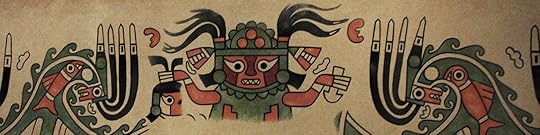
Lecture 1 South America’s Lost Cradle of Civilization ✔
Lecture 2 Discovering Peru’s Earliest Cities ✔
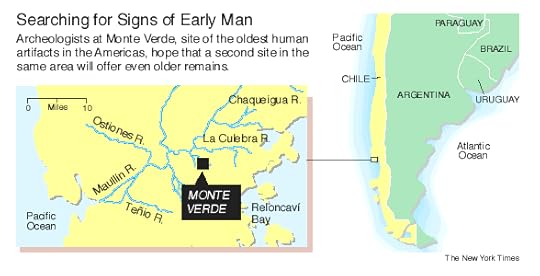
Lecture 3 South America’s First People ✔
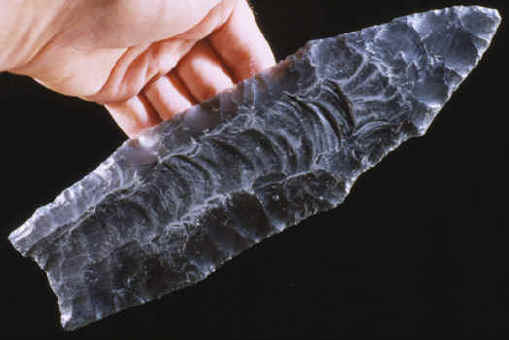 clovis point.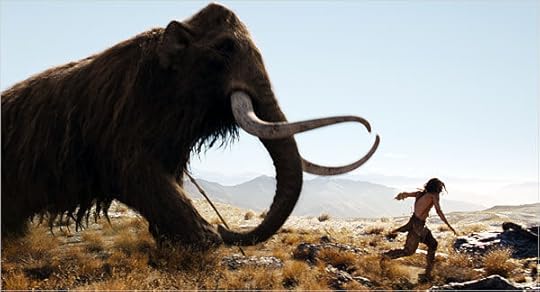
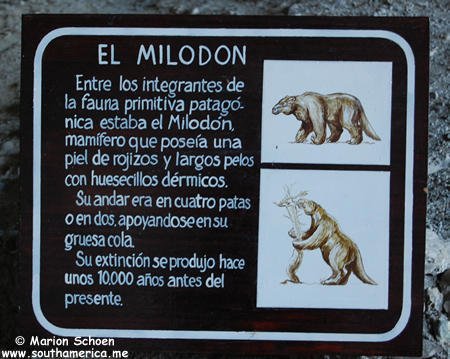 The Milodon Cave near Puerto Natales
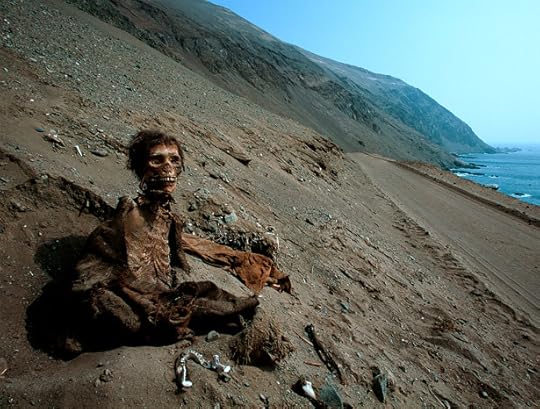 Among the most amazing finds in archaic South America are the Chinchorro mummies. More than 1,500 mummies have been found in the Atacama Desert, dating back to 5000 B.C. These are by far the world’s oldest mummies, many of them 2,000 years older than Egypt’s oldest mummies.
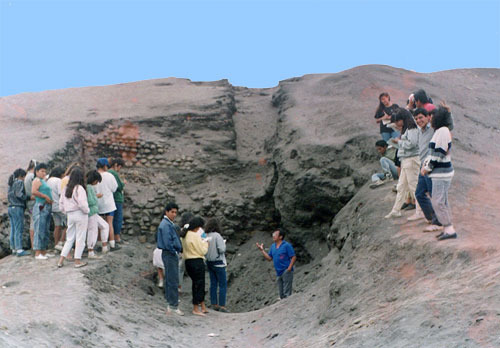 The Huaca Prieta Site
Lecture 4 Ceramics, Textiles, and Organized States ✔
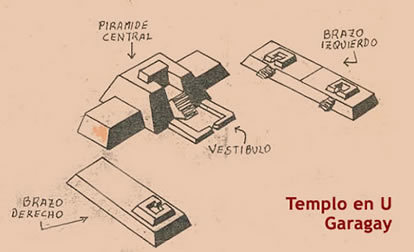 Garagay dates somewhere between 1640 and 900 B.C. It is in a horrible state because it was mined for decades for construction fill. Similar modern destruction occurred in Lima during its 20th-century development.
Lecture 5 Chavín and the Rise of Religious Authority ✔
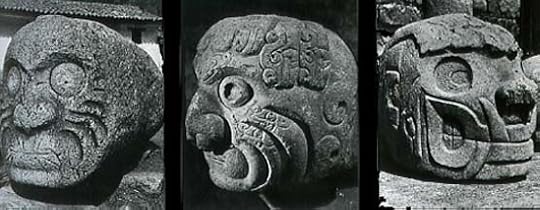 Fanged tenon heads
Lecture 6 Cupisnique to Salinar—Elite Rulers and War ✔
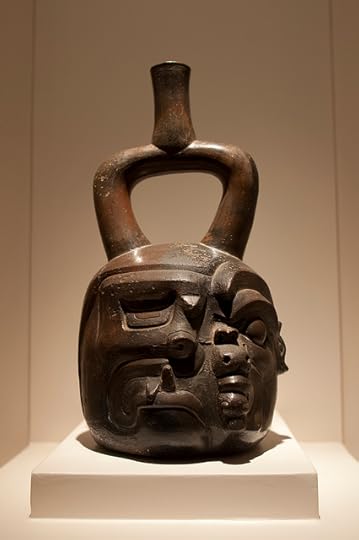 Cupisnique pottery
RESUMING THIS COURSE AUTUMN 2015:
Lecture 7 Paracas—Mummies, Shamans, and Severed Heads✔
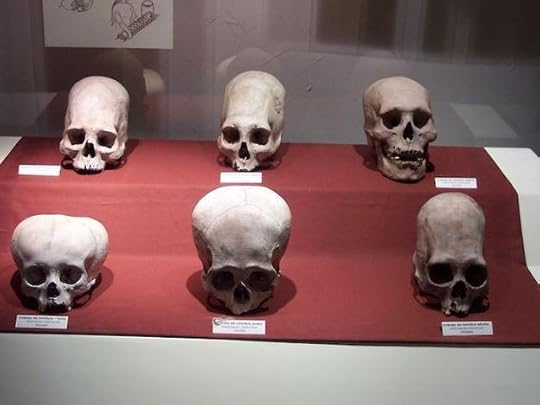
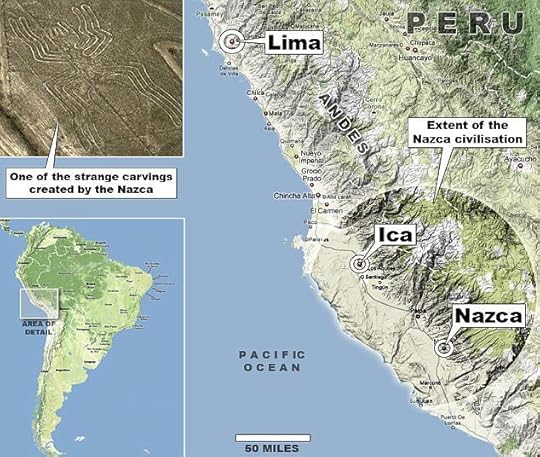
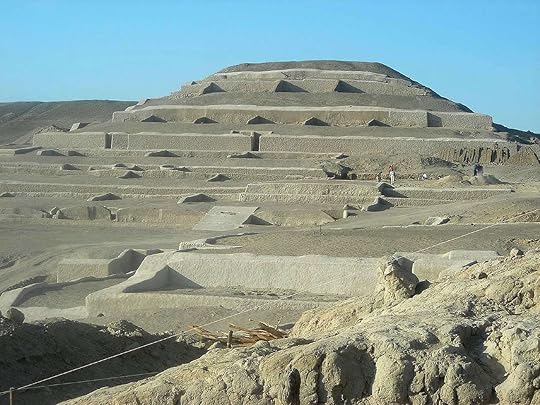
Lecture 8 The Nazca Lines and Underground Channels✔
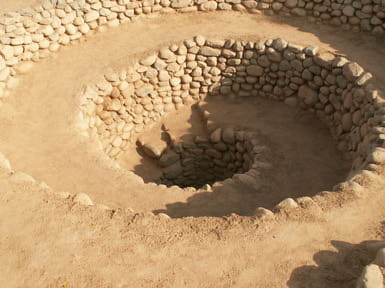 Nasca Culture Aqueduct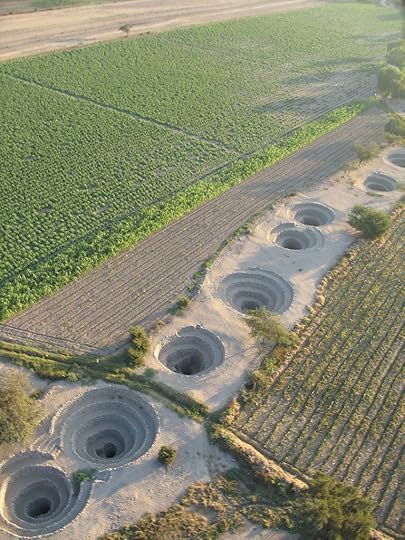
Lecture 9: The Moche — Pyramids, Gold, and Warriors✔
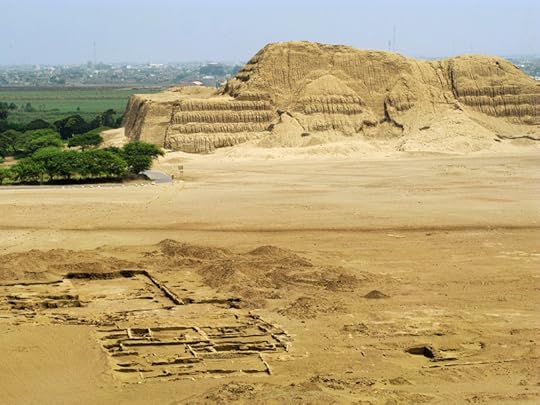
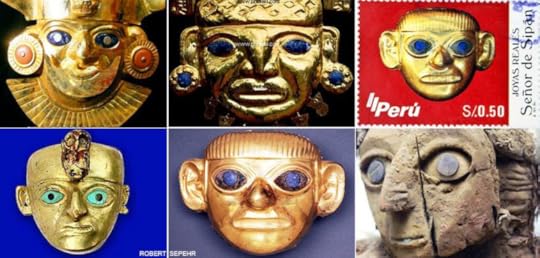
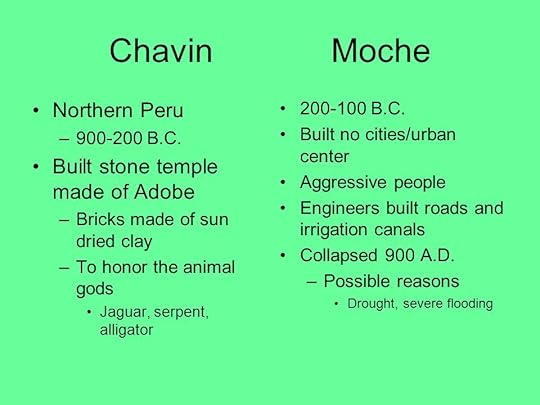
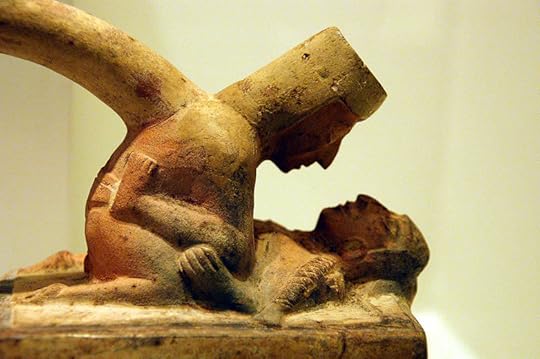
Lecture 10: The Moche — Richest Tombs in the New World✔

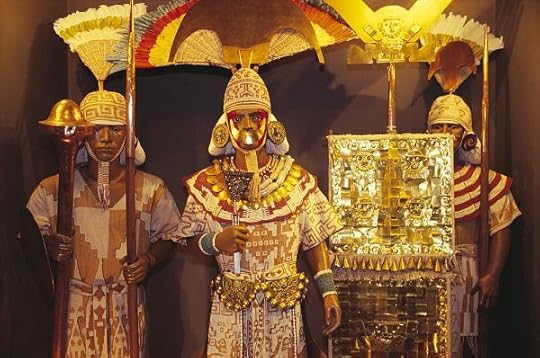
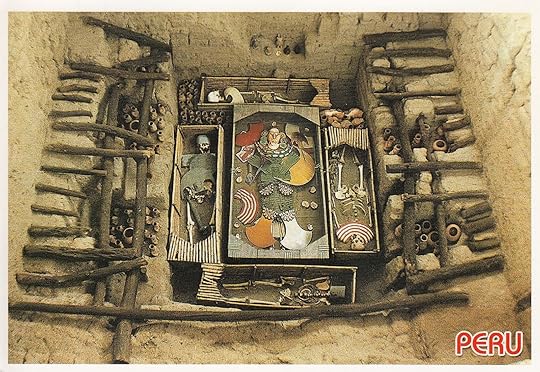 The Lord of Sipán tomb is a Moche culture site in Peru, found intact and untouched by thieves.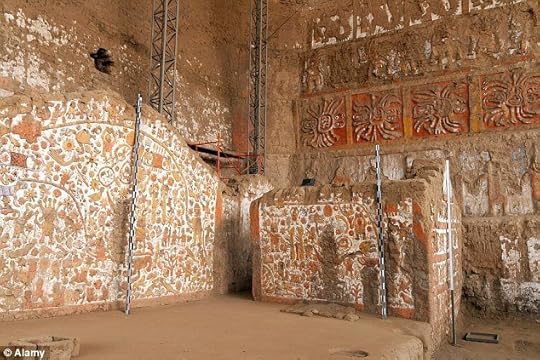
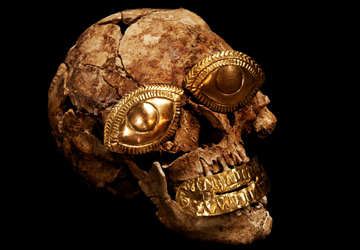
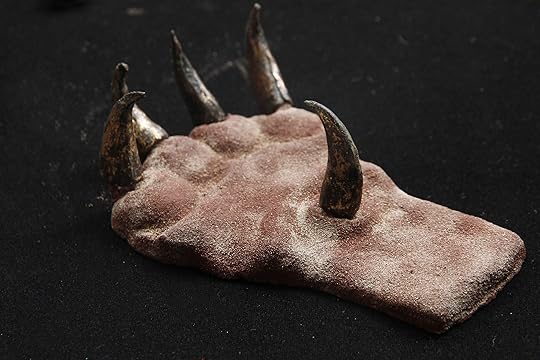
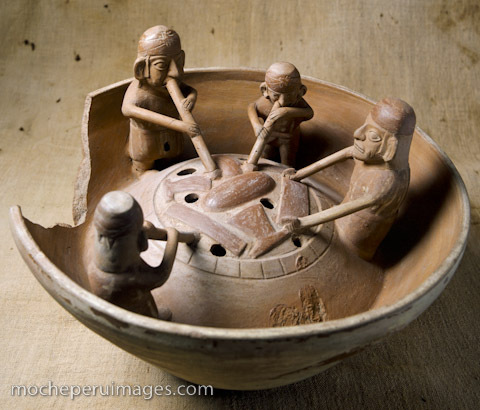
Lecture 11 The Moche—Drugs, Sex, Music, and Puppies✔
 Datura
Lecture 12 Enigmatic Tiwanaku by Lake Titicaca✔
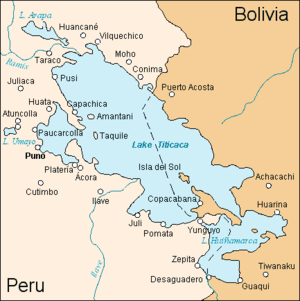
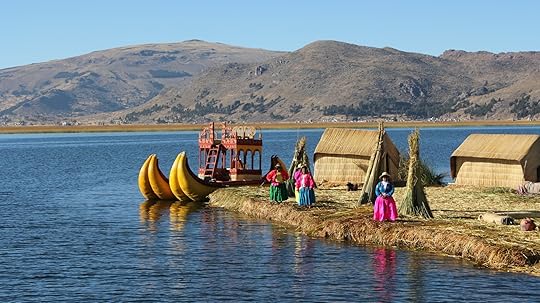
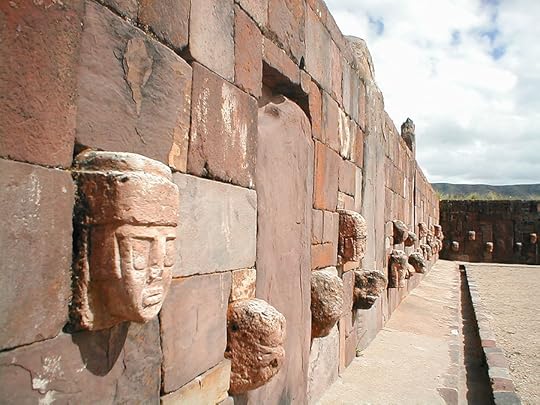
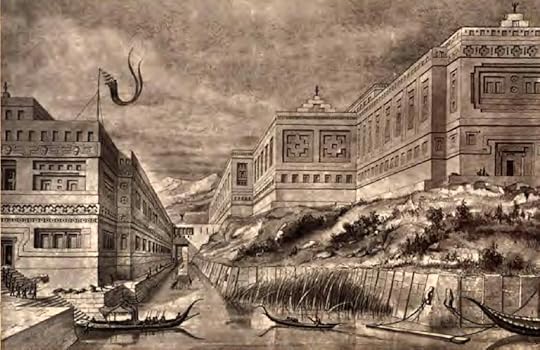 Projected Reconstruction of Tiwanaku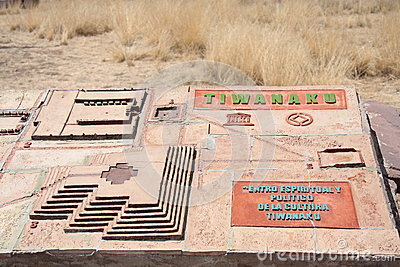
Lecture 13 The Amazon—Civilization Lost in the Jungle✔
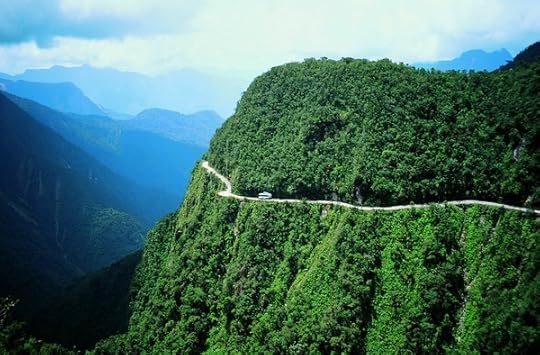 Amazonia Bolivian style
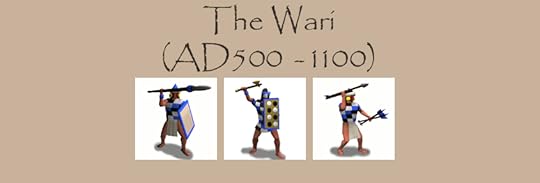
Lecture 14 The Wari—Foundations of the Inca Empire?✔
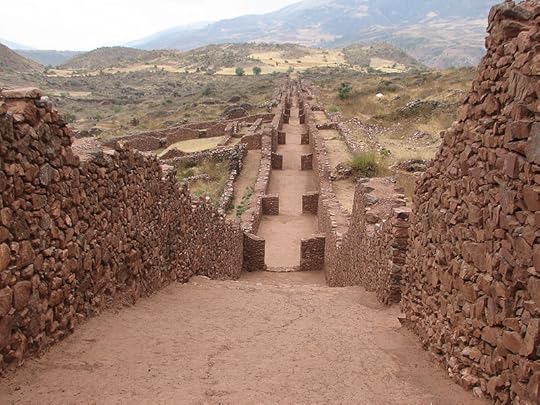
 This pyramid in Lima, Peru was built by the Wari civilization, who pre-dated the Incas.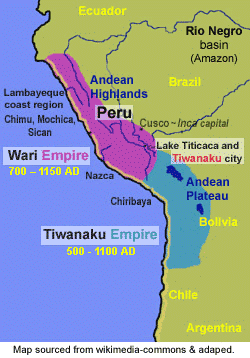
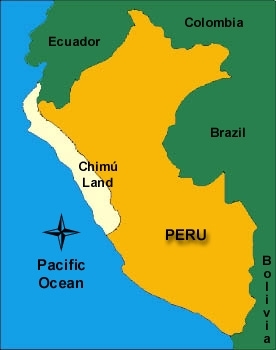
Lecture 15 The Chimú—Empire of the Northern Coast : 900-1470 ✔
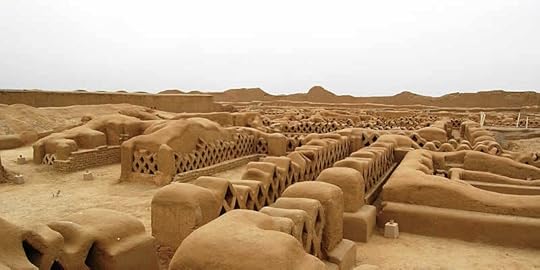
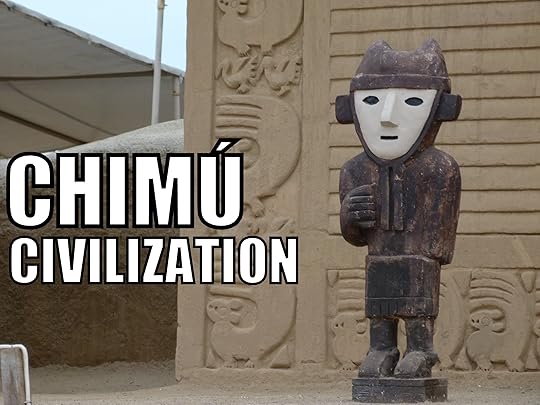
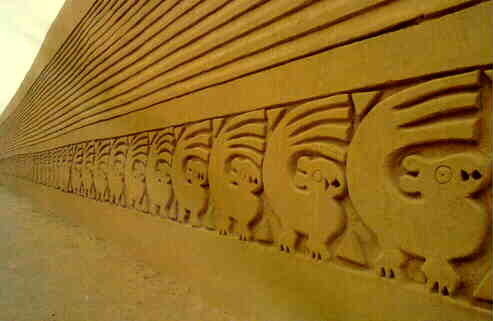
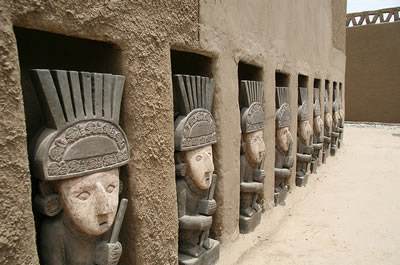 Chimu city of Chan Chan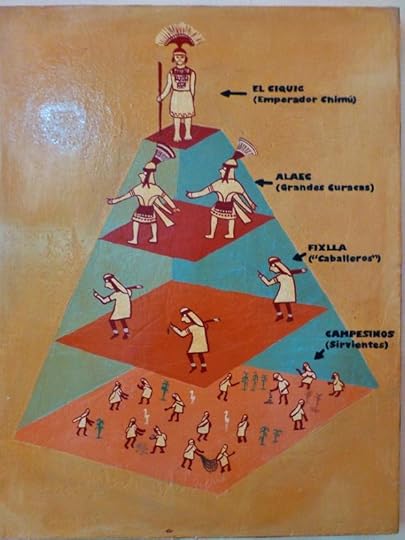
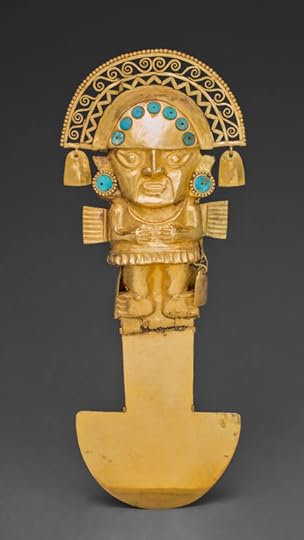 Tumi (decapitating knife)
Lecture 16 The Sican—Goldsmiths of the Northern Coast✔
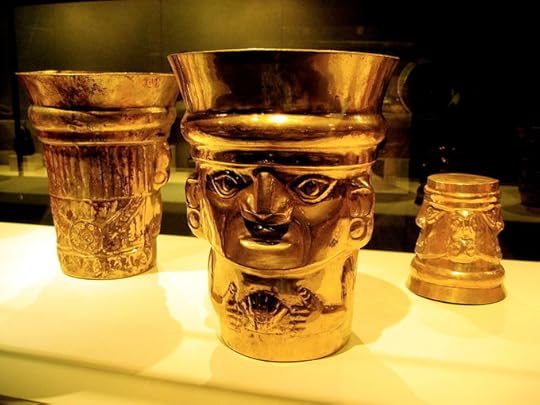
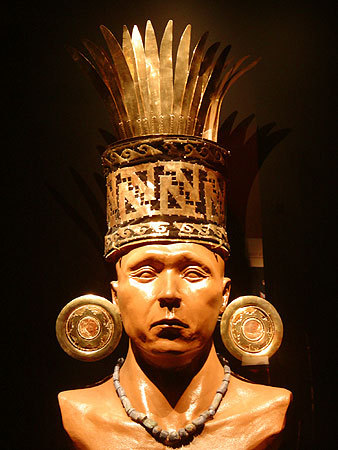
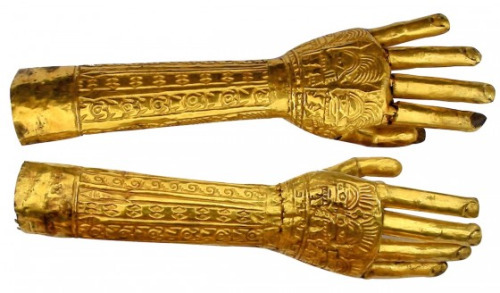

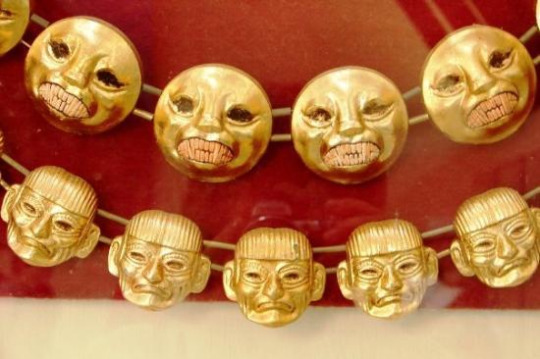
Lecture 17 The Inca Origins—Mythology v. Archaeology: The Inca civilization arose from the highlands of Peru sometime in the early 13th century, and the last Inca stronghold was conquered by the Spanish in 1572.(wiki sourced)✔
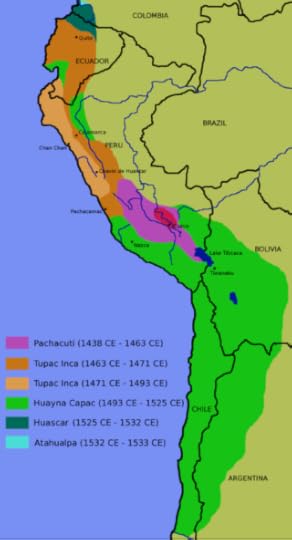
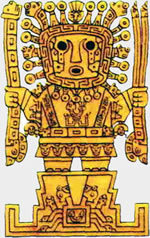
Lecture 18 Cuzco and the Tawantinsuyu Empire✔
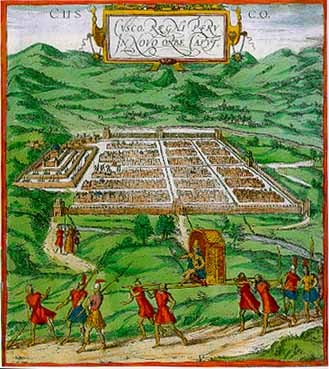 Cuzco 16th century lithograph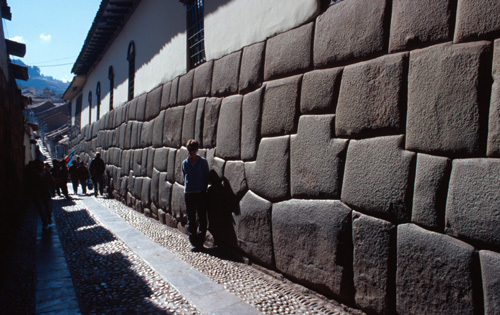
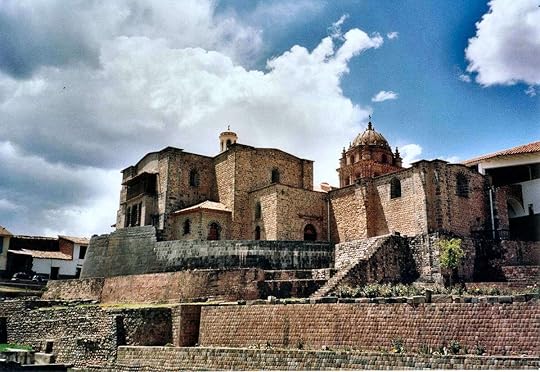 Coricancha (Temple of the Sun)
Lecture 19 The Inca—From Raiders to Empire✔
 Aguas Calientes
Lecture 20 The Inca—Gifts of the Empire✔
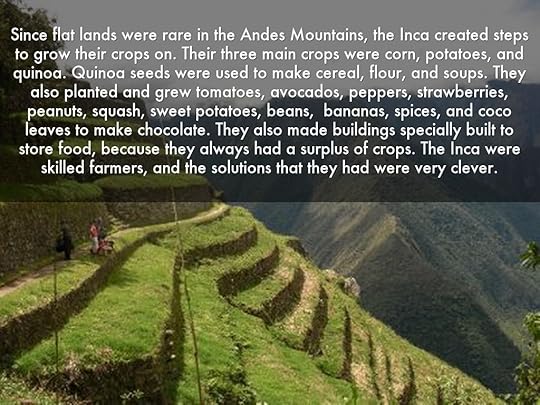
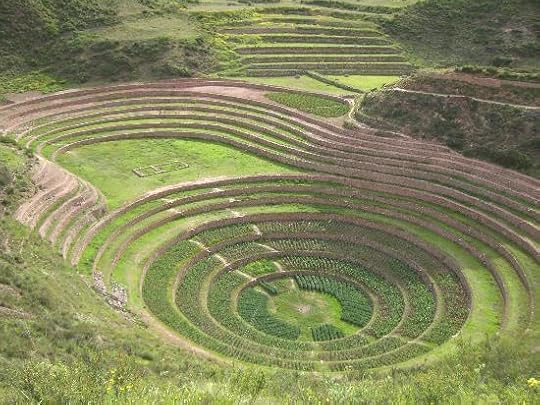 terraces for potatoes and corn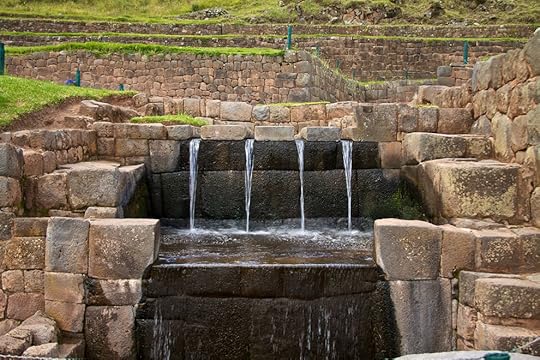
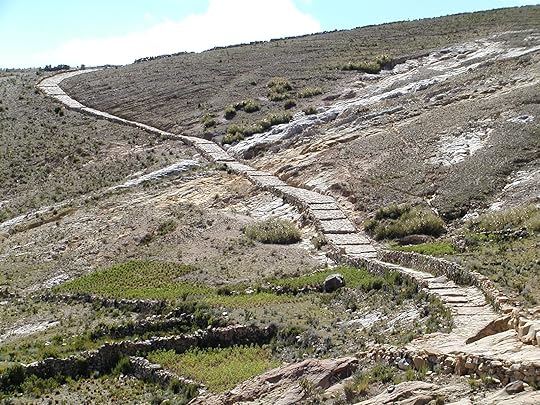
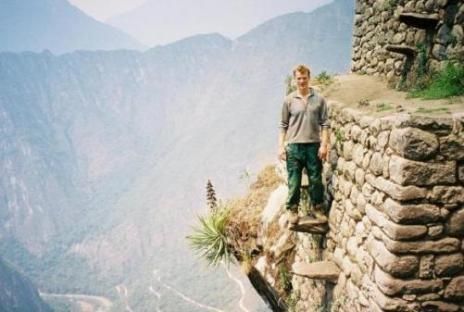
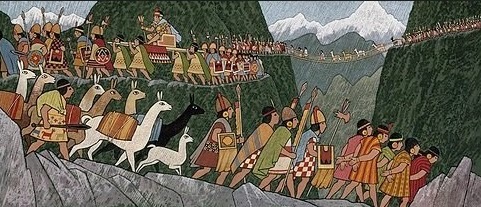 The llamas were trained to use the rope bridges but Spanish horses wouldn't/couldn't be cajoled into passage
Lecture 21 The Khipu—Language Hidden in Knots✔
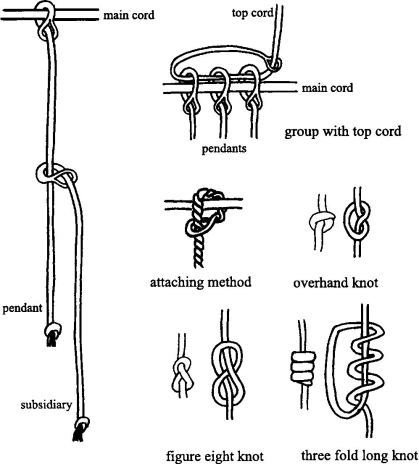
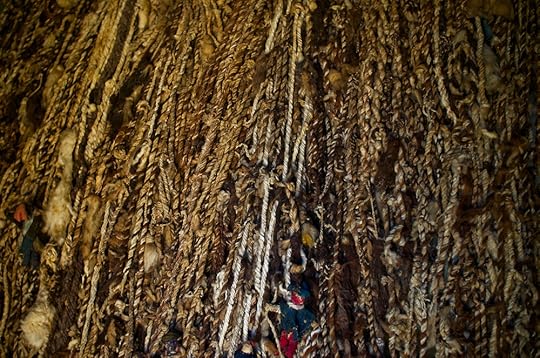
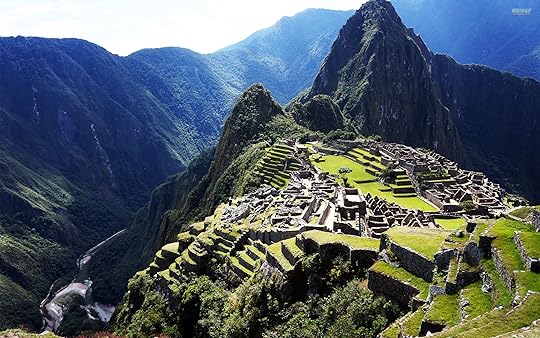
Lecture 22 Machu Picchu and the Sacred Valley✔
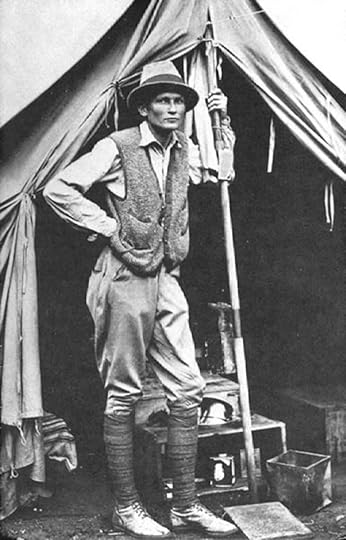 Hiram Bingham III at his tent door near Machu Picchu in 1912
Lecture 23 Spanish Contact—Pizarro Conquers the Inca✔
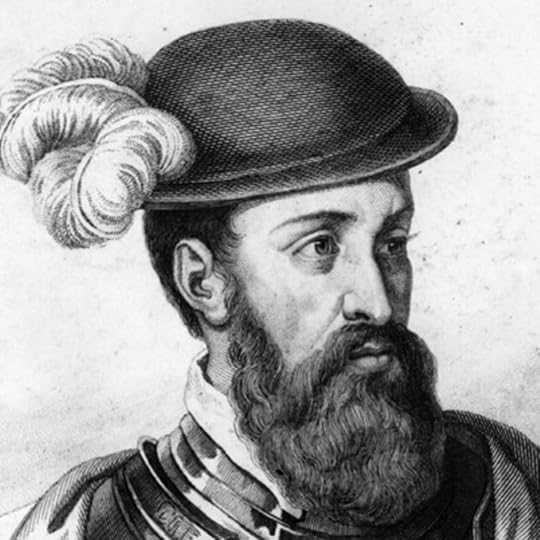 grrr
grrr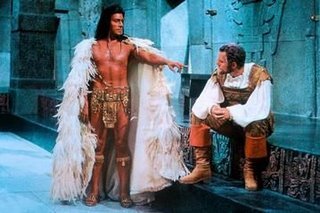 Pizarro meets Atahualpa, from the 1969 film of the play 'The Royal Hunt of the Sun' by Schaffer.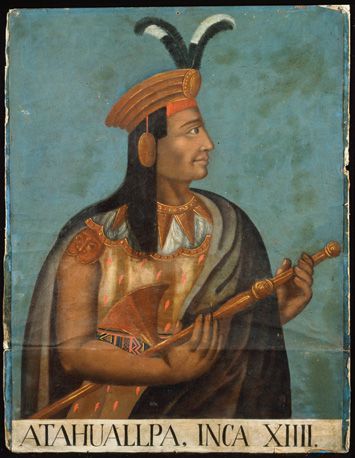
Lecture 24 Remnants of the Past—Andean Culture Today✔
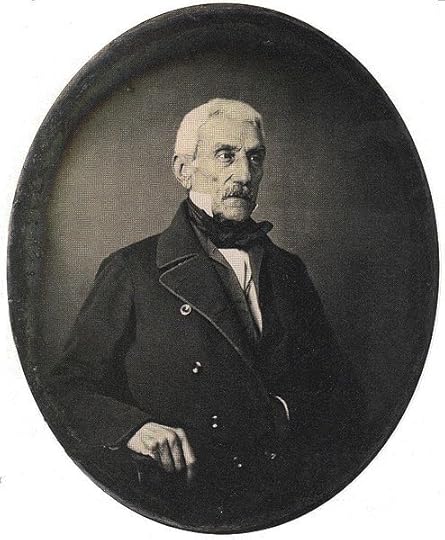 José San Martín and his forces liberated Peru and proclaimed its independence from Spain on July 28th, 1821.
NONFIC NOVEMBER 2015:
CR White Mughals
5* A History of England from the Tudors to the Stuarts
3* Rome and the Barbarians
4* Field Notes From A Hidden City
3* The King's Jews: Money, Massacre and Exodus in Medieval England
CR A History of Palestine 634-1099
3* Charlotte Brontë: A Life
3* The Alhambra
5* A Long Walk in the Himalaya: A Trek from the Ganges to Kashmir
3* Buddhist Warfare
4* A Gathering of Spoons
AB A Brief History of Roman Britain - Conquest and Civilization
4* Victorian Glassworlds: Glass Culture and the Imagination, 1830-1880
3* Food Safari
4* She-Wolves
3* India: A Portrait
2* The Archaeology of Ancient Sicily
5* Classics of Russian Literature
CR The Battle of Salamis
5* Lost Worlds of South America

TTC:
4* History of Science 1700 - 1900
5* A History of England from the Tudors to the Stuarts
TR Secrets of Sleep
TR Turning Points in Modern History
TR Apocalypse
4* Myth in Human History
3* A History of Russia
TR Classic Novels
5* London
4* Re-thinking Our Past
4* The Vikings
5* Lost Worlds of South America
3* Rome and the Barbarians
TR Living the French Revolution and the Age of Napoleon
OH History of Science: Antiquity to 1700
TR Albert Einstein: Physicist, Philosopher, Humanitarian
TR Will to Power: The Philosophy of Friedrich Nietzsche
5* From Monet To Van Gogh: A History Of Impressionism
5* History of the English language
TR The Late Middle Ages
3* Great American Music: Boadway Musicals
5* Classics of Russian Literature

January 5, 2022
Edwin Barnhardt is Great Courses principal expert on the native peoples of North and South America, and in this volume he walks the reader through a primer on the ancient peoples of the far south—people who appear not to have crossed the Bering Land Bridge and who had to invent agriculture and everything else that comes with a civilization all on their own. They were isolated from the rest of the world and had no models to follow—not that that slowed them down. Barnhardt’s tour of these ancient peoples is absolutely fascinating and I quickly discovered that I knew almost nothing about them—especially pre-Columbus. It’s an extraordinary world that we’ve only scratched the surface of.
If you liked this review, you can find more at www.gilbertstack.com/reviews.
If you liked this review, you can find more at www.gilbertstack.com/reviews.

August 4, 2020
Barnhart's Great Course are, well, great. This is the second one of his that I have listened to.
He presents it from the Indigenous population's pov (and boy, he sounds like he, rightly, wants to smack the Spanish).
There is so much here. It was so wonderful. I just wish it was longer.
He presents it from the Indigenous population's pov (and boy, he sounds like he, rightly, wants to smack the Spanish).
There is so much here. It was so wonderful. I just wish it was longer.

November 10, 2019
“While the accepted belief about this topic is this, I think that that is actually more correct.” In this series of lectures, Mr Barnhart absolutely blasted everyone else who has worked in South American archaeology while always suggesting that he really knows what is going on. To be fair, about two other archaeologists get a positive rating and one of them for the reason that the author couldn’t possibly be bothered to go into the Amazon as it doesn’t have cinemas.
Now, I have to say I found a lot of information in this series which I didn’t know before. This was an enlightening experience — especially for the cultures I had not heard about before. But, and this is a very important but, I don’t think Mr Barnhart was presenting a fair and unbiased view. He was advancing his own views and on every topic he covered, he thought he was more correct than everybody else in the archaeological community. Perhaps he is on one of these, perhaps he is on all of these — I can’t say because I really don’t know, but by mostly failing to provide the arguments of the people who think differently, the reader/peruser of this work is left wanting.
So, yes, I don’t mind strong and new theories. I just want these to be explained such that both sides of any argument could be considered. For some of the places that Mr Barnhart talked about, he didn’t even mention any alternative theories — Machu Picchu stands out most because I’ve heard so many of them — which only leads me to think of what else he left out.
This was definitely enlightening and I know more now than before — but I don’t think I would recommend this even so.
This review was originally posted on my blog.
Now, I have to say I found a lot of information in this series which I didn’t know before. This was an enlightening experience — especially for the cultures I had not heard about before. But, and this is a very important but, I don’t think Mr Barnhart was presenting a fair and unbiased view. He was advancing his own views and on every topic he covered, he thought he was more correct than everybody else in the archaeological community. Perhaps he is on one of these, perhaps he is on all of these — I can’t say because I really don’t know, but by mostly failing to provide the arguments of the people who think differently, the reader/peruser of this work is left wanting.
So, yes, I don’t mind strong and new theories. I just want these to be explained such that both sides of any argument could be considered. For some of the places that Mr Barnhart talked about, he didn’t even mention any alternative theories — Machu Picchu stands out most because I’ve heard so many of them — which only leads me to think of what else he left out.
This was definitely enlightening and I know more now than before — but I don’t think I would recommend this even so.
This review was originally posted on my blog.
October 30, 2019
The information presented in this course is generally good, but I disagreed with Barnhart's focus on his own theories. Even though his theories run contrary to the general consensus of the field, he presented his many arguments in detail and only briefly mentioned the opposition's position, giving those views no time or opportunity to present an equal argument. This wasn't a book or academic article where he's meant to make his case, it's a general information course for people with only basic knowledge of the subject matter. I felt it was irresponsible not to present all sides for basic understanding. It made me feel I couldn't trust his objectivity and suspicious of all he said.
I also just have to say that I'm shocked any contemporary academic would still opt to use BC/AD, even after explaining that it's no longer the preferred academic terminology and offering other alternatives. But in an archaeology course dedicated to non-European, non-Christian cultures? To be so blatantly disrespectful to the cultures he's supposedly representing makes me question his ability to put his mindset into that of the indigenous people's, as is required of any decent archaeologist. And for this non-Christian listener, it made me cringe and felt like a slap in the face literally every time he said it.
I also just have to say that I'm shocked any contemporary academic would still opt to use BC/AD, even after explaining that it's no longer the preferred academic terminology and offering other alternatives. But in an archaeology course dedicated to non-European, non-Christian cultures? To be so blatantly disrespectful to the cultures he's supposedly representing makes me question his ability to put his mindset into that of the indigenous people's, as is required of any decent archaeologist. And for this non-Christian listener, it made me cringe and felt like a slap in the face literally every time he said it.
May 12, 2022
The Lost Civilizations of South America became available through audible for me, so I gave it a listen! I have listened to other lectures by Edwin Barnhart, and have enjoyed them
In the Lost Civilizations of South America we travel through time to get a basic grasp on how various cultures thrived and concured the Amazonian jungle.
I always felt that the classes I took in high school left out South America in its curriculum. This course was exactly what I had wanted it to be. It provided archeological and anthropological evidence to share what we know about the Inca's and the precursor Civilizations before them
I do think a huge area we can continue to focus on is asking the indiginous people who still live there about their history and their stories. Barnhart offered several examples where scientests puzzled over things for years, then casually spoke to a local, and got all the answers to their questions. I also appreciate the note that the Inca's legend of the 5 ages of the world, mirror almost exactly what archeology has shown.
I learned alot in this lecture and definitely reccomend it to anyone who likes history!
In the Lost Civilizations of South America we travel through time to get a basic grasp on how various cultures thrived and concured the Amazonian jungle.
I always felt that the classes I took in high school left out South America in its curriculum. This course was exactly what I had wanted it to be. It provided archeological and anthropological evidence to share what we know about the Inca's and the precursor Civilizations before them
I do think a huge area we can continue to focus on is asking the indiginous people who still live there about their history and their stories. Barnhart offered several examples where scientests puzzled over things for years, then casually spoke to a local, and got all the answers to their questions. I also appreciate the note that the Inca's legend of the 5 ages of the world, mirror almost exactly what archeology has shown.
I learned alot in this lecture and definitely reccomend it to anyone who likes history!

December 4, 2020
I did Mr. Barnhart entire American Cultures in reverse I started with Central America than North America and finally South America and I'm glad I did. This is the weakest of the 3, not because I didnt learn anything, I learned more in this lecture series than I ever knew about the cultures of S. America. My problem with this one was that in this one more than any other the lecturer advocated his own views on the subject and keeps on his interpretation. This would not be bad if this was a scholarly work but this is for the laymans and might give an impression of the subject that is not the current consensus.
That is all my criticisms', this is an amazing set of lectures and Im glad I listened to them I learned about more cultures than I ever knew existed, to be fair I only knew Inca/Nazca and thats it. Mr Barnhart is a gifted speaker and a joy to listen to. If all professors had the same joy about their chosen subject the world would be a better place.
Highly Recommend, with the above caveat.
That is all my criticisms', this is an amazing set of lectures and Im glad I listened to them I learned about more cultures than I ever knew existed, to be fair I only knew Inca/Nazca and thats it. Mr Barnhart is a gifted speaker and a joy to listen to. If all professors had the same joy about their chosen subject the world would be a better place.
Highly Recommend, with the above caveat.

September 18, 2022
I would say maybe a bit eccentric. Some of his opinions might be strange but he's the kind of guy who wants to get off the trail and go find stuff. That's what archeology and life is all about. High on my own bucket list is a trip down one side of Latin and South America and back up the other side. Barnhart would be one of those guys who would be of great value in having along. Listening to this course I found myself constantly consulting google maps. So much to see!

October 31, 2022
Expired before I could finish it.

March 29, 2023
The main information I retained is fuck the Spanish

July 19, 2026
As always Barnhart is strong on archaeology but weak on abstract ideas and theoretical reach. Is that because of a lack of evidence and/or his tastes and abilities?

October 15, 2021
I don't think I've read a history book or taken a class that provided more new information than this one. South America really doesn't show up much in either secondary or post-secondary history, and the few impressions I did have of South American civilizations seem ridiculously ethnocentric now.
I also really enjoyed the teaching style/narrator. Looking forward to finding more audio classes in this series.
I also really enjoyed the teaching style/narrator. Looking forward to finding more audio classes in this series.

February 20, 2016
A particularly great series of lectures for those interested in the history and culture of the areas around what is today Peru/Chile/Ecuador and also a little information on the early Amazon cultures. I viewed shortly before an exhibit of artifacts of these early cultures came to Seattle, so I was a double treat to see some of the same things seen on the dvd in person. The author really knows his stuff.

June 6, 2018
Khipus…the original dangling participle?
My lovely bride and I will visit Peru (mostly the standard touristy Cuzco and Machu Picchu) and Ecuador later this summer...and we know little to nothing about South American Archaeology. Professor Barnhart's course offers the highest level survey introduction to the history OF THE ENTIRE CONTINENT (the course is titled, after-all, "Lost Worlds of South America") by examining only the current status of archaeology in the western Andean Peru, Bolivia and southern Ecuador?? Don't get me wrong, this is not meant as a criticism, but what's going on in Argentina, or Paraguay or Chile?
But I digress...The audio version of these lectures is really good. Many of the comments from the video version reviewers pointed out distractions that I could only imagine...but didn't, since the good Doctor's voice seemed clear, and easily understood, following a loose organization that worked for me. The maps and other visuals proved to be a bit of a challenge, but with a little research (and several long pauses for a myriad of visual data available elsewhere) I was able to keep up fairly well.
I was most impressed by the current pace of South American archaeology since it is based almost entirely on iconography...pottery, structures, jewelry and a few knotted knickknacks...as well as tons of C14 age data sets. This is quite a challenge to decipher. Little wonder that Dr Barnhart speculates from time to time...that danged fanged deity does seem to pop up a lot. That's the one thing I'll keep an eye out for when I'm wheezing at Machu Picchu. I won't be admiring the 'melting' of rock contacts, however...maybe a little secondary calcite cementation, but certainly not melting...not in andesites!
And what about those khipus (quipus)? Could they be the Linear B Script of South America? Could these series of knots represent texts that might document history much like the ancient Cretans? Exciting stuff...who needs aliens?
Good to great course...well worth the sale price, with or without a coupon. Recommended!
My lovely bride and I will visit Peru (mostly the standard touristy Cuzco and Machu Picchu) and Ecuador later this summer...and we know little to nothing about South American Archaeology. Professor Barnhart's course offers the highest level survey introduction to the history OF THE ENTIRE CONTINENT (the course is titled, after-all, "Lost Worlds of South America") by examining only the current status of archaeology in the western Andean Peru, Bolivia and southern Ecuador?? Don't get me wrong, this is not meant as a criticism, but what's going on in Argentina, or Paraguay or Chile?
But I digress...The audio version of these lectures is really good. Many of the comments from the video version reviewers pointed out distractions that I could only imagine...but didn't, since the good Doctor's voice seemed clear, and easily understood, following a loose organization that worked for me. The maps and other visuals proved to be a bit of a challenge, but with a little research (and several long pauses for a myriad of visual data available elsewhere) I was able to keep up fairly well.
I was most impressed by the current pace of South American archaeology since it is based almost entirely on iconography...pottery, structures, jewelry and a few knotted knickknacks...as well as tons of C14 age data sets. This is quite a challenge to decipher. Little wonder that Dr Barnhart speculates from time to time...that danged fanged deity does seem to pop up a lot. That's the one thing I'll keep an eye out for when I'm wheezing at Machu Picchu. I won't be admiring the 'melting' of rock contacts, however...maybe a little secondary calcite cementation, but certainly not melting...not in andesites!
And what about those khipus (quipus)? Could they be the Linear B Script of South America? Could these series of knots represent texts that might document history much like the ancient Cretans? Exciting stuff...who needs aliens?
Good to great course...well worth the sale price, with or without a coupon. Recommended!

October 11, 2024
Lost Worlds of South America by Edwin Barnhart is a great course, though a little less so than the Maya course. This one is much lighter on historical narrative, letting archeology and informed social science-y speculation about how they might live. A running theme throughout the course is Barnhart using pictographic information related to religious symbols and practices as a vehicle to suggest that South America worshipped a monotheistic faith centered around the Fanged deity. While I think the common visual depiction is quite neat, I think its probably more likely to be a meta category of how Andean civilization chooses to depict anything divine through anthropomorphic divine jaguar symbolism. Perhaps similar to a halo, though of a very different context. You'll hear Barnhart talk about this heresy a lot - perhaps during half the lectures.
He can get away with it for a couple reasons. The first is he's a talented lecturer and knows his stuff. We're walked through substantial material covering thousands of years of history and a dizzying array of cultures and locations very easily, providing a very firm foundation for the introduction of true narrative history around the time of the Inca conquests. He's good at this. Second, he can also get away with it because there's not as much to know about the South American counterparts to the Maya and Aztecs - which is a shame. The Inca come across as a much better type of empire to live under than the Aztecs ever were, or even the Maya. There's still violence, but it feels more Romanesque.
One of the prescient flags he put in this study had to do with the Amazon, as he said there was quite a lot of research coming out about the region and in ten years there would be a ton more to say. Boy howdy, he was right on that one. I'm hoping the Teaching Company will give him a 6 or 12 lecture course to explore it one of these days.
He can get away with it for a couple reasons. The first is he's a talented lecturer and knows his stuff. We're walked through substantial material covering thousands of years of history and a dizzying array of cultures and locations very easily, providing a very firm foundation for the introduction of true narrative history around the time of the Inca conquests. He's good at this. Second, he can also get away with it because there's not as much to know about the South American counterparts to the Maya and Aztecs - which is a shame. The Inca come across as a much better type of empire to live under than the Aztecs ever were, or even the Maya. There's still violence, but it feels more Romanesque.
One of the prescient flags he put in this study had to do with the Amazon, as he said there was quite a lot of research coming out about the region and in ten years there would be a ton more to say. Boy howdy, he was right on that one. I'm hoping the Teaching Company will give him a 6 or 12 lecture course to explore it one of these days.

February 24, 2022
Over all, I enjoyed this and found the information fascinating. The Khipu rope accounting system especially and I found myself following up on that. I found myself following up on a lot of information.
The potato famine of Ireland, got it's one kind of potato from Peruvian potato farmers, the use of Khipus as badges of office, the dyes used in the weaving and textiles, the ancient walls that remained even after earthquakes in at least two different centuries attesting to their architecture and skill, the burial practices...I want more.
One drawback I noticed was how often the professor speaks of going to Cuzcu and various other cites of ancient history, testing celestial line ups and mound and temple placements. While the answer may be that it's already been checked, I wanted to ask him if the position of the stars, sun, moon and Milky Way all retain the exact same position then as now. Wouldn't that give some explanation for why some things don't line up anymore? At the same time, a few times, things lined up perfectly despite the centuries so I'm not sure if that is a valid question. But he mentioned that archeo-astronomy is not a strongly respected field yet (at time of recording I'm guessing) so I'm curious to see if there are later courses on this world coming out soon.
The potato famine of Ireland, got it's one kind of potato from Peruvian potato farmers, the use of Khipus as badges of office, the dyes used in the weaving and textiles, the ancient walls that remained even after earthquakes in at least two different centuries attesting to their architecture and skill, the burial practices...I want more.
One drawback I noticed was how often the professor speaks of going to Cuzcu and various other cites of ancient history, testing celestial line ups and mound and temple placements. While the answer may be that it's already been checked, I wanted to ask him if the position of the stars, sun, moon and Milky Way all retain the exact same position then as now. Wouldn't that give some explanation for why some things don't line up anymore? At the same time, a few times, things lined up perfectly despite the centuries so I'm not sure if that is a valid question. But he mentioned that archeo-astronomy is not a strongly respected field yet (at time of recording I'm guessing) so I'm curious to see if there are later courses on this world coming out soon.

February 12, 2020
The information provided was excellent, but I didn't particularly like the style of the presenter, thus the 4-star review.
I choose this course as I knew very little about South American cultures, mostly just the Mayans and Incas. I know more now, but there is A LOT more to learn about. As an overview course the information provided a top-level look at known mythology of some groups, as well as the state of the archeology today, including all of the looting, which makes one wonder what has been lost. I ended up not having a favorite lecture as I found all of the information to be interesting.
I agree with a prior reviewer that the presenter does tend to discount offhand other views without fully explaining his reasoning. However, there is a lot of information presented in 24 lectures, so going in depth on these disagreements isn't feasible. There are journal articles and other information available to understand the information and make your own decision if interested.
As I purchased this course through Audible, it came with a ~200 page pdf, which will be very useful for future research and reading.
I choose this course as I knew very little about South American cultures, mostly just the Mayans and Incas. I know more now, but there is A LOT more to learn about. As an overview course the information provided a top-level look at known mythology of some groups, as well as the state of the archeology today, including all of the looting, which makes one wonder what has been lost. I ended up not having a favorite lecture as I found all of the information to be interesting.
I agree with a prior reviewer that the presenter does tend to discount offhand other views without fully explaining his reasoning. However, there is a lot of information presented in 24 lectures, so going in depth on these disagreements isn't feasible. There are journal articles and other information available to understand the information and make your own decision if interested.
As I purchased this course through Audible, it came with a ~200 page pdf, which will be very useful for future research and reading.

January 22, 2021
This was a set of 12 audio CDs, focused on the history of South America before the European invasion (particularly the Andean cultures of modern day Peru and Ecuador). Nowadays, it would probably be a DVD Video set or even a download meant to be viewed. I mention this because most of this history is extrapolated from an analysis of archaeological sites scattered across northern South America.
Unfortunately, archaeological remains do not lend themselves comfortably to an audio format. A video format including maps and photos of various sites would be much more helpful. I wish I could have seen the Jaguar god described by the author, and the farming arrangements of the various societies. I wish I could have seen an example of the Khipu (the Inca language embedded in knots). I probably missed half the content of the lectures because I listened instead of looked.
I've given these lectures 3 stars because the content interested me and opened up the subject of South America before westerners invaded, but I don't recommend it in audio form. View it online or download the video version...
Unfortunately, archaeological remains do not lend themselves comfortably to an audio format. A video format including maps and photos of various sites would be much more helpful. I wish I could have seen the Jaguar god described by the author, and the farming arrangements of the various societies. I wish I could have seen an example of the Khipu (the Inca language embedded in knots). I probably missed half the content of the lectures because I listened instead of looked.
I've given these lectures 3 stars because the content interested me and opened up the subject of South America before westerners invaded, but I don't recommend it in audio form. View it online or download the video version...

January 13, 2019
A fascinating Great Courses lecture series, Lost Worlds of South America, by Edwin Barnhart, delivers a solid presentation on the history of Ancient South America. The focus is primarily on the Peruvian coastal region, its river valleys and around Lake Titicaca; rarely deviating from this geography. Only one course ventures into the Amazon Basin. However, this is only because the archaeological and historical understanding of ancient South America has, to date, been almost entirely focused on this area. Much work still needs to be done before a greater understanding of the ancient history in other South American regions can be understood. However, what is known, is covered in depth by Barnhart. Unafraid to deliver controversial opinions (such as his firm confidence in the monotheistic version of the great-fanged deity), he sometimes seems a bit conspiratorial in nature, but somehow remains in the bounds of true science through it all. Highly recommended!

December 5, 2024
The Great Courses lecture series has some great entries, and this one in particular really shines as a fascinating listen about a part of world history that is clearly not as widely known as things like European and Egyptian history.
Lost Worlds of South America was released in 2013 and the archeological discoveries are happening at great pace in South America, but it is a brilliant, easy to follow introduction to some of the ancient people focused around the Andes mountain range. It will take you from some of the very earliest evidence of humans in the Americas and some of the earliest and most of advanced city builders in the world, through to the end of the Inca Empire. The Inca may be a fascinating subject on their own, but the Andes and the surrounding area, be that inhospitable desert or dense Amazonian rainforest has so much more just hiding below the surface!
Lost Worlds of South America was released in 2013 and the archeological discoveries are happening at great pace in South America, but it is a brilliant, easy to follow introduction to some of the ancient people focused around the Andes mountain range. It will take you from some of the very earliest evidence of humans in the Americas and some of the earliest and most of advanced city builders in the world, through to the end of the Inca Empire. The Inca may be a fascinating subject on their own, but the Andes and the surrounding area, be that inhospitable desert or dense Amazonian rainforest has so much more just hiding below the surface!

January 1, 2019
This was a exploration of a part of world history that is still being discovered today--South America. Even four years ago, a major assumption about which civilization was the founder and which was the follower has been overturned. We are right now in the middle of overturning our understanding of Amazonian cultures. Plus, any discussion of the city of Teotihuacan (ancient Mexican city) raises more questions than answers, it's so far advanced for the technology of the time. So, there are a lot of interesting ideas. And the centerpiece of this story is the Incan empire, which I was fascinated with as a child. If you're into history and stories of empires built and lost, then you'd like this one.

June 18, 2017
I read this book prior to a trip to South America and it most definitely heightened my experience by providing me with a much broader background knowledge of the cultures of the continent. It also provided me with a much stronger knowledge of the sophistication and extent of the many civilizations that thrived in South America for thousands of years. Having a background in the ancient languages and cultures of both the ancient Near East and South Asia, and having some experience with Egyptology, this course expanded my knowledge base of the ancient world and sparked by interest into exploring the history of both South and North America in greater depth.

August 17, 2019
Another delightful tour though the history of the Western Hemisphere. This does not cover the entirety of South America, despite the title, but focuses on the Andes and west coast. It is also pre-Colombian. Although the Amazon is mentioned there have been very few finds that could be used to help decipher the past in that area. For the area covered there is much learned from questions being raised about accepted theories on human migration to the destruction of civilizations by the climate to the normal human conquests and migrations. There is much more to the history of the area than the Incas and their conquest by the Spanish.
August 27, 2024
This course got my attention not only to ancient history in Peru, but introduced me to a format of learning I still use to this day. This was the first of the Great Courses I ever encountered, and I am delighted to have crossed paths with this series. Dr. Barnhart was inspiring, and able to educate on subject matter higher than I should have been able to comprehend at the time. This course will always hold a special place on my "shelf", and in my heart. Even though I ended up choosing to pursue a career in science, history has always been a love of mine, one the Great Courses have helped me continue to nurture into adulthood. Thanks, Dr. Barnhart.

March 10, 2019
Really interesting lecture series. We Westerners tend to treat European history as the sum total of relevant earthly history, but the Roman Empire wasn't the only massive Empire that rose and fell in the ancient world. I was also delighted to find that the Inca were socialist as fuck and that the system worked well until the Europeans showed up to rape, murder, and pillage cultures all over the Americas. There it's so much to know, and this lecture only scratches the surface, as it must with such a broad and varied collection of cultures to touch on.

September 27, 2019
A good overview of South American history. The professor who taught this was interesting, had obvious expertise in the area and was passionate about it.
I don't know how much might have been left out because I have a sad American education that doesn't focus on anything except the "rah rah Murika" outlook, and I never sought personal reading on the subject unlike Europe, Japan and Egyptian history.
I appreciated what I got from it though, and I definitely recommend it as a source for those interested in reading about South America.
I don't know how much might have been left out because I have a sad American education that doesn't focus on anything except the "rah rah Murika" outlook, and I never sought personal reading on the subject unlike Europe, Japan and Egyptian history.
I appreciated what I got from it though, and I definitely recommend it as a source for those interested in reading about South America.
Displaying 1 - 30 of 74 reviews