Jump to ratings and reviews
Rate this book

El Zahir

Rate this book
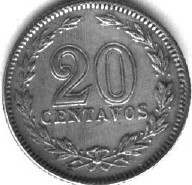
Cuento "El Zahir", de Jorge Luis Borges, originalmente publicado en el libro El Aleph, en 1949.

8 pages, ebook

First published January 1, 1949

5 people are currently reading
224 people want to read

About the author

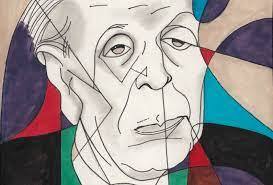
Jorge Luis Borges

1,605 books14.5k followers
Jorge Francisco Isidoro Luis Borges Acevedo was an Argentine short-story writer, essayist, poet and translator regarded as a key figure in Spanish-language and international literature. His best-known works, Ficciones (transl. Fictions) and El Aleph (transl. The Aleph), published in the 1940s, are collections of short stories exploring motifs such as dreams, labyrinths, chance, infinity, archives, mirrors, fictional writers and mythology. Borges's works have contributed to philosophical literature and the fantasy genre, and have had a major influence on the magic realist movement in 20th century Latin American literature.
Born in Buenos Aires, Borges later moved with his family to Switzerland in 1914, where he studied at the Collège de Genève. The family travelled widely in Europe, including Spain. On his return to Argentina in 1921, Borges began publishing his poems and essays in surrealist literary journals. He also worked as a librarian and public lecturer. In 1955, he was appointed director of the National Public Library and professor of English Literature at the University of Buenos Aires. He became completely blind by the age of 55. Scholars have suggested that his progressive blindness helped him to create innovative literary symbols through imagination. By the 1960s, his work was translated and published widely in the United States and Europe. Borges himself was fluent in several languages.
In 1961, he came to international attention when he received the first Formentor Prize, which he shared with Samuel Beckett. In 1971, he won the Jerusalem Prize. His international reputation was consolidated in the 1960s, aided by the growing number of English translations, the Latin American Boom, and by the success of Gabriel García Márquez's One Hundred Years of Solitude. He dedicated his final work, The Conspirators, to the city of Geneva, Switzerland. Writer and essayist J.M. Coetzee said of him: "He, more than anyone, renovated the language of fiction and thus opened the way to a remarkable generation of Spanish-American novelists."

Ratings & Reviews

What do you think?
Rate this book

Friends & Following

Create a free account to discover what your friends think of this book!

Community Reviews

5 stars
120 (38%)
4 stars
119 (38%)
3 stars
56 (17%)
2 stars
13 (4%)
1 star
5 (1%)
Displaying 1 - 21 of 21 reviews
Profile Image for Gaurav Sagar.
203 reviews1,753 followers
August 8, 2024


The Borgesian world is always full of bizarre and weird surprises, as we expect from the literary master. But what appear to be unusual and mystifying affairs at the surface, on careful study turn out to be not so unfamiliar with our world, though it requires a thorough and considerate approach from the reader. The question may pop up out of obscurity to blunt your argument that why the author crafted complex and oblong sentences. Perhaps the answer lies in the basic fabric of Borgesian literature, for it is a philosophical exercise wherein surreal fantasy elements are tightly weaved with our myths, superstitions and legends to produce complex stories (that read more like poetry or essays) which make you think and work with the text, at times to look into your own abyss and darkness, and sometimes to amaze in awe at the entire universe contained in those stories.


Jorge Luis Borges has been a prolific powerhouse, throughout his career, which spawned universes (which in turn may branch off to multiverses) of insane possibilities, for the fantastical element of his literature lies in stretching the normal to abnormal levels. The uni(multi)verses churned out of the cerebral faculty of Borges deal with identity, mazes, labyrinths, myths, existential anxieties and angst, and our inherent skepticism towards the world we live in, wherein the ideas themselves are perhaps not so essential as the way they vibrate over all possible the contradictions to push the limit between possibility and impossibility. The beauty of his literature lies, as of all the great literature, in the exploration of raising our sense of ordinary to extraordinary where all possibilities and impossibilities are explored without conforming none. His literature takes us to a domain wherein the boundaries between most of the (preconceived) binaries are blurred to see the universe in the most fundamental and essential spirit, the fact and fiction, existence and non-existence, good and evil, pain and pleasure, light and dark, all coalesce into a single continuous being in which universe is one and one is universe.


It is rather known fact that man is slave to his desires but the analytical ability of human brain has benefited him to fulfill those longings but what happens when the rational capability of our brain becomes irrational, and our simple desires transforms into obsessions whose memories only aggravate with time rather than otherwise. There lies a thin and somewhat blurred line between possession and obsession as it might cloud our consciousness, even when it means that an innocuous looking coin becomes the essence of our existence, and we may get transformed into someone else or something else. Our soul might cry from depth of non-existence unable to break free the unease of being a servant to our obsession as if we ourselves have become that coin itself, Borges, the narrator of the story finds himself chained in the shackles of his fixation and the world appears quite bleak and Kafkaesque, he goes through a sort of existential crisis wherein his identity gets muddled and there seems to be nothing available in the entire world to assuage his weeping soul. There may be quite a variegated inspirations to our obsession ranging from our desire to be perfect and absolute (though we know no man is free of sin) to various myths; and some of these myths, legends and superstition have the terrible property of being unforgettable and whose image finally drives one mad, all these things are categorized as ‘The Zahir’.


link: source


It is as if one has chosen these ‘Zahir’ possessions for oneself, rather these ‘Zahir’ have chosen oneself as if it’s will of the universe. Borges, the narrator argues that money is abstract (contrary to the popular opinion) and is fluid and full of possibilities so that it may be transformed anything as the narrator’s coin changed him into something, perhaps the coin is the ‘Zahir’ which chose the narrator. Borges, the narrator and the author discuss various legends and myths, from different traditions, that became ‘Zahir’ and there seems to be no way to get away from these Zahir as if they are symbols of some supreme being. Borges, the narrator creates distractions too to get away from the unease the coin- ‘The Zahir’ sets in his soul and shakes him to the core but nothing seems to unshackle him from these psychological chains. It reminds me of essence of literature or art in general, for that matter; isn’t it that all our art forms are the distractions we have created for ourselves to withstand our angst and anxiety towards life and thereby to brave our existential ordeal.


The question here arises is that would our narrator, Borges be able to rise from the dungeons of non-existence and nothingness to get his soul free from the effect of his ‘Zahir’- the twenty centavos coin and thereby to define his life (perhaps authentically) or as it is maintained in Sufi tradition of Islam, he will lose himself to become one with the ‘Zahir’. The prose is written with a poetic touch and is full of allusion to historical myths and legends, wherein the reader will be always kept on toes for suspecting the intention and plan of an author. According to Idealist doctrine the verbs to live and to dream are rigorously synonymous; as for me, thousands of appearances will become one; a very complex dream into a simple one. Others will dream that I am mad, while I dream of the Zahir. When every person on earth thinks, day and night, of the Zahir, which will be dream and which reality, the earth or the Zahir?


The story raises the profound questions of ‘free will’ and existence as it is mentioned in it that money is abstract and may get transformed into anything and therefore represent our ‘free will’. It reflects the fascinating tussle between our ‘free will’ and determinism, we have a proud feeling that we have complete autonomy over our decisions but is it not that our past, memories, upbringing and environment affect our decisions, therefore, our ‘free will’ may not be absolutely free. Another intriguing prospect arises to life here that do we have any control over our world or actions, or there is someone codified information or desire in our universe as per which we have to act. So, do we live in a real world or is it just a simulation wherein someone else takes or directs decisions in the pretext of our ‘free will’. The fantastical story of ‘The Zahir’ also underlines the concept of oneness of the universe, it argues that the visible world is implicit in every sense just like the will and contains universal history as if it is entire universe. It implies that we are one with the universe in a sense that we are just cogs in this grand universe but are microcosms which are symbolic mirrors of the universe, we are the universe.


We see an inevitable comparison of Borges’s universe to that of Kalfa as the influence of Kafka is evident in his literature. However, the treatments and reactions to the absurd worlds they create are somewhat different. While the man of Kafka’s universe struggles to grapple with incomprehensible, ominous situations wherein the world seems to fall unto itself, the Borges seems to rise above the distinction between the various elements of universe to an abstract level to accept them as one. The story demands you-the reader- to lose yourself in the world of Borges to understand it fully. We read Borges sometimes to enhance our understanding of the universe but, more often that not, to see his world reverberating and echoing our own universe as if his literature is mirror which reflects us.


link: source

Who am I
Or perhaps What am I.
I am not sure,
If I know myself,
I am all the people met,
all the literature,
I have read.

I am all the things,
I loved,
all the things,
I hated,
for that matter.

I am all the passions,
I hold in my chest,
all the thoughts,
I have borrowed,
which keep ringing in my head.

I am the soul,
I keep searching for,
all the fears,
I keep encountering on.

I am all the edges,
I hold upon,
the fringes I live on,
the games I play on,
the roles I drape on.
I am all the successes,
I found along the way,
all the failures,
I went through,
I am all the dreams,
I dreamt on,
all the imaginations
I kept building on,
and perhaps will keep till eternity.

I am the music,
I heard,
all the silences,
which kept speaking to me,
about the unspeakable,
I could not foresee.

I am the roads,
I travel,
the places,
I keep on visiting,
all the destinations,
keep missing in the process.

I am all the facades,
I keep pretending on,
all the candour,
I fail to display.

I am all the pleasures,
I come across,
the moments of joy,
I swim in,
all the tears,
I try to conceal.

I am the essence,
I keep,
the life bestowing upon,
the absurdness,
life keeps bringing on.

I am not sure,
If I know myself,
I am not certain,
If I exist,
perhaps I am nothing,
probably I am everything,
I am the life,
I am the death,
I am what the universe is,
I am the universe.


Profile Image for Paul LaFontaine.
652 reviews6 followers
January 20, 2019
The author receives change after paying for a drink and realizes one of the 20 cent coins in his change is a zahir, an object that can create an obsession. The coin captures his attention, and in self defense he decides to get rid of it. Even without it he cannot stop thinking about it until he can no longer function in reality as dream and reality become one.

An excellent read, big idea with crisp execution. Only a bit light on character. The end is fantastic, the zahir being an example of how we call live in a dream world of obsession and the objects in our lives capture our attention based on our story about them. Powerful end.

Highly recommend
Profile Image for Mahdie.
96 reviews26 followers
November 1, 2017
تنیسون می گفت که اگر ما فقط یک گُل را درک کنیم آنگاه درک خواهیم کرد که خود که هستیم و دنیا چیست. شاید چیزی که او می کوشید بگوید این بود که در دنیا هیچ چیز، هر اندازه هم بی اهمیت، نیست که دلالت بر تاریخ جهان و وابستگی متقابل زنجیره ی بینهایتِ علت و معلول های آن نداشته باشد. شاید هم چیزی که می خواست بگوید این بود که کل جهان مرئی را در هر تصویری می توان دید، همانطور که شوپنهاور می گوید اراده، تمامیت خود را در هر مرد و زنی بیان می کند. کابالیست ها بر این باور بودند که انسان یک جهان کوچک است، آیینه ی نمادین تمامی جهان؛ اگر حرف تنیسون را باور کنیم، هر چیز همه چیز است، حتی آن ظاهرِ تحمل ناشدنی.

Profile Image for Ivan Perdomo.
138 reviews8 followers
January 26, 2018
Es un cuento dentro del Aleph que relata sobre el Zahir, que es una especie de Dios y que Borges vive como un sueño y que le hace vivir una experiencia mitica.

Un cuento bastate extraño cargado de detalles y que refleja a su vez la increíble imaginación del autor a la hora de relacionar ficción con realidad, y su relacion con la historia
Profile Image for Gio Mikava.
49 reviews
April 11, 2025
ბორხესისთვის ფურცლის ნაგლეჯი რომ მიგეცათ, იქაც დაატევდა უამრავი აზრით გატენილ მოთხრობას.
Profile Image for Alex Gracia.
142 reviews24 followers
February 19, 2022
"Notorio, visible, manifesto", qué increíble es este cuento y que compleja la forma de pensar de Borges, agradecido con el de arriba por este cuento 🥲.
Profile Image for Jaap Zeldenrust.
3 reviews2 followers
January 25, 2016
Veel van Borges' verhalen volgen hetzelfde stramien, waarin het verhaal z'n eigen aannamen ongeldig maakt. Toch gaat dit geen moment vervelen, omdat die aannamen zo vanzelfsprekend lijken dat hun omkering telkens verrast. In zekere zin zijn deze verhalen bewijzen uit het ongerijmde. Ze vertellen over hoe geheugen niet werkt, of over hoe oorzakelijkheid niet werkt, of hoe het consumeren van verhalen niet werkt.

Er zijn allerlei dingen die lezers vaak waarderen, die in het werk van Borges vrijwel ontbreken. Verwacht geen uitgewerkte, sympathieke karakters of realistische, naturalistische verhaallijnen. De karakters van Borges zijn contouren of archetypen, z'n verhaallijnen zijn expliciet kunstmatig. Veel van de verhalen hebben een centraal thema dat je alleen leert kennen door de ruimte eromheen. Als je jezelf graag onmogelijke vragen stelt, als je suggestie en dubbelzinnigheid interessanter vindt dan duidelijkheid en verhalen met een kop en een staart, dan zijn de verhalen van Borges verplichte kost.
Profile Image for Juan Bernal.
164 reviews13 followers
December 23, 2023
Undécimo cuento de El Aleph

El Zahir se presenta como una especie de visión ominosa que lleva a la locura a todo aquel que la experimenta.

En el caso de Borges, es una moneda con la que no puede dejar de pensar. Pero relata que, al descubrir un manuscrito que recoge experiencias pasadas con El Zahir, existen multitud de formas que ha ido teniendo en el pasado: un tigre, un astrolabio, un ciego en una mezquita...

Me ha parecido además muy interesante la versión que tiene sobre el dinero, no como algo material, sino como una infinidad de posibles futuros, haciendo referencia a que ese dinero no es algo físico sino una experiencia potencial a la que puedes acceder con él, y que no conocerás hasta que la experimentes.
Profile Image for emily .
88 reviews2 followers
October 29, 2024
A Zahir is an Islamic belief that the external properties of something represent a deeper meaning. In Sufism, it refers to one's outward behavior. It is also another name for God in Islam, and there are 99 total names for God. In Islam, they do not believe in physical representations of God, but do believe in concepts like Zahir, which can represent God. In this, a Zahir is an object that becomes permanently fixed in someone's mind. They can't think about anything else. They go mad and many end up debilitated. There can only be one active Zahir in the world at one time. Here it was a coin with a symbol etched into it. Borges leans into the Islamic meaning of Zahir, believing that if he thought about the coin endlessly, he will forget it. Just like in Islam, a appreciation of their God is to say their name or the 99 names of God until it becomes "meaningless".
Profile Image for Valentina Palavecino.
19 reviews1 follower
February 20, 2025
En El Zahir, Borges explora la obsesión y la naturaleza de lo infinito a través de un objeto aparentemente común: una moneda que, una vez vista, consume por completo la mente de quien la posee. El narrador se ve atrapado en un ciclo de pensamiento del que no puede escapar, cuestionando la realidad, la memoria y la percepción.
Profile Image for Alexander Solís.
12 reviews
May 18, 2025
El primer cuento que leo de Borges. Una prosa hermosa y una profundidad que me da envidia.
Envidia también me da pensar en que pueda existir un Zahir.
Ojalá el mío no sea una moneda, preferiría un tigre.
La idea de una obsesión condenadora y a la vez redentora es más lógica de lo que hubiera imaginado.

"Quizás, detrás de la moneda esté Dios"
Profile Image for Mabi.
324 reviews
January 26, 2018
Hay momentos en que pienso que Borges está cambiando de tema y se está saliendo de la tangente, para luego asombrarme que él va ligando todo al mismo tema, de una manera espectacular, y sabia. Realmente Borges es un hombre sabio. Zahir es muestra de ello.
Profile Image for linda.
123 reviews5 followers
February 26, 2025
Pérdida de detalles, pierdes vida por obsesionarte en un zahir. El zahir contiene todo el universo. Take care..

"El dinero es abstracto, repetí, el dinero es tiempo futuro".

"Ya no percibiré el universo, percibiré el Zahir". Trascendencia después de la muerte, unsueño muy simple
Profile Image for Greg.
Author 3 books40 followers
September 9, 2022
One of us ought to have the inkling to engrave the following generation's Zahir onto a human iris, coloured blue, scratched very beautifully in the omniverse.
Profile Image for Verano por siempre.
144 reviews4 followers
May 9, 2022
Como todos los cuentos de Borges, más de una lectura es necesaria para entender su brillante narración.
Displaying 1 - 21 of 21 reviews

Can't find what you're looking for?

Get help and learn more about the design.