The Brute by Joseph Conrad is a novella that tells the story of a sailor named James Wait, who is known for his brutish and violent behavior. Wait is hired by a wealthy shipowner named Mr. Jacobus to work on his yacht, the Narcissus, which is set to sail from England to South America. Despite his reputation, Wait is initially well-behaved and even becomes friendly with some of the other crew members. However, as the voyage progresses, Wait's violent tendencies begin to resurface, and he becomes increasingly unstable. The crew becomes fearful of him, and tensions rise as they struggle to maintain order on the ship. The story explores themes of violence, power, and the dangers of unchecked aggression. Ultimately, The Brute is a gripping tale of psychological suspense that showcases Conrad's skill as a master storyteller.What's madness? Only something just a tiny bit wrong in the make of your brain. Why shouldn't there be a mad ship--I mean mad in a ship-like way, so that under no circumstances could you be sure she would do what any other sensible ship would naturally do for you. There are ships that steer wildly, and ships that can't be quite trusted always to stay; others want careful watching when running in a gale; and, again, there may be a ship that will make heavy weather of it in every little blow. But then you expect her to be always so.This scarce antiquarian book is a facsimile reprint of the old original and may contain some imperfections such as library marks and notations. Because we believe this work is culturally important, we have made it available as part of our commitment for protecting, preserving, and promoting the world's literature in affordable, high quality, modern editions, that are true to their original work.
Joseph Conrad was a Polish-British novelist and story writer. He is regarded as one of the greatest writers in the English language and, although he did not speak English fluently until his twenties, he became a master prose stylist who brought a non-English sensibility into English literature. He wrote novels and stories, many in nautical settings, that depict crises of human individuality in the midst of what he saw as an indifferent, inscrutable, and amoral world. Conrad is considered a literary impressionist by some and an early modernist by others, though his works also contain elements of 19th-century realism. His narrative style and anti-heroic characters, as in Lord Jim, for example, have influenced numerous authors. Many dramatic films have been adapted from and inspired by his works. Numerous writers and critics have commented that his fictional works, written largely in the first two decades of the 20th century, seem to have anticipated later world events. Writing near the peak of the British Empire, Conrad drew on the national experiences of his native Poland—during nearly all his life, parceled out among three occupying empires—and on his own experiences in the French and British merchant navies, to create short stories and novels that reflect aspects of a European-dominated world—including imperialism and colonialism—and that profoundly explore the human psyche.
“That fellow Wilmot fairly dashed her brains out, and a good job, too.”
This short story by Joseph Conrad, called The Brute, had me engaged. There were some surprises, and I learned a bit about the topic at hand. I really don’t want to say much more about this one as it will spoil it if any of you decide to read it.
Suffice to say, my opening quote is mentioned early in the story by one of the male characters. It certainly hooked me.
There is suspense in this one and we dive into a business I am not at all familiar with, this was interesting. It was also interesting to see how this male-dominated industry operates and some of the practices it employs.
I know this review is like eating a ham and tomato sandwich with no ham, or tomato and not much bread – but sometimes it just has to be.
Seafaring tales of derring-do are not usually my thing and this didn't resonate at any level for me beyond a passing thought that this was published six years before Titanic sank, plus a grudging admiration for building an entire short story from a 'dad joke' .
There is a framing story, which was a little confusing at first, and overall, the core concept of a malign machine felt wasted.
If you want maritime metaphors and humour, I prefer the first joke my kid ever coined. Daft, but cute from a barely three-year-old: Q Why did the ship sink? A 🤦
Conrad at sea
Conrad served in the French and British merchant navies, so he knew the lingo, camaraderie, fears, and the power of storytelling. For me, this worked far better in The Secret Sharer, which I reviewed HERE.
Quote
“He left off biting his lower lip to apostrophize me.” [huh?]
3.5★ "I moved towards the parlour door. A voice discoursing on the other side (it was but a matchboard partition), rose so loudly that the concluding words became quite plain in all their atrocity.
'That fellow Wilmot fairly dashed her brains out, and a good job, too!' "
Our storyteller can't believe the barmaid is yawning and looking out the window, paying no attention to this appalling conversation. He joins the three men in the parlour and hears still more.
" 'I was glad when I heard she got the knock from somebody at last. Sorry enough for poor Wilmot, though. That man and I used to be chums at one time. Of course that was the end of him. A clear case if there ever was one. No way out of it. None at all.' "
They begin speaking of the Apse Family, and at some point, he realises they are talking about a shipwreck – but where, and why? I seems this brute of a ship kills someone on every voyage, and that's how they speak of her.
" 'There are ships difficult to handle, but generally you can depend on them behaving rationally. With that ship, whatever you did with her you never knew how it would end. She was a wicked beast. Or, perhaps, she was only just insane.'"
I have not read Conrad before, but I used to read a lot of old sailing stories, so I'm aware of the many superstitions and stories that attach themselves to certain vessels. I was surprised when an attractive young woman was taken onboard as a passenger whose uncle has given her a sea trip for her health.
There's little about life at sea, as many of the difficulties with the ship happen when tugs are towing. On this particular trip, there's a pair of brothers (the older has his eye on their fetching passenger), and the younger is making his first big voyage. Their father doesn't like having them both on this ill-fated ship, but of course both promise, as young men do, to be on the lookout for anything suspicious.
The Brute is a ship which was built too large and too heavy to manipulate easily. Sailors are reluctant to sail on her because of her reputation for fatal accidents. Is something evil controlling the Brute?
"The Brute" is an entertaining story with a frame story around the tale of the ship. 3.5 stars.
“‘[…] Why couldn’t there be something in her build, in her lines corresponding to – What’s madness? Only something just a tiny bit wrong in the make of your brain. Why shouldn’t there be a mad ship – I mean mad in a ship-like way, so that under no circumstances could you be sure she would do what any other sensible ship would naturally do for you.’”
Written in early 1906, even belittled by Conrad himself and eventually made part of the short story collection A Set of Six, The Brute is a tale that seems to lack in Conrad’s usual depth but simply tells the tale of a vessel, The Apse Family, that is so unpredictable and difficult to handle that it has acquired the reputation of being a mad ship. To make matters worse, she is even notorious for claiming the life of at least one person sailing on her during every voyage, a rumour that perversely leaves her with no shortage of crew because many a mariner is intrigued with the notion of signing up on her to see if this be true. The story focuses on two brothers, who serve as mates on The Apse Family and the elder of whom loses his fiancée in a freak accident in which she is caught by an anchor and drowned in a river, shortly before the voyage is at an end – and then the tale moves on to the destruction of the ship in another freak accident, brought about by the neglect of duty by a seaman whose mind is occupied by flirting with a female passenger.
Conrad claims that he derived the idea for this story from an actually existing ship that had a murderous reputation, and so we are not really in a ghost story here – Conrad’s scepticism against the supernatural is well-known, anyway – but rather reading a tale about superstition and maybe self-fulfilling prophecies. As so often with Conrad, his narrative perspective is anything but straightforward in that we do not get the story of the drowned girl as a first-hand account but as one given by a first-person narrator who happens to meet a young man in conversation with two pilots, Mr. Stonor and Mr. Jermyn, in a pub named The Three Crows. The young man is on the verge of telling the story of The Apse Family and why he is glad the ship has finally been destroyed. Everyone present has already heard a lot of rumours concerning that ill-renowned vessel, and they are therefore all too ready to drink in every single word of the second narrator, crediting his interpretation of the events recounted. That sounds like the perfect breeding-ground for more rumour.
We might all of us have come across objects or gadgets or even cars that gave us a shadowy feeling of being jinxed, and when we pause for a moment and consider what gave us that feeling, we will probably find that it was because the object in question simply did not work or respond the way we felt entitled to expect it should. Our experience with other objects of its kind has led us to believe that if we press button A, a certain result should ensue – even though we do not understand how this result is brought about and how the inner mechanisms of the object interact with the outer world to effect this result. If the result does not follow, let alone if a different result presents itself, our first reaction is to suspect the object of a will of its own unless we find a handy explanation for the malfunction. That’s an instance of magical thinking, and it has its roots in our assumption that, on the whole, we ought to be able to control the world around us with the objects we have concocted – an assumption that has as much madness as method in it. Or at least is a sign of presumptuousness, which even a small virus can make us painfully aware of.
It is not necessarily the case that Conrad meant the reader’s thoughts go into this self-searching direction but nevertheless it is quite interesting that the last and fateful accident of The Apse Family is brought about by human error, namely the lack of attention of a philandering young sailor.
Not my favourite long short story by Conrad. The storyteller is slow to disclose who is "the brute" of the title, and there is much discussion of sailors and their nature.
One of the biggest plot points was not suspenseful, but always felt inevitable.
There are a number of strange details herein; the "proper" relations with Miss Blank; the unknown man in tweed who tells the story; the other two or three characters listening, who are also almost unknown (to the reader).
This is my second short story that I have read by Conrad, last Christmas one of his short stories was in a Holiday Collection with other authors. I will eventually read one of his novels but I was really wanting to read The Brute, which is one of his set of six short stories. See my shelf set of six above to see the other short stories.
Below Joseph Conrad comments on the six stories, 1920 author's note.
"The six stories in this volume are the result of some three or four years of occasional work. The dates of their writing are far apart, their origins are various. None of them are connected directly with personal experiences. In all of them the facts are inherently true, by which I mean that they are not only possible but that they have actually happened."
Why did I want to read "The Brute" now? Once again I heard an OTR (Old Time Radio) show called "Escape" which originally aired April 11, 1948 and even though I heard this episode before, recently hearing it again I wanted to see how close it played to his story. It was fairly close but the ending was a little different and details of the ship and her history were more detailed. I found both the radio version and the story both excellent but I enjoyed the read better because of some mysterious elements. As you read above and below this story and the other of the "set of six" are "inherently true". Below in Conrad's words a synopsis of The Brute. Why should I summarize when you hear it from the author himself?
"The Brute, which is the only sea-story in the volume, is, like Il Conde, associated with a direct narrative and based on a suggestion gathered on warm human lips. I will not disclose the real name of the criminal ship but the first I heard of her homicidal habits was from the late Captain Blake, commanding a London ship in which I served in 1884 as Second Officer. Captain Blake was, of all my commanders, the one I remember with the greatest affection. I have sketched in his personality, without however mentioning his name, in the first paper of The Mirror of the Sea. In his young days he had had a personal experience of the brute and it is perhaps for that reason that I have put the story into the mouth of a young man and made of it what the reader will see. The existence of the brute was a fact."
Parley Baer, is in this one and he is all over OTR, Chester on Radio Gunsmoke and I remember him fondly on TV - The Andy Griffith Show as the second mayor. One of my favorite TV shows of all times. I just had to mention him! 😊
The Brute by Joseph Conrad was a week’s short story selection this month in the GR Short Story Club.
This was one of my favorites since I joined the club. First of all, the prose was so good and apt for the context. Next, the story was full of surprises for me, for instance, the MC was a ship, believe it or not. It took me a while to catch on (I went in cold) as I thought the story was about a dangerous person, and then I thought it was about a dangerous person on the crew of a ship.
The reader is introduced to the story as told by a Stranger who walks into a pub and joins three other men who are sitting by a fire in the back room. Why this is important I really can’t say. He tells the story and the reader follows the narrative, as if sitting in the room with the other three men. The Stranger tells the story of the final voyage of the merchant ship named The Aps Family.
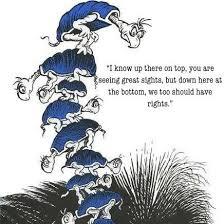
So as I “listen” it seems to me that the tale is one of hubris. A successful merchant ship empire is owned by a family named Apse…each ship bears the name of a different member of the Apse family, until, like Yertl the Turtle (forgive me Dr. Suess), Apse Senior builds the greatest of all ships, named The Apse Family – built to his own specification rendering the strongest, the heaviest, and presumably the safest ship in their fleet – capable of withstanding all manner of threat from the sea – a taming of nature, so to speak. Safe for whom?
Shipbuilding standards be damned! Too much of everything is thrown into the building of the ship, rendering it awkward and unsuitable for its intended purpose and with safety to the crew playing second fiddle to safety of the vessel.
The Apse Family is the Brute in the story (possibly intended as a double entendre). It has claimed the lives of one sailor, at least, on each of its voyages.
Enter Charley, the First Mate, who convinces his brother to sign on as sailor and join him on his upcoming voyage on The Apse Family.
Captain Colchester brought his niece, Maggie Colchester, on the voyage for her health – the latter being Charlie’s soon to be Fiancé. Mrs. Colchester’s “stuff and nonsense” views included ignoring all superstition where the ship was concerned. Maggie followed her lead, strolling anywhere and everywhere she pleased on board the vessel, with little or no regard to tales of death at the hands of the Brute (I’m following Conrad’s lead in his descriptive humanizing attributes).
Stranger survives to tell a tale where Nature and Destiny prove stronger than the hubris of the owners, crew and passengers, resulting in the particularly brutal death of a ship’s passenger (doubling the dose of irony).
As it turns out the Stranger telling the story is Charlie’s brother.
’Yertle the Turtle was a king. He was the king over all he saw, but he was dissatisfied. He wanted a bigger kingdom, so he decided he needed a higher throne. From the higher throne, he would be able to see farther, and rule over more territory. To satisfy his need for a higher throne, he ordered a few turtles to be stacked upon each other. From atop this throne of turtles, he could expand his kingdom. Over the course of increasing his reign an insignificant turtle on the bottom of the throne named Mack asked for some relief. He was granted none. Higher and higher the turtles were stacked, and yet Yertle was never satisfied. Eyeing his vast empire, he noted he wasn’t the highest creature in the sky. Perturbed by the presence of the moon, he ordered a thousand more turtles for his throne. All the while poor Mack on the bottom of the stack was aching with a sore back. Finally, Mack cracked. Actually, he burped. And the tower of turtles came toppling down. Yertle fell into a puddle of mud, where he reigned over all that he could see, which wasn’t very far.’…from the internet site of The Fat Pastor….
Το κτήνος είναι πιο κοντά στη θαλασσινή περιπέτεια, σίγουρα ενδιαφέρον, αλλά όχι απ'τα κορυφαία του Κόνραντ. Ο κόμης από την άλλη πλευρά, διαθέτει σε στιγμές την αφηγηματική αιχμή του συγγραφέα, αφού κινείται σε πιο υπαρξιακά πλαίσια.
I won’t look it up, but this only has part of Conrad’s gifts: strange places, an exotic story, but not the depth of development in character or language. A good yarn it is, but that’s all.
As a fan of Conrad's, I found this week's GR short story read to be a bit of a puzzle for me. While the seafaring tale told in a tavern for sailors feels absolutely familiar, the overall comedic tone of the story is not something I'd been familiar with in Conrad's works. (Apparently I'm not that great of a Conrad fan, anyway, because the Internet has informed me that the author is quite skilled in the genre, and now I need to go back and reread Heart of Darkness in a very different light, it seems.)
Nonetheless, I enjoyed this tale, and without the added comedy, I'm not sure I would have. Besides the long-running misdirection gag at the tale's beginning, you have Conrad’s hilarious description of the obese seaman and his enormous coat made of yards and yards of fabric, the strange noises made by Jermyn in response to everything in the tale, the green-eyed woman near the end in her red-flannel pj’s screeching like a cockatoo, and of course our frame narrator’s strictly proper attraction to the barmaid Miss Blank. (True story: I had a short, ill-fated relationship with a Missy Blank back in high school. I think she liked me, but the only place I ever took her was to a freestyle wrestling tournament in Bettendorf, Iowa, and so after that she sought affection elsewhere. Oh well.) Thus, although the humor in Heart of Darkness may have eluded me the first three or four times through, I shall be ready for it the next time!
This was an okay story. Conrad has a real knack for bringing nautical adventures to life on the page. This one is about a cursed ship that keeps killing off sailors, eventually killing the love interest of one of the sailors. It ends with the boat finally crashing. It keeps steering off course and it's bottom is torn off along the rocks.
Compared to Conrad's other works, this isn't anything to write home about, but still an entertaining story. The ship is basically its own character.